Lumi Region, Torricelli Mountains, West Sepik Province, Papua New Guinea
19th century or before
Length: 19.25 inches (48.9 cm) Width: 5.5 inches (14 cm)
Provenance: Field collected by M Truman of Western Australian the early 1960’s.
The art of the Lumi, from Papua New Guinea’s West Sepik Province, is some of the least studied yet most captivating art from the region. Because the steep central spine of the Torricelli Mountains renders this rugged region nearly unreachable, Lumimaterial culture evolved in isolation, birthing an aesthetic that departs dramatically from the iconic, figurative art found along the Sepik River Basin further to the east. Rather than the more broadly accessible ancestral sculptures typical of eastern communities, West Sepik artists favored abstract, organic shapes and pure unadorned form. Their work embraces a stark, ascetic minimalism, frequently relying upon the clarity of uncolored, smoke-blackened wood rather than the applied flourishes ofvibrant pigments. This restrained and austere artistic approach is perfectly captured in the wooden food bowls crafted by the Lumi.
While many of these vessels feature a rugged, archaic simplicity, only a select few embody a powerful dynamism in their form, like the remarkable bowl presented here. Branching out from the central, leaf-shaped bowl, the hooked zoomorphic faces curve in opposing directions to establish a striking sense of dynamism, the counterbalanced elements seemingly pregnant with potential energy and masculine/feminine duality. This Lumi bowl transcended daily utility to function as the sacred centerpiece of a local fertility rite. Its distinctly hooked heads once served a practical ritual purpose; allowing two village elders to carry the vessel together, each man grasping the bowl by one of itsopposing heads. As they walked between segregated lines of young men and women, the elders used the bowl's consecrated contents to anoint the youth, ensuring the prosperity and vitality of the entire community.
The finely incised motif of a lizard on the underside of the bowl clearly reveals the identity of the two hooked heads. In the Torricelli and Prince Alexander Mountains surrounding the Lumi region, these reptiles are not viewed as mere animals, rather they are understood to be the physical manifestations of powerful clan ancestors or local forest spirits. The artist’schoice to carve the bowl with a distinct pair of opposing abstract lizard’s heads joined by an incised lizard’s body infuses the vessel with the animal spirit’s life force, blessing the magical contents inside and protecting it from malevolent spirits. The bowl is precontact, archaic in form, and carved with the exclusive use of native stone tools. The surface has taken on a deep, smoke encrusted glossy black patina, from generationsspent stored above the rafters near the smoke of the cooking fires. Like other fine examples of Lumi art, the bowl’s black form provides a striking sculptural clarity paired with a raw, elemental power.
Note: A closely related Lumi bowl from Friede’s JolikaCollection was sold by Sotheby’s Paris on June 16th 2010 for 43,950 euros, reflecting the increasing recognition from collectors of the artistic importance of West Sepik art.
We ship free anywhere in the world, fully insured, packed by hand
Lumi Region, Torricelli Mountains, West Sepik Province, Papua New Guinea
19th century or before
Length: 19.25 inches (48.9 cm) Width: 5.5 inches (14 cm)
Provenance: Field collected by M Truman of Western Australian the early 1960’s.
The art of the Lumi, from Papua New Guinea’s West Sepik Province, is some of the least studied yet most captivating art from the region. Because the steep central spine of the Torricelli Mountains renders this rugged region nearly unreachable, Lumimaterial culture evolved in isolation, birthing an aesthetic that departs dramatically from the iconic, figurative art found along the Sepik River Basin further to the east. Rather than the more broadly accessible ancestral sculptures typical of eastern communities, West Sepik artists favored abstract, organic shapes and pure unadorned form. Their work embraces a stark, ascetic minimalism, frequently relying upon the clarity of uncolored, smoke-blackened wood rather than the applied flourishes ofvibrant pigments. This restrained and austere artistic approach is perfectly captured in the wooden food bowls crafted by the Lumi.
While many of these vessels feature a rugged, archaic simplicity, only a select few embody a powerful dynamism in their form, like the remarkable bowl presented here. Branching out from the central, leaf-shaped bowl, the hooked zoomorphic faces curve in opposing directions to establish a striking sense of dynamism, the counterbalanced elements seemingly pregnant with potential energy and masculine/feminine duality. This Lumi bowl transcended daily utility to function as the sacred centerpiece of a local fertility rite. Its distinctly hooked heads once served a practical ritual purpose; allowing two village elders to carry the vessel together, each man grasping the bowl by one of itsopposing heads. As they walked between segregated lines of young men and women, the elders used the bowl's consecrated contents to anoint the youth, ensuring the prosperity and vitality of the entire community.
The finely incised motif of a lizard on the underside of the bowl clearly reveals the identity of the two hooked heads. In the Torricelli and Prince Alexander Mountains surrounding the Lumi region, these reptiles are not viewed as mere animals, rather they are understood to be the physical manifestations of powerful clan ancestors or local forest spirits. The artist’schoice to carve the bowl with a distinct pair of opposing abstract lizard’s heads joined by an incised lizard’s body infuses the vessel with the animal spirit’s life force, blessing the magical contents inside and protecting it from malevolent spirits. The bowl is precontact, archaic in form, and carved with the exclusive use of native stone tools. The surface has taken on a deep, smoke encrusted glossy black patina, from generationsspent stored above the rafters near the smoke of the cooking fires. Like other fine examples of Lumi art, the bowl’s black form provides a striking sculptural clarity paired with a raw, elemental power.
Note: A closely related Lumi bowl from Friede’s JolikaCollection was sold by Sotheby’s Paris on June 16th 2010 for 43,950 euros, reflecting the increasing recognition from collectors of the artistic importance of West Sepik art.
We ship free anywhere in the world, fully insured, packed by hand


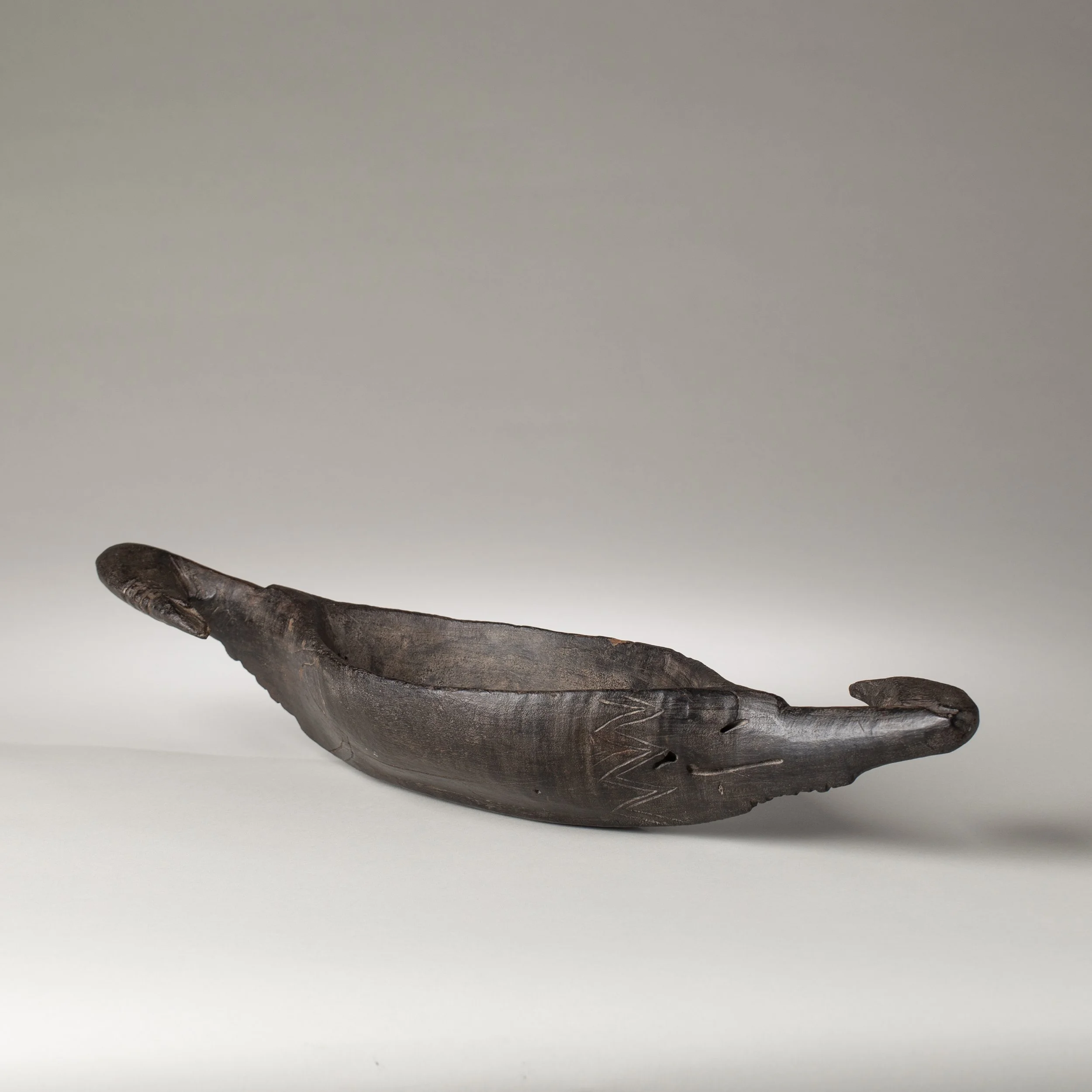 Image 1 of 11
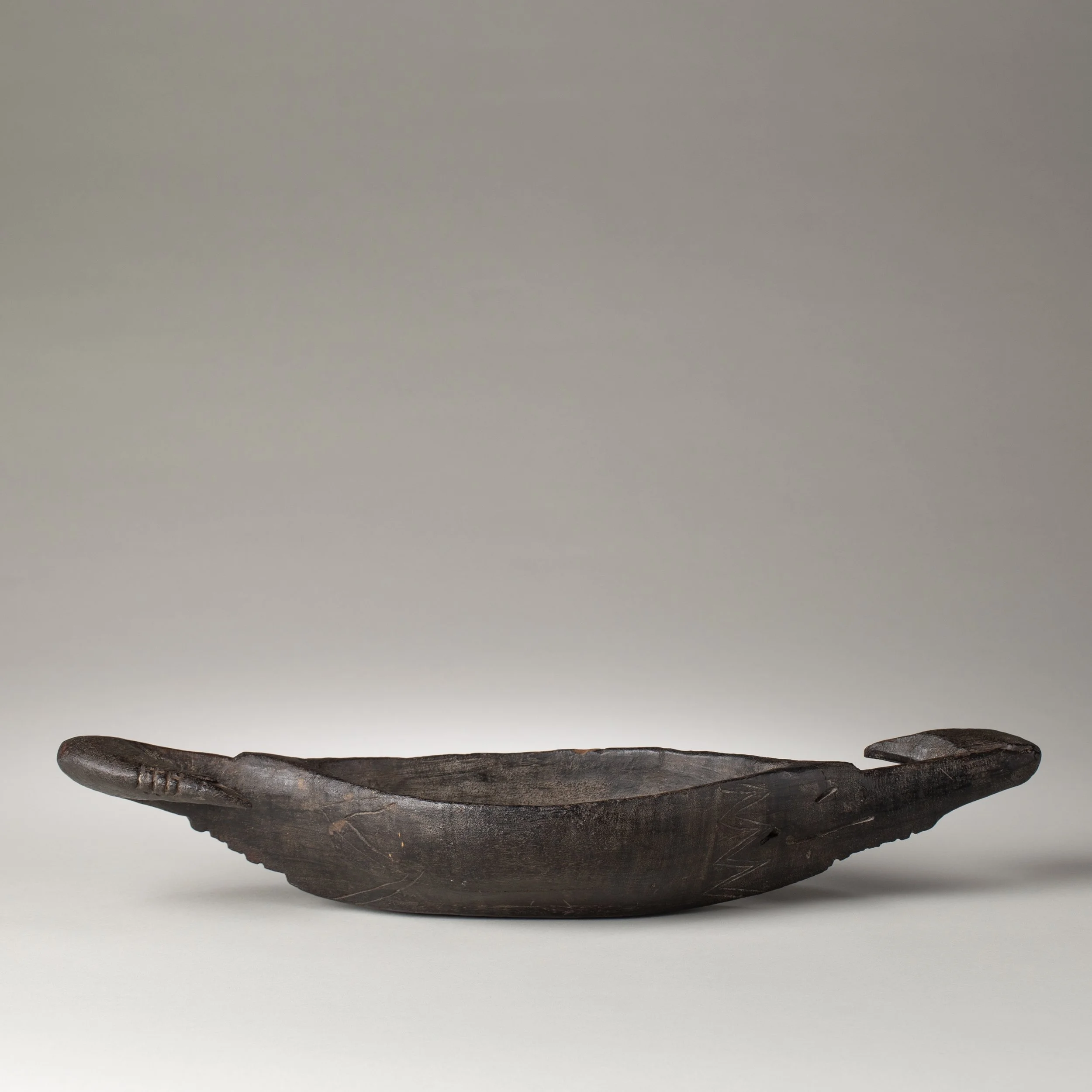 Image 2 of 11
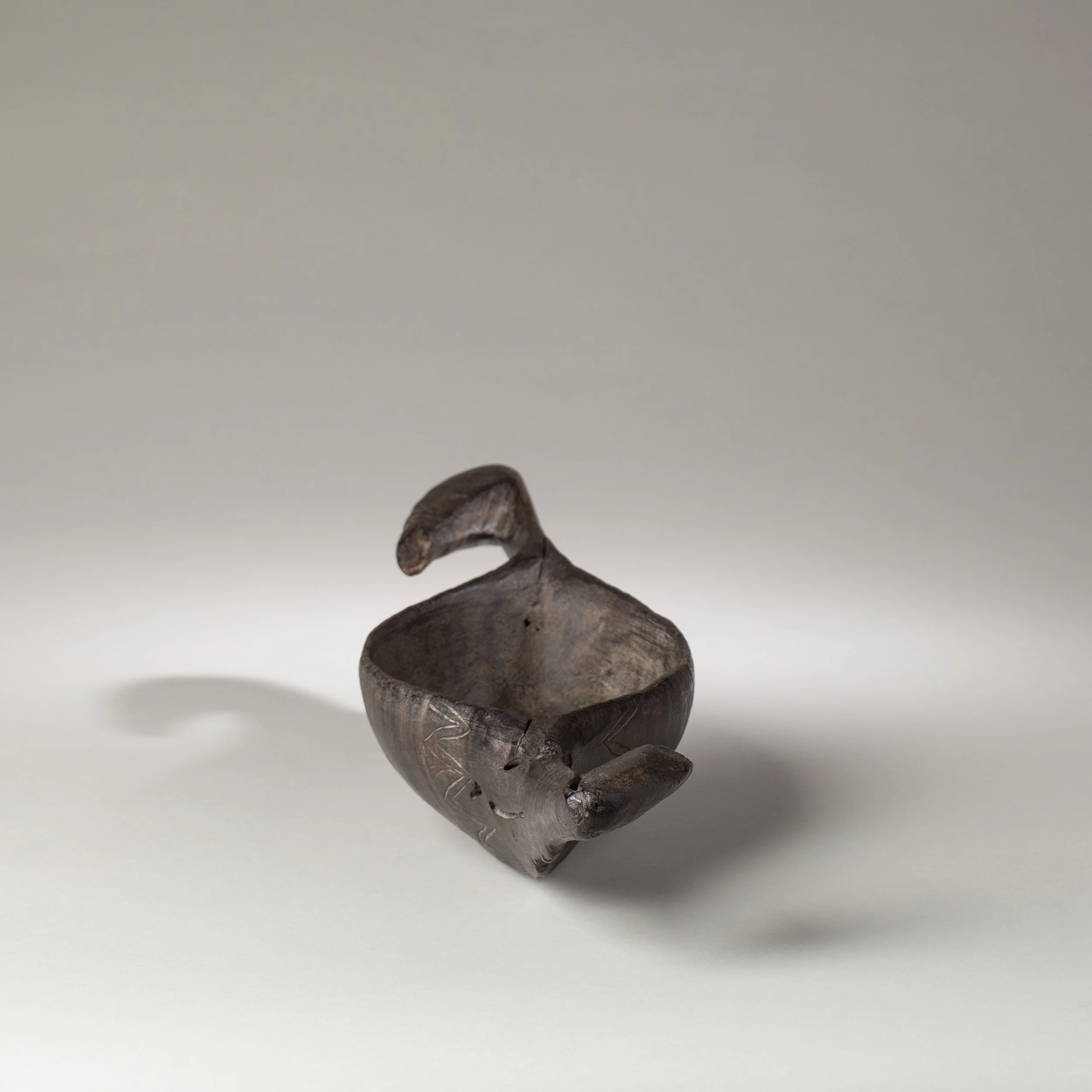 Image 3 of 11
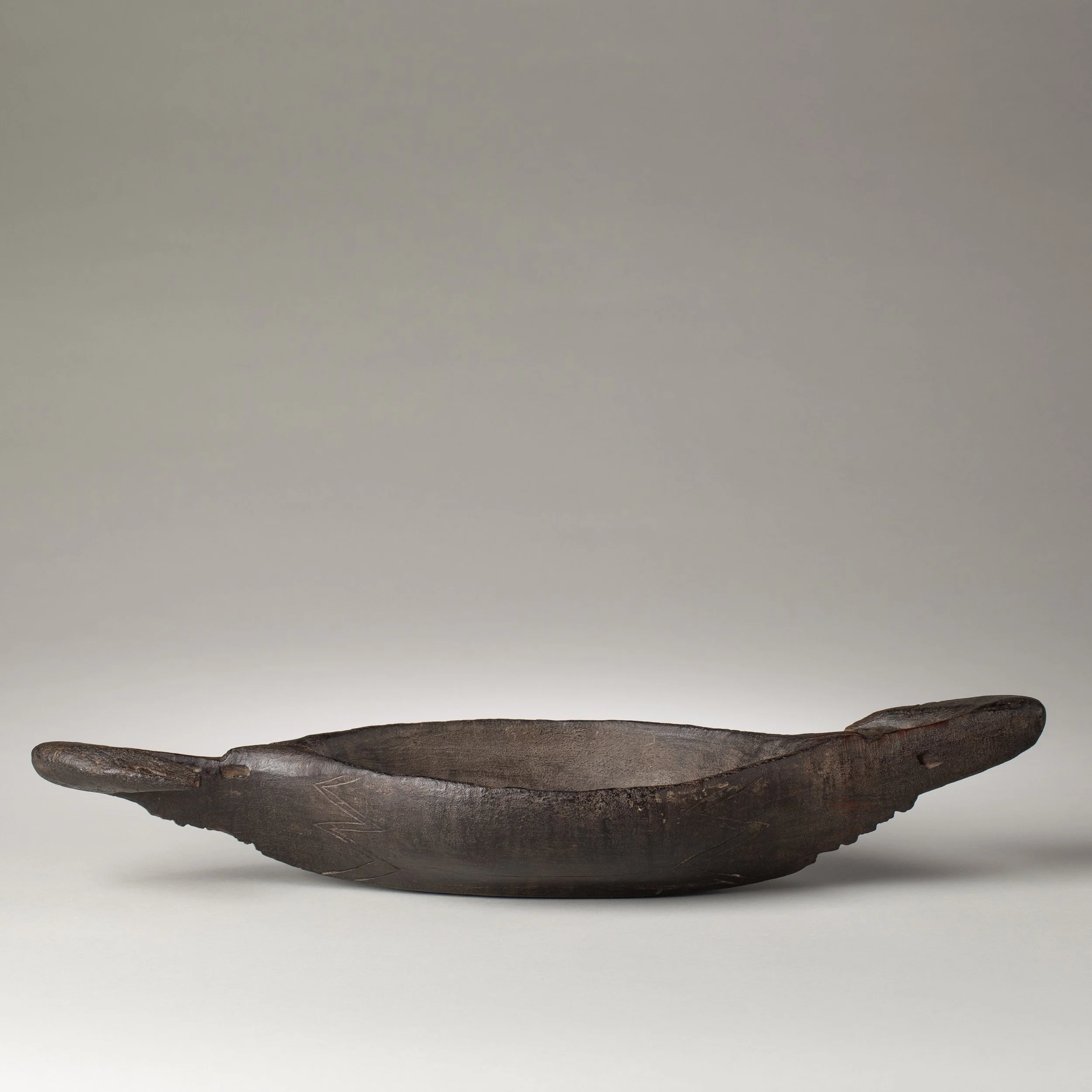 Image 4 of 11
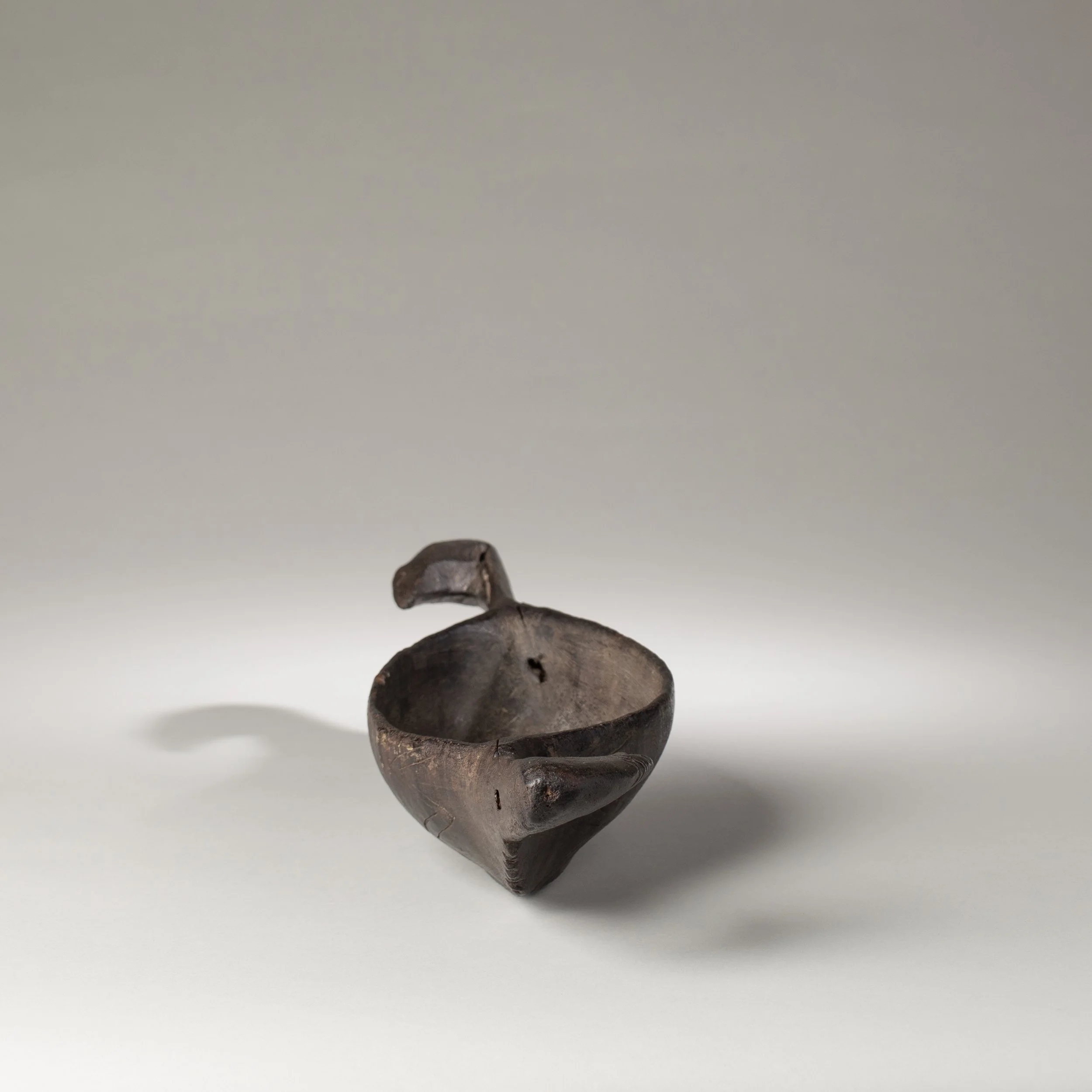 Image 5 of 11
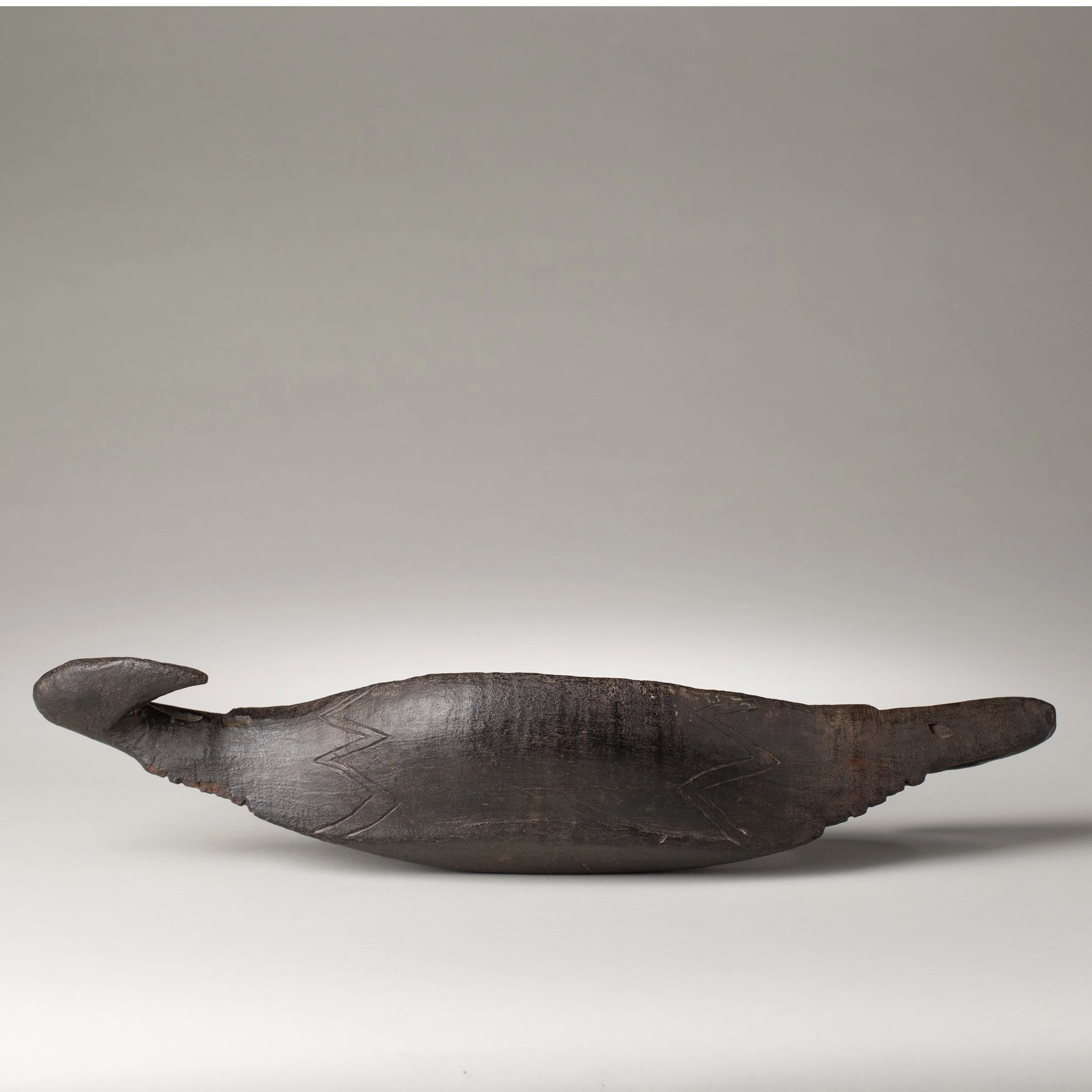 Image 6 of 11
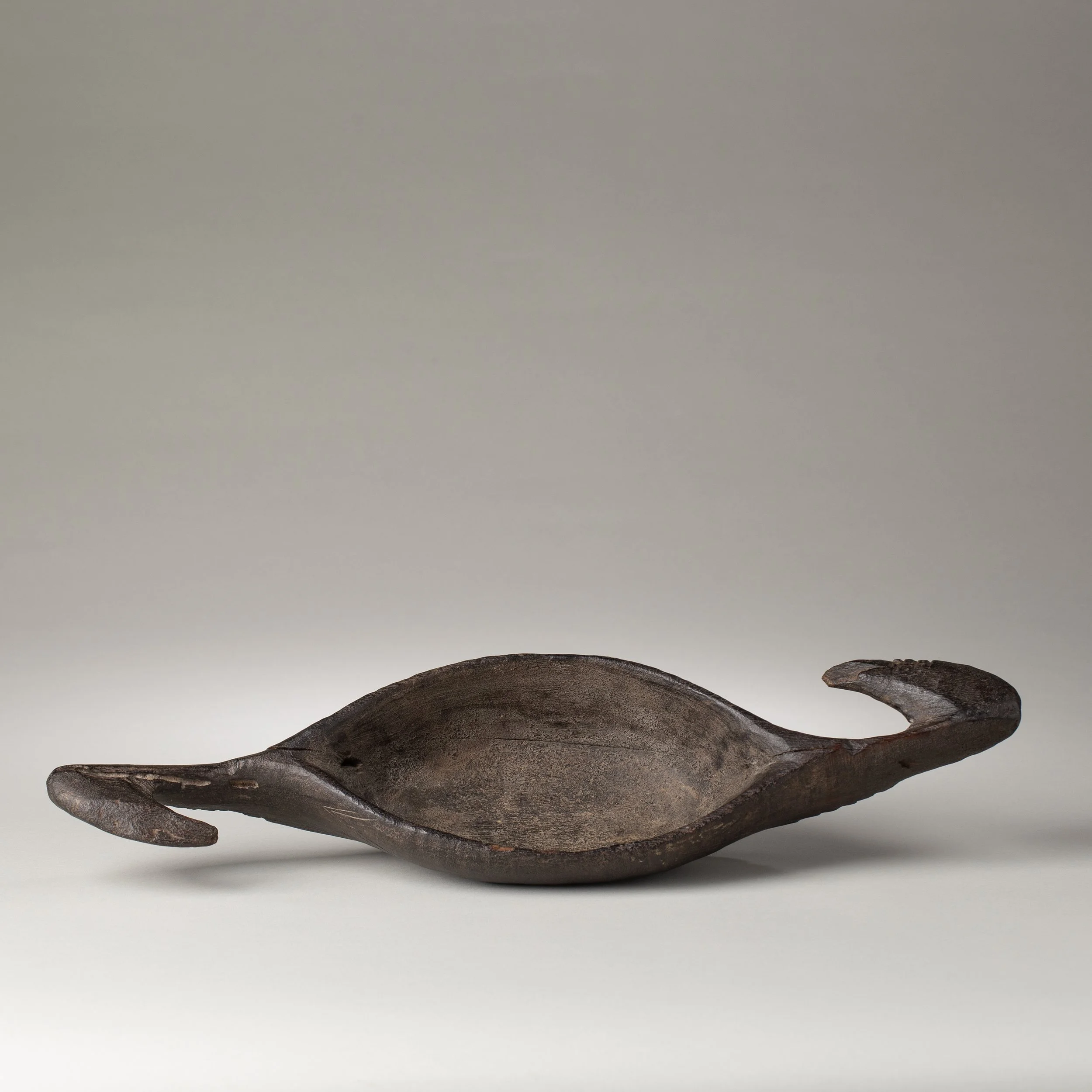 Image 7 of 11
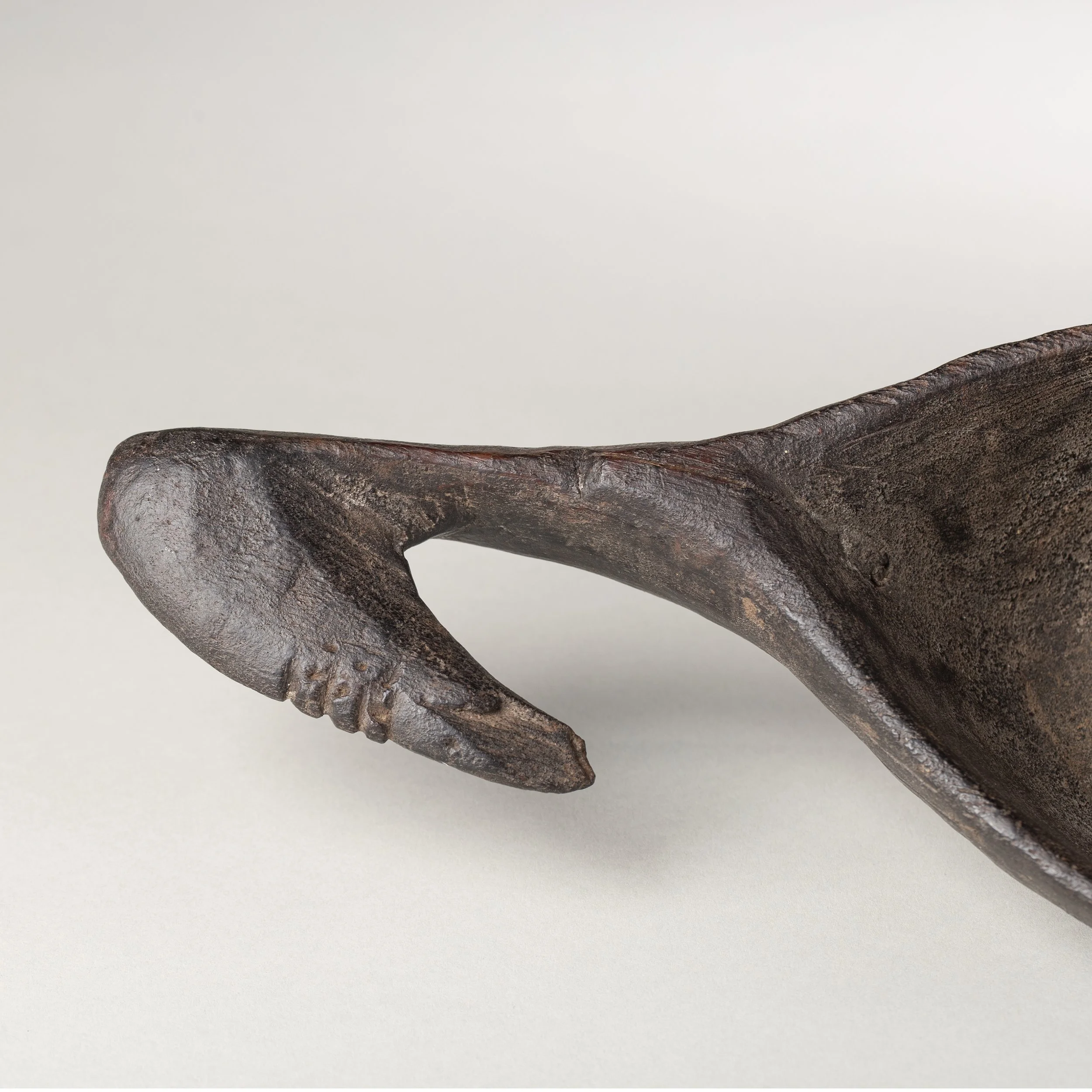 Image 8 of 11
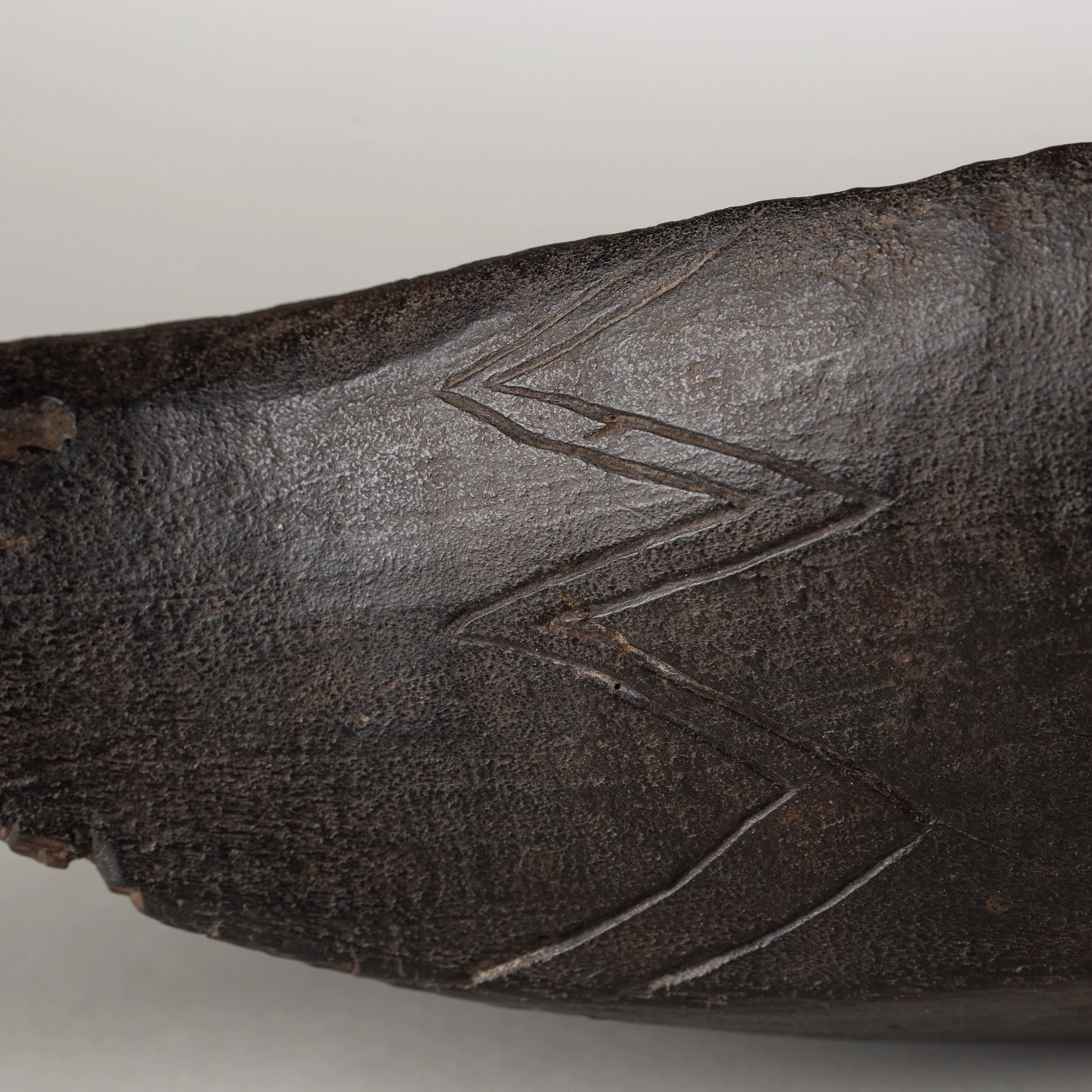 Image 9 of 11
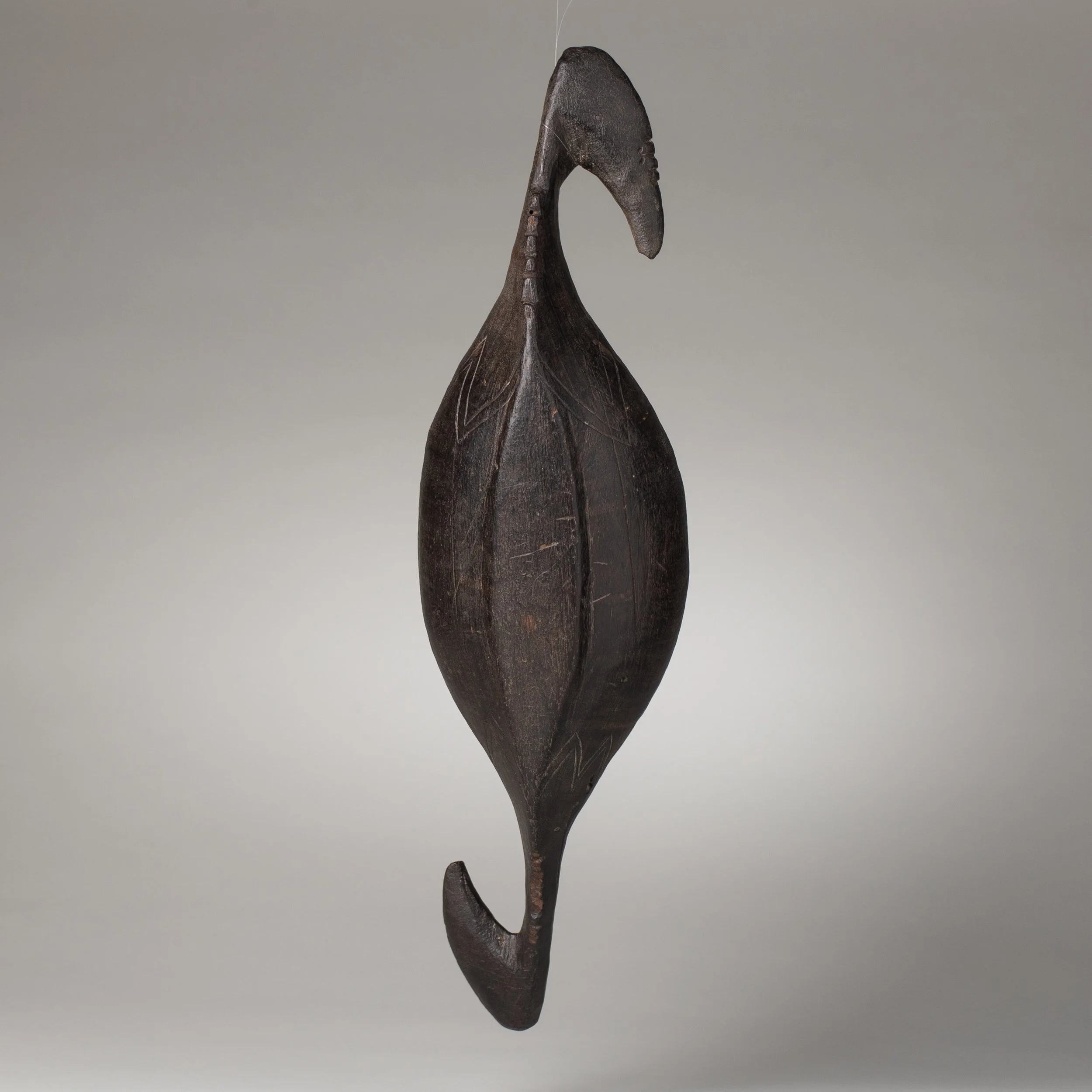 Image 10 of 11
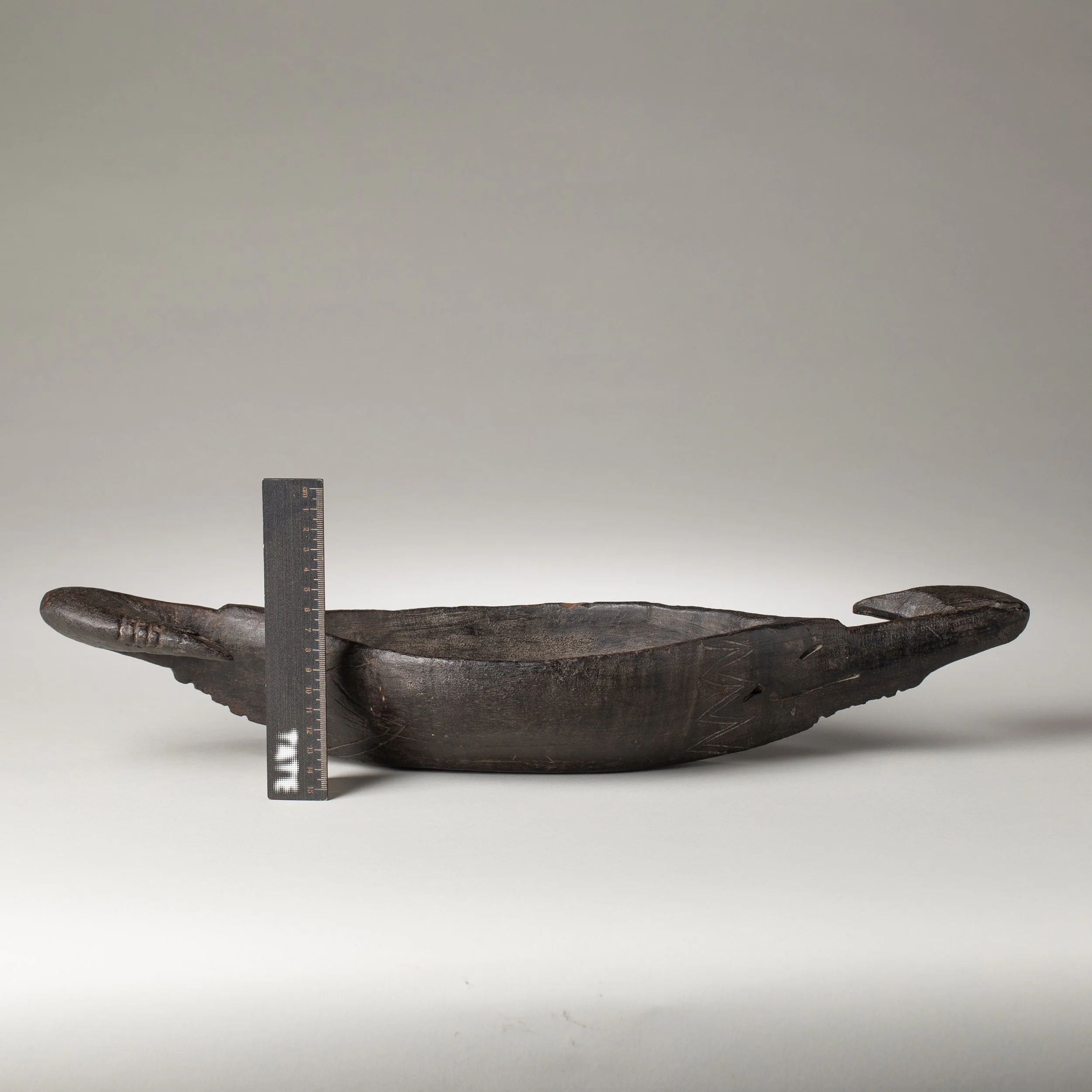 Image 11 of 11