

 Image 1 of 3
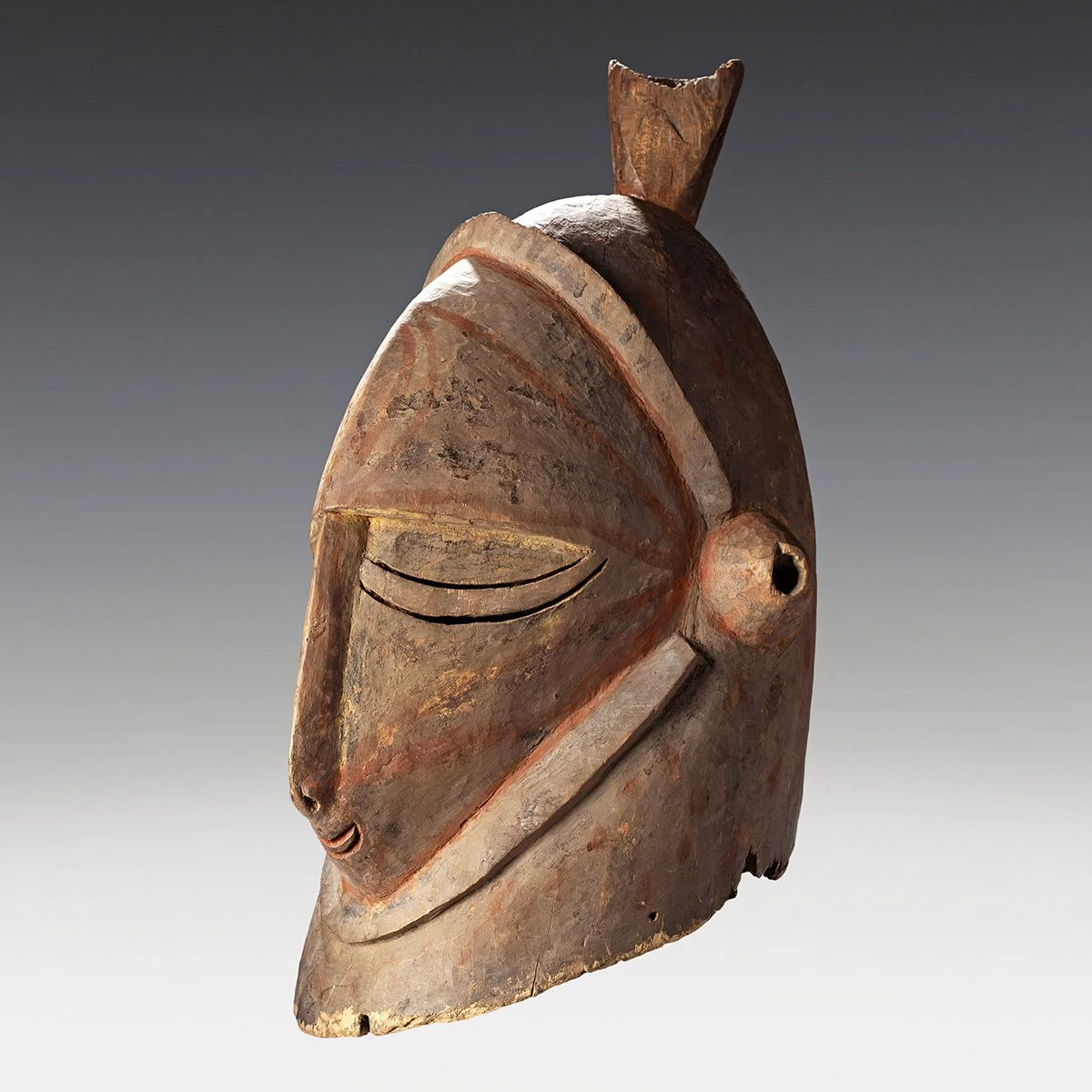 Image 2 of 3
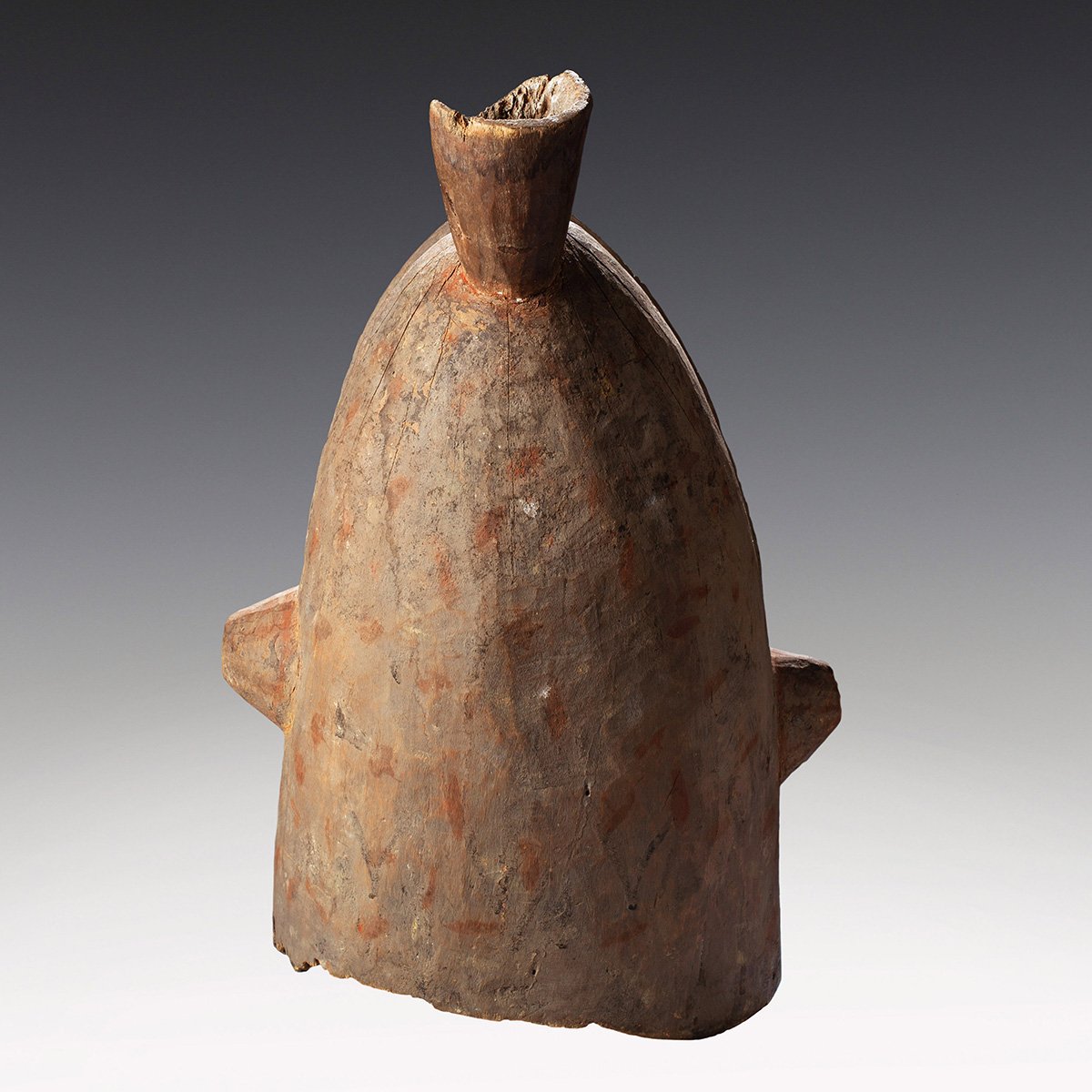 Image 3 of 3
Abelam culture, Prince Alexander Mountains, East Sepik Province, Papua New Guinea
Early 20th century
Wood, red and yellow ocher pigments
Height: 24 in (61 cm)
Provenance: Field collected among the Abelam by Michael Kremerskothen, Dortmund, Germany; Gallery Visser, Brussels; Chris and Anna Thorpe, Sydney, Australia
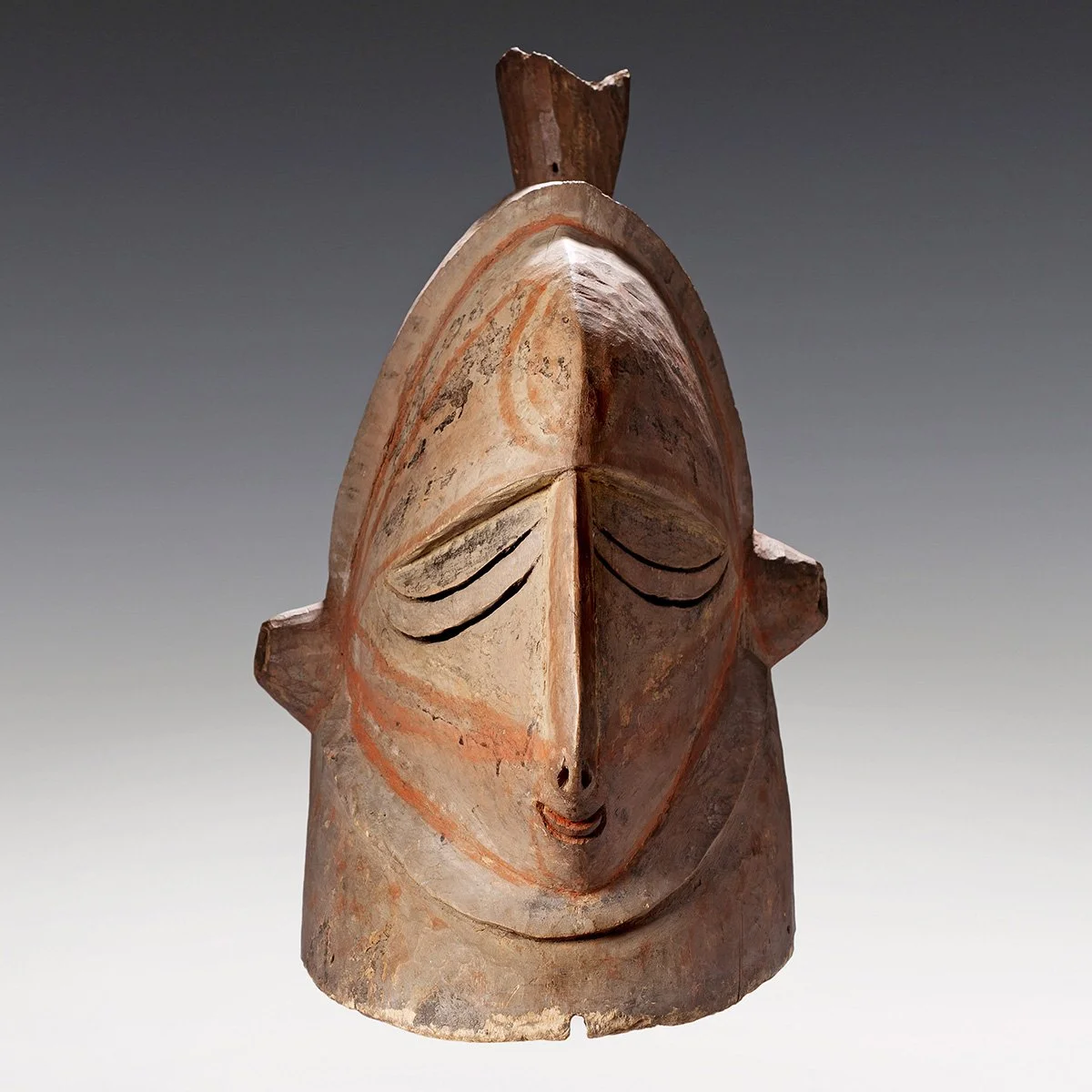
Wooden helmet masks known as mi babakumbu are among the least documented objects in Abelam ceremonial life, distinct from the more familiar wickerwork masks used to adorn long yams during the nggwalndu maira rituals associated with the highest stages of yam initiation. A single example was photographed in an Abelam cult house in 1953 by the Swiss anthropologist Paul Wirz, who recorded that the mask represented spirits of powerful clan ancestors — the nggwalndu — and was used during initiation ceremonies connected to the yam cycle that structured Abelam religious and social life. The holes at the lower perimeter indicate an original skirt of sago palm fibers worn by the masquerader, and the conical extension at the crown served to secure a feather headdress.
The mask is of voluminous, monumental form, the eyes rendered as narrow crescent openings that allowed the wearer to see while concealing his identity — a functional and formal solution consistent across the known examples of this type. The surface carries painted motifs in red and yellow ocher applied in multiple layers, the accumulation of successive repaintings over several generations of ceremonial use visible in the depth and variation of the pigment surface. The conical crown extension retains a glossy patina consistent with use as a practical handle during ceremonial manipulation, and the three-collection provenance chain — from field collection in Germany through Brussels and Sydney — traces a clear path through the specialist market for Sepik material.
We ship free anywhere in the world, fully insured, packed by hand.
Abelam culture, Prince Alexander Mountains, East Sepik Province, Papua New Guinea
Early 20th century
Wood, red and yellow ocher pigments
Height: 24 in (61 cm)
Provenance: Field collected among the Abelam by Michael Kremerskothen, Dortmund, Germany; Gallery Visser, Brussels; Chris and Anna Thorpe, Sydney, Australia
Wooden helmet masks known as mi babakumbu are among the least documented objects in Abelam ceremonial life, distinct from the more familiar wickerwork masks used to adorn long yams during the nggwalndu maira rituals associated with the highest stages of yam initiation. A single example was photographed in an Abelam cult house in 1953 by the Swiss anthropologist Paul Wirz, who recorded that the mask represented spirits of powerful clan ancestors — the nggwalndu — and was used during initiation ceremonies connected to the yam cycle that structured Abelam religious and social life. The holes at the lower perimeter indicate an original skirt of sago palm fibers worn by the masquerader, and the conical extension at the crown served to secure a feather headdress.
The mask is of voluminous, monumental form, the eyes rendered as narrow crescent openings that allowed the wearer to see while concealing his identity — a functional and formal solution consistent across the known examples of this type. The surface carries painted motifs in red and yellow ocher applied in multiple layers, the accumulation of successive repaintings over several generations of ceremonial use visible in the depth and variation of the pigment surface. The conical crown extension retains a glossy patina consistent with use as a practical handle during ceremonial manipulation, and the three-collection provenance chain — from field collection in Germany through Brussels and Sydney — traces a clear path through the specialist market for Sepik material.
We ship free anywhere in the world, fully insured, packed by hand.