Acoma Pueblo, New Mexico
circa 1920
Earthenware, mineral and vegetal pigments
Height 8.75" (22.2 cm), Diameter 10.5" (26.7 cm)
Provenance: Private collection, Seattle, Washington; inscription on concave base reads "old Acoma"
Acoma pottery of the early 20th century is characterized by thinly coiled earthenware decorated with geometric and abstract designs in black and orange-red on a white slip ground, and this olla exemplifies that tradition with bold, large-scale step forms, hatched panels, and dynamic negative space across the full exterior body. The low, rounded shoulder profile and unslipped terracotta base are typical of Acoma work of this era, and the painted surface is well preserved with strong pigment contrast throughout. An inscription on the concave base reading "old Acoma" suggests early recognition of the vessel's cultural and geographic origin, likely added by a previous collector.
The composition combines large geometric reserve panels with finer hatched and linear infill, reflecting the confident draftsmanship associated with accomplished Acoma potters of the period. The scale of the vessel and the coverage of the decoration make this a strong representative example of classic Acoma polychrome work from the early 20th century. The Seattle provenance suggests long-held private ownership outside the Southwest collector market.
We ship free anywhere in the world, fully insured, packed by hand.
Acoma Pueblo, New Mexico
circa 1920
Earthenware, mineral and vegetal pigments
Height 8.75" (22.2 cm), Diameter 10.5" (26.7 cm)
Provenance: Private collection, Seattle, Washington; inscription on concave base reads "old Acoma"
Acoma pottery of the early 20th century is characterized by thinly coiled earthenware decorated with geometric and abstract designs in black and orange-red on a white slip ground, and this olla exemplifies that tradition with bold, large-scale step forms, hatched panels, and dynamic negative space across the full exterior body. The low, rounded shoulder profile and unslipped terracotta base are typical of Acoma work of this era, and the painted surface is well preserved with strong pigment contrast throughout. An inscription on the concave base reading "old Acoma" suggests early recognition of the vessel's cultural and geographic origin, likely added by a previous collector.
The composition combines large geometric reserve panels with finer hatched and linear infill, reflecting the confident draftsmanship associated with accomplished Acoma potters of the period. The scale of the vessel and the coverage of the decoration make this a strong representative example of classic Acoma polychrome work from the early 20th century. The Seattle provenance suggests long-held private ownership outside the Southwest collector market.
We ship free anywhere in the world, fully insured, packed by hand.


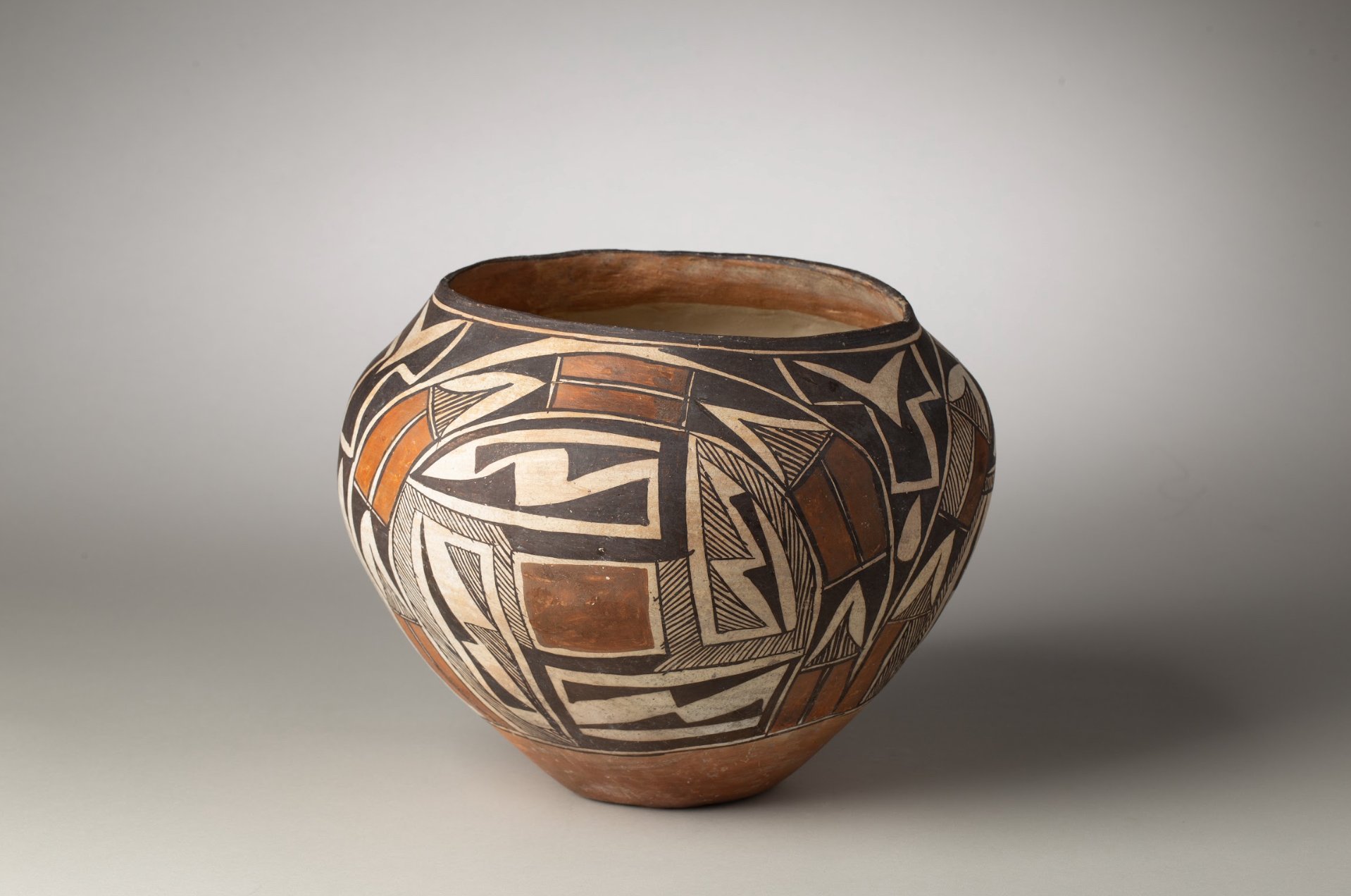 Image 1 of 6
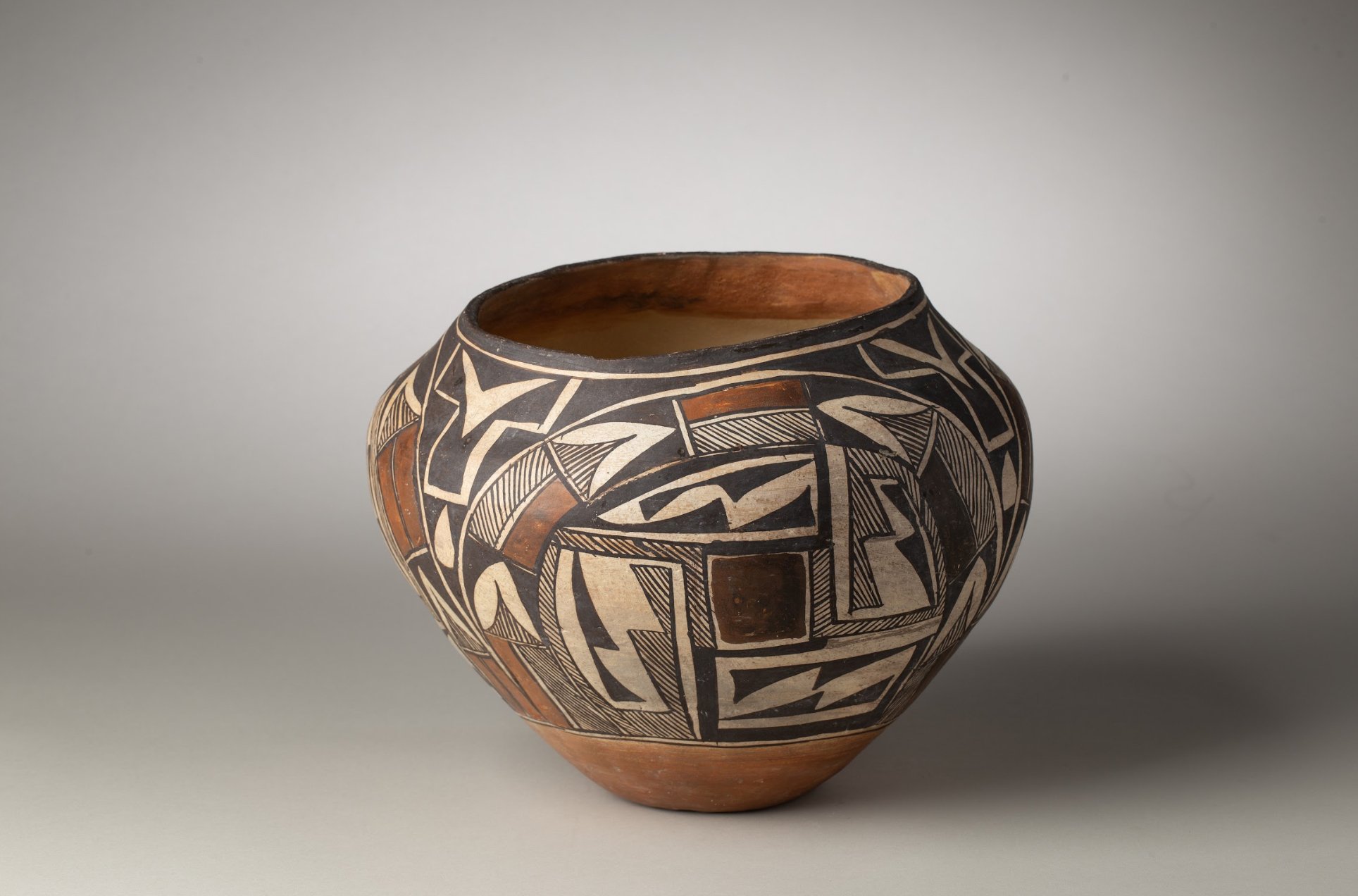 Image 2 of 6
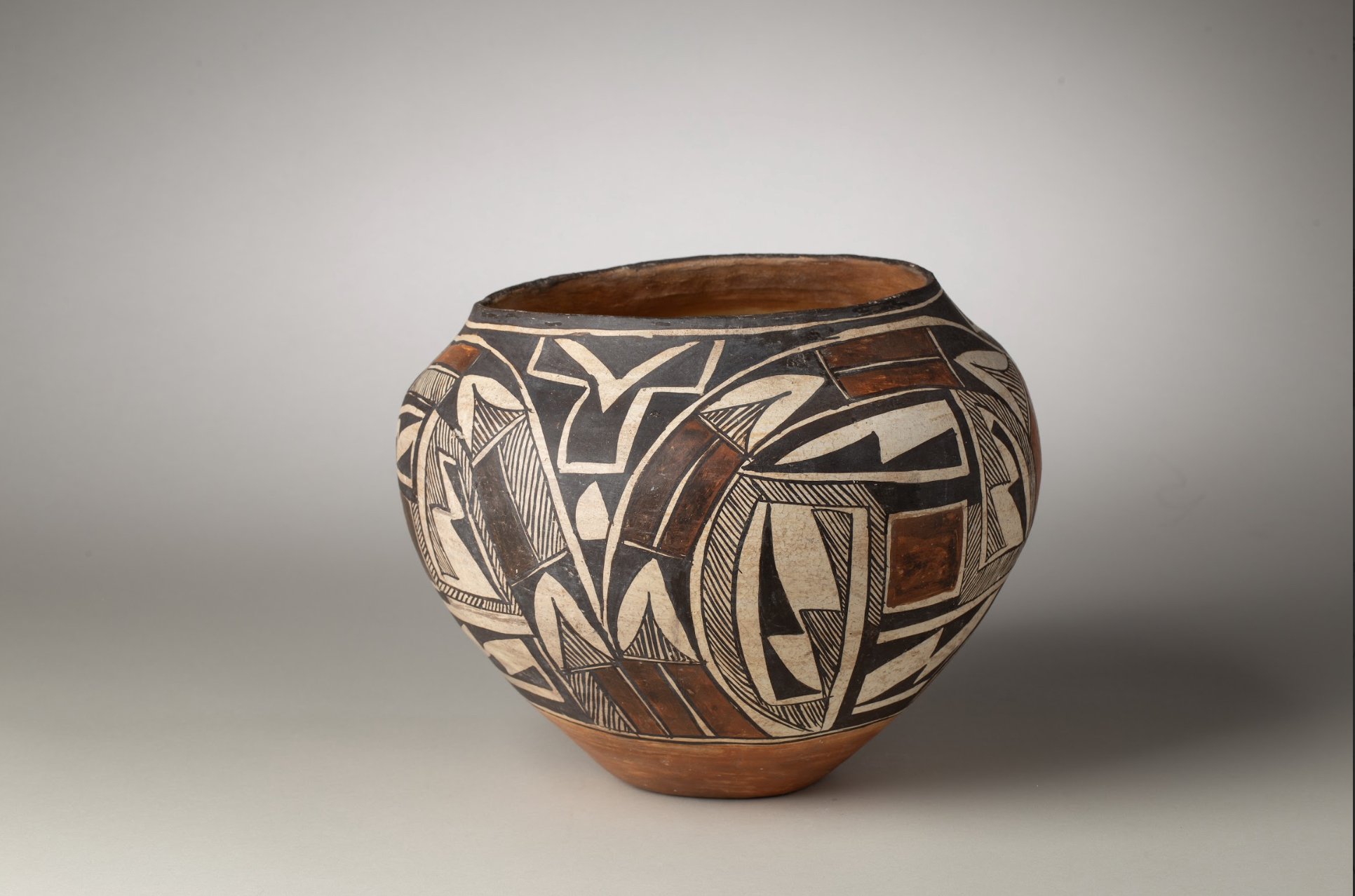 Image 3 of 6
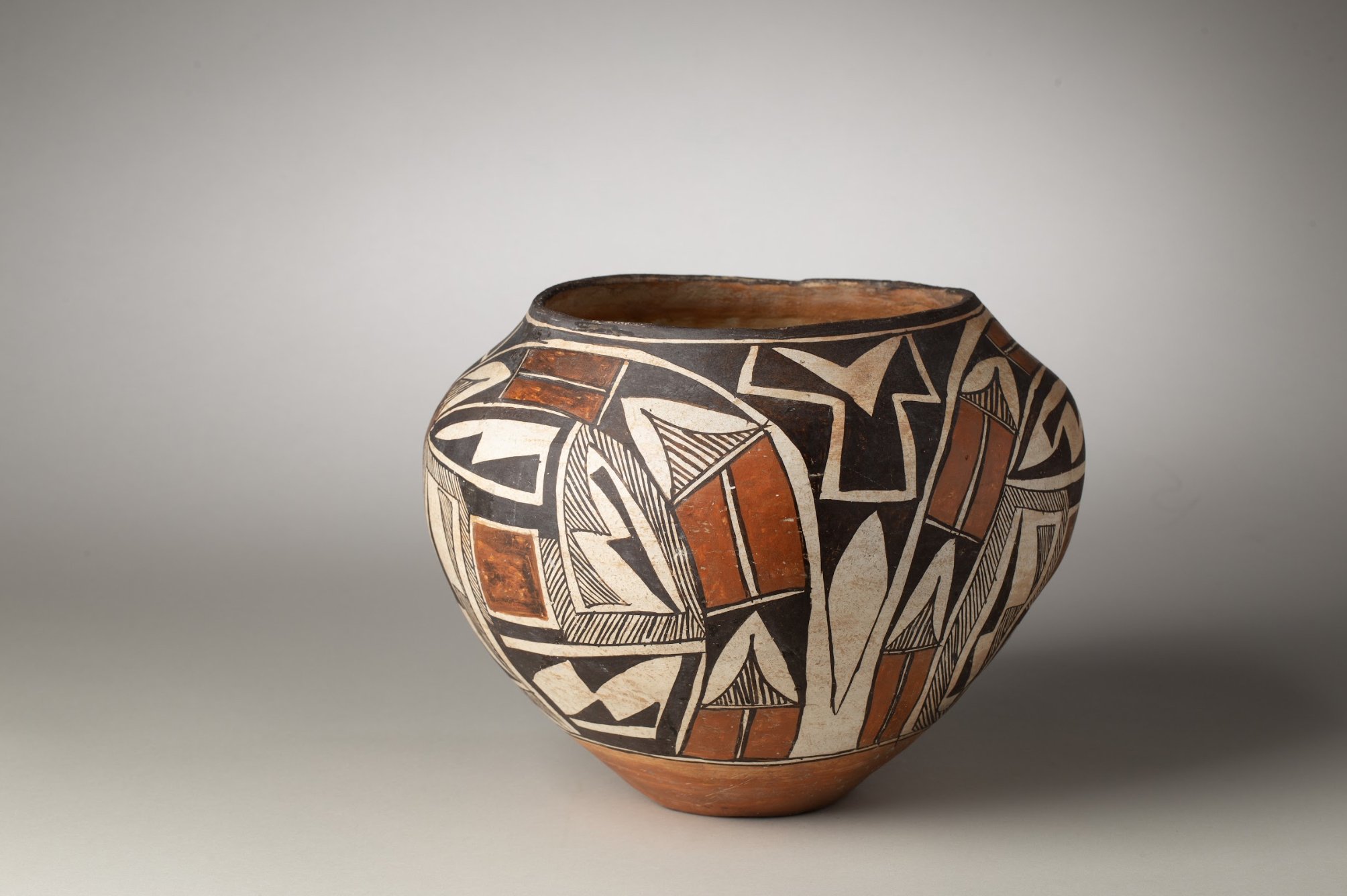 Image 4 of 6
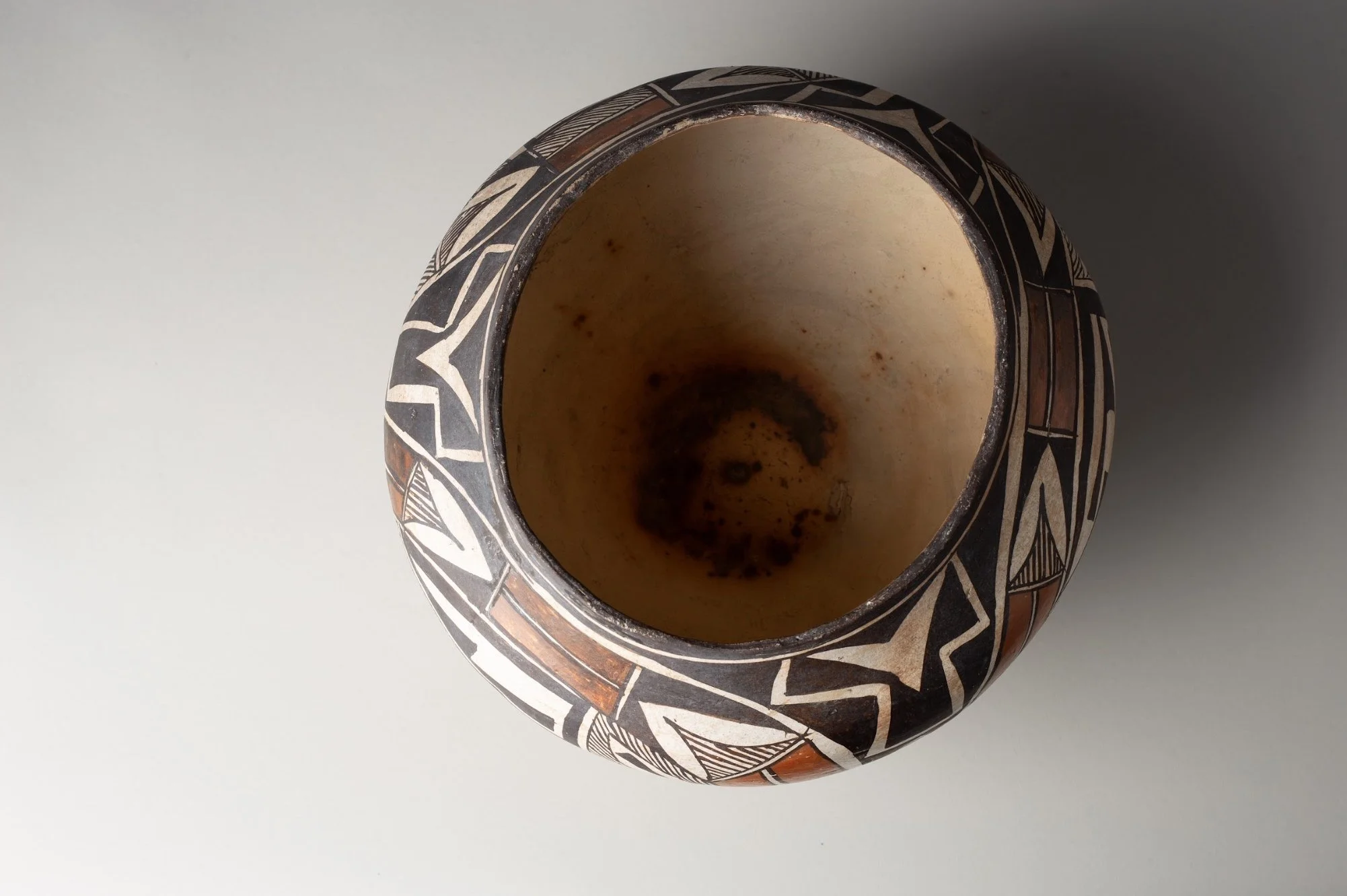 Image 5 of 6
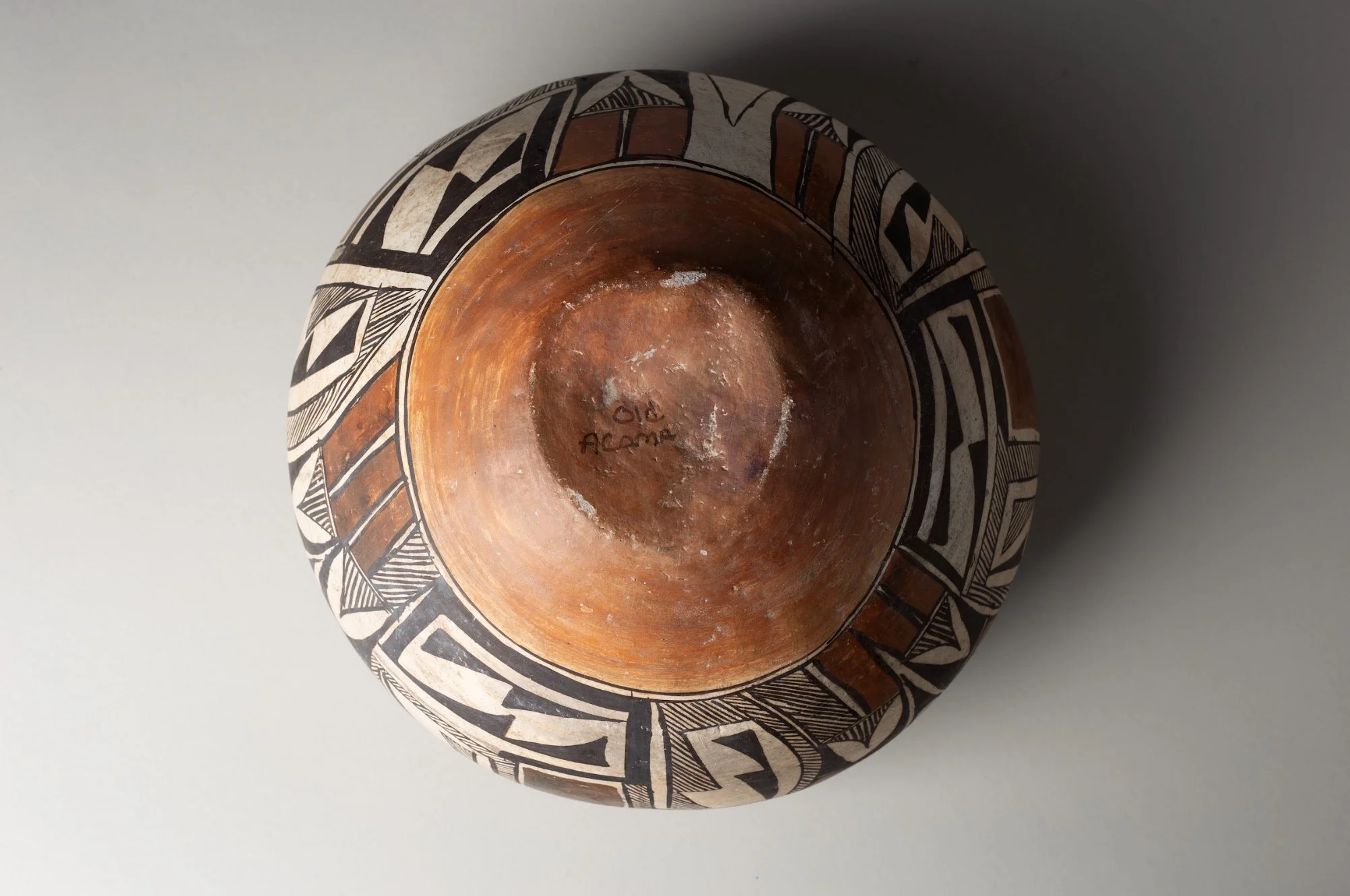 Image 6 of 6