

 Image 1 of 4
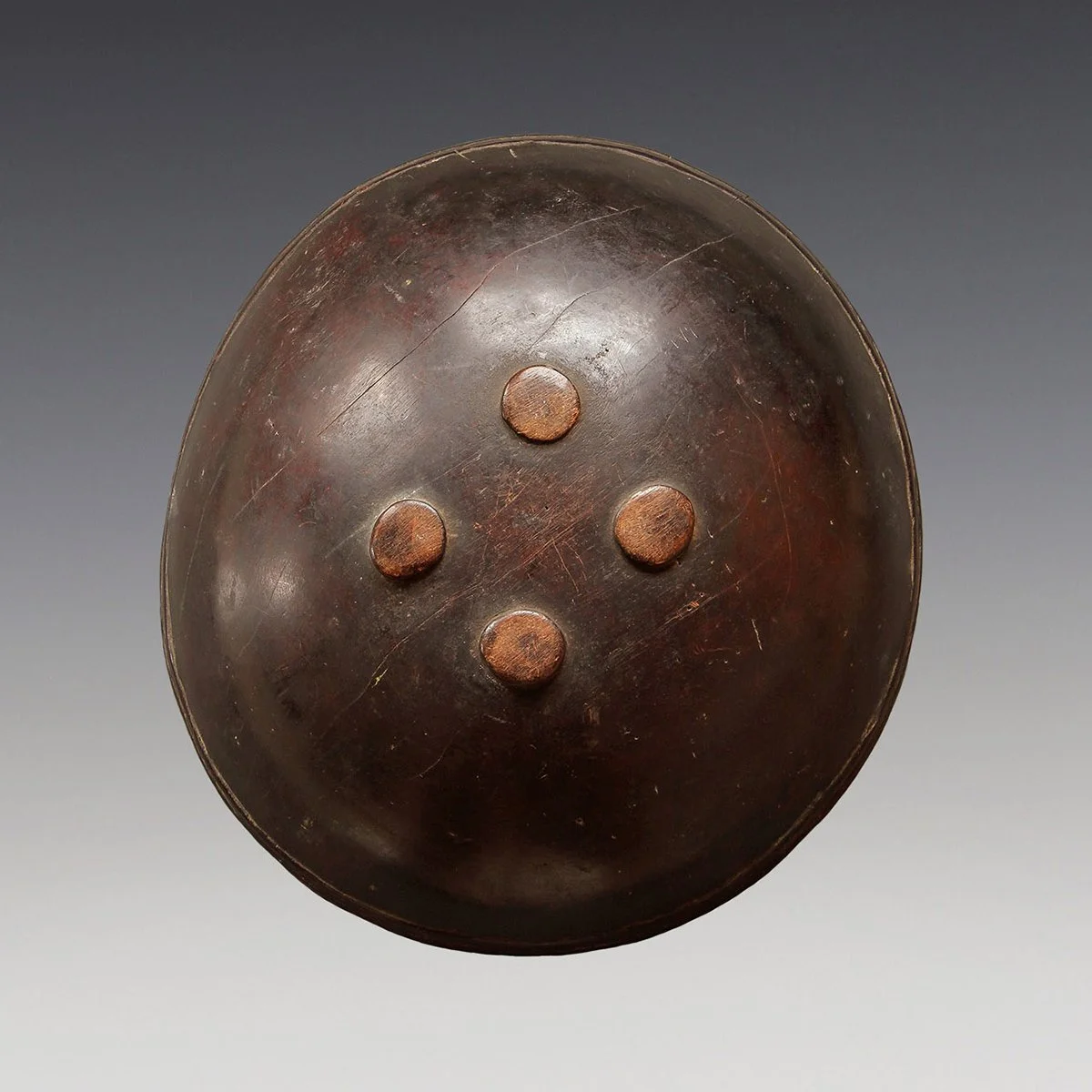 Image 2 of 4
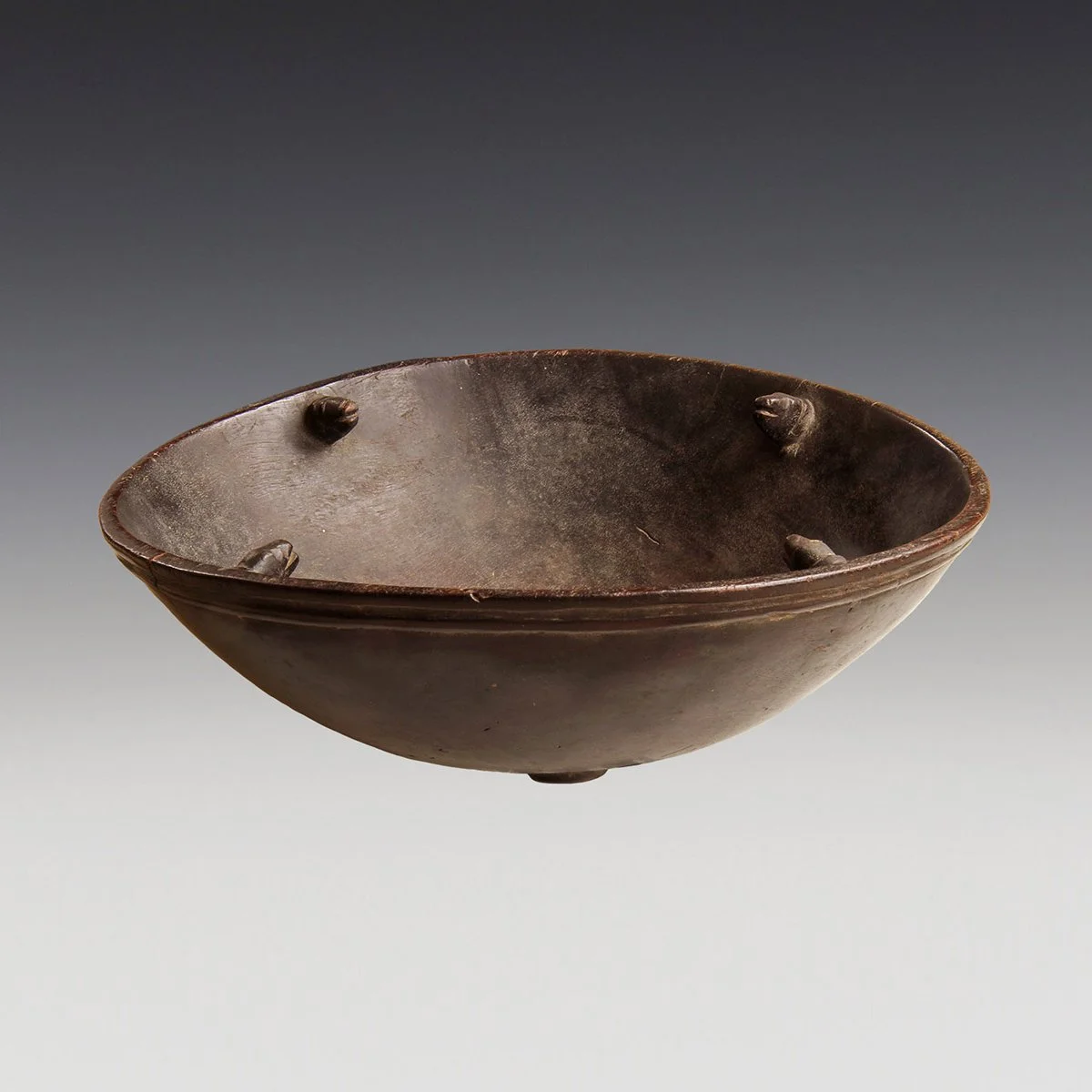 Image 3 of 4
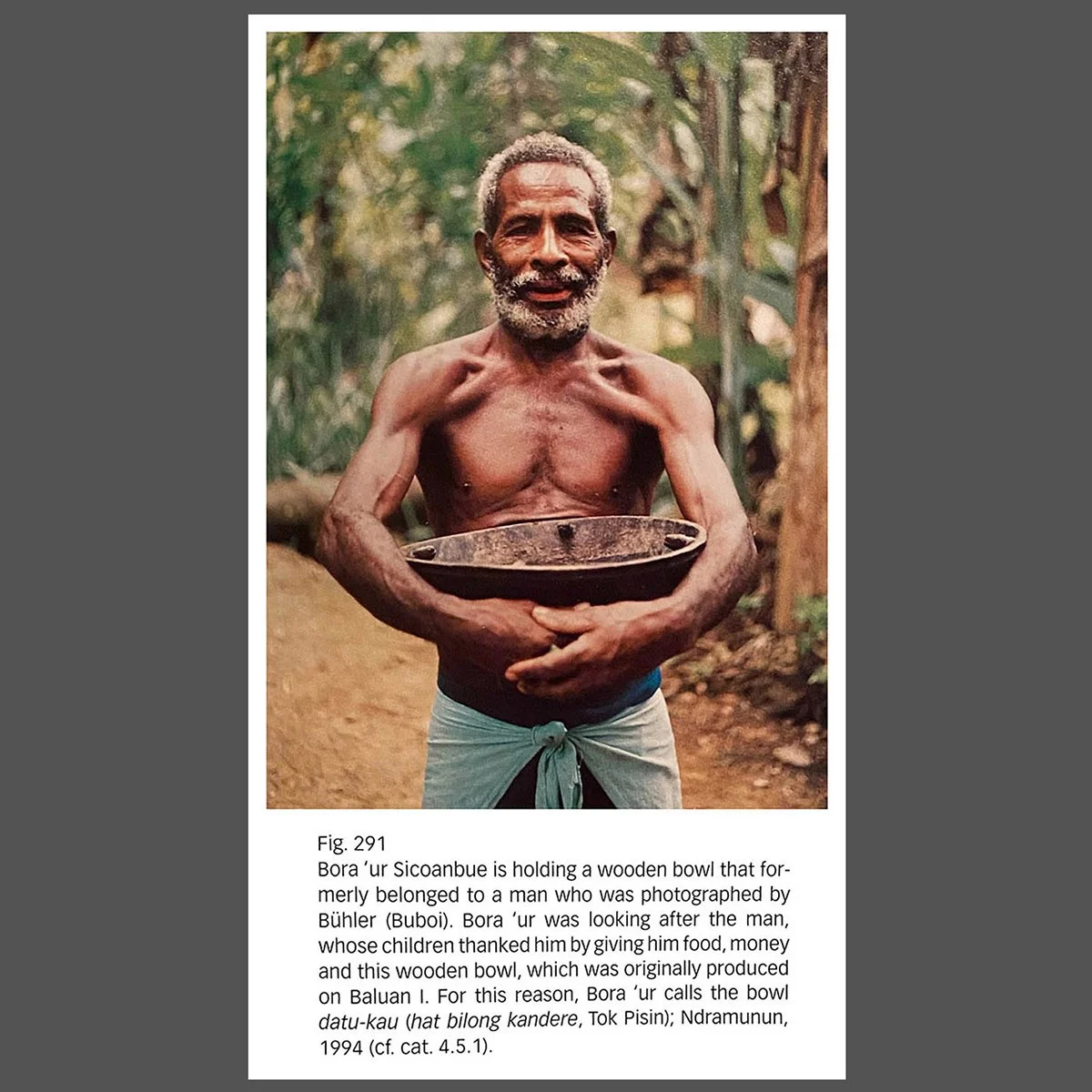 Image 4 of 4
Admiralty Islands, Papua New Guinea
Circa 1890–1930
Hardwood
Diameter: 14 in (35 cm)
Provenance: United Kingdom private collection
Wooden ceremonial bowls from the Admiralty Islands served as vessels for devotions addressed to the patron spirit of a deceased ancestor, known as moen palit, by their high-ranking owners. Food and aromatic herbs were placed in the bowl before the owner communicated with the ancestral spirit, the vessel functioning as the material point of contact between the living and the protective presence of the dead. Objects of this type were heirlooms, their age and association with named ancestors compounding their value across generations.
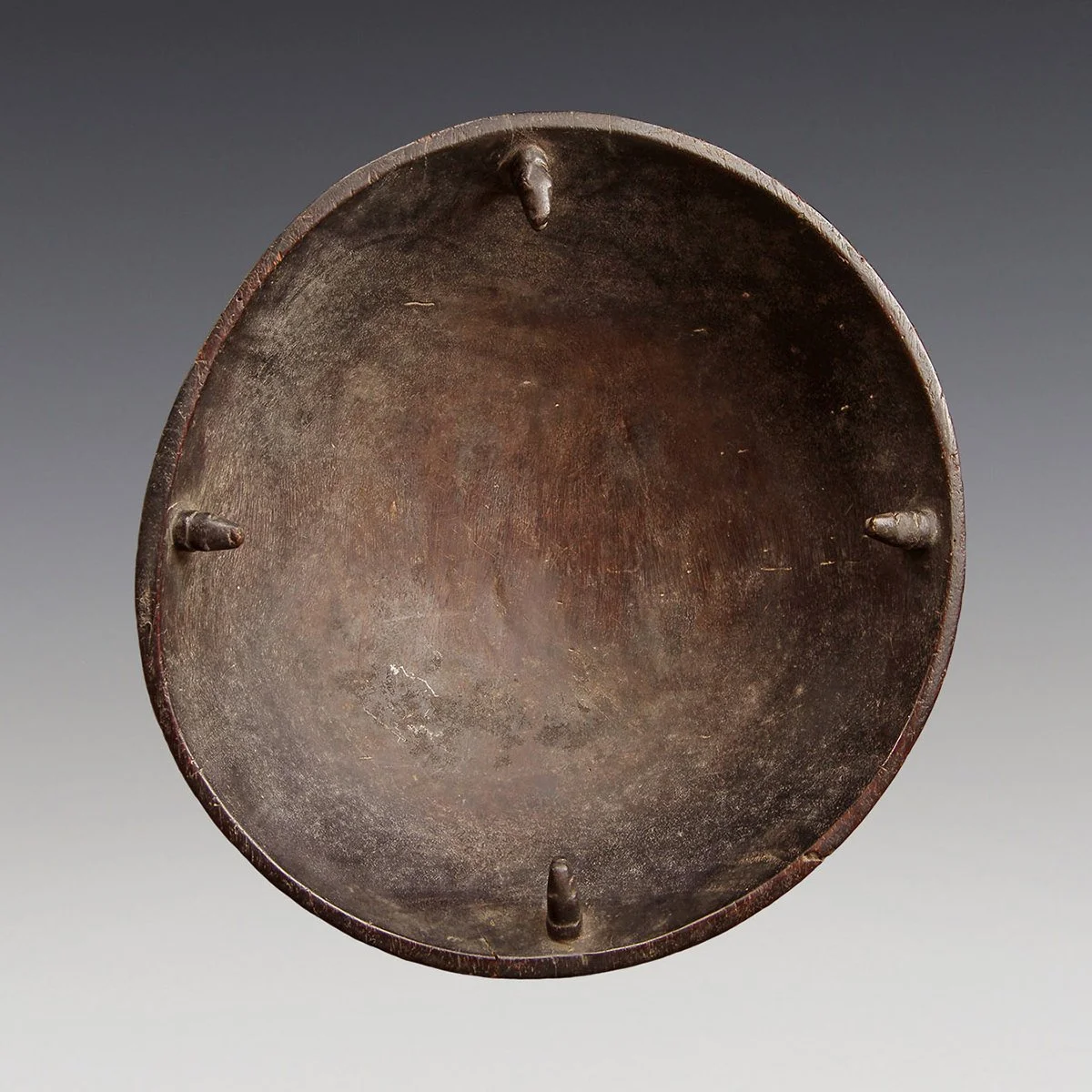
The rim of this bowl is carved with four inward-facing dog's heads at evenly spaced intervals, a feature that connects the bowl to the animal symbolism embedded in Admiralty Islands prestige culture. The piece appears to correspond to a bowl photographed in the field in 1994 and published in An Ethnology of the Admiralty Islands (1996), with the original owner documented by the ethnographer Alfred Bühler in 1931 — a chain of evidence that places this bowl within a specific and datable field history. The wood has darkened to a deep tone throughout, the surface carrying the patina of extended ceremonial use and careful keeping.
We ship free anywhere in the world, fully insured, packed by hand.
Admiralty Islands, Papua New Guinea
Circa 1890–1930
Hardwood
Diameter: 14 in (35 cm)
Provenance: United Kingdom private collection
Wooden ceremonial bowls from the Admiralty Islands served as vessels for devotions addressed to the patron spirit of a deceased ancestor, known as moen palit, by their high-ranking owners. Food and aromatic herbs were placed in the bowl before the owner communicated with the ancestral spirit, the vessel functioning as the material point of contact between the living and the protective presence of the dead. Objects of this type were heirlooms, their age and association with named ancestors compounding their value across generations.
The rim of this bowl is carved with four inward-facing dog's heads at evenly spaced intervals, a feature that connects the bowl to the animal symbolism embedded in Admiralty Islands prestige culture. The piece appears to correspond to a bowl photographed in the field in 1994 and published in An Ethnology of the Admiralty Islands (1996), with the original owner documented by the ethnographer Alfred Bühler in 1931 — a chain of evidence that places this bowl within a specific and datable field history. The wood has darkened to a deep tone throughout, the surface carrying the patina of extended ceremonial use and careful keeping.
We ship free anywhere in the world, fully insured, packed by hand.