Terracotta
1400–1100 BC
Height 9"
Provenance: Christian Rub, Santa Barbara, CA, antique dealer, 1930s; Martha Pillard, Honolulu, HI, Docent of the Honolulu Academy of Arts, acquired 1999; Mark Blackburn, Marfa, TX
This standing female figure from the Amlash culture of Gilan Province in northwestern Iran dates to the early first phase of Amlash terracotta production, between 1400 and 1100 BC. The form is rendered with the characteristic stylization of the tradition: an elongated neck, rudimentary outstretched arms, modeled breasts, and pronounced hips and thighs that emphasize the figure's fertility symbolism. Thermoluminescence testing by CIRAM laboratories confirmed an age of approximately 3,450 years, consistent with the attributed date.
Amlash figurines entered European awareness in the late nineteenth and early twentieth centuries, when examples began appearing on the antiquities market and attracted attention from collectors and institutions drawn to their affinities with modernist abstraction. The elongated, schematic forms were noted by contemporary artists including Picasso as anticipating the visual language of the avant-garde, and the figures entered significant public and private collections during this period. The provenance of this example traces to Christian Rub, a Santa Barbara antique dealer active in the 1930s who counted Taos artist Joseph Henry Sharp among his acquaintances.
The figure stands nine inches tall and retains its original surface with mineral encrustation consistent with long burial. The featureless head and reduced limbs direct attention to the body's central forms, a compositional strategy shared across Amlash figural production. The work passes from the Rub family collection through Martha Pillard, Docent of the Honolulu Academy of Arts, to the present collection.
CIRAM report included - click here to view
We ship free anywhere in the world, fully insured, packed by hand.
Terracotta
1400–1100 BC
Height 9"
Provenance: Christian Rub, Santa Barbara, CA, antique dealer, 1930s; Martha Pillard, Honolulu, HI, Docent of the Honolulu Academy of Arts, acquired 1999; Mark Blackburn, Marfa, TX
This standing female figure from the Amlash culture of Gilan Province in northwestern Iran dates to the early first phase of Amlash terracotta production, between 1400 and 1100 BC. The form is rendered with the characteristic stylization of the tradition: an elongated neck, rudimentary outstretched arms, modeled breasts, and pronounced hips and thighs that emphasize the figure's fertility symbolism. Thermoluminescence testing by CIRAM laboratories confirmed an age of approximately 3,450 years, consistent with the attributed date.
Amlash figurines entered European awareness in the late nineteenth and early twentieth centuries, when examples began appearing on the antiquities market and attracted attention from collectors and institutions drawn to their affinities with modernist abstraction. The elongated, schematic forms were noted by contemporary artists including Picasso as anticipating the visual language of the avant-garde, and the figures entered significant public and private collections during this period. The provenance of this example traces to Christian Rub, a Santa Barbara antique dealer active in the 1930s who counted Taos artist Joseph Henry Sharp among his acquaintances.
The figure stands nine inches tall and retains its original surface with mineral encrustation consistent with long burial. The featureless head and reduced limbs direct attention to the body's central forms, a compositional strategy shared across Amlash figural production. The work passes from the Rub family collection through Martha Pillard, Docent of the Honolulu Academy of Arts, to the present collection.
CIRAM report included - click here to view
We ship free anywhere in the world, fully insured, packed by hand.


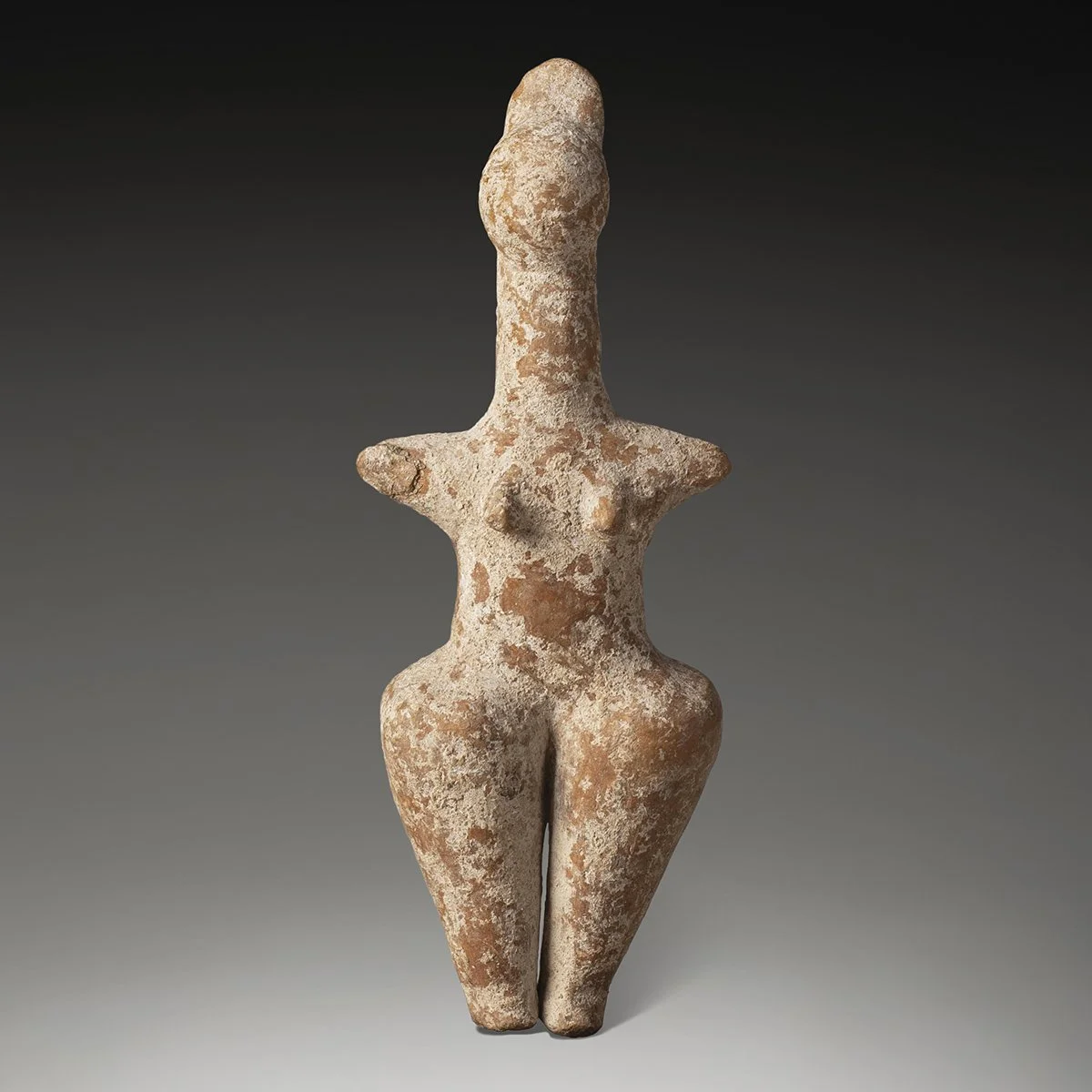 Image 1 of 7
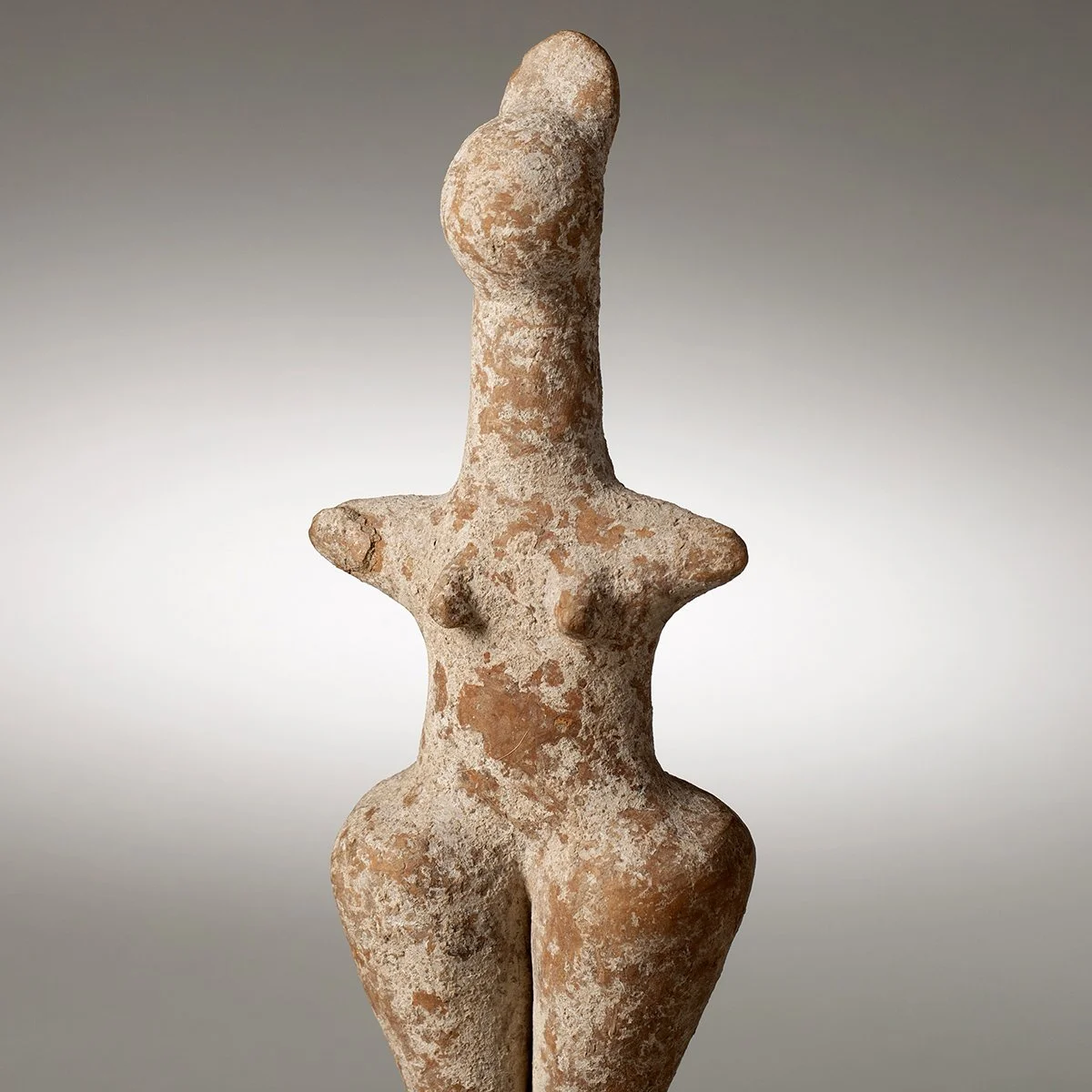 Image 2 of 7
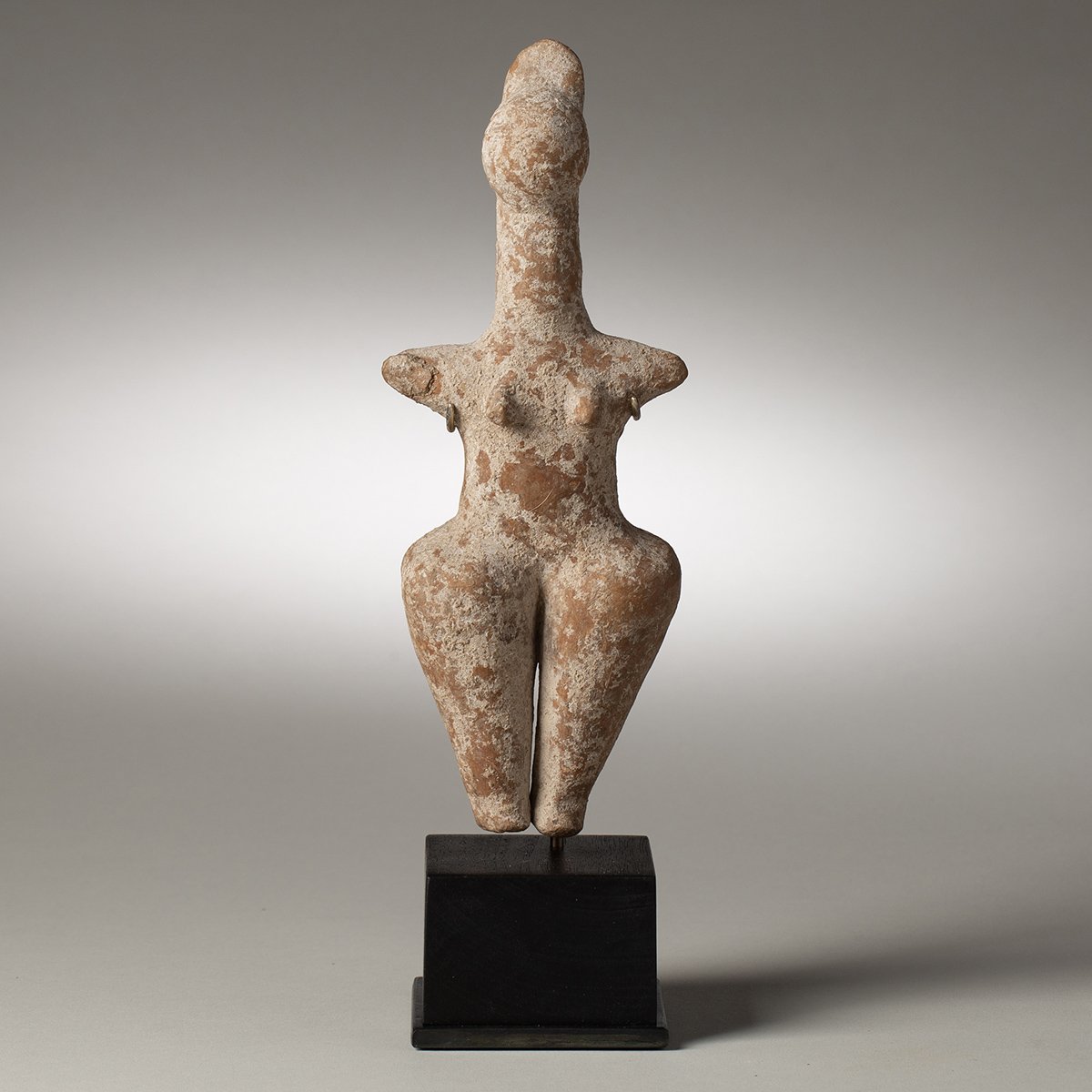 Image 3 of 7
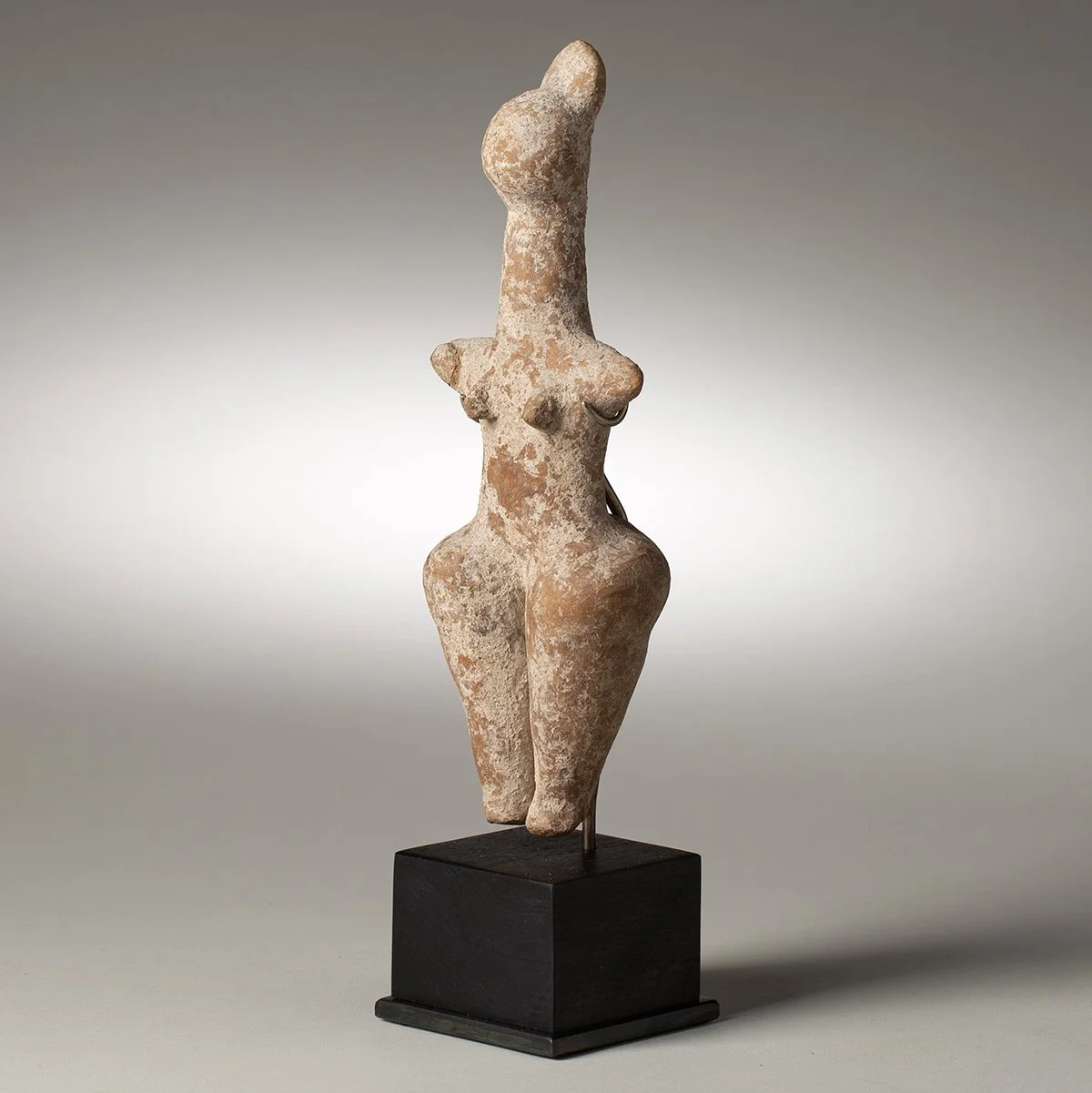 Image 4 of 7
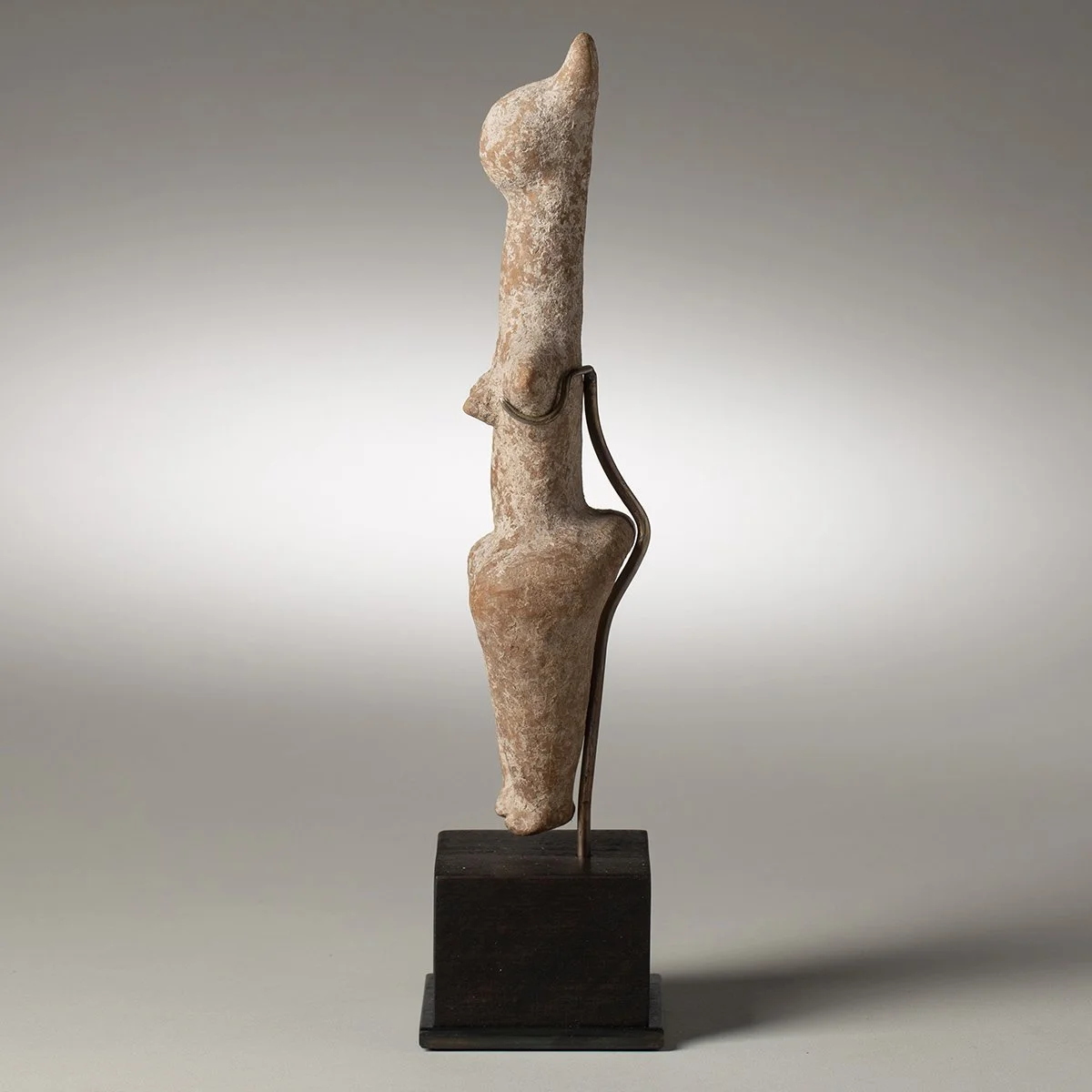 Image 5 of 7
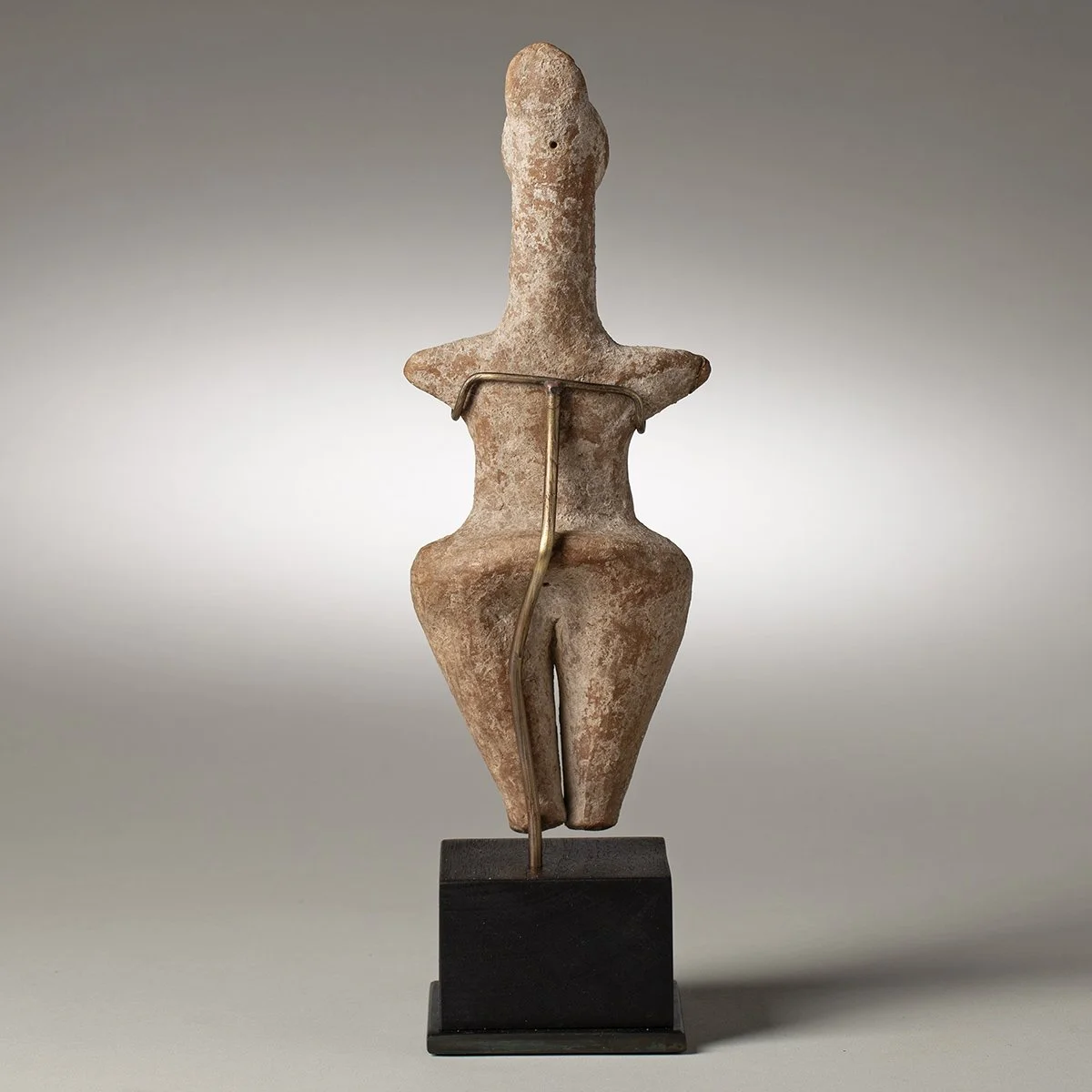 Image 6 of 7
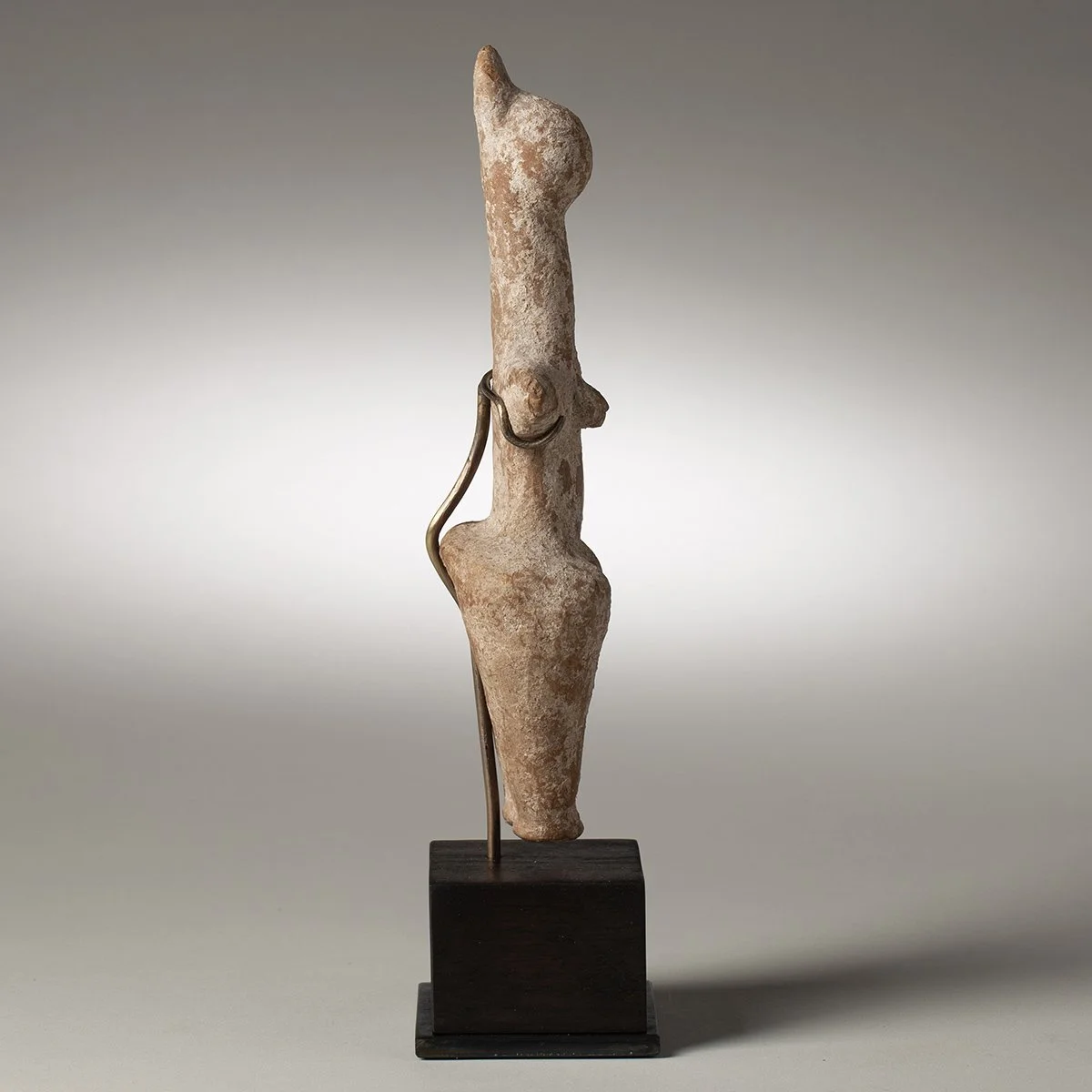 Image 7 of 7