Ancestral Puebloan (Anasazi), American Southwest
AD 1100 to 1450
Ceramic, olivella shells, turquoise, shell and stone beads
Pot height 6 1/2 in. (16.5 cm); diameter 10 in. (25.4 cm)
Provenance: James Adolphus "Dolph" Williams, Culbertson County, Texas, prior to 1941; Gene Lang, Denver, Colorado, 1992; Major and Nan Spessard collection, Virginia Beach, Virginia; not found on federal or state land
Note: The Williams Ranch was studied and excavated by the Peabody Museum, Salem, in 1951
Cache pots of this type were used by Ancestral Puebloan communities to store valued trade goods, ritual objects, and personal possessions, placed within structures or buried at significant locations within the settlement. The contents of this cache include olivella shells, pump-drilled turquoise, and shell and stone beads, all materials that circulated widely across Southwestern and Mesoamerican trade networks during the period. The presence of multiple trade categories within a single intact vessel documents the intersection of long-distance exchange and local ritual practice characteristic of Ancestral Puebloan communities between AD 1100 and 1450.
Olivella shells, sourced from the Pacific and Gulf Coasts, and turquoise, quarried primarily in the Cerrillos Hills of New Mexico and the Kingman region of Arizona, were among the most valued commodities in Southwestern exchange networks during this period. Their co-occurrence within a single cache pot reflects the access of the depositing community to multiple trade routes simultaneously. The pump-drilled turquoise beads demonstrate the technical capability of the producing community, as this drilling technique required considerable skill and specialized tools.
We ship free anywhere in the world, fully insured, packed by hand.
Ancestral Puebloan (Anasazi), American Southwest
AD 1100 to 1450
Ceramic, olivella shells, turquoise, shell and stone beads
Pot height 6 1/2 in. (16.5 cm); diameter 10 in. (25.4 cm)
Provenance: James Adolphus "Dolph" Williams, Culbertson County, Texas, prior to 1941; Gene Lang, Denver, Colorado, 1992; Major and Nan Spessard collection, Virginia Beach, Virginia; not found on federal or state land
Note: The Williams Ranch was studied and excavated by the Peabody Museum, Salem, in 1951
Cache pots of this type were used by Ancestral Puebloan communities to store valued trade goods, ritual objects, and personal possessions, placed within structures or buried at significant locations within the settlement. The contents of this cache include olivella shells, pump-drilled turquoise, and shell and stone beads, all materials that circulated widely across Southwestern and Mesoamerican trade networks during the period. The presence of multiple trade categories within a single intact vessel documents the intersection of long-distance exchange and local ritual practice characteristic of Ancestral Puebloan communities between AD 1100 and 1450.
Olivella shells, sourced from the Pacific and Gulf Coasts, and turquoise, quarried primarily in the Cerrillos Hills of New Mexico and the Kingman region of Arizona, were among the most valued commodities in Southwestern exchange networks during this period. Their co-occurrence within a single cache pot reflects the access of the depositing community to multiple trade routes simultaneously. The pump-drilled turquoise beads demonstrate the technical capability of the producing community, as this drilling technique required considerable skill and specialized tools.
We ship free anywhere in the world, fully insured, packed by hand.


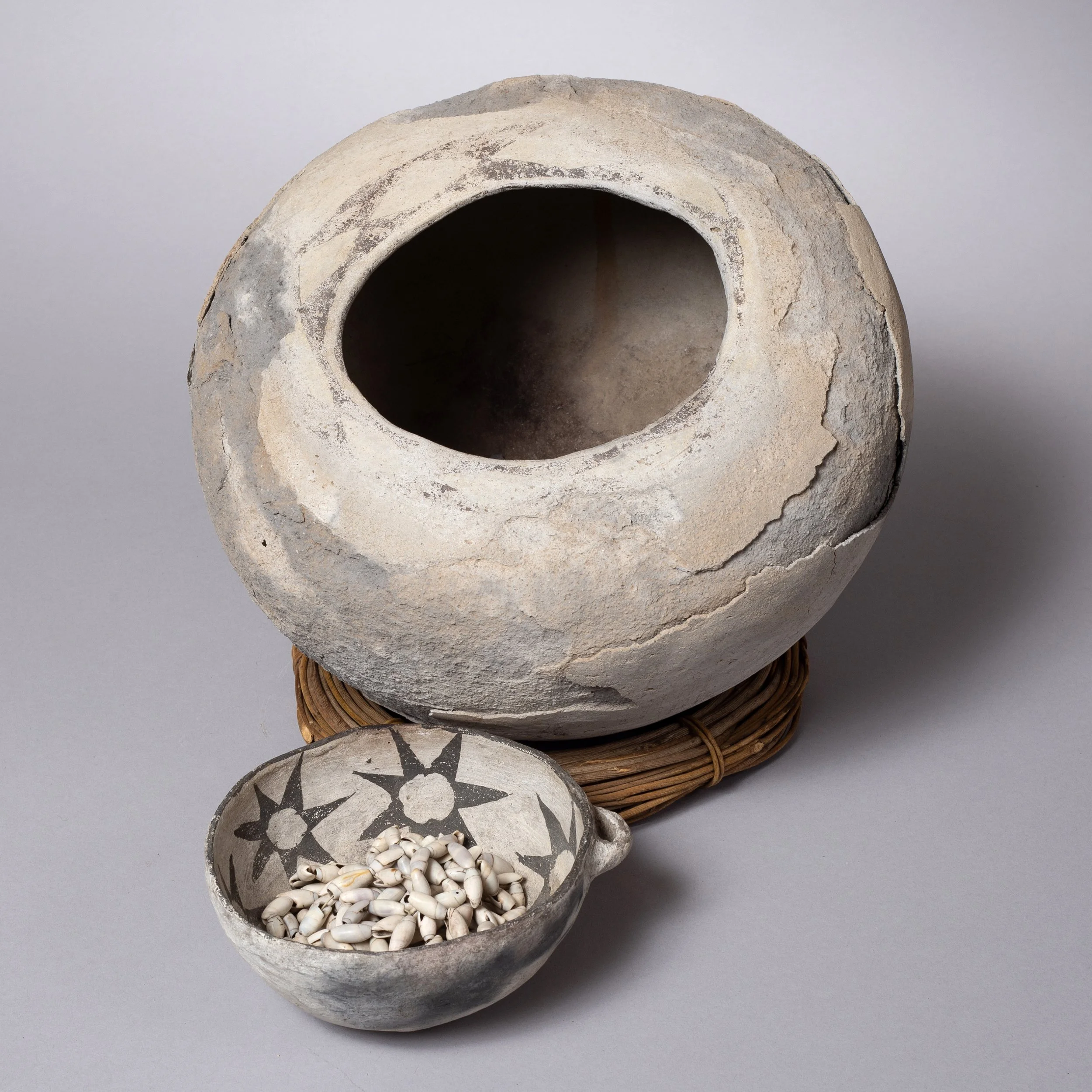 Image 1 of 10
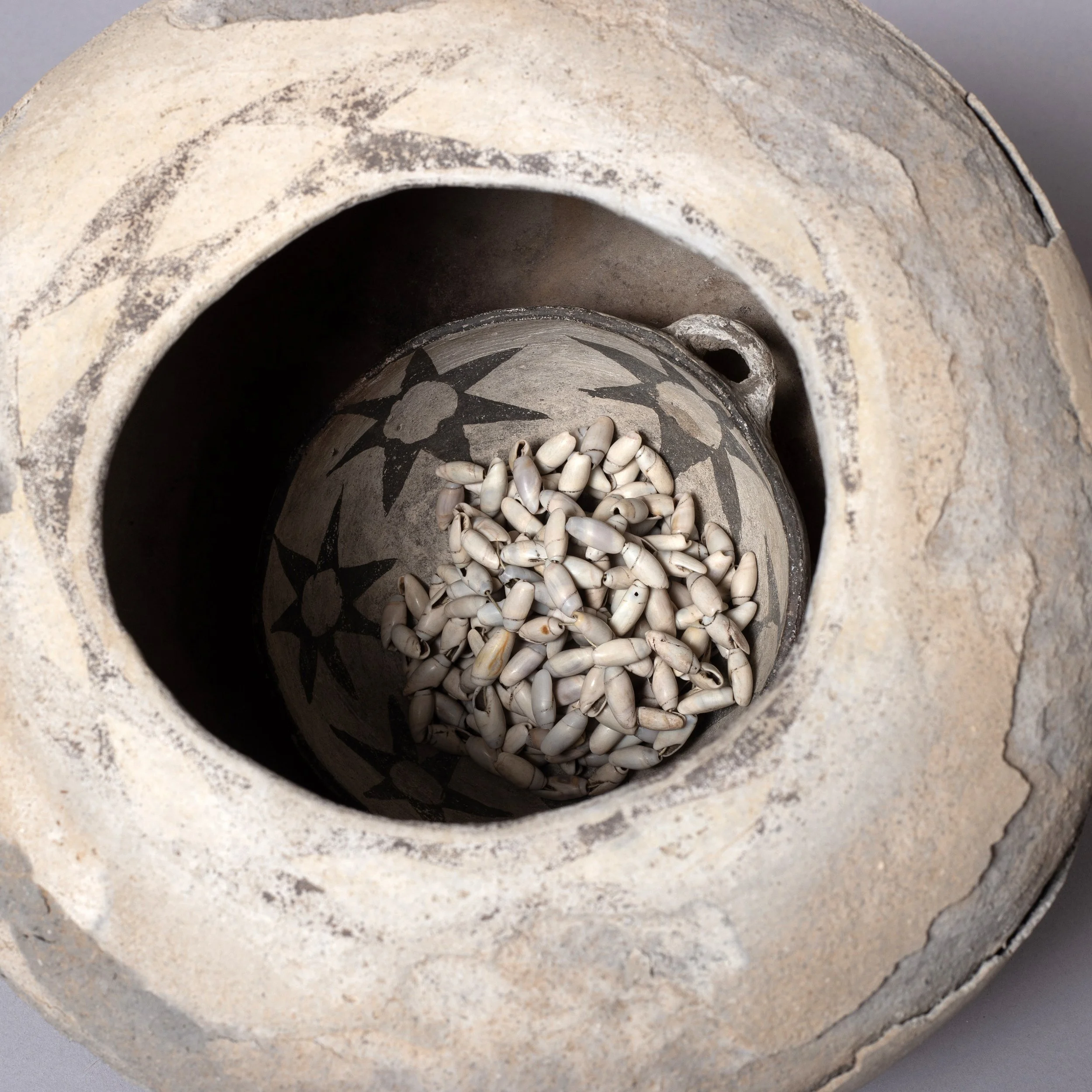 Image 2 of 10
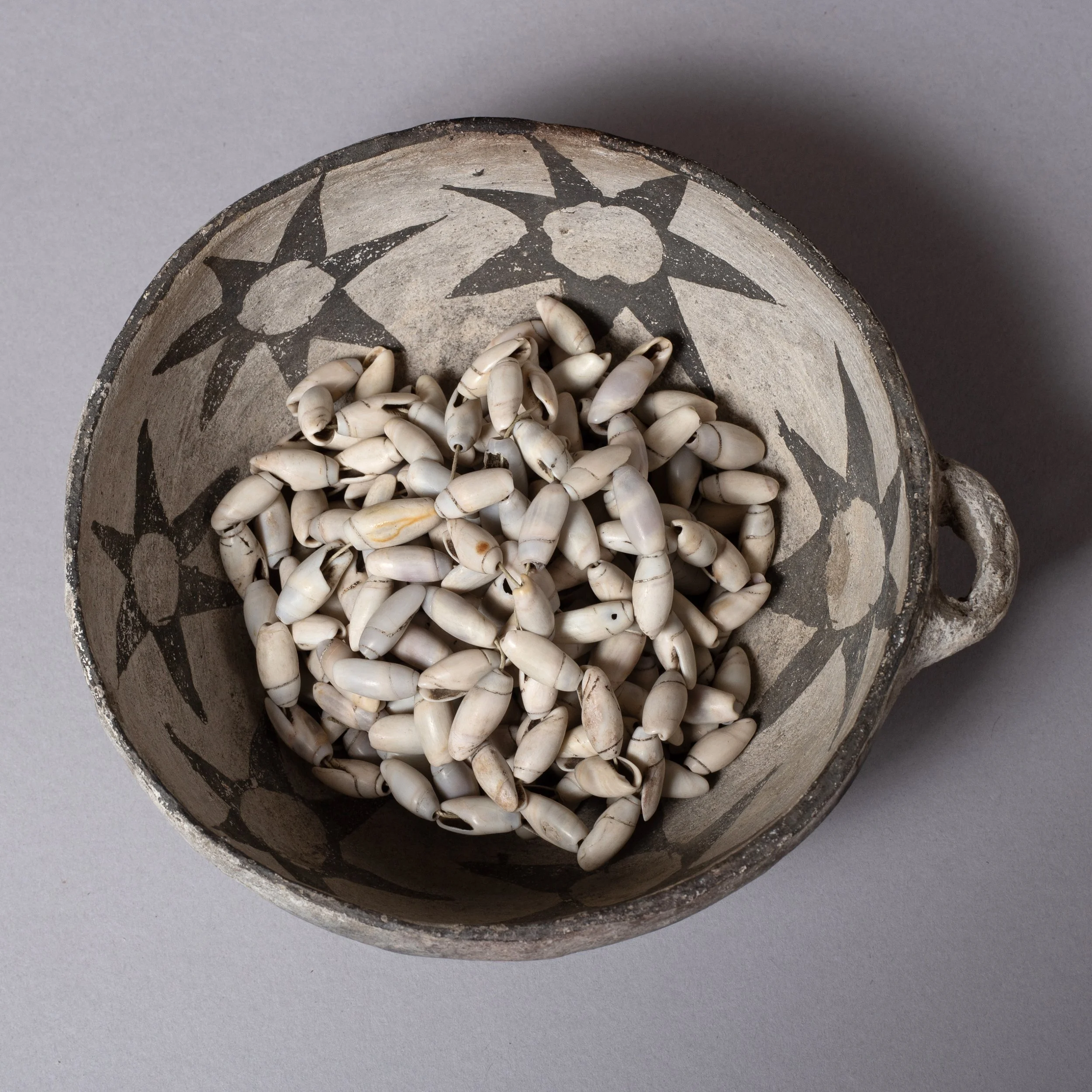 Image 3 of 10
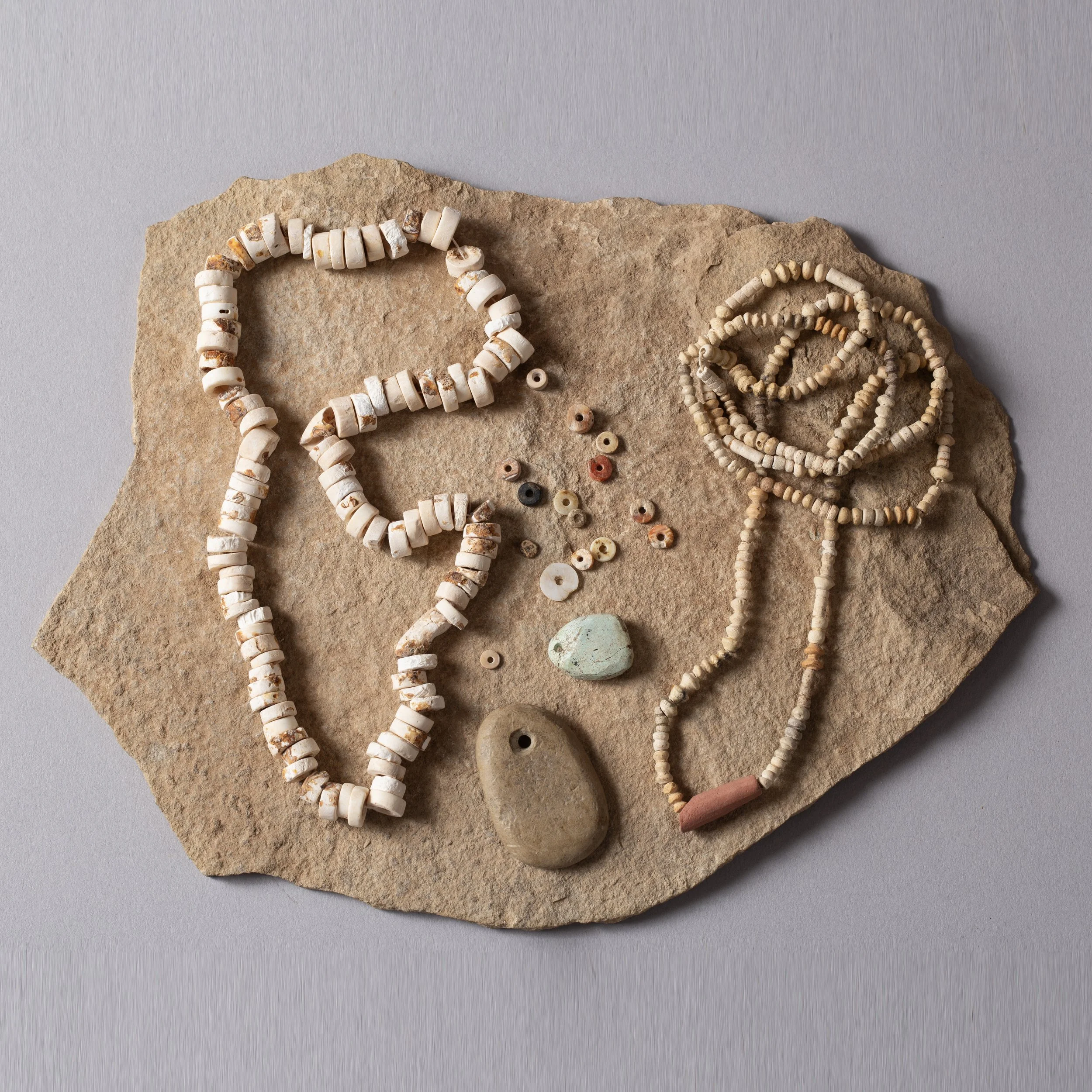 Image 4 of 10
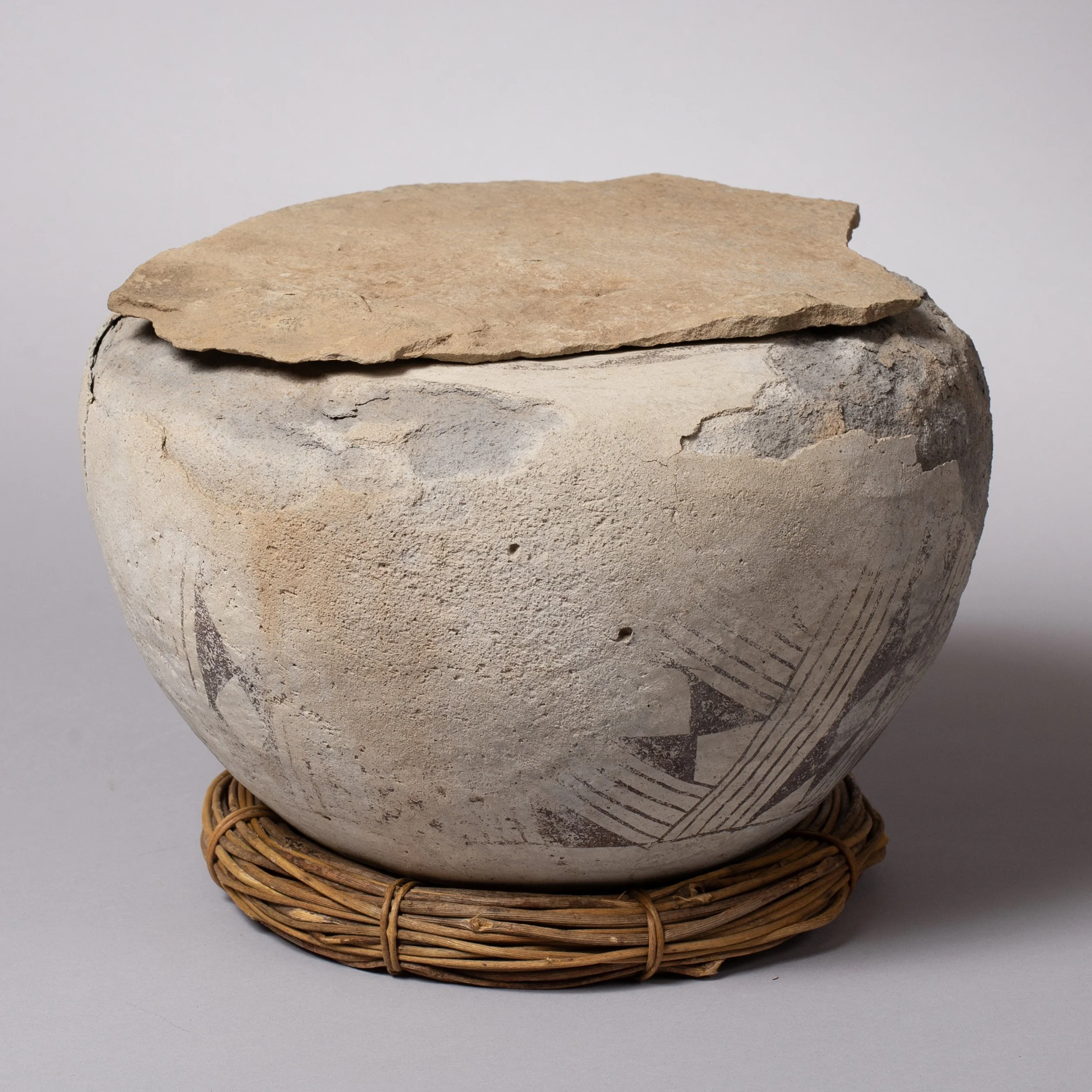 Image 5 of 10
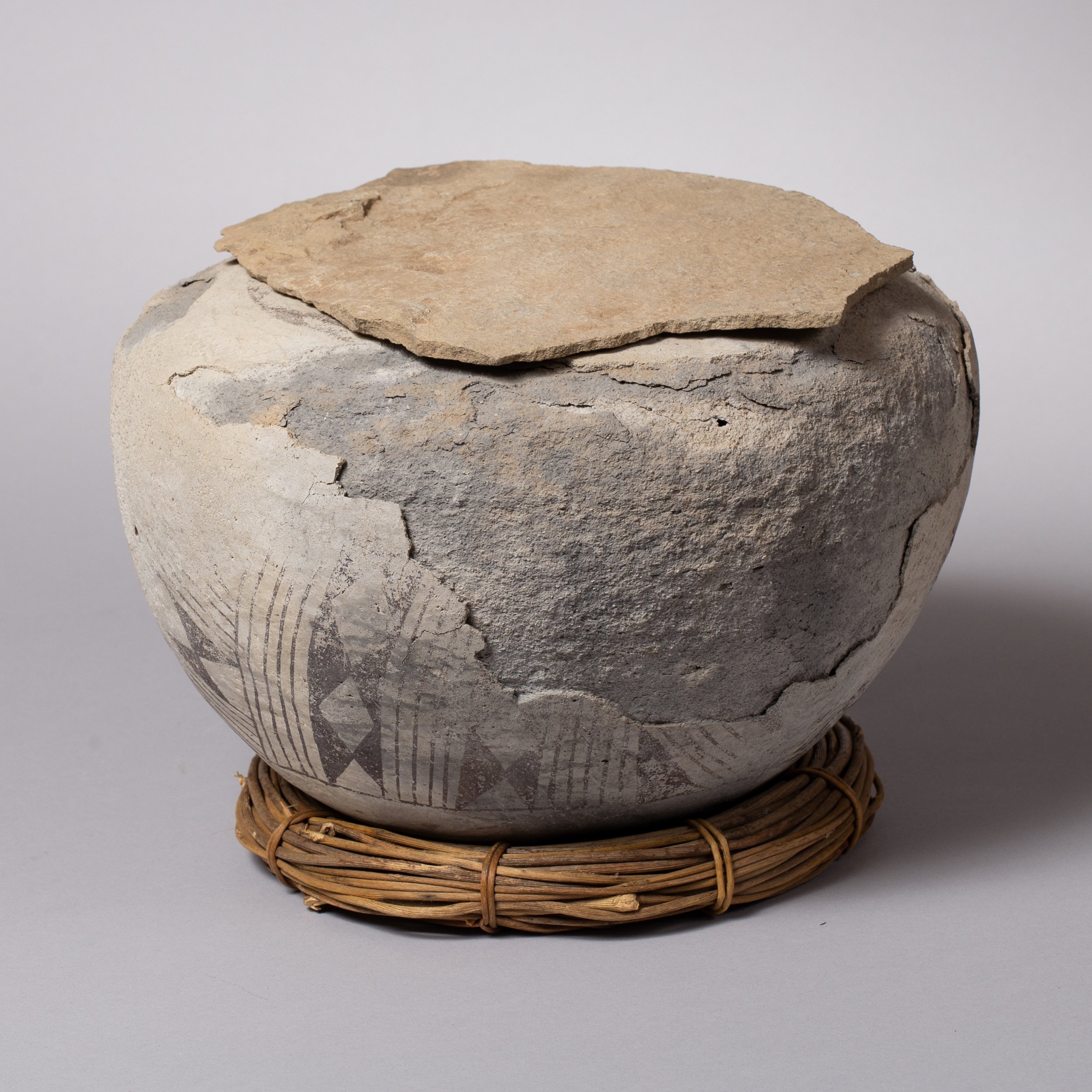 Image 6 of 10
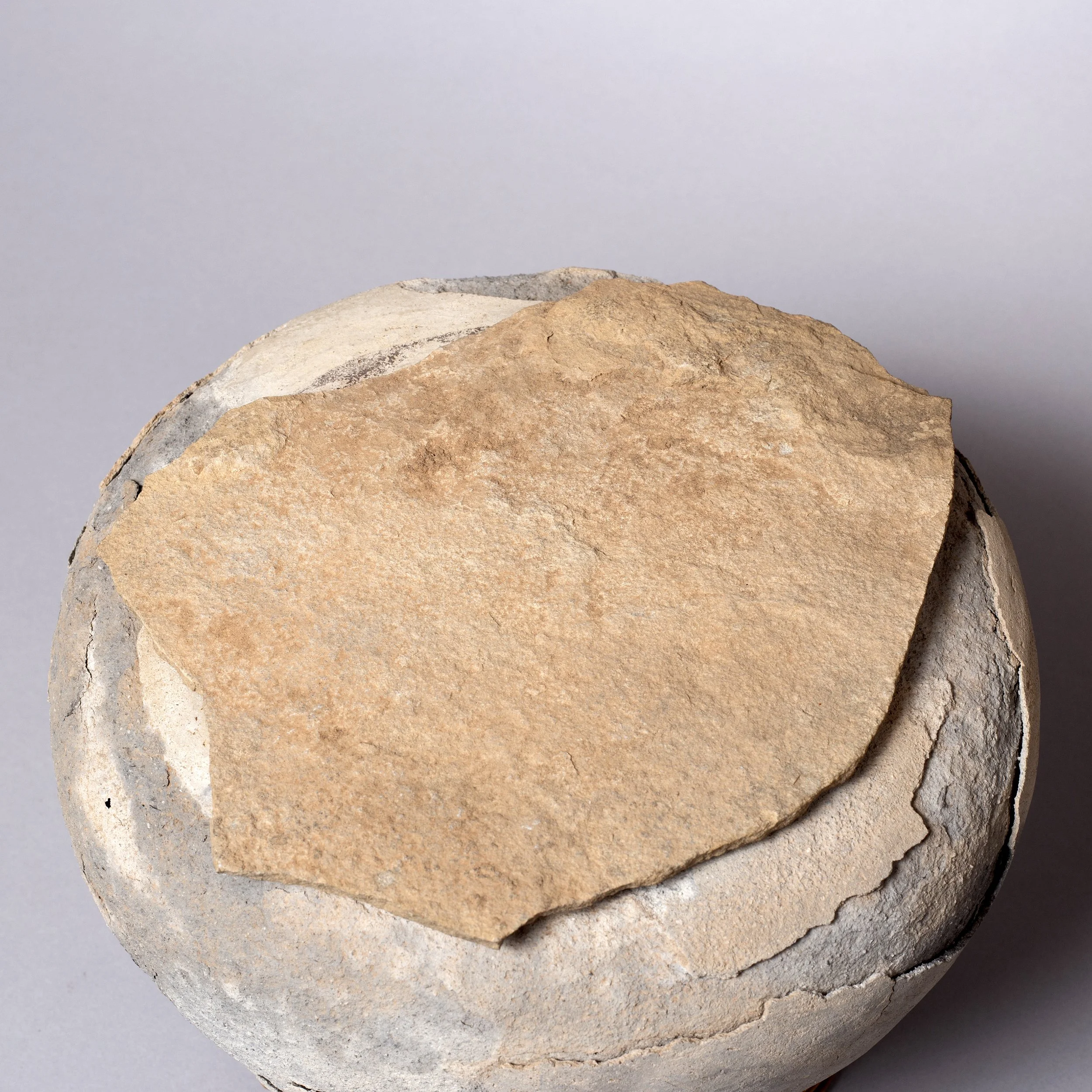 Image 7 of 10
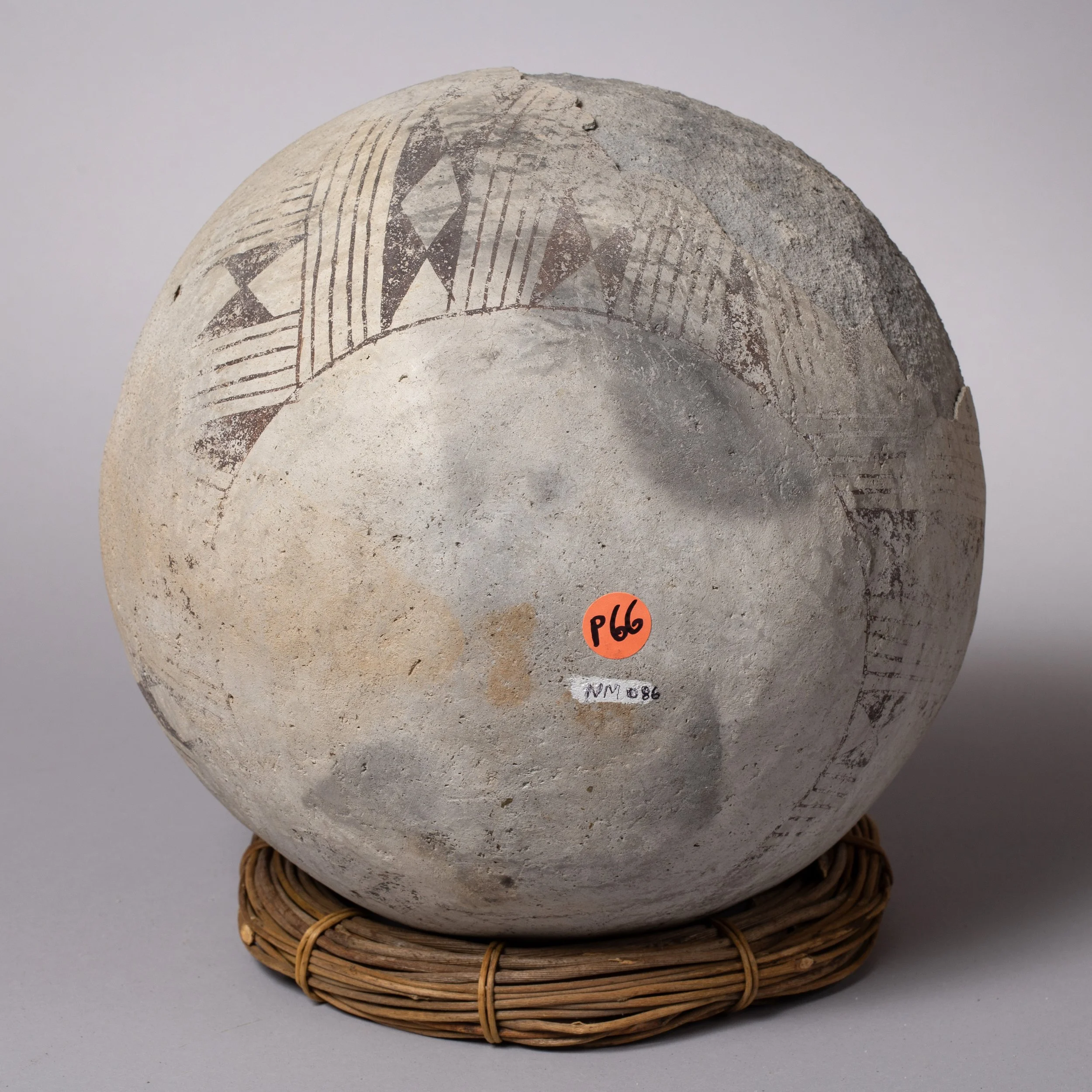 Image 8 of 10
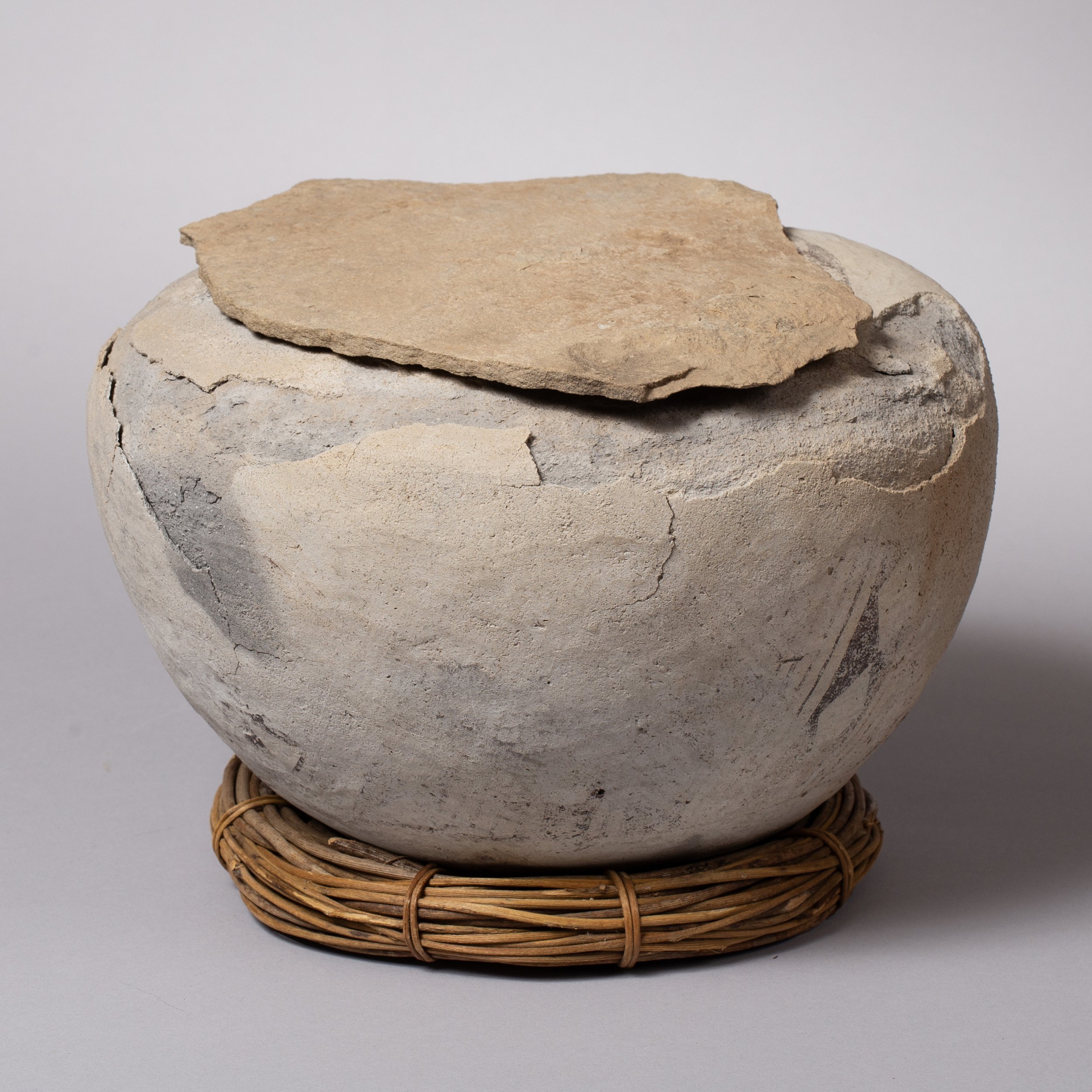 Image 9 of 10
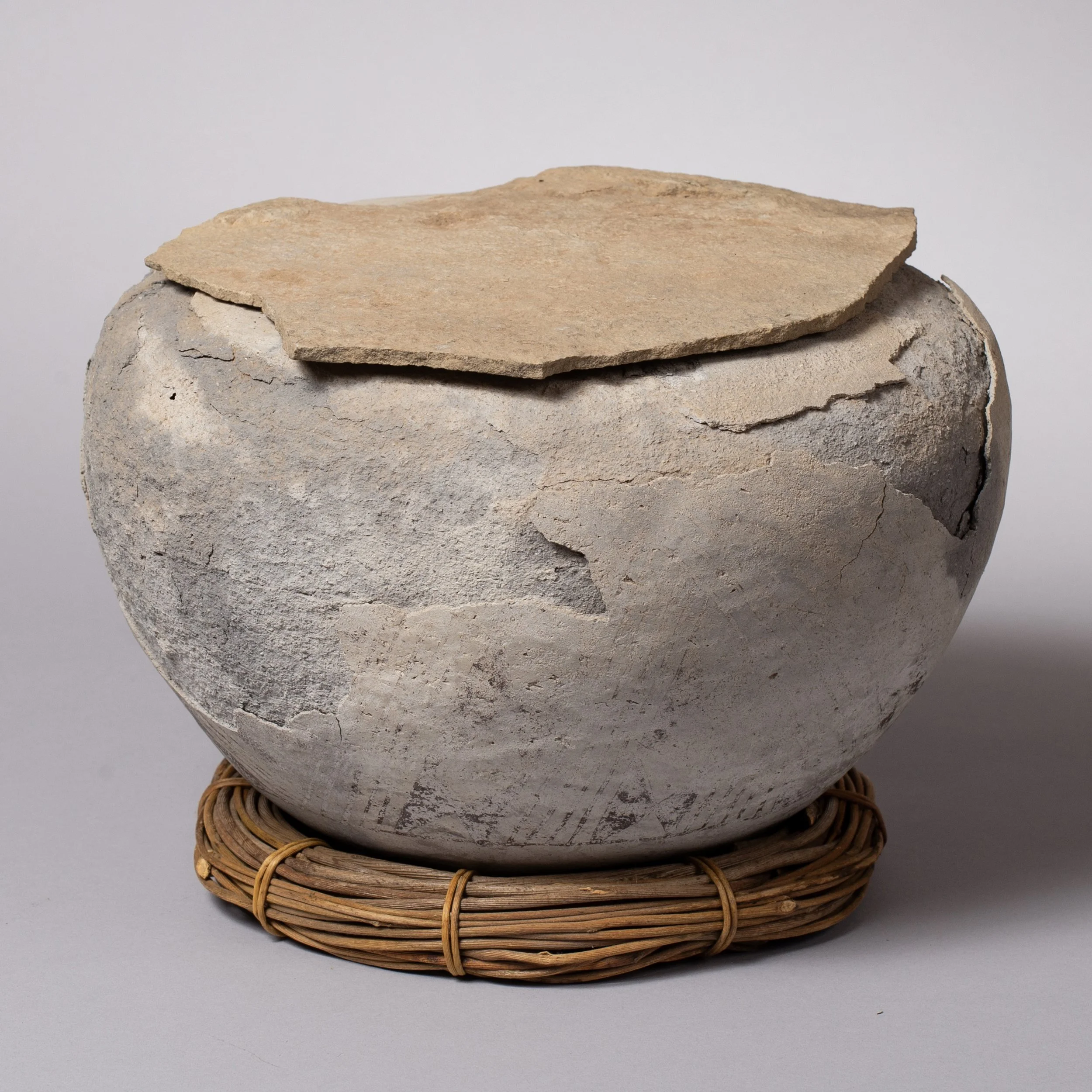 Image 10 of 10