

 Image 1 of 5
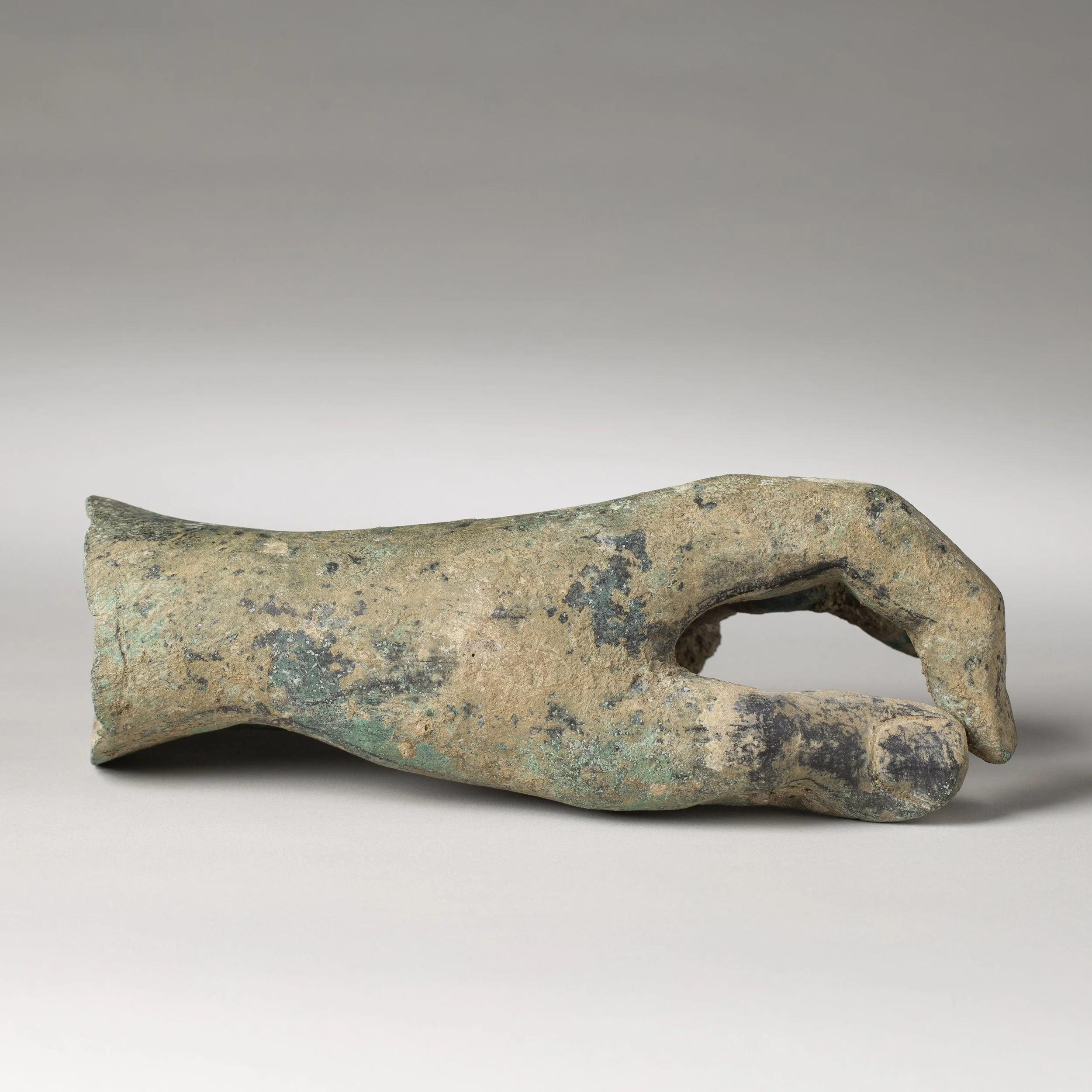 Image 2 of 5
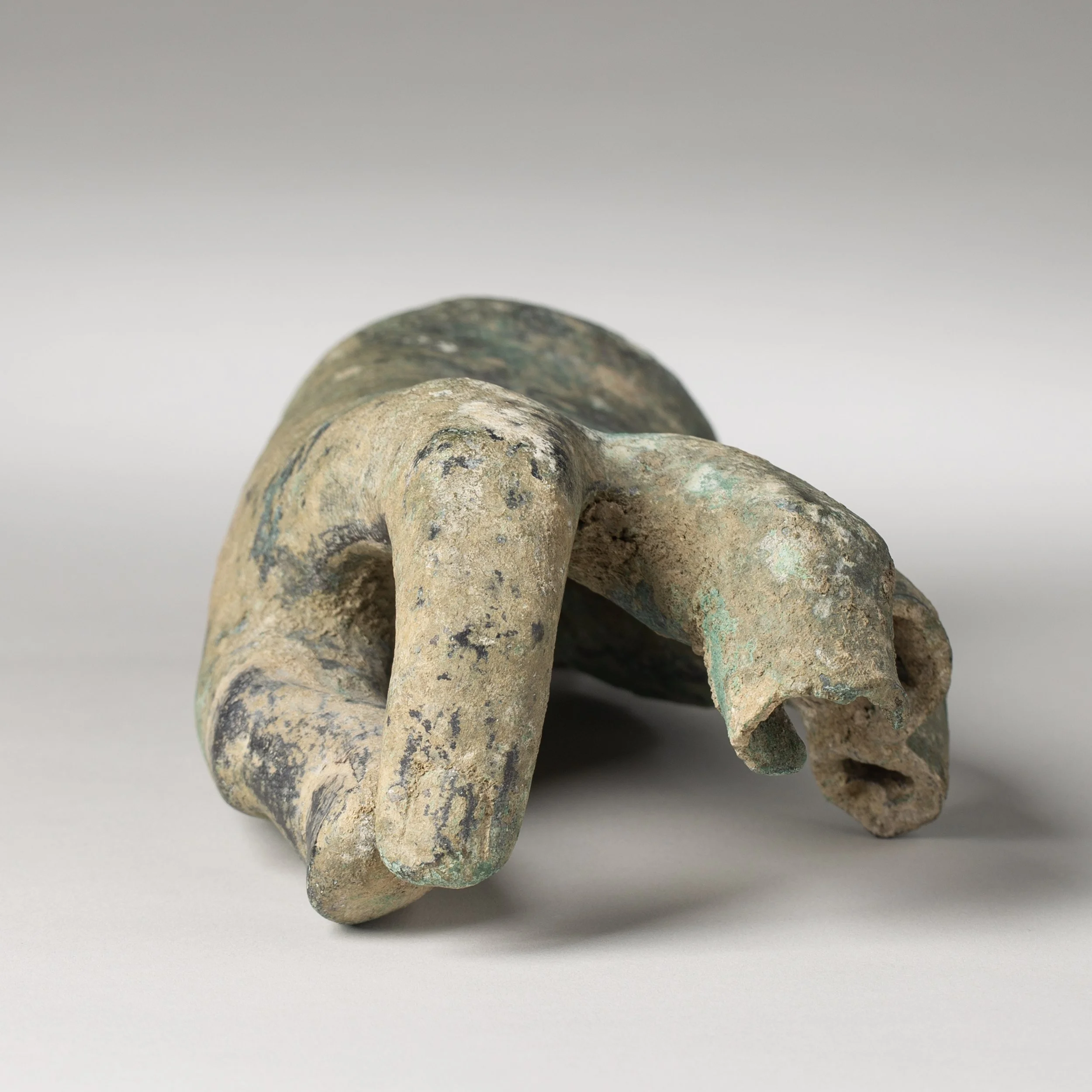 Image 3 of 5
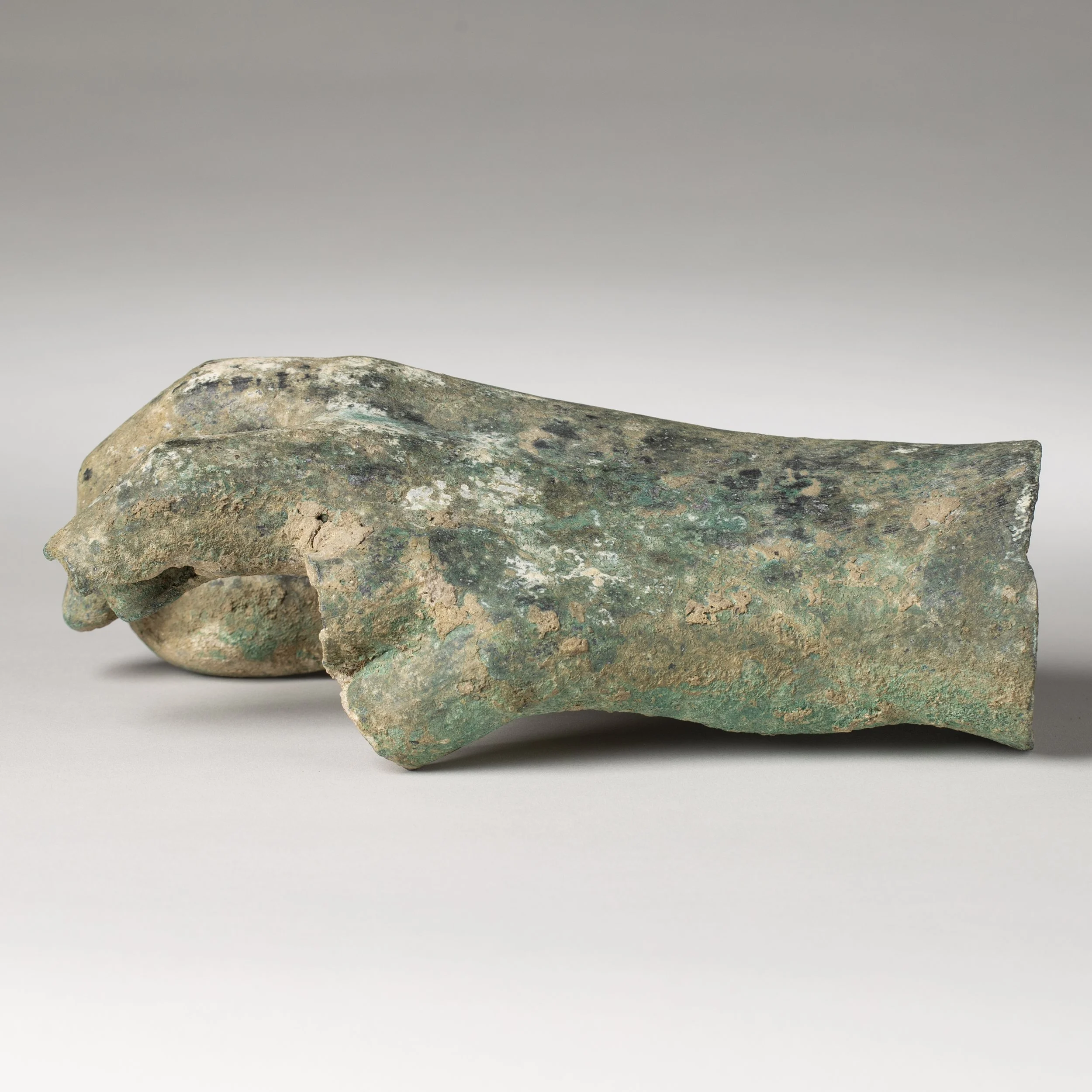 Image 4 of 5
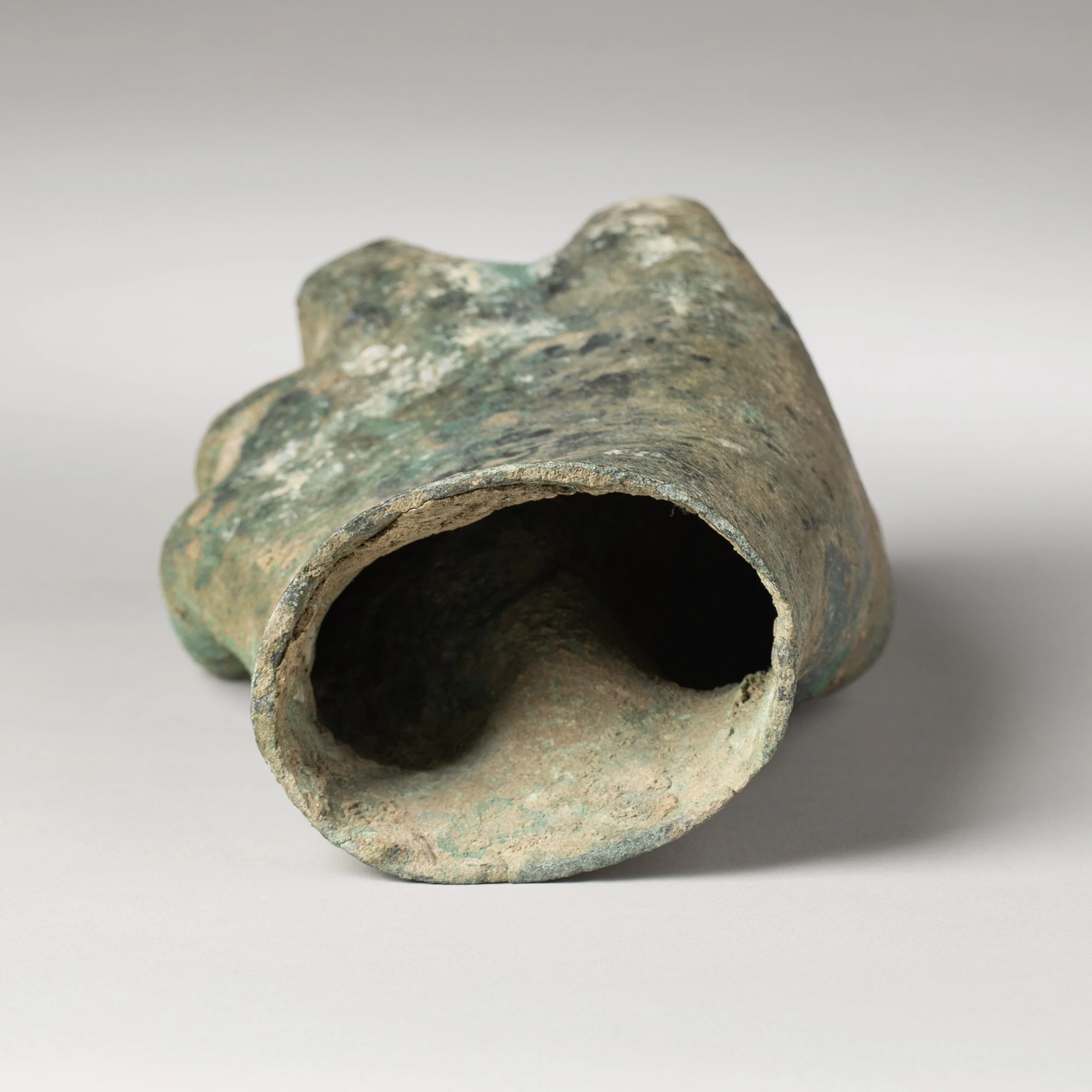 Image 5 of 5
1st century A.D.
Bronze
Length 9 1/4 in (23.49 cm)
Provenance: Martha Pillard, Honolulu HI
Christian Rub, Santa Barbara CA and Moorea French Polynesia
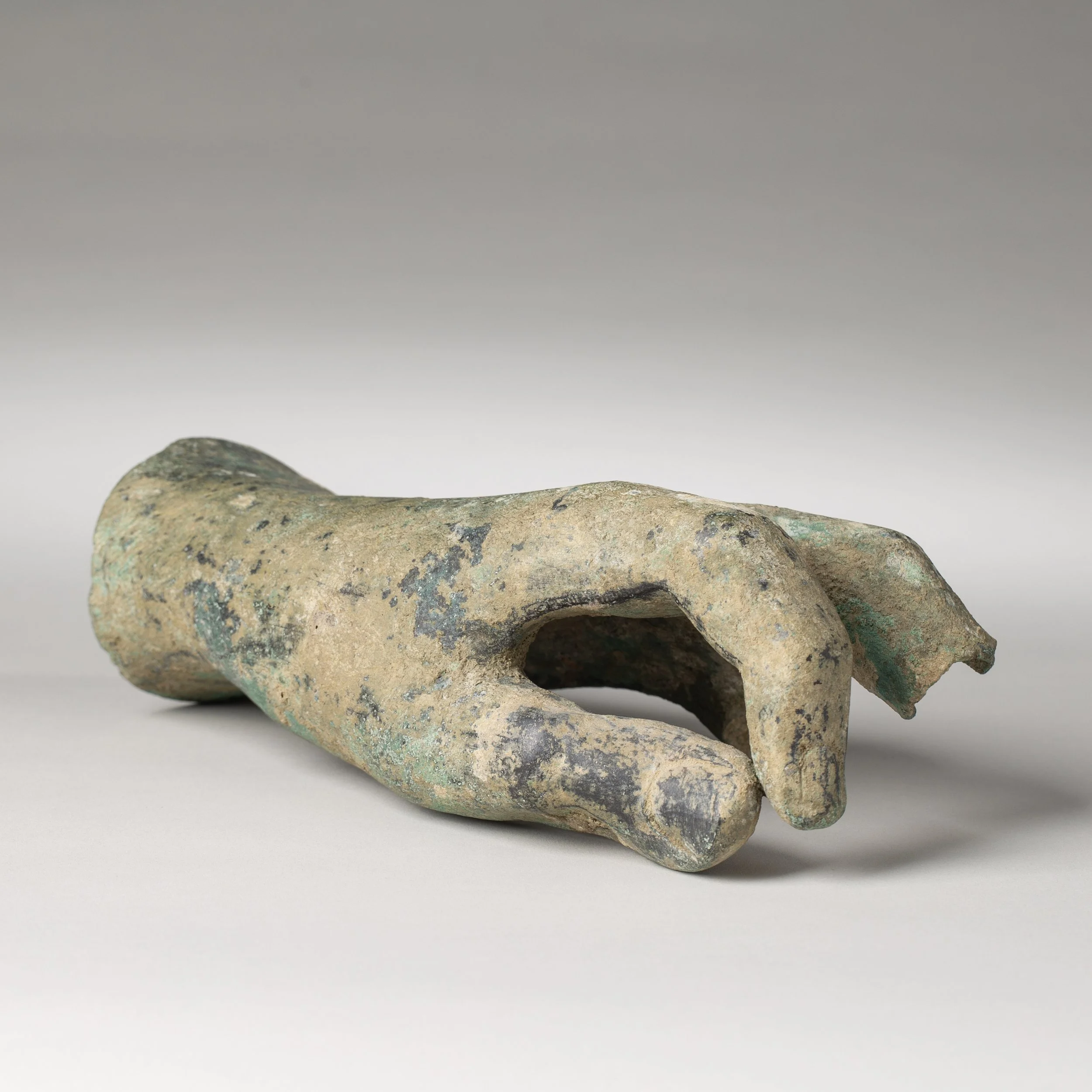
This bronze left hand made a part of a monumental statue. It is hollow; the casting involved the lost-wax technique. The hand is rendered naturalistically and was modeled directly from life. The fingers are clasped into a loose fist, as if they once held an object, a spear, staff, or reins; this suggests that the statue represented a man. It shows the musculature, the plump and fleshy palm, the shape of the bending phalanxes, and the fingernails which were carefully incised. In some bronze statues the fingernails have been inlaid with sheet of silver. As only one hand remains, it is impossible to say whom the large bronze sculpture once represented. However, because of its size and the fact that it was cast in bronze, it is certain that the individual was an important figure, either divine or mortal. Although only few large bronze statues survive, they were extremely popular in antiquity. In fact, the greatest works of Greek sculpture were originally cast in bronze, today they are known through many survived Roman copies in marble. Because bronze was so valuable, these works of art were often melted down, so that the metal could be reused for other purposes.
We ship free anywhere in the world, fully insured, packed by hand.
1st century A.D.
Bronze
Length 9 1/4 in (23.49 cm)
Provenance: Martha Pillard, Honolulu HI
Christian Rub, Santa Barbara CA and Moorea French Polynesia
This bronze left hand made a part of a monumental statue. It is hollow; the casting involved the lost-wax technique. The hand is rendered naturalistically and was modeled directly from life. The fingers are clasped into a loose fist, as if they once held an object, a spear, staff, or reins; this suggests that the statue represented a man. It shows the musculature, the plump and fleshy palm, the shape of the bending phalanxes, and the fingernails which were carefully incised. In some bronze statues the fingernails have been inlaid with sheet of silver. As only one hand remains, it is impossible to say whom the large bronze sculpture once represented. However, because of its size and the fact that it was cast in bronze, it is certain that the individual was an important figure, either divine or mortal. Although only few large bronze statues survive, they were extremely popular in antiquity. In fact, the greatest works of Greek sculpture were originally cast in bronze, today they are known through many survived Roman copies in marble. Because bronze was so valuable, these works of art were often melted down, so that the metal could be reused for other purposes.
We ship free anywhere in the world, fully insured, packed by hand.