Gaua Island, Banks Islands Group, Northern Vanuatu
18th century or before
Volcanic stone
Height: 27¾ in (70.5 cm); Weight: 64 lbs (29 kg)
Provenance: Field collected in the 1960s by Pierre Langlois; Nicolai Michoutouchkine (1929–2010), co-founder of the Museum of Oceanic Art, Port Vila, Noumea, New Caledonia
Qat is the principal deity in the oral mythology of the Banks Islands of northern Vanuatu, a creator figure credited with forming the world, introducing night and death, and establishing the cultural order of the islands. Stone figures from Vanuatu occupy a distinct and scarce category within Pacific sculptural traditions, understood variously as representations of ancestors, deities, or objects carrying concentrated spiritual power connected with fertility, pigs, and the accumulation of mana. This example originates from Gaua, the volcanic island at the center of the Banks Islands group and the setting for key episodes in the Qat mythological cycle.
The figure is carved from the dense volcanic stone of the island, rendered in a compact upright form with a rounded head, simplified facial features, and arms held close to the body. The porous, heavily textured surface carries the character of the raw material and the considerable age the piece represents, with a physical presence amplified by its substantial weight of 64 pounds. The provenance through Pierre Langlois and Nicolai Michoutouchkine places it within the most credible collecting chain available for Vanuatu material of this period, Michoutouchkine having assembled one of the most significant collections of Pacific indigenous art of the twentieth century.
The dating of 18th century or before situates this figure among the earliest documented examples of sculptural production from the Banks Islands, predating sustained European contact with the northern Vanuatu archipelago. Objects of this material, scale, and provenance depth are effectively unavailable on the market, as the combination of archaic stone carving from Gaua with a documented mid-20th century field collection history represents a convergence that rarely surfaces. Its presence in the Michoutouchkine collection, alongside thousands of objects gathered across the Pacific over decades of active fieldwork, confirms its standing as a piece of serious collecting significance.
We ship free anywhere in the world, fully insured, packed by hand.
Gaua Island, Banks Islands Group, Northern Vanuatu
18th century or before
Volcanic stone
Height: 27¾ in (70.5 cm); Weight: 64 lbs (29 kg)
Provenance: Field collected in the 1960s by Pierre Langlois; Nicolai Michoutouchkine (1929–2010), co-founder of the Museum of Oceanic Art, Port Vila, Noumea, New Caledonia
Qat is the principal deity in the oral mythology of the Banks Islands of northern Vanuatu, a creator figure credited with forming the world, introducing night and death, and establishing the cultural order of the islands. Stone figures from Vanuatu occupy a distinct and scarce category within Pacific sculptural traditions, understood variously as representations of ancestors, deities, or objects carrying concentrated spiritual power connected with fertility, pigs, and the accumulation of mana. This example originates from Gaua, the volcanic island at the center of the Banks Islands group and the setting for key episodes in the Qat mythological cycle.
The figure is carved from the dense volcanic stone of the island, rendered in a compact upright form with a rounded head, simplified facial features, and arms held close to the body. The porous, heavily textured surface carries the character of the raw material and the considerable age the piece represents, with a physical presence amplified by its substantial weight of 64 pounds. The provenance through Pierre Langlois and Nicolai Michoutouchkine places it within the most credible collecting chain available for Vanuatu material of this period, Michoutouchkine having assembled one of the most significant collections of Pacific indigenous art of the twentieth century.
The dating of 18th century or before situates this figure among the earliest documented examples of sculptural production from the Banks Islands, predating sustained European contact with the northern Vanuatu archipelago. Objects of this material, scale, and provenance depth are effectively unavailable on the market, as the combination of archaic stone carving from Gaua with a documented mid-20th century field collection history represents a convergence that rarely surfaces. Its presence in the Michoutouchkine collection, alongside thousands of objects gathered across the Pacific over decades of active fieldwork, confirms its standing as a piece of serious collecting significance.
We ship free anywhere in the world, fully insured, packed by hand.


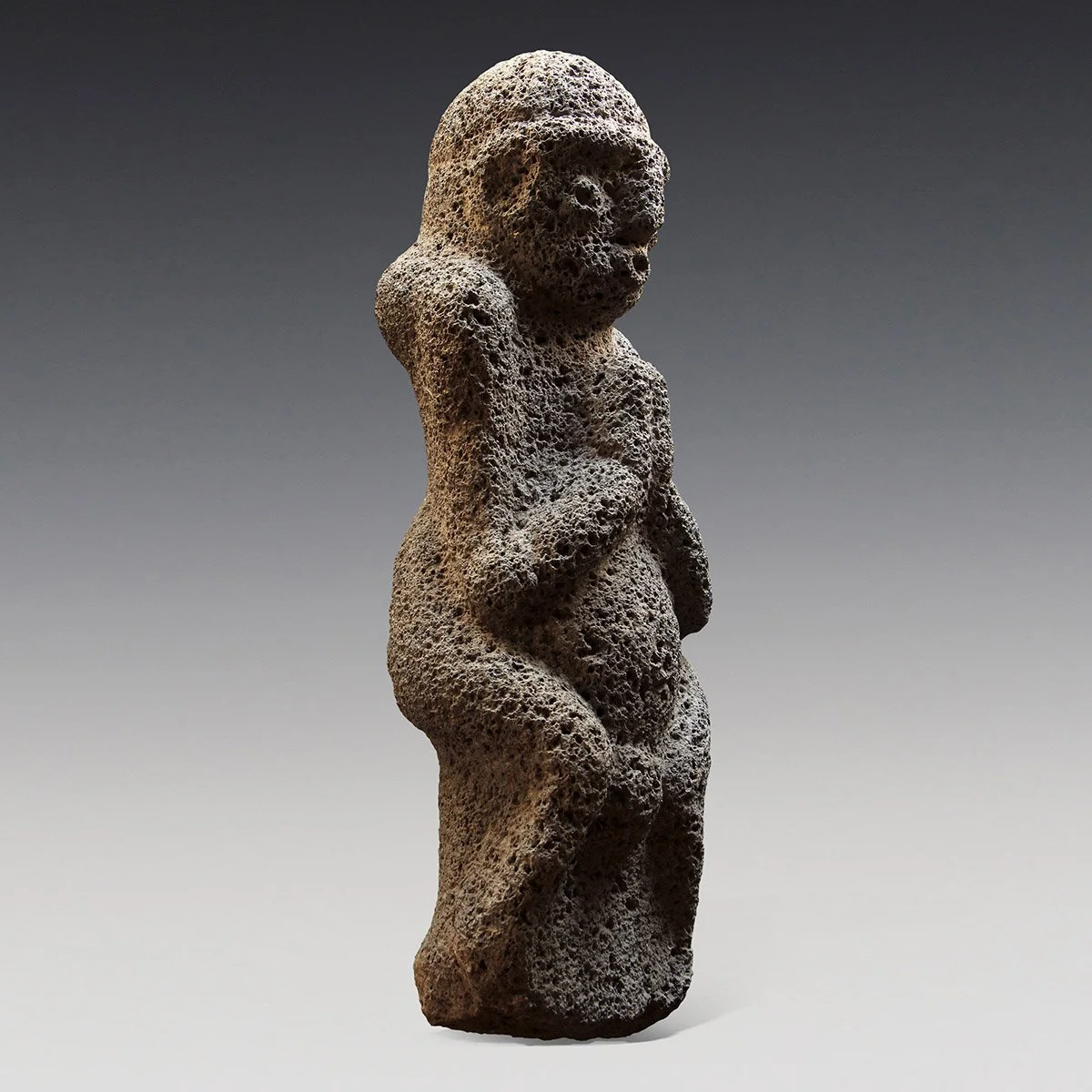 Image 1 of 6
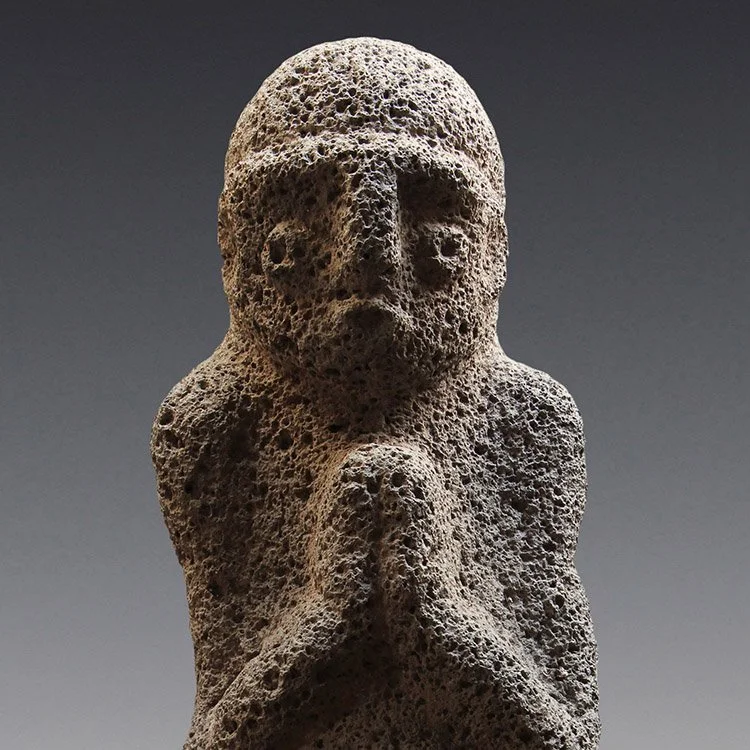 Image 2 of 6
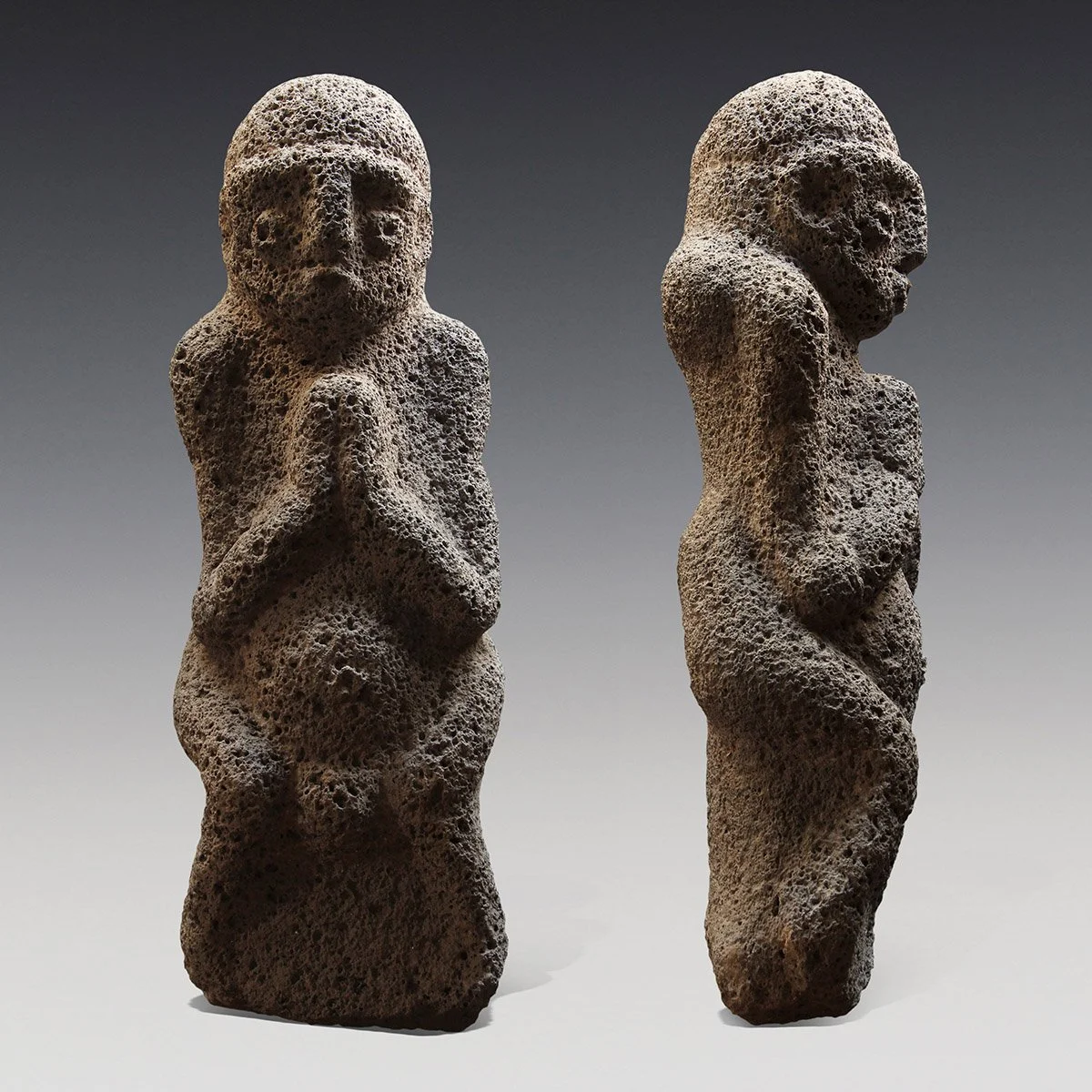 Image 3 of 6
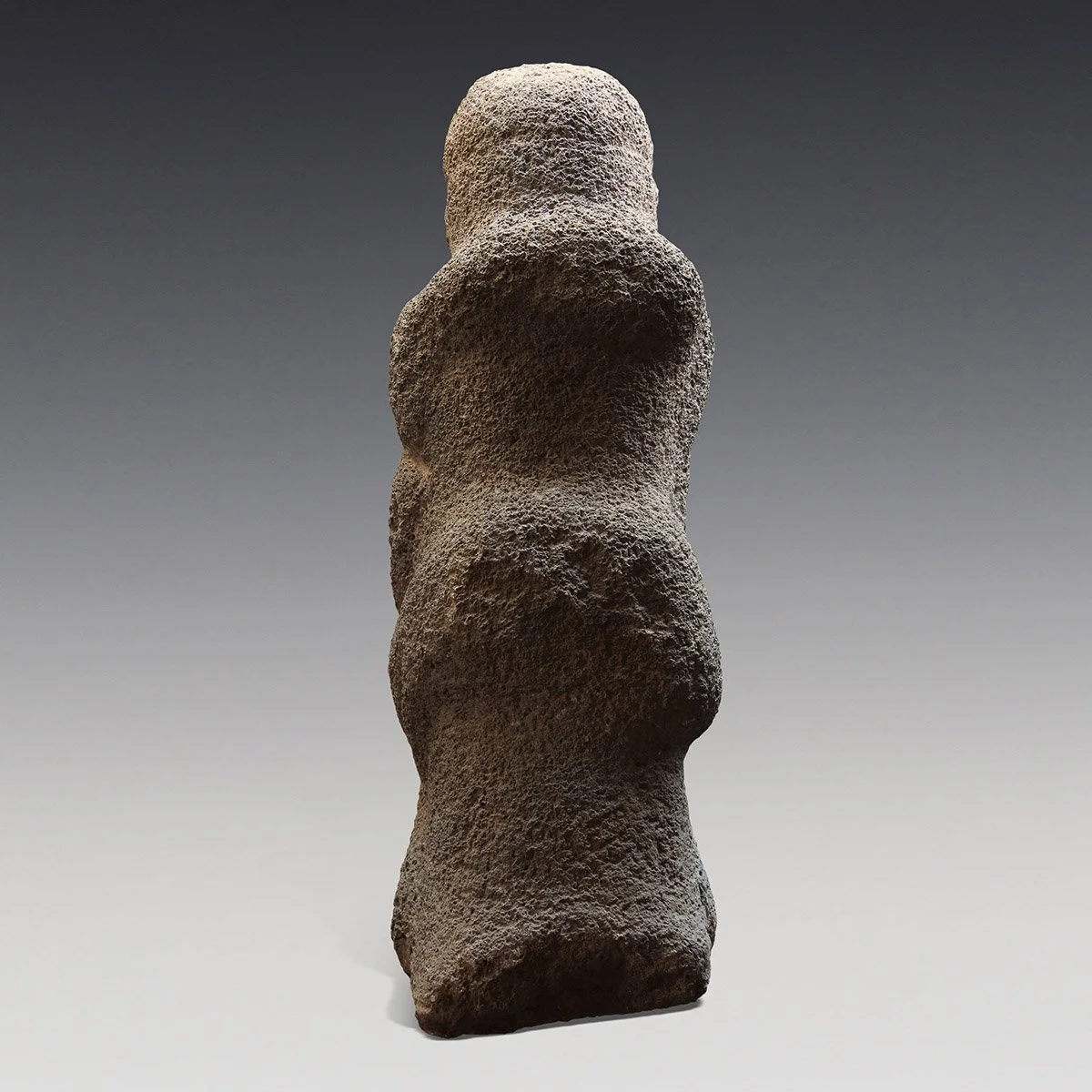 Image 4 of 6
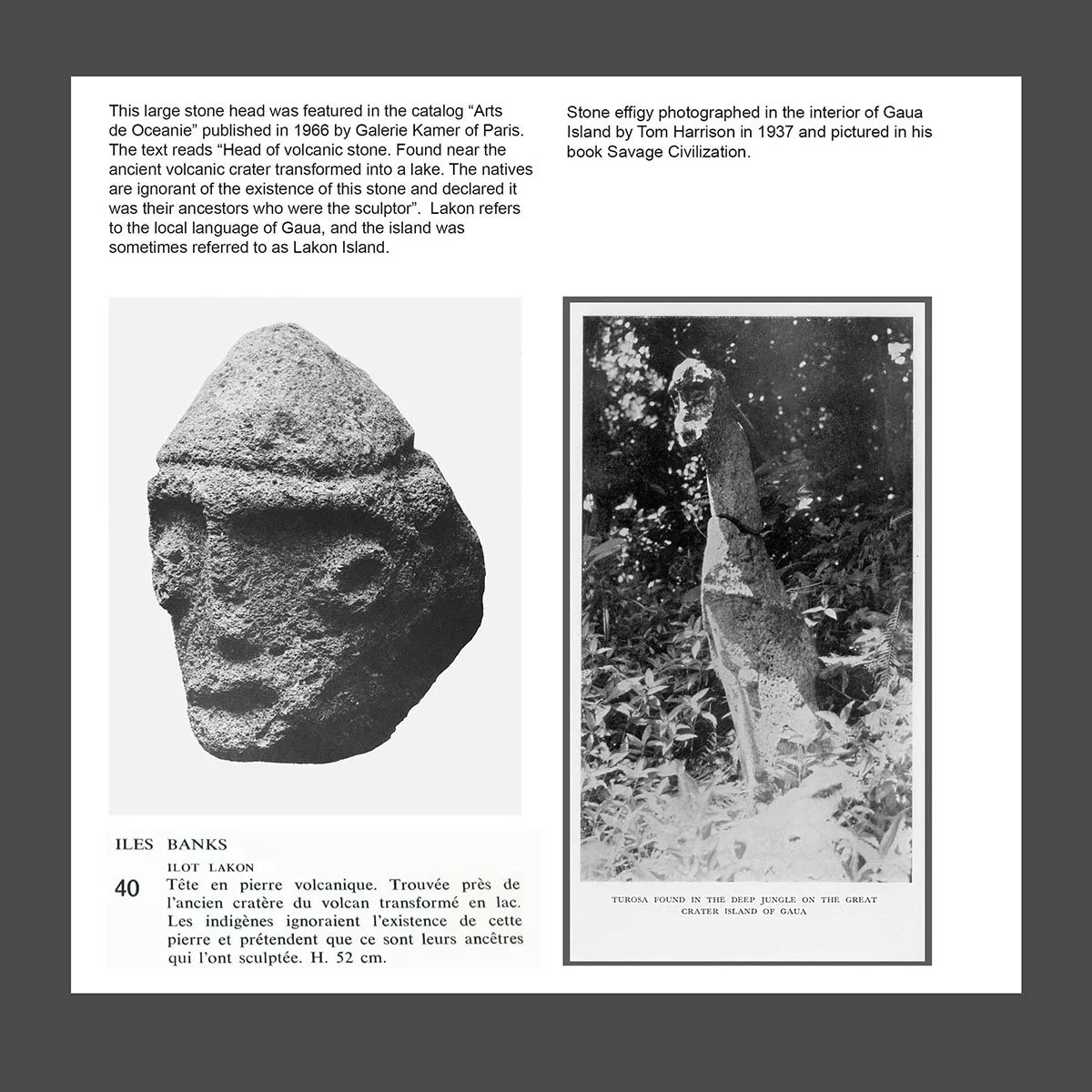 Image 5 of 6
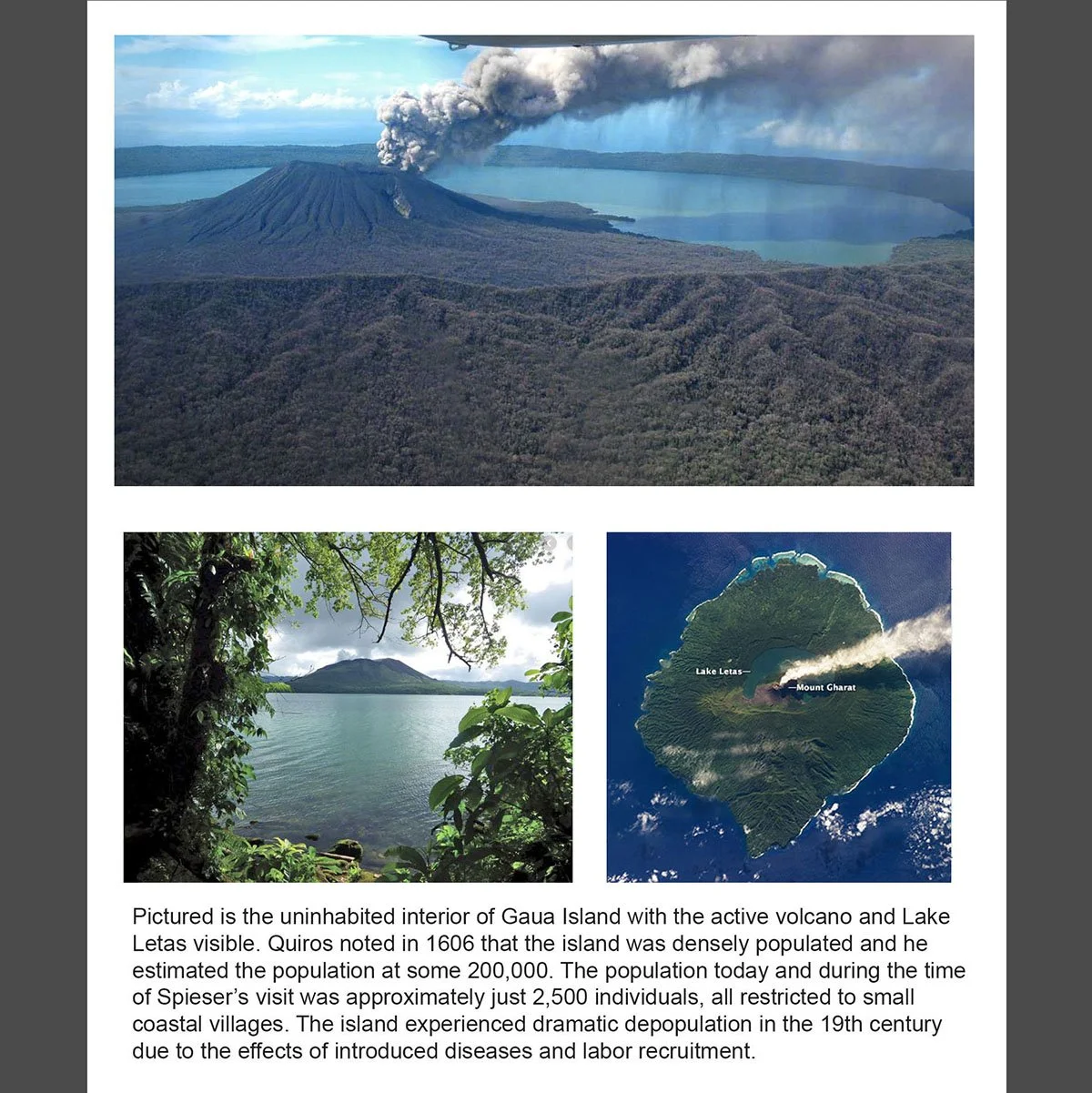 Image 6 of 6