

 Image 1 of 3
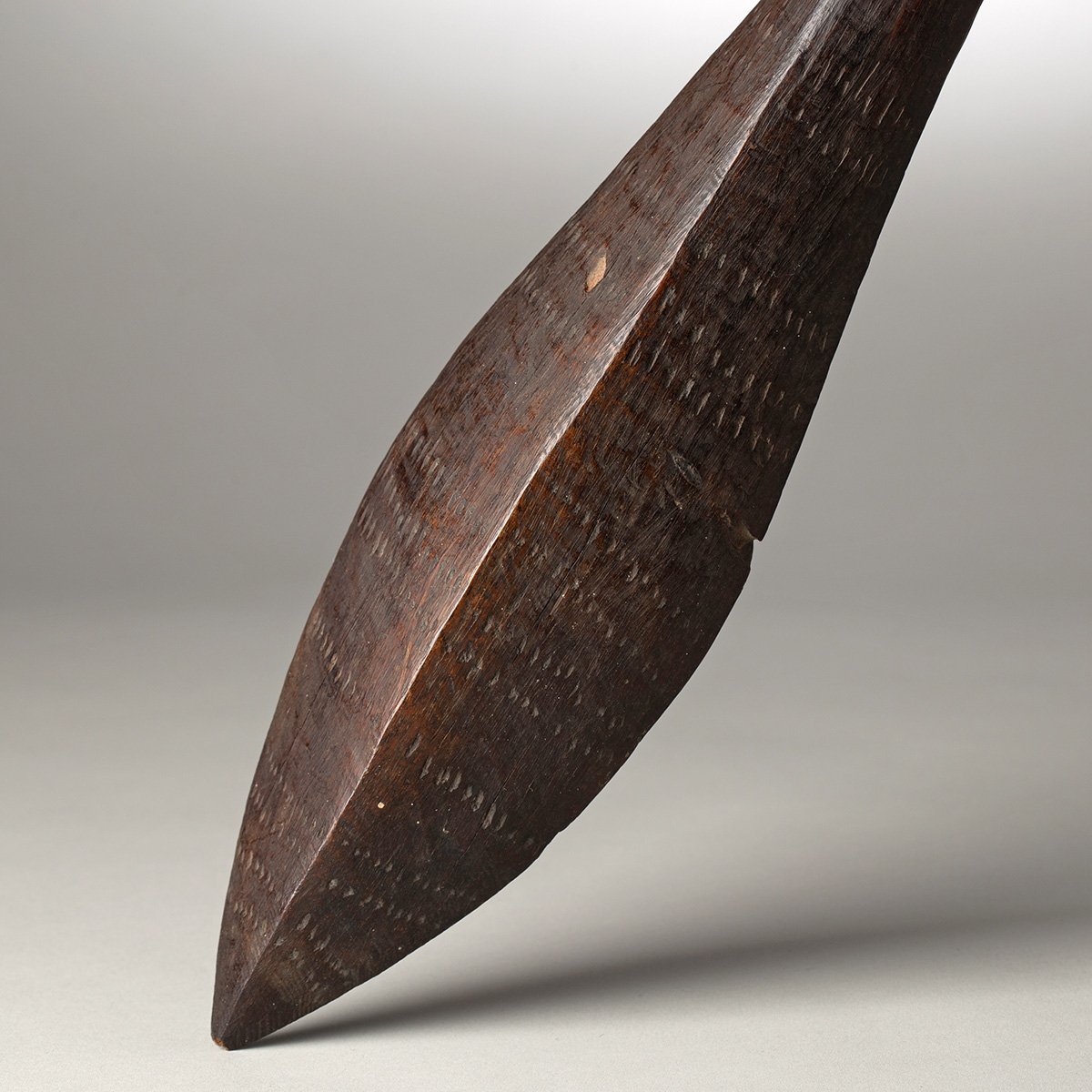 Image 2 of 3
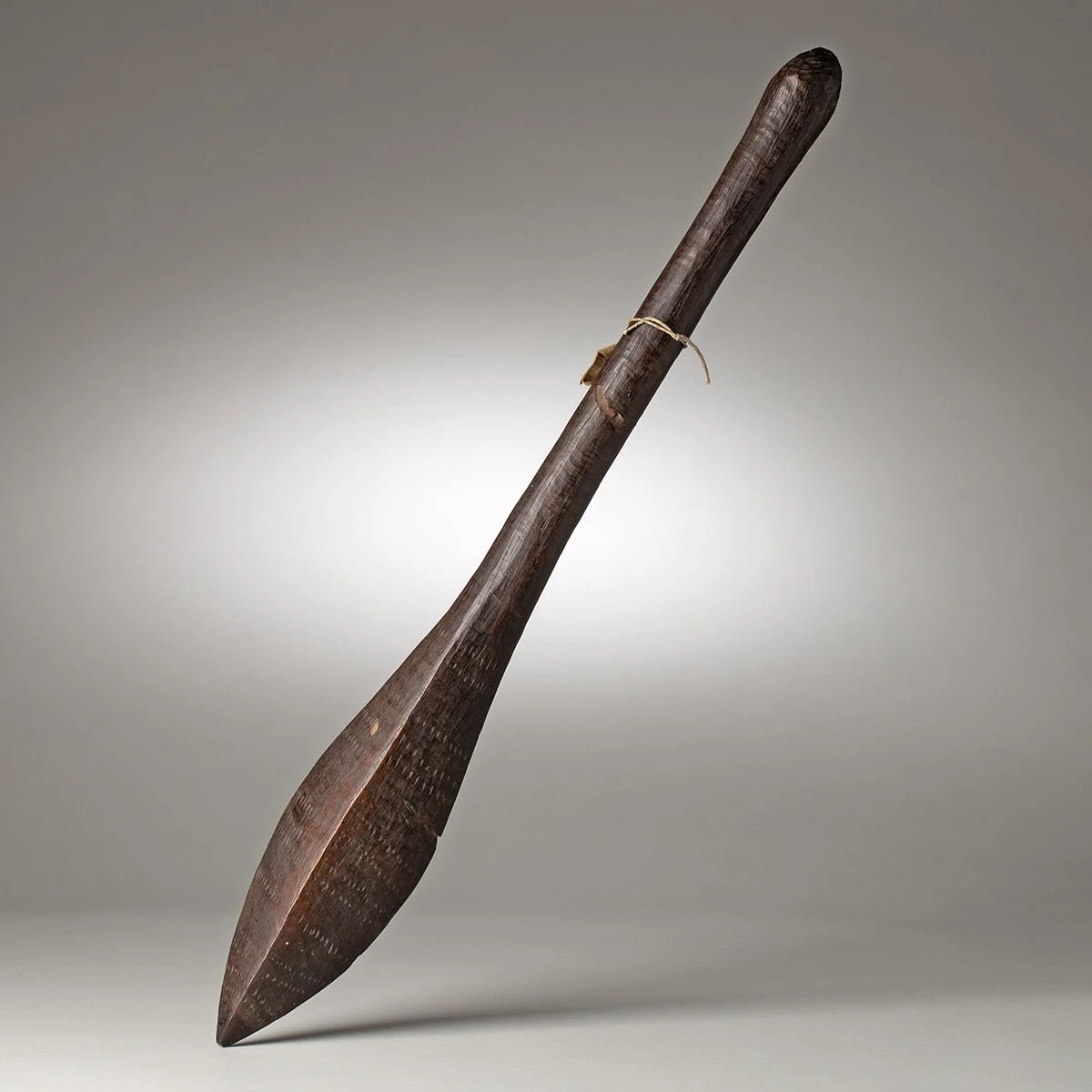 Image 3 of 3
Australia, Victoria
19th century
Turpentine wood
Length: 24½ inches (62.2 cm)
Provenance: London trade; old label indicating Victoria, Australia
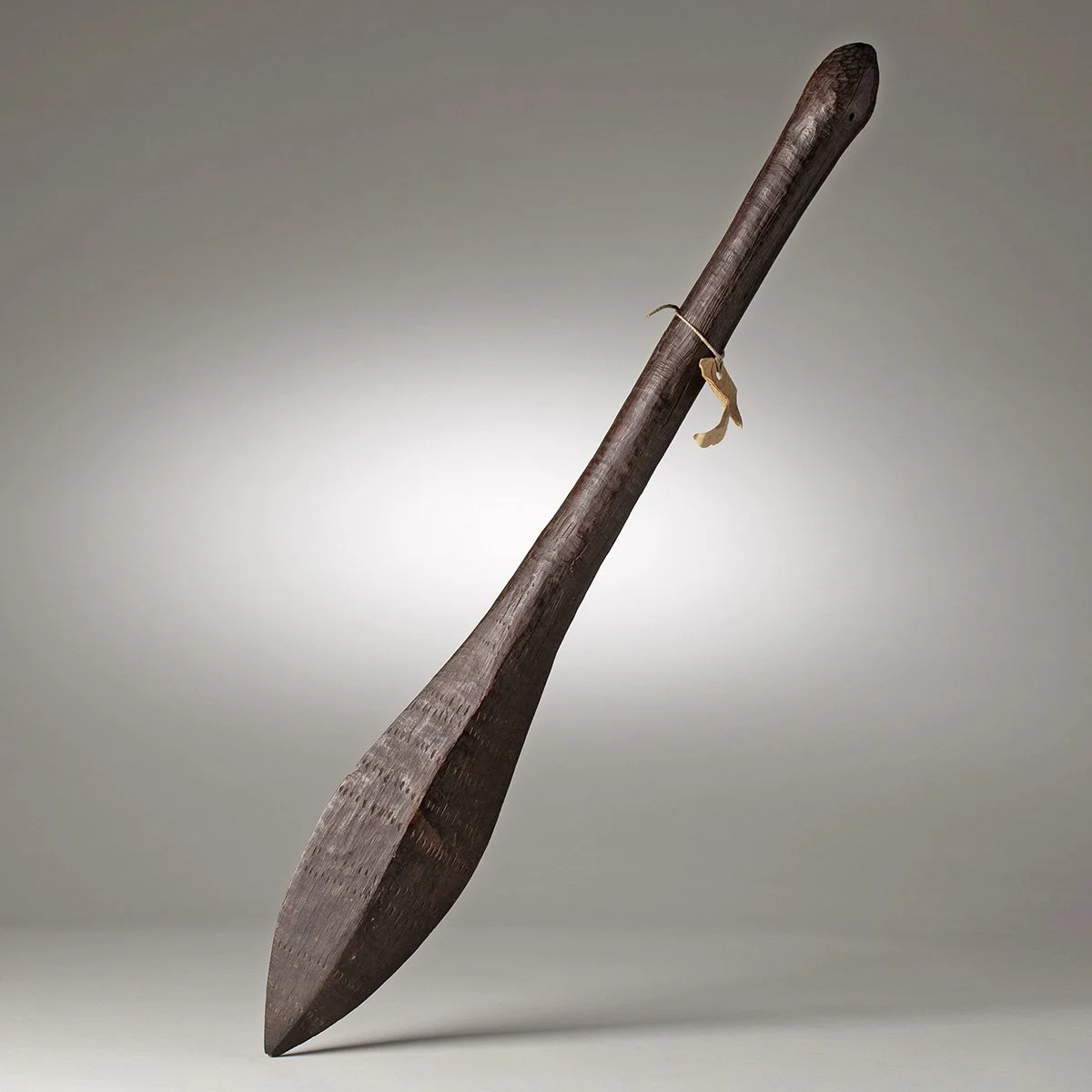
Clubs of this form with a bulbous rounded head and tapering pointed blade were produced across southeastern Australia, and the Victorian provenance label on this example is consistent with the club-making traditions documented among communities of that region during the 19th century. Turpentine wood (Syncarpia glomulifera) was selected for its hardness and resistance to splitting, qualities essential in a weapon intended for both throwing and hand-to-hand combat. The surface has developed a deep, near-black patina through age and handling, with fiber binding retained at the upper shaft.
The club's form is well defined, the transition from handle to head cleanly carved and the pointed lower terminal providing a secondary striking surface. An old trade label indicating Victorian origin adds a layer of collecting history that places this piece within the 19th-century London market for Australian ethnographic material.
We ship free anywhere in the world, fully insured, packed by hand.
Australia, Victoria
19th century
Turpentine wood
Length: 24½ inches (62.2 cm)
Provenance: London trade; old label indicating Victoria, Australia
Clubs of this form with a bulbous rounded head and tapering pointed blade were produced across southeastern Australia, and the Victorian provenance label on this example is consistent with the club-making traditions documented among communities of that region during the 19th century. Turpentine wood (Syncarpia glomulifera) was selected for its hardness and resistance to splitting, qualities essential in a weapon intended for both throwing and hand-to-hand combat. The surface has developed a deep, near-black patina through age and handling, with fiber binding retained at the upper shaft.
The club's form is well defined, the transition from handle to head cleanly carved and the pointed lower terminal providing a secondary striking surface. An old trade label indicating Victorian origin adds a layer of collecting history that places this piece within the 19th-century London market for Australian ethnographic material.
We ship free anywhere in the world, fully insured, packed by hand.