Baule, Yaure, Côte d'Ivoire, circa 1900
Wood
Height 14 1/2 inches (36.8 cm)
Provenance: David Cassera personal collection, Washington; Andrew Berz, California; Mark Eglington, Tennessee; Fly Keita, California
The face is a narrow oval carved with a long ridged nose running the full length from brow to lip, coffee bean eyes cut as slender horizontal slits beneath arched brows, and a small pouted mouth set close beneath the nose. A continuous band of triangular teeth encircles the whole face in a projecting sawtooth border, and from the crown a tall flattened blade rises and widens toward a rounded terminal, standing well clear of the head. The wood carries a dark brown to black surface with lighter wear across the nose ridge, the brow, and the outer points of the border where handling has taken the finish back.
Yaure masks come from the region between the Baule and the Guro in central Côte d'Ivoire, and the two traditions have long been discussed together because the Yaure sit at the boundary and their carving shares features with both. Masks of this type appeared in gu and je performances connected with funerals and with the restoration of order after a death, danced in sequence rather than singly. The projecting sawtooth border is a defining Yaure feature, read variously as a coiffure or a frame setting the face apart, and it is the element that most reliably separates this material from Baule work proper.
We ship free anywhere in the world, fully insured, packed by hand.
Baule, Yaure, Côte d'Ivoire, circa 1900
Wood
Height 14 1/2 inches (36.8 cm)
Provenance: David Cassera personal collection, Washington; Andrew Berz, California; Mark Eglington, Tennessee; Fly Keita, California
The face is a narrow oval carved with a long ridged nose running the full length from brow to lip, coffee bean eyes cut as slender horizontal slits beneath arched brows, and a small pouted mouth set close beneath the nose. A continuous band of triangular teeth encircles the whole face in a projecting sawtooth border, and from the crown a tall flattened blade rises and widens toward a rounded terminal, standing well clear of the head. The wood carries a dark brown to black surface with lighter wear across the nose ridge, the brow, and the outer points of the border where handling has taken the finish back.
Yaure masks come from the region between the Baule and the Guro in central Côte d'Ivoire, and the two traditions have long been discussed together because the Yaure sit at the boundary and their carving shares features with both. Masks of this type appeared in gu and je performances connected with funerals and with the restoration of order after a death, danced in sequence rather than singly. The projecting sawtooth border is a defining Yaure feature, read variously as a coiffure or a frame setting the face apart, and it is the element that most reliably separates this material from Baule work proper.
We ship free anywhere in the world, fully insured, packed by hand.


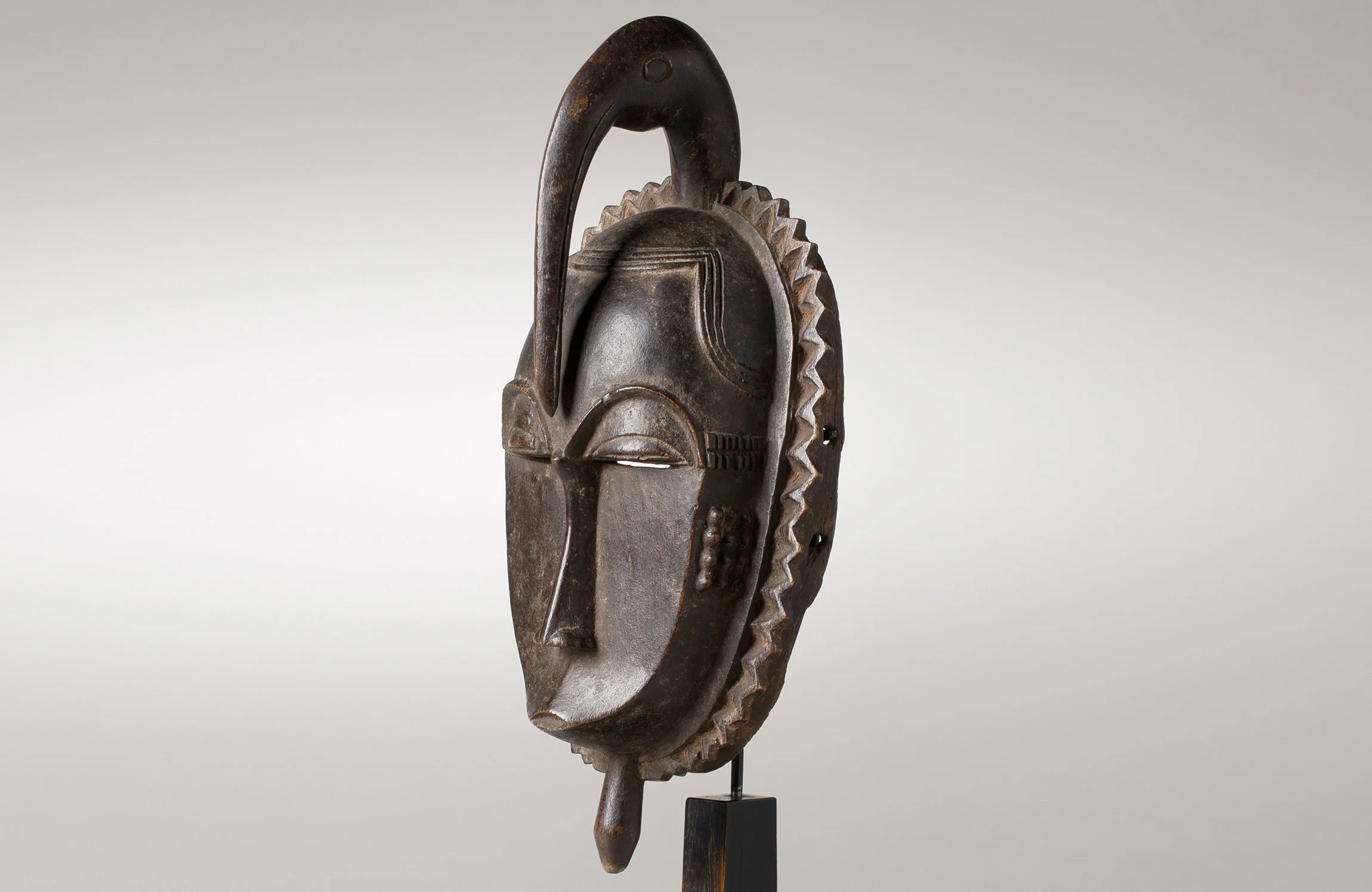 Image 1 of 9
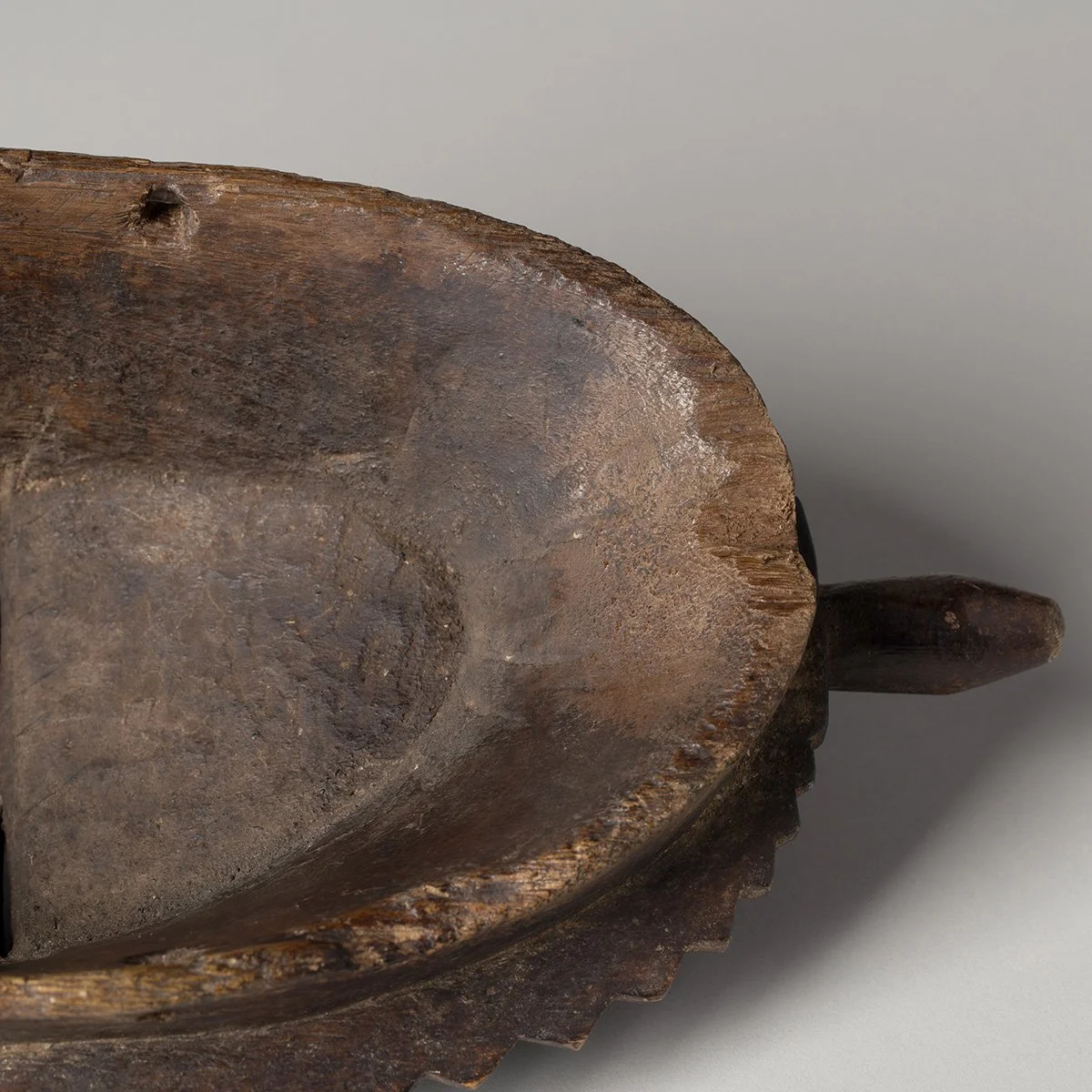 Image 2 of 9
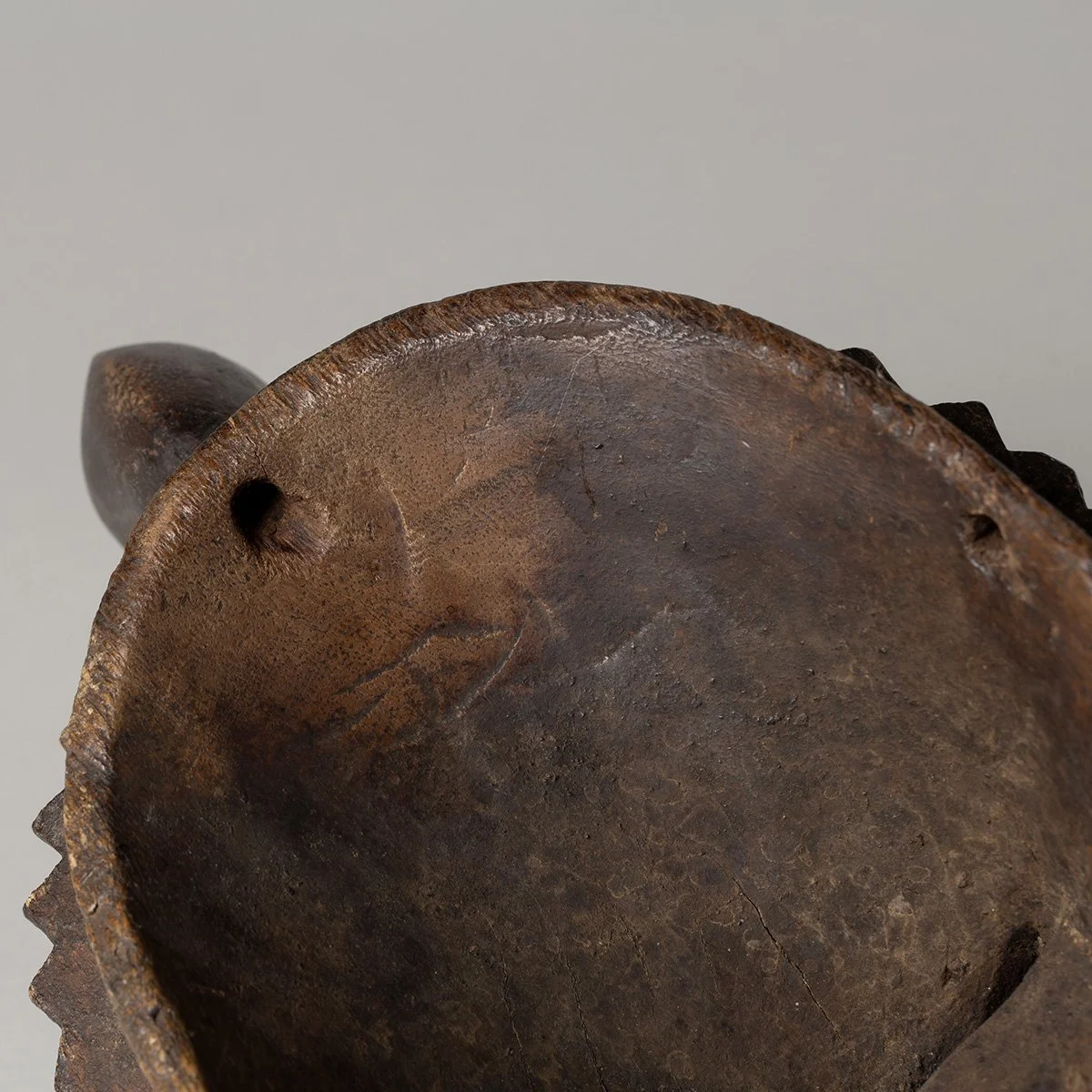 Image 3 of 9
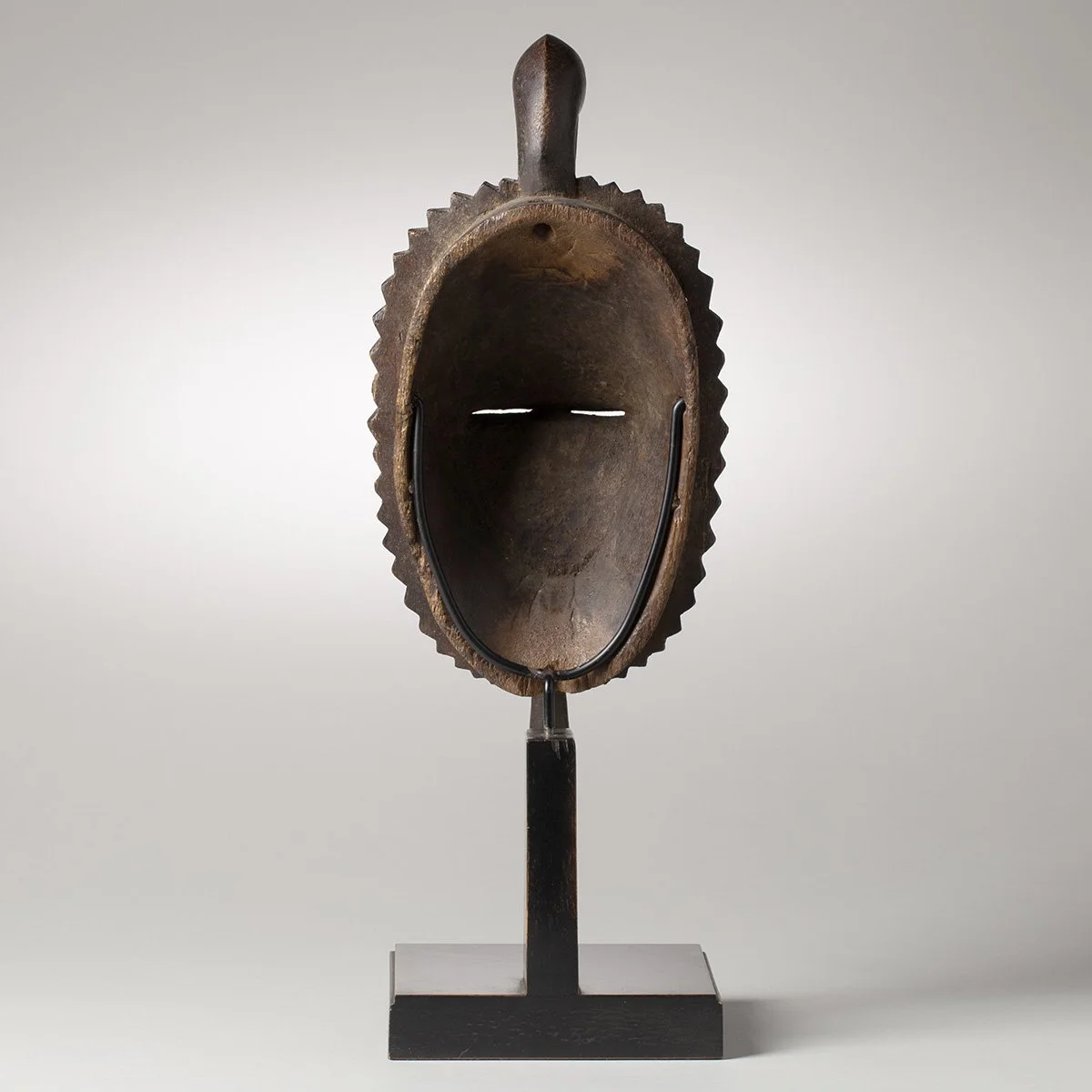 Image 4 of 9
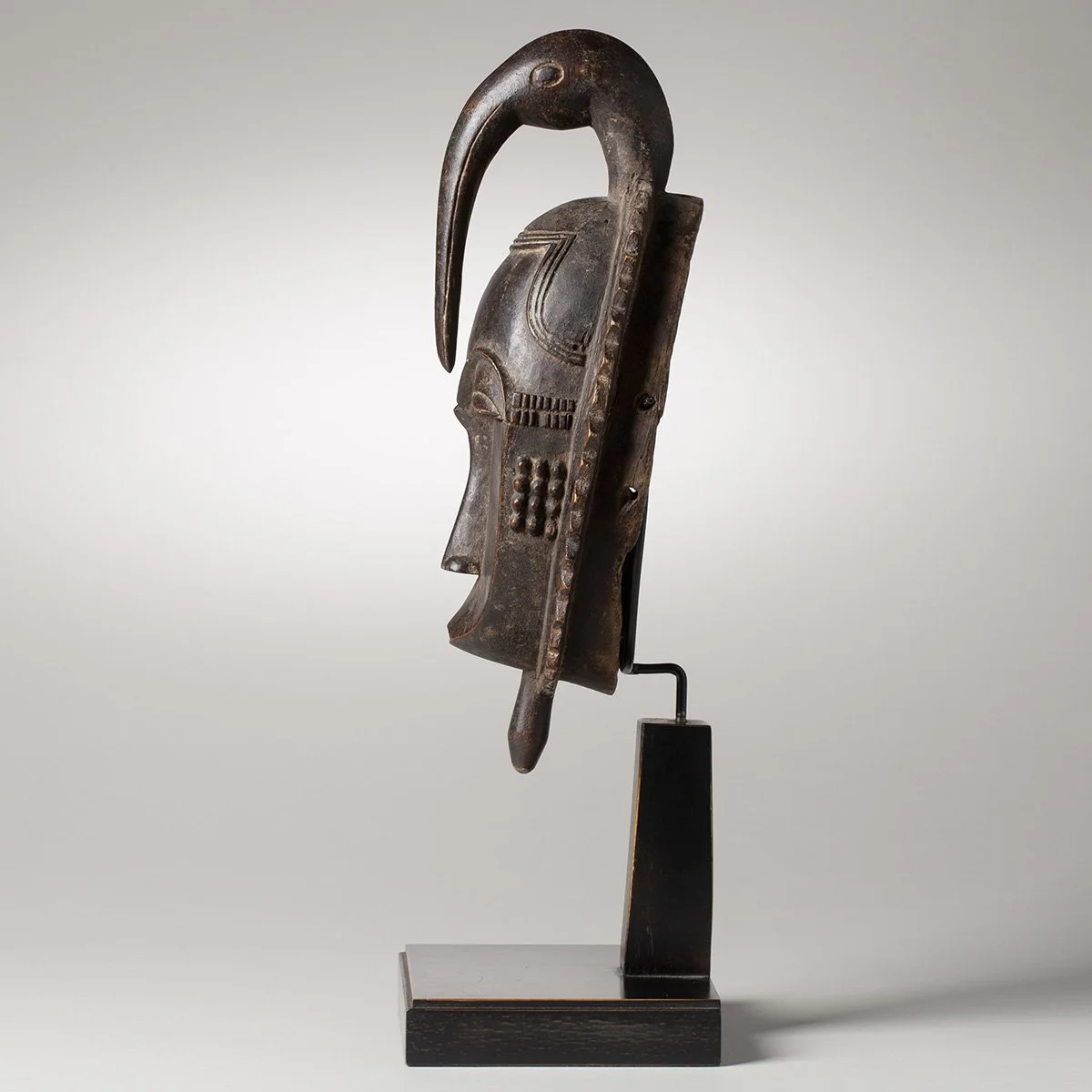 Image 5 of 9
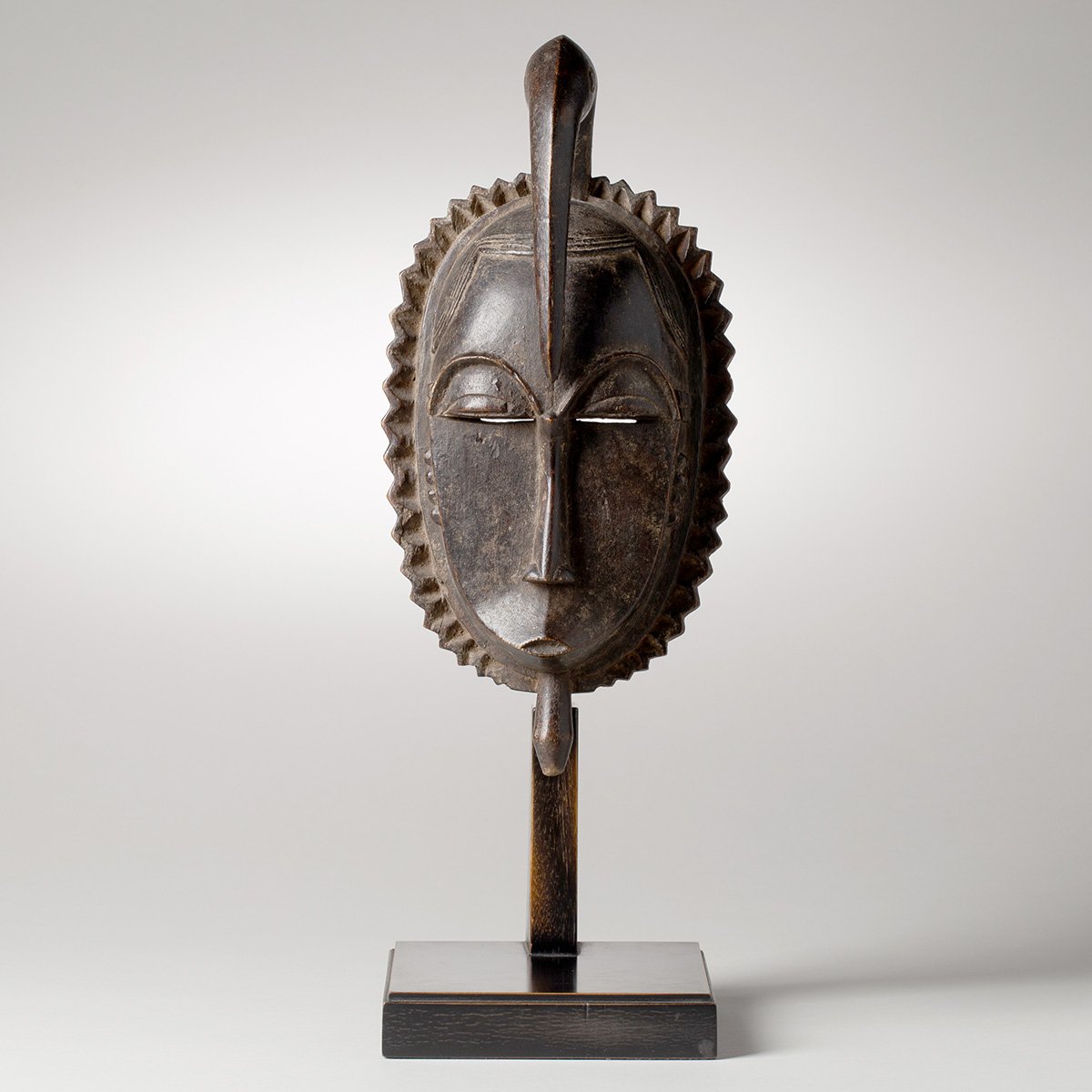 Image 6 of 9
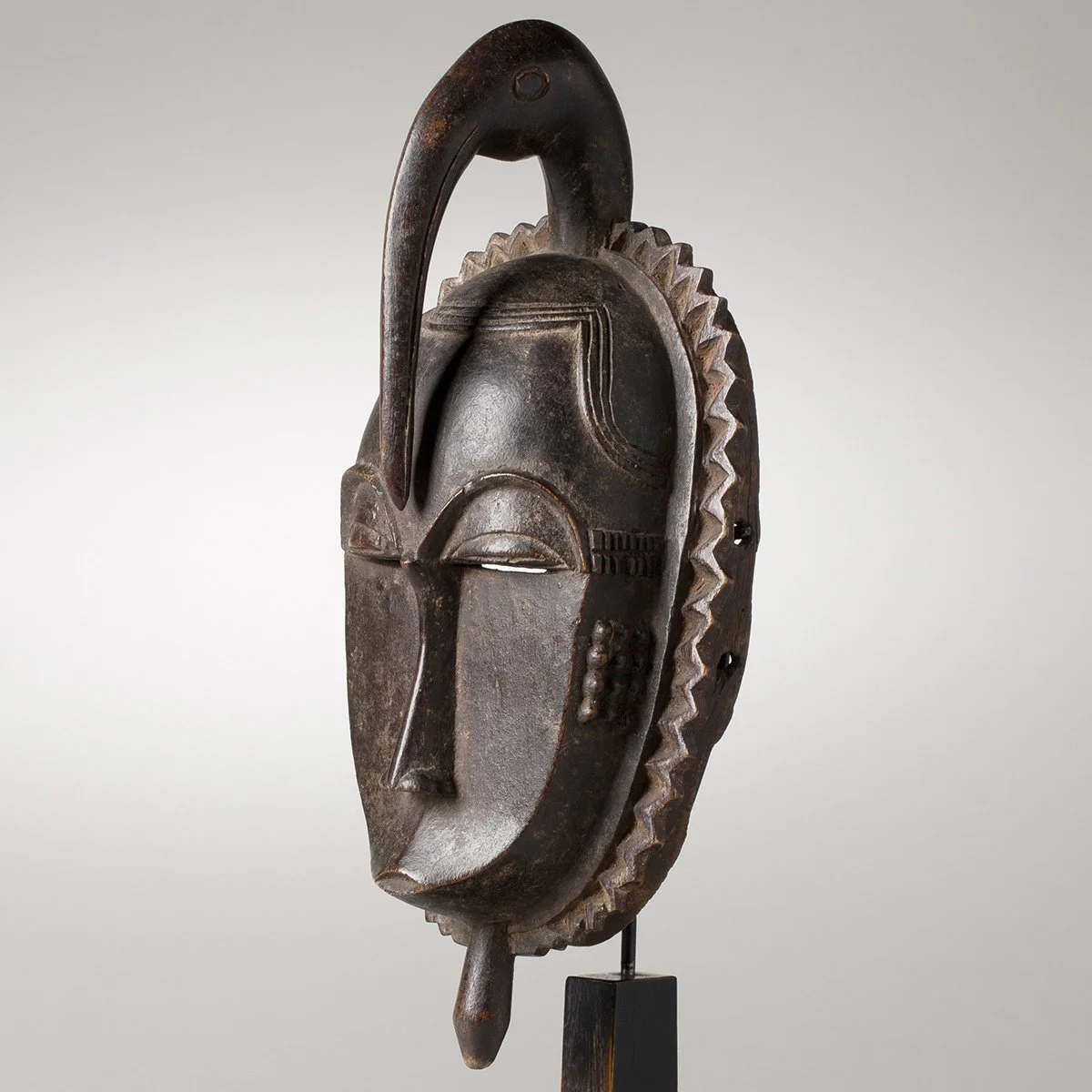 Image 7 of 9
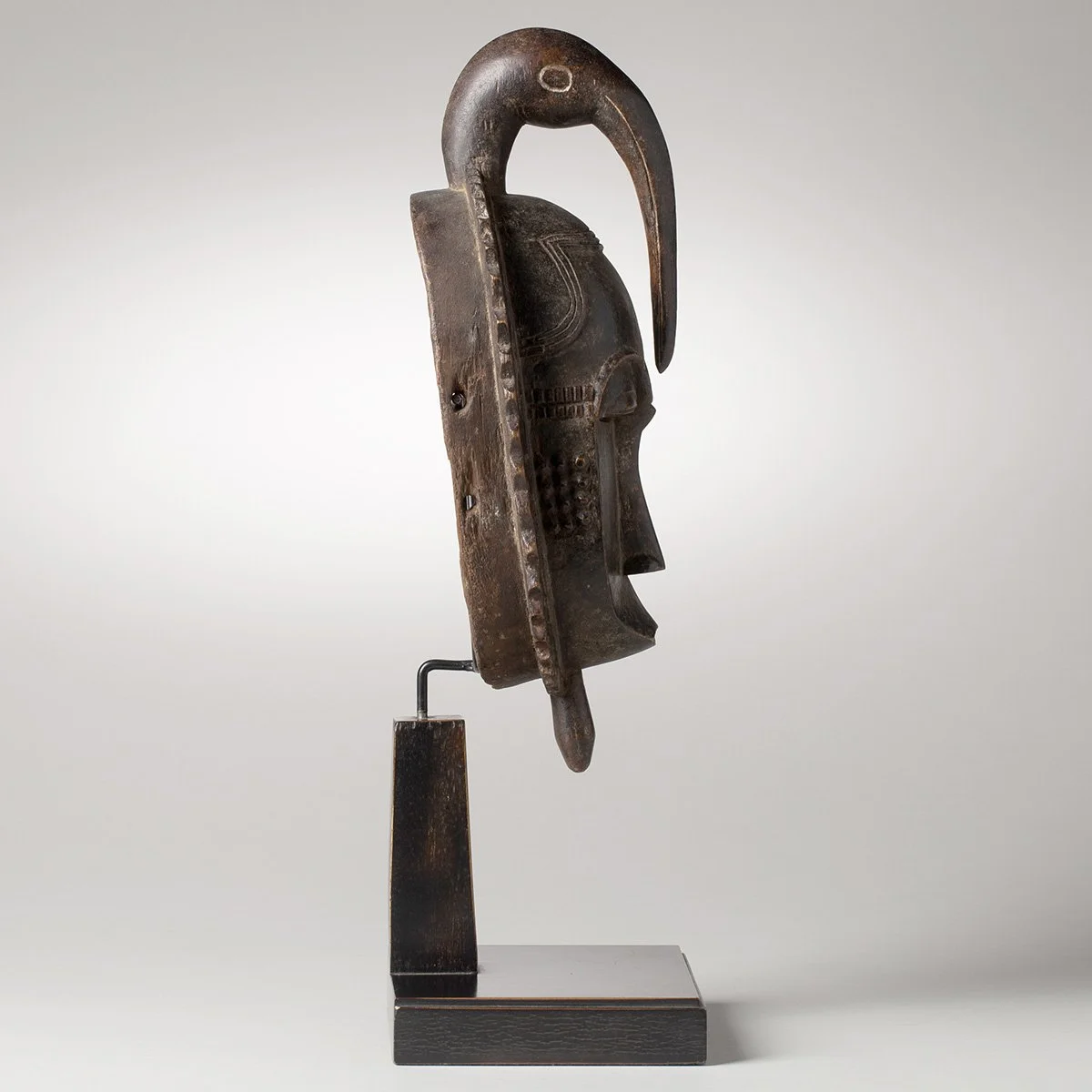 Image 8 of 9
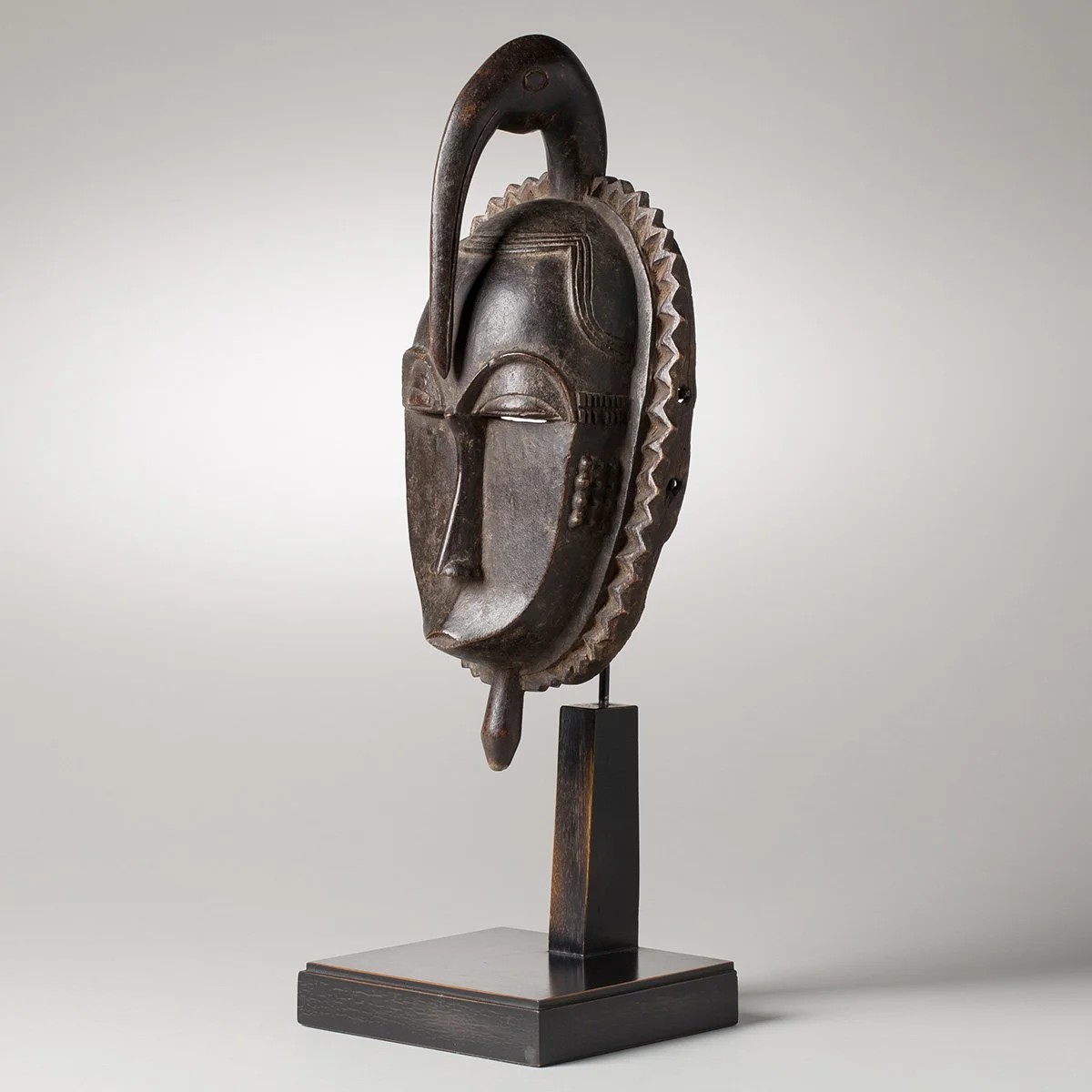 Image 9 of 9