Bembe, Democratic Republic of the Congo, circa 1900
Wood
Height 5 inches (12.7 cm)
Provenance: London trade; private collection, Paris
The figure crouches on a circular plinth with the knees drawn up and the heels tucked beneath, the back curved forward and the arms folded across the chest so that the hands meet at the shoulder. The head is carved with a domed cranium above a face cut in profile relief, with an almond eye, a projecting jaw, and a small pierced ear, and a band of fine parallel incisions runs from the chin along the side of the neck. The pipe bowl rises between the knees as an open cylinder, its rim blackened and its interior charred from use, and the wood elsewhere has taken a deep glossy brown from handling.
Bembe carvers of the eastern Congo worked in small scale and applied the same figural treatment to functional objects as to figures kept for ritual, so a pipe of this kind reads as sculpture rather than as an implement with sculpture attached. The seated posture with folded arms is a recurring Bembe form, and the incised marks along the neck and jaw correspond to the scarification patterns recorded on the region's figures. The charring inside the bowl and the wear across the shoulders and knees indicate a pipe that was used rather than made for exchange.
We ship free anywhere in the world, fully insured, packed by hand.
Bembe, Democratic Republic of the Congo, circa 1900
Wood
Height 5 inches (12.7 cm)
Provenance: London trade; private collection, Paris
The figure crouches on a circular plinth with the knees drawn up and the heels tucked beneath, the back curved forward and the arms folded across the chest so that the hands meet at the shoulder. The head is carved with a domed cranium above a face cut in profile relief, with an almond eye, a projecting jaw, and a small pierced ear, and a band of fine parallel incisions runs from the chin along the side of the neck. The pipe bowl rises between the knees as an open cylinder, its rim blackened and its interior charred from use, and the wood elsewhere has taken a deep glossy brown from handling.
Bembe carvers of the eastern Congo worked in small scale and applied the same figural treatment to functional objects as to figures kept for ritual, so a pipe of this kind reads as sculpture rather than as an implement with sculpture attached. The seated posture with folded arms is a recurring Bembe form, and the incised marks along the neck and jaw correspond to the scarification patterns recorded on the region's figures. The charring inside the bowl and the wear across the shoulders and knees indicate a pipe that was used rather than made for exchange.
We ship free anywhere in the world, fully insured, packed by hand.


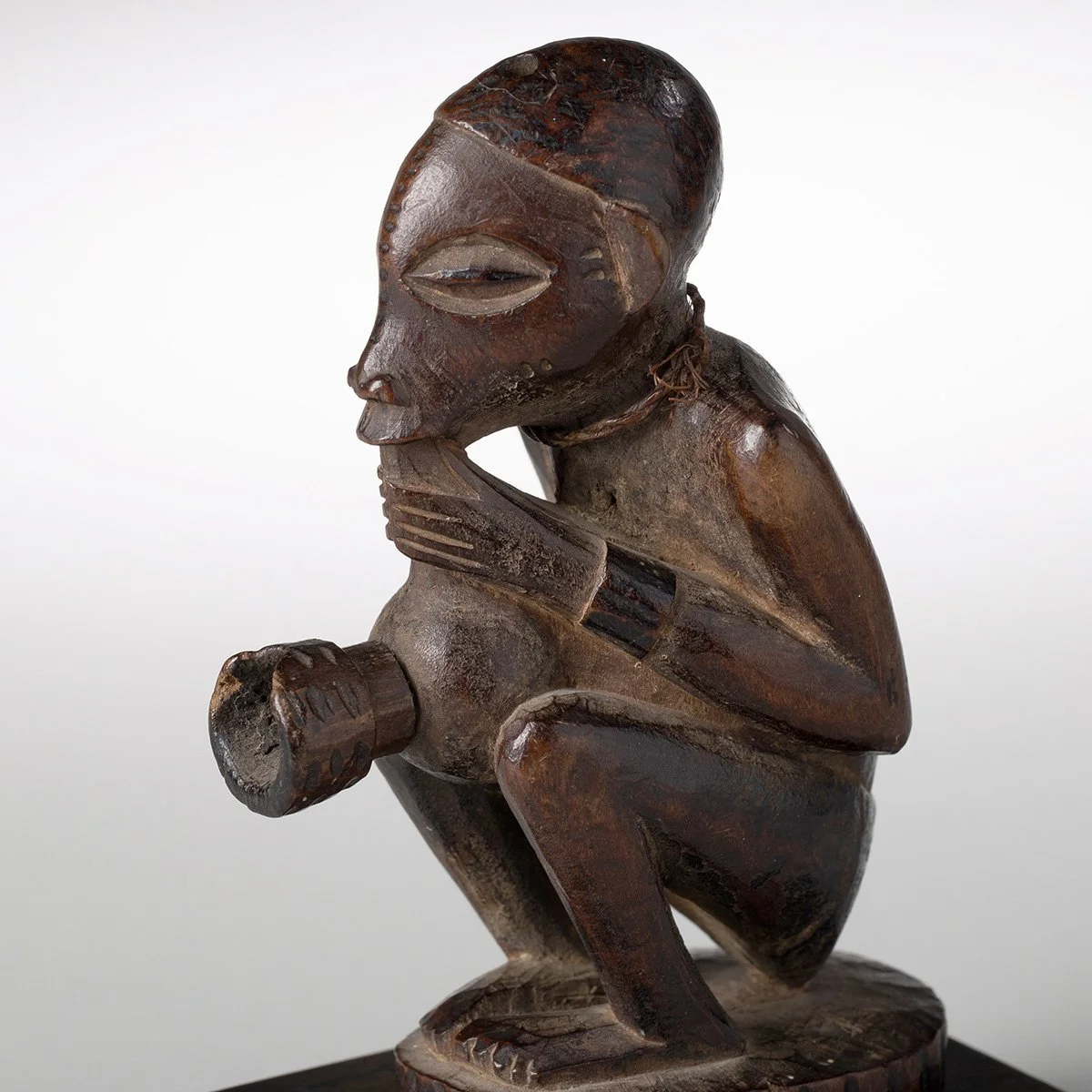 Image 1 of 7
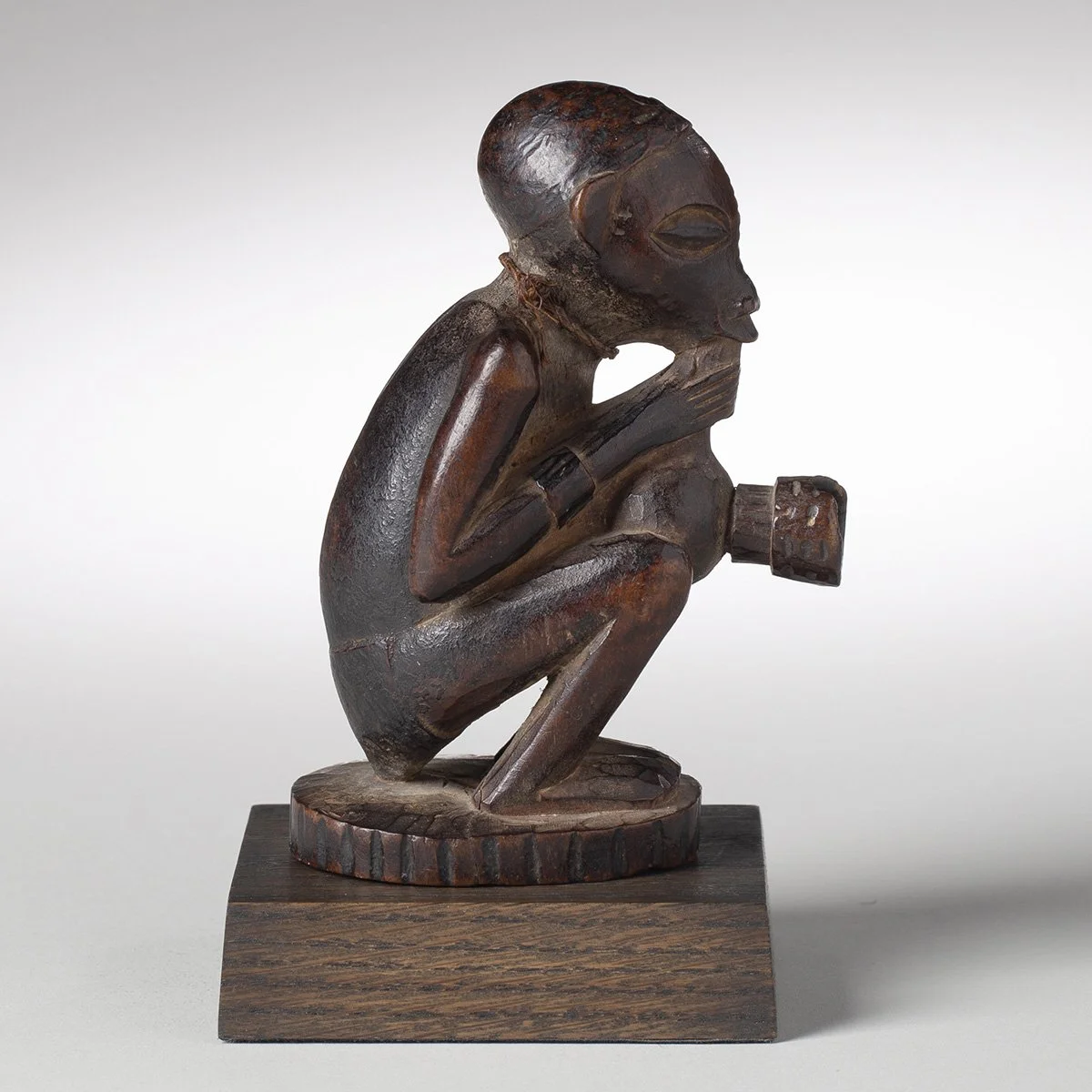 Image 2 of 7
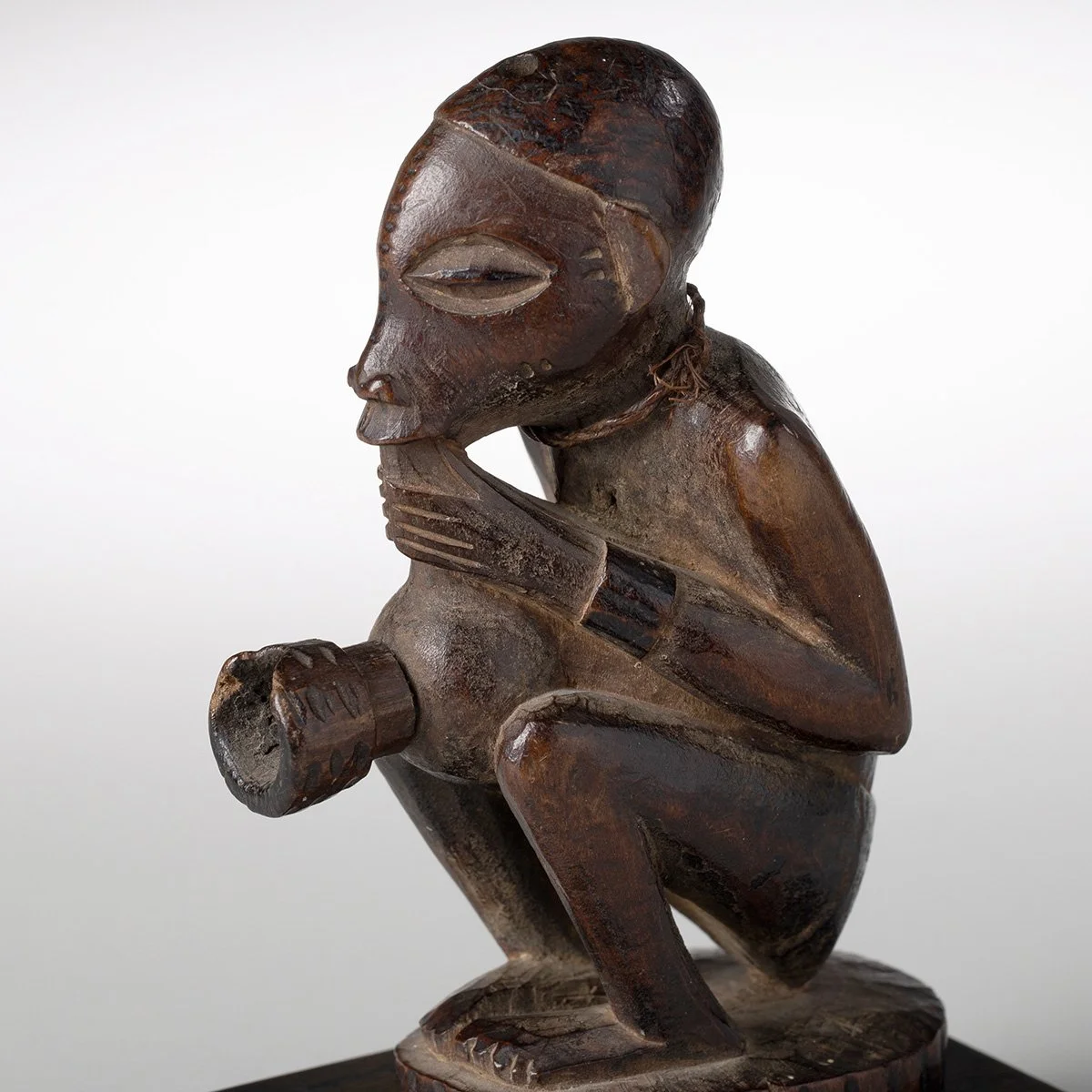 Image 3 of 7
 Image 4 of 7
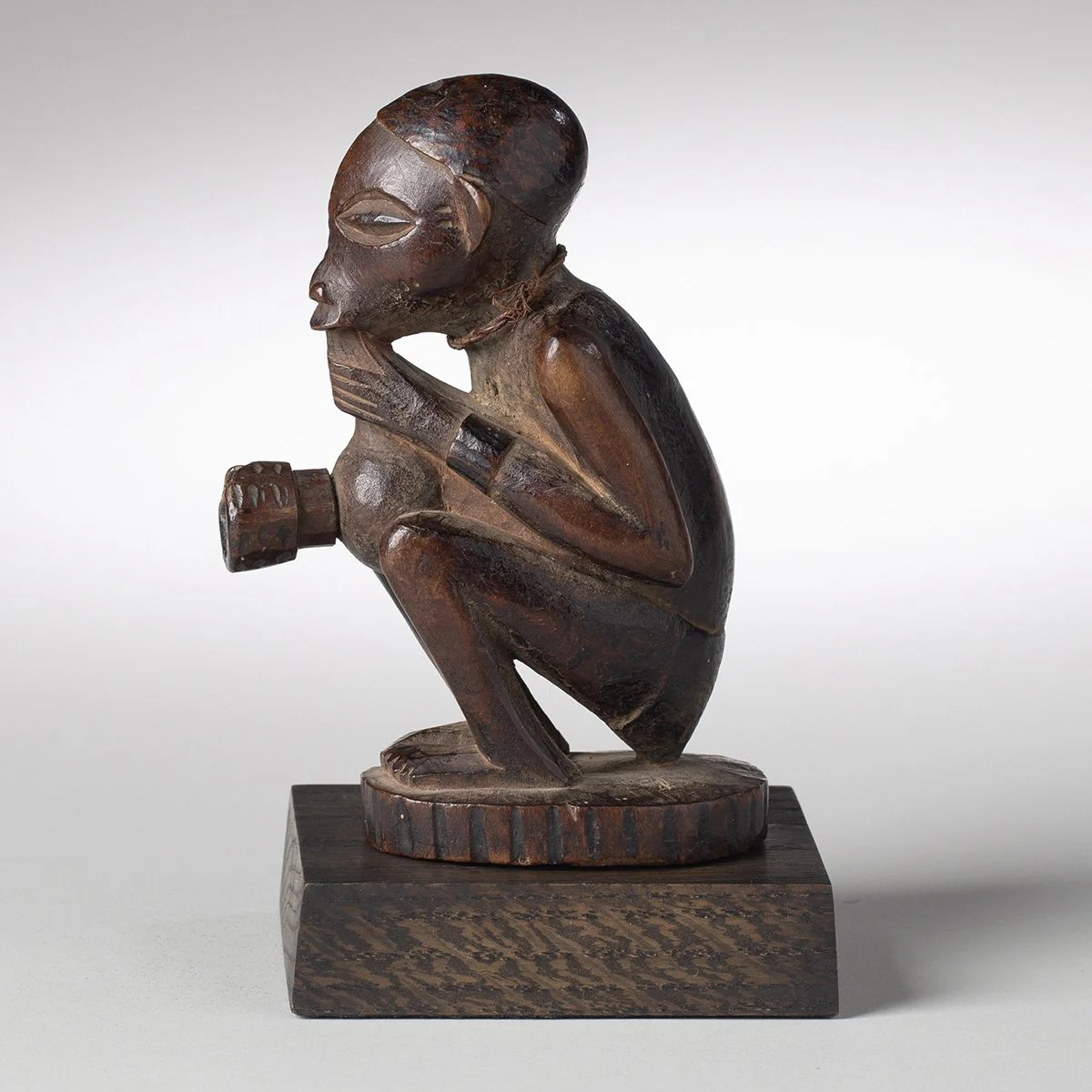 Image 5 of 7
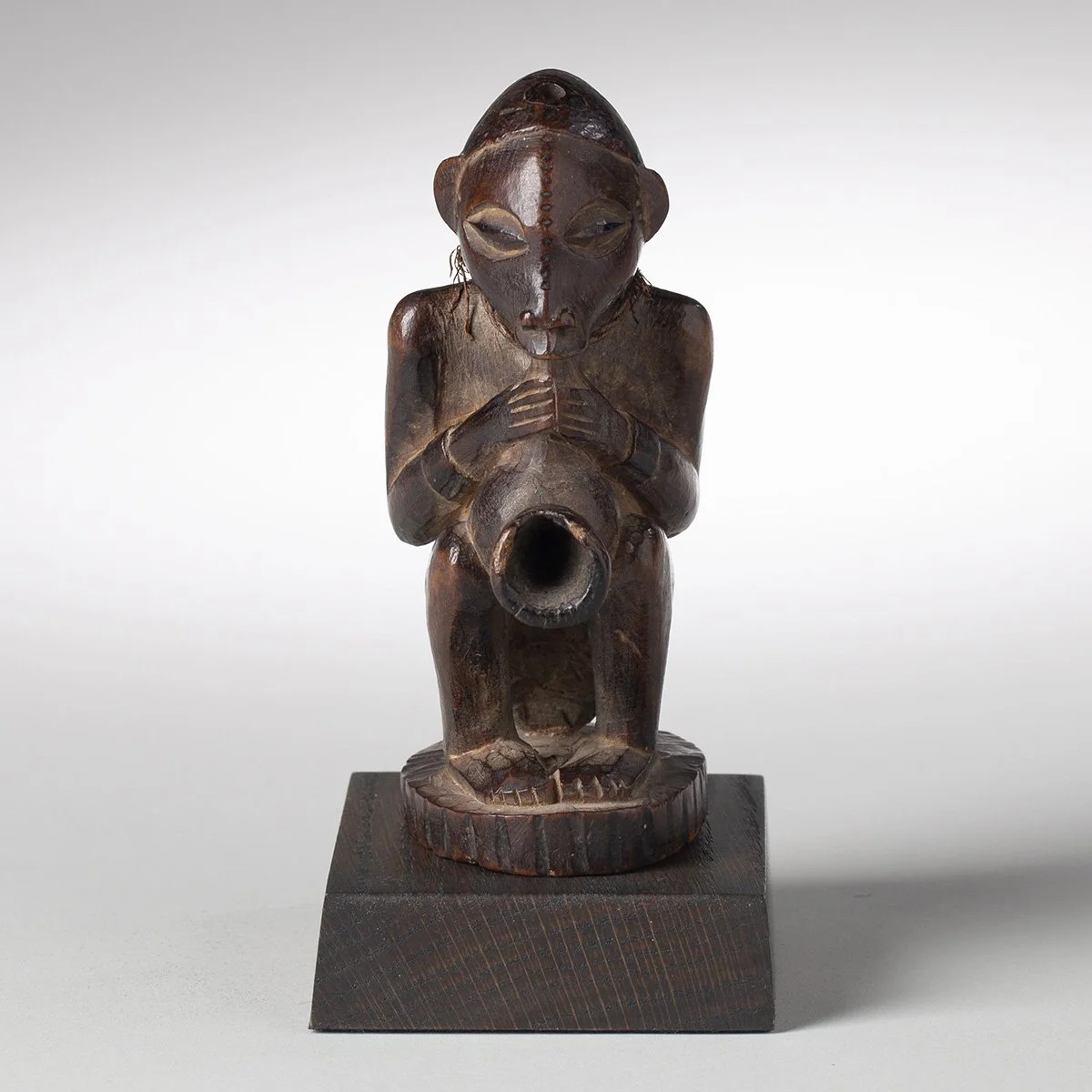 Image 6 of 7
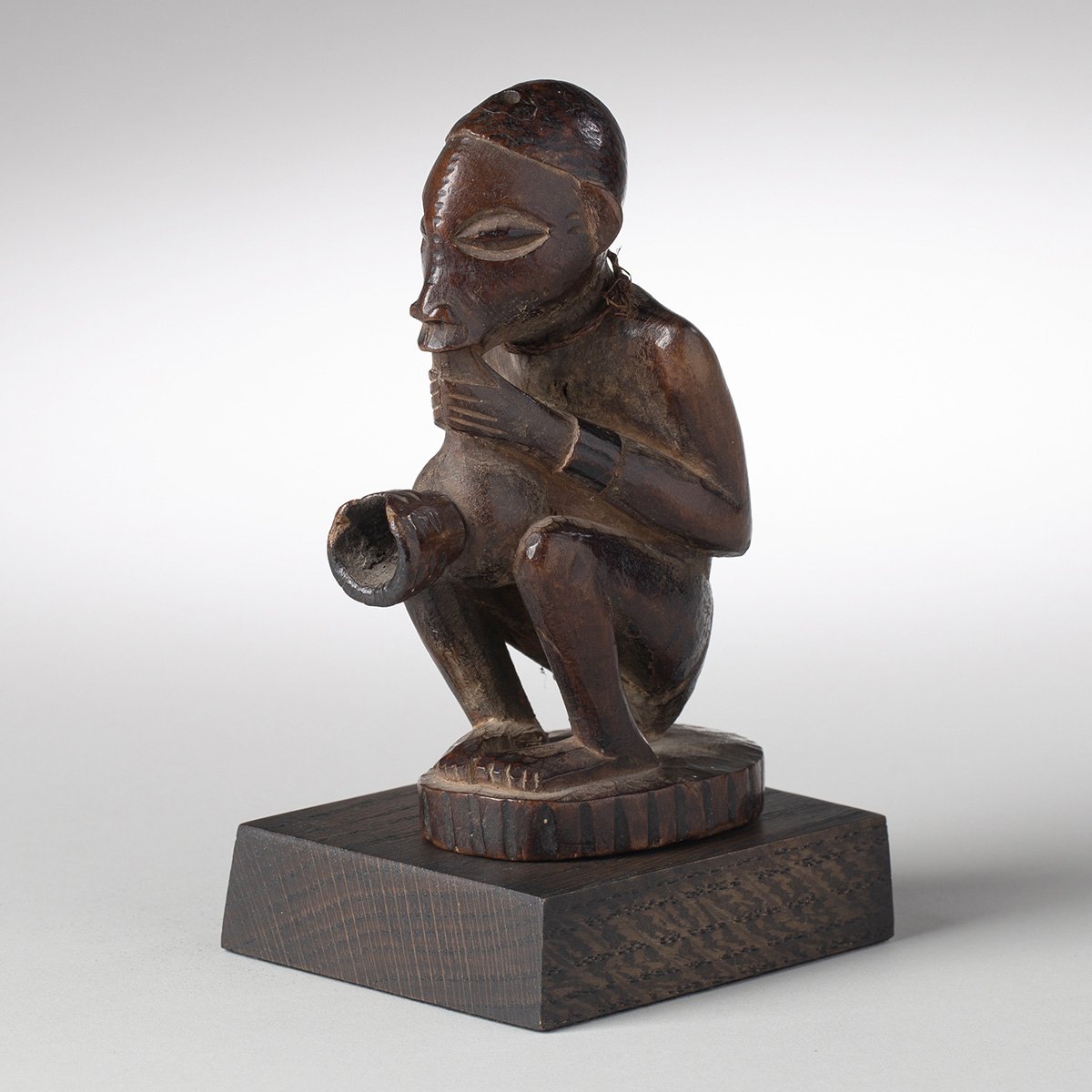 Image 7 of 7