American (Swedish-born), Colorado
Signed and dated 1923 by Birger Sandzen
Oil on canvas
60 × 80 inches (152.4 × 203.2 cm)
Provenance: John S. Ankeney, Director of the Dallas Art Museum (1929–1935); bequeathed to Bethany College, Lindsborg, Kansas; Manitou Galleries Auction, 2011 (sold $632,000); acquired by a prominent California developer; private collection, New Mexico, 2015; private collection, Colorado, 2024. Documented in Sandzén's personal record book, 1923, as the first painting listed for exhibition at McPherson High School.
Birger Sandzén (1871–1954) occupies a singular position in American Western landscape painting. A Swedish-born artist who arrived in Kansas in 1894, Sandzen spent 52 years teaching at Bethany College, and became one of the most celebrated interpreters of the Rocky Mountain West. Trained in Stockholm under Anders Zorn and introduced to Post-Impressionist technique in Paris under Aman-Jean who shared a studio with Georges Seurat, Sandzén brought a European structural rigor to the American landscape that few of his contemporaries could match. By 1922, the year before this work was made, the Taos Society of Artists had recognized him as an associate member, and his Colorado expeditions had become central to his mature practice.
Summer in the Mountains belongs to the full flowering of Sandzén's Fauvist period, when the controlled pointillism of his early work had given way to dense, sculptural impasto and chromatic intensities that earned comparisons to Van Gogh, comparisons Sandzén accepted with some amusement, noting he had not encountered a Van Gogh until 1924, the year after this canvas was completed. At 60 by 80 inches, it is a monumental work: the Tarryall range rendered in thick, directional strokes that carry both geological weight and atmospheric light simultaneously. The handling of color and surface across a canvas of this scale reflects a painter working at the height of his powers.
The provenance is unusually complete for a work of this period. The painting appears as the first work listed in Sandzén's own 1923 record book for exhibition at McPherson High School, passed through the collection of John S. Ankeney who was the Director of the Dallas Art Museum from 1929 to 1935, and was bequeathed by him to Bethany College before its 2011 appearance at Manitou Galleries, where it sold for $632,000. It has remained in private hands since, passing through collections in California, New Mexico, and Colorado.
To read more from Mark about this extraordinary item, please click here.
We ship free anywhere in the world, fully insured, packed by hand.
INQUIRE HERE
American (Swedish-born), Colorado
Signed and dated 1923 by Birger Sandzen
Oil on canvas
60 × 80 inches (152.4 × 203.2 cm)
Provenance: John S. Ankeney, Director of the Dallas Art Museum (1929–1935); bequeathed to Bethany College, Lindsborg, Kansas; Manitou Galleries Auction, 2011 (sold $632,000); acquired by a prominent California developer; private collection, New Mexico, 2015; private collection, Colorado, 2024. Documented in Sandzén's personal record book, 1923, as the first painting listed for exhibition at McPherson High School.
Birger Sandzén (1871–1954) occupies a singular position in American Western landscape painting. A Swedish-born artist who arrived in Kansas in 1894, Sandzen spent 52 years teaching at Bethany College, and became one of the most celebrated interpreters of the Rocky Mountain West. Trained in Stockholm under Anders Zorn and introduced to Post-Impressionist technique in Paris under Aman-Jean who shared a studio with Georges Seurat, Sandzén brought a European structural rigor to the American landscape that few of his contemporaries could match. By 1922, the year before this work was made, the Taos Society of Artists had recognized him as an associate member, and his Colorado expeditions had become central to his mature practice.
Summer in the Mountains belongs to the full flowering of Sandzén's Fauvist period, when the controlled pointillism of his early work had given way to dense, sculptural impasto and chromatic intensities that earned comparisons to Van Gogh, comparisons Sandzén accepted with some amusement, noting he had not encountered a Van Gogh until 1924, the year after this canvas was completed. At 60 by 80 inches, it is a monumental work: the Tarryall range rendered in thick, directional strokes that carry both geological weight and atmospheric light simultaneously. The handling of color and surface across a canvas of this scale reflects a painter working at the height of his powers.
The provenance is unusually complete for a work of this period. The painting appears as the first work listed in Sandzén's own 1923 record book for exhibition at McPherson High School, passed through the collection of John S. Ankeney who was the Director of the Dallas Art Museum from 1929 to 1935, and was bequeathed by him to Bethany College before its 2011 appearance at Manitou Galleries, where it sold for $632,000. It has remained in private hands since, passing through collections in California, New Mexico, and Colorado.
To read more from Mark about this extraordinary item, please click here.
We ship free anywhere in the world, fully insured, packed by hand.
INQUIRE HERE


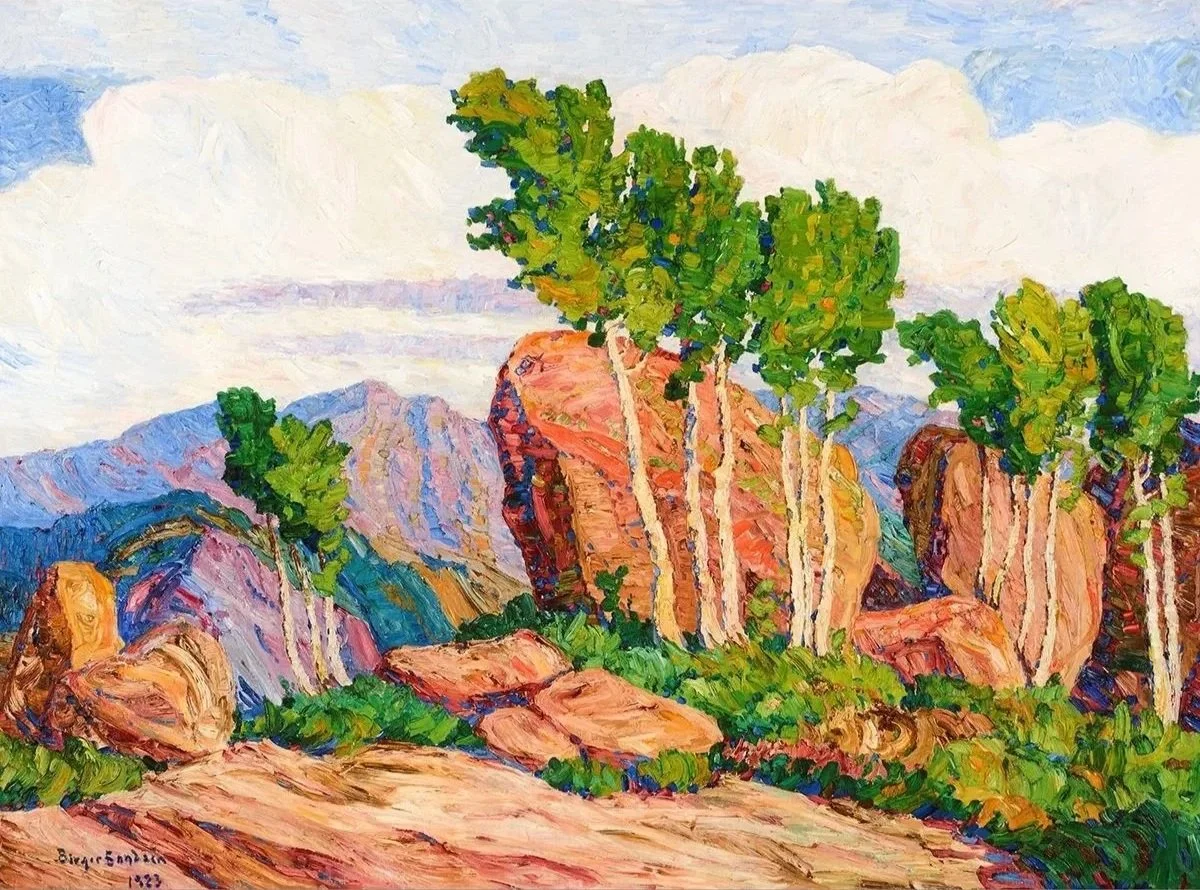 Image 1 of 9
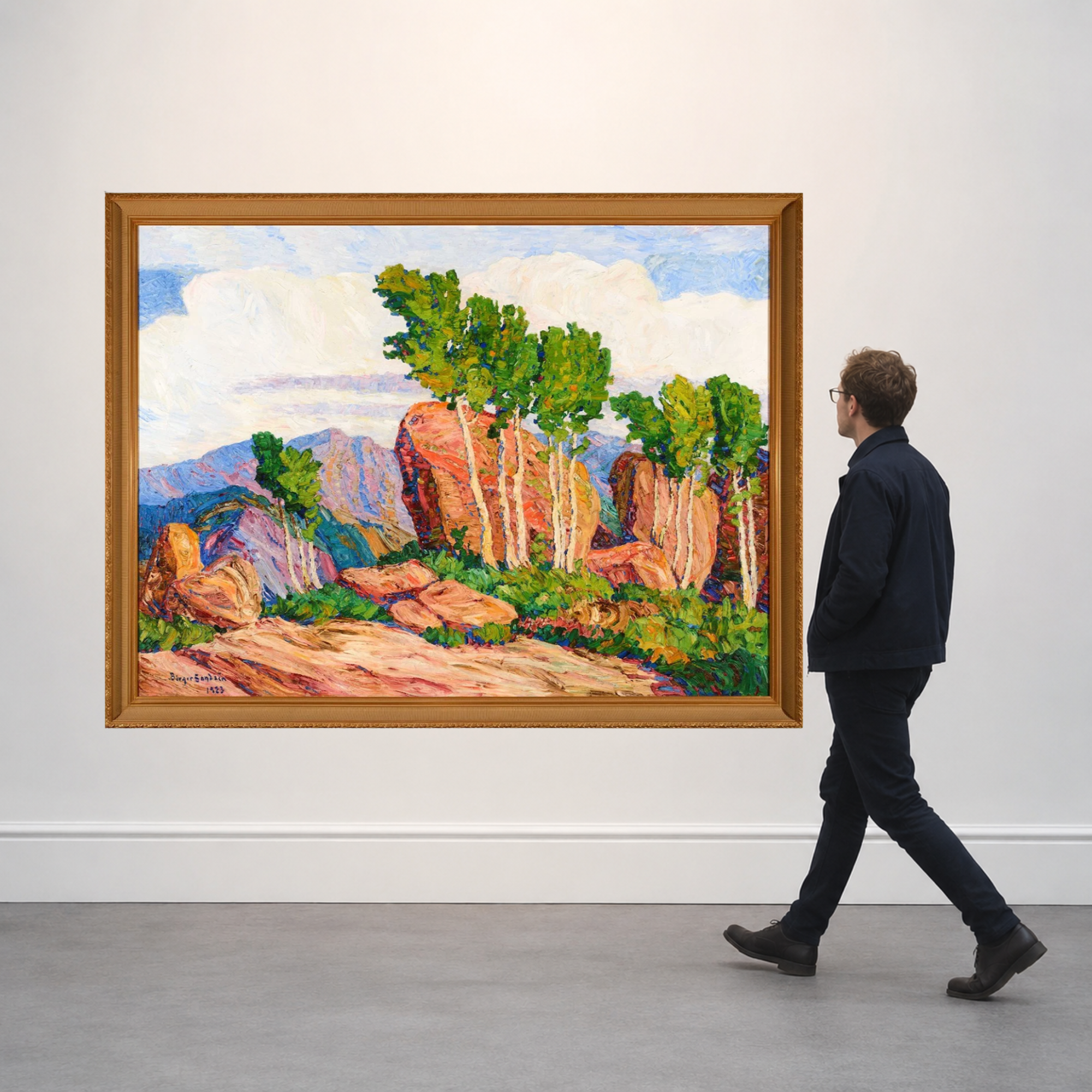 Image 2 of 9
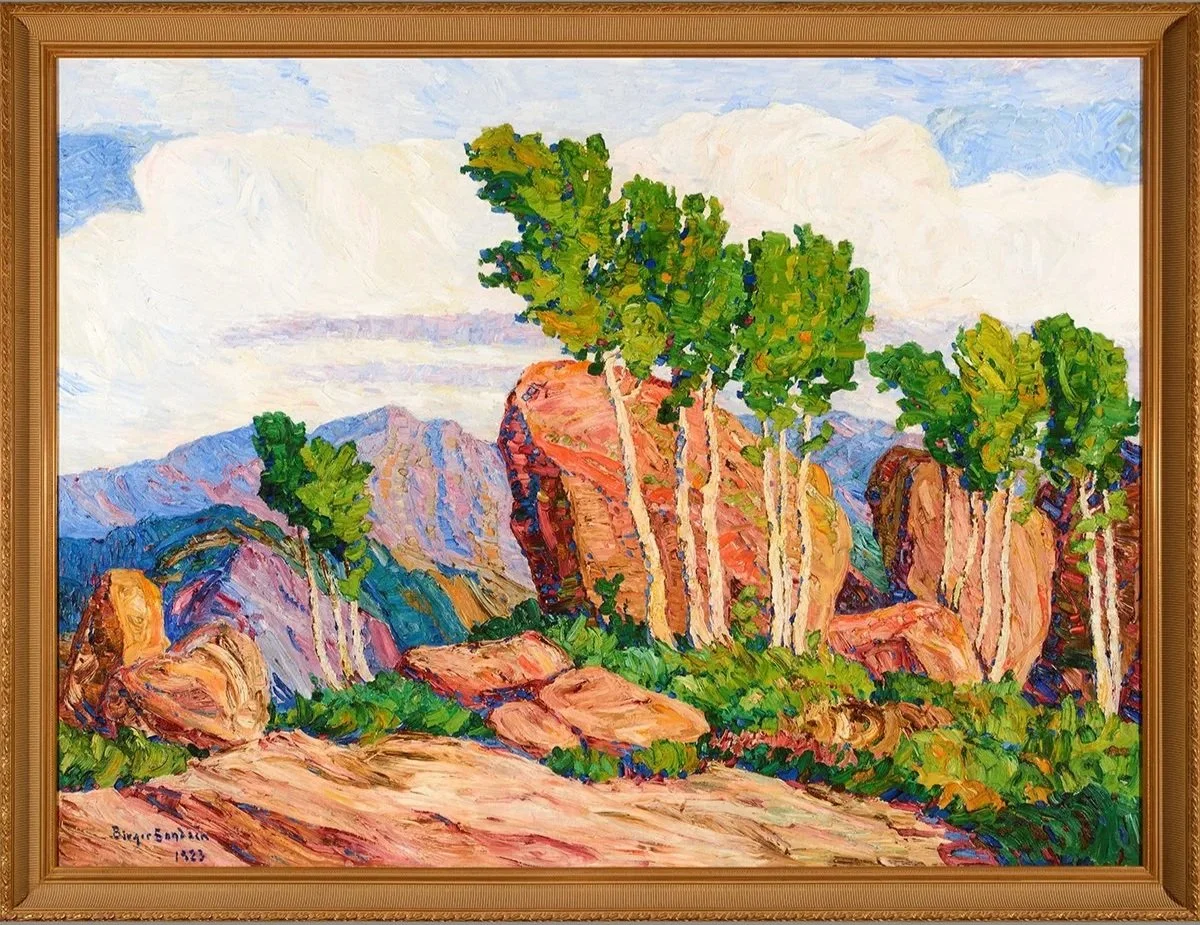 Image 3 of 9
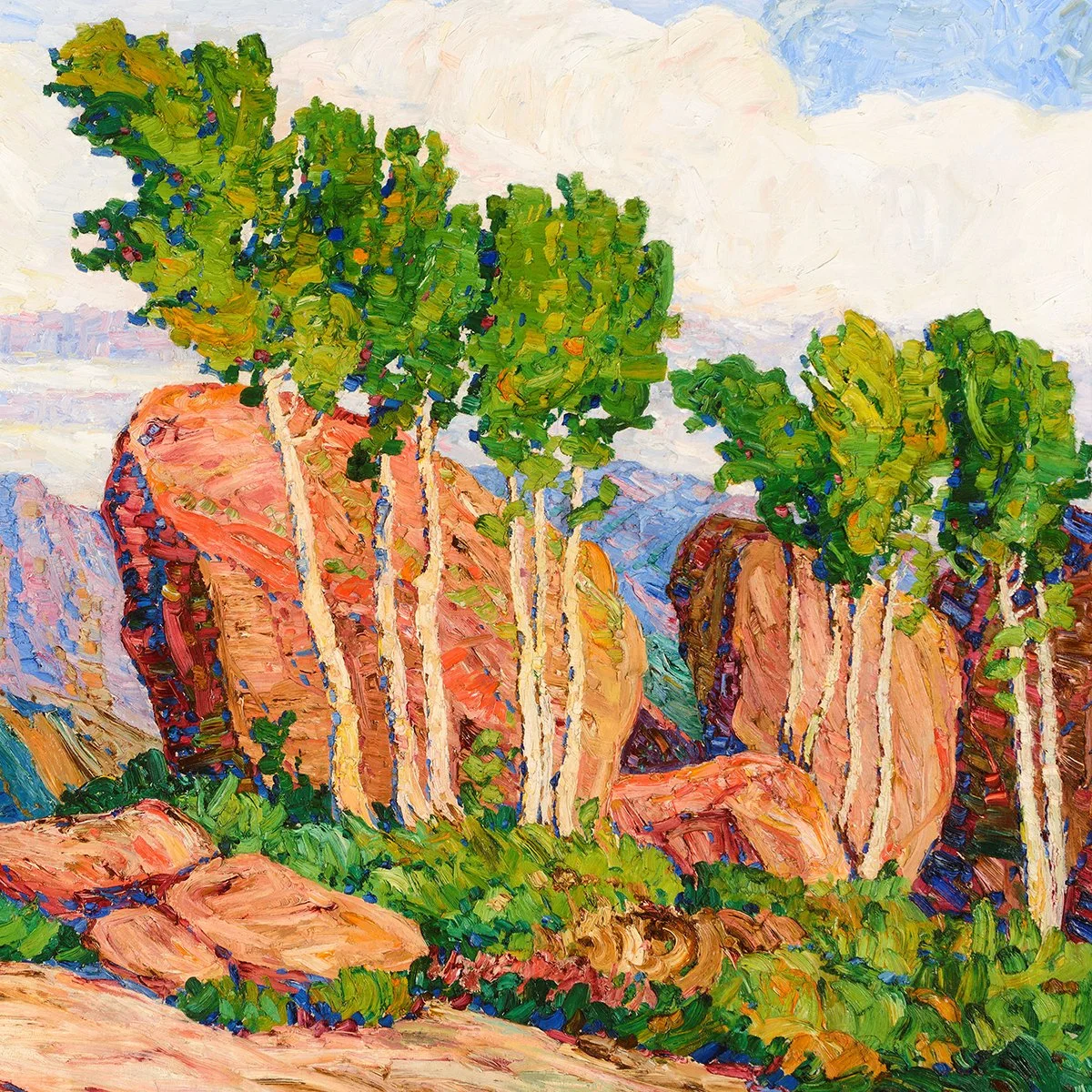 Image 4 of 9
 Image 5 of 9
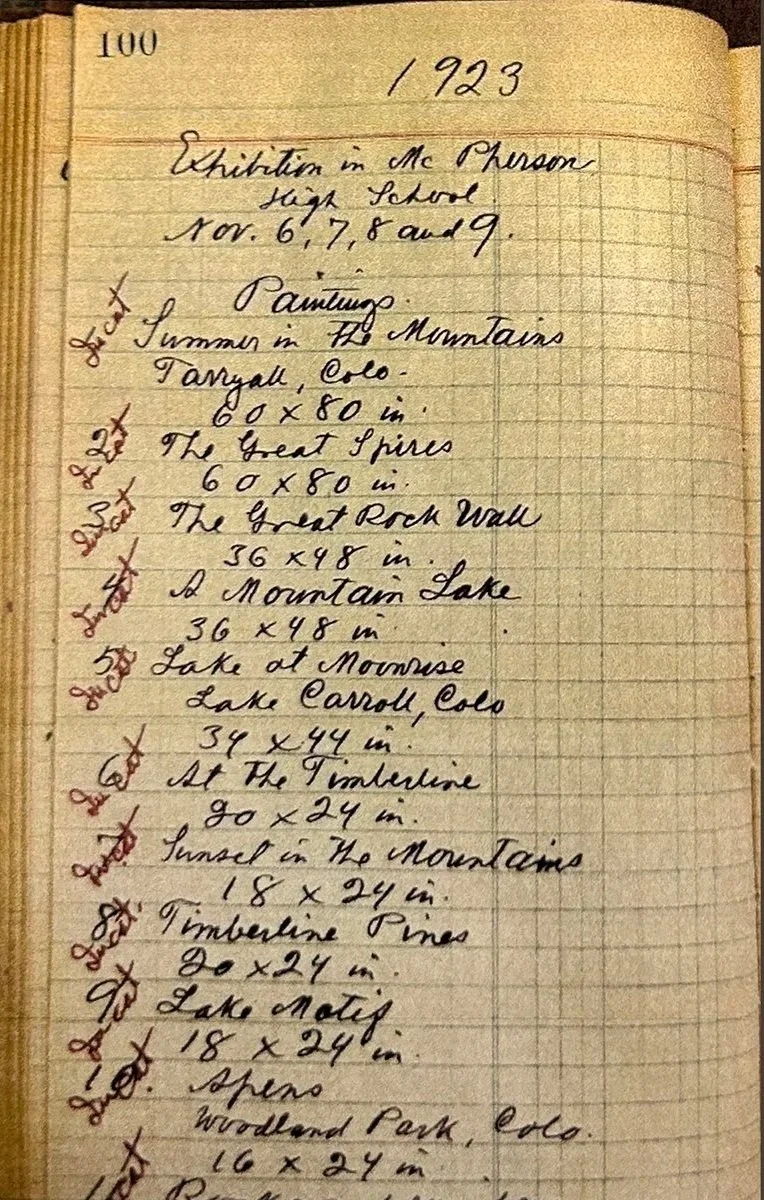 Image 6 of 9
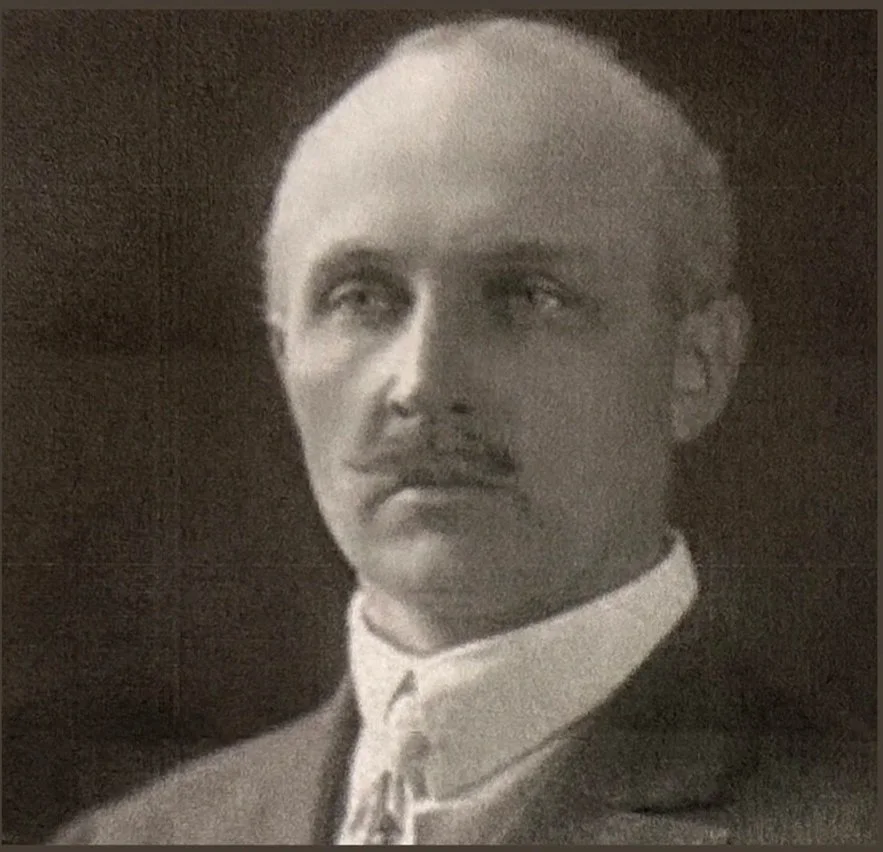 Image 7 of 9
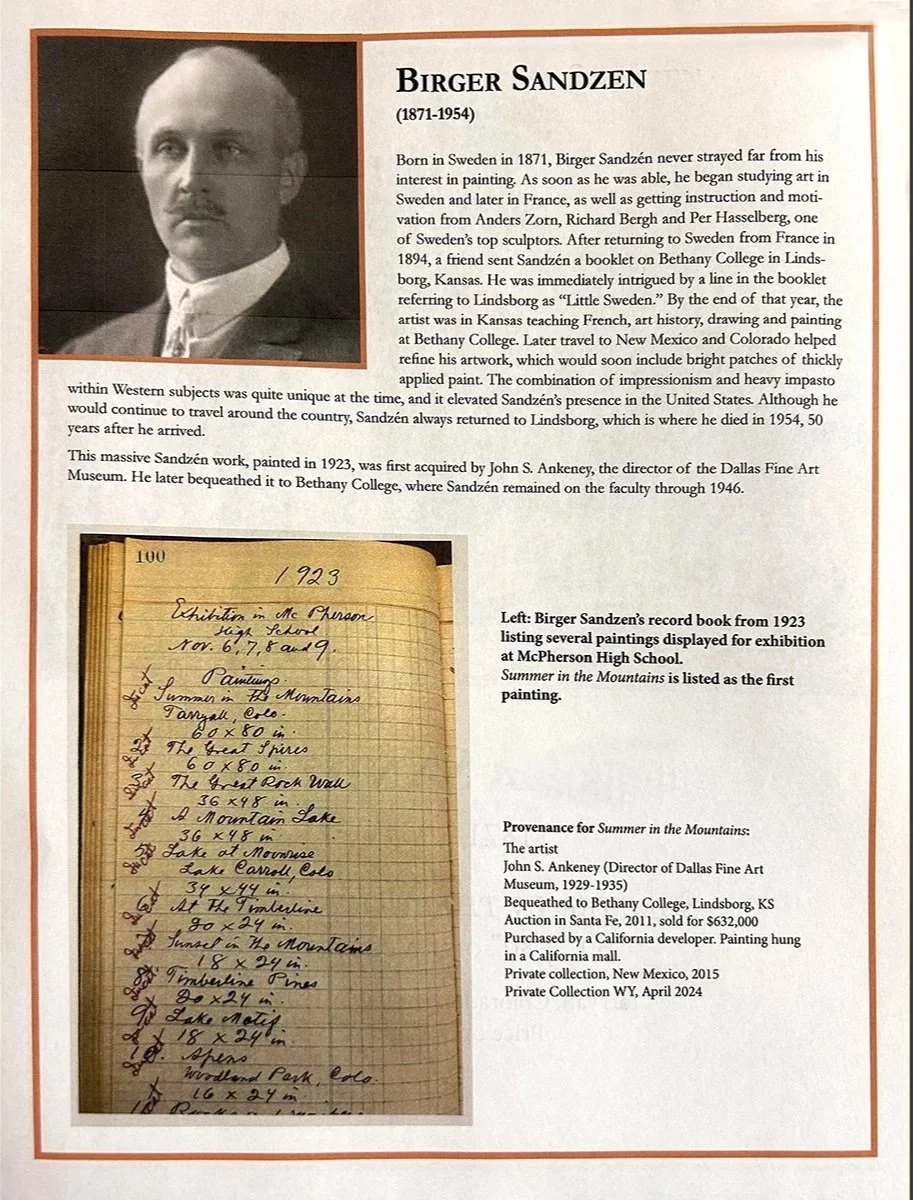 Image 8 of 9
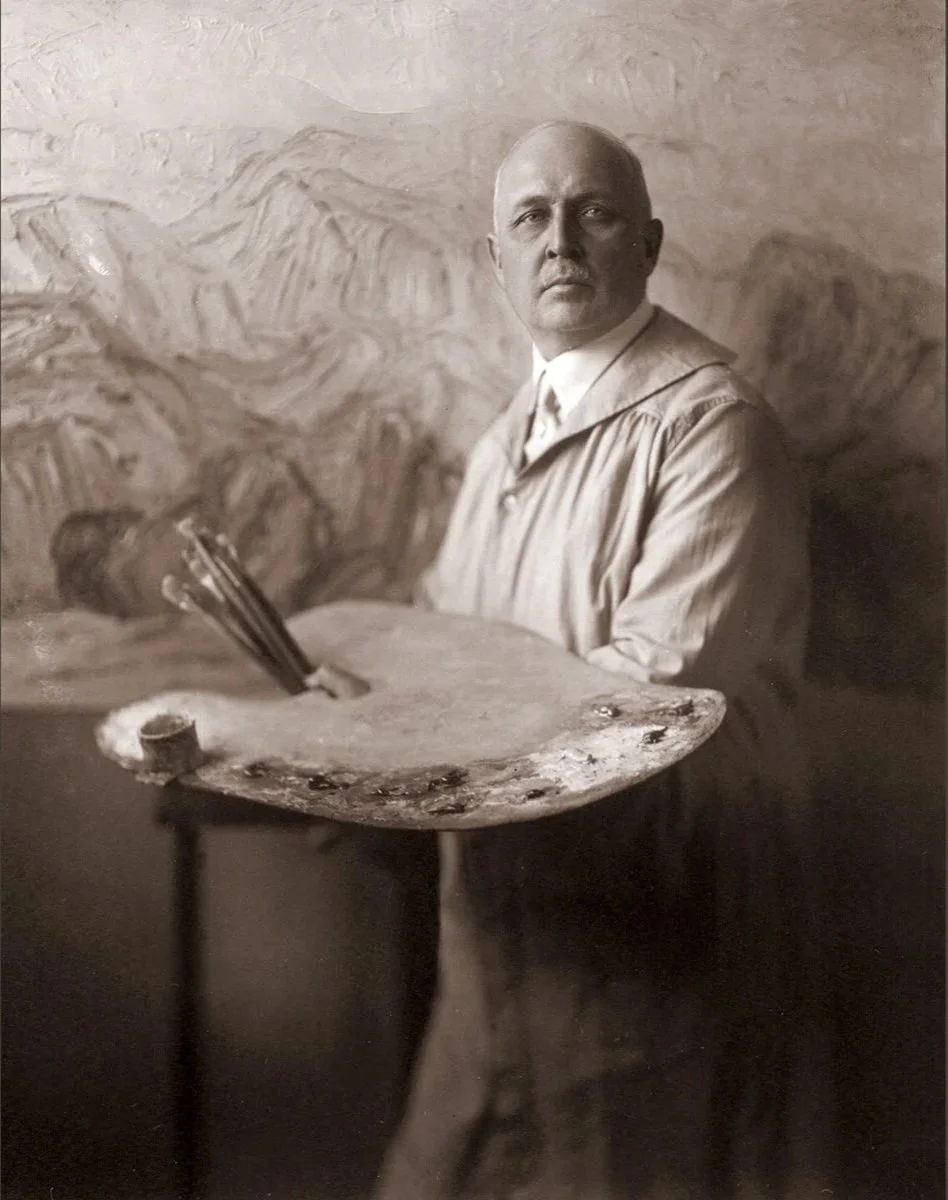 Image 9 of 9