

 Image 1 of 5
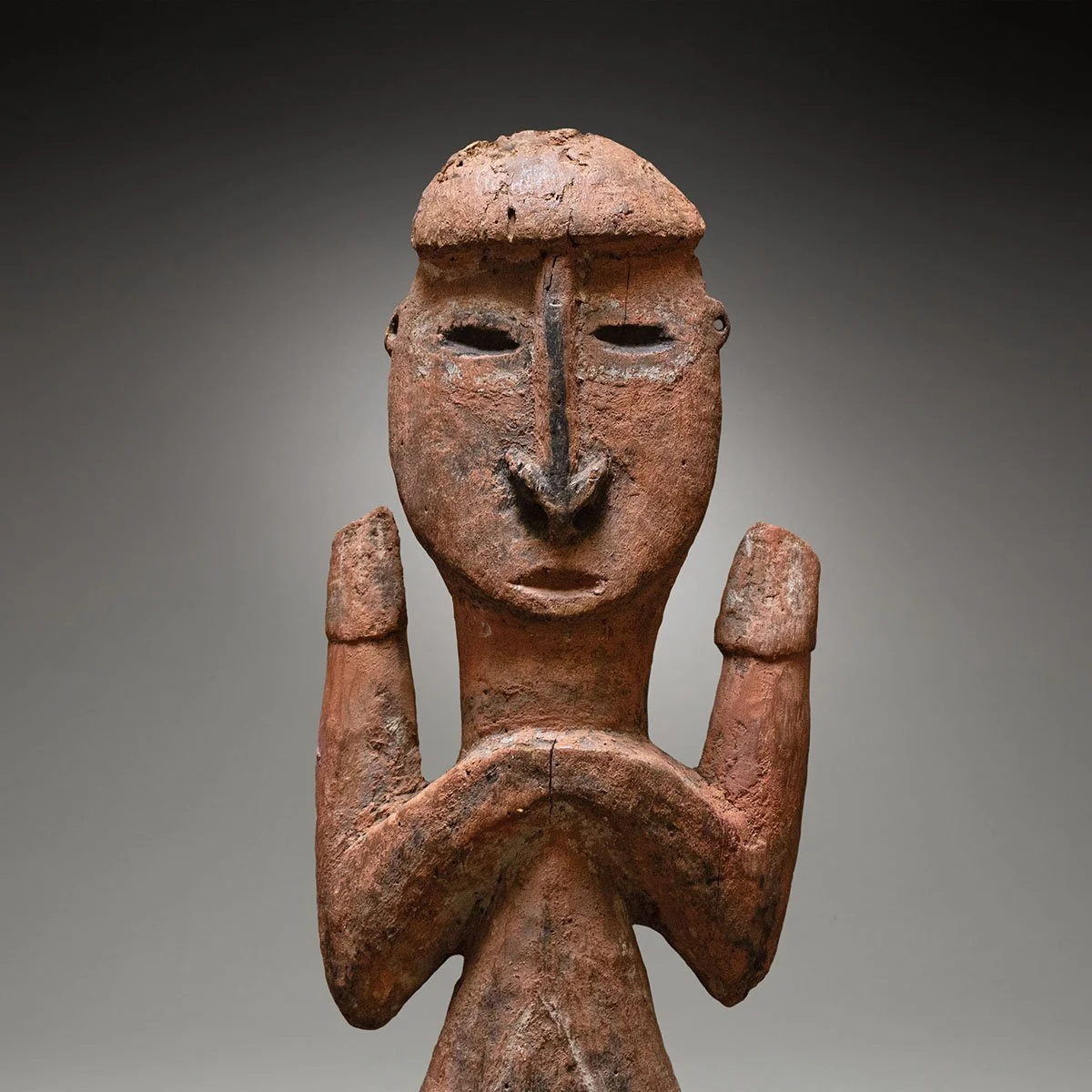 Image 2 of 5
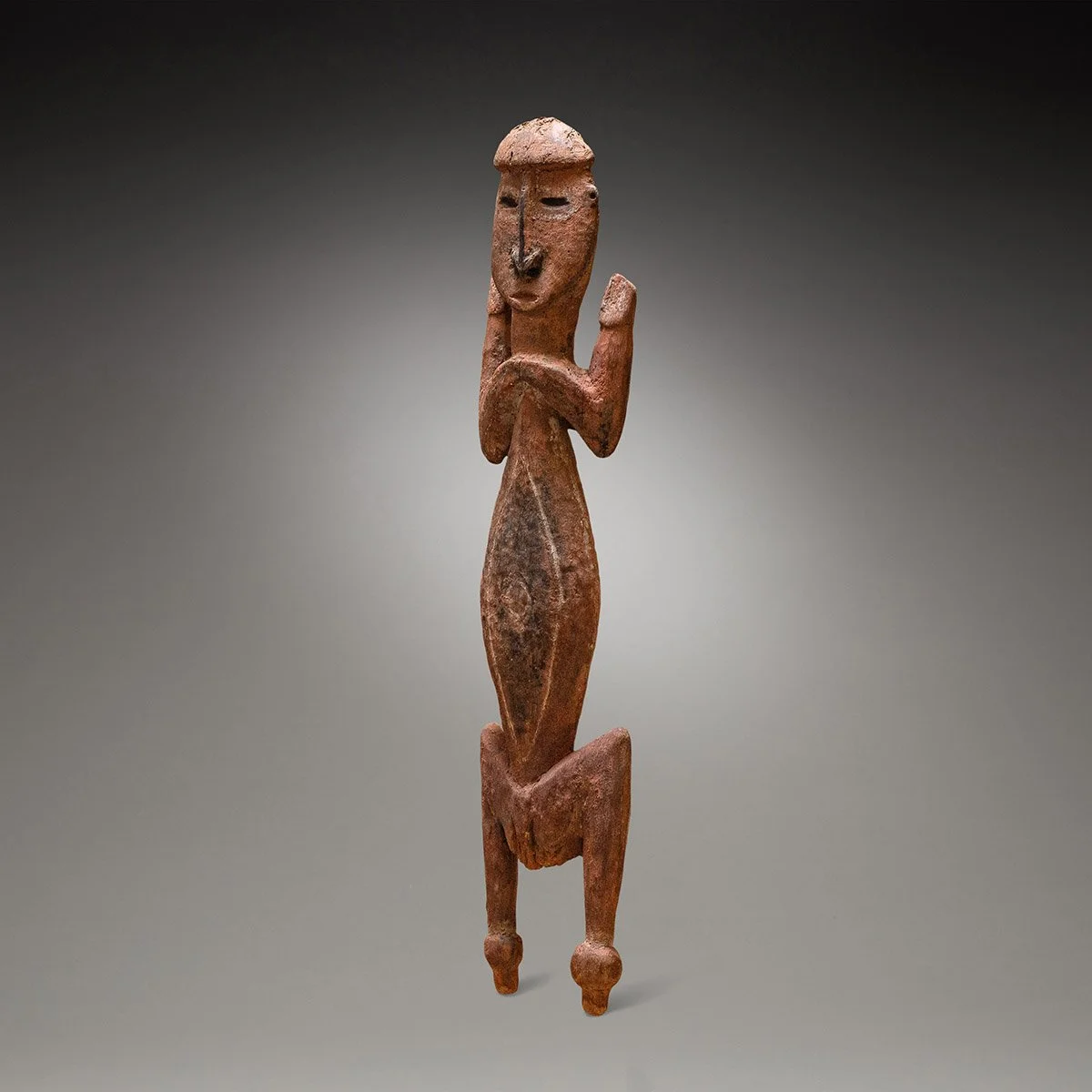 Image 3 of 5
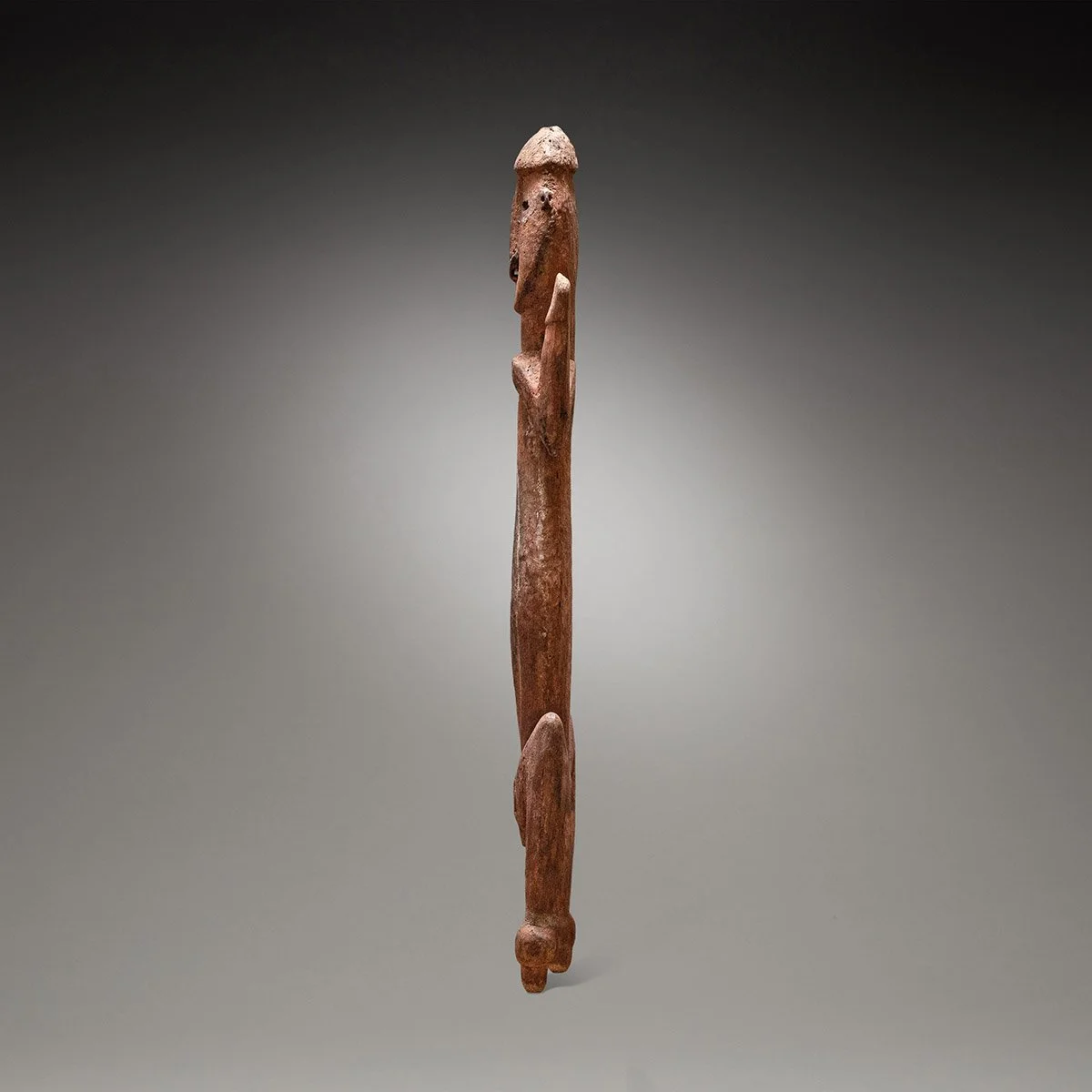 Image 4 of 5
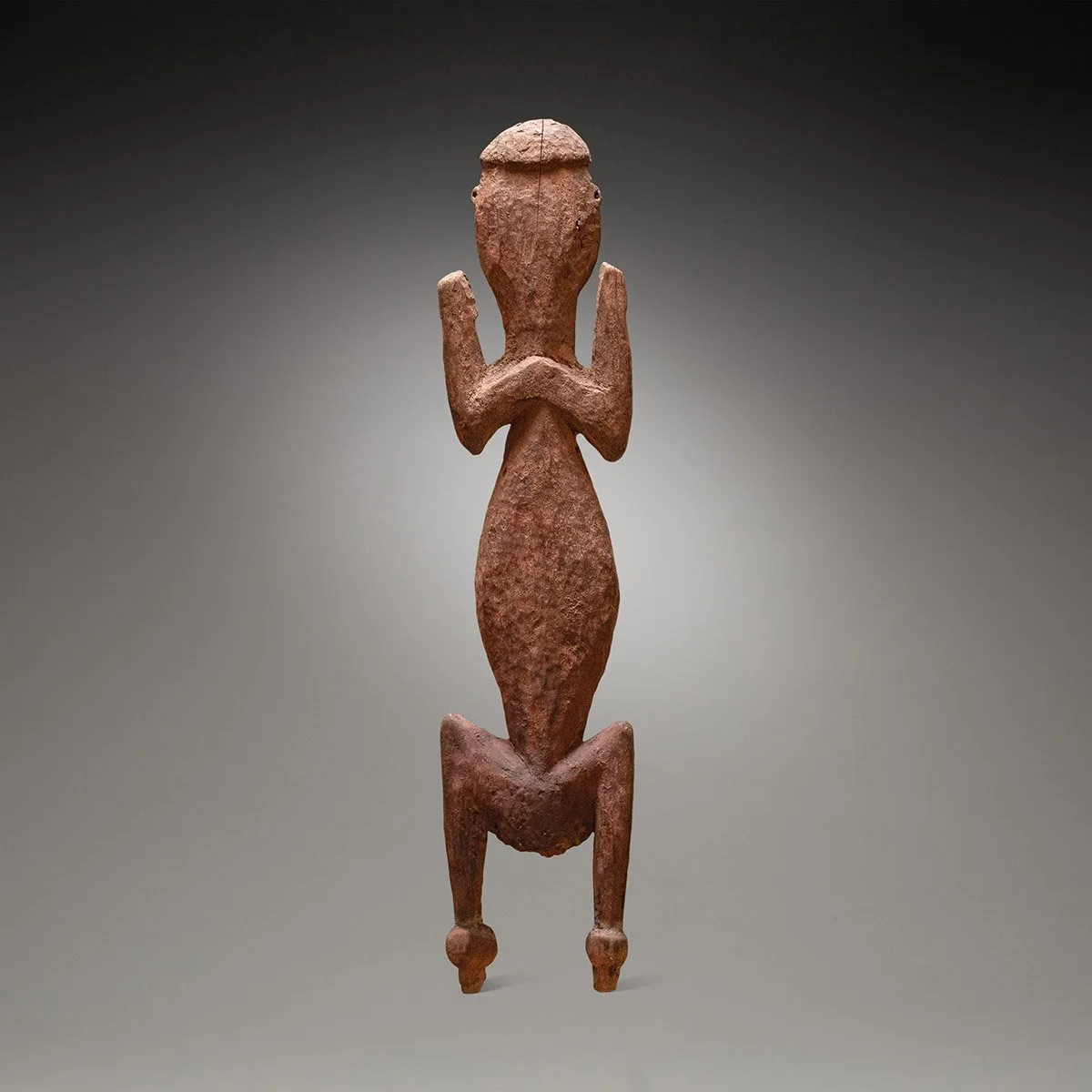 Image 5 of 5
Prince Alexander Mountains, Papua New Guinea
19th to early 20th century; carved with stone tooling
Wood, earth pigments, lime, charcoal
Height: 31¼ in (79 cm)
Provenance: Collected in the mid-1960s by John and Lucy Castledon, Wewak, Papua New Guinea; private collection, Canberra, Australia
The Boiken people of the Prince Alexander Mountains produced cult figures known as malingatcha in male and female pairs for use in male initiation ceremonies, kept inside a dedicated hut within the initiation enclosure and shown to initiates only at the moment of ritual instruction. Initiates were presented before the figures, informed of their new identities by the ritual guardians of the carvings, and given a set of taboos to observe for the months that followed. The figures were bestowed with personal names and recharged with fresh pigment for each ceremonial occasion, their layered surfaces accumulating the history of multiple generations of use.
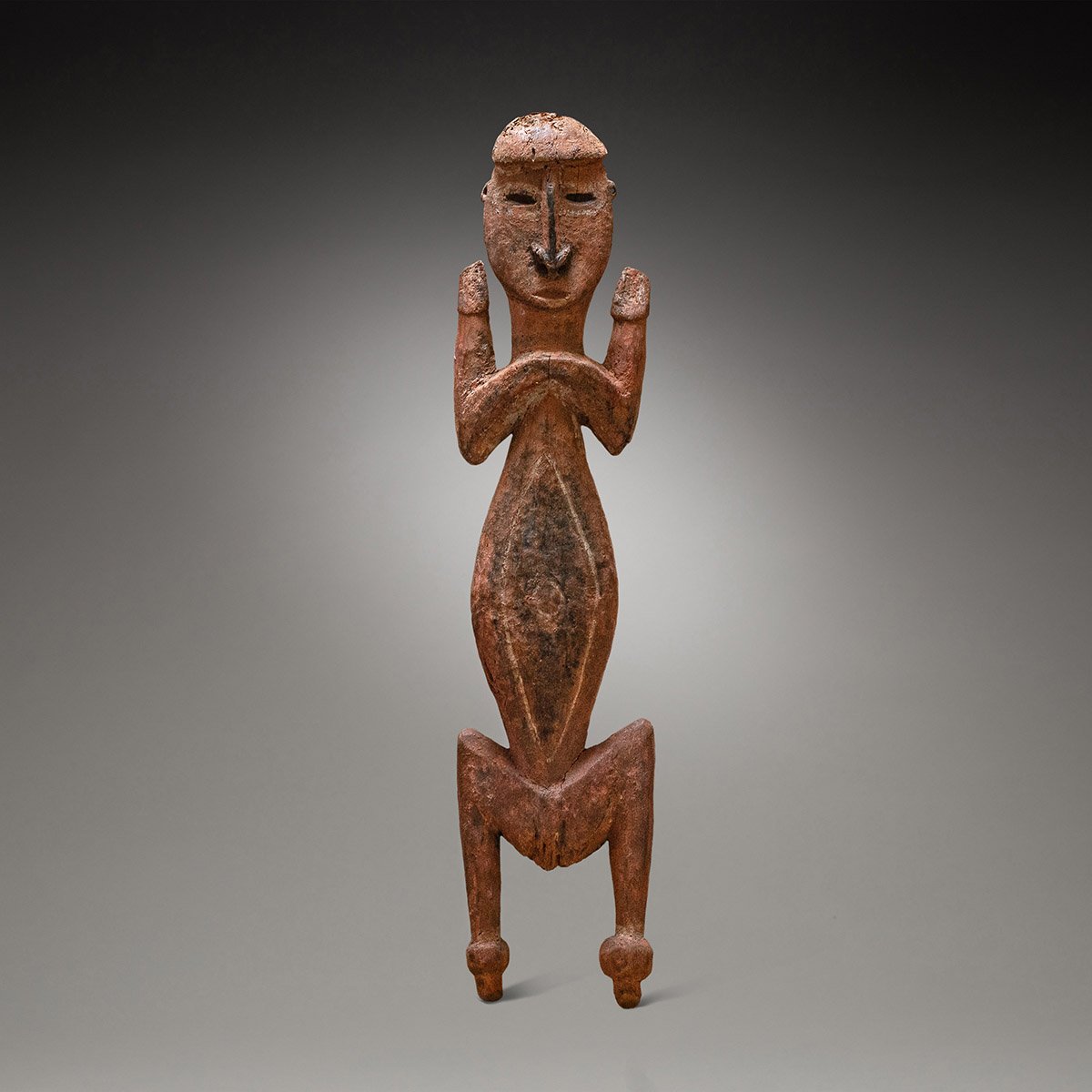
This male malingatcha is carved in the classic Boiken posture, arms bent with hands raised, the form distinguished from the female pair by its male physiognomy and the archaic quality of the carving, which reflects the use of stone rather than metal tools. The surface retains earth pigments in orange and pink tones, with highlights in white lime and black charcoal, the multiple layers of pigment now fully integrated into the wood through the accumulation of successive ceremonies. The nose and ears are pierced with suspension holes for ritual adornments, and the figure was field-collected in the 1960s by residents of Wewak with direct knowledge of its origin.
We ship free anywhere in the world, fully insured, packed by hand.
Prince Alexander Mountains, Papua New Guinea
19th to early 20th century; carved with stone tooling
Wood, earth pigments, lime, charcoal
Height: 31¼ in (79 cm)
Provenance: Collected in the mid-1960s by John and Lucy Castledon, Wewak, Papua New Guinea; private collection, Canberra, Australia
The Boiken people of the Prince Alexander Mountains produced cult figures known as malingatcha in male and female pairs for use in male initiation ceremonies, kept inside a dedicated hut within the initiation enclosure and shown to initiates only at the moment of ritual instruction. Initiates were presented before the figures, informed of their new identities by the ritual guardians of the carvings, and given a set of taboos to observe for the months that followed. The figures were bestowed with personal names and recharged with fresh pigment for each ceremonial occasion, their layered surfaces accumulating the history of multiple generations of use.
This male malingatcha is carved in the classic Boiken posture, arms bent with hands raised, the form distinguished from the female pair by its male physiognomy and the archaic quality of the carving, which reflects the use of stone rather than metal tools. The surface retains earth pigments in orange and pink tones, with highlights in white lime and black charcoal, the multiple layers of pigment now fully integrated into the wood through the accumulation of successive ceremonies. The nose and ears are pierced with suspension holes for ritual adornments, and the figure was field-collected in the 1960s by residents of Wewak with direct knowledge of its origin.
We ship free anywhere in the world, fully insured, packed by hand.