Carved antelope deer pipe attributed to Sitting Bull
circa 1860s
Sioux Lakota of the Dakotas, upper Missouri River
Stem 4 5/8 inches, height 2 3/4 inches
Provenance: Ex Tribbett, Perry Hansen and Slack collections.
The antelope is among the least common of all Plains effigy forms, and where buffalo, horse, bear, eagle, and elk recur throughout the pipe tradition, the antelope almost never appears. This one is carved by a hand that knew the animal, the head turned and the line of the back exactly right, without stiffness anywhere in the piece. The stone carries a deep patina from two sources, the polish left across years by a hand holding the bowl as these long pipes with wood stems are held, and the darker staining drawn through the bowl by smoke over a long stretch of use.
The antelope carried particular weight among the Lakota in this decade. Running Antelope, elected a shirt wearer in 1851 and one of the four principal chiefs who advised Sitting Bull through the years of the wars, signed the Treaty of 1868 at Fort Rice with a pictograph of a running antelope, the animal serving as his name and his mark, and he remains the only Native American depicted on United States paper currency. I do not know who carried this pipe but the likelihood of Sitting Bull and his relationship with Running Antelope makes is certainly a very strong possibility.
Worn text on the pipe reads Sitting Bull, Sioux Lakota of the Dakotas, and an inscription on the underside, from the Tribbett collection, reads Carved Antelope Deer Pipe, Minnesota, from the Dakotas, upper Missouri River.
Carved antelope deer pipe attributed to Sitting Bull
circa 1860s
Sioux Lakota of the Dakotas, upper Missouri River
Stem 4 5/8 inches, height 2 3/4 inches
Provenance: Ex Tribbett, Perry Hansen and Slack collections.
The antelope is among the least common of all Plains effigy forms, and where buffalo, horse, bear, eagle, and elk recur throughout the pipe tradition, the antelope almost never appears. This one is carved by a hand that knew the animal, the head turned and the line of the back exactly right, without stiffness anywhere in the piece. The stone carries a deep patina from two sources, the polish left across years by a hand holding the bowl as these long pipes with wood stems are held, and the darker staining drawn through the bowl by smoke over a long stretch of use.
The antelope carried particular weight among the Lakota in this decade. Running Antelope, elected a shirt wearer in 1851 and one of the four principal chiefs who advised Sitting Bull through the years of the wars, signed the Treaty of 1868 at Fort Rice with a pictograph of a running antelope, the animal serving as his name and his mark, and he remains the only Native American depicted on United States paper currency. I do not know who carried this pipe but the likelihood of Sitting Bull and his relationship with Running Antelope makes is certainly a very strong possibility.
Worn text on the pipe reads Sitting Bull, Sioux Lakota of the Dakotas, and an inscription on the underside, from the Tribbett collection, reads Carved Antelope Deer Pipe, Minnesota, from the Dakotas, upper Missouri River.


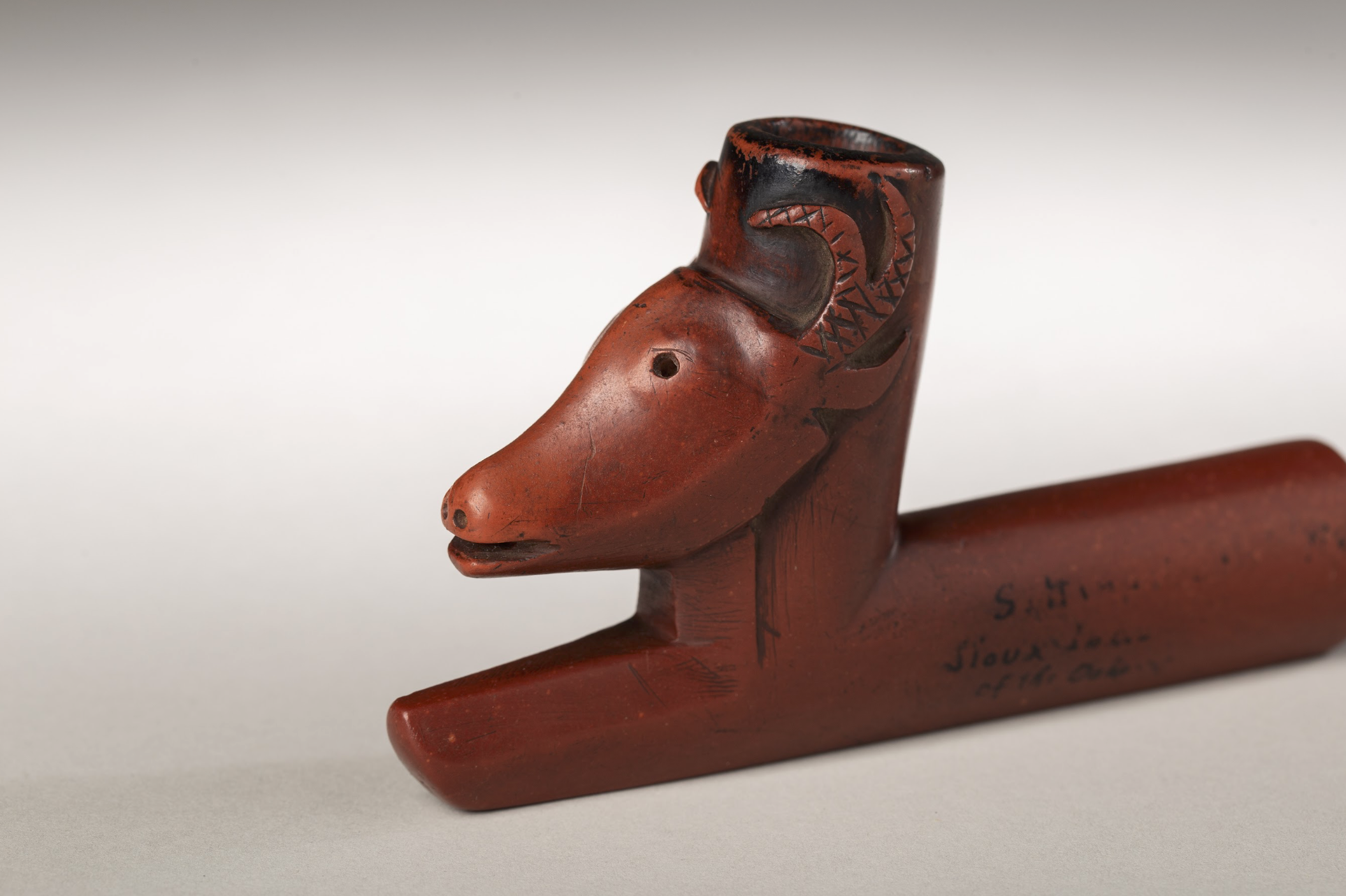 Image 1 of 8
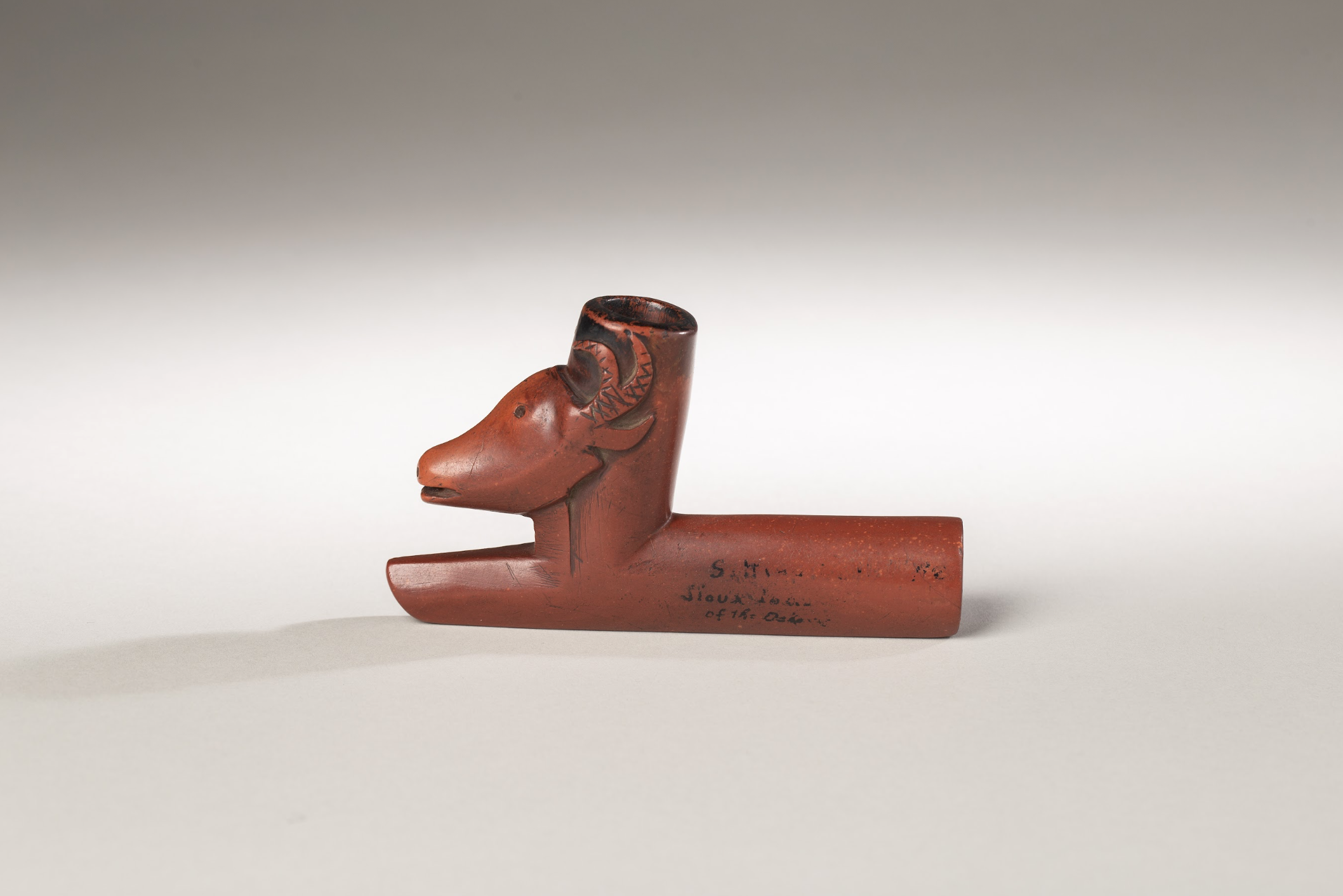 Image 2 of 8
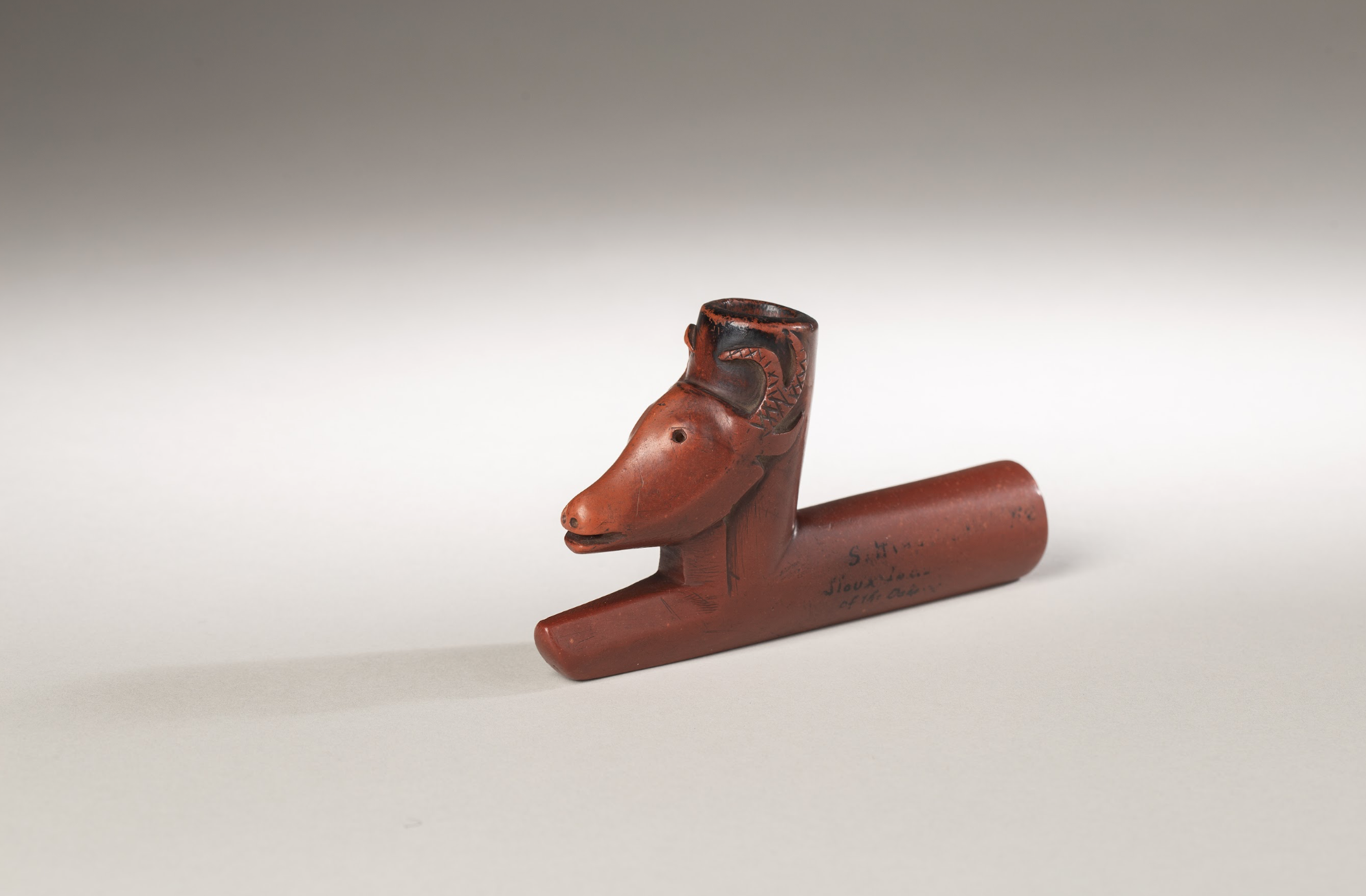 Image 3 of 8
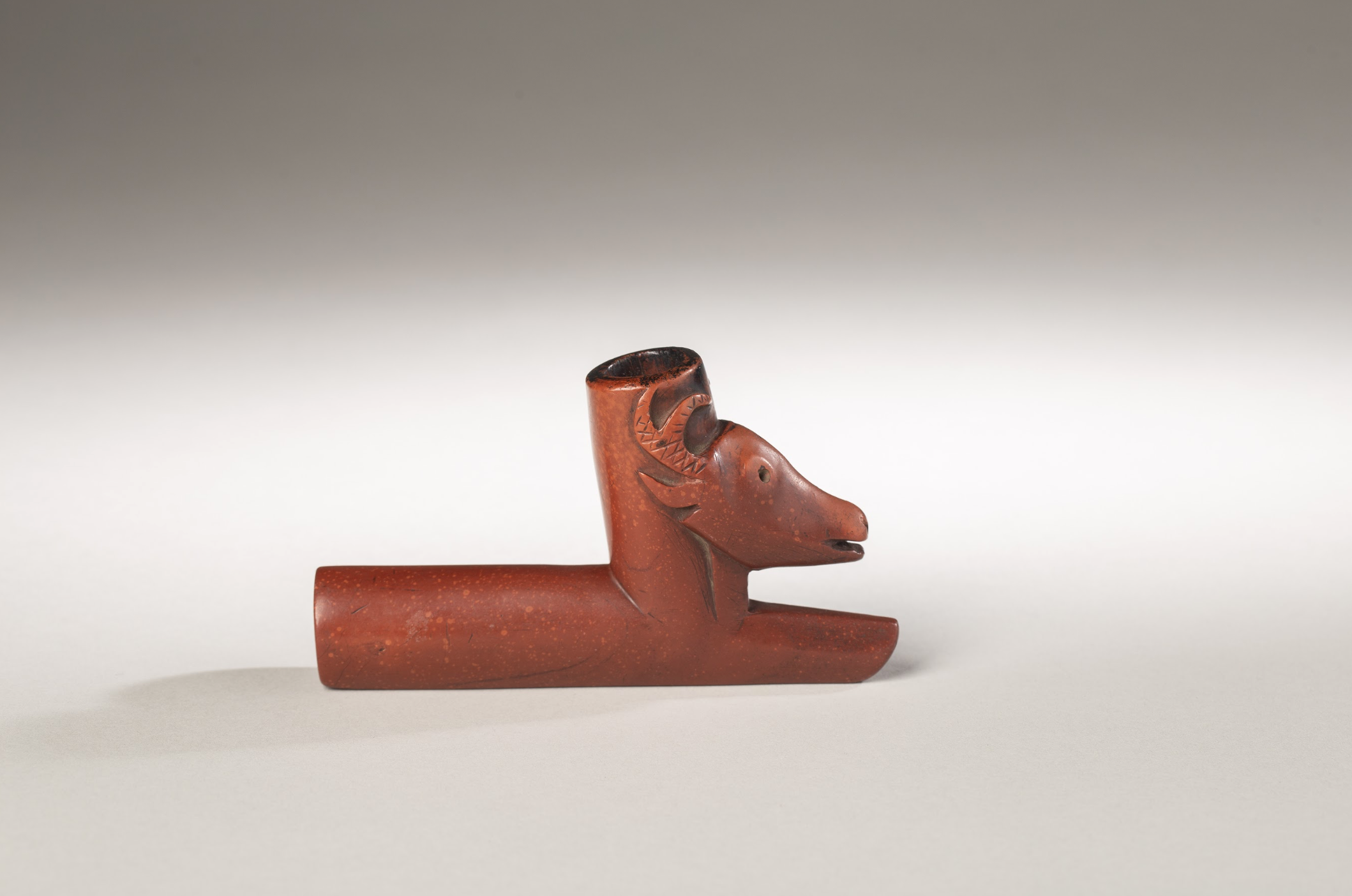 Image 4 of 8
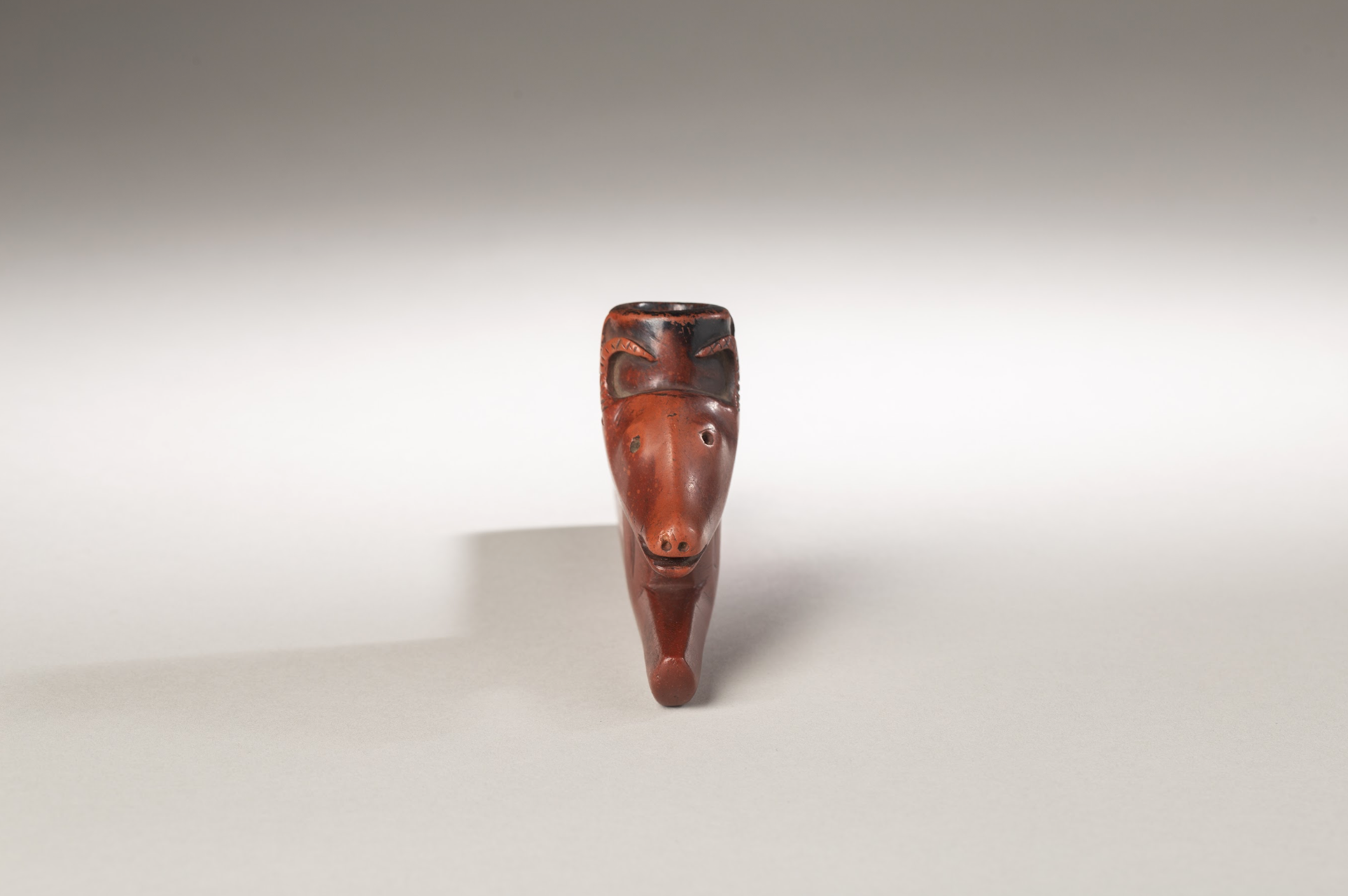 Image 5 of 8
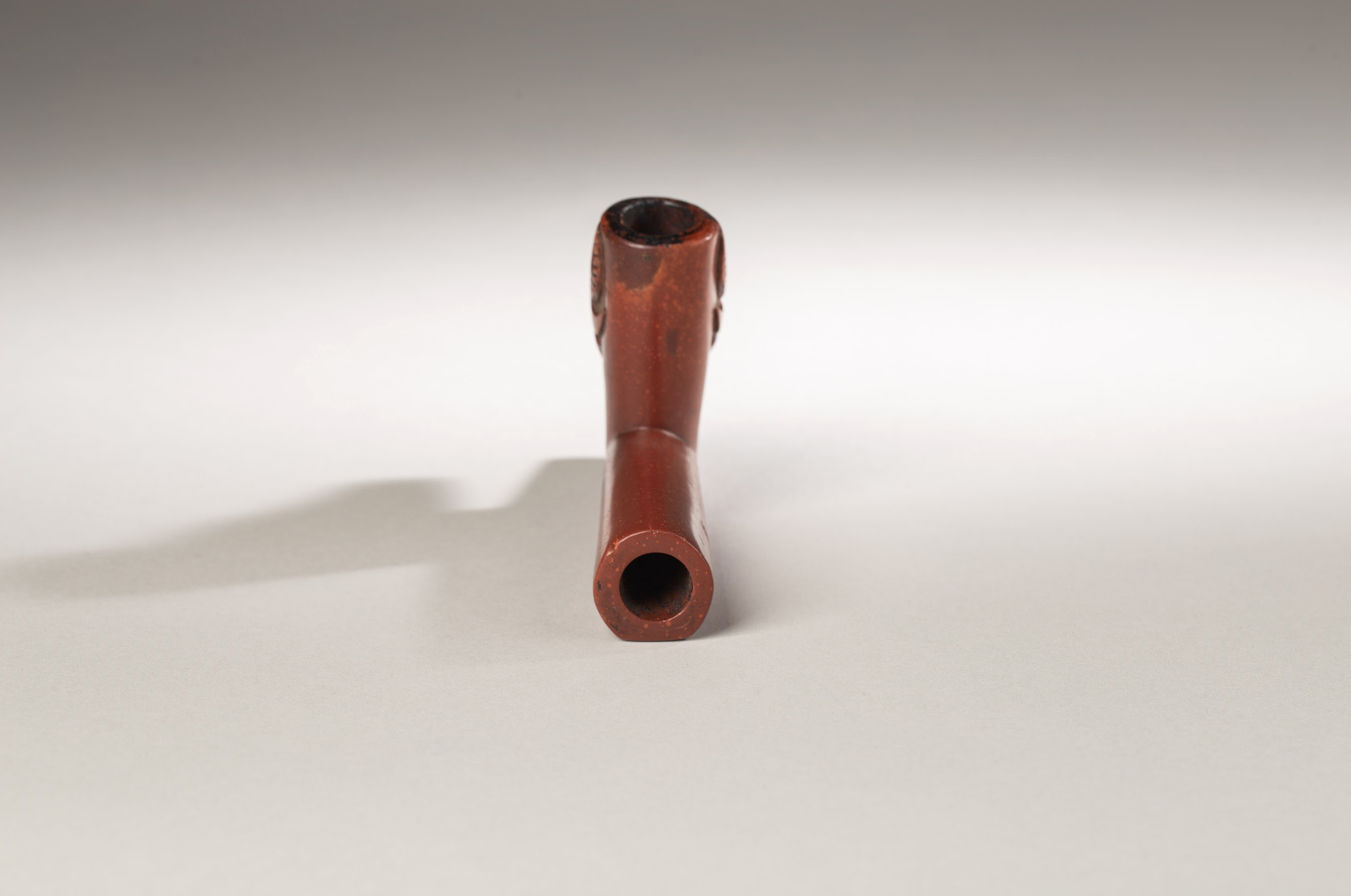 Image 6 of 8
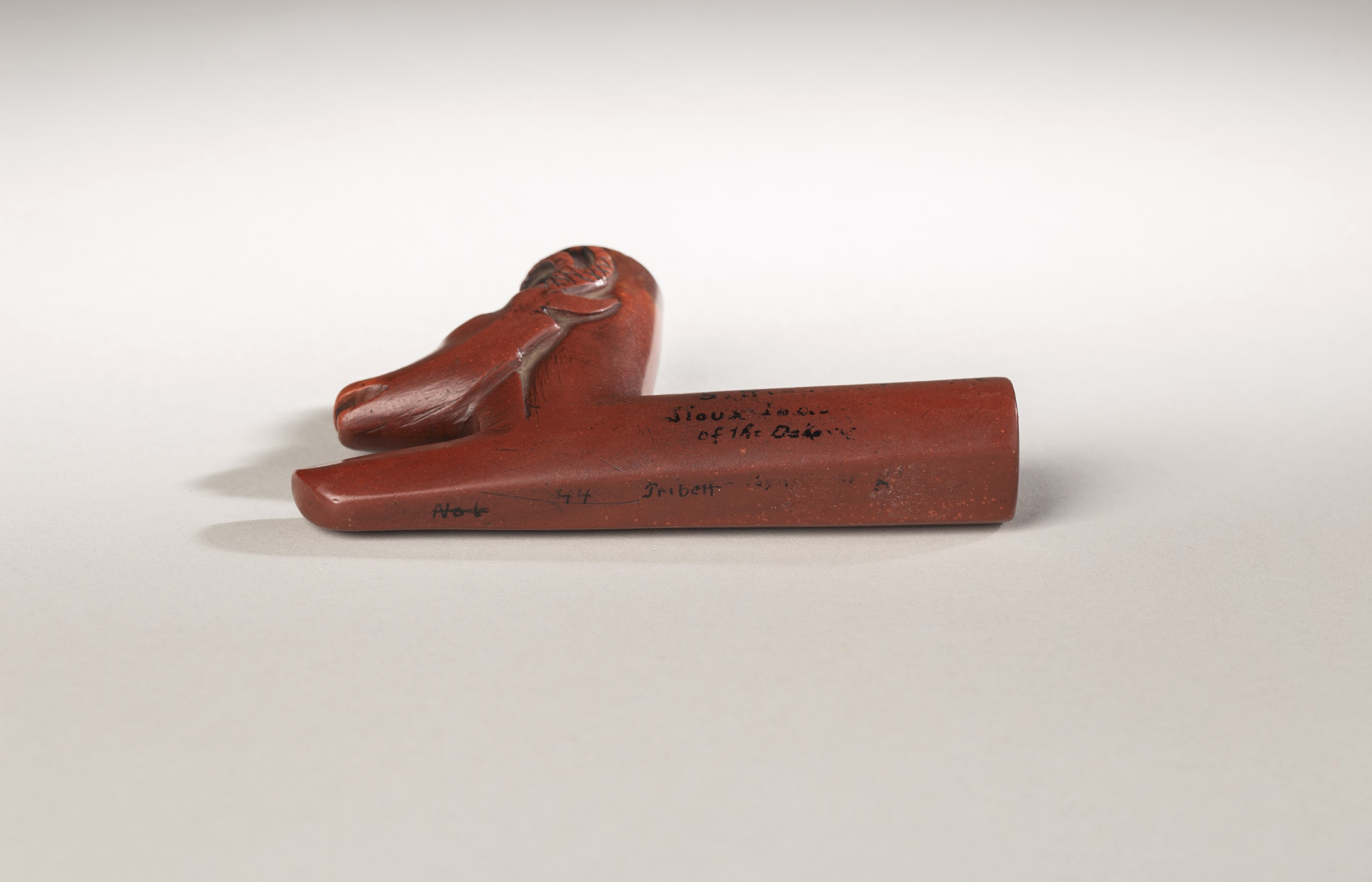 Image 7 of 8
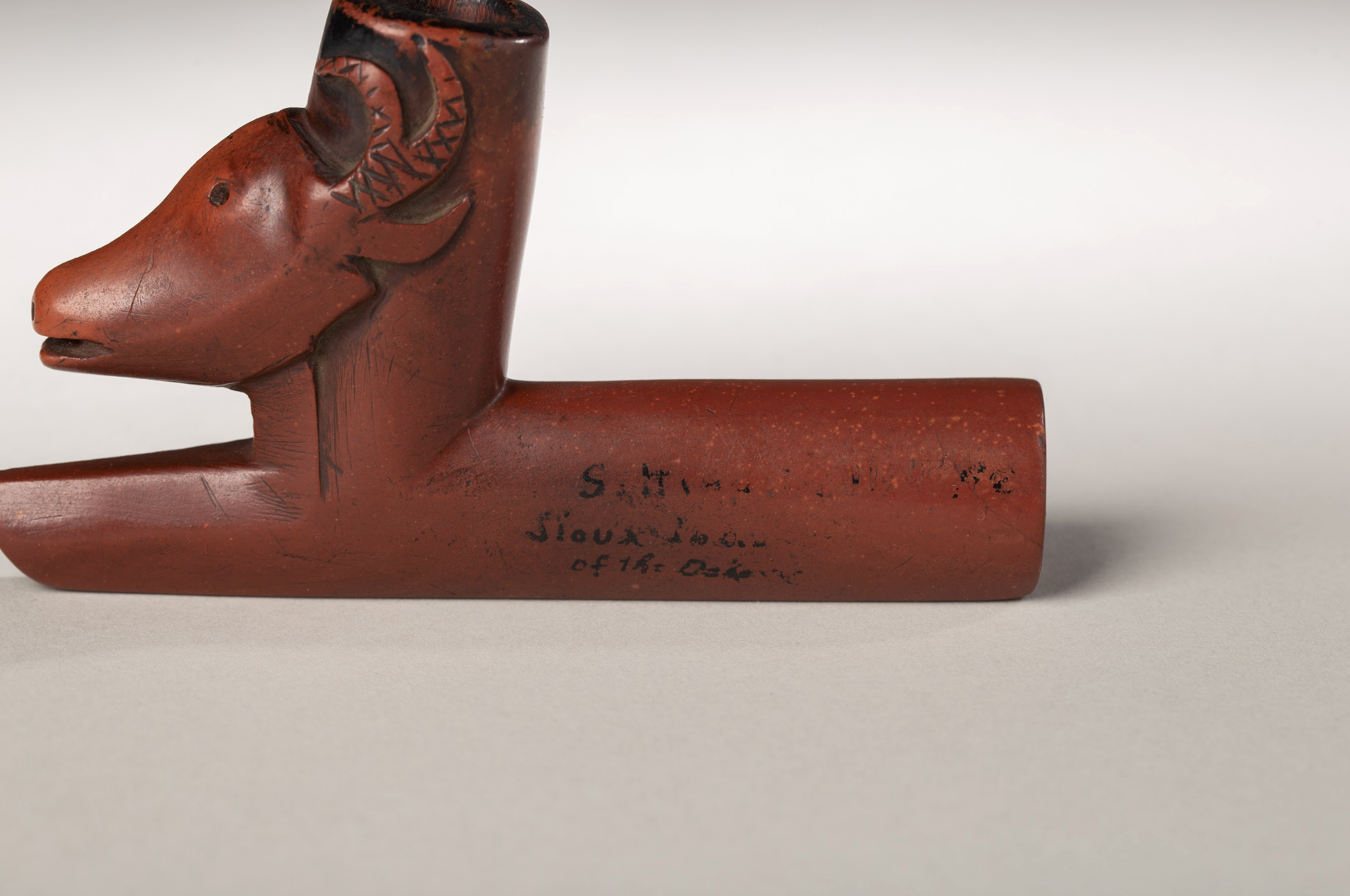 Image 8 of 8