Casas Grandes (Paquimé), Chihuahua, Mexico
Circa 1200 CE, Ramos Polychrome
Ceramic, slip, mineral pigment
Height 7¼ in (18.4 cm); diameter 6 in (15.2 cm)
Provenance: Peter Tillou, Litchfield, CT
Not recovered from Federal or State land.
Ramos Polychrome is the principal painted ceramic tradition of the Paquimé culture, produced in the Chihuahuan Desert of northern Mexico between approximately 1200 and 1450 CE. The type is distinguished by geometric and figurative decoration in black and red on a cream slip ground, applied over a burnished surface. Human effigy jars form a distinct category within it, in which the body of the vessel is modeled and painted as a figure rather than ornamented as a container.
This jar carries a modeled face at the shoulder, with lidded eyes, applied ears, and a band of stepped and hooked motifs across the crown reading as a cap. A zigzag register crosses the cheeks in the manner of the facial painting recorded on other Casas Grandes effigy vessels, and a narrow red line encircles the neck below. The lower body is divided into broad diagonal panels of hooked scrolls and grouped parallel lines, a vocabulary shared with the ceremonial imagery of Mesoamerican cultures to the south and connected to Paquimé through the long distance trade networks centered there.
We ship free anywhere in the world, fully insured, packed by hand.
Casas Grandes (Paquimé), Chihuahua, Mexico
Circa 1200 CE, Ramos Polychrome
Ceramic, slip, mineral pigment
Height 7¼ in (18.4 cm); diameter 6 in (15.2 cm)
Provenance: Peter Tillou, Litchfield, CT
Not recovered from Federal or State land.
Ramos Polychrome is the principal painted ceramic tradition of the Paquimé culture, produced in the Chihuahuan Desert of northern Mexico between approximately 1200 and 1450 CE. The type is distinguished by geometric and figurative decoration in black and red on a cream slip ground, applied over a burnished surface. Human effigy jars form a distinct category within it, in which the body of the vessel is modeled and painted as a figure rather than ornamented as a container.
This jar carries a modeled face at the shoulder, with lidded eyes, applied ears, and a band of stepped and hooked motifs across the crown reading as a cap. A zigzag register crosses the cheeks in the manner of the facial painting recorded on other Casas Grandes effigy vessels, and a narrow red line encircles the neck below. The lower body is divided into broad diagonal panels of hooked scrolls and grouped parallel lines, a vocabulary shared with the ceremonial imagery of Mesoamerican cultures to the south and connected to Paquimé through the long distance trade networks centered there.
We ship free anywhere in the world, fully insured, packed by hand.


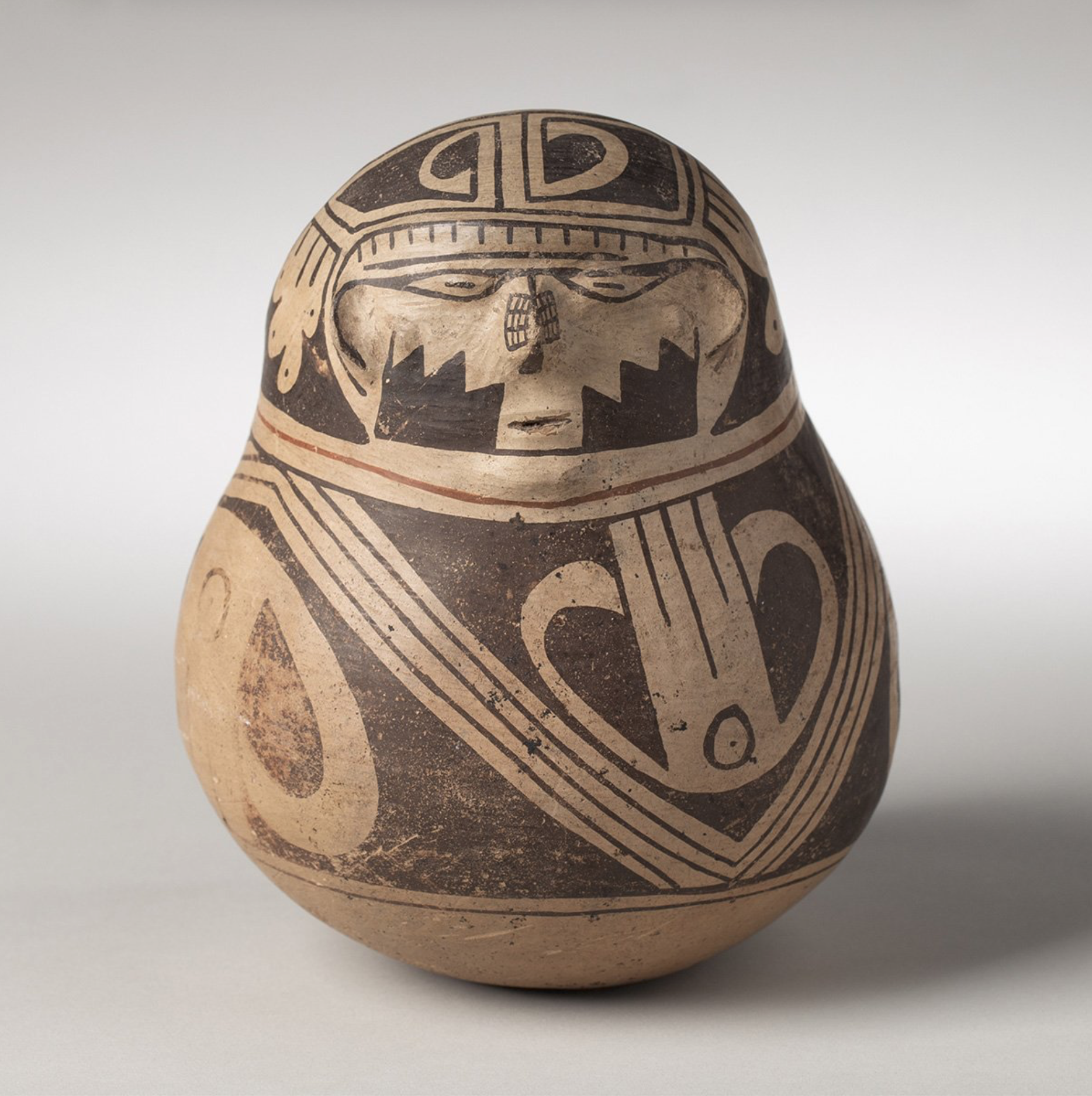 Image 1 of 7
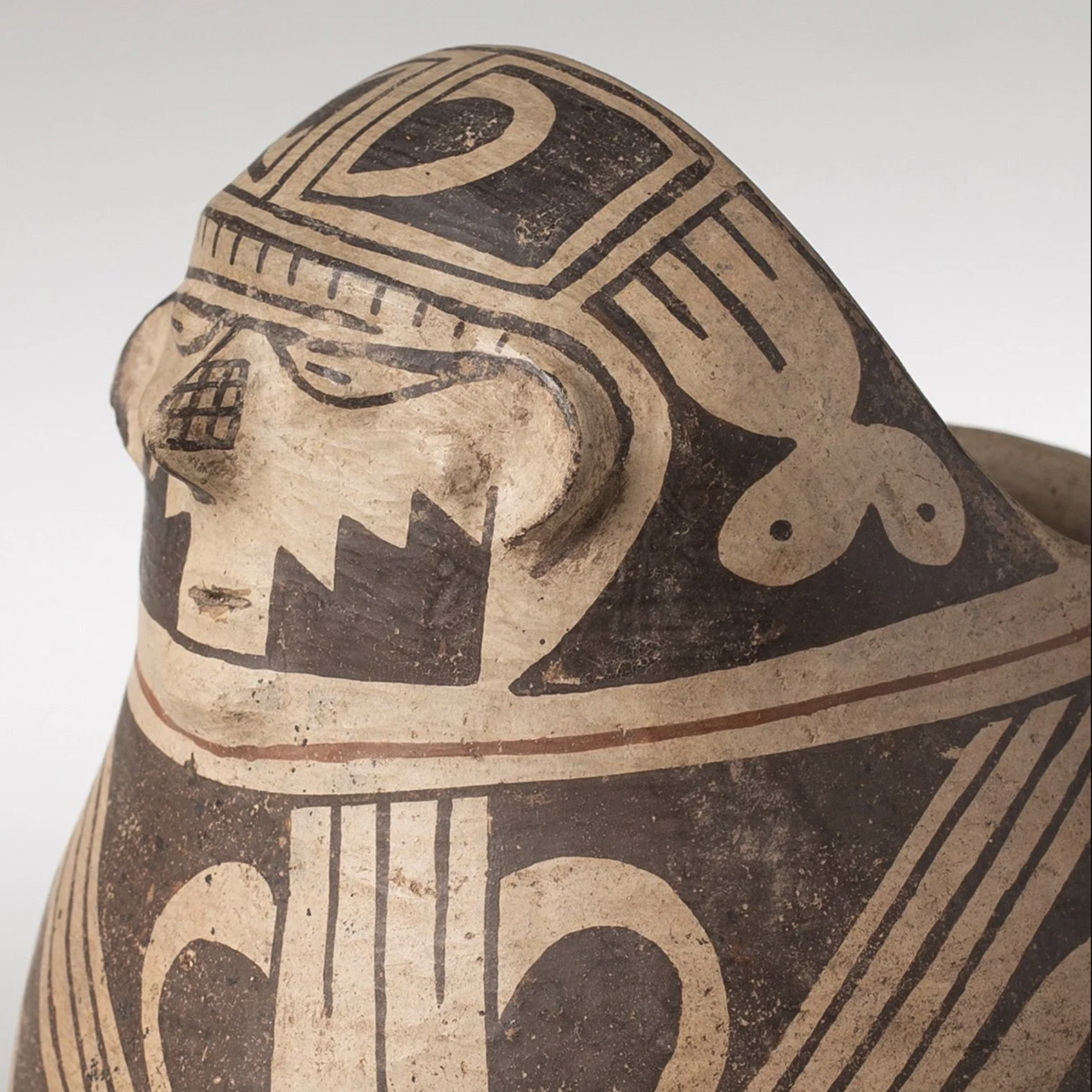 Image 2 of 7
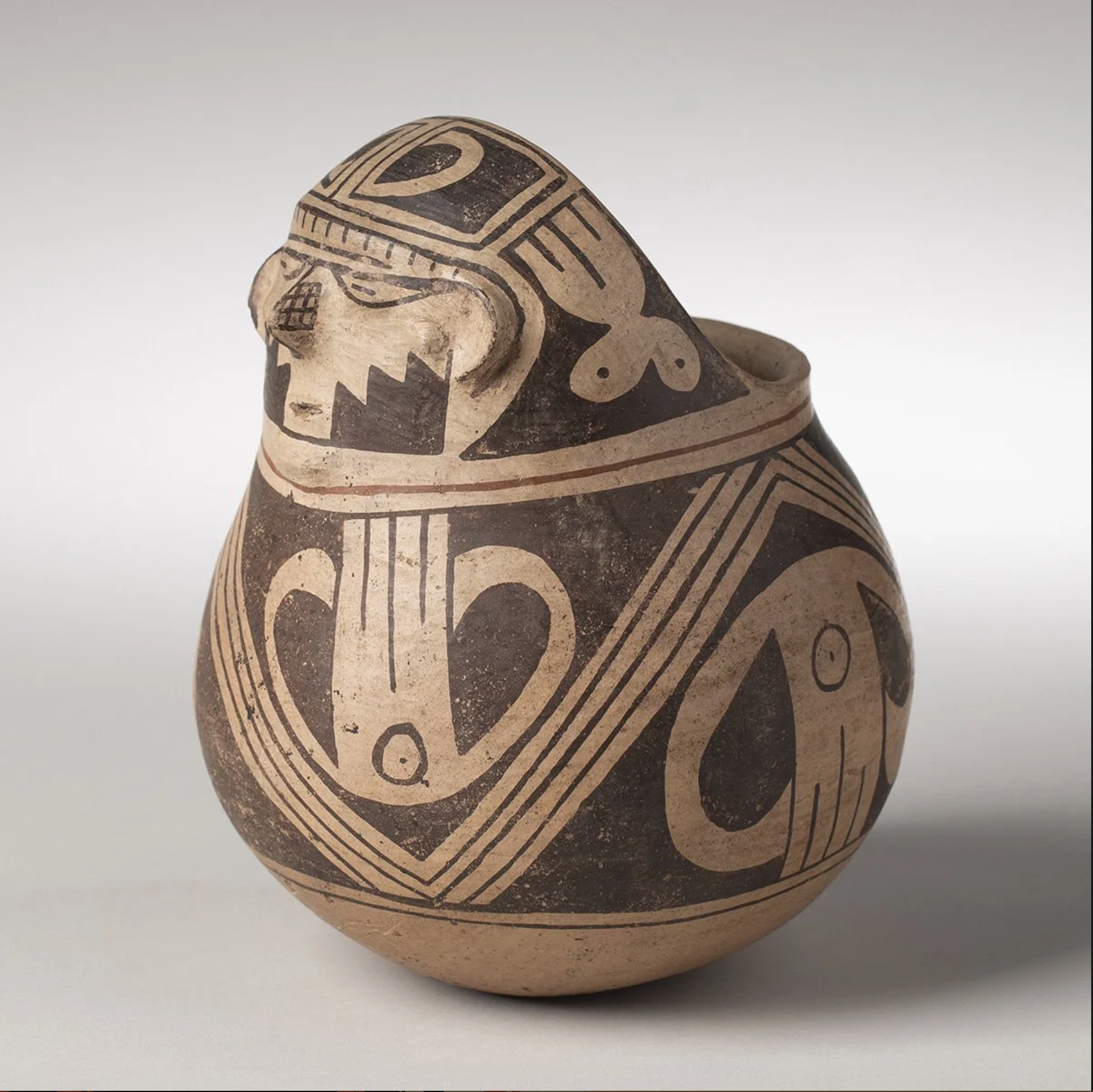 Image 3 of 7
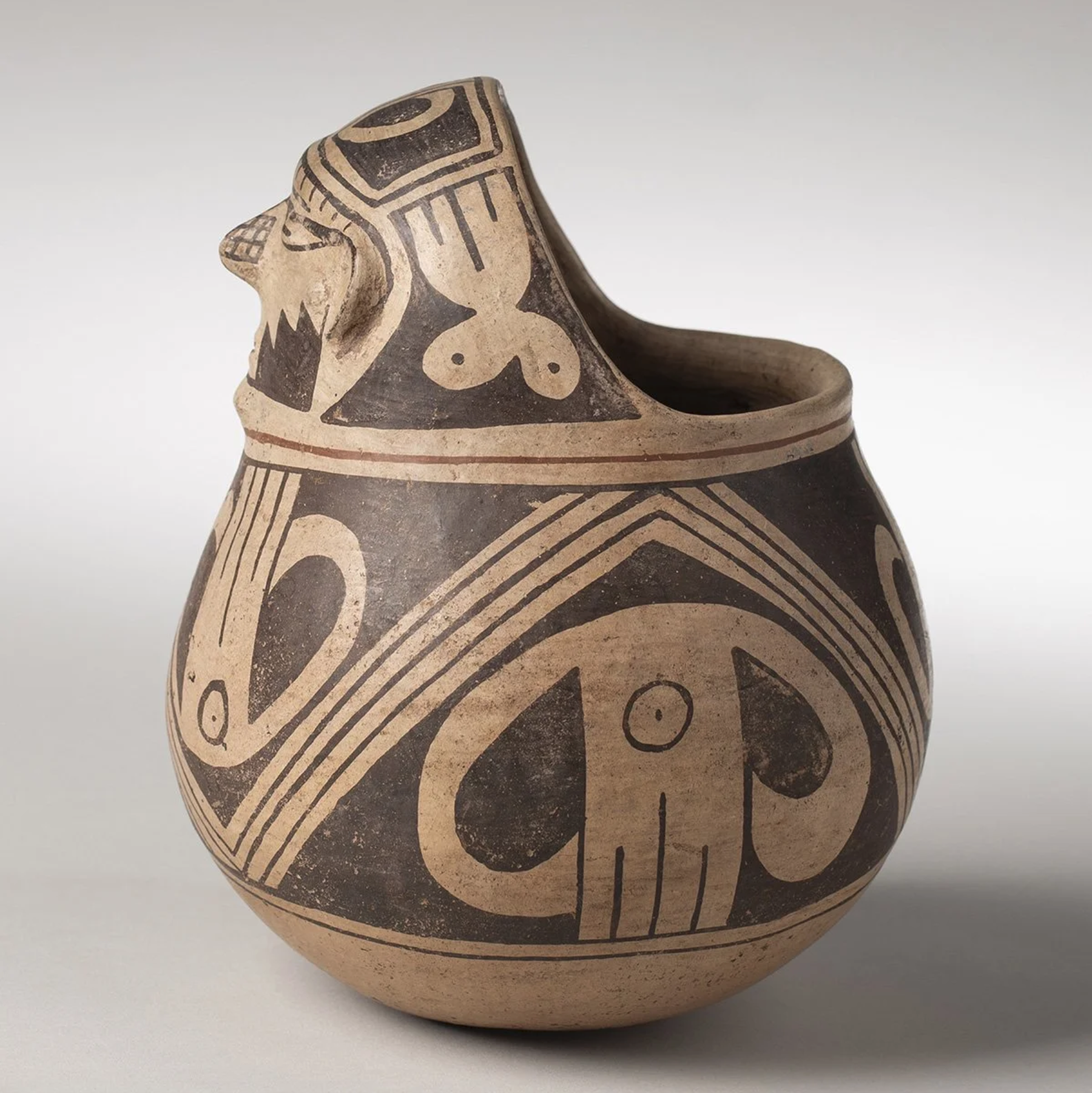 Image 4 of 7
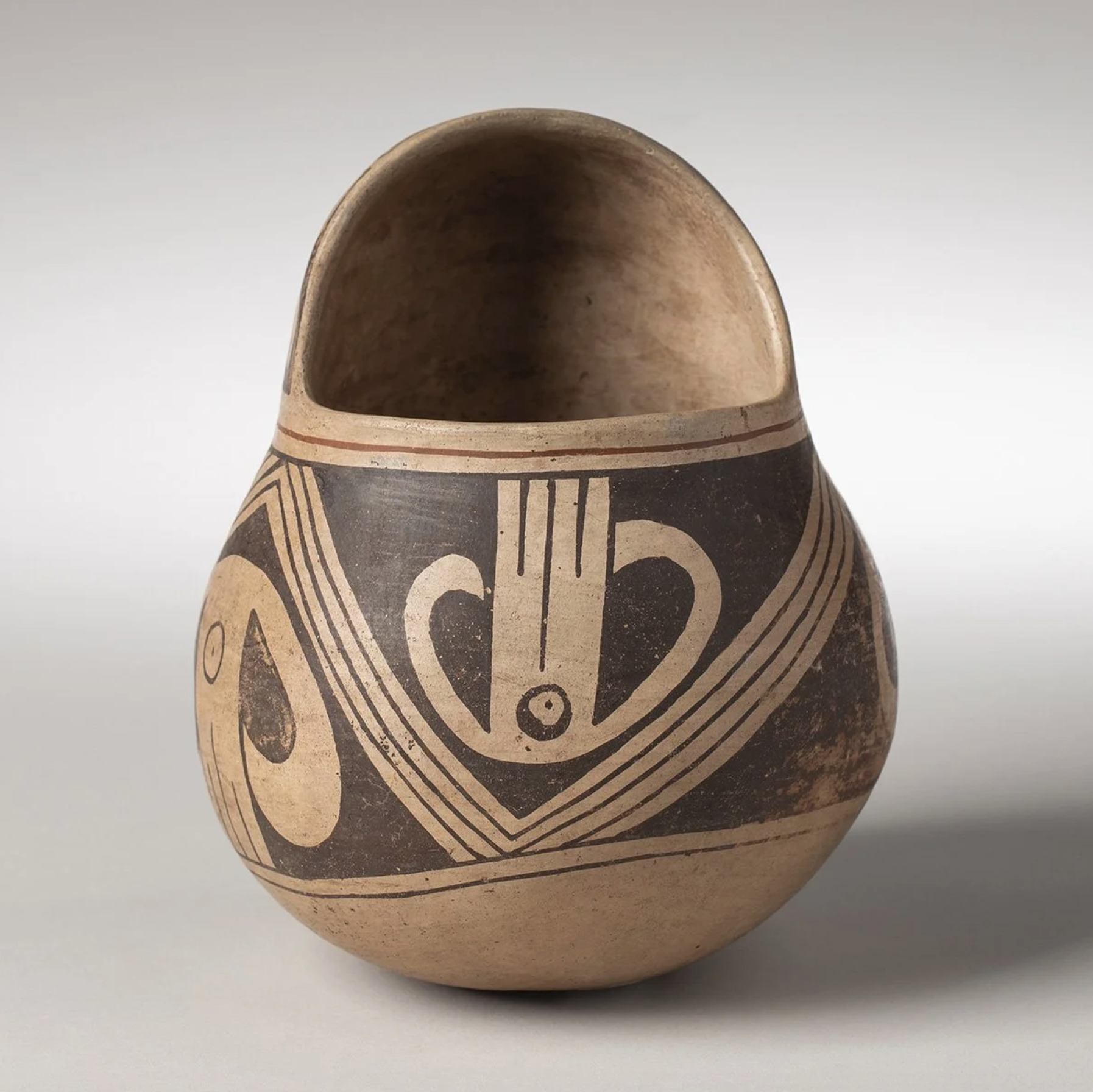 Image 5 of 7
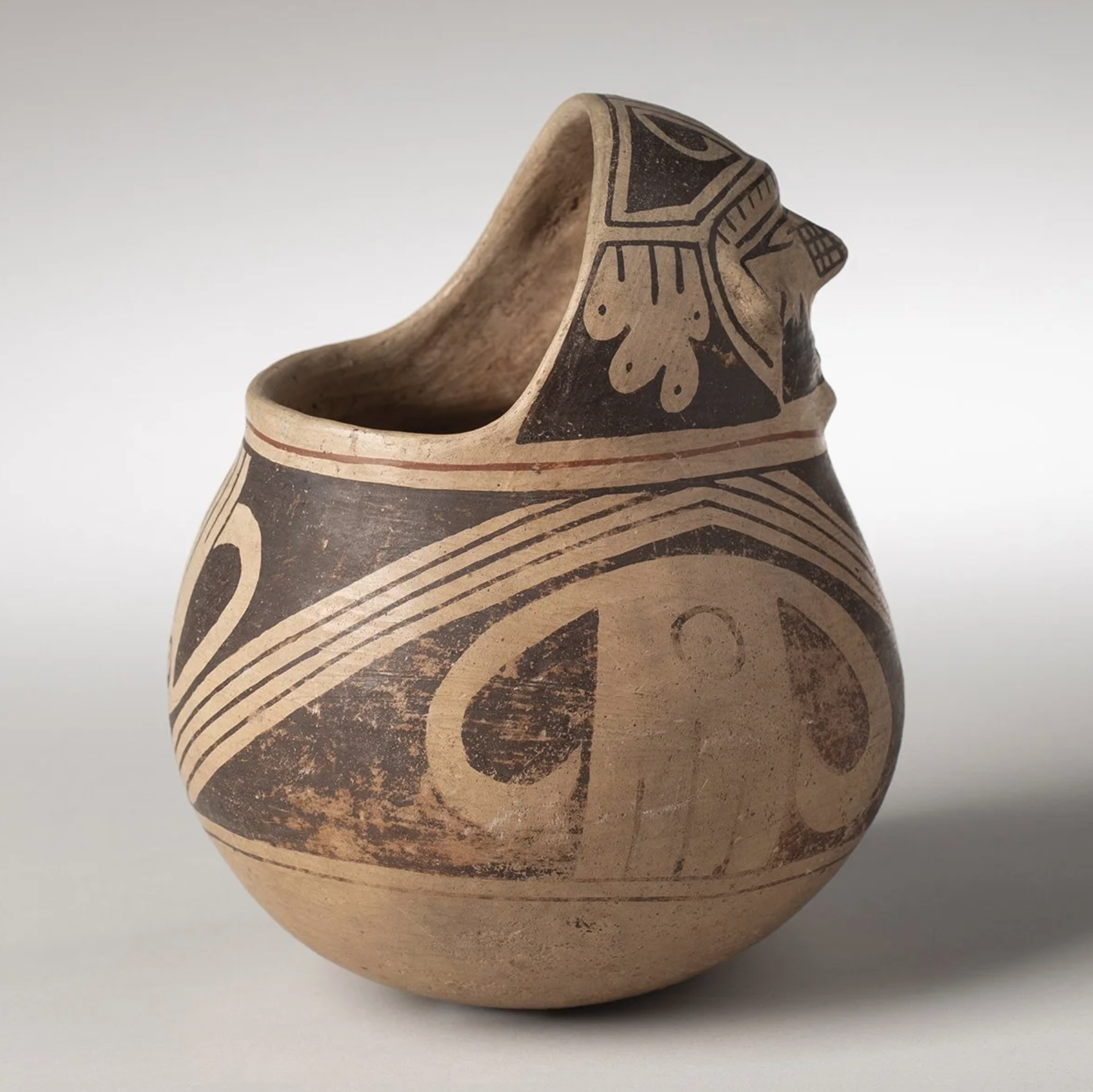 Image 6 of 7
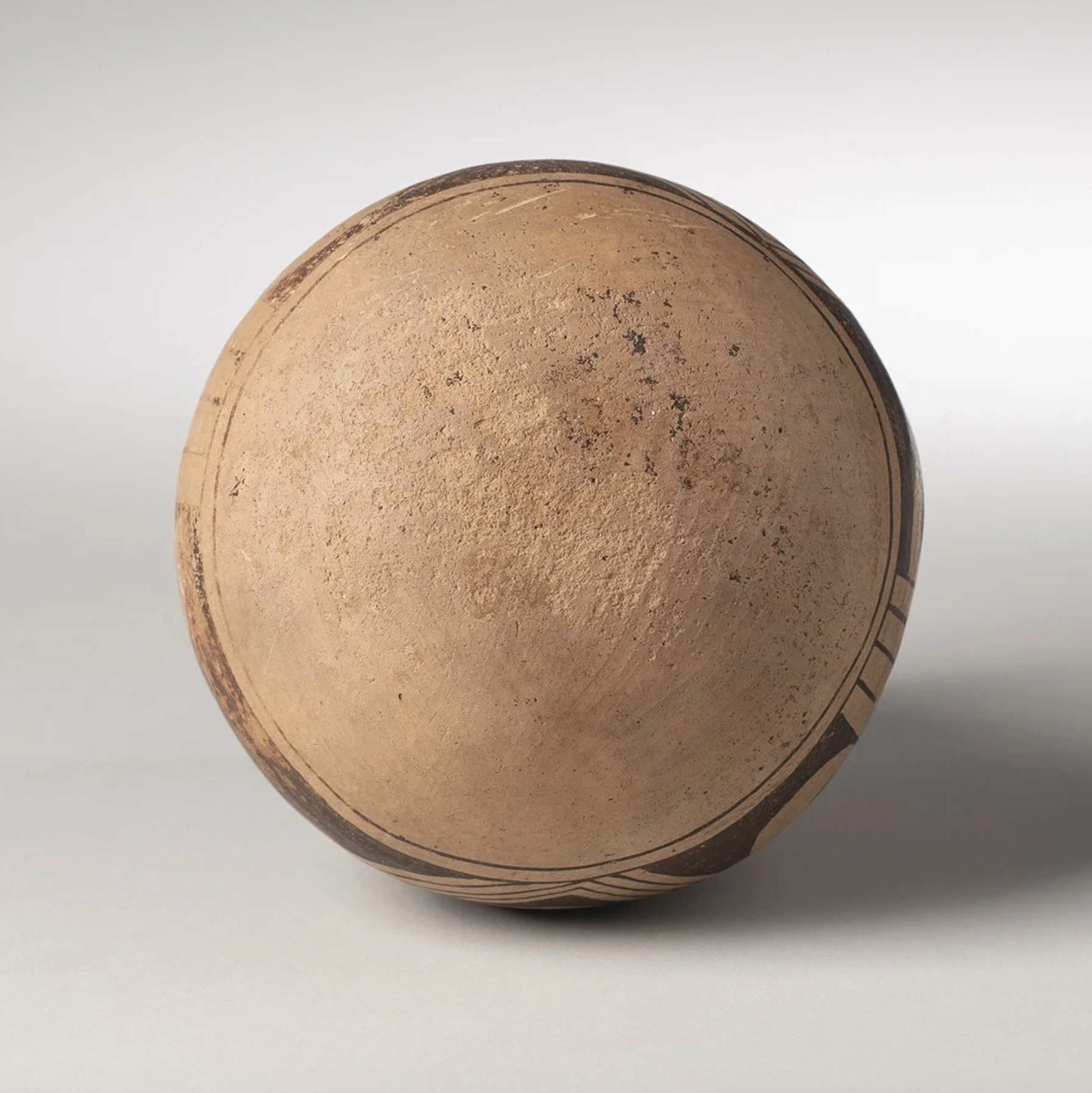 Image 7 of 7