

 Image 1 of 2
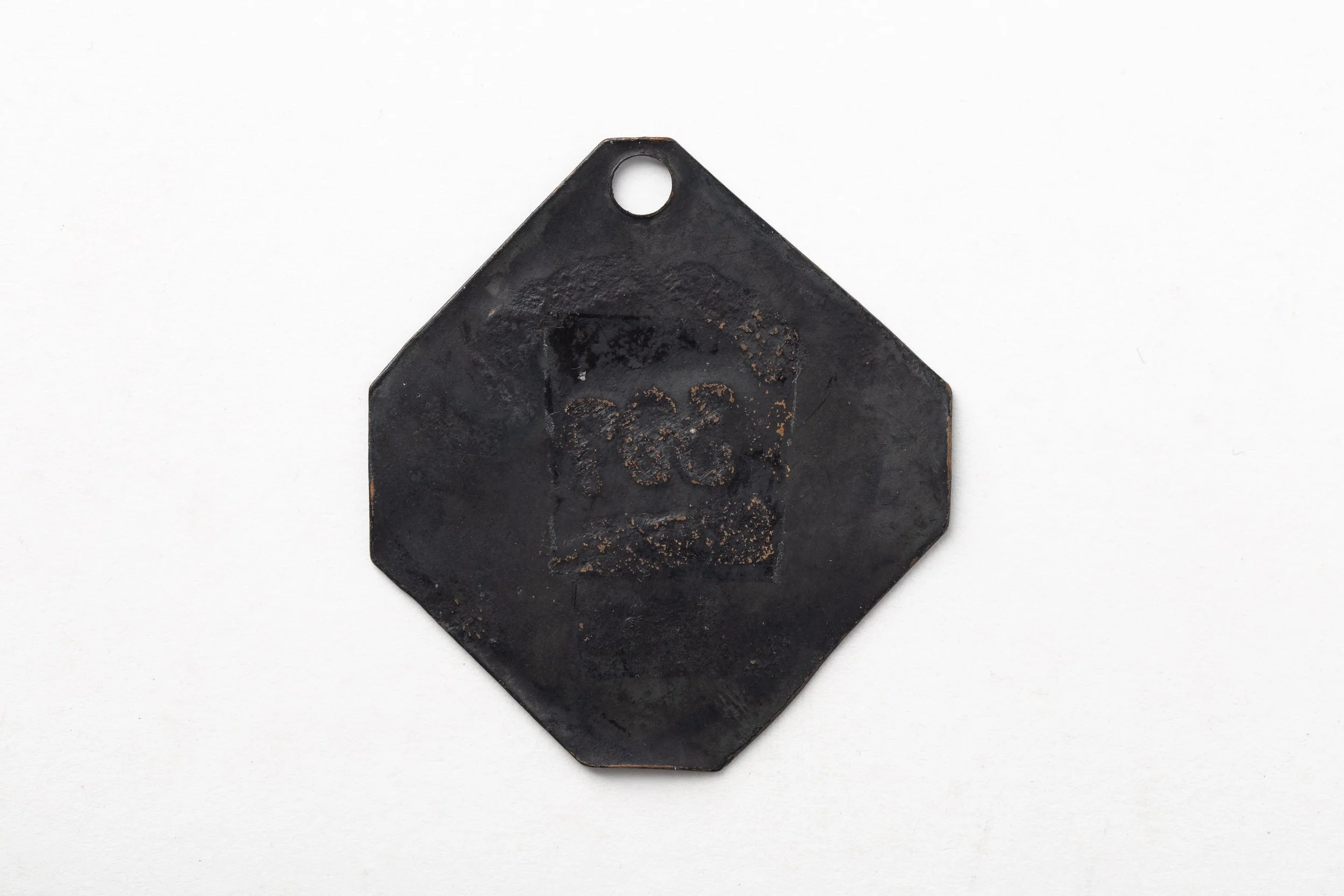 Image 2 of 2
Charleston, South Carolina
1841
Copper or brass
1 1/2" x 1 5/8" (3.8 x 4.1 cm)
Provenance: Stanley and Jackie Levin, Savannah, Georgia; purchased 1987
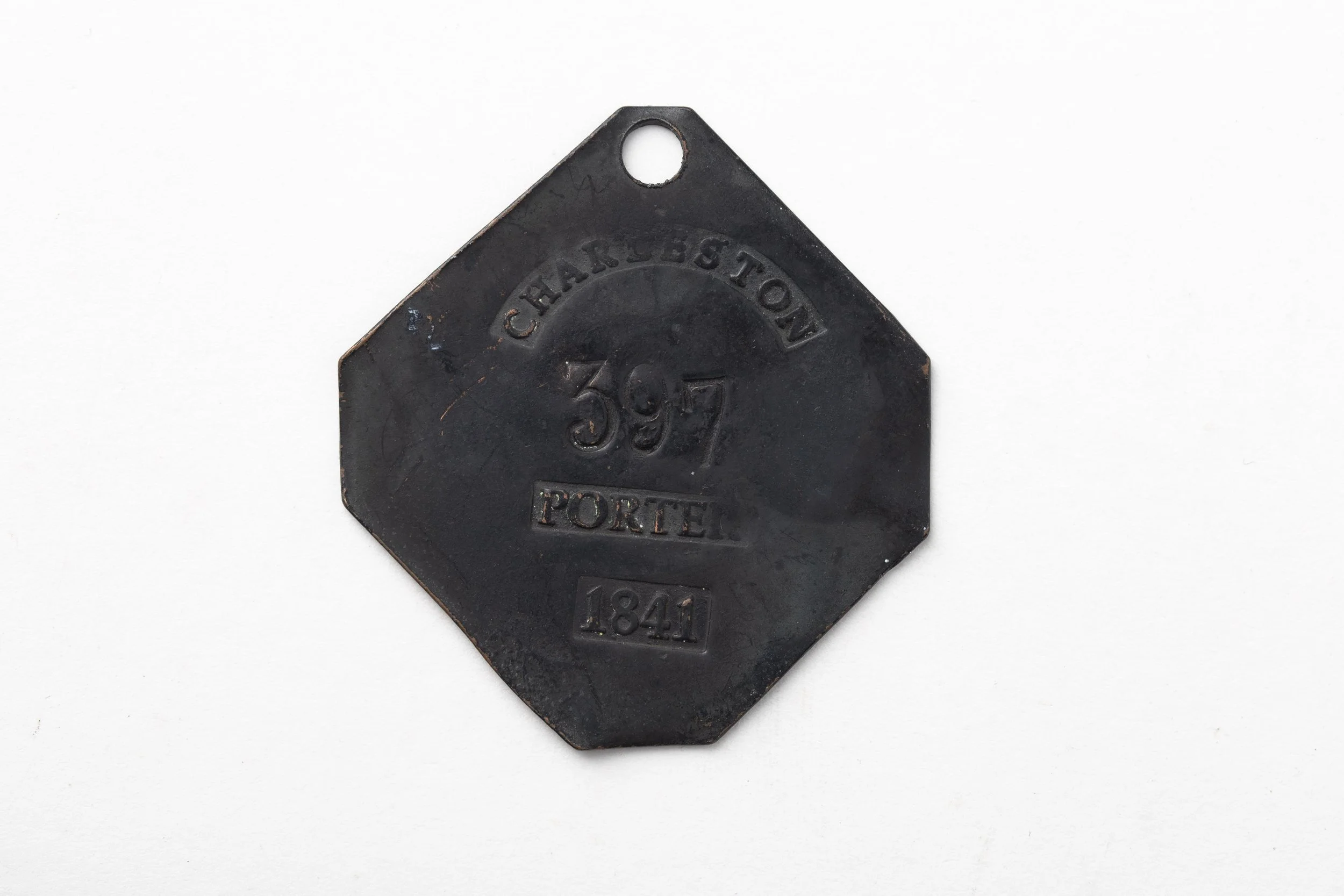
Charleston, South Carolina operated one of the most formally regulated slave hire systems in the antebellum South, with municipal ordinances requiring enslavers to purchase annual badges for enslaved people hired out to work outside the household. The badges functioned simultaneously as a tax mechanism and a system of movement control, worn around the neck or affixed to clothing. This example is stamped "CHARLESTON / 1841 / PORTER" with an individual tracking number, placing the wearer within the category of hired labor classified as a porter.
Badges were typically produced by local blacksmiths or silversmiths in copper or brass, stamped with the city name, year, occupation, and an individual number, with occupational categories including PORTER, SERVANT, MECHANIC, and FISHER. The badge system was significantly tightened following the Denmark Vesey conspiracy of 1822, which heightened municipal concern over the movement of enslaved people within the city. Charleston slave hire badges are among the most documented material artifacts of the urban slave economy in the American South and are held in major museum and institutional collections.
The physical object is small in scale but carries substantial historical weight as a primary document of the bureaucratic apparatus through which slavery was administered in antebellum Charleston. Porter designated badges from the 1841 series are infrequently encountered on the market, and examples with documented provenance of this specificity are rarer still. The Levin provenance, with a recorded 1987 purchase date, places this badge within a recognized category of early private collecting of American slavery material culture.
We ship free anywhere in the world, fully insured, packed by hand.
Charleston, South Carolina
1841
Copper or brass
1 1/2" x 1 5/8" (3.8 x 4.1 cm)
Provenance: Stanley and Jackie Levin, Savannah, Georgia; purchased 1987
Charleston, South Carolina operated one of the most formally regulated slave hire systems in the antebellum South, with municipal ordinances requiring enslavers to purchase annual badges for enslaved people hired out to work outside the household. The badges functioned simultaneously as a tax mechanism and a system of movement control, worn around the neck or affixed to clothing. This example is stamped "CHARLESTON / 1841 / PORTER" with an individual tracking number, placing the wearer within the category of hired labor classified as a porter.
Badges were typically produced by local blacksmiths or silversmiths in copper or brass, stamped with the city name, year, occupation, and an individual number, with occupational categories including PORTER, SERVANT, MECHANIC, and FISHER. The badge system was significantly tightened following the Denmark Vesey conspiracy of 1822, which heightened municipal concern over the movement of enslaved people within the city. Charleston slave hire badges are among the most documented material artifacts of the urban slave economy in the American South and are held in major museum and institutional collections.
The physical object is small in scale but carries substantial historical weight as a primary document of the bureaucratic apparatus through which slavery was administered in antebellum Charleston. Porter designated badges from the 1841 series are infrequently encountered on the market, and examples with documented provenance of this specificity are rarer still. The Levin provenance, with a recorded 1987 purchase date, places this badge within a recognized category of early private collecting of American slavery material culture.
We ship free anywhere in the world, fully insured, packed by hand.