Pueblo, Colorado/Arizona region
1870
Ceramic, terracotta slip, mineral pigment
Height 5 in (12.7 cm); diameter 7 in (17.8 cm)
Provenance: Jim Flurry, Albuquerque, NM
Reference: Bureau of Ethnology Annual Report, Volume 1, 1900–1901, p. 67
Effigy vessels in the form of birds or ducks were produced across a range of Pueblo cultures during the historic period, combining the functional vessel form with figurative modeling that places the object within the ceremonial and cosmological traditions of Southwestern ceramic art. The Chevlon Ruin site in Arizona was associated with a distinct local ceramic tradition, and bird effigy vessels of this type are documented in early ethnographic and archaeological literature, including the Bureau of Ethnology Annual Report of 1900–1901, which illustrates a closely comparable example. This vessel combines a globular terracotta body with a modeled duck head at one end and a tail form at the other, the neck forming the vessel opening.
The body is decorated with bold black geometric forms including zigzag bands, triangular elements, and linear motifs applied in mineral pigment against the warm terracotta ground. The surface retains honest age and wear consistent with a vessel of this period, and the modeling of the head — with incised eye and beak detail — is rendered with directness and clarity. The Albuquerque provenance from Jim Flurry is consistent with Pueblo material entering the New Mexico market through established Southwestern collecting channels.
We ship free anywhere in the world, fully insured, packed by hand.
Pueblo, Colorado/Arizona region
1870
Ceramic, terracotta slip, mineral pigment
Height 5 in (12.7 cm); diameter 7 in (17.8 cm)
Provenance: Jim Flurry, Albuquerque, NM
Reference: Bureau of Ethnology Annual Report, Volume 1, 1900–1901, p. 67
Effigy vessels in the form of birds or ducks were produced across a range of Pueblo cultures during the historic period, combining the functional vessel form with figurative modeling that places the object within the ceremonial and cosmological traditions of Southwestern ceramic art. The Chevlon Ruin site in Arizona was associated with a distinct local ceramic tradition, and bird effigy vessels of this type are documented in early ethnographic and archaeological literature, including the Bureau of Ethnology Annual Report of 1900–1901, which illustrates a closely comparable example. This vessel combines a globular terracotta body with a modeled duck head at one end and a tail form at the other, the neck forming the vessel opening.
The body is decorated with bold black geometric forms including zigzag bands, triangular elements, and linear motifs applied in mineral pigment against the warm terracotta ground. The surface retains honest age and wear consistent with a vessel of this period, and the modeling of the head — with incised eye and beak detail — is rendered with directness and clarity. The Albuquerque provenance from Jim Flurry is consistent with Pueblo material entering the New Mexico market through established Southwestern collecting channels.
We ship free anywhere in the world, fully insured, packed by hand.


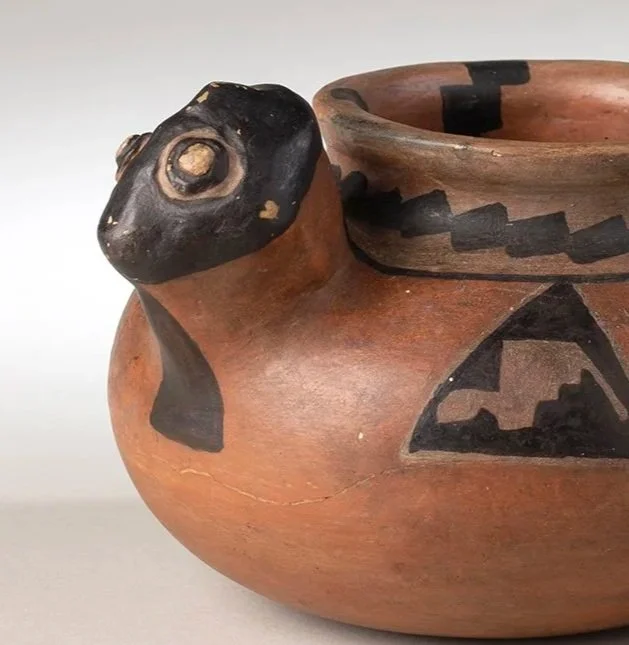 Image 1 of 7
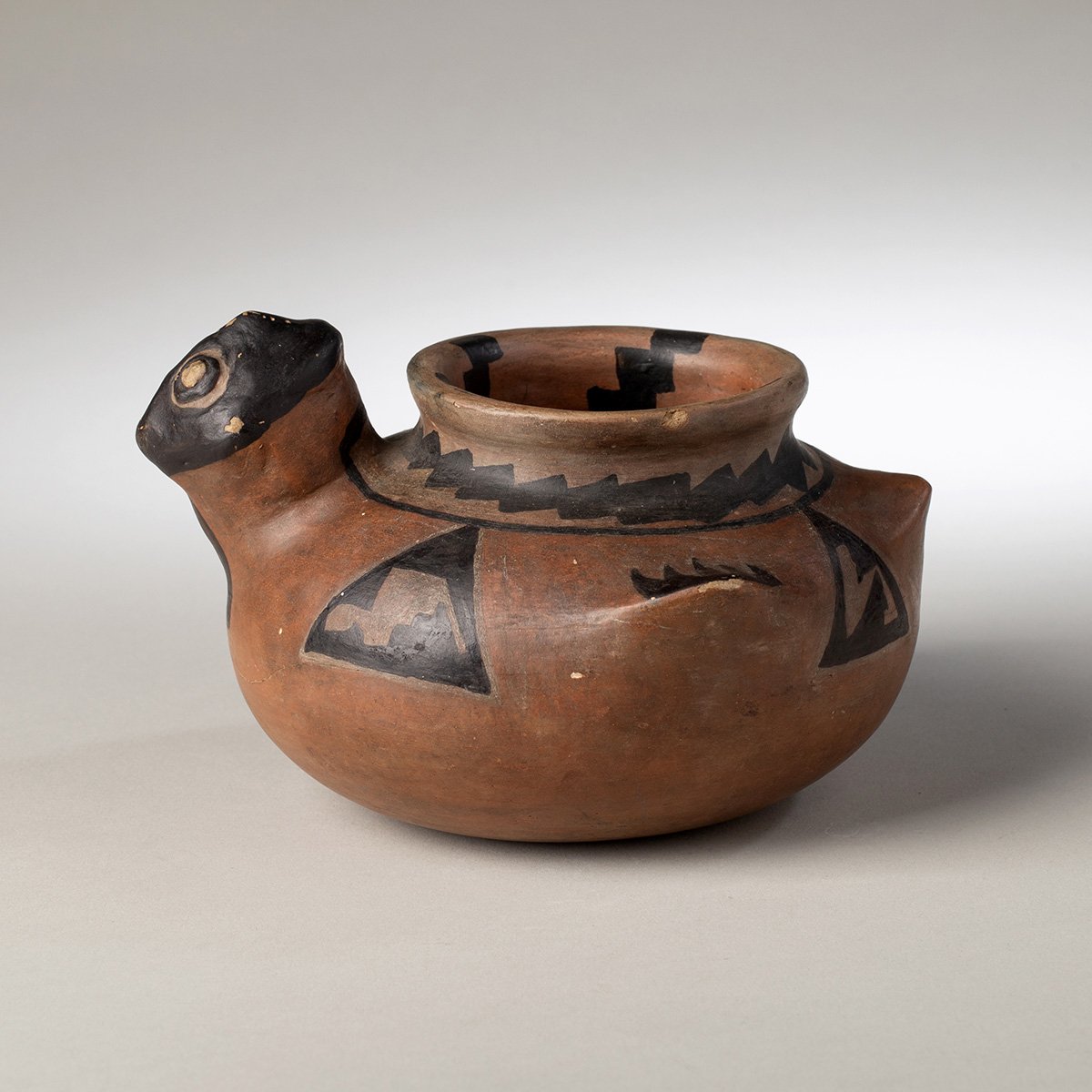 Image 2 of 7
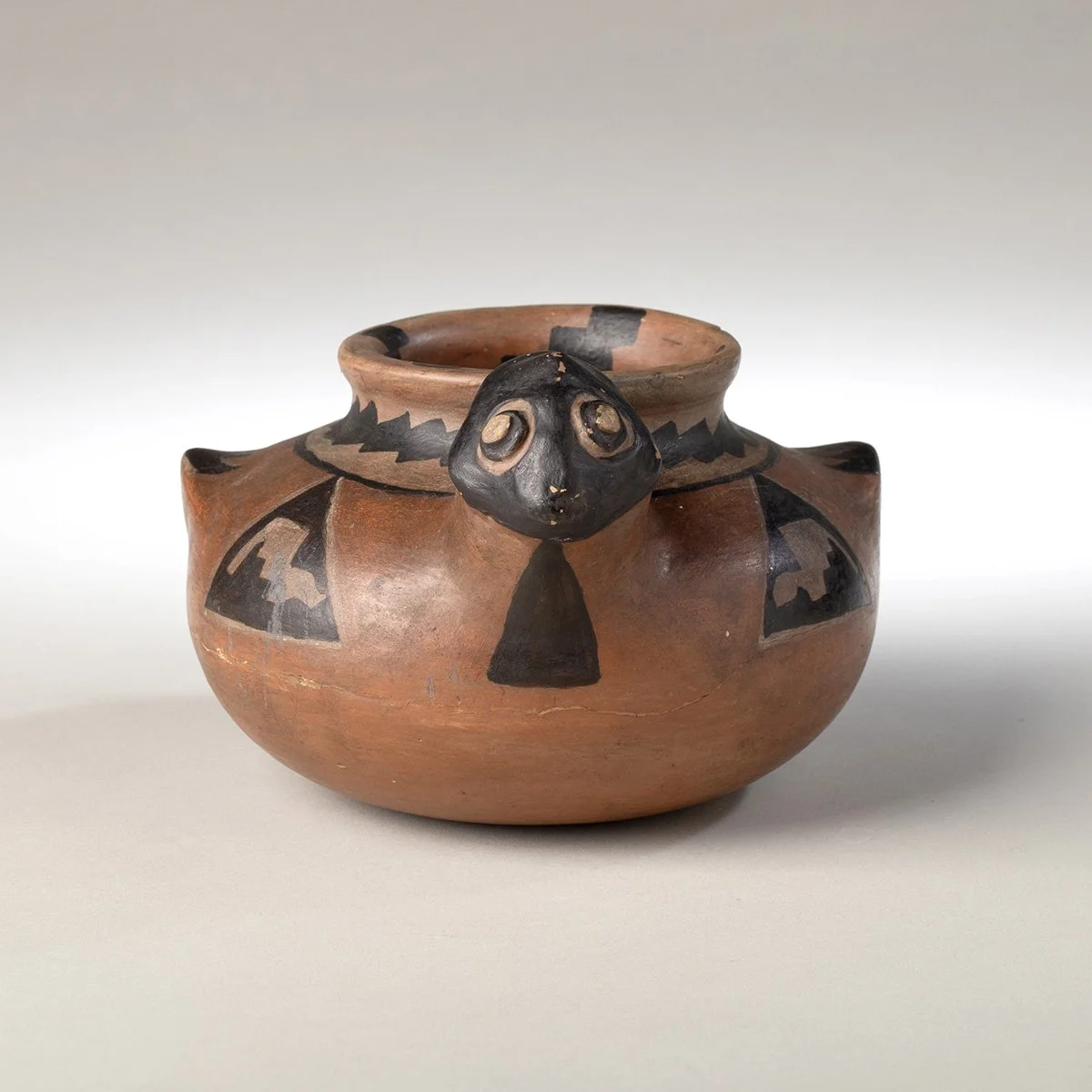 Image 3 of 7
 Image 4 of 7
 Image 5 of 7
 Image 6 of 7
 Image 7 of 7