

 Image 1 of 3
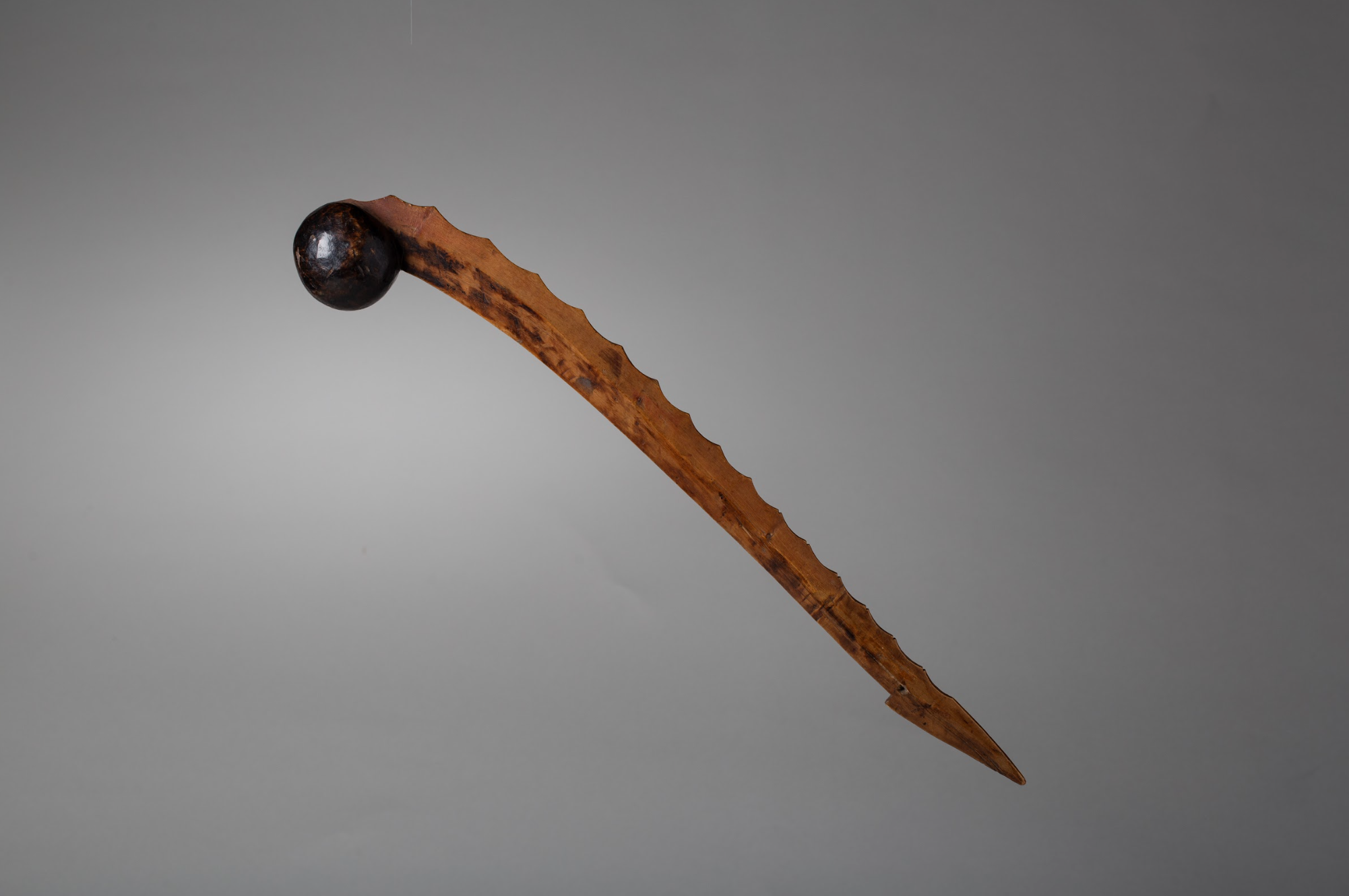 Image 2 of 3
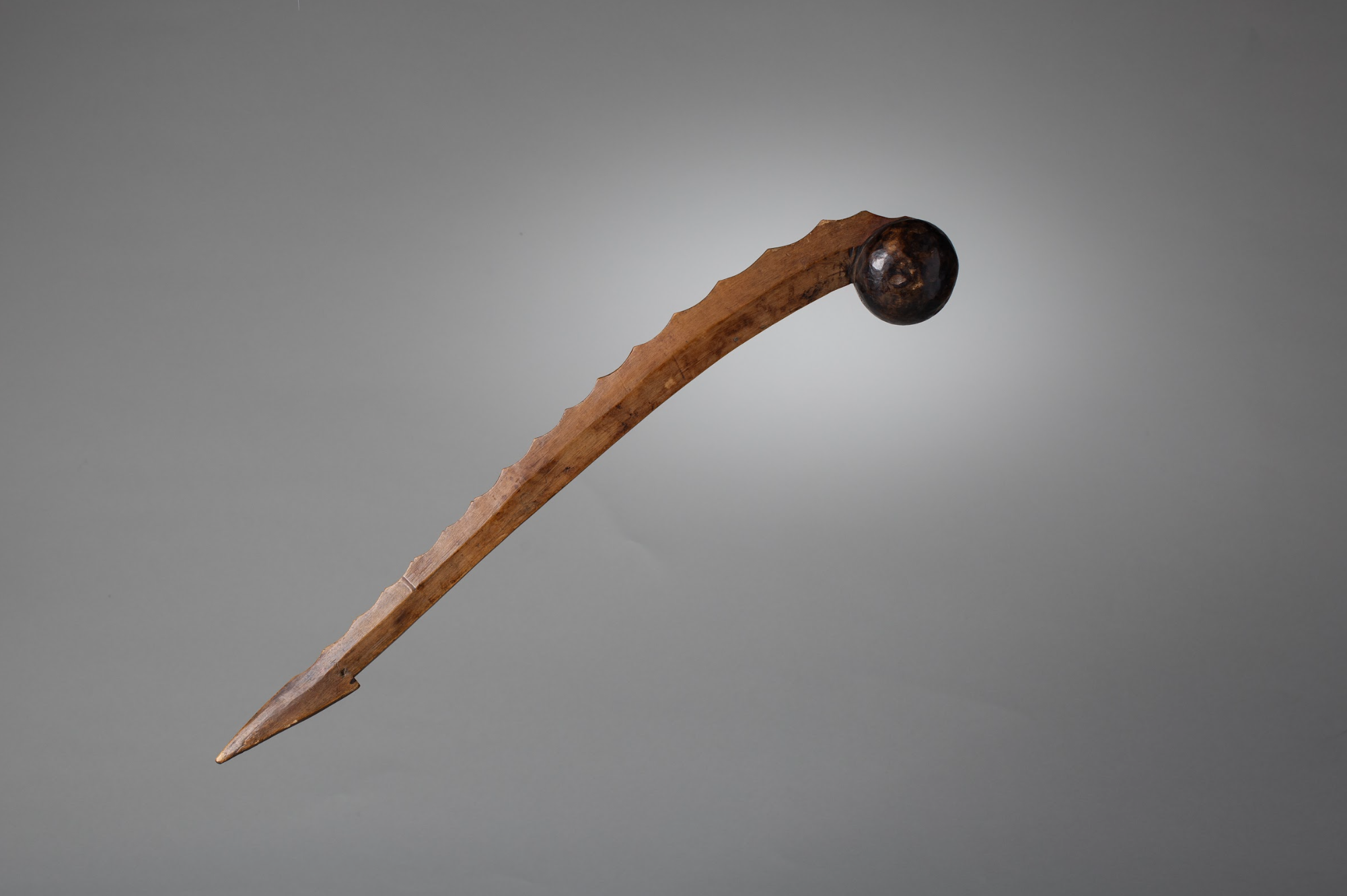 Image 3 of 3
Chippewa / Ojibwe, Woodlands
Circa 1820–1840
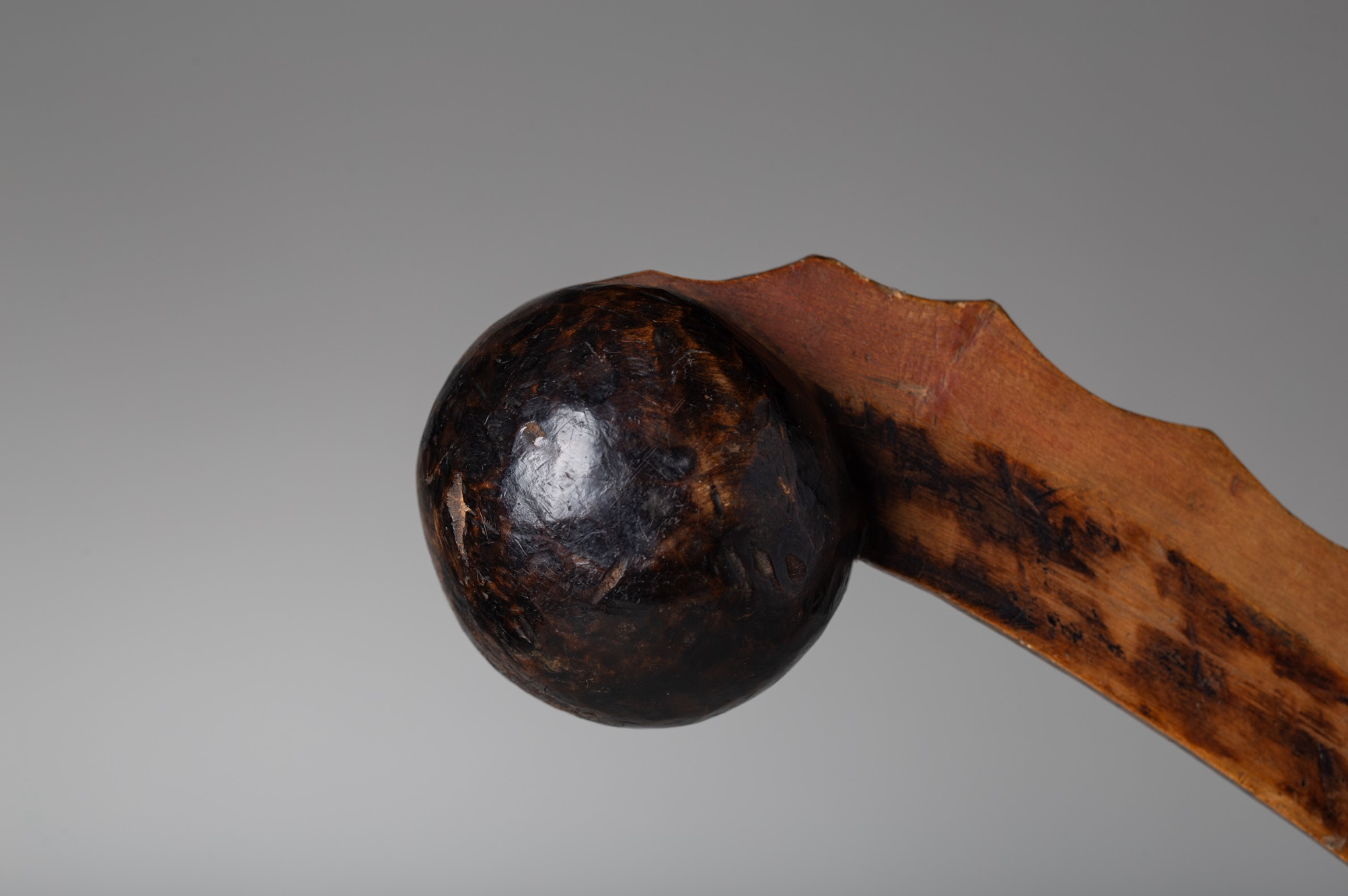
Wood with traces of red vermilion pigment
Length 23 1/4 in. (59.1 cm)
Provenance: Heye Foundation, accession no. 15/4350, purchased 1927; exchanged to David E. Currie, 1973
Clubs of this form were among the prestige weapons of the Woodlands peoples of the Great Lakes region, produced in the early 19th century when traditional material culture remained closely tied to ceremonial and warrior identity. The scalloped handle is a defining feature of the type, worked from a single piece of wood with a carved profile that gives the shaft both visual distinction and a secure grip. Traces of red vermilion pigment survive on the surface, a treatment associated with the ritual preparation of weapons and objects of significance in Woodlands culture.
The piece dates to circa 1820–1840, placing it within the early contact period when Chippewa and Ojibwe communities of the western Great Lakes maintained active ceremonial and material traditions. At 23 1/4 inches the club is compact and well-proportioned, with the weight and density of early 19th-century Woodlands carving. The documented institutional history adds a layer of provenance unusual for objects of this type and period.
The piece entered the Heye Foundation, the collection that became the National Museum of the American Indian, under accession number 15/4350, purchased in 1927, and was exchanged to collector David E. Currie in 1973. The Heye Foundation was among the most significant early institutional collections of Native American material in North America, and objects deaccessioned through its exchange program carry a well-documented chain of ownership. This club is among the earlier and more fully documented examples of the Woodlands club form to appear on the market.
We ship free anywhere in the world, fully insured, packed by hand.
Chippewa / Ojibwe, Woodlands
Circa 1820–1840
Wood with traces of red vermilion pigment
Length 23 1/4 in. (59.1 cm)
Provenance: Heye Foundation, accession no. 15/4350, purchased 1927; exchanged to David E. Currie, 1973
Clubs of this form were among the prestige weapons of the Woodlands peoples of the Great Lakes region, produced in the early 19th century when traditional material culture remained closely tied to ceremonial and warrior identity. The scalloped handle is a defining feature of the type, worked from a single piece of wood with a carved profile that gives the shaft both visual distinction and a secure grip. Traces of red vermilion pigment survive on the surface, a treatment associated with the ritual preparation of weapons and objects of significance in Woodlands culture.
The piece dates to circa 1820–1840, placing it within the early contact period when Chippewa and Ojibwe communities of the western Great Lakes maintained active ceremonial and material traditions. At 23 1/4 inches the club is compact and well-proportioned, with the weight and density of early 19th-century Woodlands carving. The documented institutional history adds a layer of provenance unusual for objects of this type and period.
The piece entered the Heye Foundation, the collection that became the National Museum of the American Indian, under accession number 15/4350, purchased in 1927, and was exchanged to collector David E. Currie in 1973. The Heye Foundation was among the most significant early institutional collections of Native American material in North America, and objects deaccessioned through its exchange program carry a well-documented chain of ownership. This club is among the earlier and more fully documented examples of the Woodlands club form to appear on the market.
We ship free anywhere in the world, fully insured, packed by hand.