Mexico, Guanajuato, Chupícuaro culture
400–100 BC
Ceramic
Largest height: 7¼ in (18.4 cm)
Provenance: Esther Scheinman, Brooklyn, New York, 1950s; Private Arizona collection
Chupícuaro ceramic figurines represent one of the most distinctive hand-modeling traditions of ancient Mesoamerica, produced in the Lerma River valley of Guanajuato during the late Preclassic period. Female figurines of this type are characterized by coffee-bean appliqué eyes, elaborately modeled headdresses, and bodies in which the female form is indicated through the genitalia while the torso and limbs remain schematically rendered. They were placed as funerary offerings in burials and dedicatory assemblages, with some scholars linking them to fertility ritual and others interpreting them as companions for the deceased.
This group of five figures displays the range of stylistic variation characteristic of Chupícuaro production, with differences in headdress form, scale, and surface treatment across the examples. The group includes a mother and child figure, a pairing that is documented but uncommon in surviving assemblages. The 1950s Scheinman provenance places these figures within the earliest period of systematic collecting for Preclassic Mexican material in the United States.
We ship free anywhere in the world, fully insured, packed by hand.
Mexico, Guanajuato, Chupícuaro culture
400–100 BC
Ceramic
Largest height: 7¼ in (18.4 cm)
Provenance: Esther Scheinman, Brooklyn, New York, 1950s; Private Arizona collection
Chupícuaro ceramic figurines represent one of the most distinctive hand-modeling traditions of ancient Mesoamerica, produced in the Lerma River valley of Guanajuato during the late Preclassic period. Female figurines of this type are characterized by coffee-bean appliqué eyes, elaborately modeled headdresses, and bodies in which the female form is indicated through the genitalia while the torso and limbs remain schematically rendered. They were placed as funerary offerings in burials and dedicatory assemblages, with some scholars linking them to fertility ritual and others interpreting them as companions for the deceased.
This group of five figures displays the range of stylistic variation characteristic of Chupícuaro production, with differences in headdress form, scale, and surface treatment across the examples. The group includes a mother and child figure, a pairing that is documented but uncommon in surviving assemblages. The 1950s Scheinman provenance places these figures within the earliest period of systematic collecting for Preclassic Mexican material in the United States.
We ship free anywhere in the world, fully insured, packed by hand.


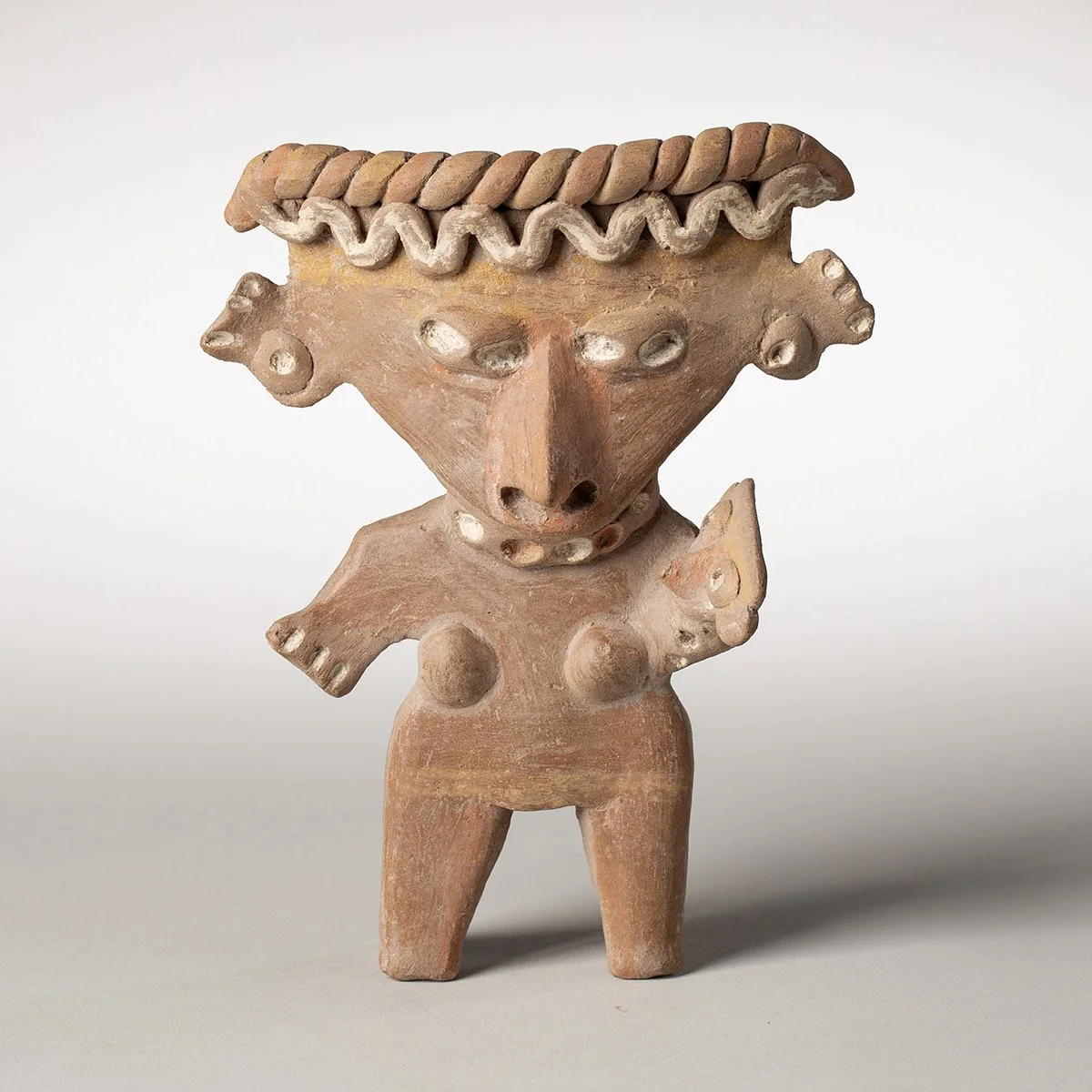 Image 1 of 7
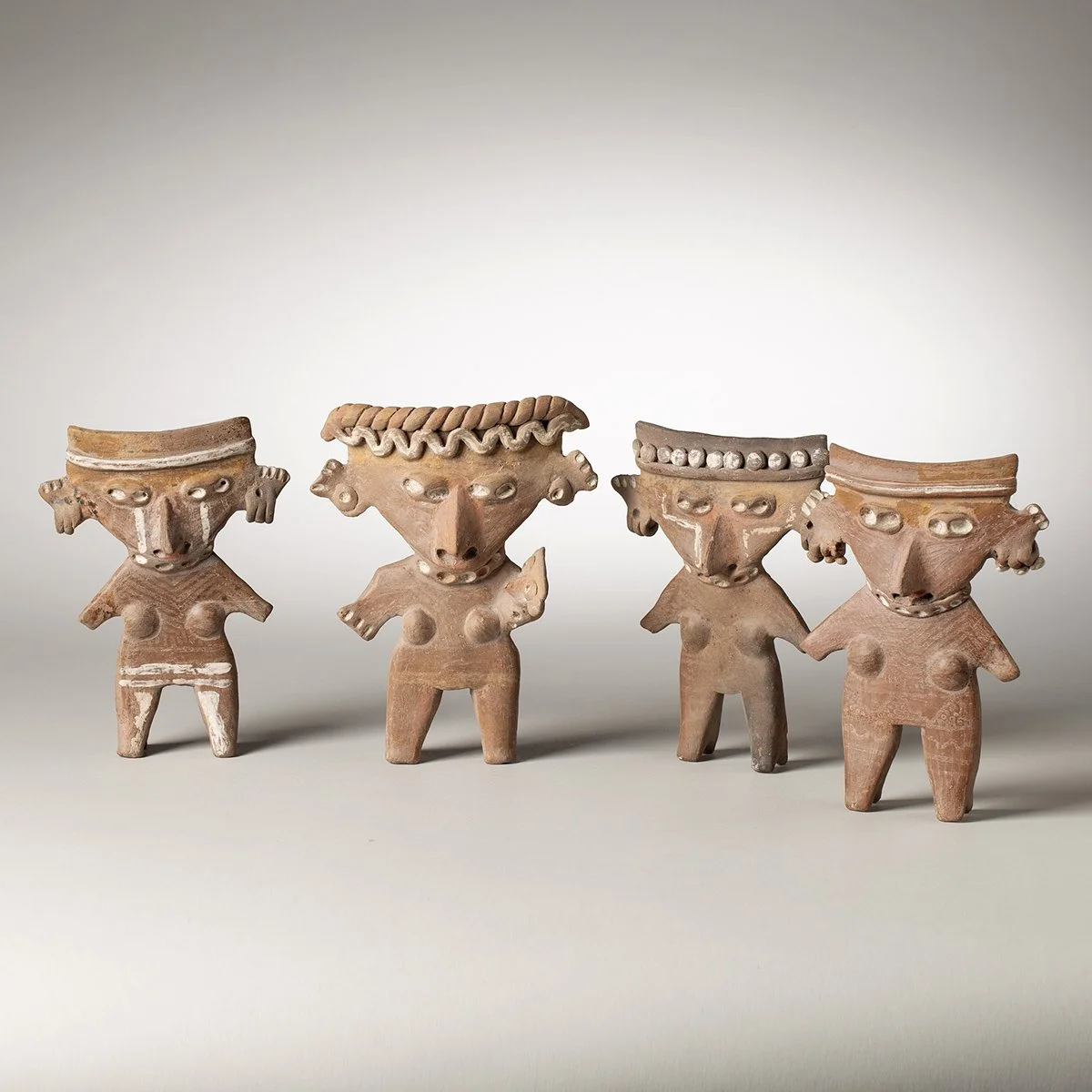 Image 2 of 7
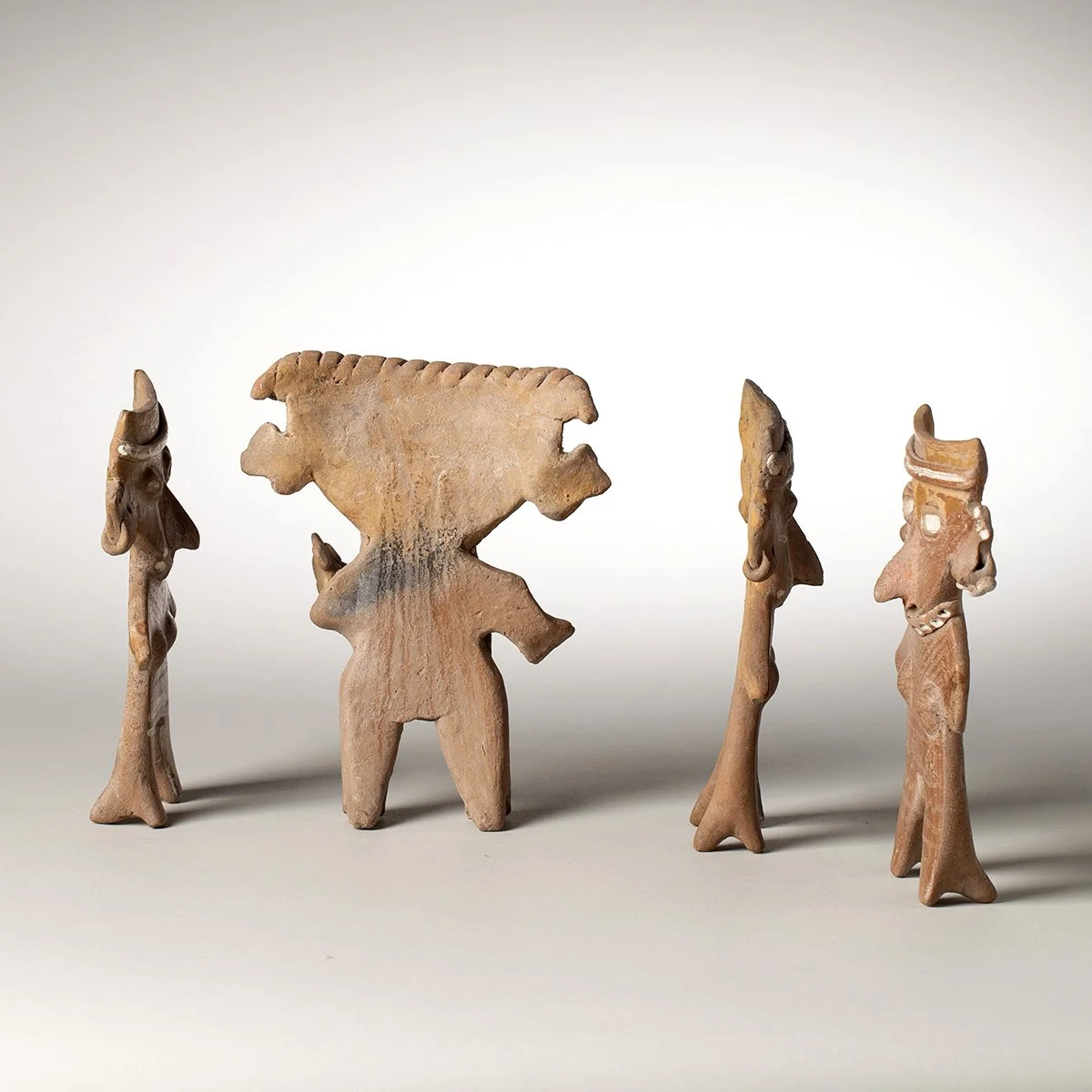 Image 3 of 7
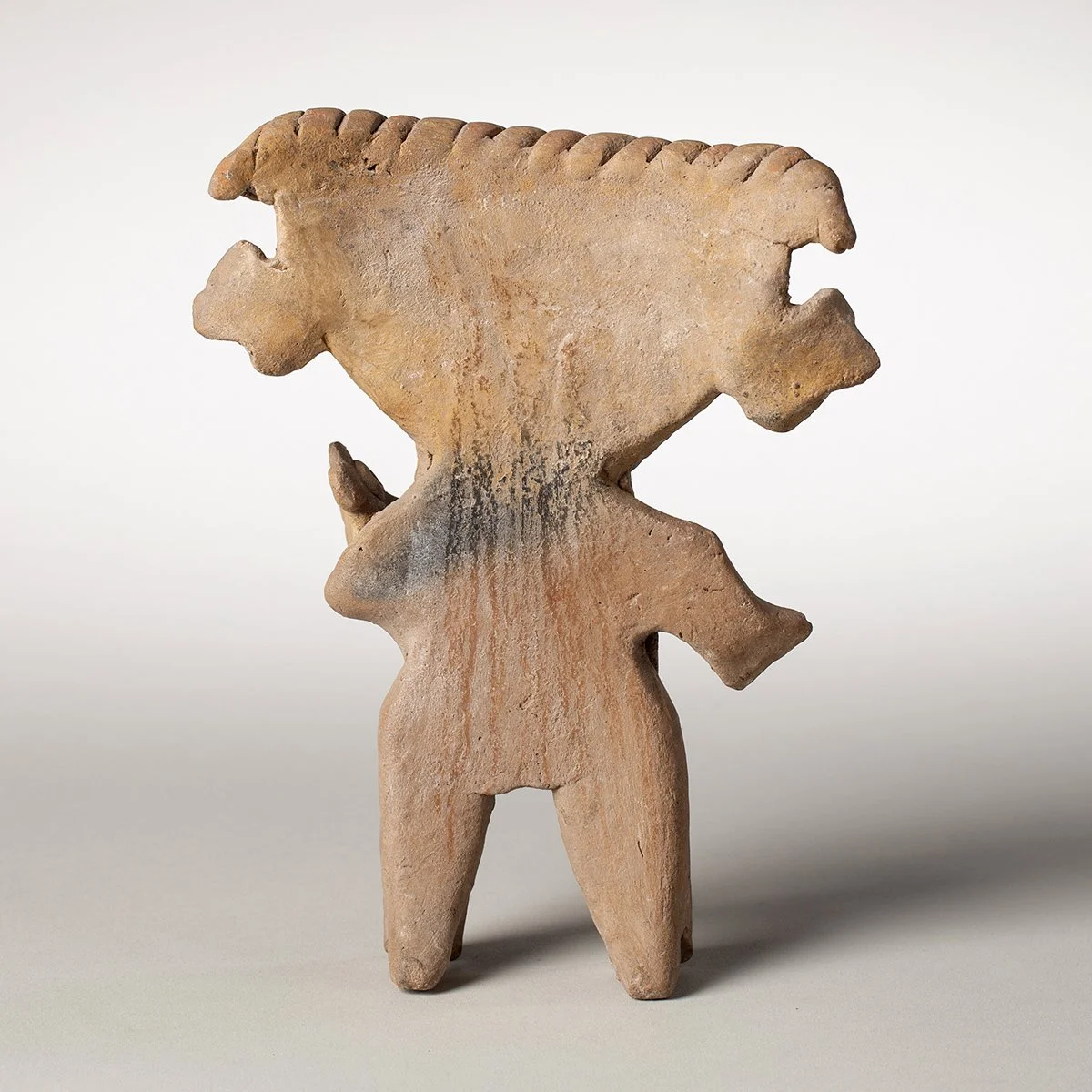 Image 4 of 7
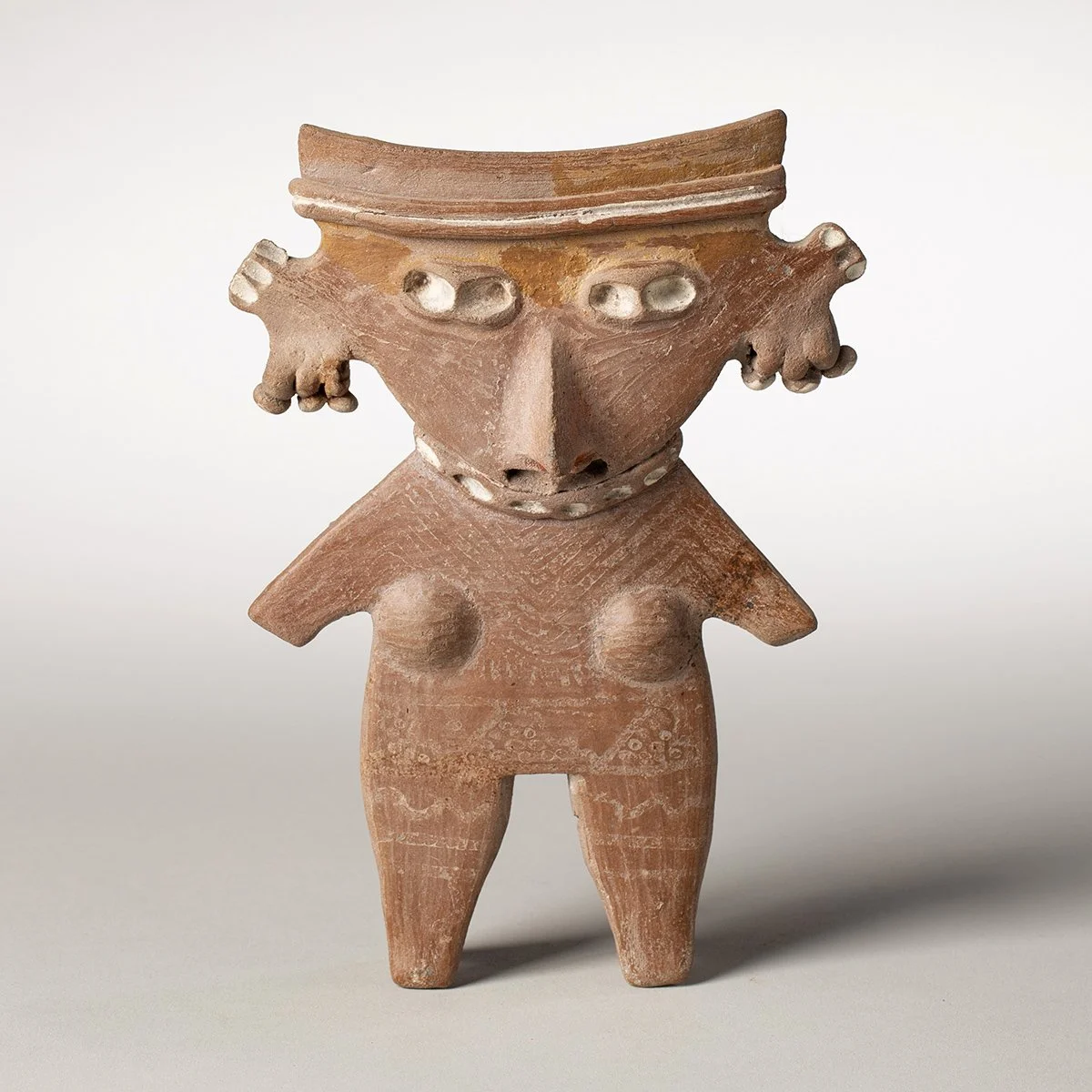 Image 5 of 7
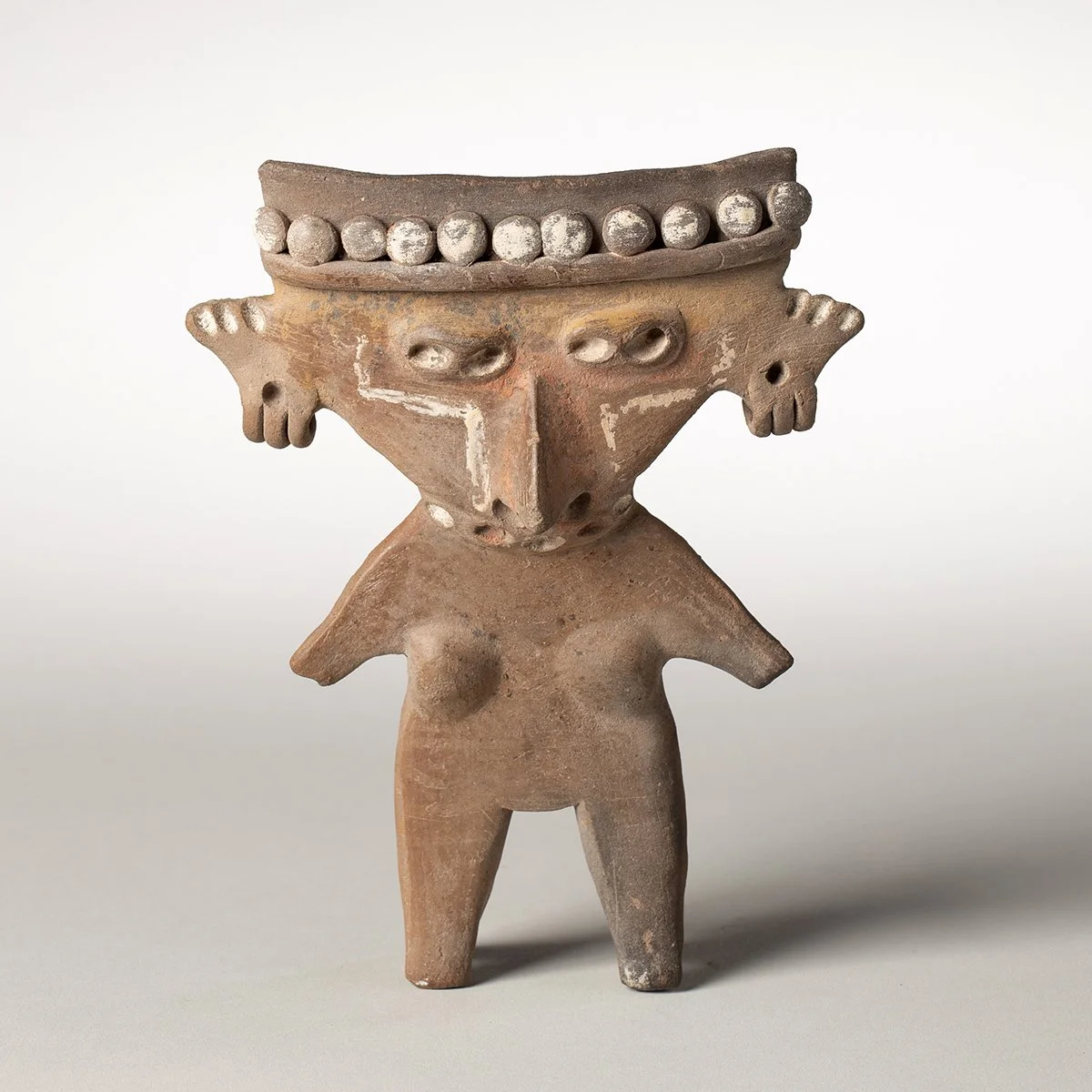 Image 6 of 7
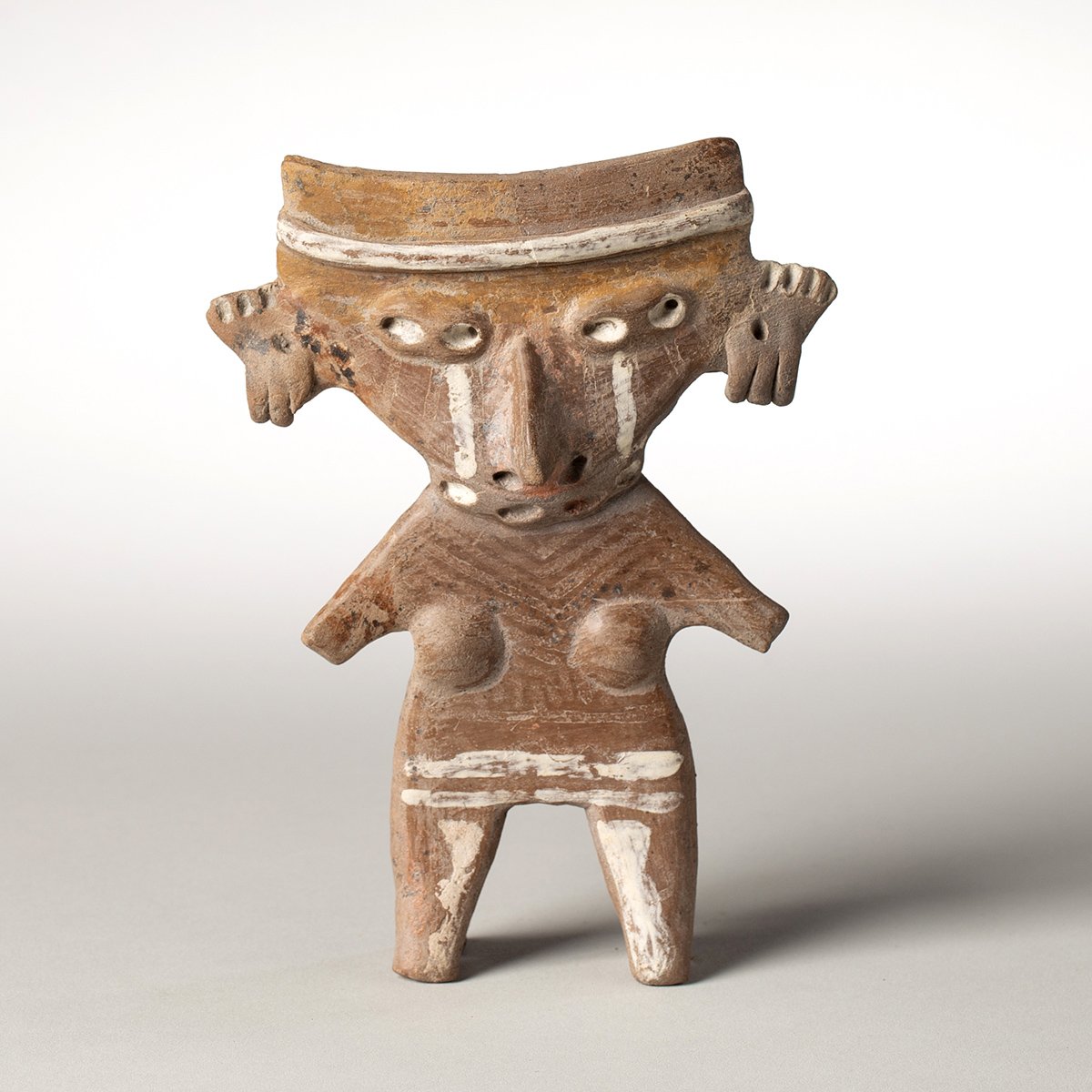 Image 7 of 7