Cochiti Pueblo, New Mexico
Circa 1900
Pottery, mineral pigments
Height 9 in. (22.9 cm); diameter 15 1/2 in. (39.4 cm)
Provenance: James and Marlene Henerson, Phoenix, Arizona
Cochiti Pueblo pottery of the late 19th and early 20th centuries is distinguished by its use of black painted decoration on a warm buff to cream slip, with design elements drawn from the ceremonial and natural world of the Rio Grande Pueblo tradition. This large storage jar is decorated with a prominent tableta motif, the stepped and draped form associated with ceremonial headdresses worn in Pueblo rain dances, rendered in bold black brushwork across the body. The wide, low profile of the vessel and its substantial diameter give it a commanding presence characteristic of Cochiti storage forms of this period.
The tableta design as a painted ceramic motif connects the vessel to the ritual life of the community, referencing the headdresses worn by dancers invoking rain and agricultural fertility. The decoration is applied with assured, deliberate brushwork, with the central motif flanked by pendant and geometric elements that fill the vessel's broad midsection. The piece comes from the collection of James and Marlene Henerson, Phoenix, Arizona.
We ship free anywhere in the world, fully insured, packed by hand.
Cochiti Pueblo, New Mexico
Circa 1900
Pottery, mineral pigments
Height 9 in. (22.9 cm); diameter 15 1/2 in. (39.4 cm)
Provenance: James and Marlene Henerson, Phoenix, Arizona
Cochiti Pueblo pottery of the late 19th and early 20th centuries is distinguished by its use of black painted decoration on a warm buff to cream slip, with design elements drawn from the ceremonial and natural world of the Rio Grande Pueblo tradition. This large storage jar is decorated with a prominent tableta motif, the stepped and draped form associated with ceremonial headdresses worn in Pueblo rain dances, rendered in bold black brushwork across the body. The wide, low profile of the vessel and its substantial diameter give it a commanding presence characteristic of Cochiti storage forms of this period.
The tableta design as a painted ceramic motif connects the vessel to the ritual life of the community, referencing the headdresses worn by dancers invoking rain and agricultural fertility. The decoration is applied with assured, deliberate brushwork, with the central motif flanked by pendant and geometric elements that fill the vessel's broad midsection. The piece comes from the collection of James and Marlene Henerson, Phoenix, Arizona.
We ship free anywhere in the world, fully insured, packed by hand.


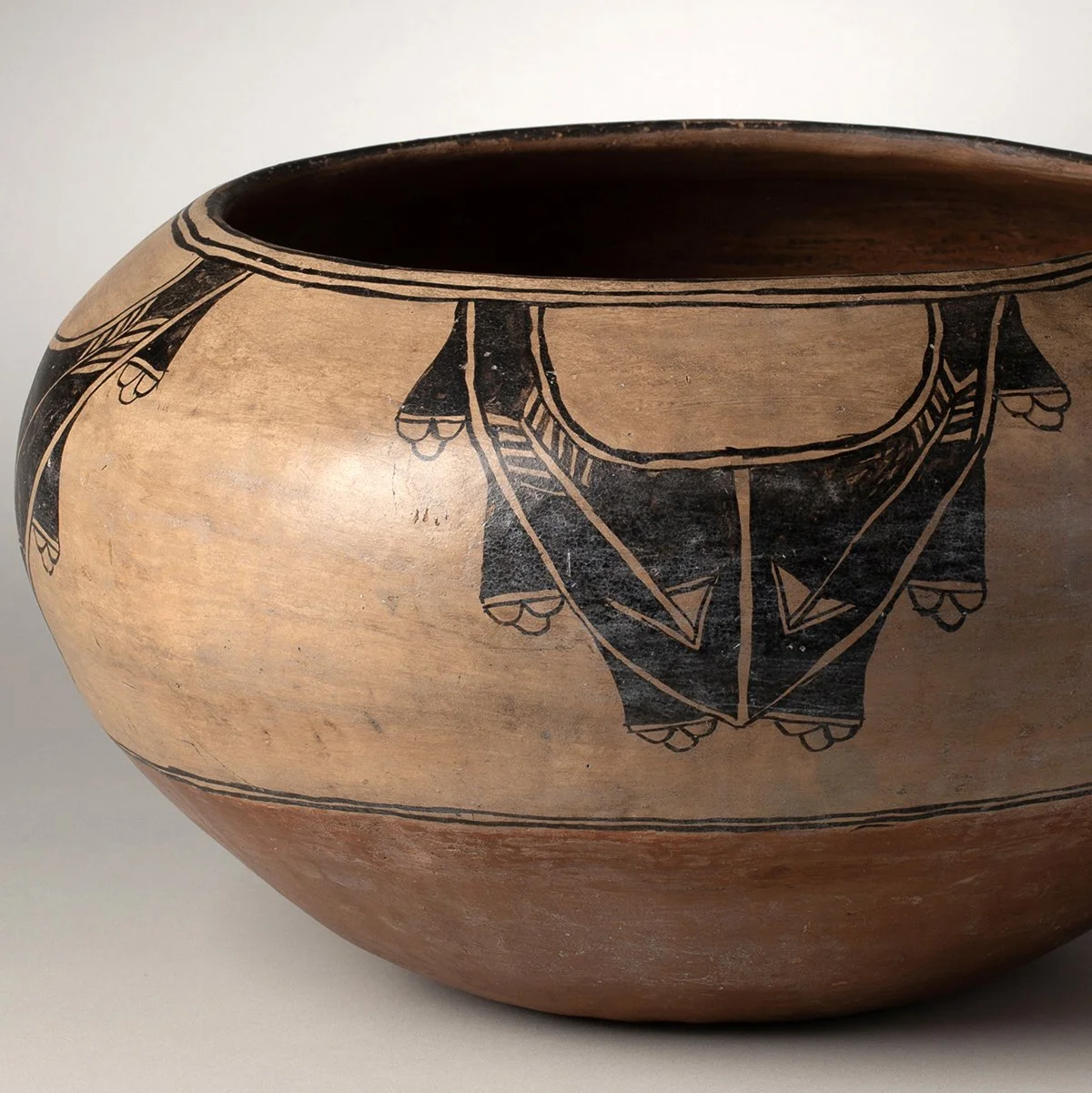 Image 1 of 7
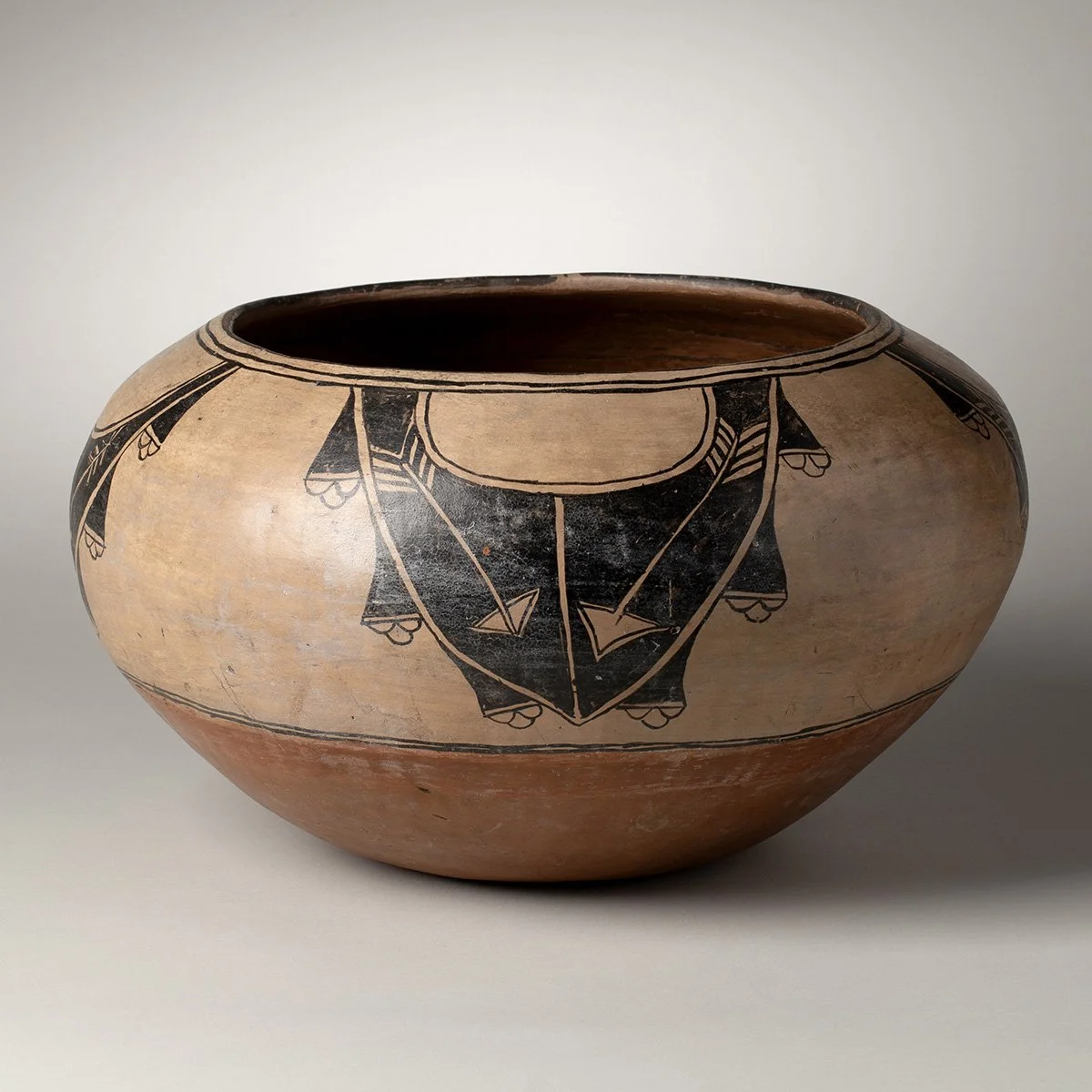 Image 2 of 7
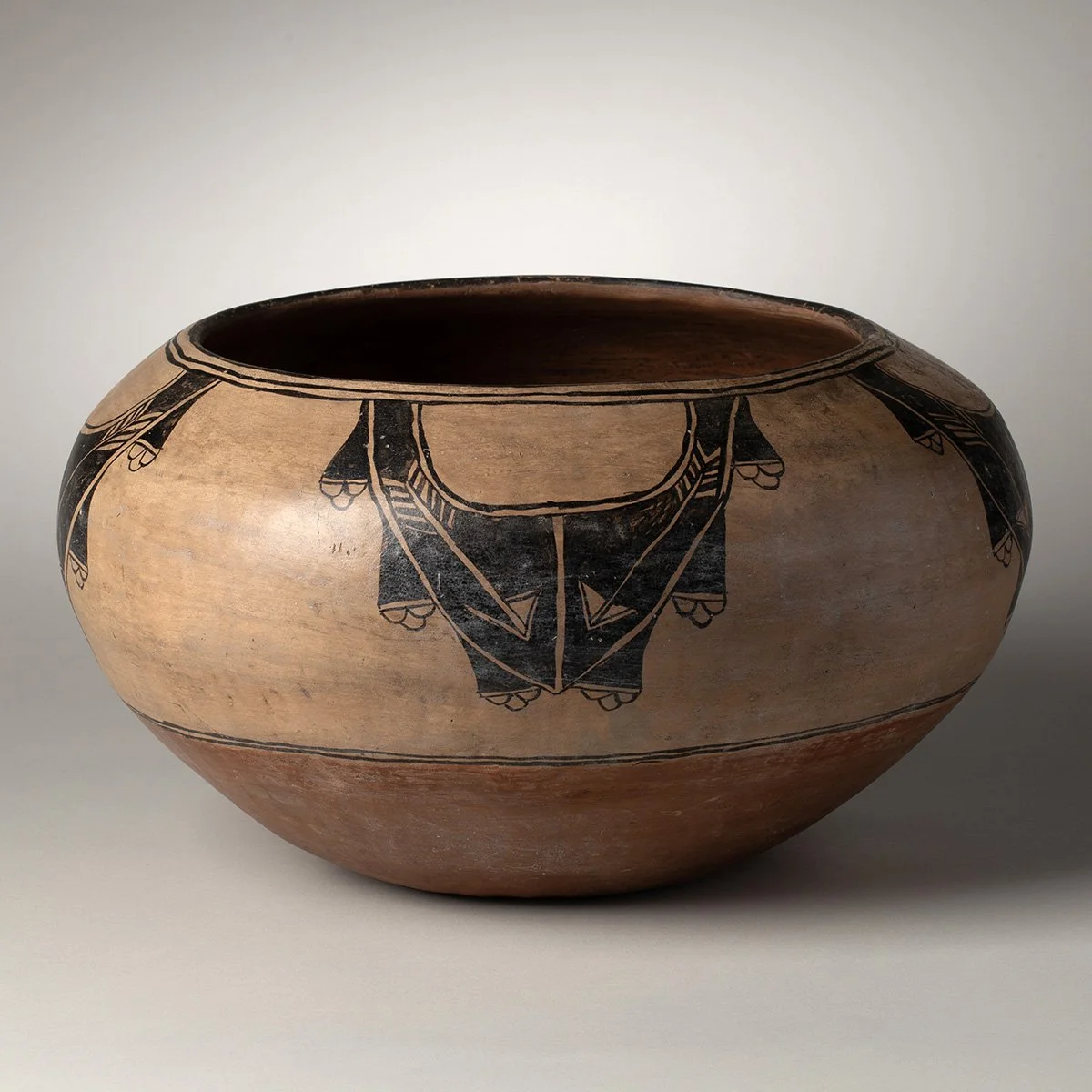 Image 3 of 7
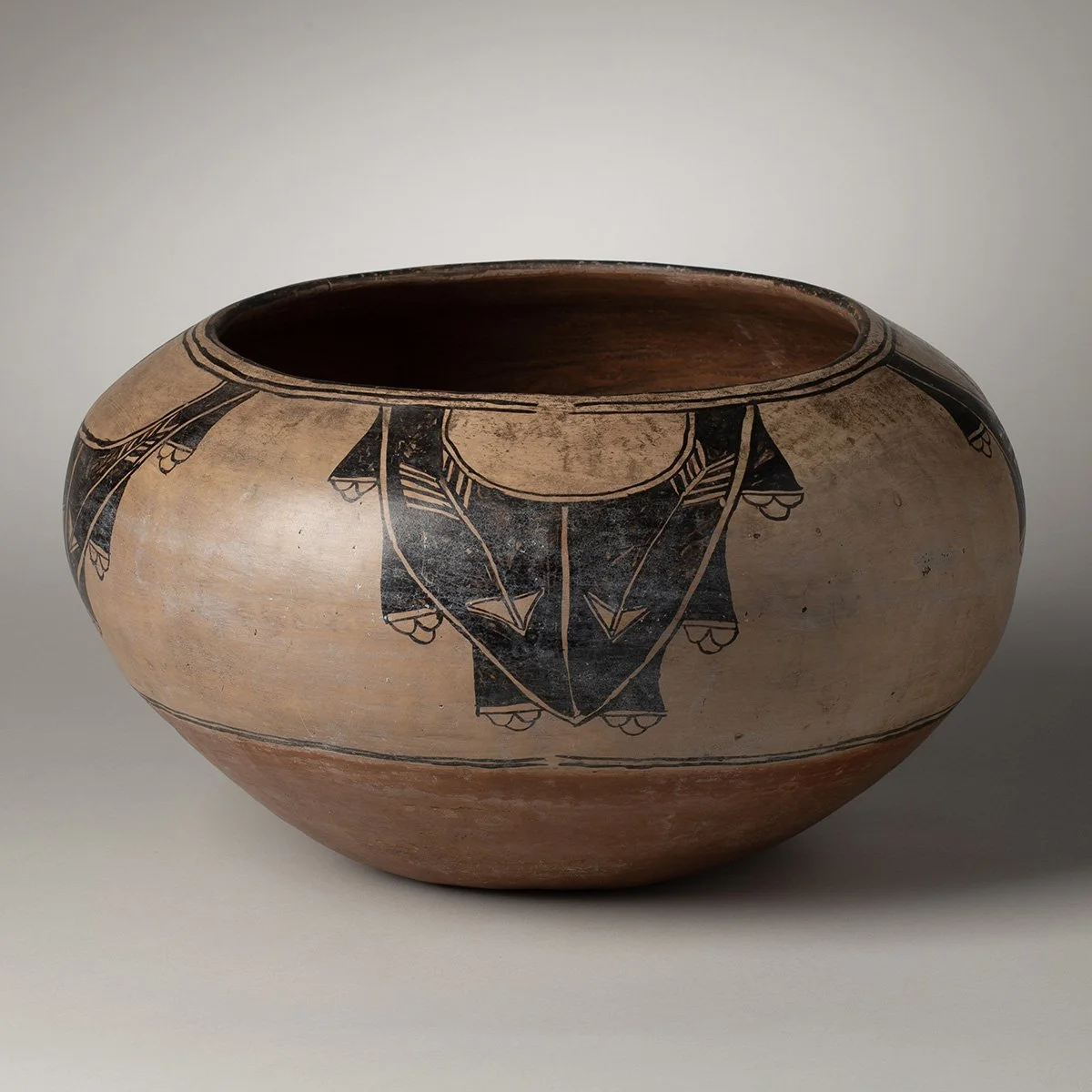 Image 4 of 7
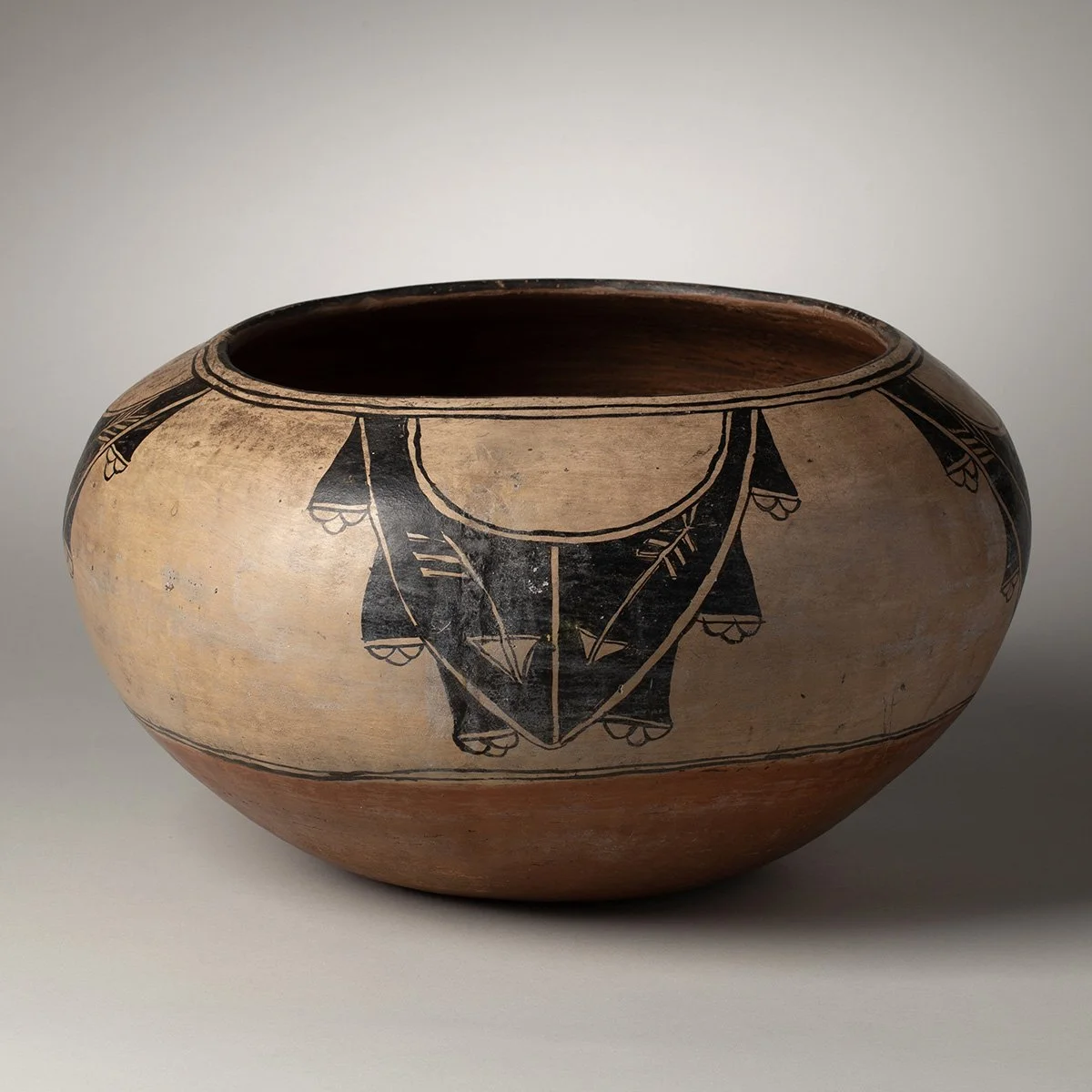 Image 5 of 7
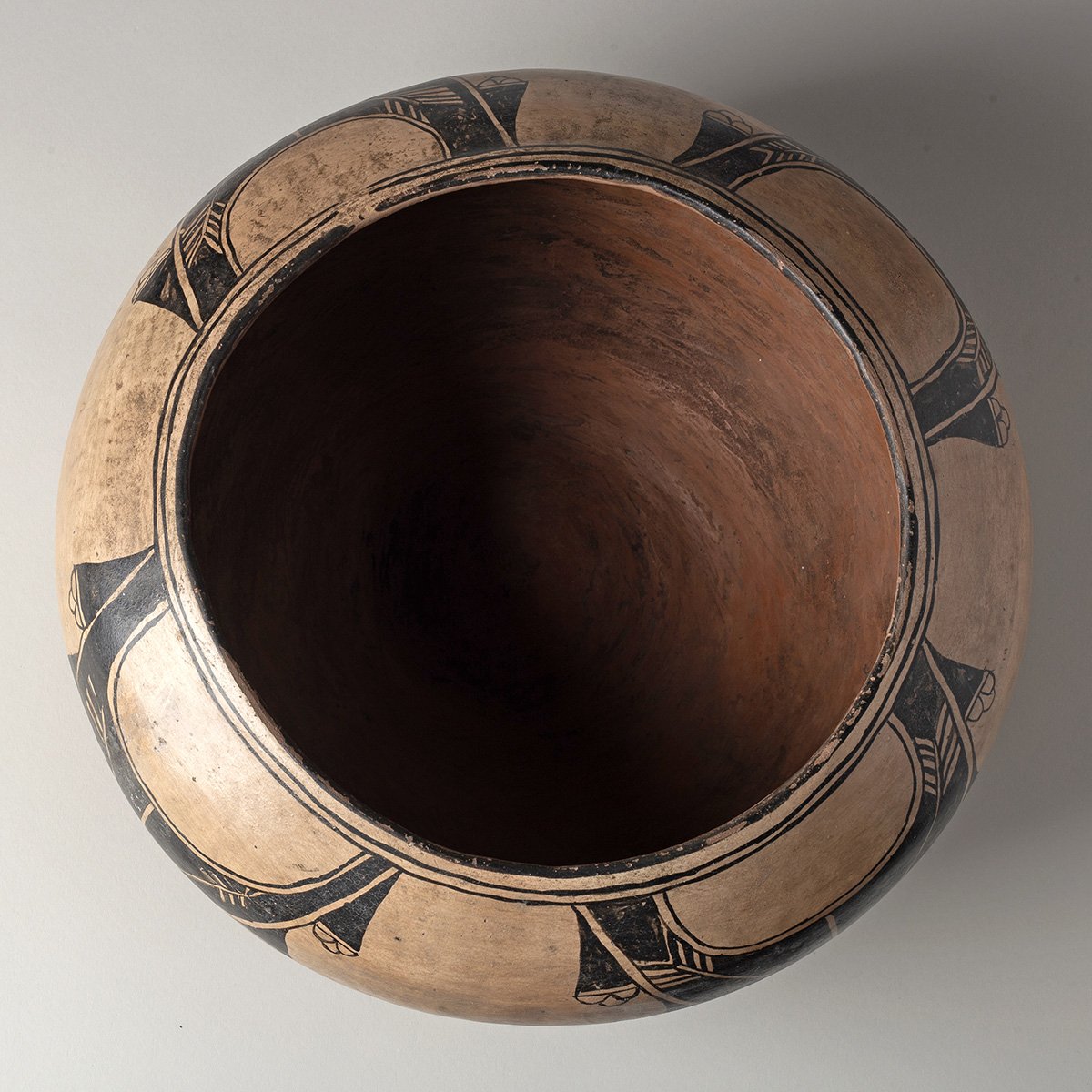 Image 6 of 7
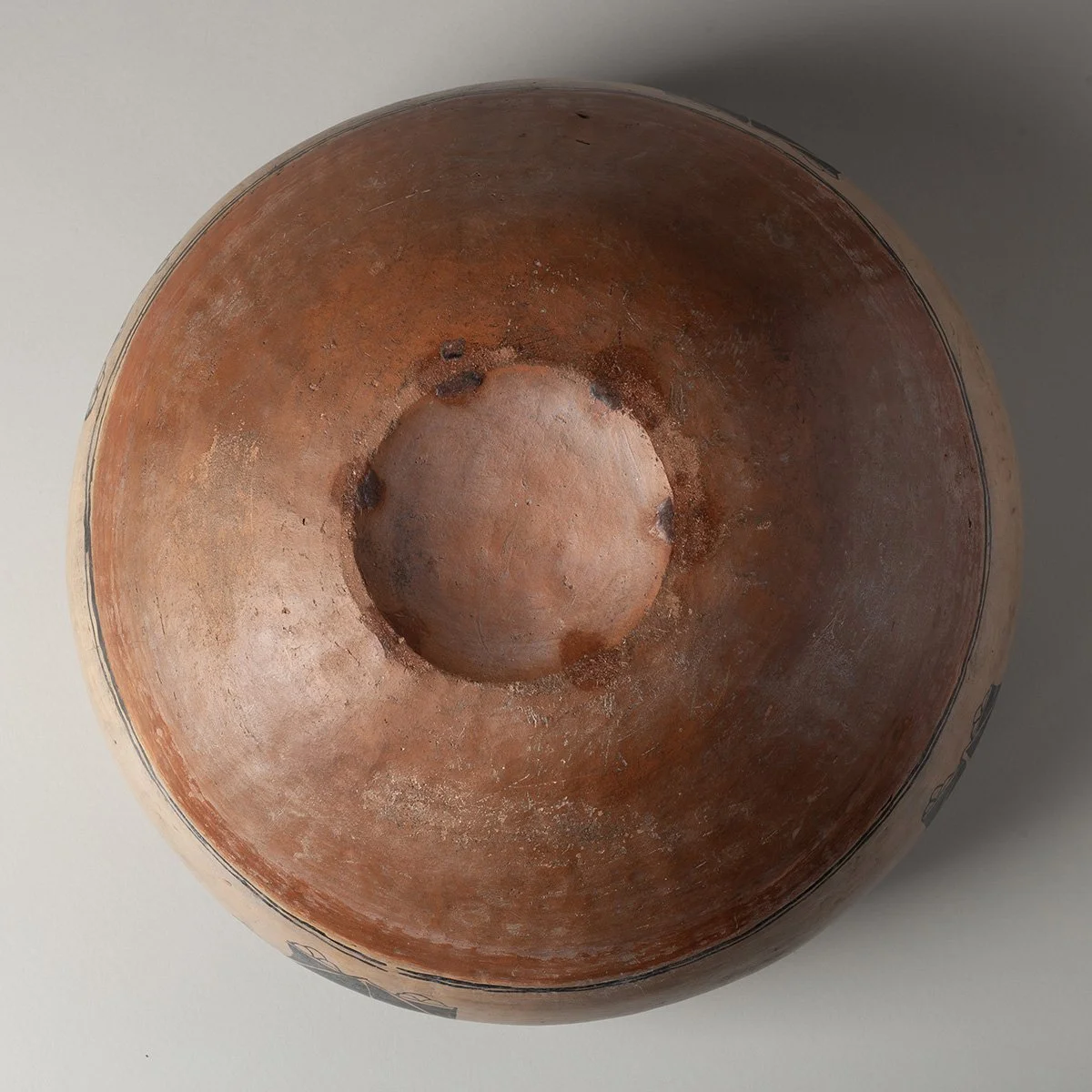 Image 7 of 7