

 Image 1 of 5
 Image 2 of 5
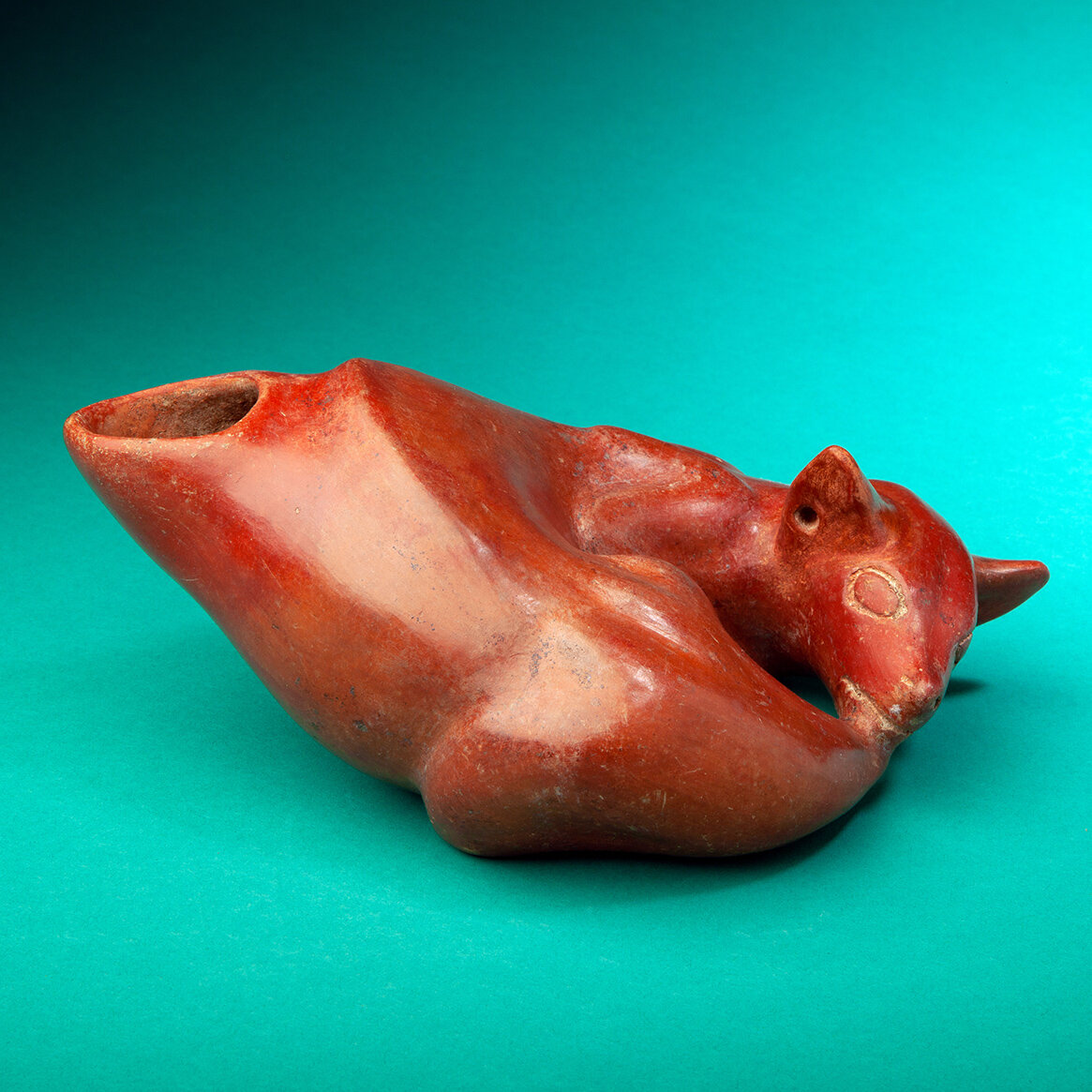 Image 3 of 5
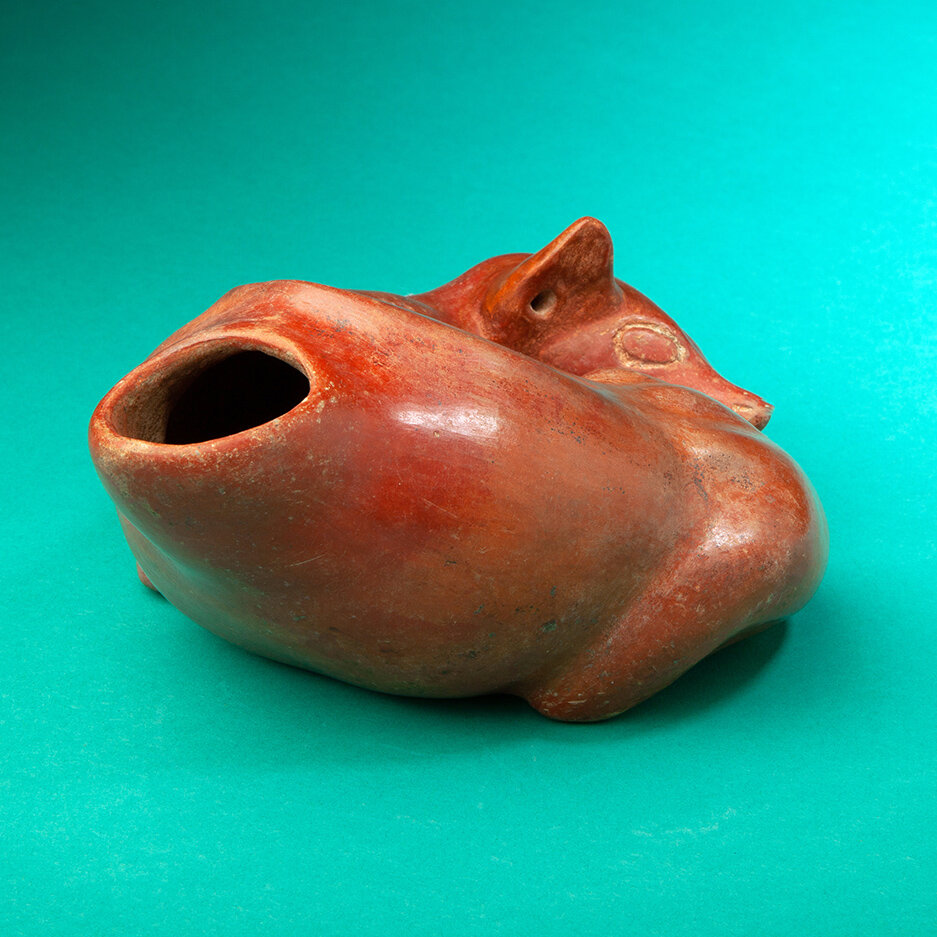 Image 4 of 5
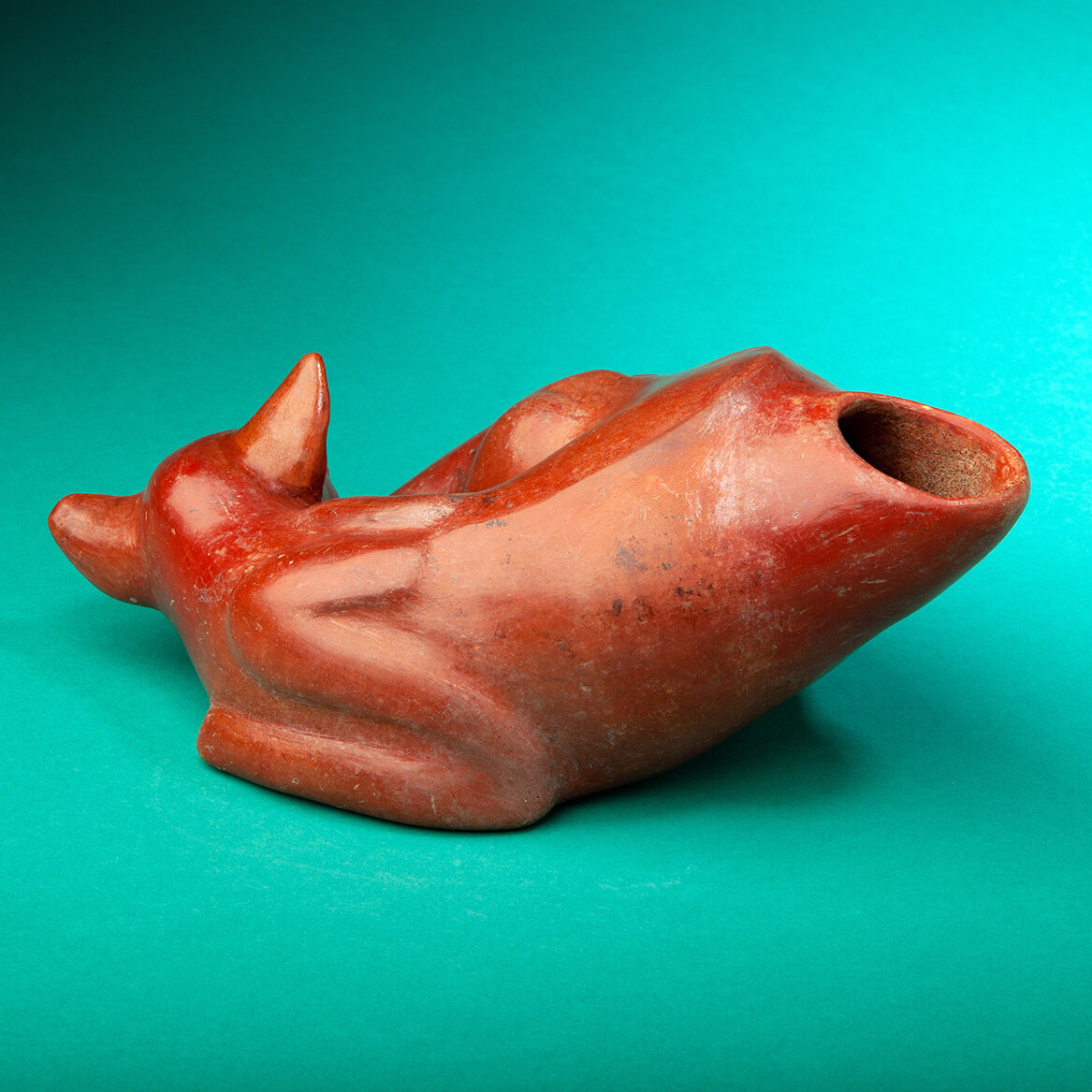 Image 5 of 5
Colima
West Mexico
100 BC–250 AD
Ceramic
Height 3.4"; Length 9.5"
Provenance: Earl Stendahl, Los Angeles, 1960s
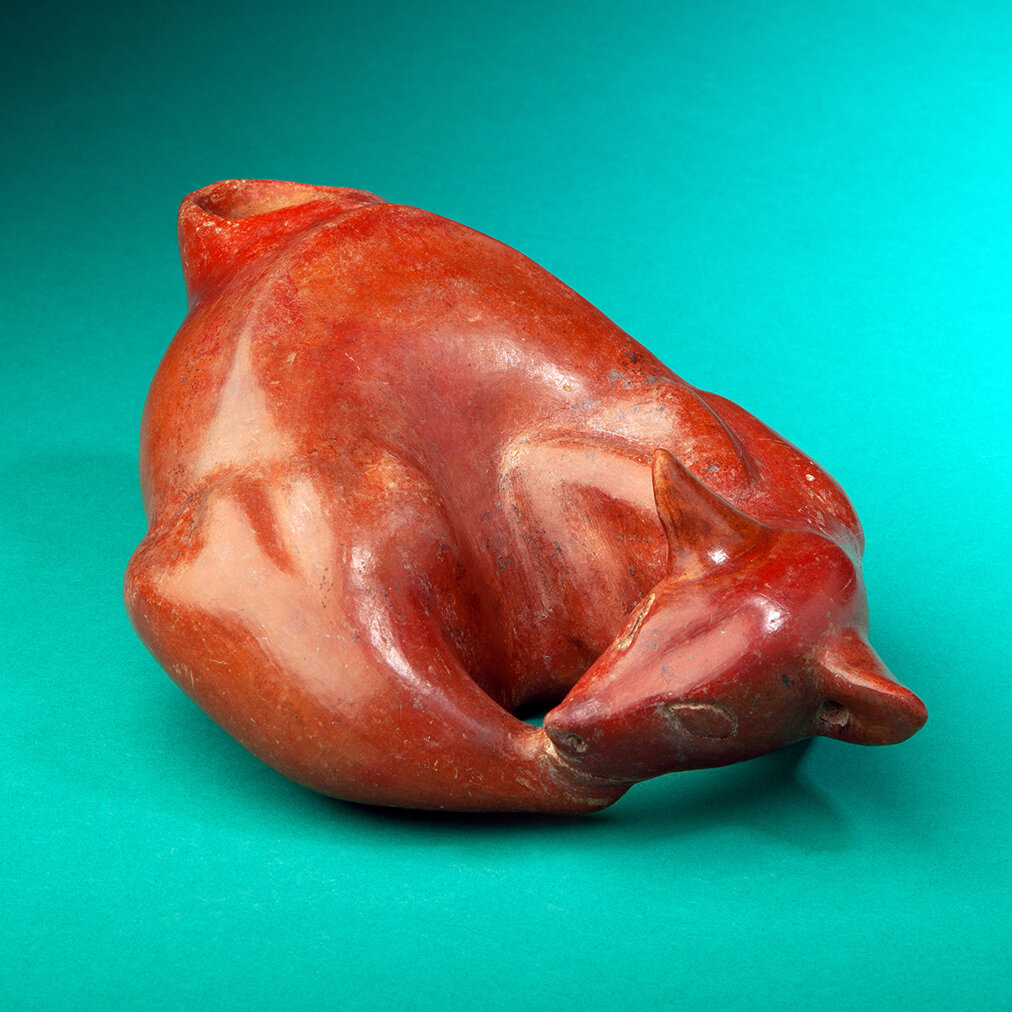
This Colima redware effigy vessel takes the form of a dog lying on its side with legs tucked and head turned inward, the body modeled as a continuous curving mass with the limbs and snout emerging as low projections from the main form. The small spout rises from the top of the haunches, and the surface is burnished to a deep red with lighter areas where the slip has worn or fire clouded, giving the piece the characteristic warm tonal variation of Colima redware. The modeling is spare and naturalistic, with the animal's pose rendered with close attention to the weight and relaxation of a sleeping form.
The Colima dog is a recurring subject in West Mexican pre-Columbian ceramic production and appears in a range of poses across the Protoclassic period. The sleeping pose, which places the animal entirely horizontal with the head turned back, is among the less common variants. A closely related example is in the Barbara and Justin Kerr Collection, New York, and the piece comes from the inventory of Earl Stendahl of Los Angeles, a dealer in pre-Columbian art from the 1930s onward.
We ship free anywhere in the world, fully insured, packed by hand.
Colima
West Mexico
100 BC–250 AD
Ceramic
Height 3.4"; Length 9.5"
Provenance: Earl Stendahl, Los Angeles, 1960s
This Colima redware effigy vessel takes the form of a dog lying on its side with legs tucked and head turned inward, the body modeled as a continuous curving mass with the limbs and snout emerging as low projections from the main form. The small spout rises from the top of the haunches, and the surface is burnished to a deep red with lighter areas where the slip has worn or fire clouded, giving the piece the characteristic warm tonal variation of Colima redware. The modeling is spare and naturalistic, with the animal's pose rendered with close attention to the weight and relaxation of a sleeping form.
The Colima dog is a recurring subject in West Mexican pre-Columbian ceramic production and appears in a range of poses across the Protoclassic period. The sleeping pose, which places the animal entirely horizontal with the head turned back, is among the less common variants. A closely related example is in the Barbara and Justin Kerr Collection, New York, and the piece comes from the inventory of Earl Stendahl of Los Angeles, a dealer in pre-Columbian art from the 1930s onward.
We ship free anywhere in the world, fully insured, packed by hand.