

 Image 1 of 5
 Image 2 of 5
 Image 3 of 5
 Image 4 of 5
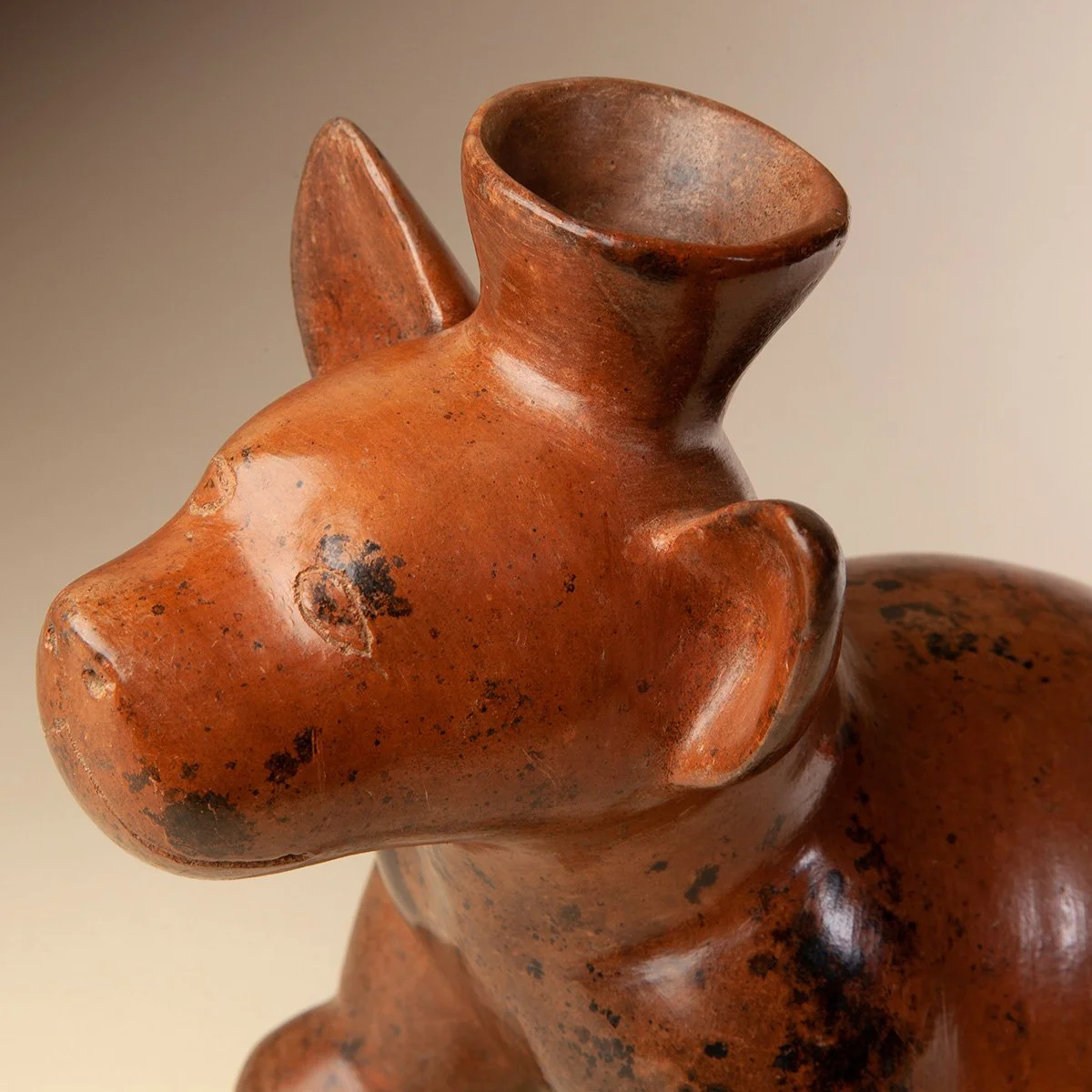 Image 5 of 5
Colima, West Mexico
100 BC to 250 AD
Ceramic
Height 8 inches (20.3 cm), Length 10 5/8 inches (27 cm)
Provenance: Private Southern California collection, 1960s; Osuna Gallery, Santa Barbara, California; private San Diego collection, California, early 1990s
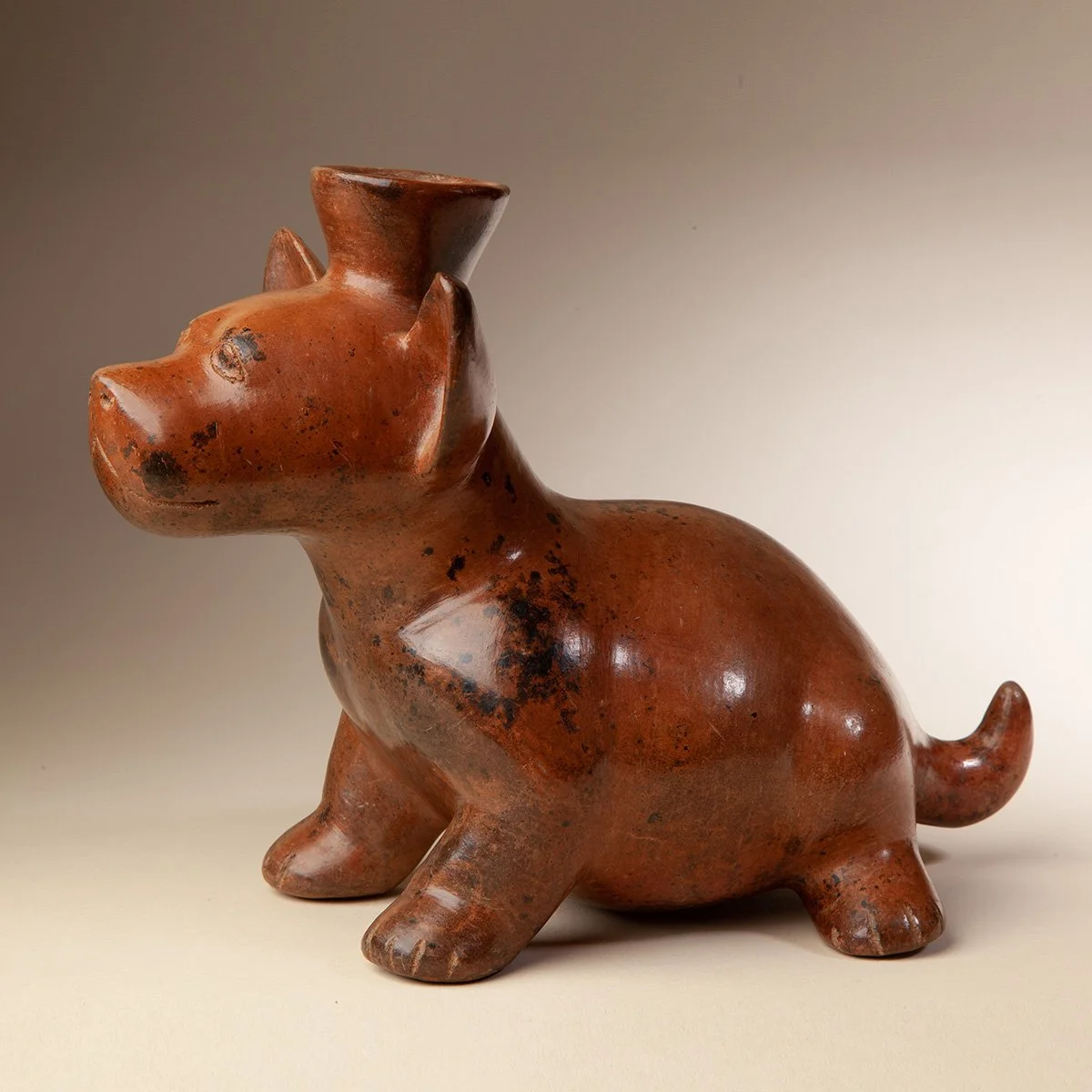
This Colima redware pup vessel depicts a young dog in a seated position with the front legs extended forward, the head raised, small ears alert, and a short tail curling to the side, with a flared cylindrical spout rising from between the shoulder blades. The burnished red brown surface carries dark manganese deposits distributed across the body, formed over long burial and recognized as evidence of age and authenticity. The form is compact and rounded with the haunches dominating the rear volume, and a small chip to the spout has been professionally restored.
Colima dogs are a widely recognized subject in West Mexican ceramic production, associated with the hairless Xoloitzcuintli breed and with the belief that the dog served as a guide for the dead. The seated pose is less common than the standing form, and the vessel functioned as a container as well as an effigy. The piece carries pre 1970 provenance from a private Southern California collection.
We ship free anywhere in the world, fully insured, packed by hand.
Colima, West Mexico
100 BC to 250 AD
Ceramic
Height 8 inches (20.3 cm), Length 10 5/8 inches (27 cm)
Provenance: Private Southern California collection, 1960s; Osuna Gallery, Santa Barbara, California; private San Diego collection, California, early 1990s
This Colima redware pup vessel depicts a young dog in a seated position with the front legs extended forward, the head raised, small ears alert, and a short tail curling to the side, with a flared cylindrical spout rising from between the shoulder blades. The burnished red brown surface carries dark manganese deposits distributed across the body, formed over long burial and recognized as evidence of age and authenticity. The form is compact and rounded with the haunches dominating the rear volume, and a small chip to the spout has been professionally restored.
Colima dogs are a widely recognized subject in West Mexican ceramic production, associated with the hairless Xoloitzcuintli breed and with the belief that the dog served as a guide for the dead. The seated pose is less common than the standing form, and the vessel functioned as a container as well as an effigy. The piece carries pre 1970 provenance from a private Southern California collection.
We ship free anywhere in the world, fully insured, packed by hand.