Colony of New South Wales, Australia
Circa 1830
Bullock horn, wood stopper
Length: 19½ inches (49.5 cm)
Provenance: English trade; private collection, Channel Islands
This bullock horn belongs to a small identified group of engraved horns produced by British soldiers posted to the Colony of New South Wales in the early 19th century, when the colony was still in its formative decades following formal proclamation in February 1788. Related examples in the National Museum of Australia and the Australian War Memorial, Canberra, bear the inscribed names of Privates J. Ball and R. Haslam of the 39th Regiment of Foot, who arrived in New South Wales in 1826 and served mainly at Parramatta supervising convicts on the Great North Road. The close correspondence between the engraving on those institutional examples and this horn makes it highly probable they share a common hand.
The scrimshaw-engraved decoration covers the full surface in a dense and varied program. The two principal elements are a Royal Coat of Arms surmounted by a crown and lion, and a roundel inscribed "New South Wales" enclosing a caduceus flanked by emus with palm fronds above. Around these are a three-masted barque under full sail, a church, two male profiles, a winged angel blowing a trumpet, a clock showing eleven o'clock, a sun motif, two kangaroos, additional birds, a dragonfly, and a lizard — a catalog that combines British heraldic convention with the natural environment of the colony. The tip is carved into graduated tiers forming a stopper, the wide end plugged with wood, and the lower edge worked with zig-zag serrations, with some minor chipping to the serrations.
The 39th Regiment horns constitute one of the most specifically documented bodies of colonial Australian scrimshaw, and the institutional Canberra examples provide a named attribution framework within which this horn plausibly sits. Its provenance through the English trade and a Channel Islands private collection is consistent with objects brought back to Britain by soldiers completing colonial service, and the horn is otherwise in sound condition for its age and complexity.
We ship free anywhere in the world, fully insured, packed by hand.
Colony of New South Wales, Australia
Circa 1830
Bullock horn, wood stopper
Length: 19½ inches (49.5 cm)
Provenance: English trade; private collection, Channel Islands
This bullock horn belongs to a small identified group of engraved horns produced by British soldiers posted to the Colony of New South Wales in the early 19th century, when the colony was still in its formative decades following formal proclamation in February 1788. Related examples in the National Museum of Australia and the Australian War Memorial, Canberra, bear the inscribed names of Privates J. Ball and R. Haslam of the 39th Regiment of Foot, who arrived in New South Wales in 1826 and served mainly at Parramatta supervising convicts on the Great North Road. The close correspondence between the engraving on those institutional examples and this horn makes it highly probable they share a common hand.
The scrimshaw-engraved decoration covers the full surface in a dense and varied program. The two principal elements are a Royal Coat of Arms surmounted by a crown and lion, and a roundel inscribed "New South Wales" enclosing a caduceus flanked by emus with palm fronds above. Around these are a three-masted barque under full sail, a church, two male profiles, a winged angel blowing a trumpet, a clock showing eleven o'clock, a sun motif, two kangaroos, additional birds, a dragonfly, and a lizard — a catalog that combines British heraldic convention with the natural environment of the colony. The tip is carved into graduated tiers forming a stopper, the wide end plugged with wood, and the lower edge worked with zig-zag serrations, with some minor chipping to the serrations.
The 39th Regiment horns constitute one of the most specifically documented bodies of colonial Australian scrimshaw, and the institutional Canberra examples provide a named attribution framework within which this horn plausibly sits. Its provenance through the English trade and a Channel Islands private collection is consistent with objects brought back to Britain by soldiers completing colonial service, and the horn is otherwise in sound condition for its age and complexity.
We ship free anywhere in the world, fully insured, packed by hand.


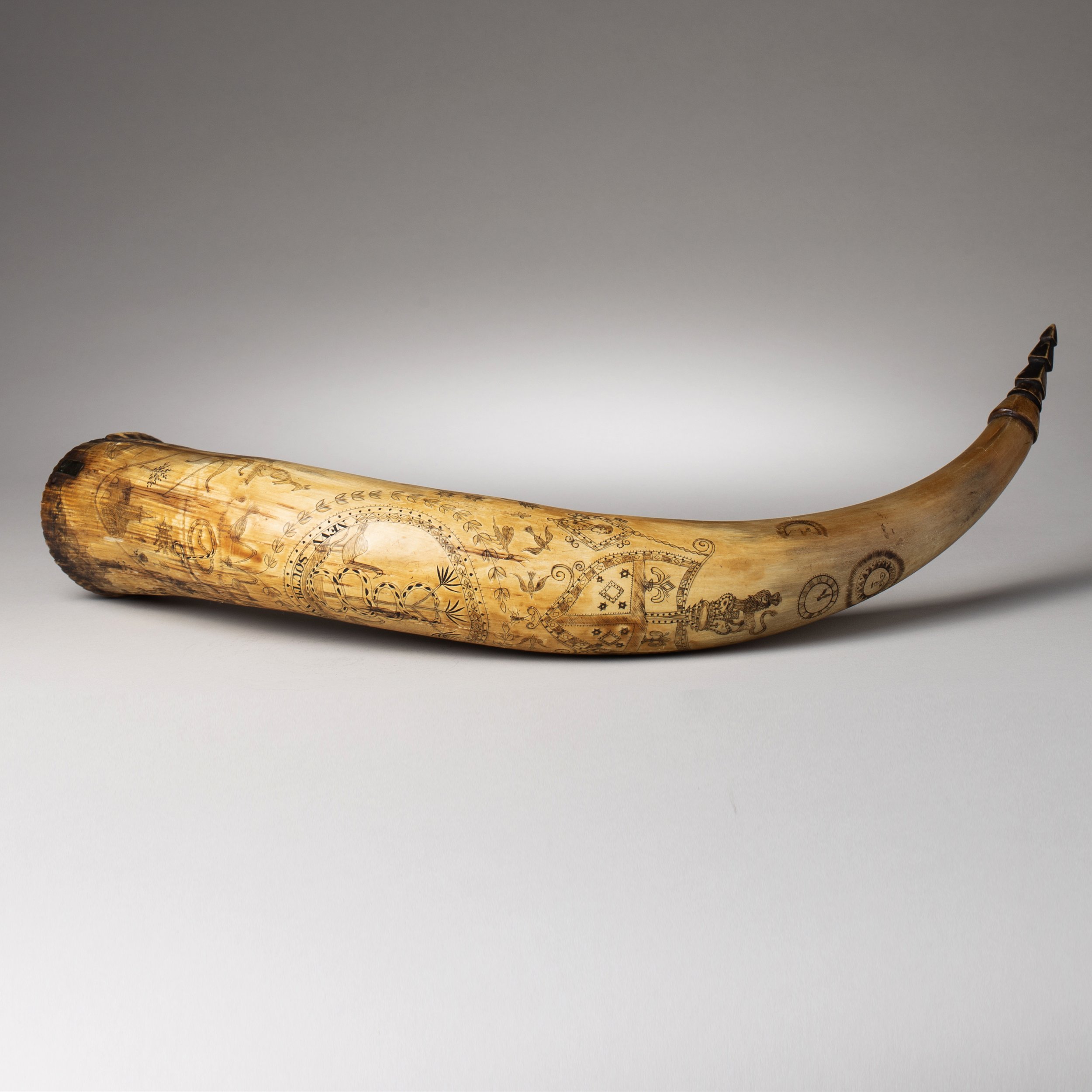 Image 1 of 10
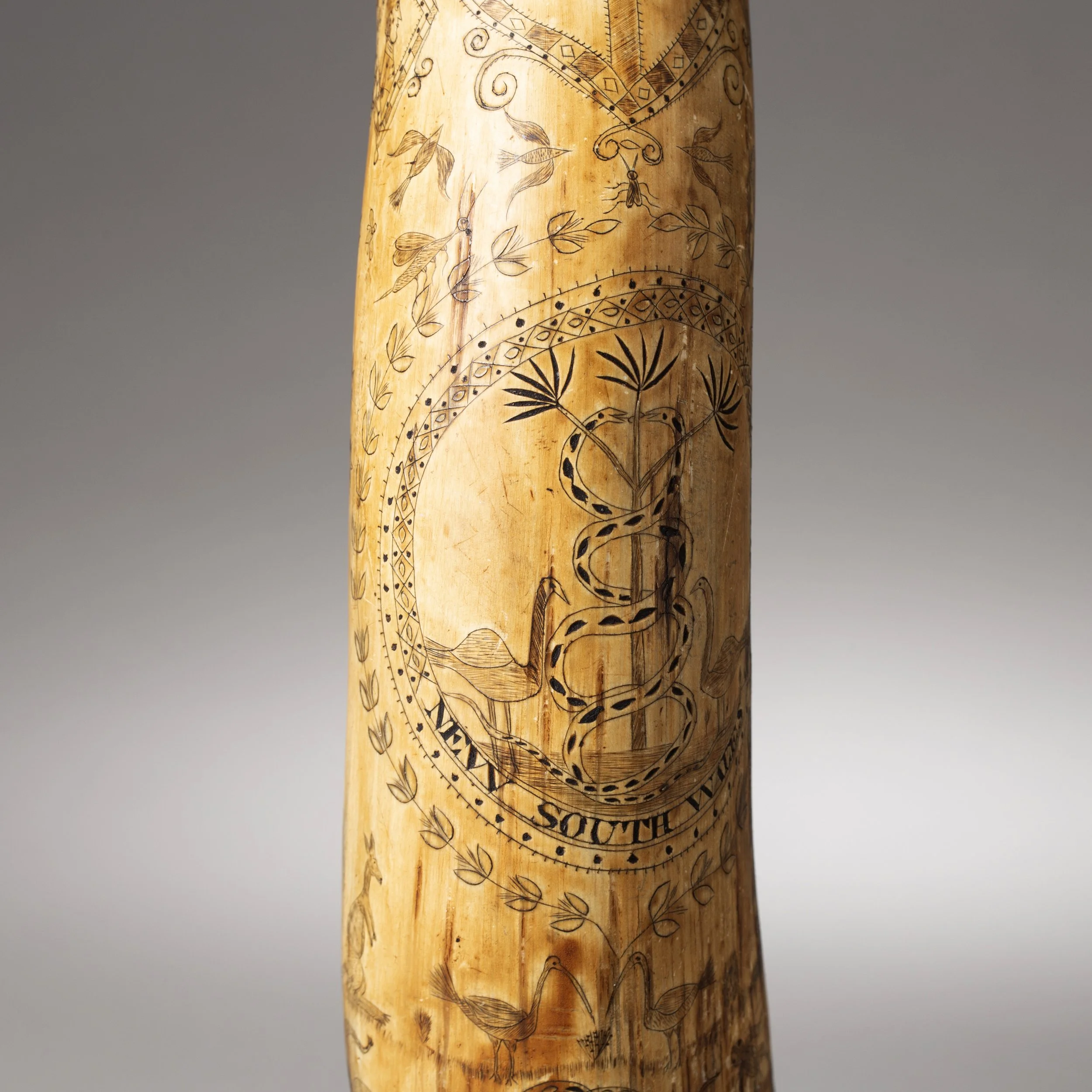 Image 2 of 10
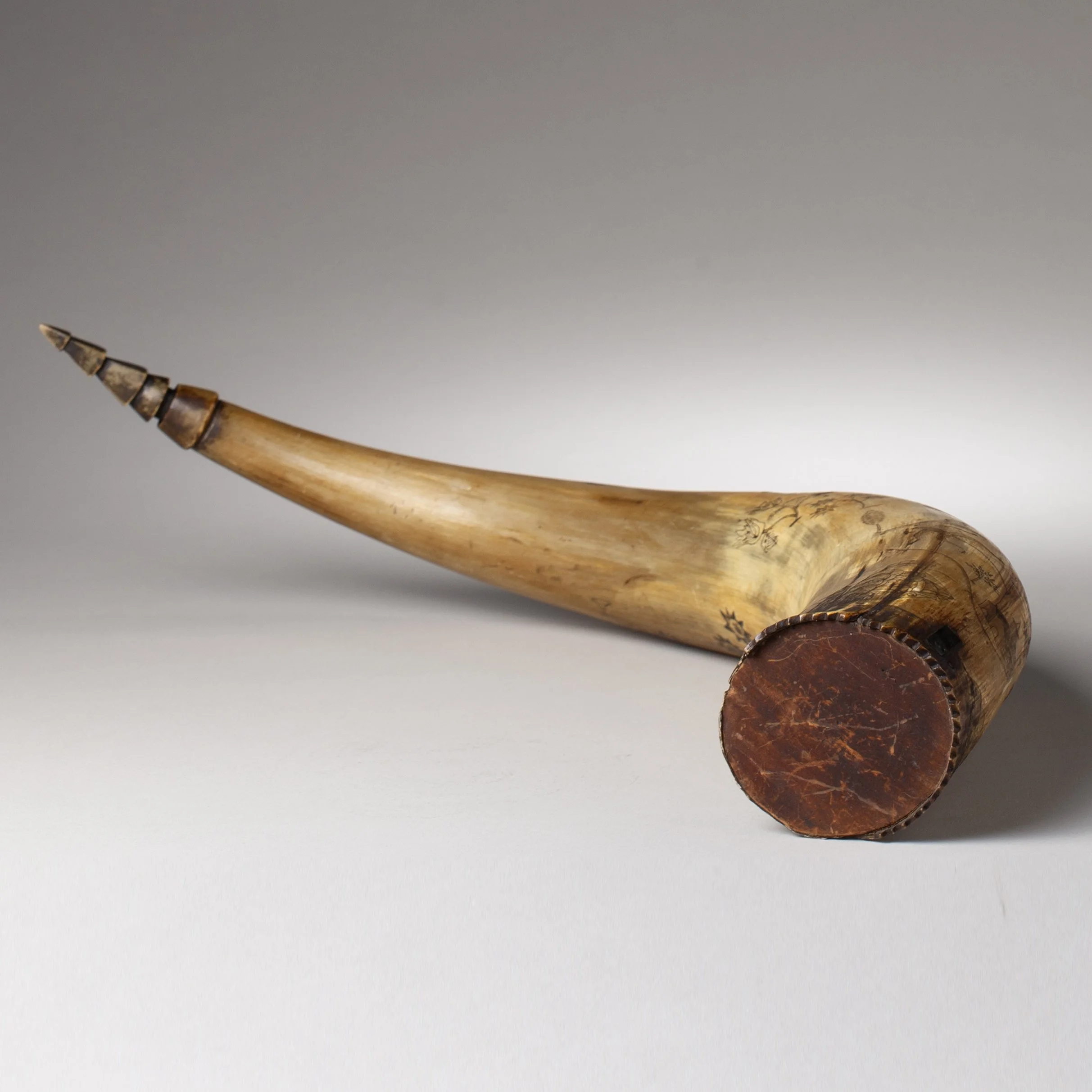 Image 3 of 10
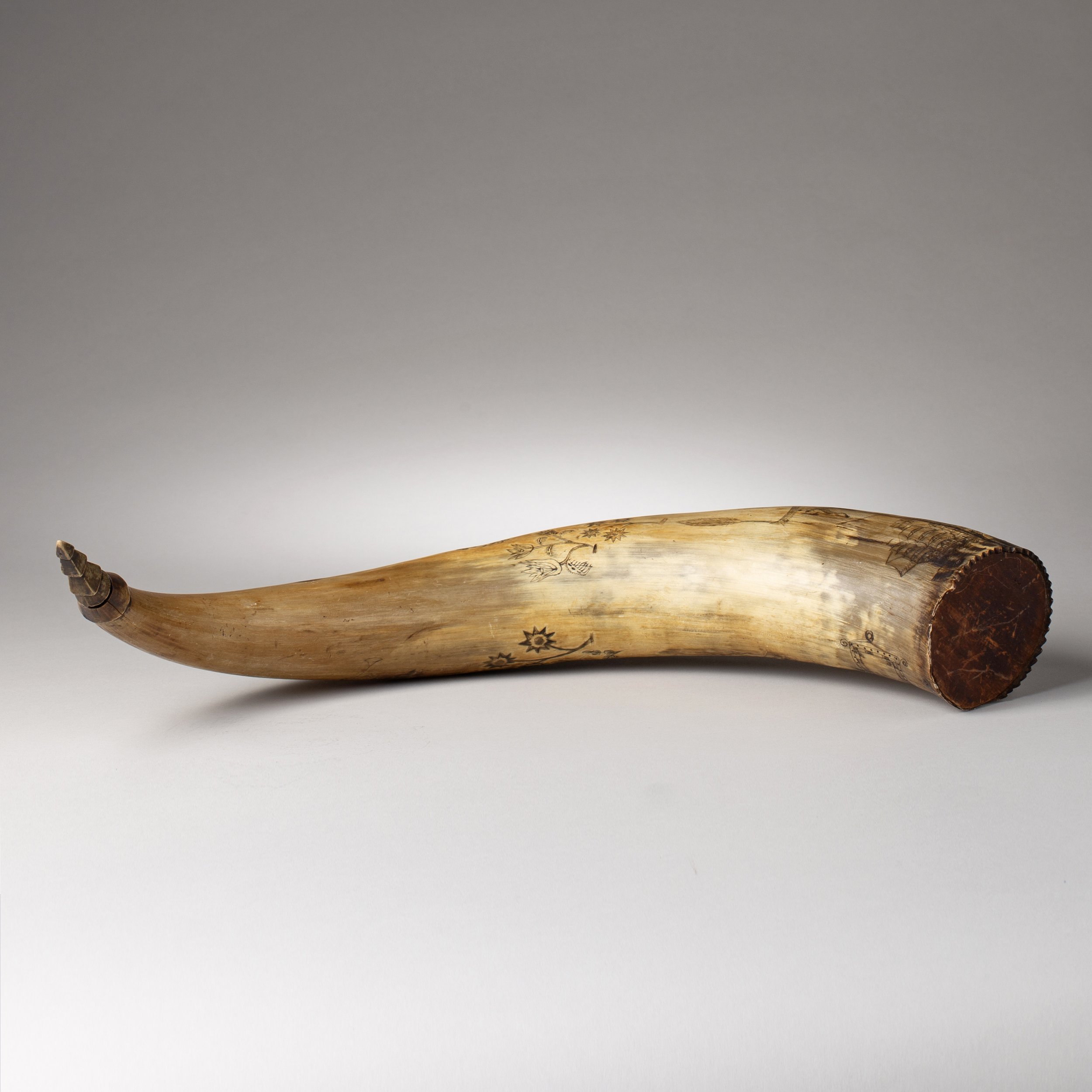 Image 4 of 10
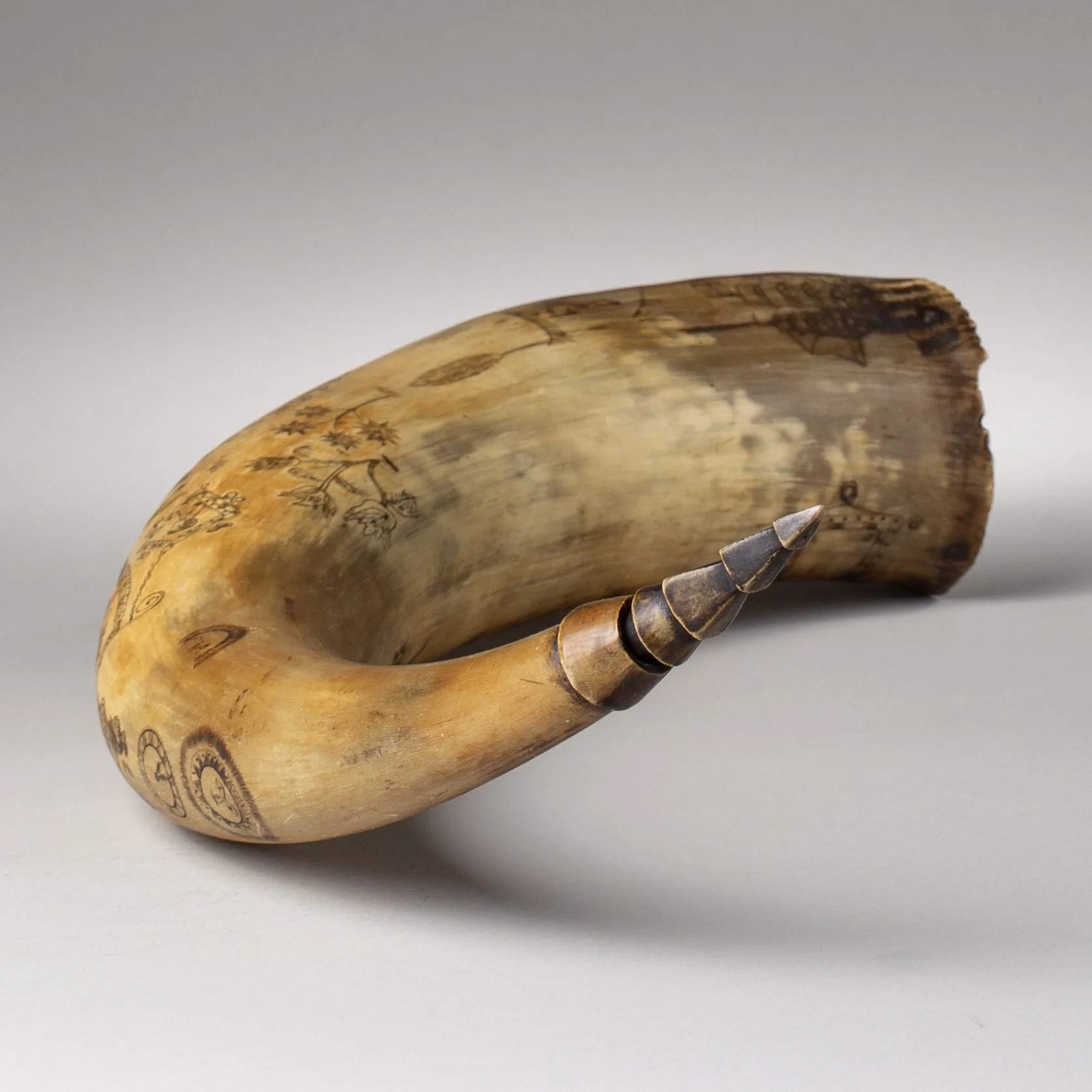 Image 5 of 10
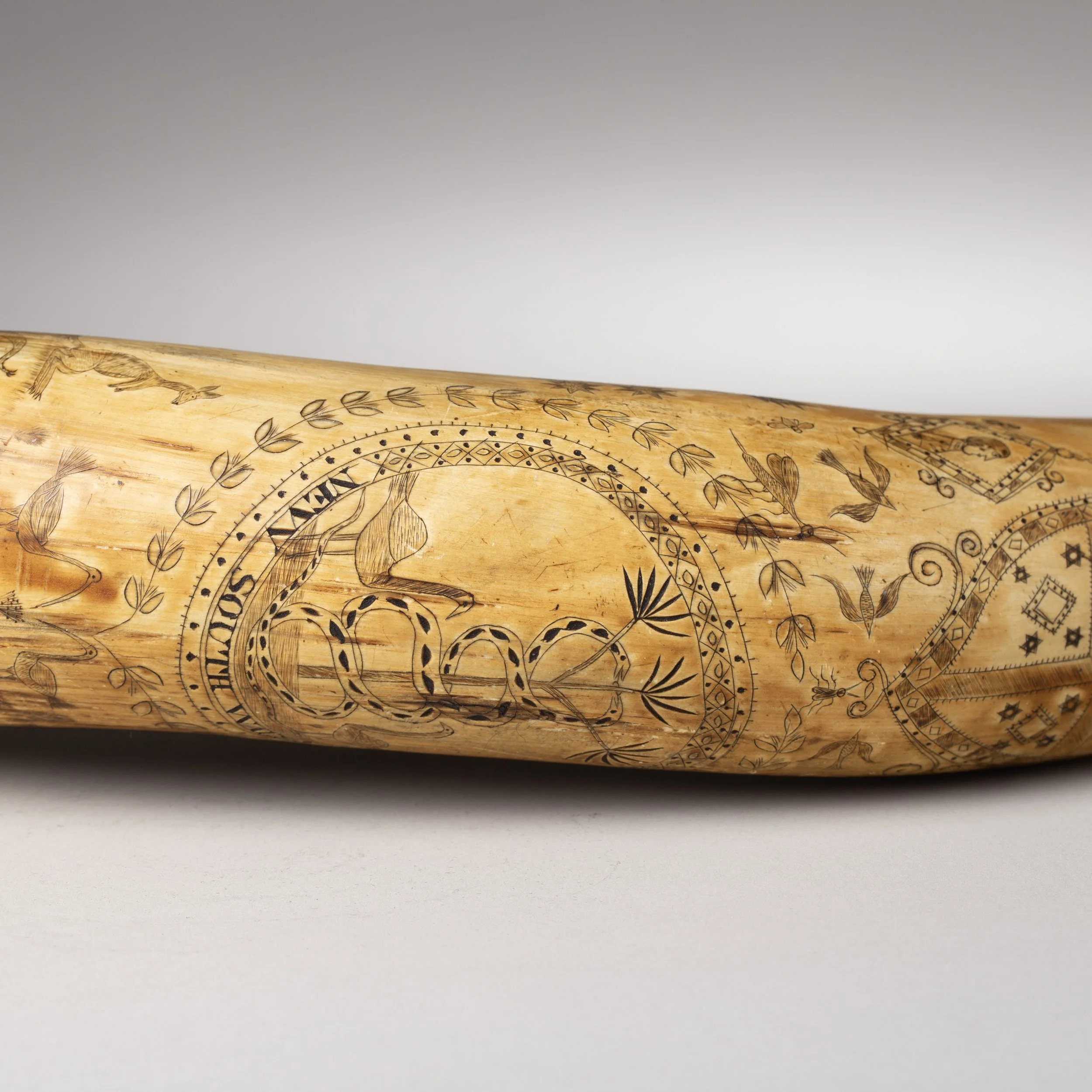 Image 6 of 10
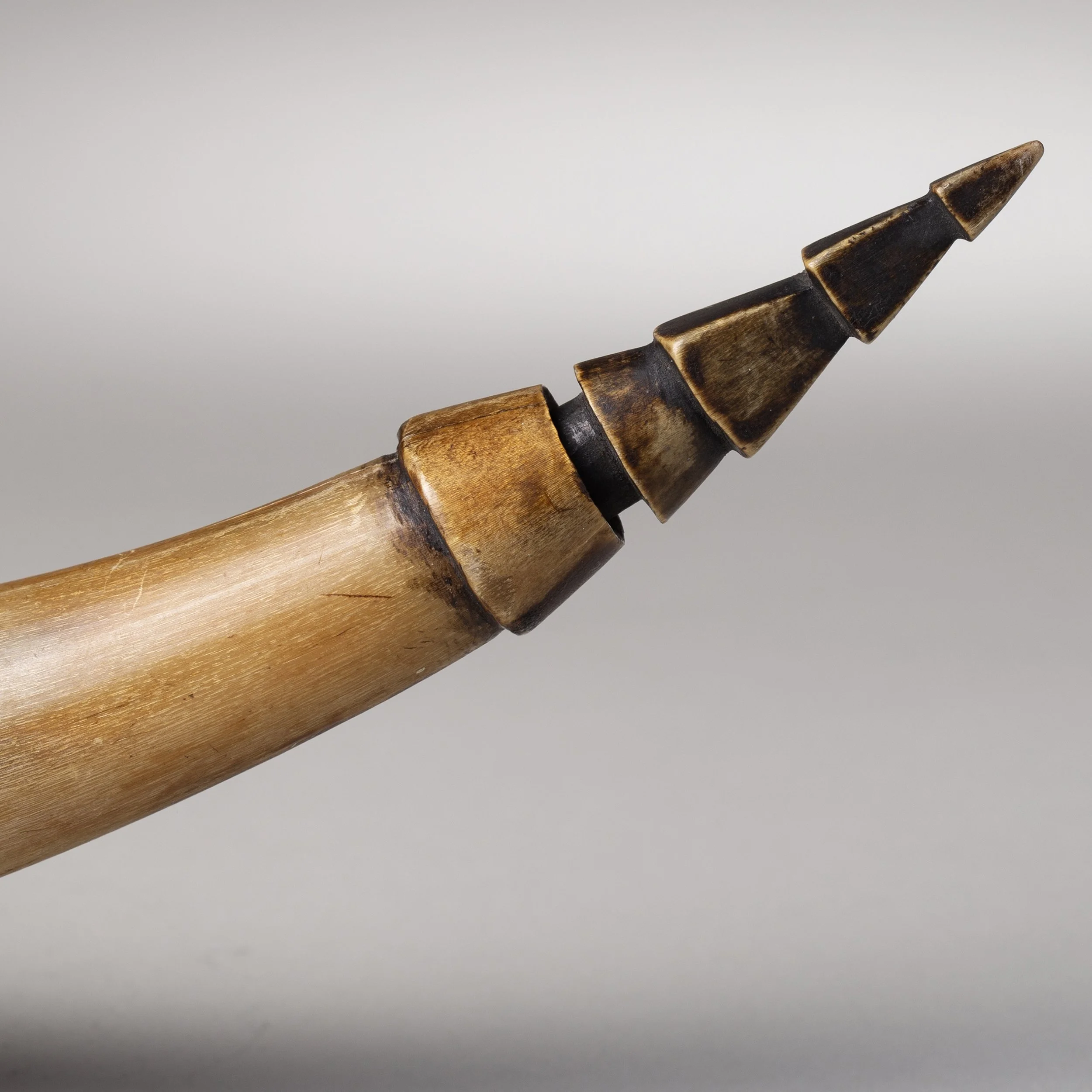 Image 7 of 10
 Image 8 of 10
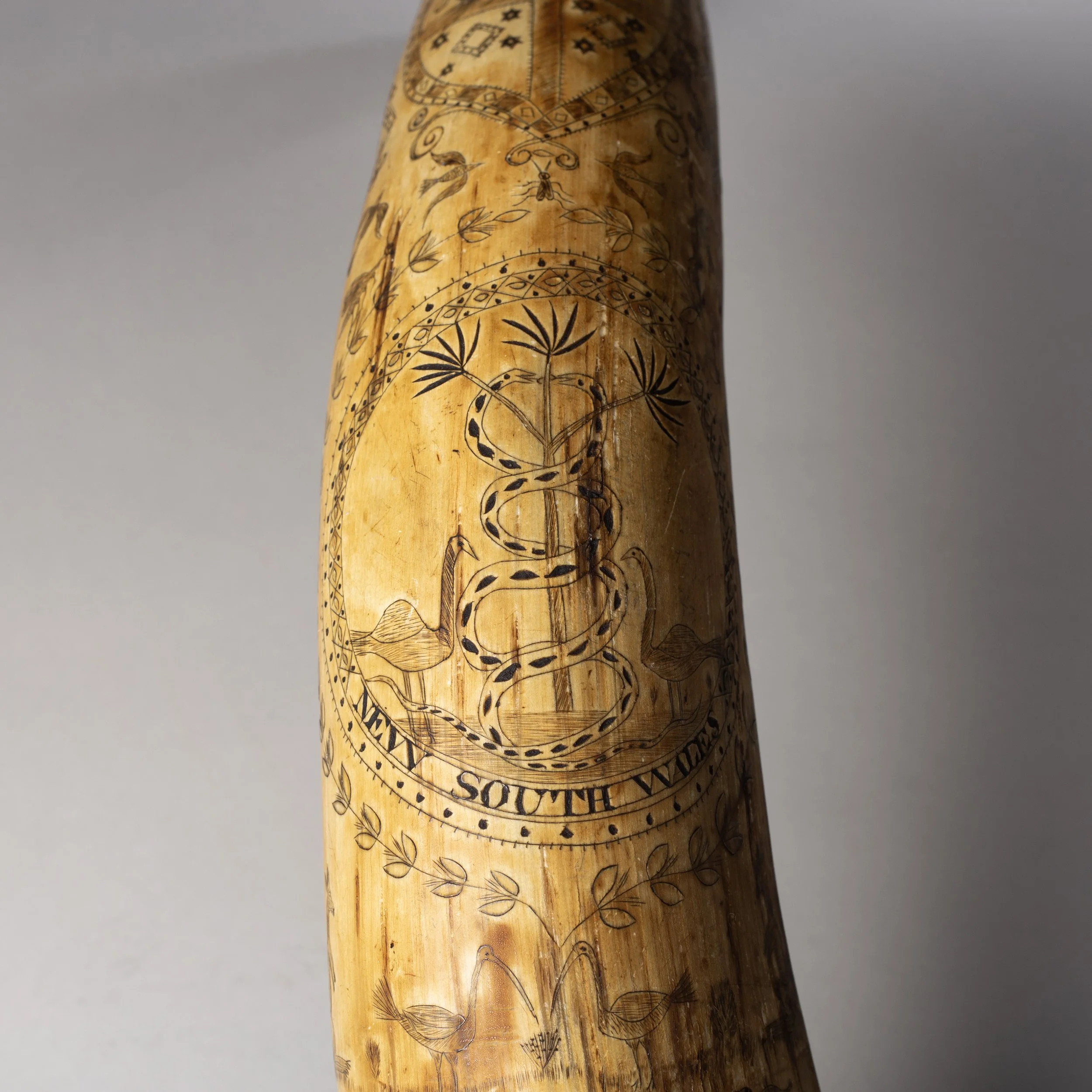 Image 9 of 10
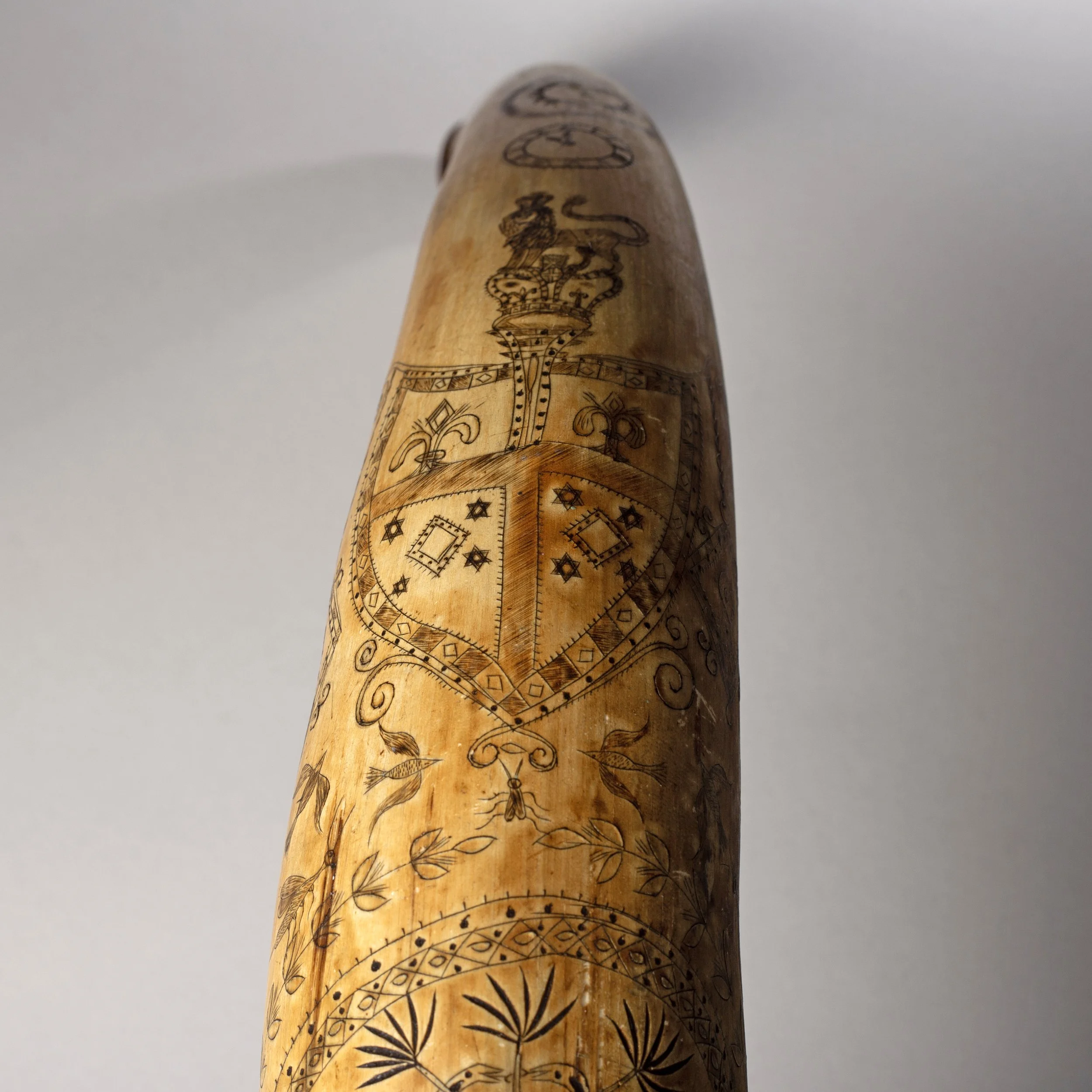 Image 10 of 10