

 Image 1 of 4
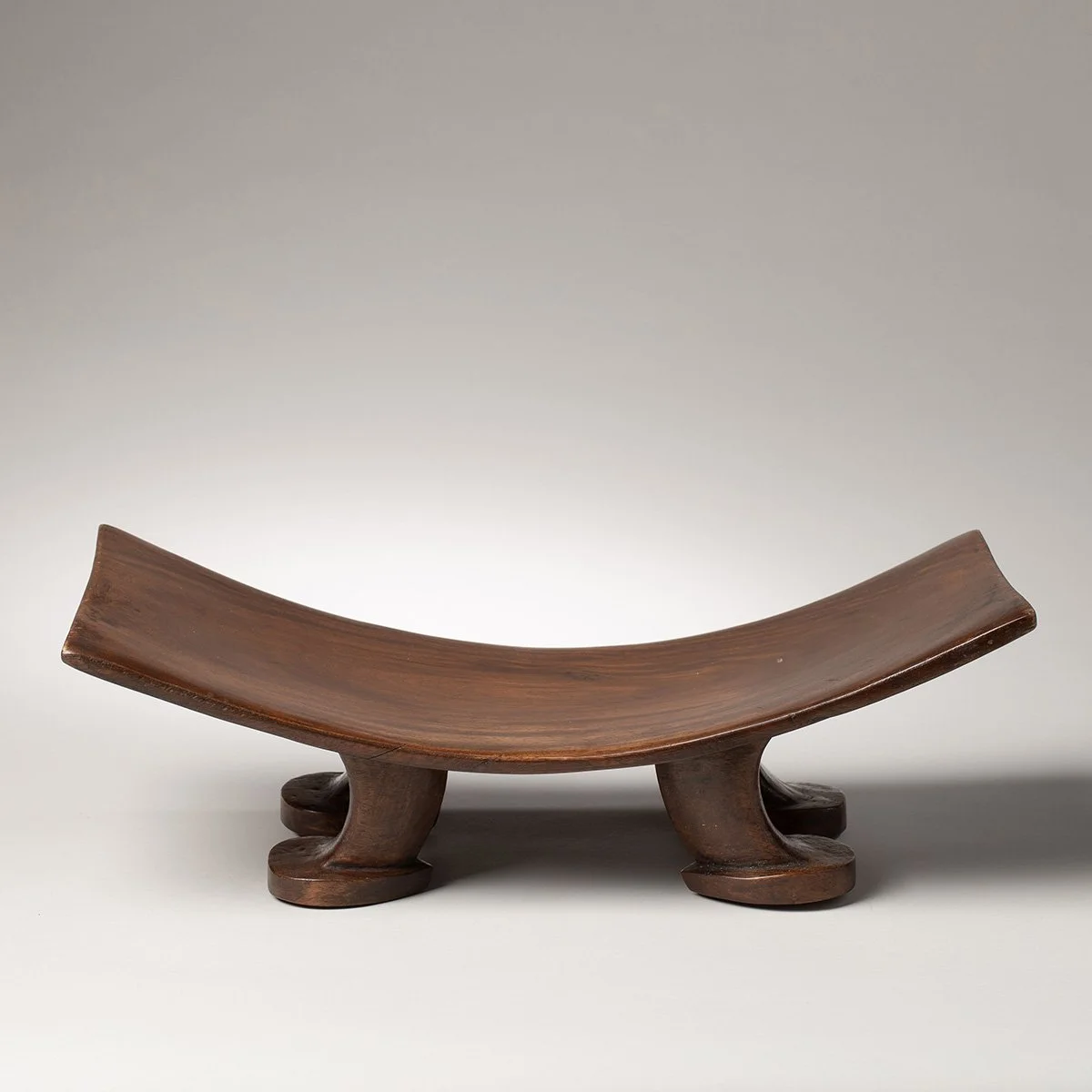 Image 2 of 4
 Image 3 of 4
 Image 4 of 4
Cook Islands, Polynesia
Mid-19th century or earlier
Wood
Height: 6 in. (15.2 cm); Width: 18 in. (45.7 cm)
Provenance: London trade
The noʻanga is a low stool form associated with chiefly use in the Cook Islands, where functional domestic objects were understood to carry social and status significance. Stools of this type were used in daily life by persons of rank and reflect the broader Cook Islands tradition of applying careful craftsmanship to objects of practical function. This example dates to the mid-nineteenth century or earlier and entered the market through the London trade.
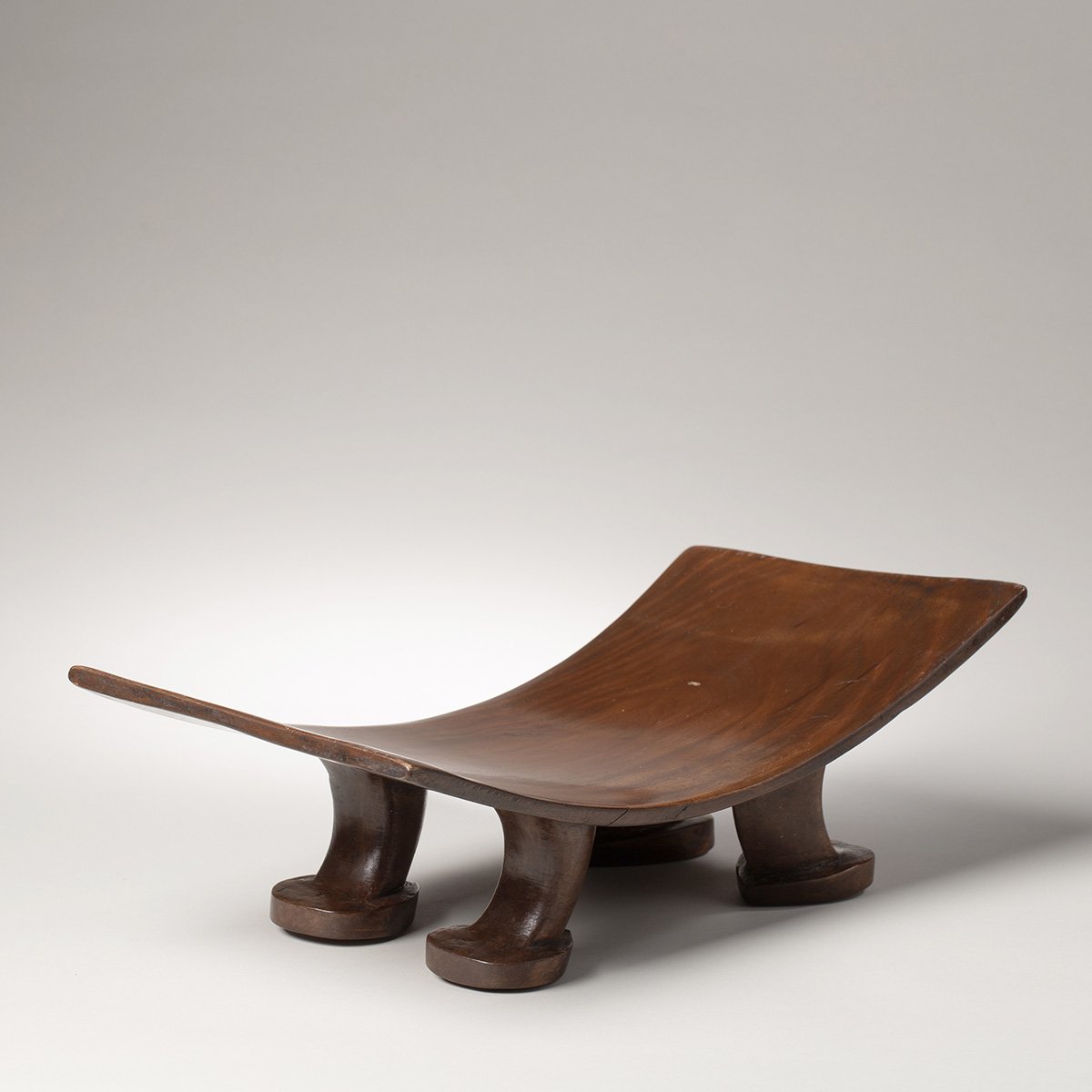
The form is cut from a single piece of wood with a gently curved, concave seat surface supported on two pairs of rounded feet, the profile low and stable. The sapwood retains a warm grain with natural tonal variation across the seat and legs. The overall proportions and surface finish reflect the restrained clarity characteristic of Cook Islands woodworking.
We ship free anywhere in the world, fully insured, packed by hand.
Cook Islands, Polynesia
Mid-19th century or earlier
Wood
Height: 6 in. (15.2 cm); Width: 18 in. (45.7 cm)
Provenance: London trade
The noʻanga is a low stool form associated with chiefly use in the Cook Islands, where functional domestic objects were understood to carry social and status significance. Stools of this type were used in daily life by persons of rank and reflect the broader Cook Islands tradition of applying careful craftsmanship to objects of practical function. This example dates to the mid-nineteenth century or earlier and entered the market through the London trade.
The form is cut from a single piece of wood with a gently curved, concave seat surface supported on two pairs of rounded feet, the profile low and stable. The sapwood retains a warm grain with natural tonal variation across the seat and legs. The overall proportions and surface finish reflect the restrained clarity characteristic of Cook Islands woodworking.
We ship free anywhere in the world, fully insured, packed by hand.