

 Image 1 of 5
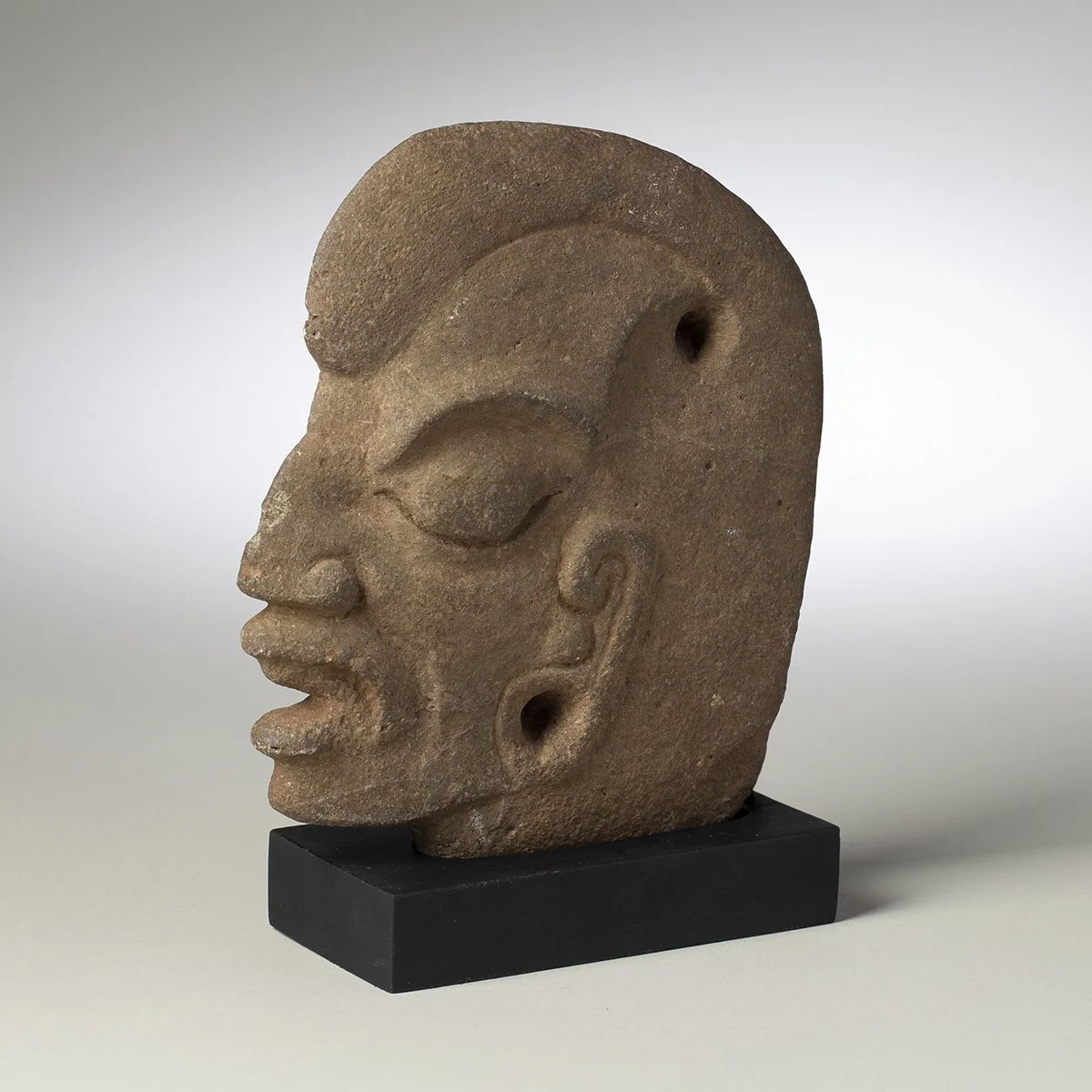 Image 2 of 5
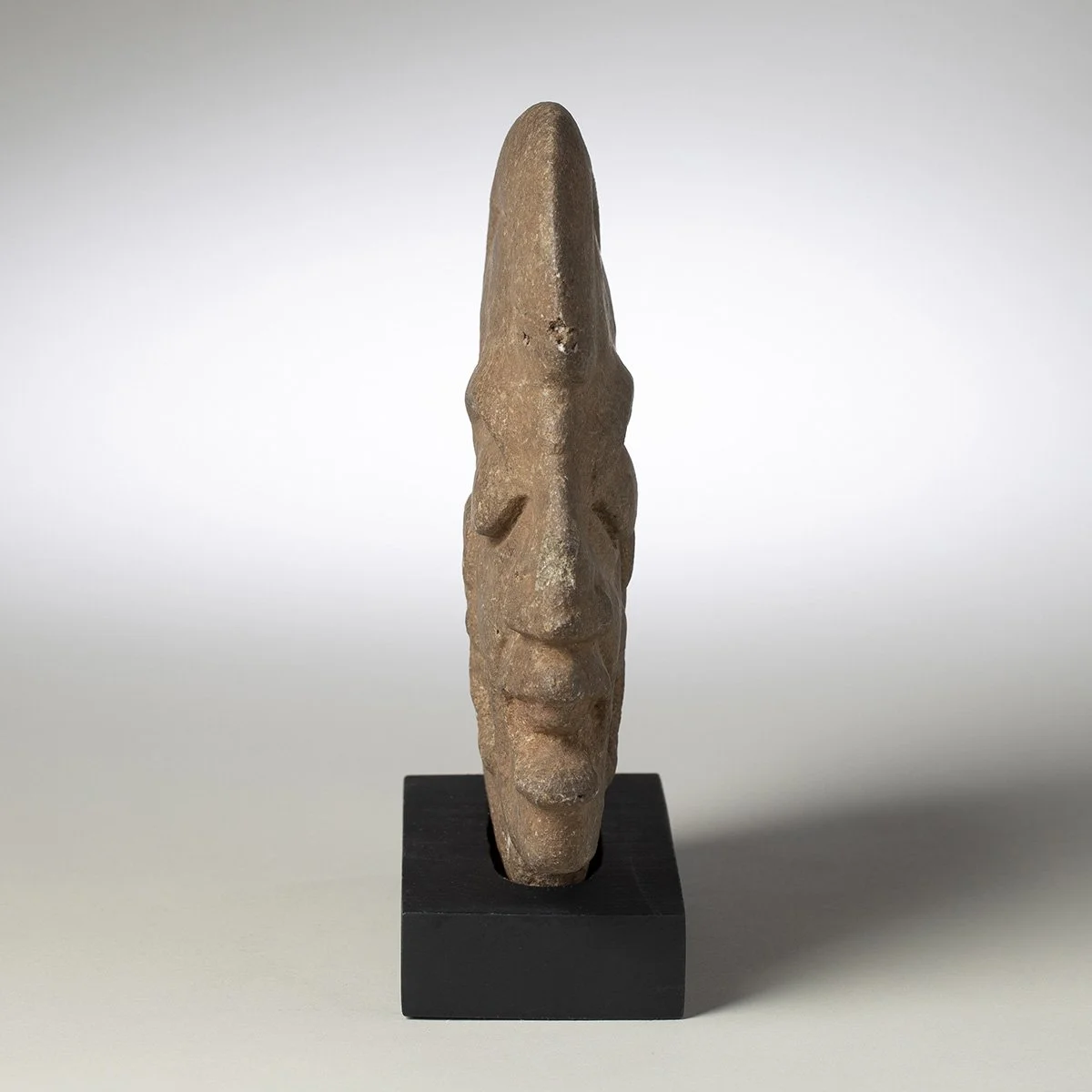 Image 3 of 5
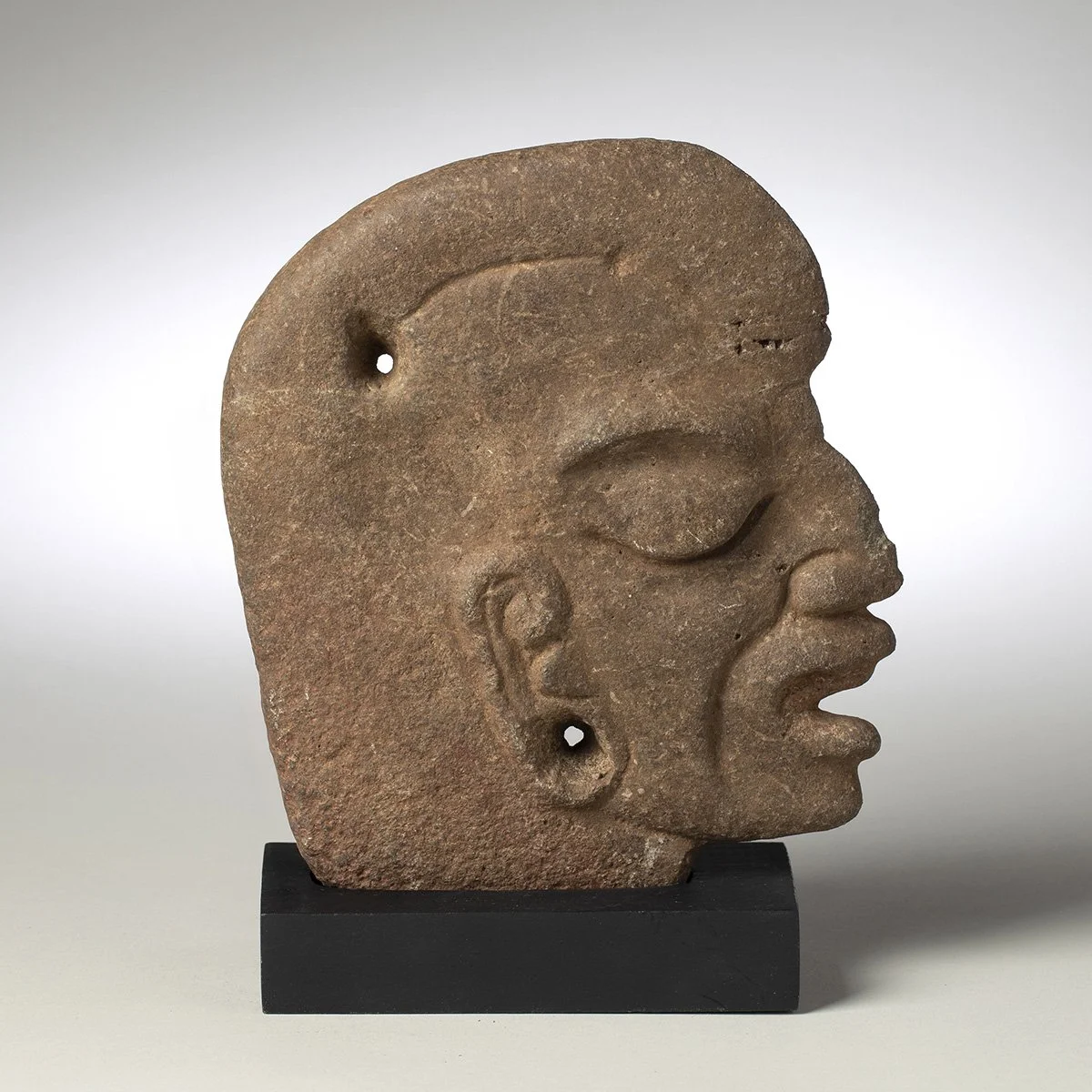 Image 4 of 5
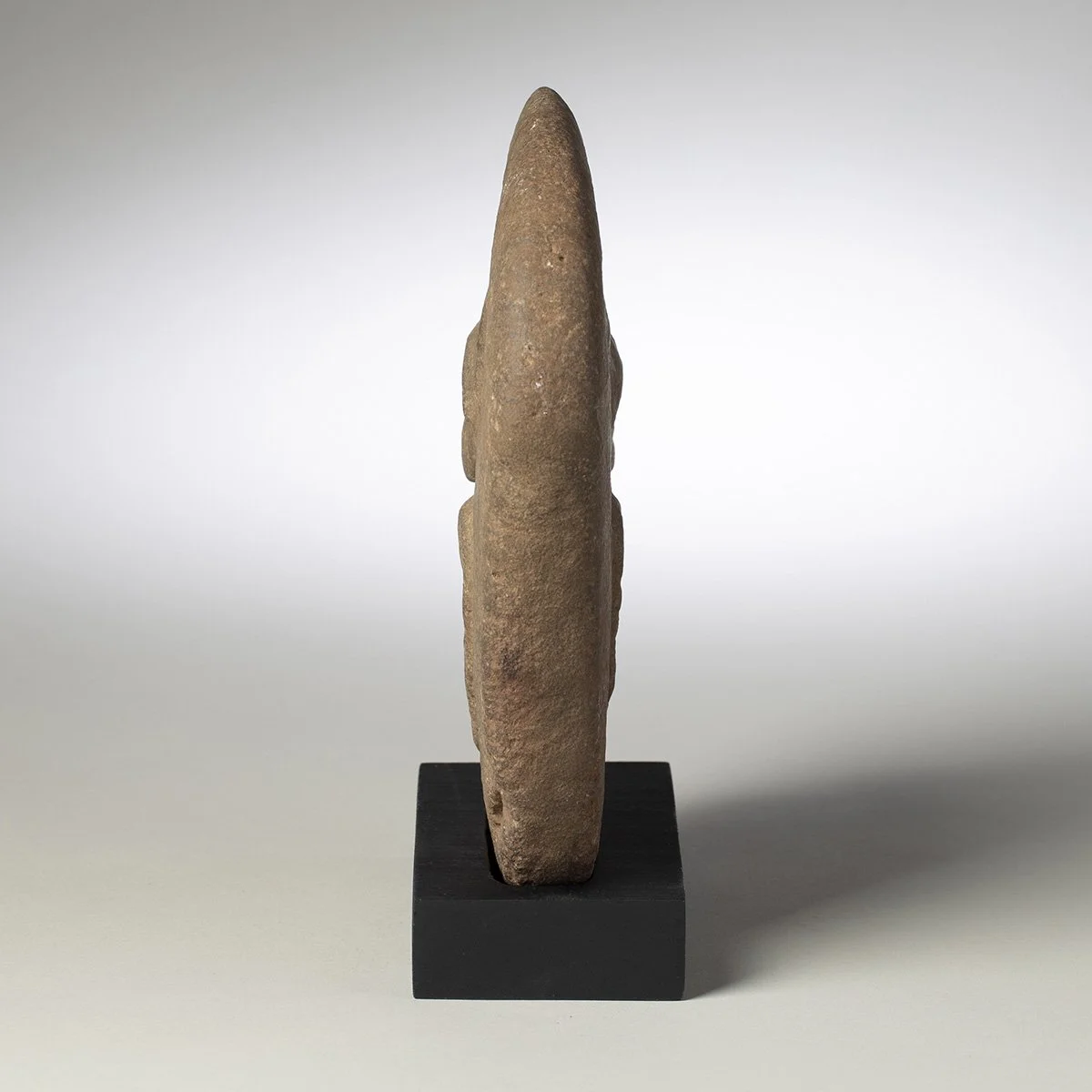 Image 5 of 5
Cotzumalhuapa
Guatemala
Middle to Late Classic period, 450 to 950 AD
Gray basalt with traces of red pigment
Height 8 1/2 inches
Provenance: Wally and Brenda Zollman, Indianapolis, Indiana
Publication: The Face of Ancient America: The Wally and Brenda Zollman Collection of Precolumbian Art, Indianapolis Museum of Art, 1989, David Joralemon and others, page 164, no. 111
Exhibition: Indianapolis Museum of Art, December 3, 1988 to February 26, 1989; Indiana University Art Museum, Bloomington, June 13 to September 10, 1989
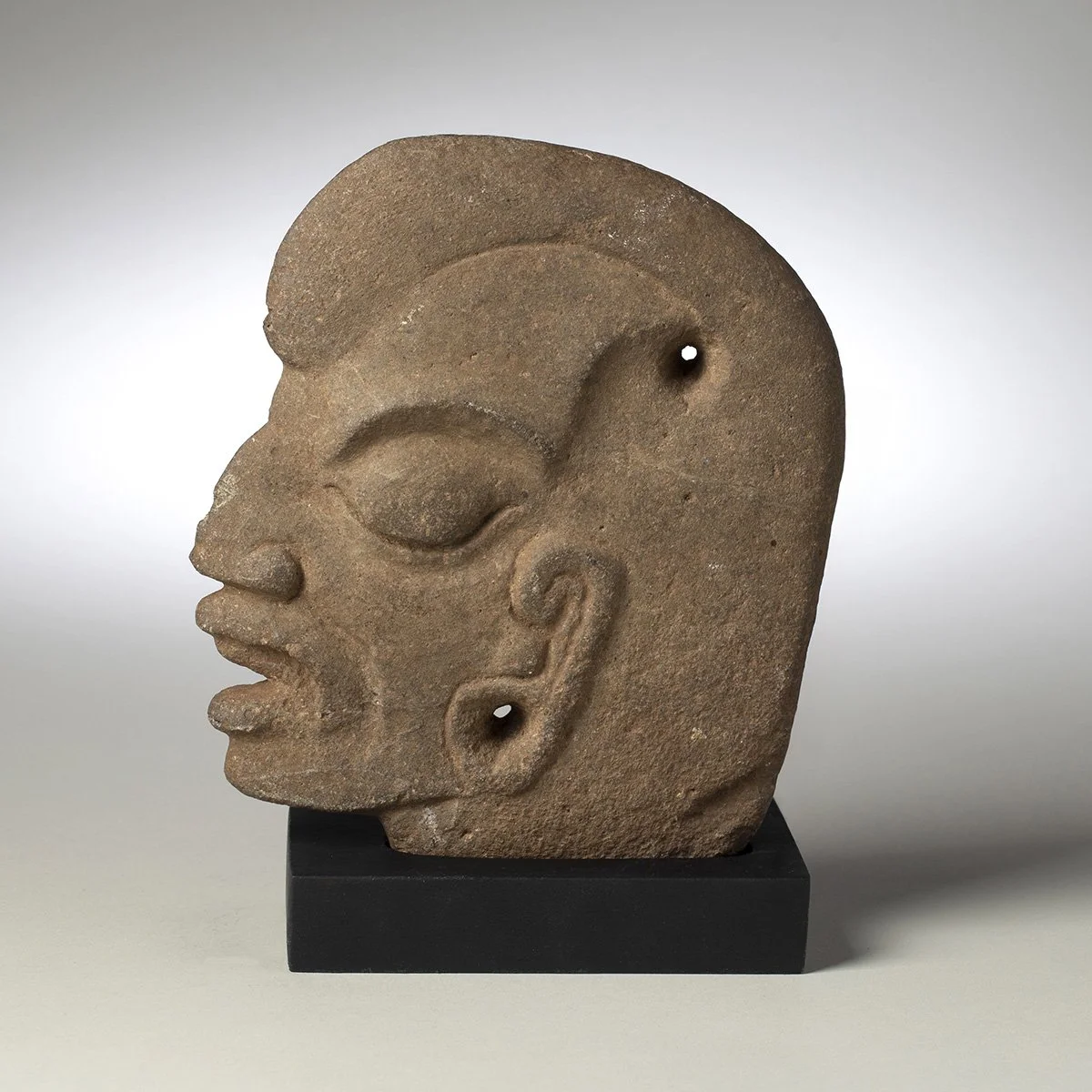
This hacha is carved in thin, flat gray basalt in the characteristic profile form used for ballgame markers of this type. The face shows parted lips, sunken cheek lines, a crested hairline, and a closed eye, a combination scholars associate with the depiction of a sacrificial or trophy head. A curled ear ornament is carved in relief beside the cheek, and two small drilled holes appear near the top and side of the head, likely for suspension or attachment.
The stone is worked to a thin, blade like profile, with a squared lower rear corner and extended base consistent with functional hacha form. Traces of red pigment remain visible on portions of the carved surface. The piece was published in The Face of Ancient America: The Wally and Brenda Zollman Collection of Precolumbian Art (Indianapolis Museum of Art, 1989, page 164, no. 111) and exhibited at the Indianapolis Museum of Art and Indiana University Art Museum in 1988 and 1989.
We ship free anywhere in the world, fully insured, packed by hand.
Cotzumalhuapa
Guatemala
Middle to Late Classic period, 450 to 950 AD
Gray basalt with traces of red pigment
Height 8 1/2 inches
Provenance: Wally and Brenda Zollman, Indianapolis, Indiana
Publication: The Face of Ancient America: The Wally and Brenda Zollman Collection of Precolumbian Art, Indianapolis Museum of Art, 1989, David Joralemon and others, page 164, no. 111
Exhibition: Indianapolis Museum of Art, December 3, 1988 to February 26, 1989; Indiana University Art Museum, Bloomington, June 13 to September 10, 1989
This hacha is carved in thin, flat gray basalt in the characteristic profile form used for ballgame markers of this type. The face shows parted lips, sunken cheek lines, a crested hairline, and a closed eye, a combination scholars associate with the depiction of a sacrificial or trophy head. A curled ear ornament is carved in relief beside the cheek, and two small drilled holes appear near the top and side of the head, likely for suspension or attachment.
The stone is worked to a thin, blade like profile, with a squared lower rear corner and extended base consistent with functional hacha form. Traces of red pigment remain visible on portions of the carved surface. The piece was published in The Face of Ancient America: The Wally and Brenda Zollman Collection of Precolumbian Art (Indianapolis Museum of Art, 1989, page 164, no. 111) and exhibited at the Indianapolis Museum of Art and Indiana University Art Museum in 1988 and 1989.
We ship free anywhere in the world, fully insured, packed by hand.