

 Image 1 of 5
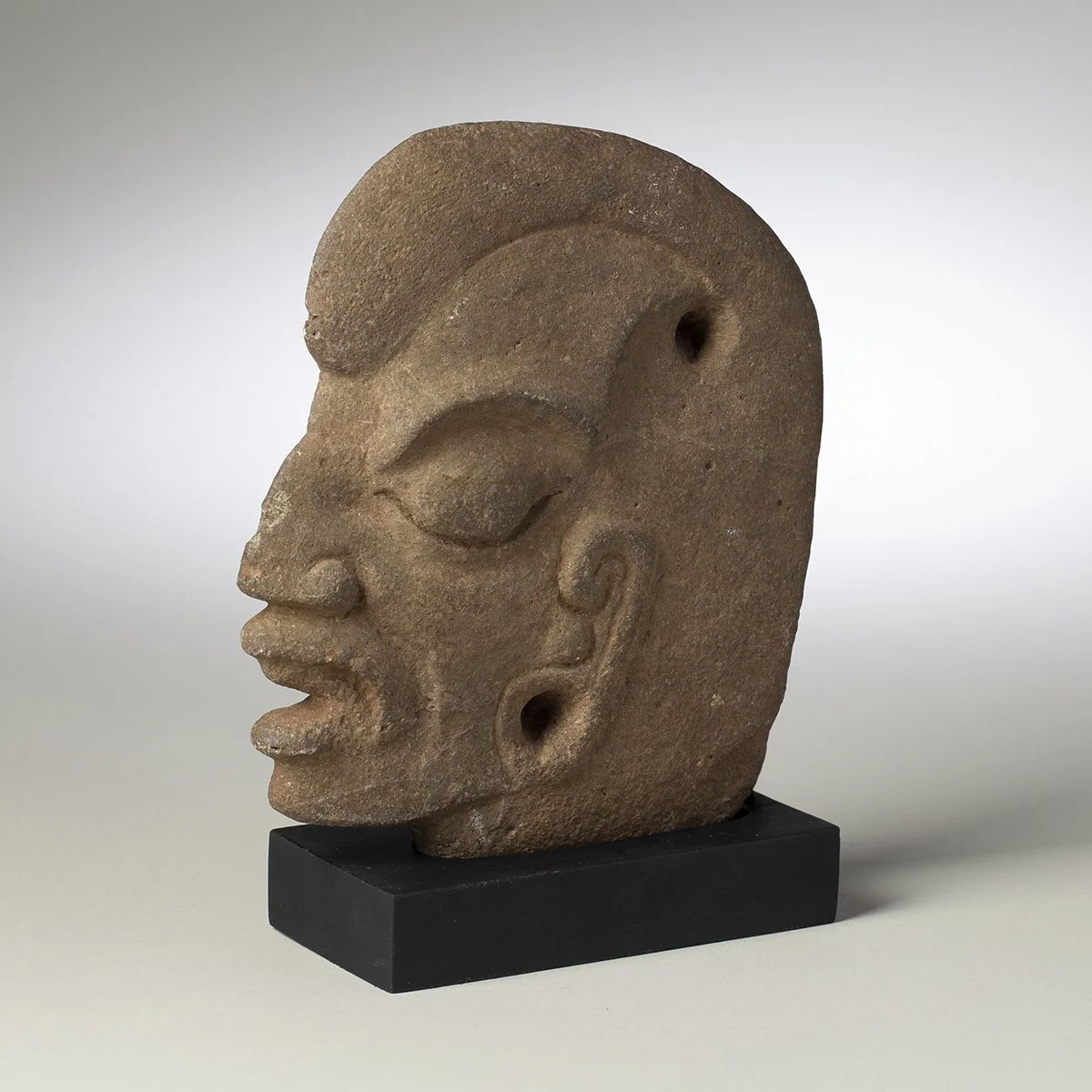 Image 2 of 5
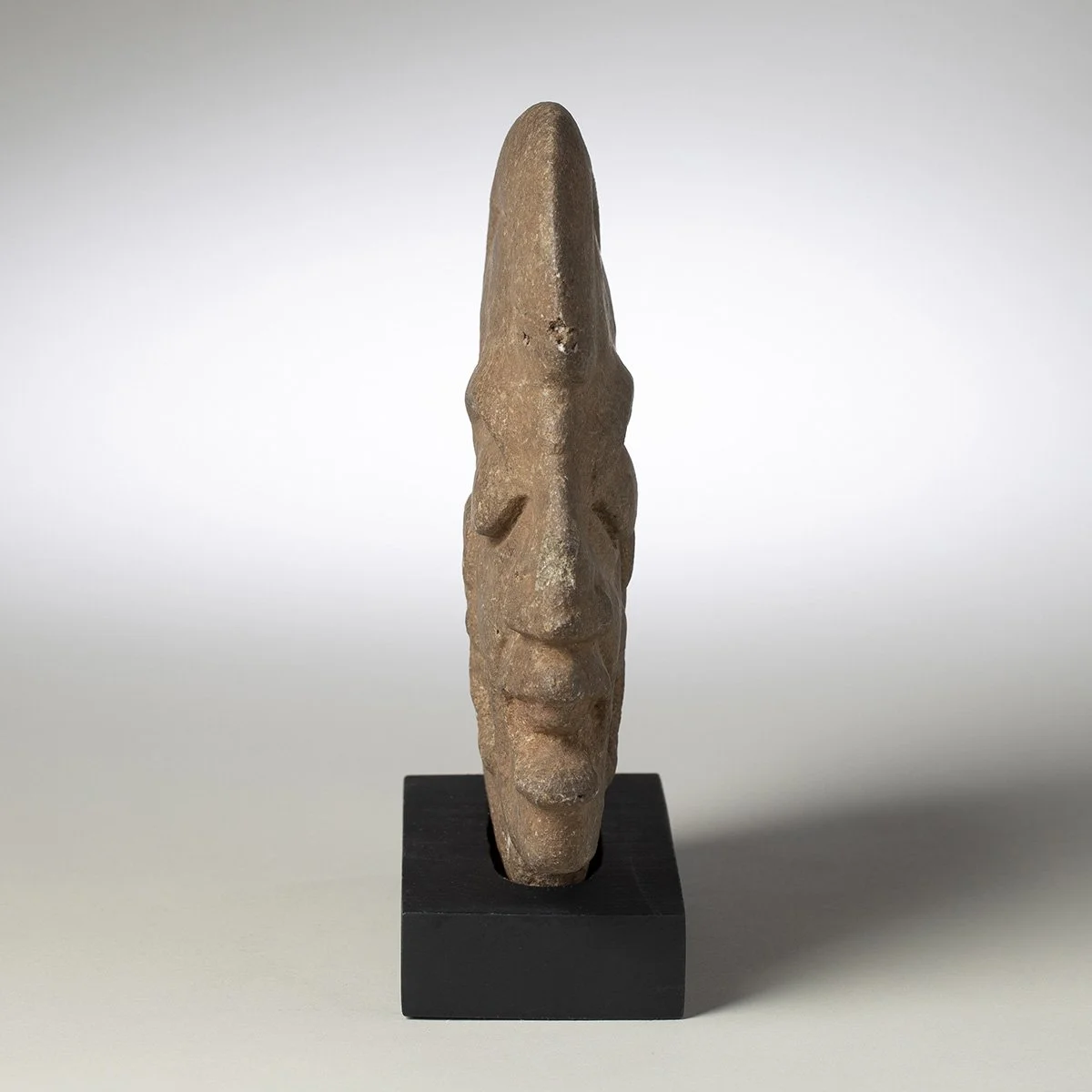 Image 3 of 5
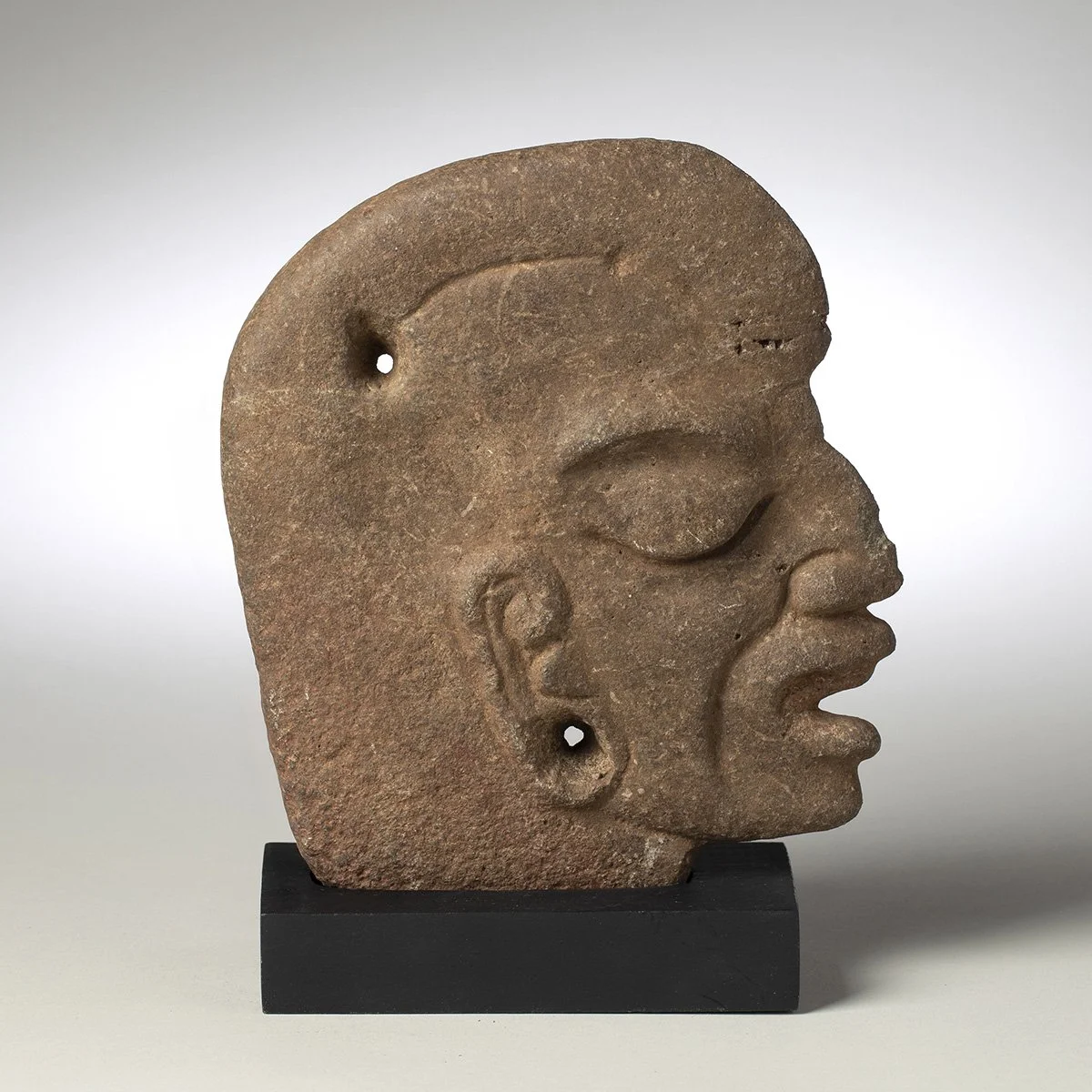 Image 4 of 5
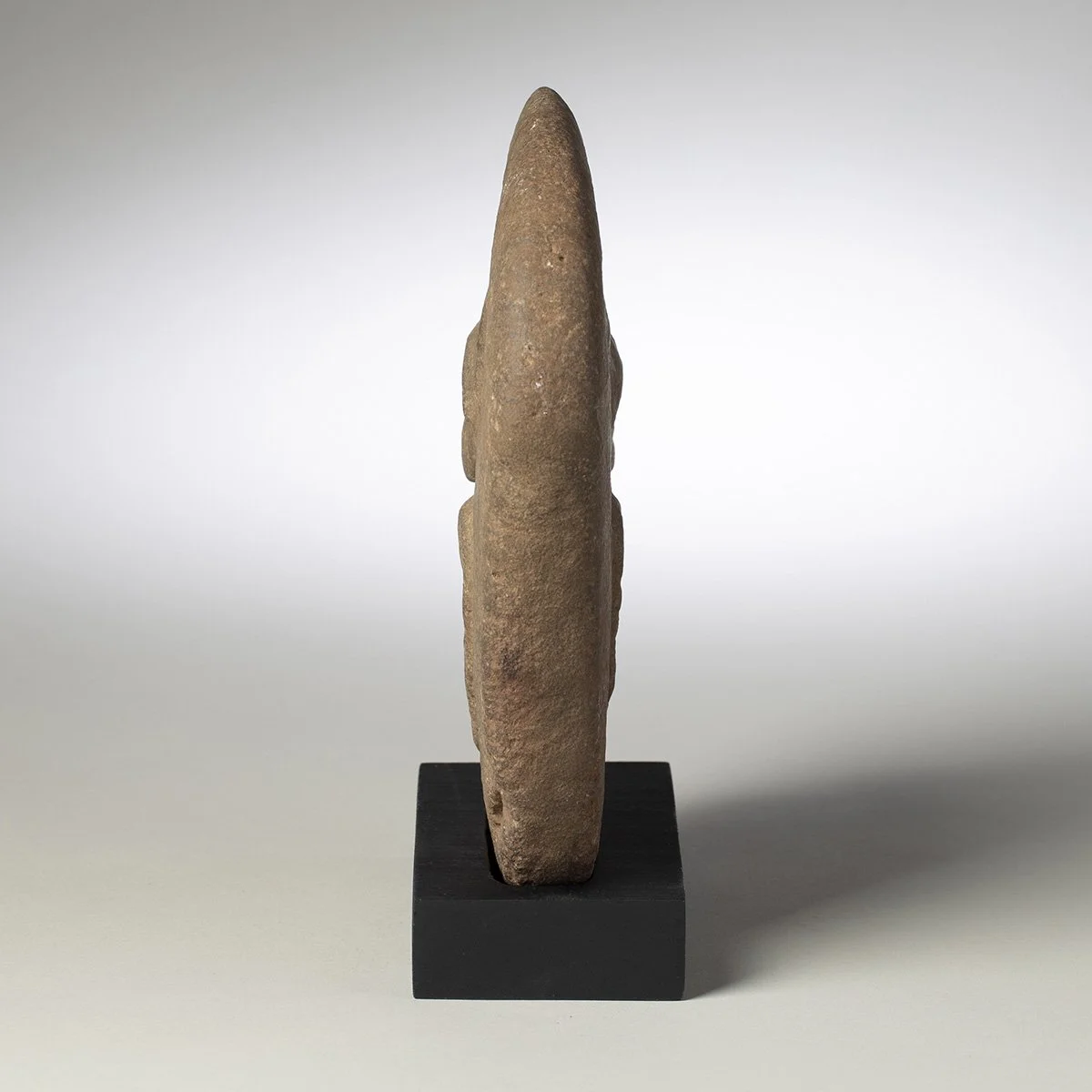 Image 5 of 5
Guatemala, Cotzumalhuapa culture
Middle to Late Classic period, 450–950 AD
Grey basalt with traces of red pigment
Height: 8½ in (21.6 cm)
Provenance: Wally and Brenda Zollman, Indianapolis, Indiana
Publication: The Face of Ancient America: The Wally and Brenda Zollman Collection of Precolumbian Art, Indianapolis Museum of Art, 1989, David Joralemon and others, page 164, no. 111
Exhibition: Indianapolis Museum of Art, December 3, 1988 – February 26, 1989; Indiana Museum of Art, Bloomington, June 13 – September 10, 1989
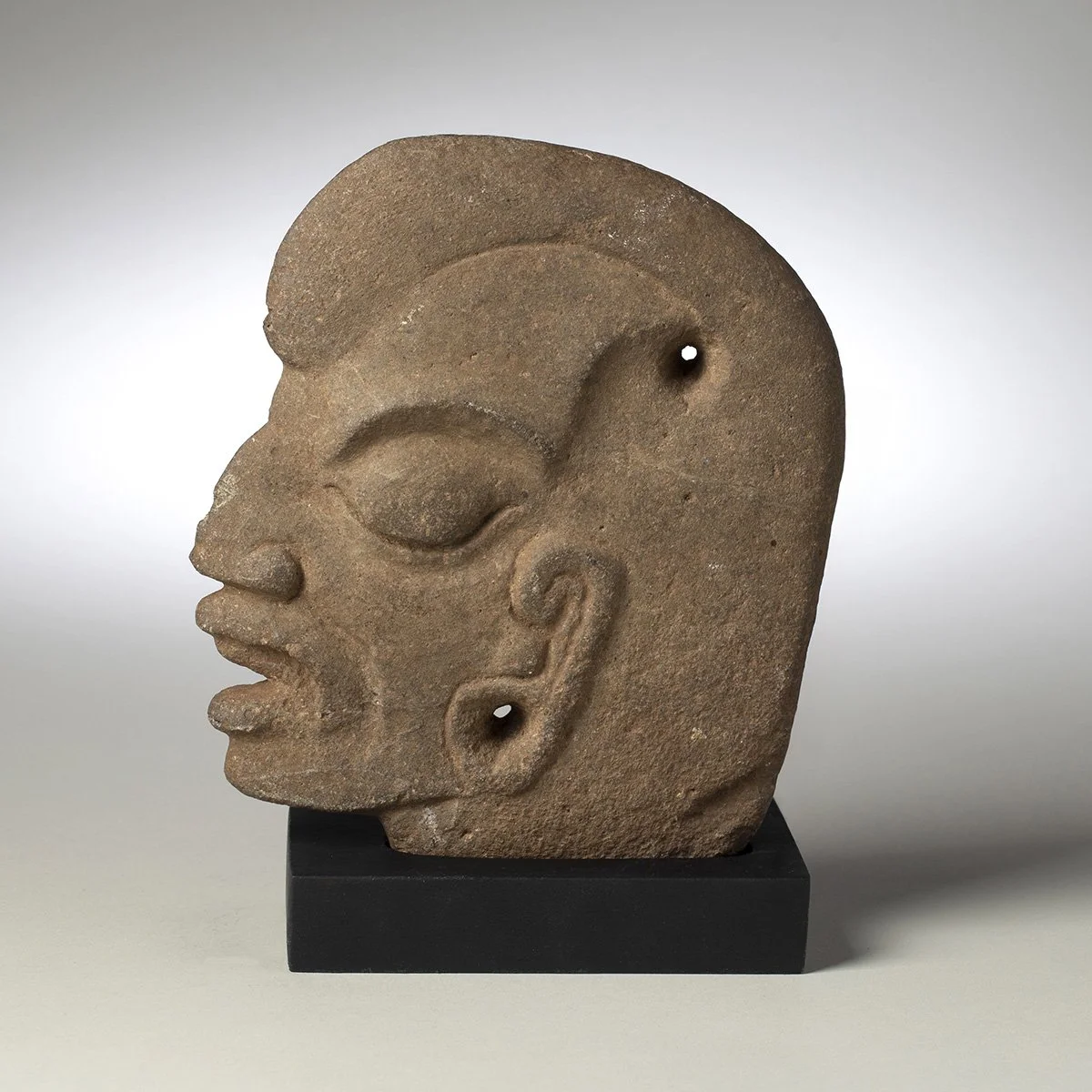
Hachas, thin stone objects carved in profile in the form of human or animal heads, are associated with the ritual ballgame complex of Mesoamerica and are most commonly found along the Pacific slope of Guatemala and the Gulf Coast of Mexico. The Cotzumalhuapa culture, centered in the piedmont zone of coastal Guatemala, produced a distinctive corpus of stone sculpture associated with the ballgame, death, and sacrifice, with a grimly expressive aesthetic that sets it apart from contemporary Maya and Veracruz traditions. Human head hachas with closed eyes are interpreted as representations of decapitated trophy heads, reflecting the sacrificial dimension of ballgame ritual.
This hacha is carved in grey basalt with the characteristic profile form, depicting a human head with parted lips, sunken cheek lines, a crested hairline, and closed eyes suggesting death. A suspension hole in the upper left of the head and a squared lower rear corner with extended base are consistent with functional hacha form. Traces of red pigment remain on the surface, and the piece was published and exhibited at the Indianapolis Museum of Art in 1988–1989 as part of the Zollman collection catalogue, one of the landmark publications in Pre-Columbian collecting history.
We ship free anywhere in the world, fully insured, packed by hand.
Guatemala, Cotzumalhuapa culture
Middle to Late Classic period, 450–950 AD
Grey basalt with traces of red pigment
Height: 8½ in (21.6 cm)
Provenance: Wally and Brenda Zollman, Indianapolis, Indiana
Publication: The Face of Ancient America: The Wally and Brenda Zollman Collection of Precolumbian Art, Indianapolis Museum of Art, 1989, David Joralemon and others, page 164, no. 111
Exhibition: Indianapolis Museum of Art, December 3, 1988 – February 26, 1989; Indiana Museum of Art, Bloomington, June 13 – September 10, 1989
Hachas, thin stone objects carved in profile in the form of human or animal heads, are associated with the ritual ballgame complex of Mesoamerica and are most commonly found along the Pacific slope of Guatemala and the Gulf Coast of Mexico. The Cotzumalhuapa culture, centered in the piedmont zone of coastal Guatemala, produced a distinctive corpus of stone sculpture associated with the ballgame, death, and sacrifice, with a grimly expressive aesthetic that sets it apart from contemporary Maya and Veracruz traditions. Human head hachas with closed eyes are interpreted as representations of decapitated trophy heads, reflecting the sacrificial dimension of ballgame ritual.
This hacha is carved in grey basalt with the characteristic profile form, depicting a human head with parted lips, sunken cheek lines, a crested hairline, and closed eyes suggesting death. A suspension hole in the upper left of the head and a squared lower rear corner with extended base are consistent with functional hacha form. Traces of red pigment remain on the surface, and the piece was published and exhibited at the Indianapolis Museum of Art in 1988–1989 as part of the Zollman collection catalogue, one of the landmark publications in Pre-Columbian collecting history.
We ship free anywhere in the world, fully insured, packed by hand.