

 Image 1 of 4
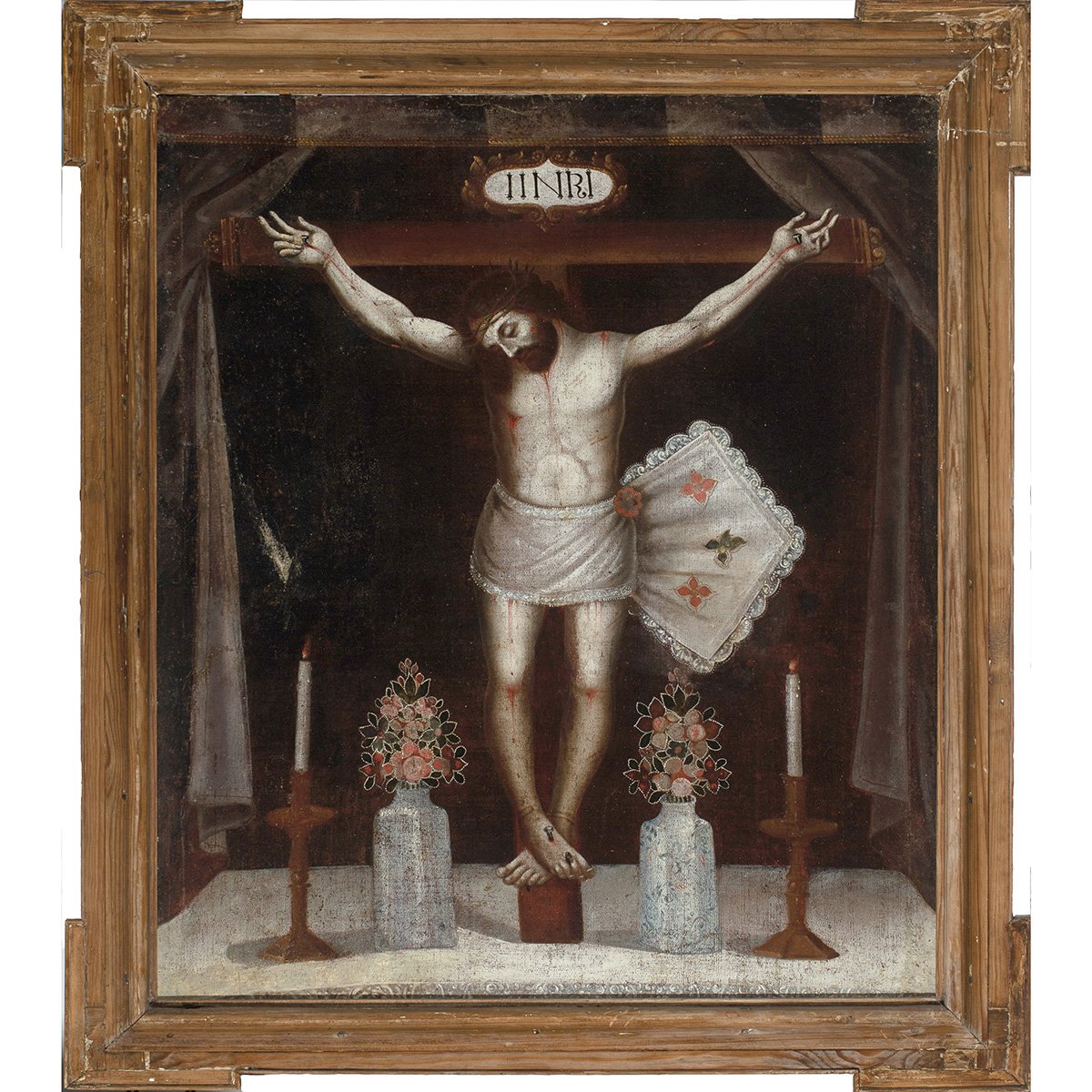 Image 2 of 4
 Image 3 of 4
 Image 4 of 4
Cuzco School, Peru
18th century
Oil on canvas
Height 44 1/2" (113 cm); width 39 1/2" (100.3 cm) including period frame
Provenance: Constance McCormick Fearing, Santa Barbara, California; displayed in her residence in Mexico in the 1950s and later in Santa Barbara
The Señor de los Temblores, or Christ of the Earthquakes, is a statue of the crucified Christ presiding over a side chapel in the Cathedral de Cusco, venerated since a 1650 earthquake that threatened the city was said to cease when worshippers processed the statue through the streets. Paintings of this subject belong to the Cusco School tradition of statue paintings, devotional works created so that worshippers could pray to a miracle-working sculpture from a distance. As the Denver Art Museum notes in its description of a related example, these paintings were understood as embodying the powers of the original image and were believed capable of working miracles in their own right.
The composition depicts the Christ of the Earthquakes on a wooden processional base, flanked by burning candles and floral arrangements in crystal vases representing special offerings to the statue. The flowers depicted carry layered meaning, combining Christian symbols such as lilies and roses with trumpet-shaped red blossoms representing native Andean nucchu and cantuta flowers, which held significance in both Christian and Andean religious traditions. This dual symbolism is characteristic of Cusco School painting, in which indigenous visual and spiritual references were woven into Catholic iconographic programs.
The provenance connects this painting to Constance McCormick Fearing of the McCormick Harvester International family, in whose Mexican residence it hung during the 1950s before moving to her Santa Barbara home. A related 18th century Christ of the Earthquakes painting is held in the Denver Art Museum (accession number 1969.346). The scale, period frame, and documented private collection history give this work a well established place within the Cusco School statue painting tradition.
We ship free anywhere in the world, fully insured, packed by hand.
Cuzco School, Peru
18th century
Oil on canvas
Height 44 1/2" (113 cm); width 39 1/2" (100.3 cm) including period frame
Provenance: Constance McCormick Fearing, Santa Barbara, California; displayed in her residence in Mexico in the 1950s and later in Santa Barbara
The Señor de los Temblores, or Christ of the Earthquakes, is a statue of the crucified Christ presiding over a side chapel in the Cathedral de Cusco, venerated since a 1650 earthquake that threatened the city was said to cease when worshippers processed the statue through the streets. Paintings of this subject belong to the Cusco School tradition of statue paintings, devotional works created so that worshippers could pray to a miracle-working sculpture from a distance. As the Denver Art Museum notes in its description of a related example, these paintings were understood as embodying the powers of the original image and were believed capable of working miracles in their own right.
The composition depicts the Christ of the Earthquakes on a wooden processional base, flanked by burning candles and floral arrangements in crystal vases representing special offerings to the statue. The flowers depicted carry layered meaning, combining Christian symbols such as lilies and roses with trumpet-shaped red blossoms representing native Andean nucchu and cantuta flowers, which held significance in both Christian and Andean religious traditions. This dual symbolism is characteristic of Cusco School painting, in which indigenous visual and spiritual references were woven into Catholic iconographic programs.
The provenance connects this painting to Constance McCormick Fearing of the McCormick Harvester International family, in whose Mexican residence it hung during the 1950s before moving to her Santa Barbara home. A related 18th century Christ of the Earthquakes painting is held in the Denver Art Museum (accession number 1969.346). The scale, period frame, and documented private collection history give this work a well established place within the Cusco School statue painting tradition.
We ship free anywhere in the world, fully insured, packed by hand.