Delaware (Lenape)
Oklahoma and Prairie Territories
circa 1840 to 1860
Factory woven stroud, glass beads, ribbon, silk, calico, cotton thread, metal cones
25 x 19 in (63.5 x 48.3 cm)
Provenance: Fred Boschan purchased the Delaware bandolier bag from Roy Harrell on July 5th, 1992, collection #071392.
The bandolier bag was worn across the body as prestige regalia among the eastern Woodlands and prairie peoples, the beaded panel resting at the hip and the strap crossing the chest. Among the Delaware it took on a distinct expression in the decades after removal carried the tribe west, when the trade cloth and glass beads that traveled those routes were worked into a visual language that was entirely new. This example gathers factory woven stroud, glass beadwork, ribbon, silk, calico, an old navy cloth printed with white polka dots, and cotton thread into a single composition.
The forced migrations of the 1830s and 1840s brought the tribes of the Southeast and the mid Atlantic into Oklahoma and the Prairie Territories, where their traditions met those of the peoples already settled on the prairie. That meeting produced a period of rapid invention, and by the middle of the century a new look in embroidered beadwork had emerged that drew on both the northern and the southern Woodlands styles. This bag sits within that moment, the stroud and its wool tassels dyed with lac and the beadwork carrying the geometric and curvilinear forms that mark Delaware work of the period.
An earlier owner recorded the piece as the work of the Yuchi of the Creek Nation, from the banks of the Savannah River in Georgia, and that note is set down here as part of its collecting history rather than offered as attribution, since the published literature identifies bandolier bags of this construction and period as Delaware.
We ship free anywhere in the world, fully insured, packed by hand.
Delaware (Lenape)
Oklahoma and Prairie Territories
circa 1840 to 1860
Factory woven stroud, glass beads, ribbon, silk, calico, cotton thread, metal cones
25 x 19 in (63.5 x 48.3 cm)
Provenance: Fred Boschan purchased the Delaware bandolier bag from Roy Harrell on July 5th, 1992, collection #071392.
The bandolier bag was worn across the body as prestige regalia among the eastern Woodlands and prairie peoples, the beaded panel resting at the hip and the strap crossing the chest. Among the Delaware it took on a distinct expression in the decades after removal carried the tribe west, when the trade cloth and glass beads that traveled those routes were worked into a visual language that was entirely new. This example gathers factory woven stroud, glass beadwork, ribbon, silk, calico, an old navy cloth printed with white polka dots, and cotton thread into a single composition.
The forced migrations of the 1830s and 1840s brought the tribes of the Southeast and the mid Atlantic into Oklahoma and the Prairie Territories, where their traditions met those of the peoples already settled on the prairie. That meeting produced a period of rapid invention, and by the middle of the century a new look in embroidered beadwork had emerged that drew on both the northern and the southern Woodlands styles. This bag sits within that moment, the stroud and its wool tassels dyed with lac and the beadwork carrying the geometric and curvilinear forms that mark Delaware work of the period.
An earlier owner recorded the piece as the work of the Yuchi of the Creek Nation, from the banks of the Savannah River in Georgia, and that note is set down here as part of its collecting history rather than offered as attribution, since the published literature identifies bandolier bags of this construction and period as Delaware.
We ship free anywhere in the world, fully insured, packed by hand.


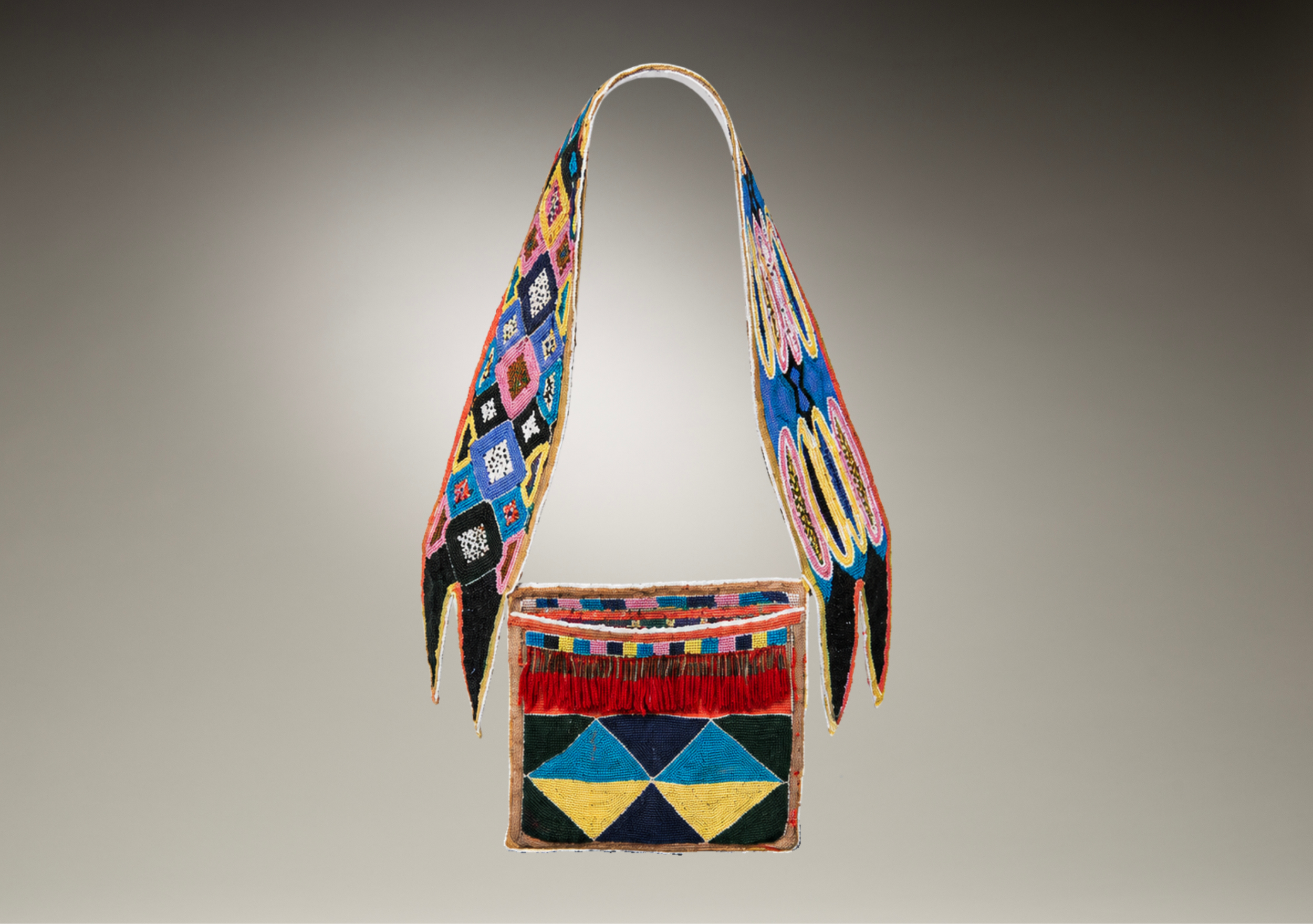 Image 1 of 6
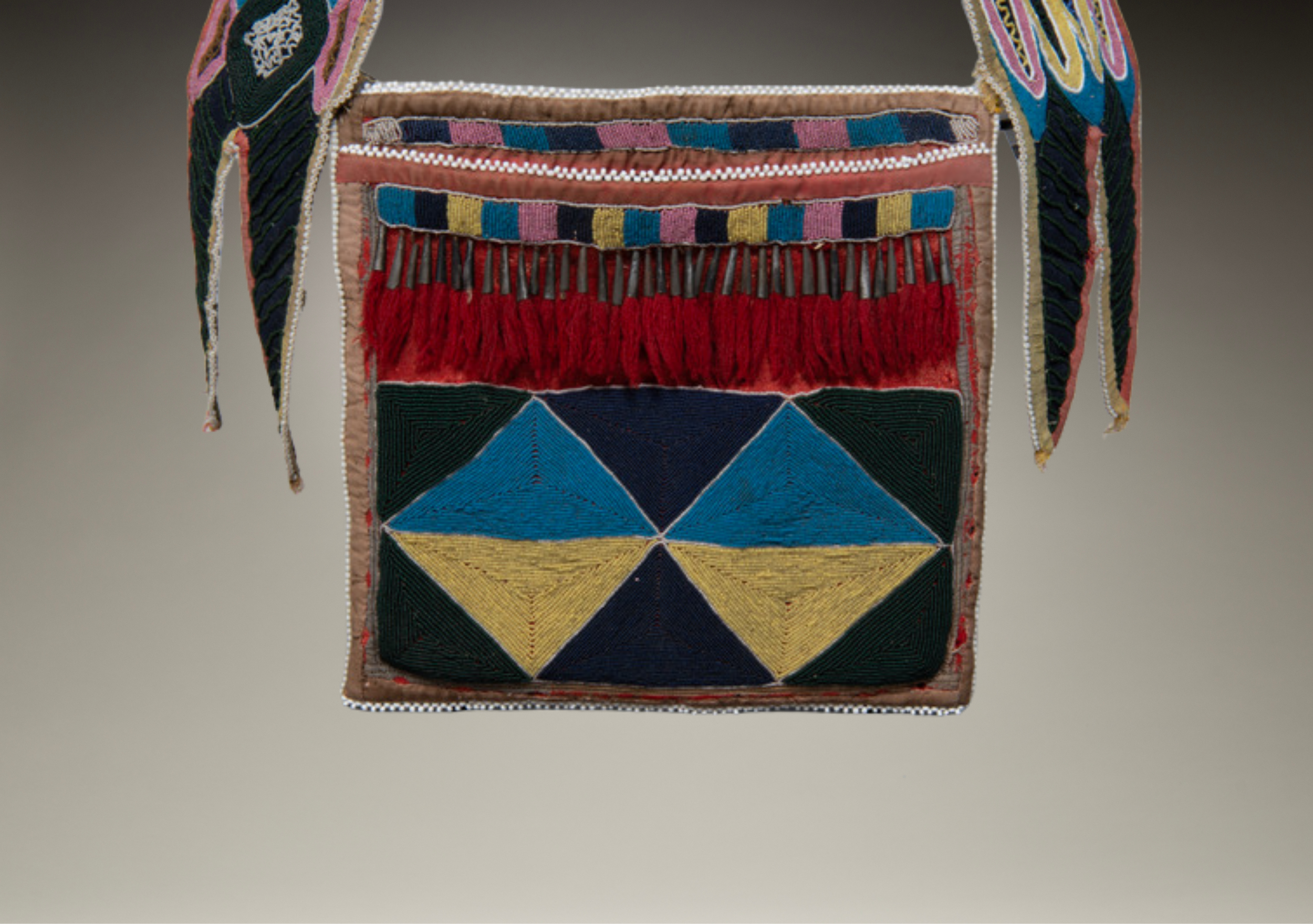 Image 2 of 6
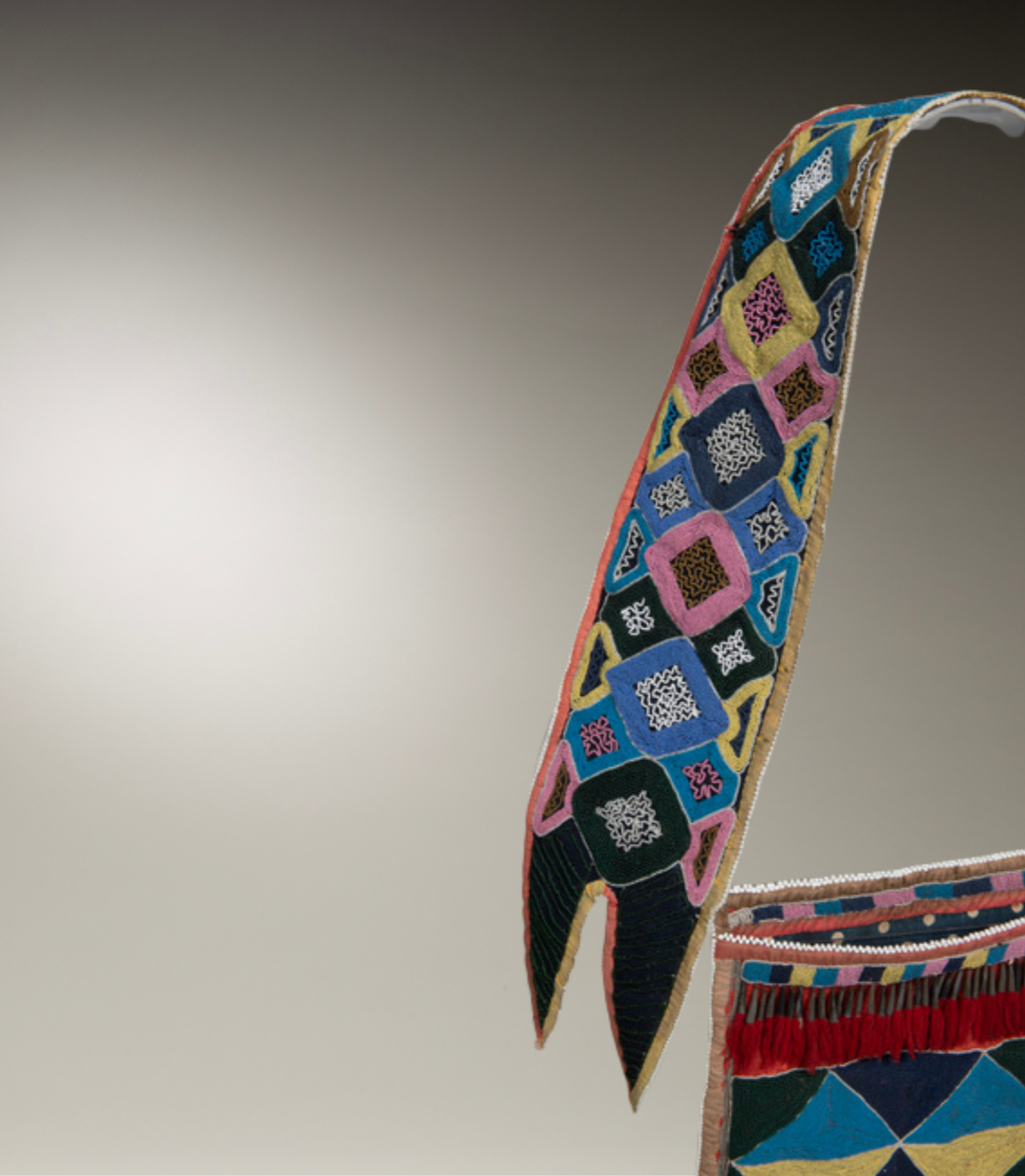 Image 3 of 6
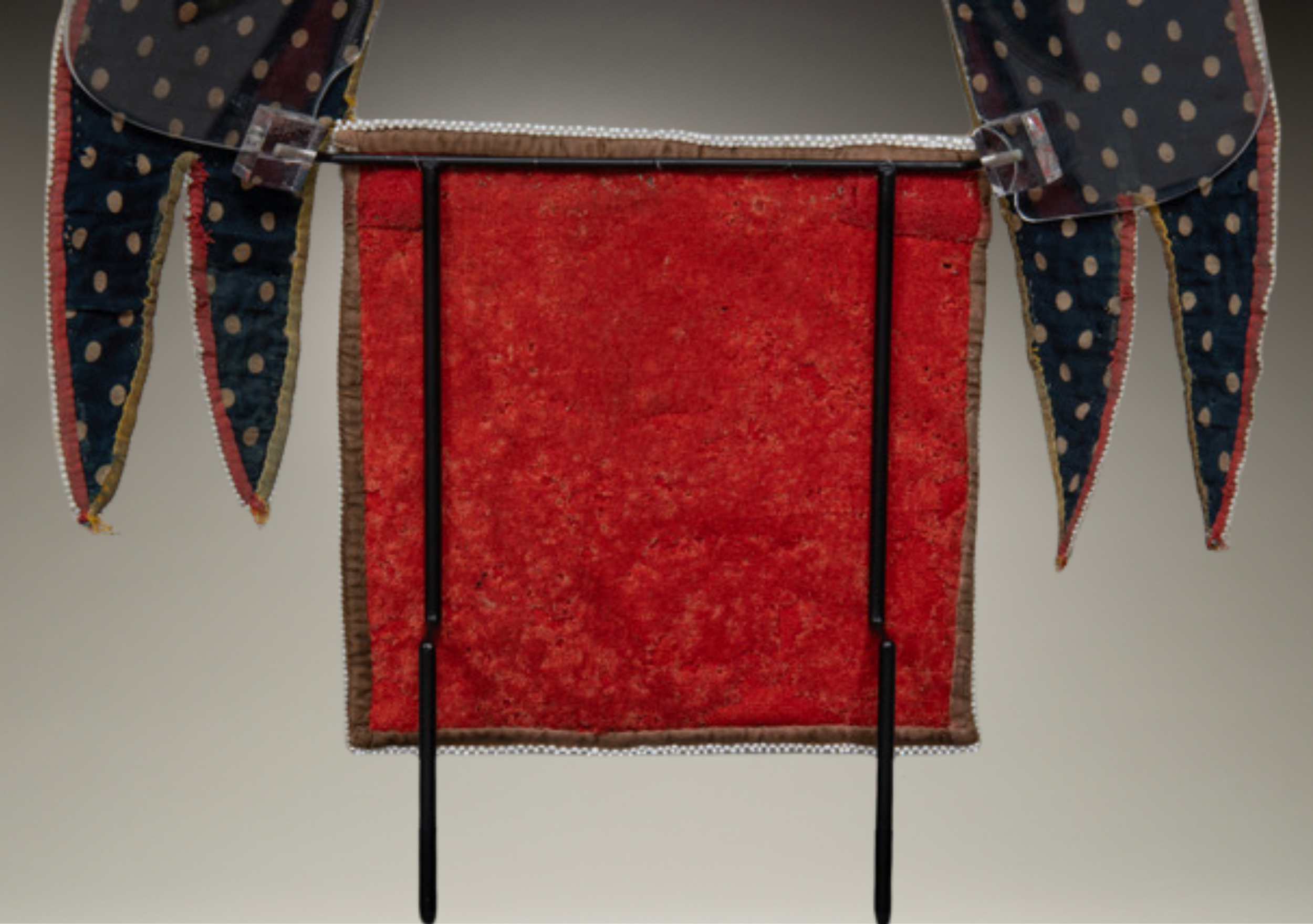 Image 4 of 6
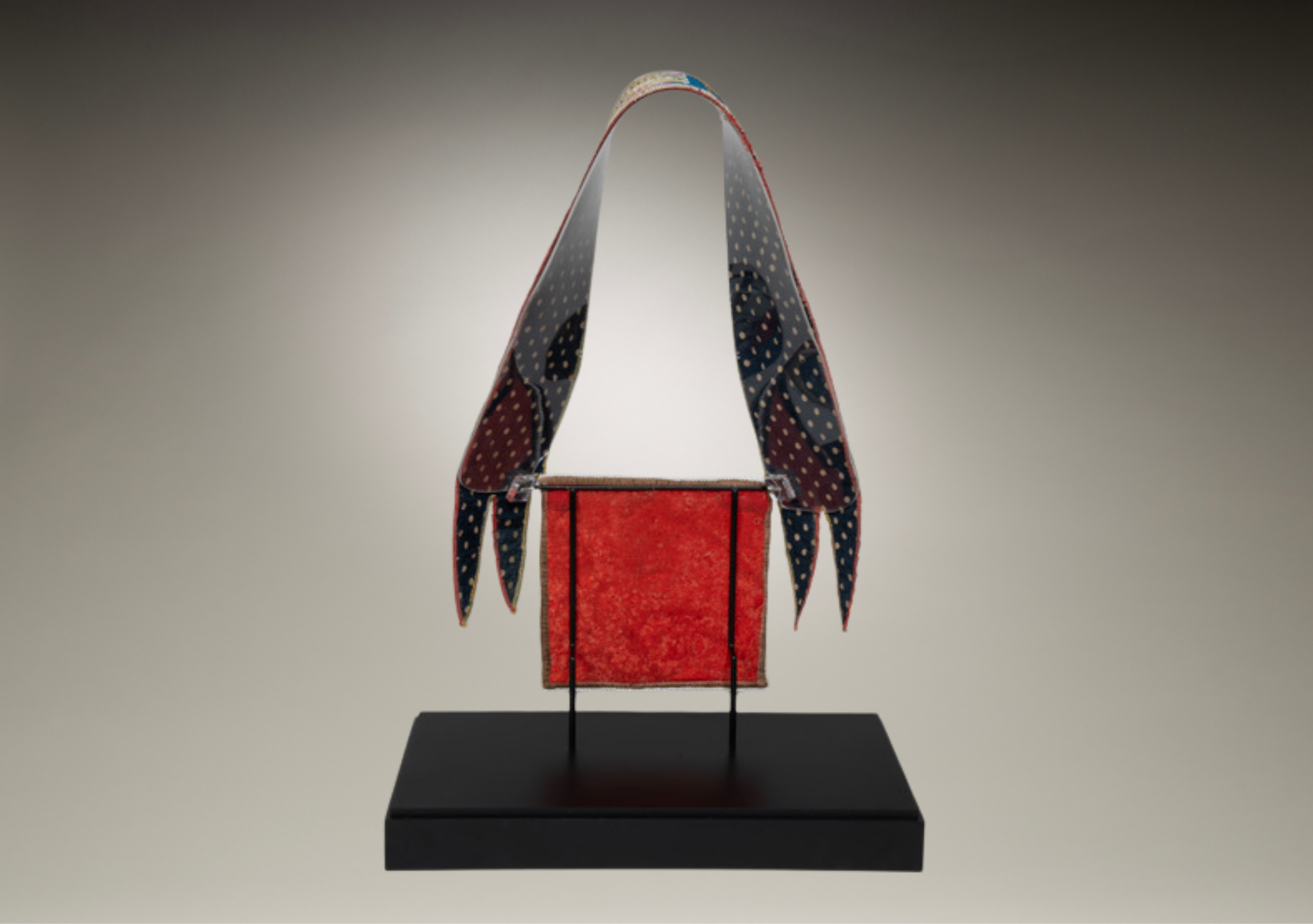 Image 5 of 6
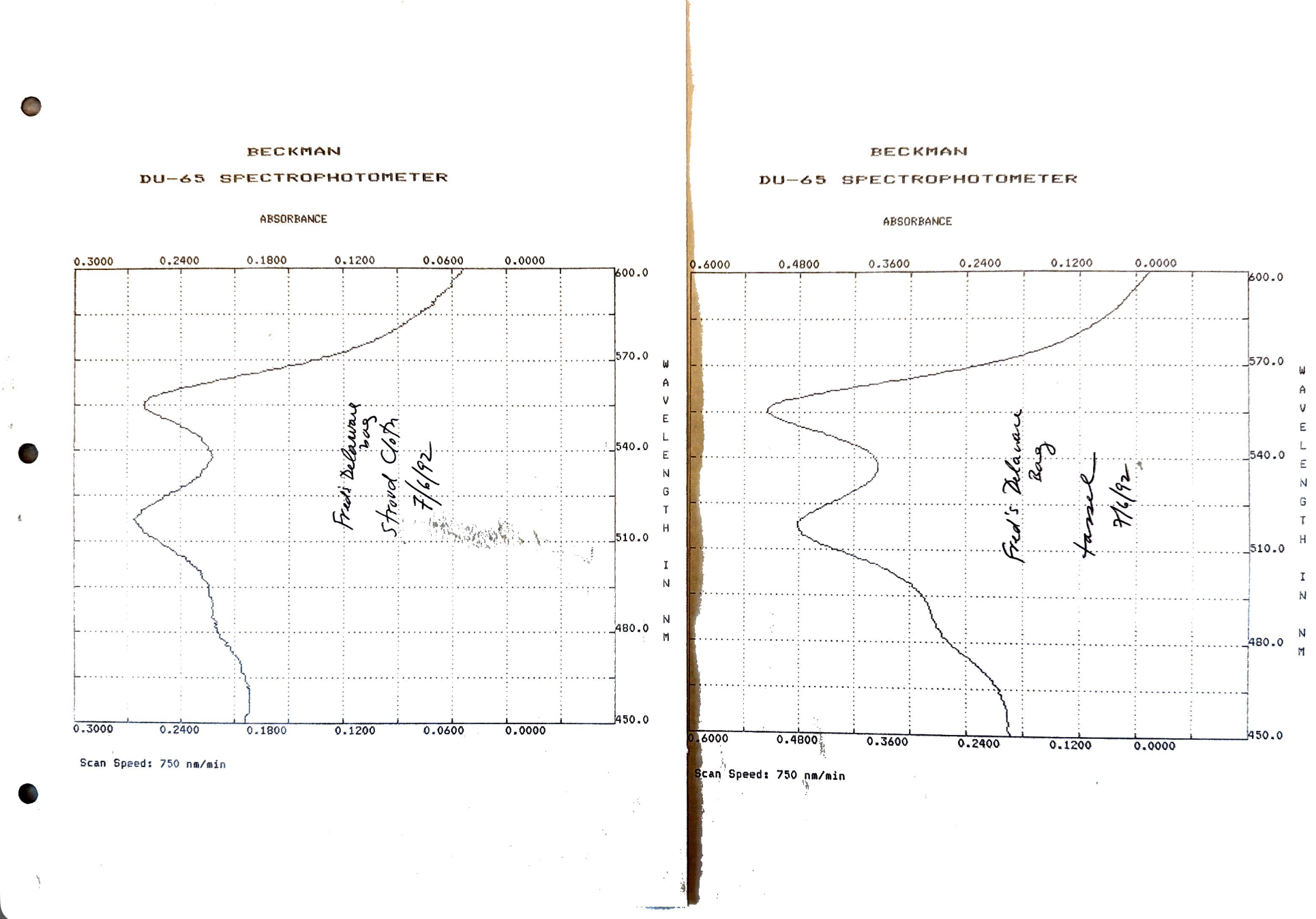 Image 6 of 6