Mali, Bandiagara Plateau region
13th–15th century
Wood
Height: 11½ in (29.2 cm)
Provenance: B. Turbang, Paris
This figure belongs to the Djennenke sculptural tradition, a pre-Dogon style associated with populations southwest of the Bandiagara cliff prior to Dogon settlement after 1500 AD. Scholars including Leloup and Grunne identified close stylistic links between these wooden figures and the terracotta sculptures of the Djenne region, with shared features including elongated body, thin nose, protuberant eyes, and tegumental scarifications. The figures are believed to have been carried into the Bandiagara caves for concealment when the Djenne Empire was invaded by the Songhay in the fifteenth century.
This example displays the elongated vertical form, folded arms, rounded abdomen, and surface scarification characteristic of the type, with a heavy black encrusted patina consistent with age and cave preservation conditions documented for this group. As Leloup notes, Djennenke wooden sculptures are rendered with a realism and virtuosity that distinguishes them from later Dogon work. The piece was formerly in the collection of B. Turbang, Paris.
We ship free anywhere in the world, fully insured, packed by hand.
Mali, Bandiagara Plateau region
13th–15th century
Wood
Height: 11½ in (29.2 cm)
Provenance: B. Turbang, Paris
This figure belongs to the Djennenke sculptural tradition, a pre-Dogon style associated with populations southwest of the Bandiagara cliff prior to Dogon settlement after 1500 AD. Scholars including Leloup and Grunne identified close stylistic links between these wooden figures and the terracotta sculptures of the Djenne region, with shared features including elongated body, thin nose, protuberant eyes, and tegumental scarifications. The figures are believed to have been carried into the Bandiagara caves for concealment when the Djenne Empire was invaded by the Songhay in the fifteenth century.
This example displays the elongated vertical form, folded arms, rounded abdomen, and surface scarification characteristic of the type, with a heavy black encrusted patina consistent with age and cave preservation conditions documented for this group. As Leloup notes, Djennenke wooden sculptures are rendered with a realism and virtuosity that distinguishes them from later Dogon work. The piece was formerly in the collection of B. Turbang, Paris.
We ship free anywhere in the world, fully insured, packed by hand.


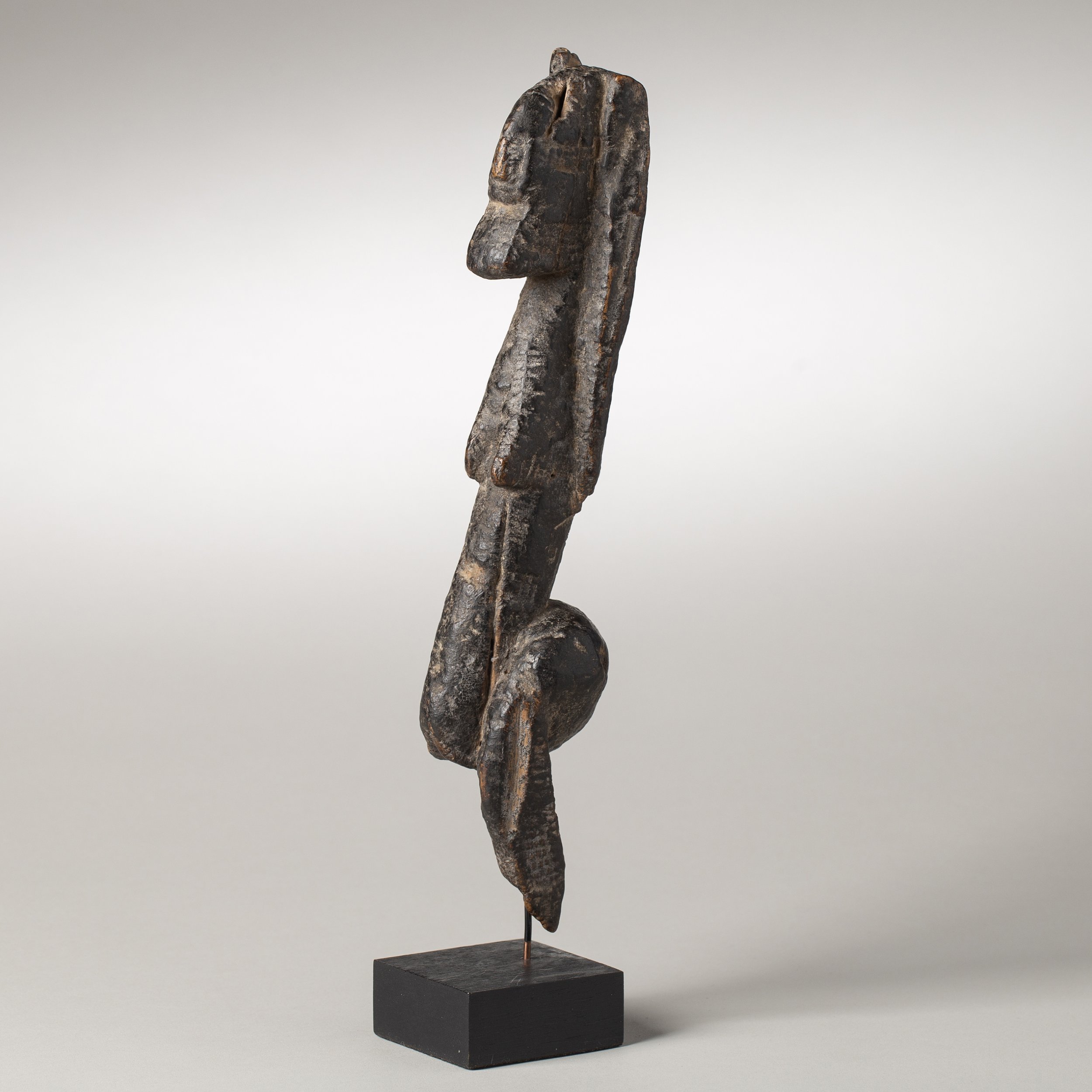 Image 1 of 6
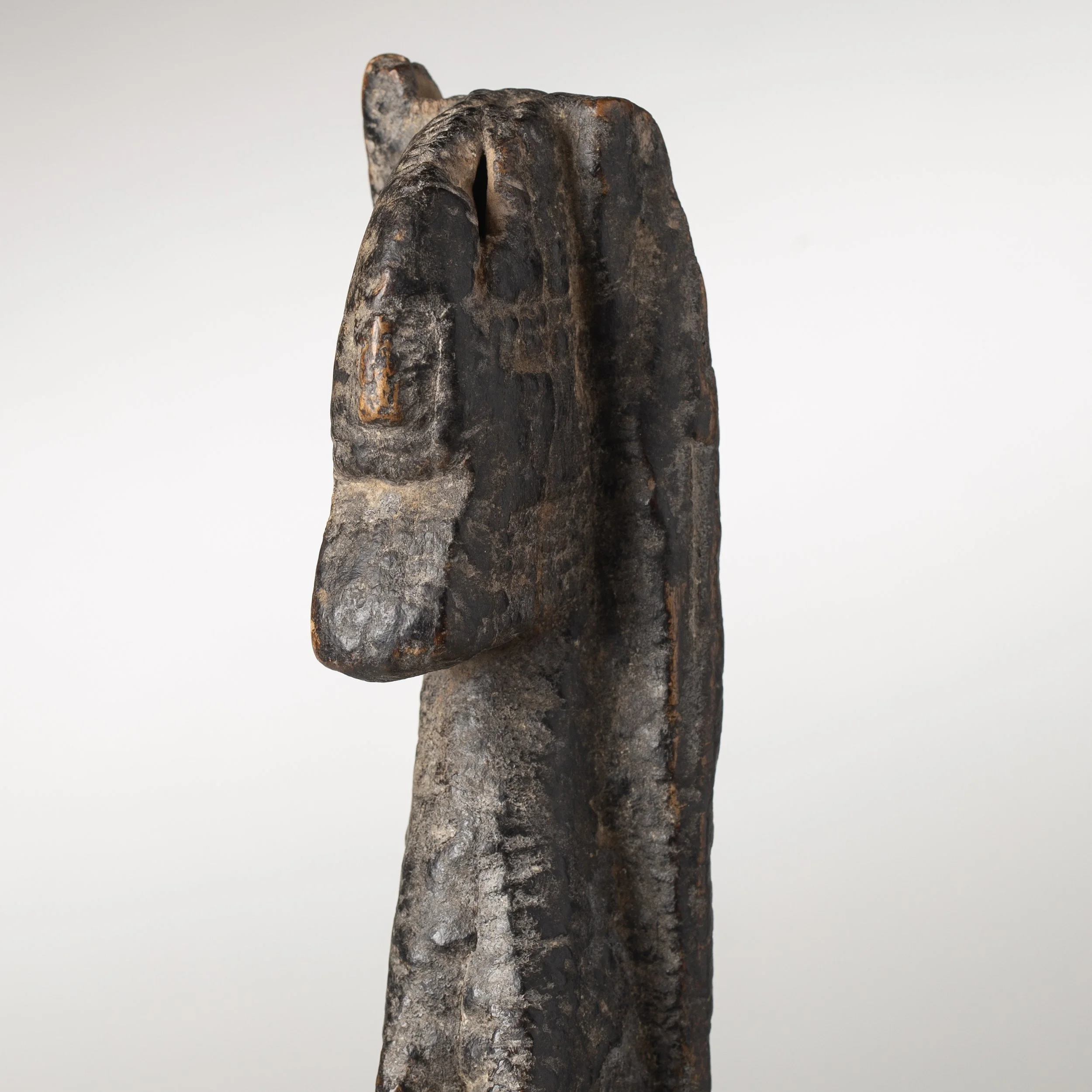 Image 2 of 6
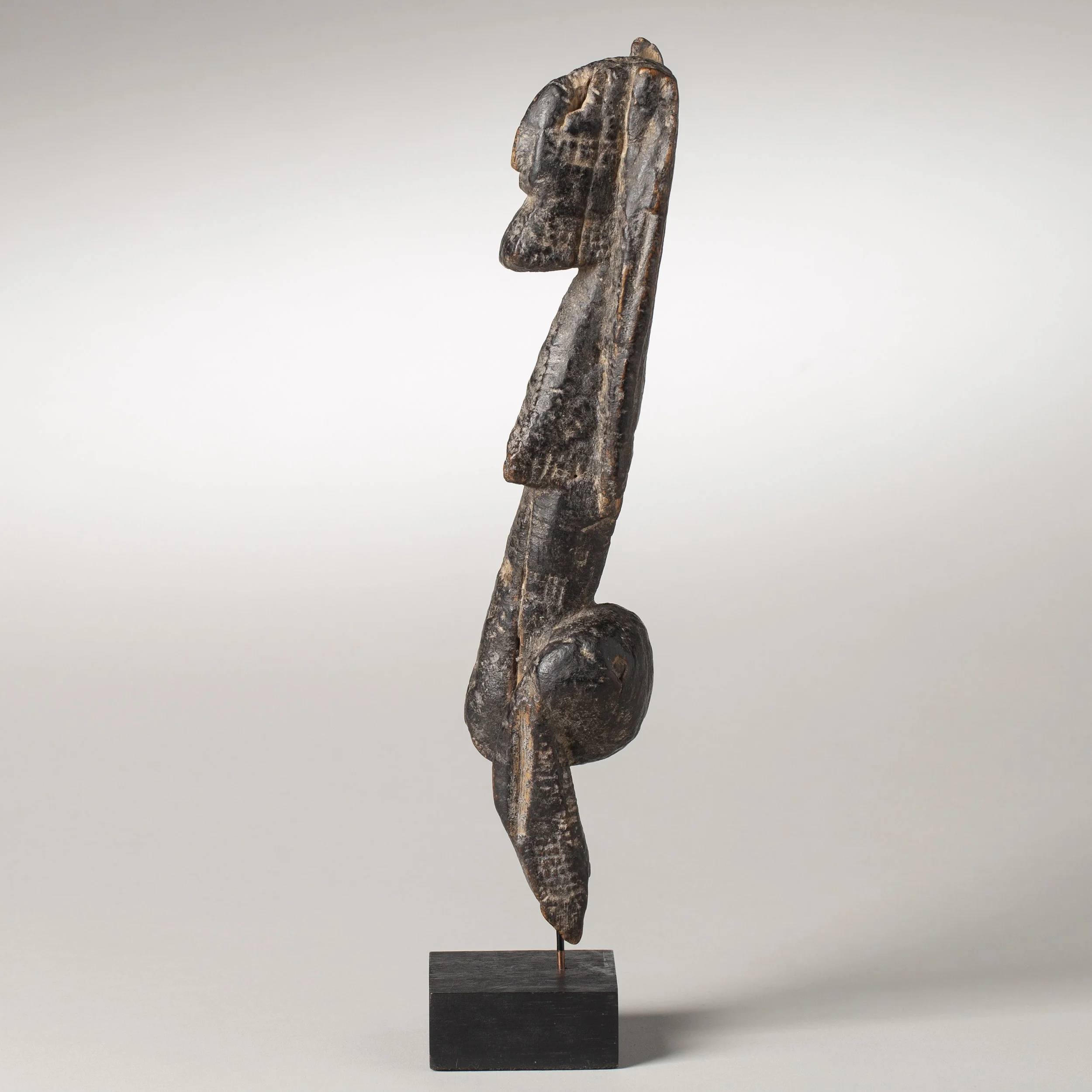 Image 3 of 6
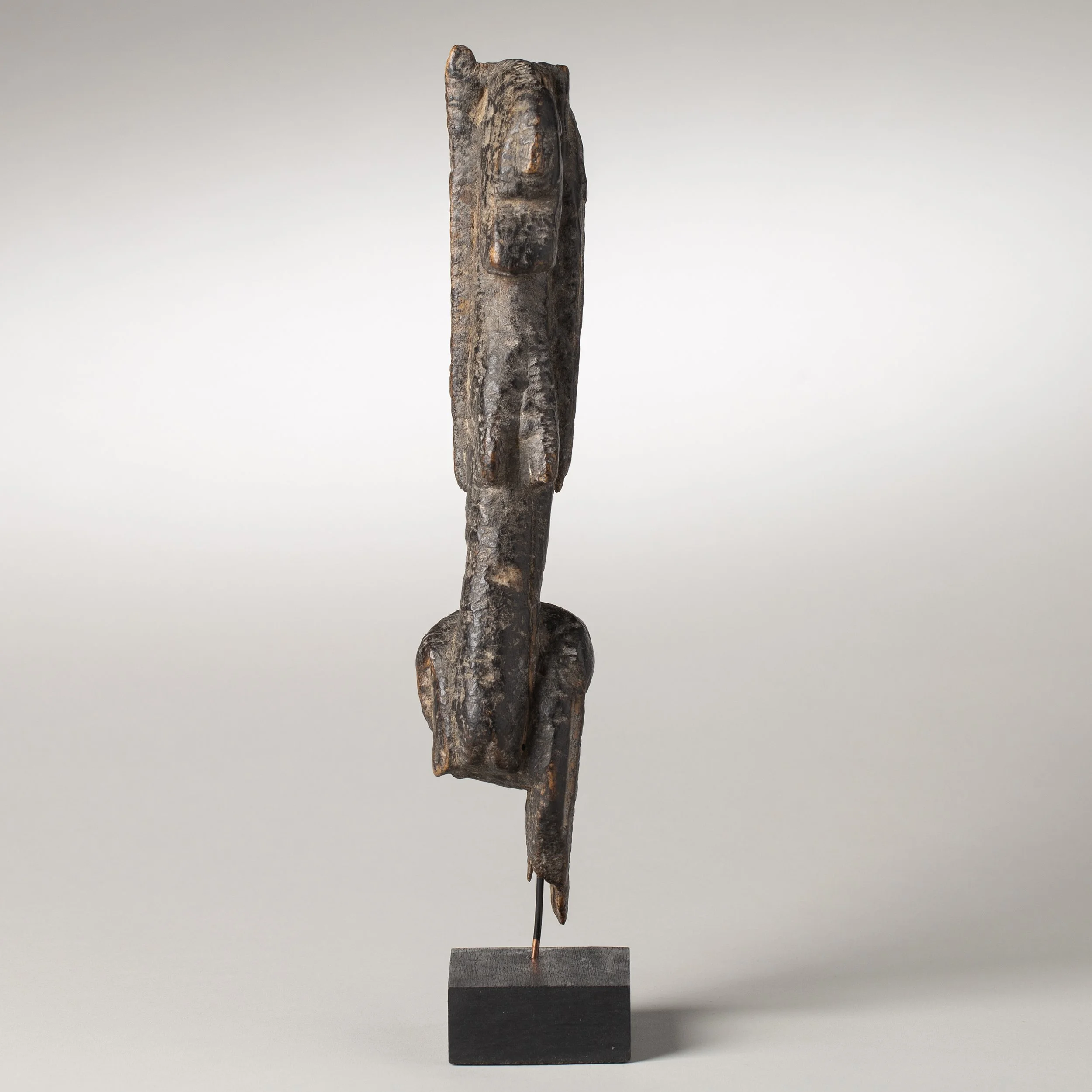 Image 4 of 6
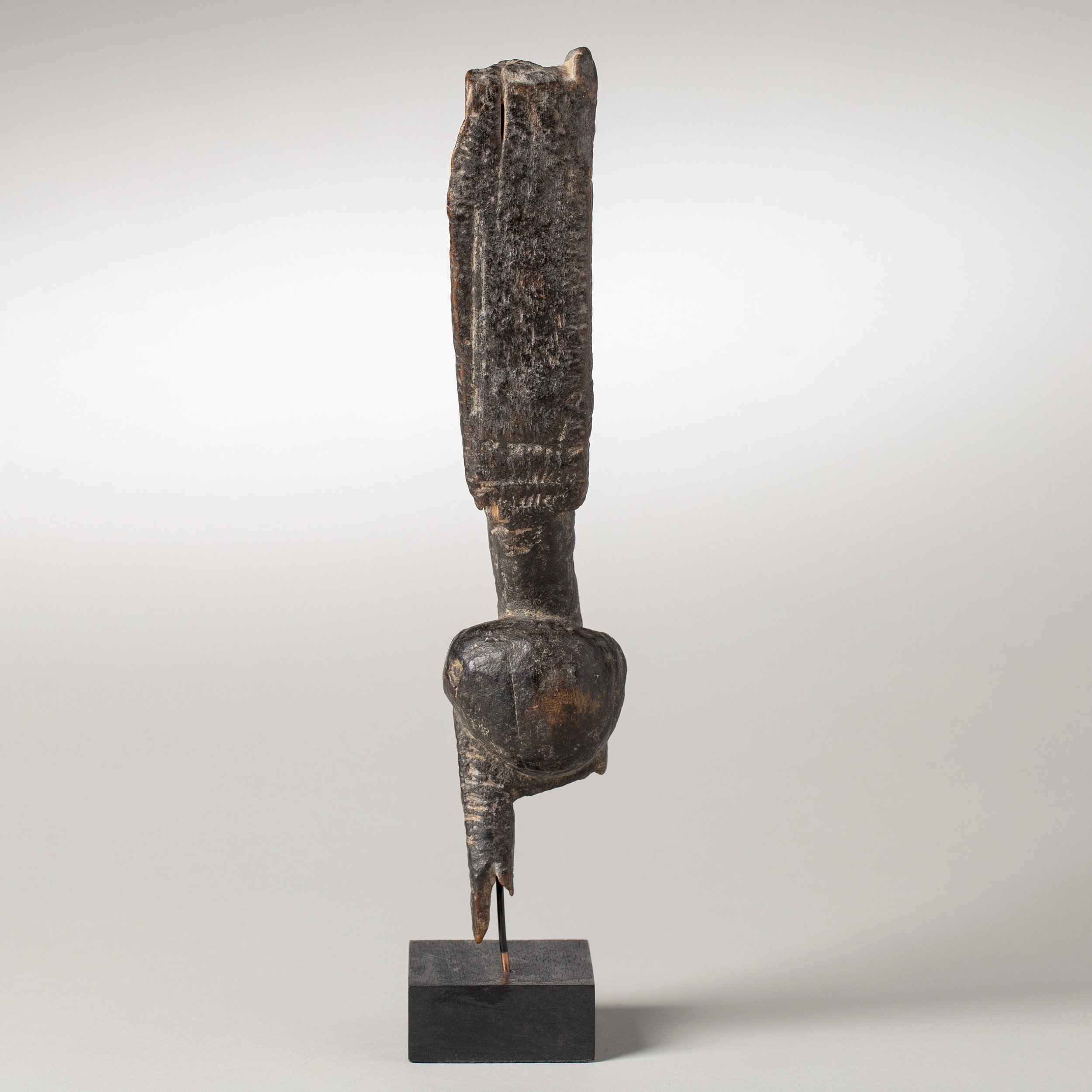 Image 5 of 6
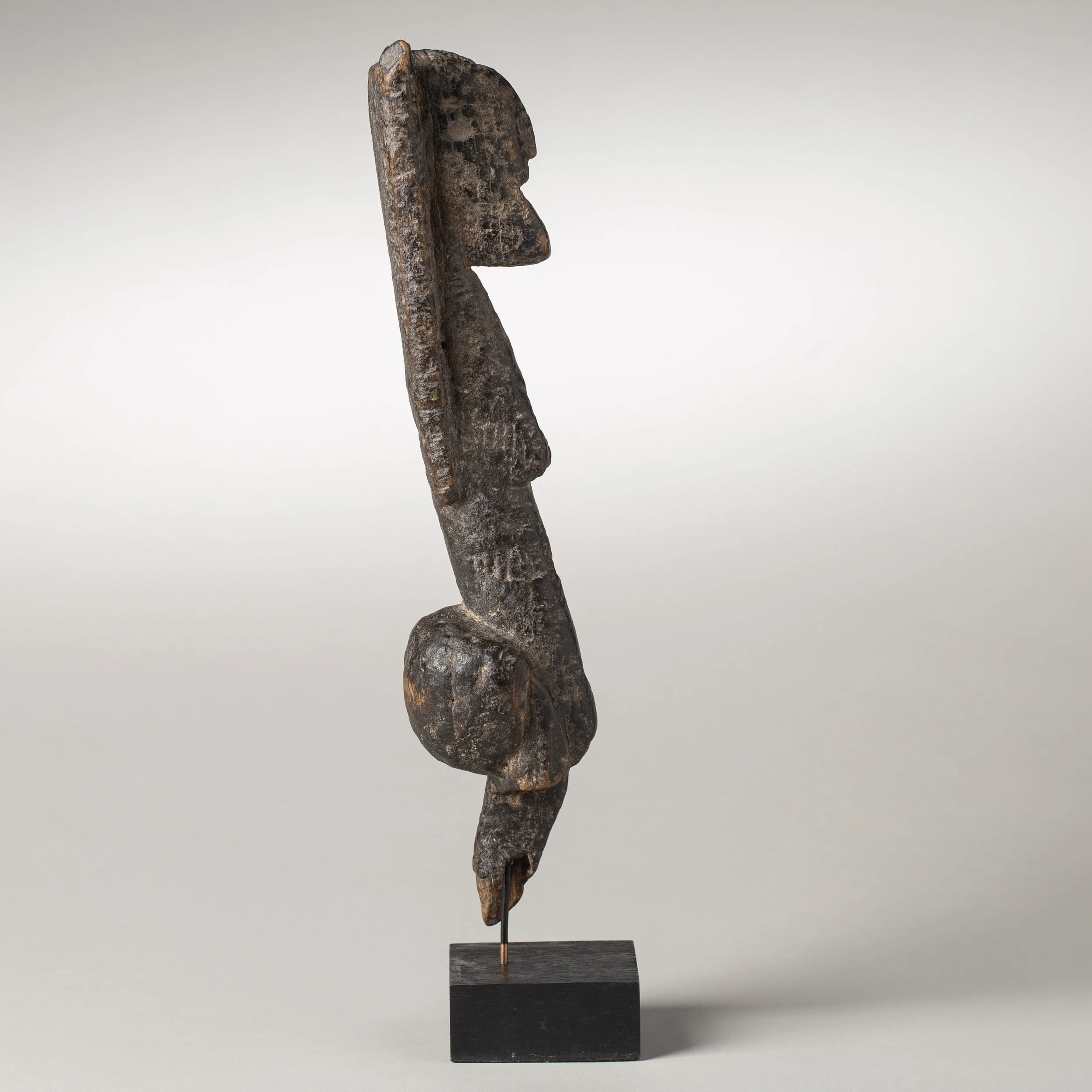 Image 6 of 6