Massim Culture, Trobriand Islands, Milne Bay, Papua New Guinea
19 th century
Length: 17.75 inches (45 cm)
English private collection
Situated in the Southeastern most province of Papua New Guinea, the Massim archipelago extends easterly to include the Trobriand Islands, a chain of verdant palm-lined coral atolls situated some ninety miles off the coast. Massim culture was renowned for its highly skilled carvers and its ancient inter-island ceremonial exchange network known as the Kula ring. In this vast maritime network, Massim men traveled hundreds of miles across open ocean to participate in a complex system of exchange involving ritual shell currencies and other valuables traded between their home village and a scattering of diverse and distant Kula trading communities.
Central to this exchange network were large profusely decorated seagoing canoes known as waga. Projecting forwards from the prow of these vessels was the tabuya, a highly stylized and intricately carved wave splitter designed to efficiently cleave the incoming ocean swells while also providing spiritual protection for the vessel and crew. The tabuya worked in tandem with the canoe’s splashboard or lagim to deflect heavy ocean spray, thereby preventing the canoe from taking on water during the long ocean passages. The tabuya and lagim, often festooned with rows of white cowrie shells, also served to beautify the canoe and were intended to captivate onlookers when they arrived at host islands where the Kula exchange was to take place. The aesthetic qualities of well-executed canoe woodcarvings were believed to enchant Kula partners, softening their minds and persuading them to surrender their most prized shell valuables. When a fleet of waga approached a distant island, the tabuya served as a primary means of identification; the specific carving patterns and structural form instantly signaling to the hosting community the exact origins of the arriving voyagers. Furthermore, the canoe’s tabuya were imbued with ritual magic or mwasila. Before embarking, a canoe magician chanted spells over the prows to instill in them apotropaic qualities believed to ward off flying witches or yoyowa that preyed upon shipwrecked crews and also instilling the great waga canoes with supernatural lightness and swiftness.
Like the superb example presented here, tabuya were sometimes rendered with great beauty, created freeform without templates by the highest-ranking master carvers, who recited specialized magical spells or megwa during the creation process. The efficacy of the finished tabuya; it’s power to enchant, protect, and succeed in endeavors like the Kula exchange or seafaring, was believed to derive from the carver’s potent incantations and the cooperation of ancestral and lineage spirits. Defined by intricate and interlocking rhythmic scrolling motifs, symbolizing the fluid power of the ocean, the tabuya’s carved motifs were originally highlighted utilizing a strict tri-chromatic palette of red, white, and black, derived from native ocher, coral lime, and charcoal pigments respectively. According to tradition, these pigments were often not refreshed after the journey and the tabuya, after many decades of perilous voyages, acquired a historical potency and prized pattern of weathering; the darkened raised grain of the wood’s surface appearing almost petrified. A distinguishing feature of the present tabuya is the addition of two ocean-going frigate birds adorning the sculpture. The charming smaller bird is positioned atop the crest of the tabuya facing the horizon, portrayed alert while riding the advancing bow wave of the vessel. A second larger frigate bird is carved facing the stern, serving as protection to the crew. Because these birds were keenly observant of weather patterns and fish, they stood as icons of vigilance and foresight, qualities the captain was expected to exhibit for his crew as he navigated the waves of the Pacific and the deeper currents of prestige, magic, and human alliances.
We ship free anywhere in the world, fully insured, packed by hand.
Massim Culture, Trobriand Islands, Milne Bay, Papua New Guinea
19 th century
Length: 17.75 inches (45 cm)
English private collection
Situated in the Southeastern most province of Papua New Guinea, the Massim archipelago extends easterly to include the Trobriand Islands, a chain of verdant palm-lined coral atolls situated some ninety miles off the coast. Massim culture was renowned for its highly skilled carvers and its ancient inter-island ceremonial exchange network known as the Kula ring. In this vast maritime network, Massim men traveled hundreds of miles across open ocean to participate in a complex system of exchange involving ritual shell currencies and other valuables traded between their home village and a scattering of diverse and distant Kula trading communities.
Central to this exchange network were large profusely decorated seagoing canoes known as waga. Projecting forwards from the prow of these vessels was the tabuya, a highly stylized and intricately carved wave splitter designed to efficiently cleave the incoming ocean swells while also providing spiritual protection for the vessel and crew. The tabuya worked in tandem with the canoe’s splashboard or lagim to deflect heavy ocean spray, thereby preventing the canoe from taking on water during the long ocean passages. The tabuya and lagim, often festooned with rows of white cowrie shells, also served to beautify the canoe and were intended to captivate onlookers when they arrived at host islands where the Kula exchange was to take place. The aesthetic qualities of well-executed canoe woodcarvings were believed to enchant Kula partners, softening their minds and persuading them to surrender their most prized shell valuables. When a fleet of waga approached a distant island, the tabuya served as a primary means of identification; the specific carving patterns and structural form instantly signaling to the hosting community the exact origins of the arriving voyagers. Furthermore, the canoe’s tabuya were imbued with ritual magic or mwasila. Before embarking, a canoe magician chanted spells over the prows to instill in them apotropaic qualities believed to ward off flying witches or yoyowa that preyed upon shipwrecked crews and also instilling the great waga canoes with supernatural lightness and swiftness.
Like the superb example presented here, tabuya were sometimes rendered with great beauty, created freeform without templates by the highest-ranking master carvers, who recited specialized magical spells or megwa during the creation process. The efficacy of the finished tabuya; it’s power to enchant, protect, and succeed in endeavors like the Kula exchange or seafaring, was believed to derive from the carver’s potent incantations and the cooperation of ancestral and lineage spirits. Defined by intricate and interlocking rhythmic scrolling motifs, symbolizing the fluid power of the ocean, the tabuya’s carved motifs were originally highlighted utilizing a strict tri-chromatic palette of red, white, and black, derived from native ocher, coral lime, and charcoal pigments respectively. According to tradition, these pigments were often not refreshed after the journey and the tabuya, after many decades of perilous voyages, acquired a historical potency and prized pattern of weathering; the darkened raised grain of the wood’s surface appearing almost petrified. A distinguishing feature of the present tabuya is the addition of two ocean-going frigate birds adorning the sculpture. The charming smaller bird is positioned atop the crest of the tabuya facing the horizon, portrayed alert while riding the advancing bow wave of the vessel. A second larger frigate bird is carved facing the stern, serving as protection to the crew. Because these birds were keenly observant of weather patterns and fish, they stood as icons of vigilance and foresight, qualities the captain was expected to exhibit for his crew as he navigated the waves of the Pacific and the deeper currents of prestige, magic, and human alliances.
We ship free anywhere in the world, fully insured, packed by hand.


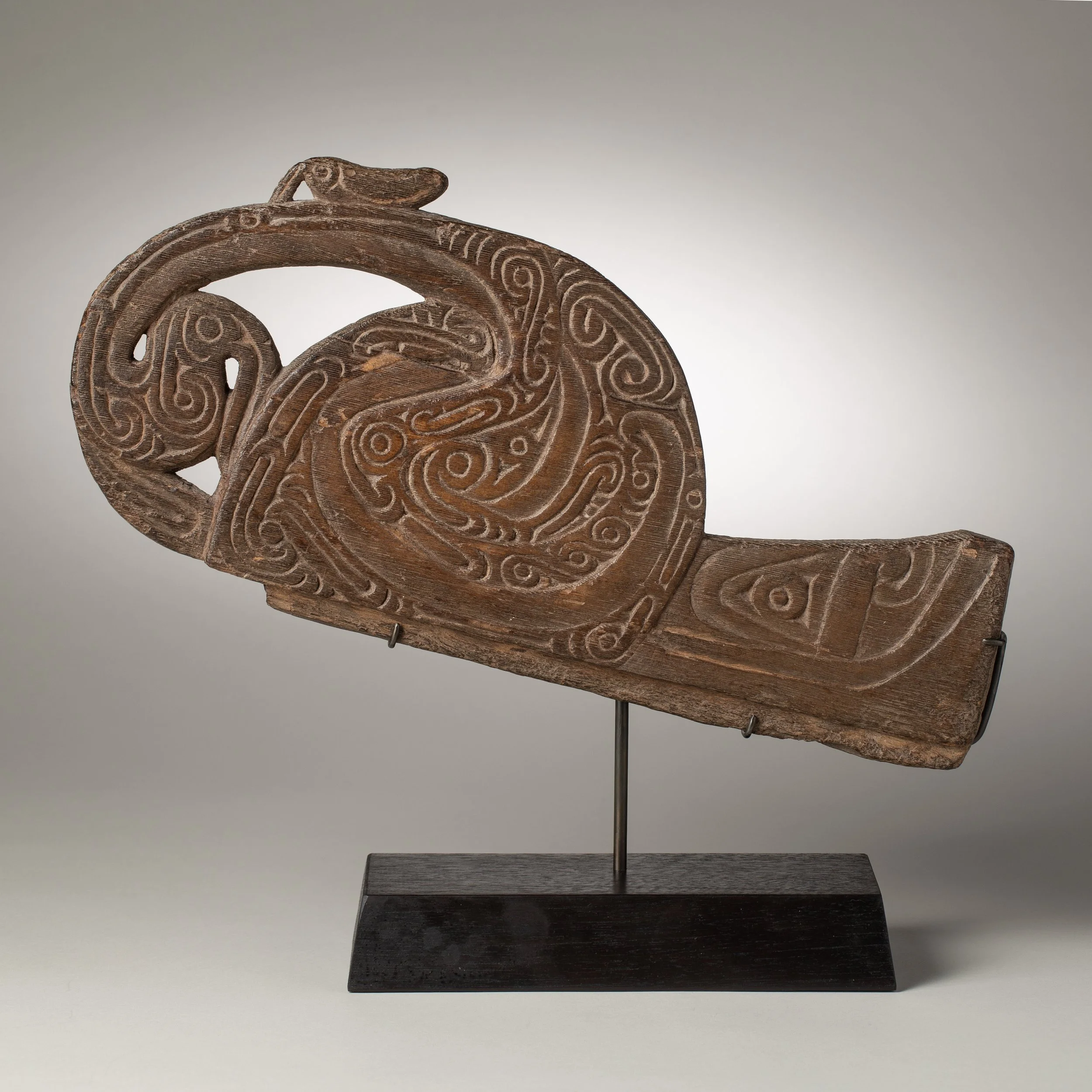 Image 1 of 10
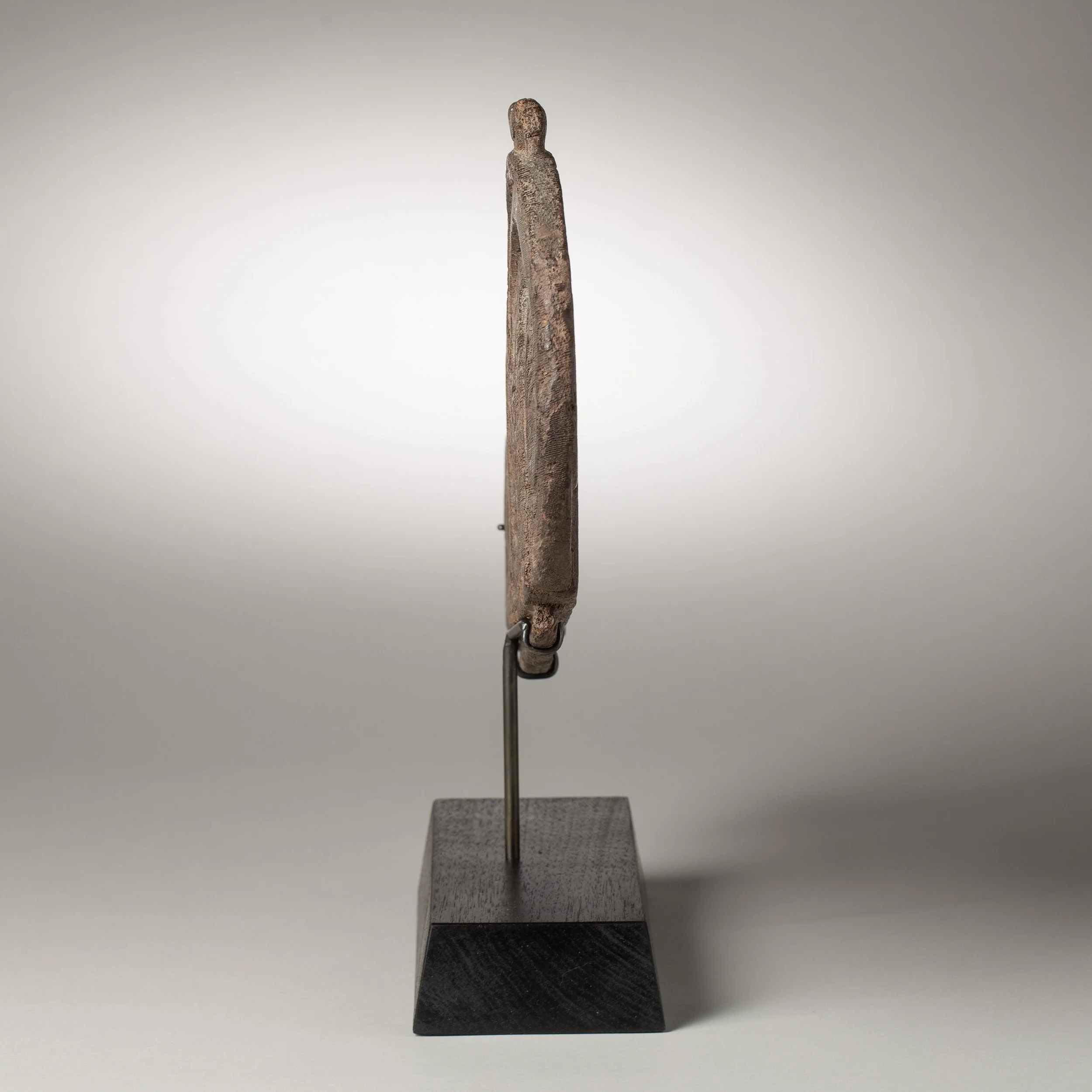 Image 2 of 10
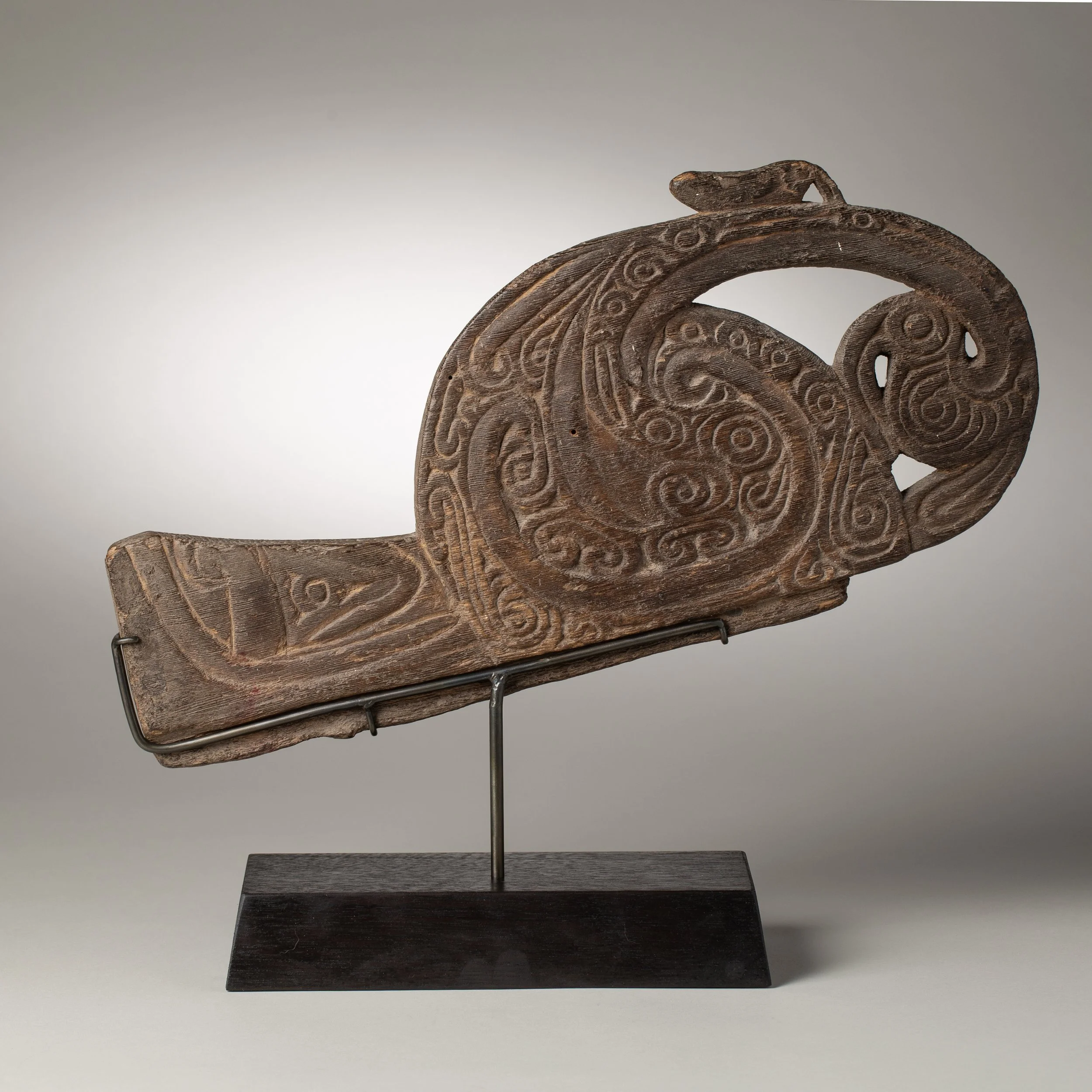 Image 3 of 10
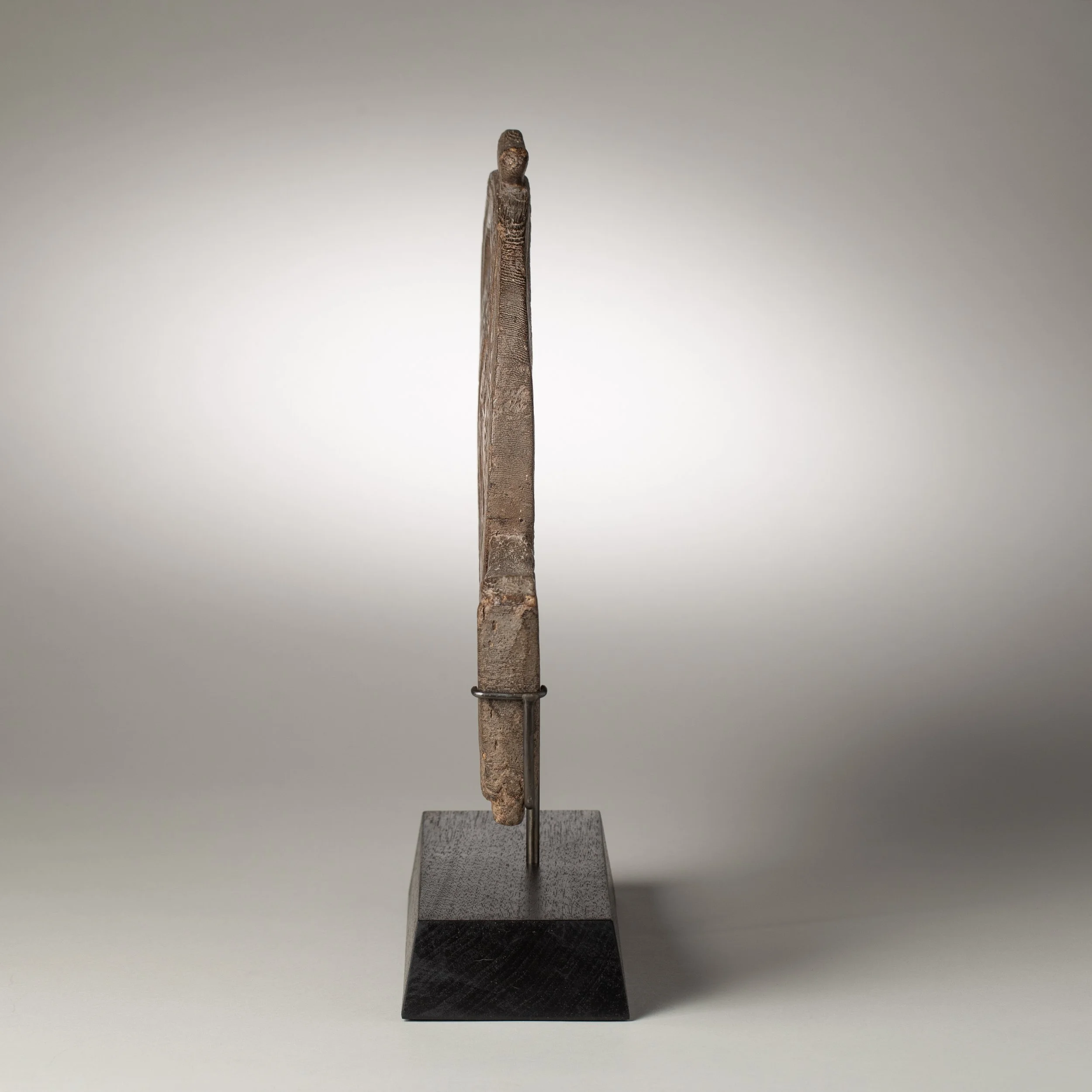 Image 4 of 10
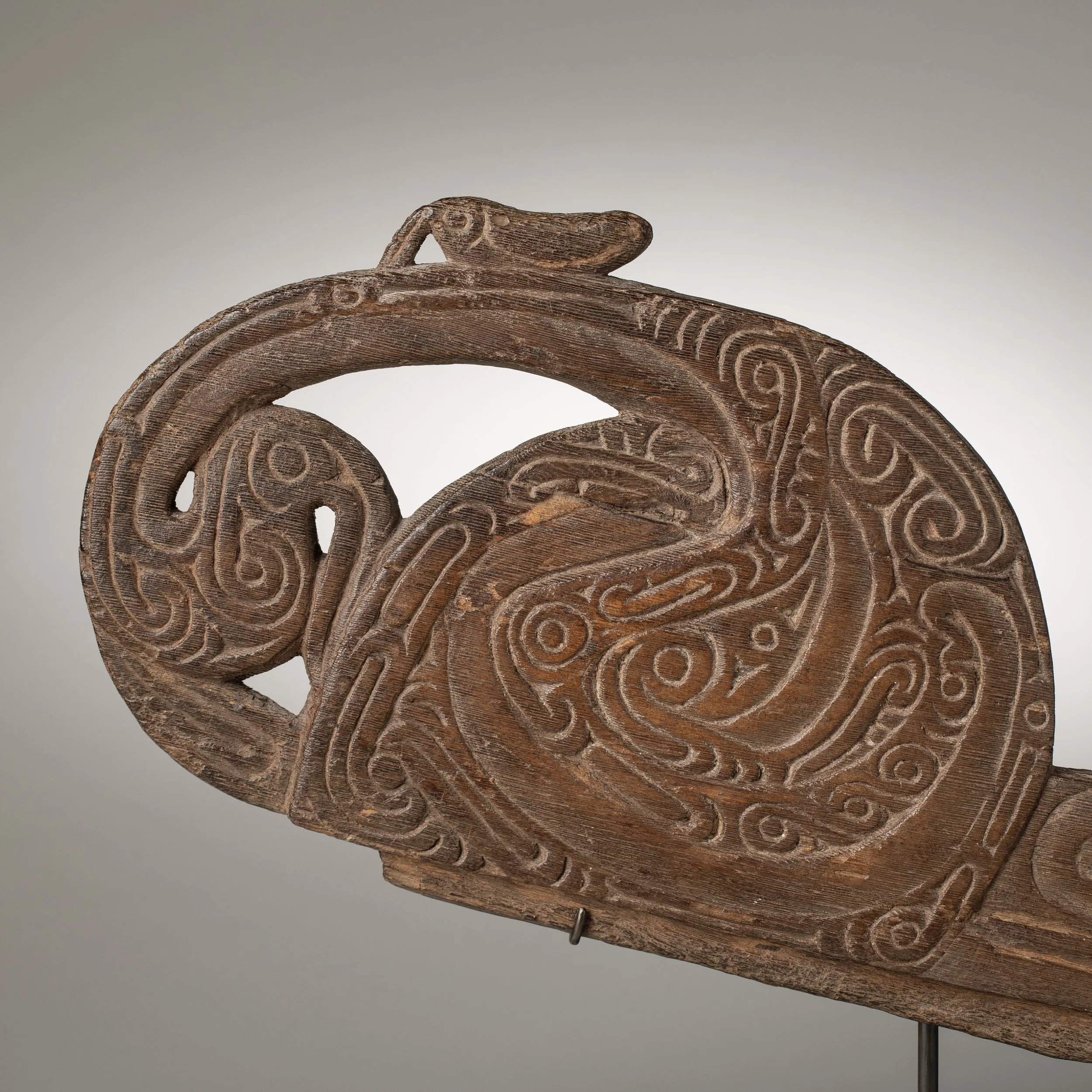 Image 5 of 10
 Image 6 of 10
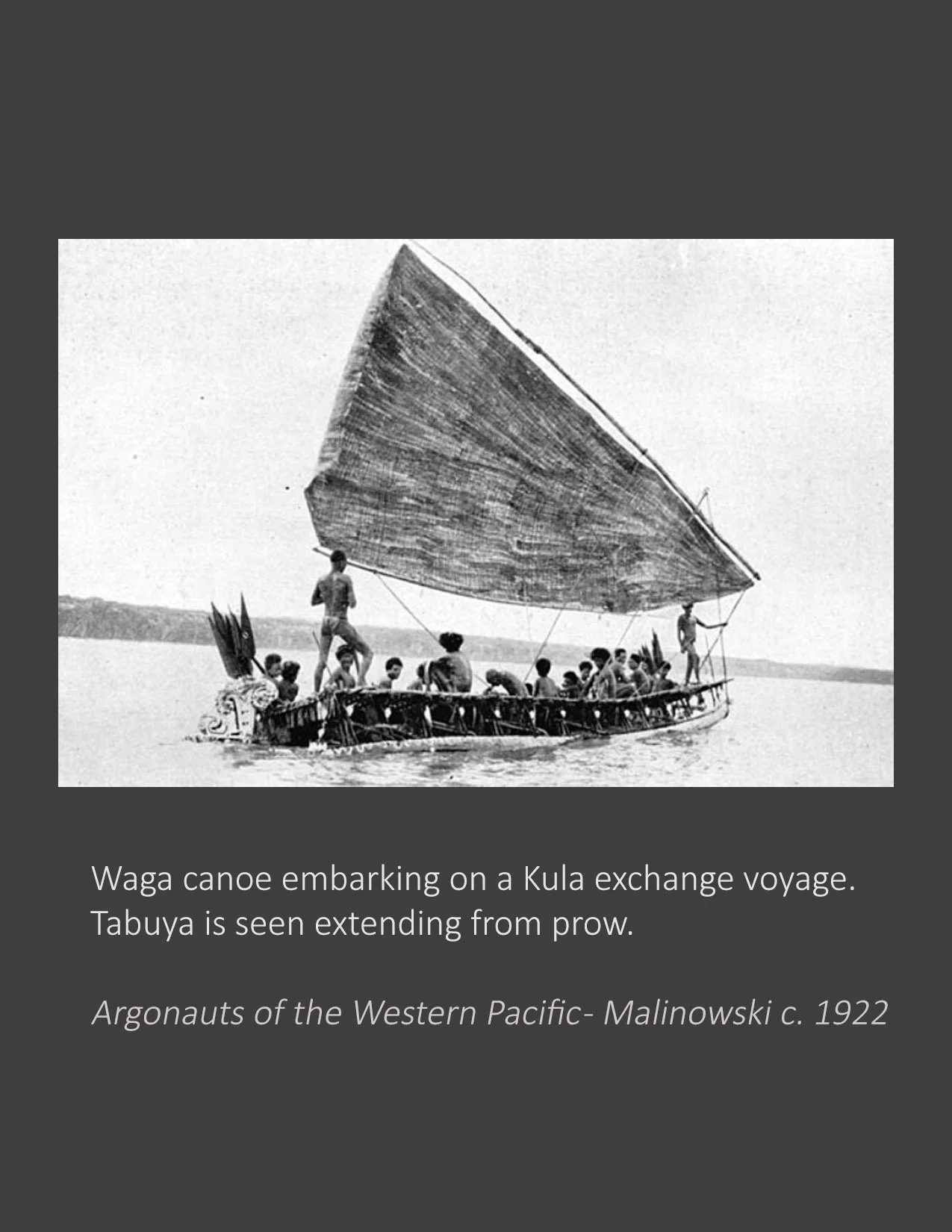 Image 7 of 10
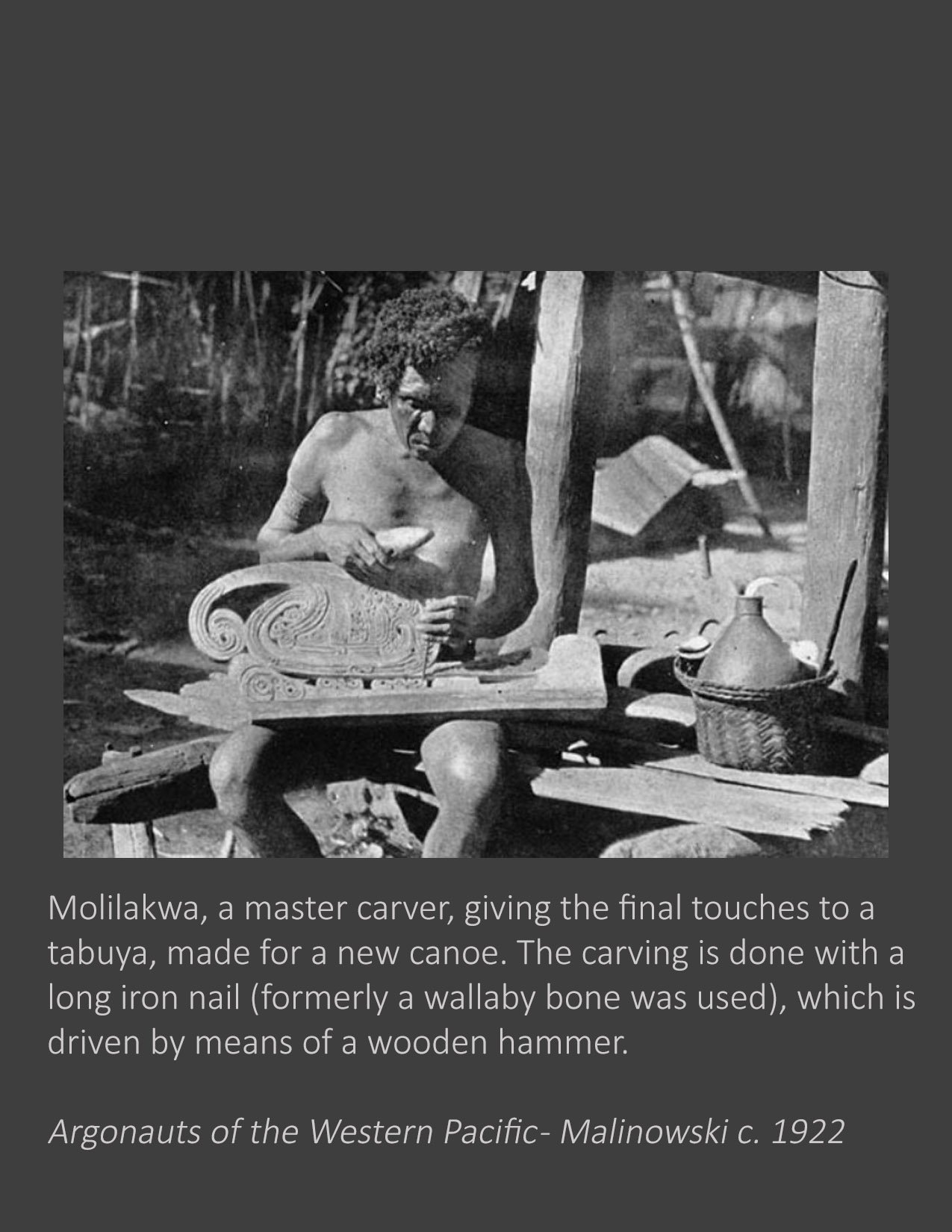 Image 8 of 10
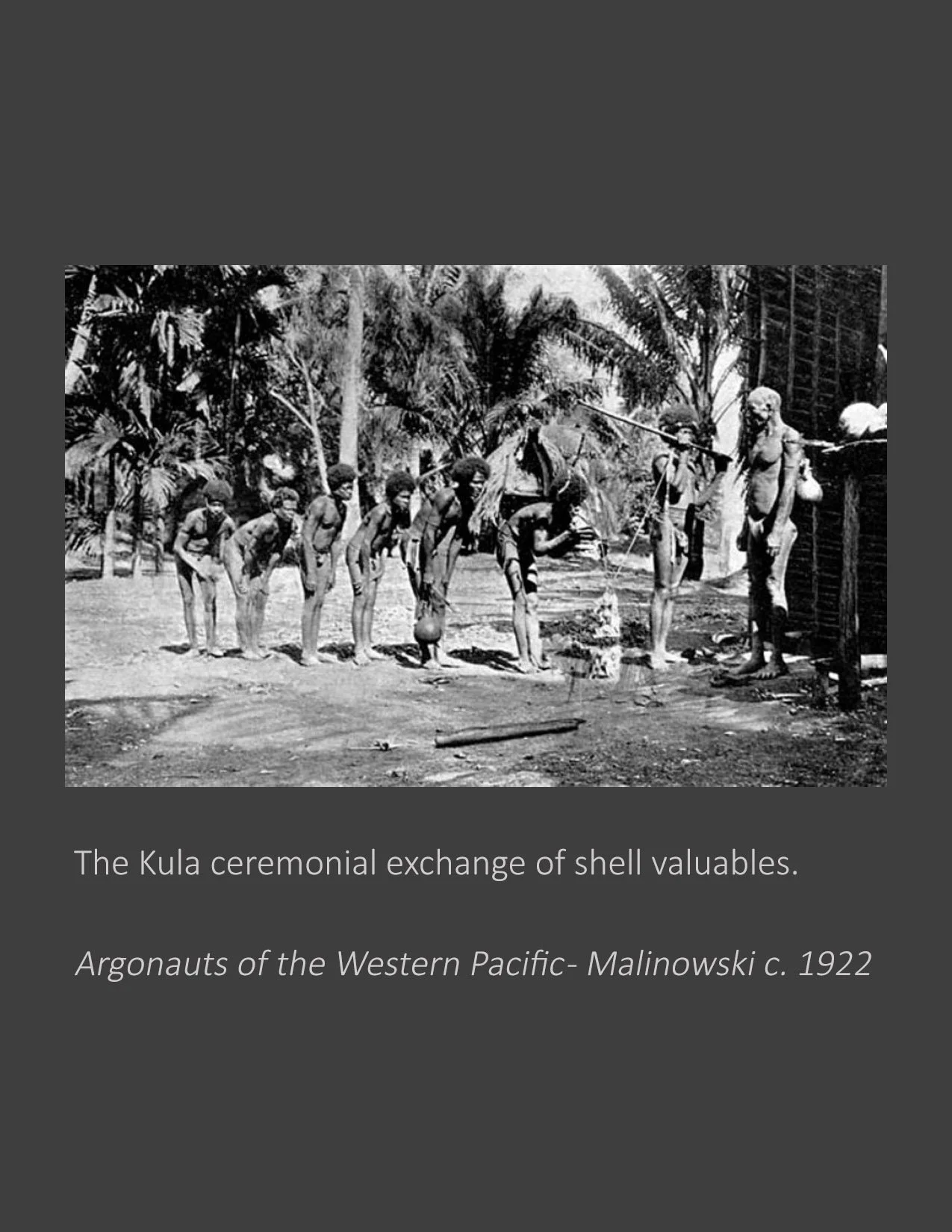 Image 9 of 10
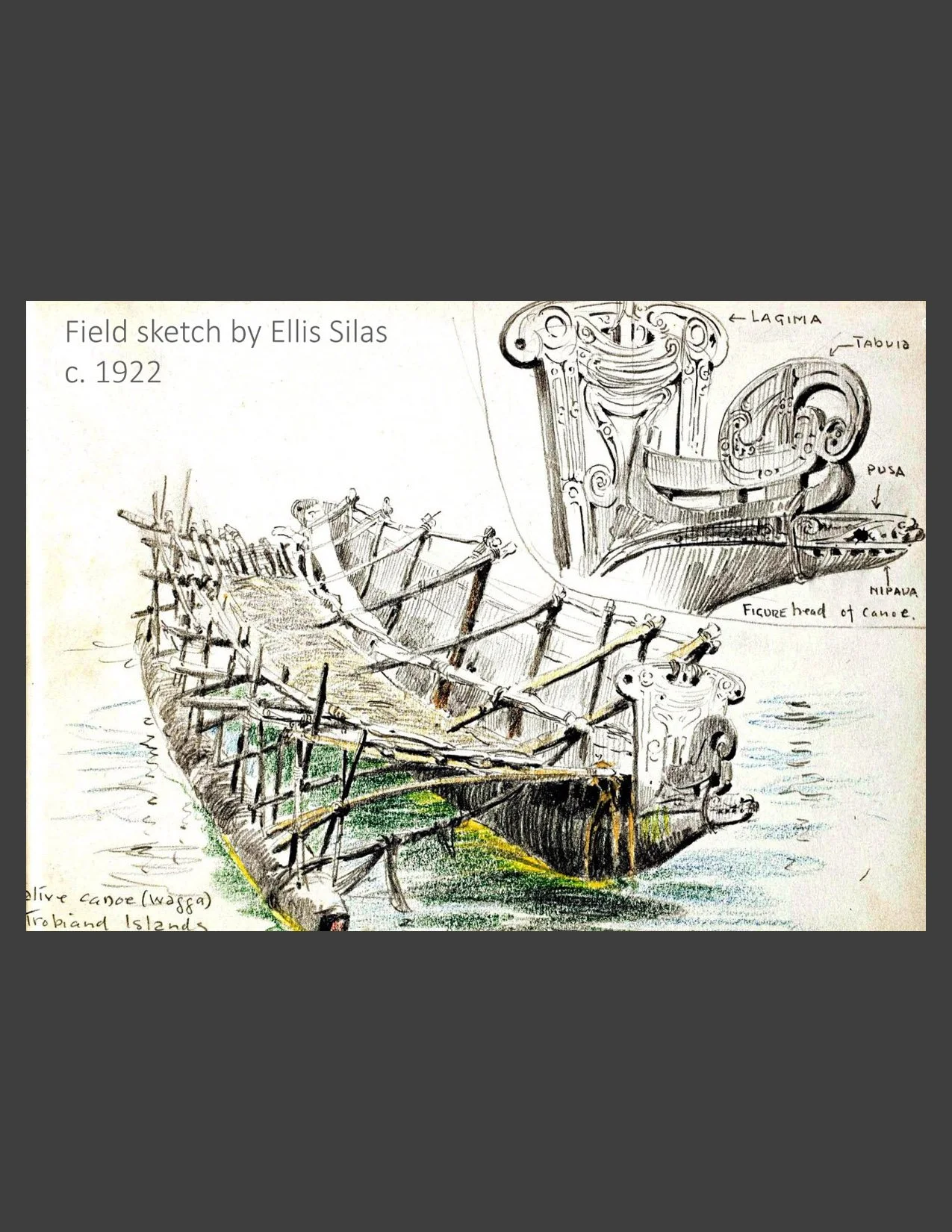 Image 10 of 10