Edo, Kingdom of Benin, Nigeria, 18th century
Cast copper alloy
Height 3 1/2 inches (8.9 cm), length 6 7/8 inches (17.5 cm)
Provenance: Personal collection of Tom Phillips, London
The vessel takes the form of a leopard's head and shoulders, the muzzle tapering to a rounded nose with the whiskers rendered as fine incised lines running back along the snout. The eyes are set within raised almond frames with pierced pupils and short radiating lashes, and the ears stand upright and slightly cupped at either side of the crown. Across the whole surface the coat is worked in dense stippled rosettes, each a small ring of punched dots, which catch the light differently from the smooth ground between them and give the metal a granular, pelt-like depth.
The leopard, ekpen, was the royal animal of Benin and its use was restricted to the Oba, appearing on plaques, staffs, and in the pair of cast leopards that flanked the throne. Vessels in this form were court objects rather than domestic ones, opening at the join behind the head to hold kola nuts, chalk, or other material used in palace ritual and hospitality. The casting is thin walled and evenly finished, and the chased detail across the muzzle and brow was worked after the metal came out of the mould.
Tom Phillips, 1937 to 2022, was a British artist and Royal Academician best known for A Humument, his lifelong treatment of a Victorian novel, and for his portraits in the National Portrait Gallery. He assembled a significant collection of African art over several decades and curated Africa: The Art of a Continent at the Royal Academy of Arts in London in 1995, one of the largest surveys of African art ever mounted in Britain. He wrote and lectured widely on the subject, and his engagement with Benin material in particular was informed by close study of the royal court corpus.
We ship free anywhere in the world, fully insured, packed by hand.
Edo, Kingdom of Benin, Nigeria, 18th century
Cast copper alloy
Height 3 1/2 inches (8.9 cm), length 6 7/8 inches (17.5 cm)
Provenance: Personal collection of Tom Phillips, London
The vessel takes the form of a leopard's head and shoulders, the muzzle tapering to a rounded nose with the whiskers rendered as fine incised lines running back along the snout. The eyes are set within raised almond frames with pierced pupils and short radiating lashes, and the ears stand upright and slightly cupped at either side of the crown. Across the whole surface the coat is worked in dense stippled rosettes, each a small ring of punched dots, which catch the light differently from the smooth ground between them and give the metal a granular, pelt-like depth.
The leopard, ekpen, was the royal animal of Benin and its use was restricted to the Oba, appearing on plaques, staffs, and in the pair of cast leopards that flanked the throne. Vessels in this form were court objects rather than domestic ones, opening at the join behind the head to hold kola nuts, chalk, or other material used in palace ritual and hospitality. The casting is thin walled and evenly finished, and the chased detail across the muzzle and brow was worked after the metal came out of the mould.
Tom Phillips, 1937 to 2022, was a British artist and Royal Academician best known for A Humument, his lifelong treatment of a Victorian novel, and for his portraits in the National Portrait Gallery. He assembled a significant collection of African art over several decades and curated Africa: The Art of a Continent at the Royal Academy of Arts in London in 1995, one of the largest surveys of African art ever mounted in Britain. He wrote and lectured widely on the subject, and his engagement with Benin material in particular was informed by close study of the royal court corpus.
We ship free anywhere in the world, fully insured, packed by hand.


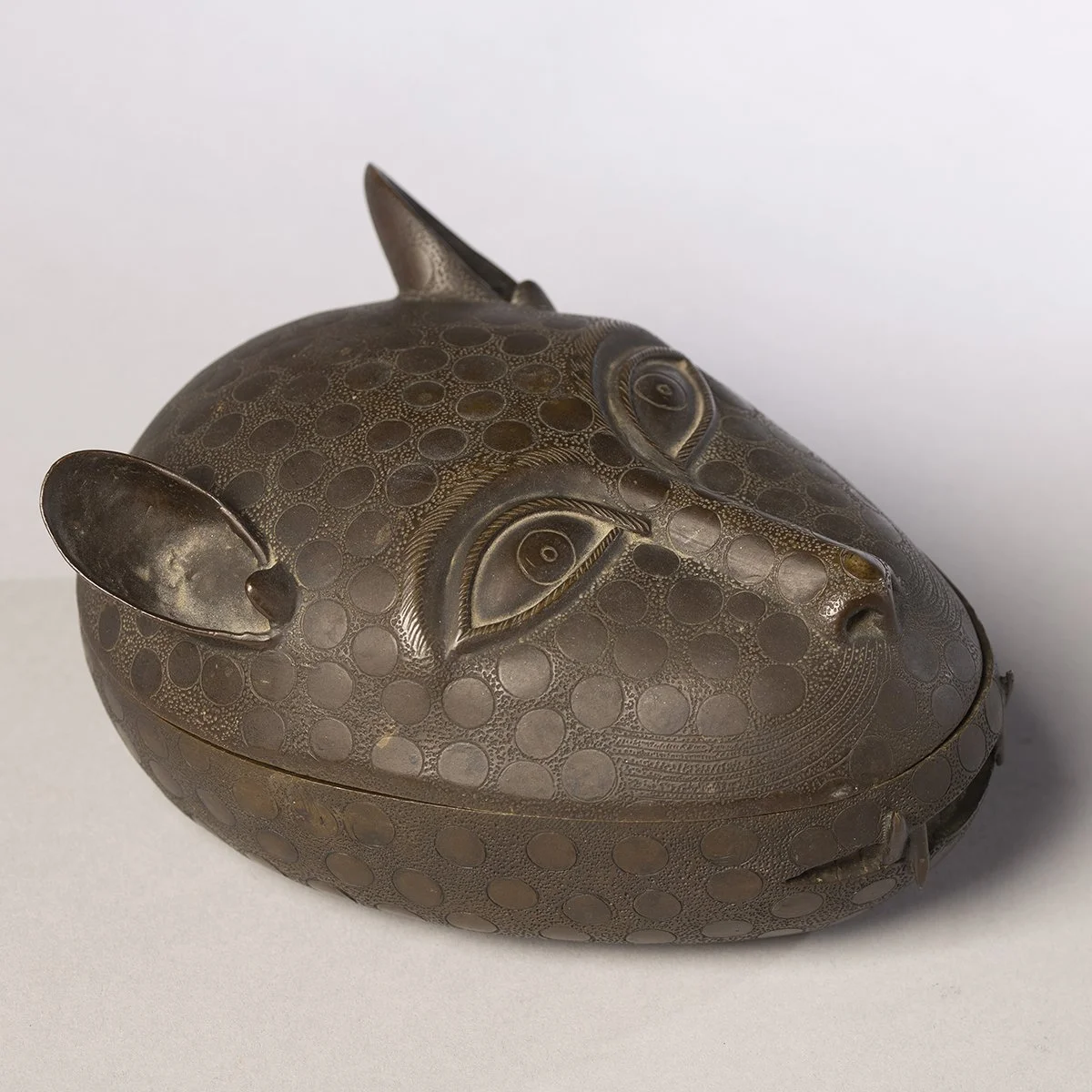 Image 1 of 6
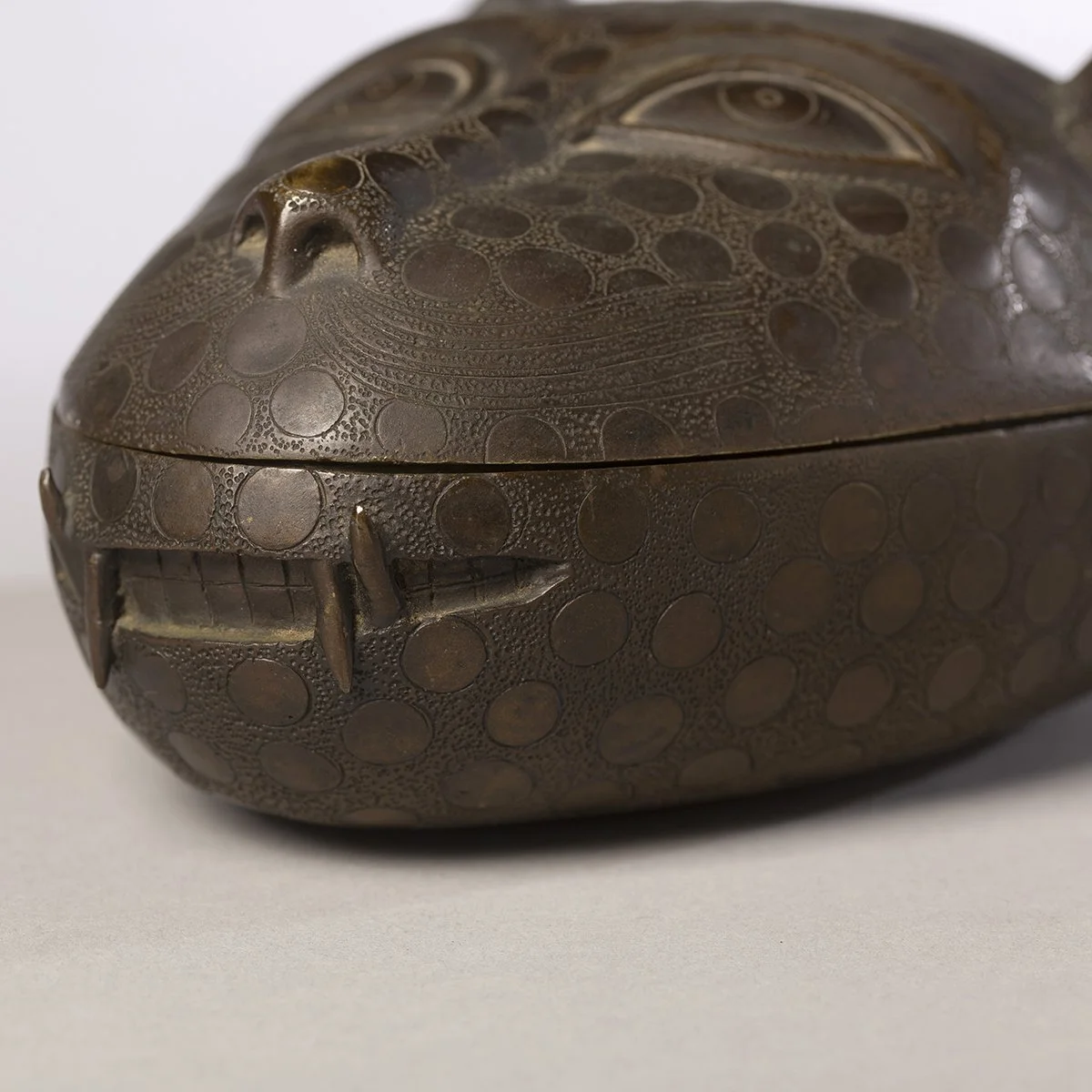 Image 2 of 6
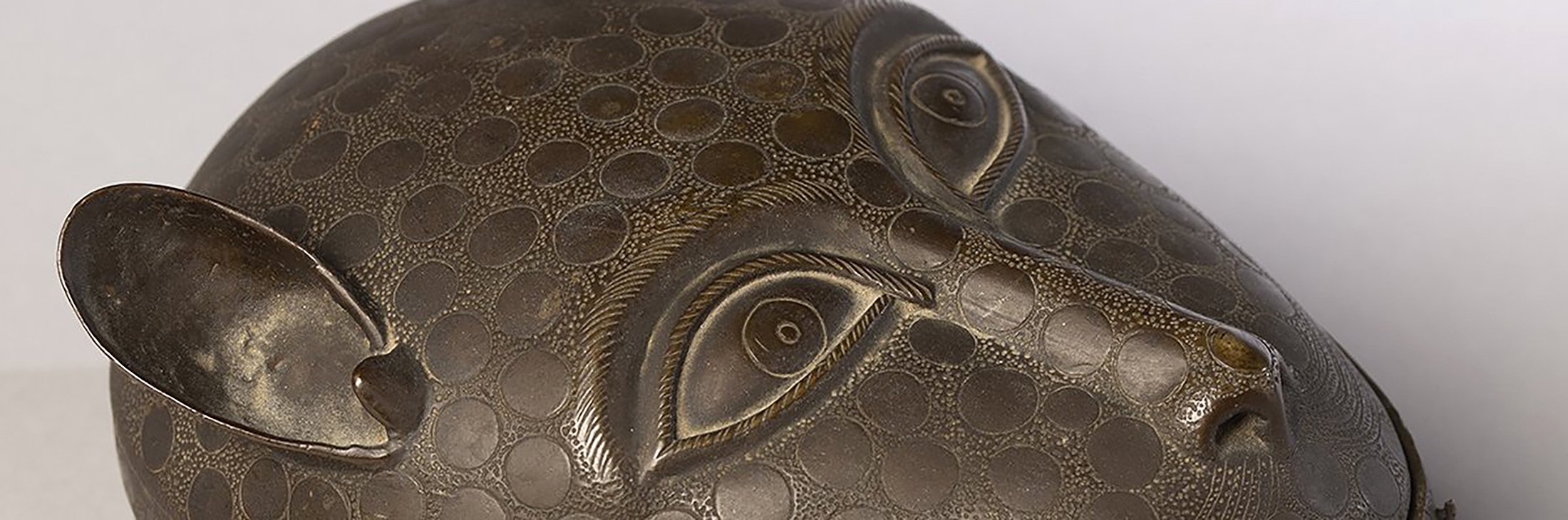 Image 3 of 6
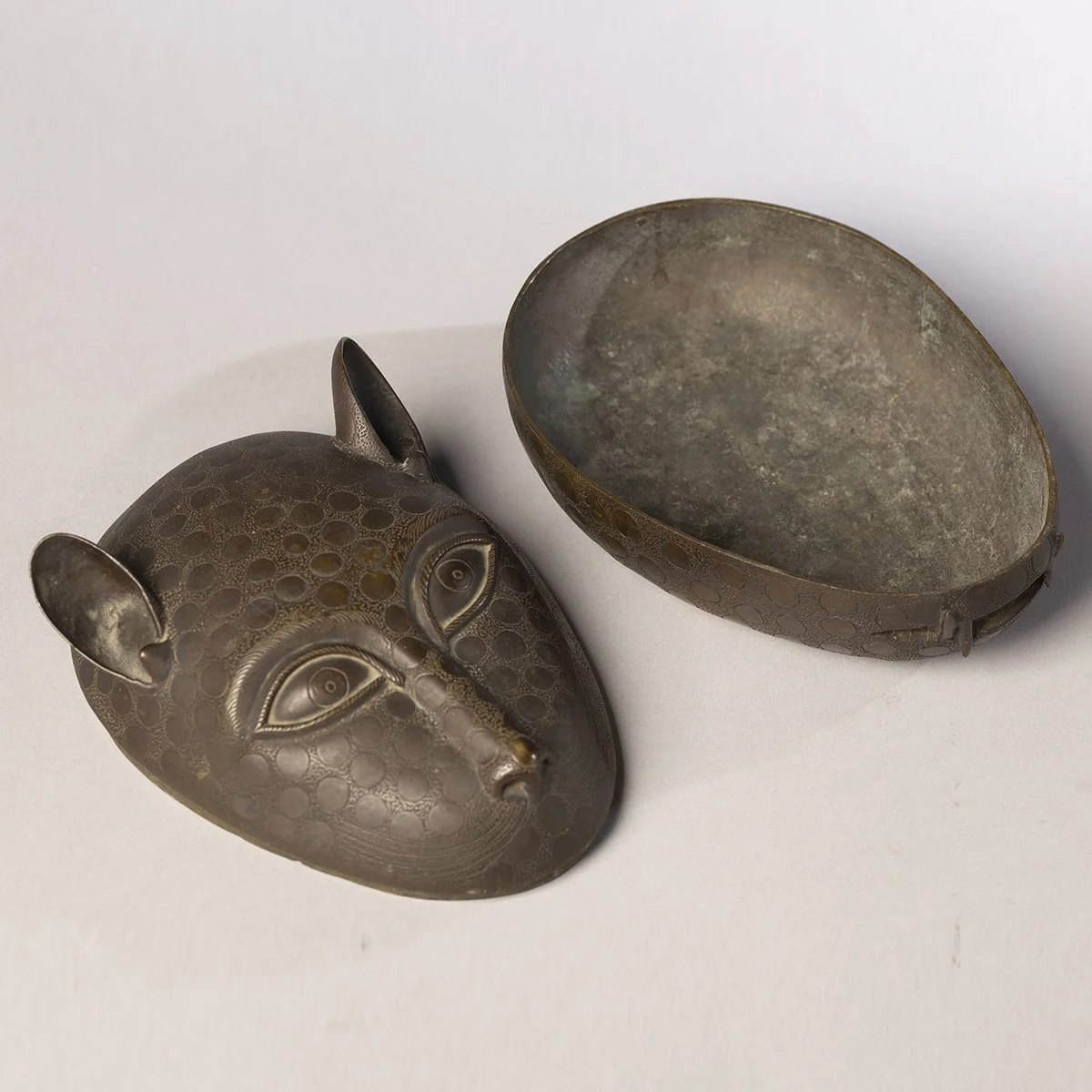 Image 4 of 6
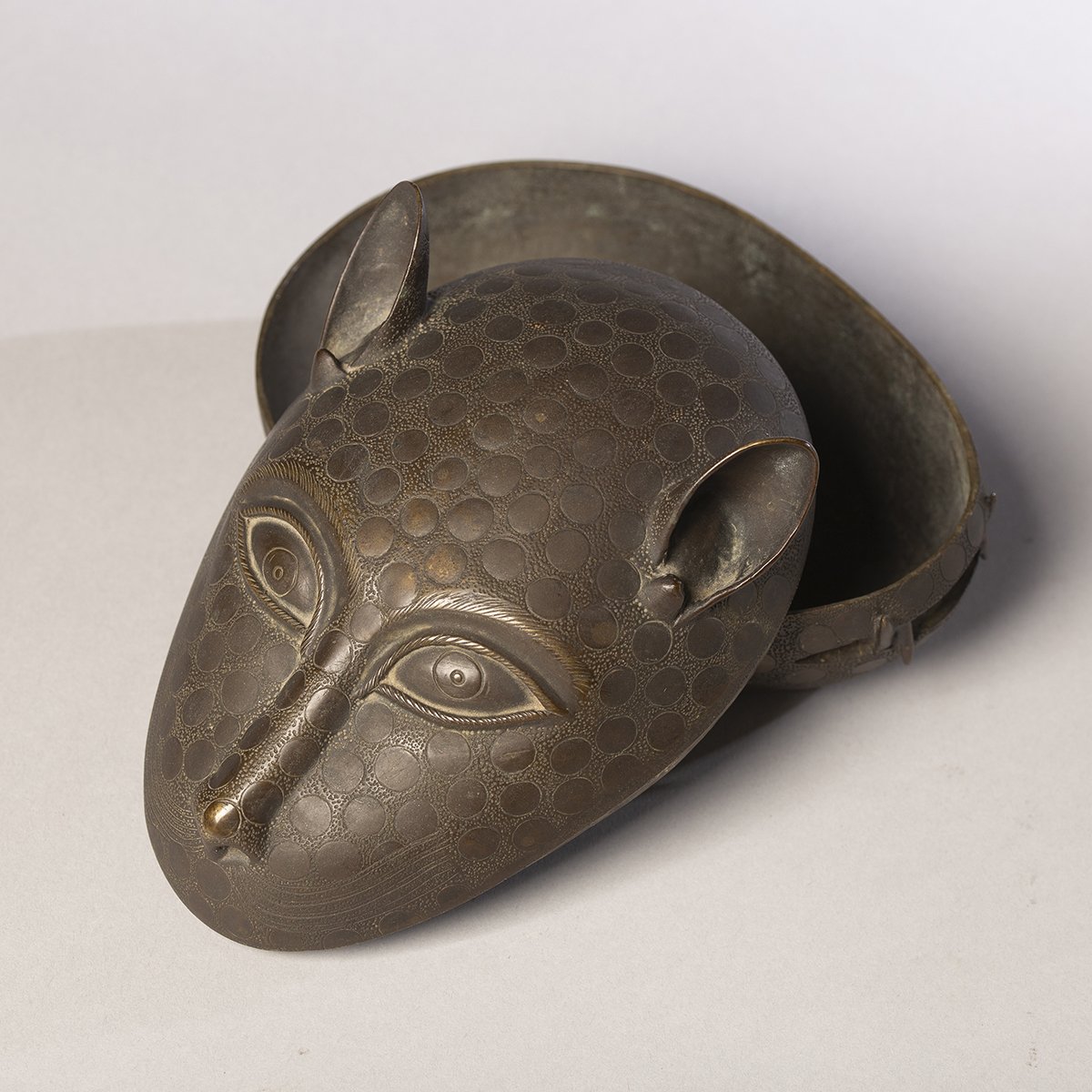 Image 5 of 6
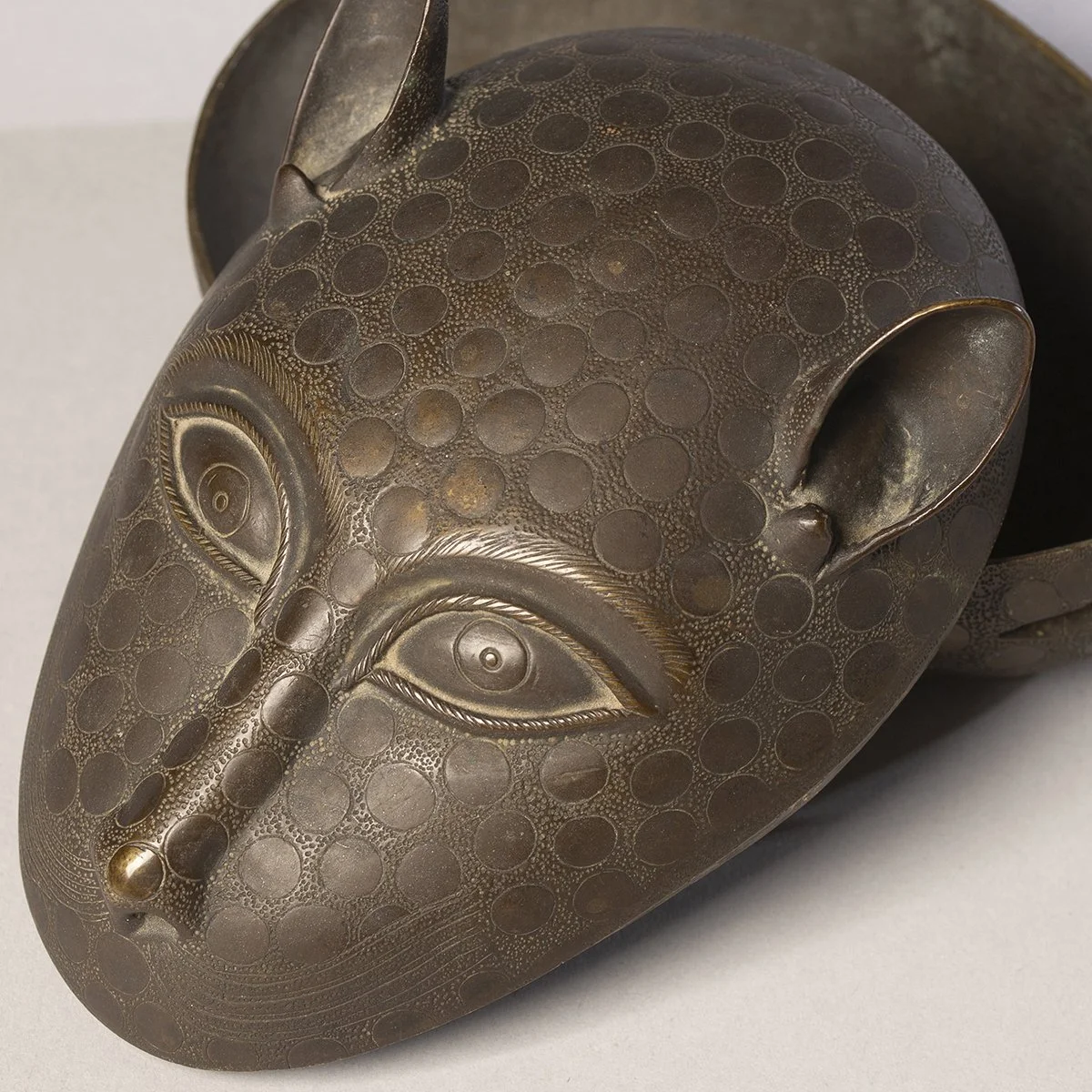 Image 6 of 6