East Cape, Milne Bay Province, Papua New Guinea
Mid-19th century
Wood, native pigments, fiber
Height: 33 inches (84 cm)
Provenance: William Ohly Collection, London / Douglas Barrett, London / Adam Prout, London
Published: War Art & Ritual - 2019. Edited by Bill Evans With contributions by Steven G. Alpert, Robyn Maxwell, Andrew Tavarelli. See shield n. 111
Milne Bay lies at the southeastern tip of mainland Papua New Guinea, where coastal villages look outward to the neighboring archipelago of islands. Milne Bay and the adjoining East Cape form part of the wider Massim cultural region, whose distinct communities were culturally connected to distant islands by canoe travel and trade. Many East Cape communities participated historically in Kula, the ceremonial exchange of shell necklaces and armbands that sustained important reciprocal partnerships across the vast Massim archipelago that include the Trobriand Islands and the D’Entrecasteaux and Woodlarkislands. Woodcarving in Milne Bay/East Cape appeared on practical objects, including canoe fittings, betel nut chewing utensils, and weapons. The oval shields of the Massim originate from this coastal mainland setting, where skilled carverscombined practical form with bold and carefully arrangeddesigns.
The oval shields of Milne Bay are exceedingly rare, and surviving examples were all collected quite early, during the mid to late 19th century. The shields have an elongated oval outline and a convex wooden face. Their characteristic design places broad black fields above and below a pale central band, framed by red and white borders, providing a strong visual presence through a restrained arrangement of color and form. Shallow relief carving on the shields often incorporates scrolls and circular motifs at the ends. A pair of rattan bands encircle the body of the shields and secure wooden grips behind it. These bands also divide the decorated surface, incorporating the shield’s construction as part of its decorative motif. Surviving examples are mostly held in major museum collections, with closely related examples found at the Harvard Peabody Museum and the British Museum. Another closely related example was illustrated by J. Edge-Partington in his “Ethnographical Album of the Pacific” in 1890.
The ethnographer Otto Finsch provides an early field account of these shields and noted they were called dududu by the villagers. In Samoafahrten published in 1888, he describes a Milne Bay canoe house at Baragom village containing several oval wooden fighting shields, distinguishing elongated oval shields with relief carving and colored paint. His 1891 catalogue also records an oval shield from Higiba village on Milne Bay’s northern coast. The Massim scholar Harry Beran later discussed Milne Bay shields in his book Shields of Melanesia published in 2005. The Beran example depicted broad black fields and simple, plain colored borders, demonstrating how little carving was needed for a clear and forceful design; while other examples possessmore elaborate scrollwork, showing individual artistic variation within a tightly defined Milne Bay tradition.
The exceptional Milne Bay shield presented here is the finest known example from the region. Carved with native stone tooling, the shield is rendered in a deeply convex form. Above and below the boldly painted black bands are depicted a distinct pair of stylized faces, with the eyes centrally placed on either side of the nose, defined with red ocher. The renowned 19th century anthropologist A.C. Haddon proposed that some circular motifs on Milne Bay shields depicted elements of a face, particularly the eyes. Perhaps more than any other example, theMilne Bay shield presented here leaves no doubt about the artists intent to portray the stylized faces of a human or ancestral spirit on its surface. Whether intended as a means of intimidation or protection, the incorporation of these motifs in the shield’s design imbues it with an artistic and spiritual potency unique among Milne Bay shields.
The shield was formerly owned by William Ohly (1883–1955), founder of London’s renowned Berkeley Galleries. Ohly brought a sculptor’s eye to the collecting of African and Oceanic art. He valued expressive form and accomplished artistry, and his collection was often described as selected for the highest artistic merit. Purchases and exchanges with European ethnographic museums helped Ohly develop an important collection shaped by this artistic judgement. Displayed at Ohly’s Abbey Art Center at New Barnet, as a source of study and inspiration for practicing artists, these tribal art objects reflected his appreciation for the skill and imagination of their indigenous makers.
We ship free anywhere in the world, fully insured and packed by hand.


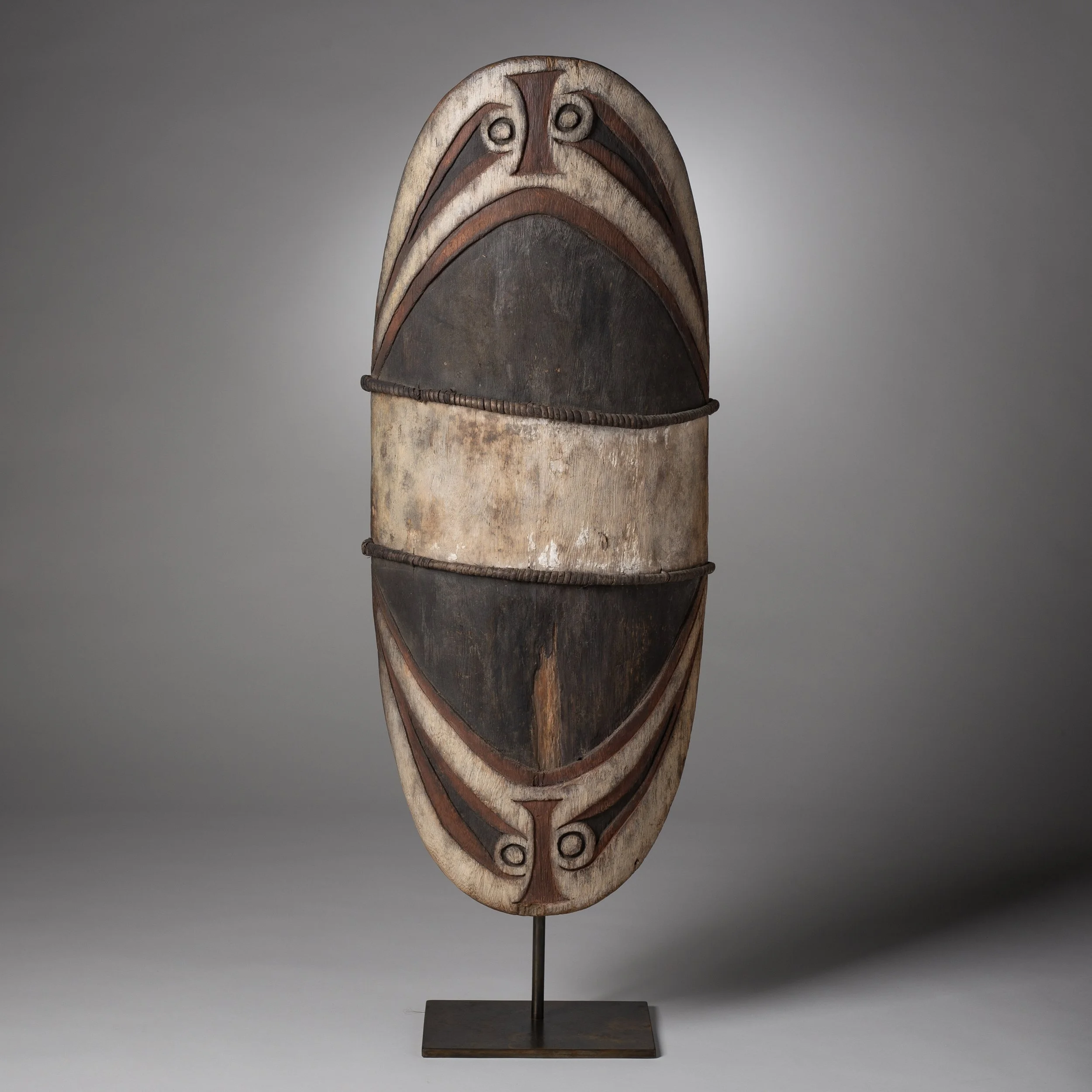 Image 1 of 6
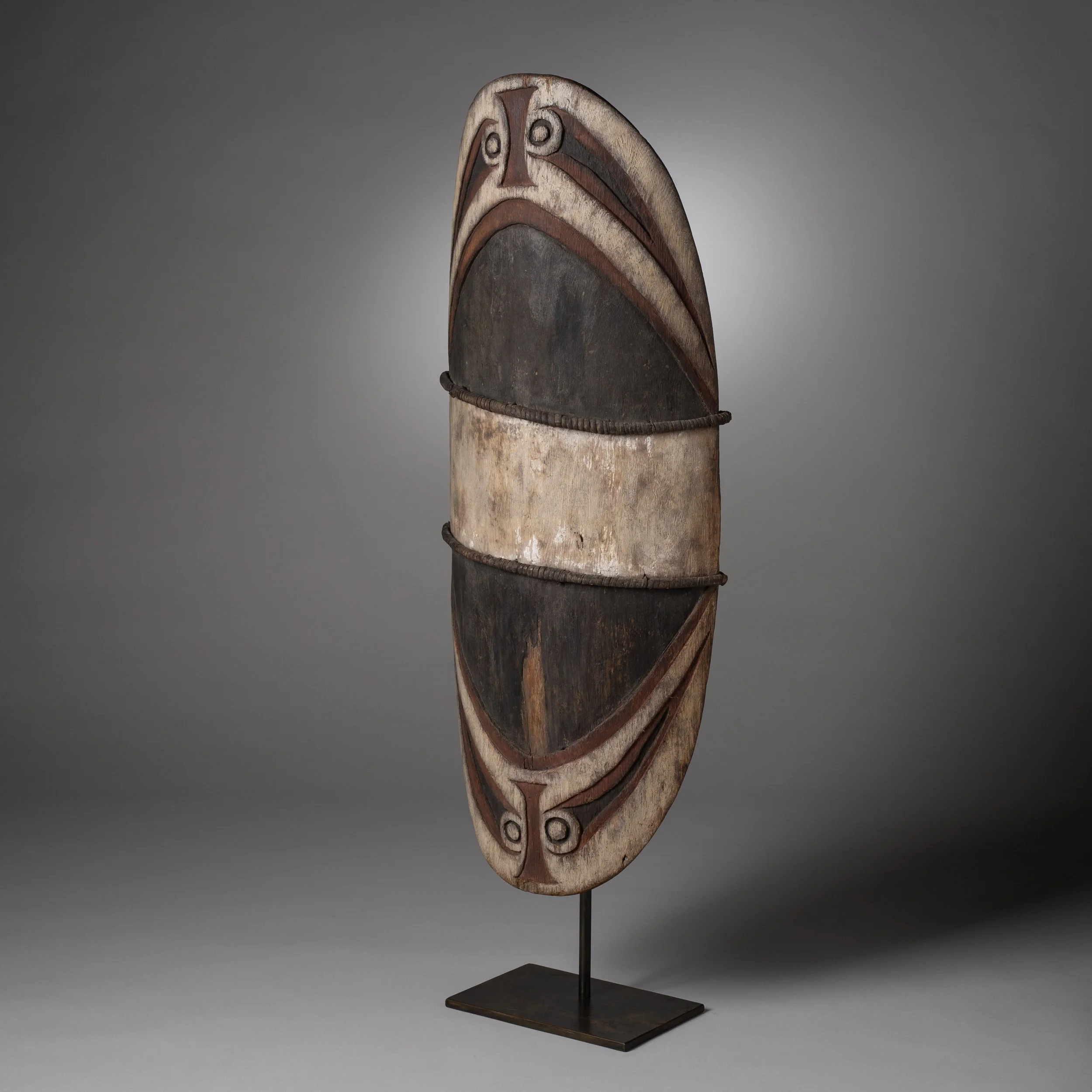 Image 2 of 6
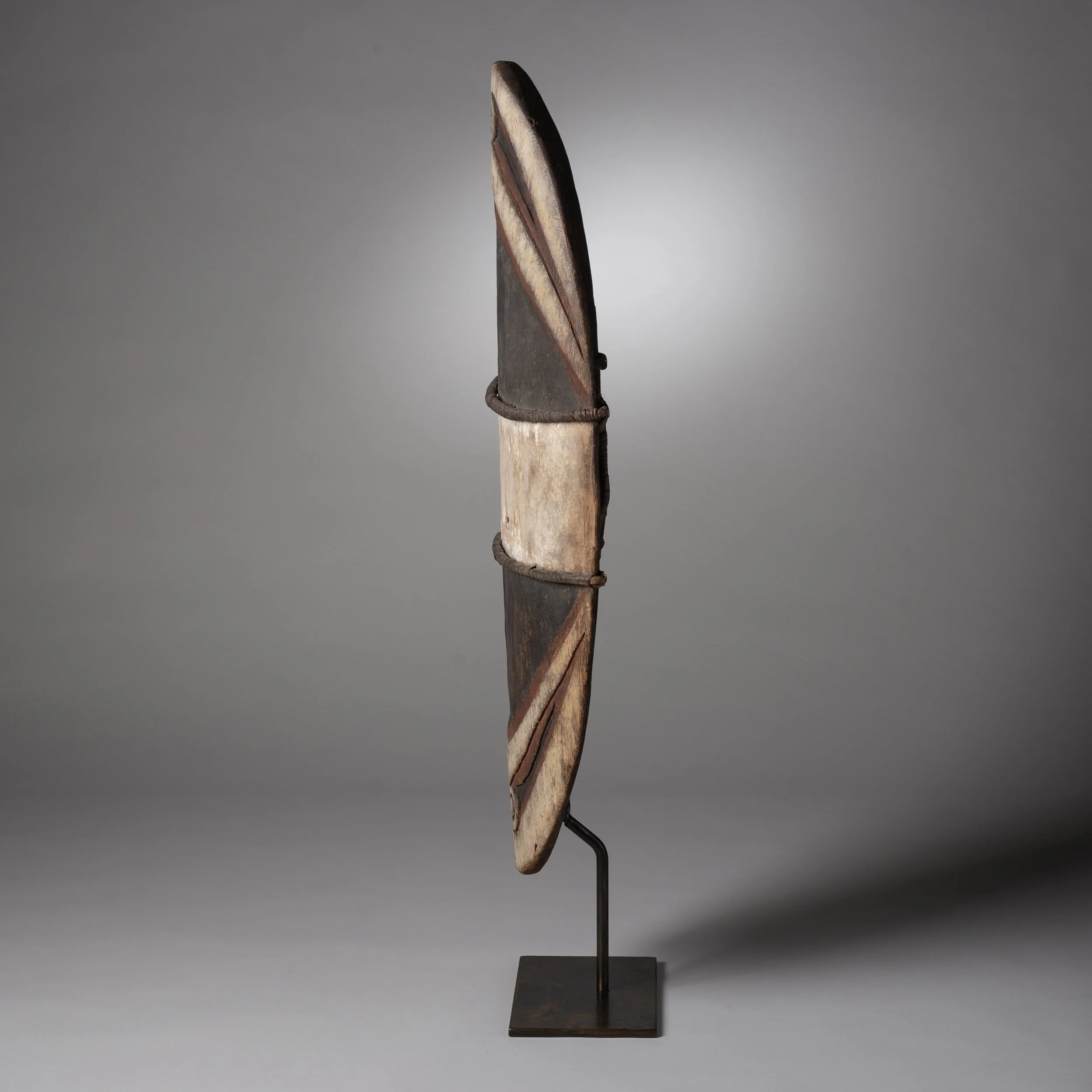 Image 3 of 6
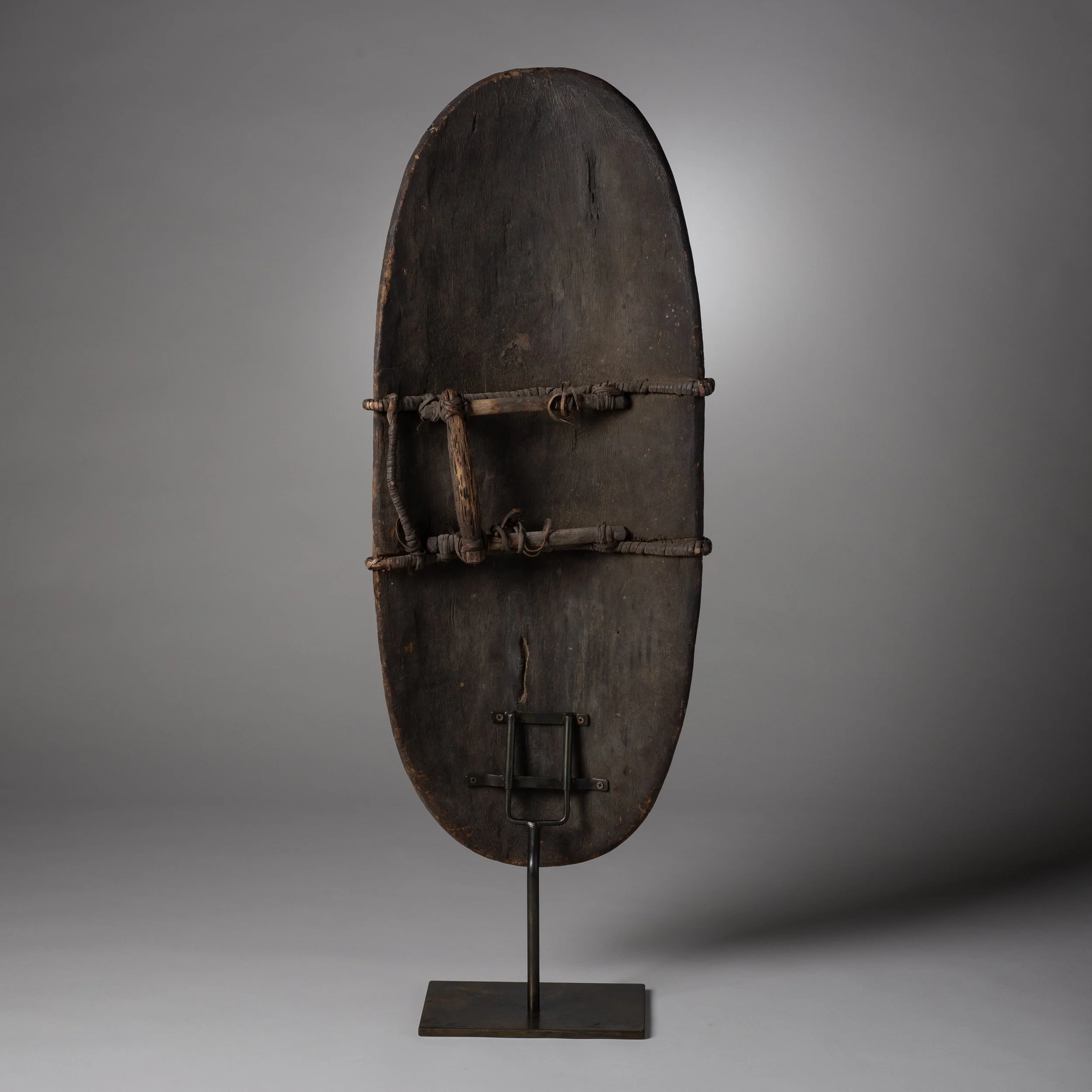 Image 4 of 6
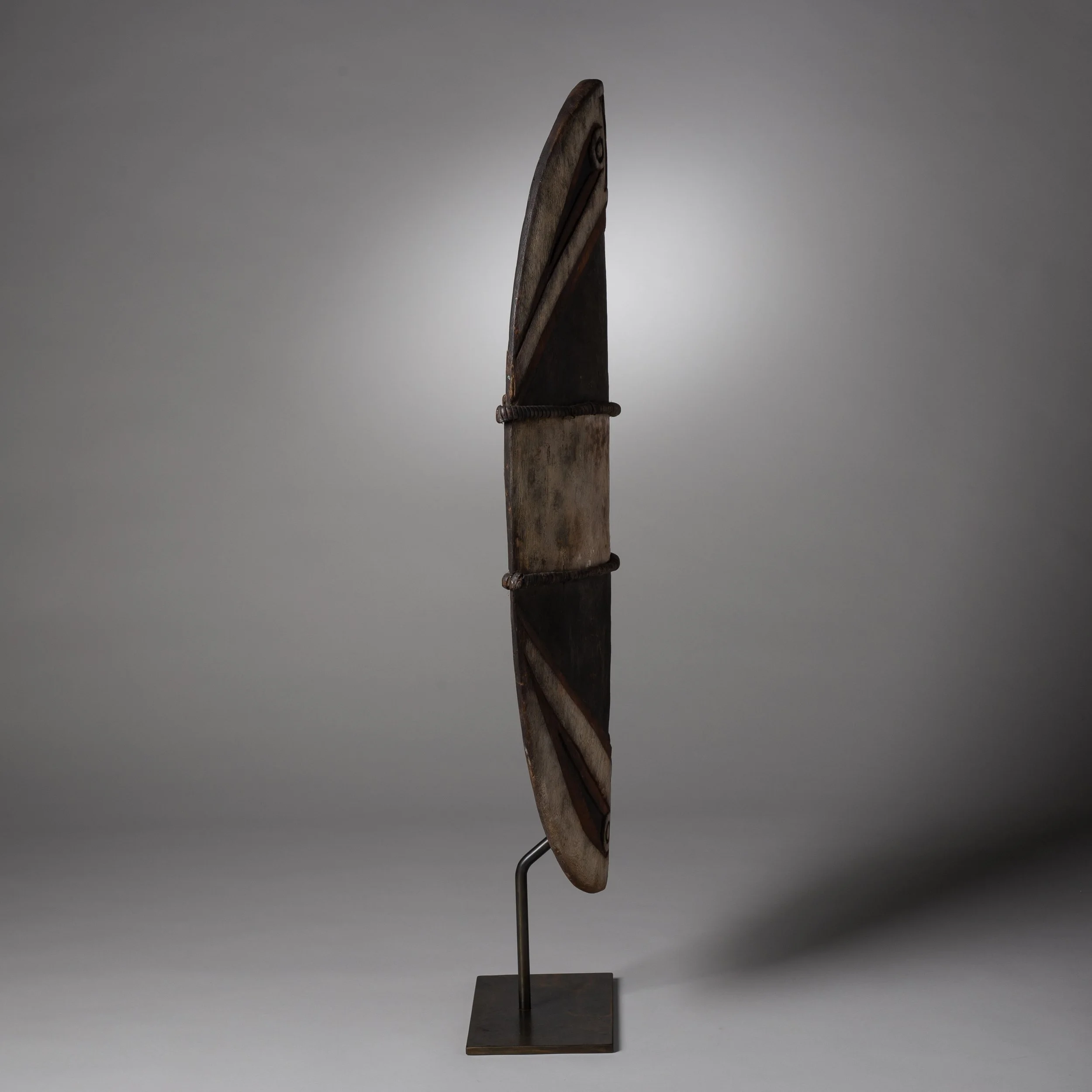 Image 5 of 6
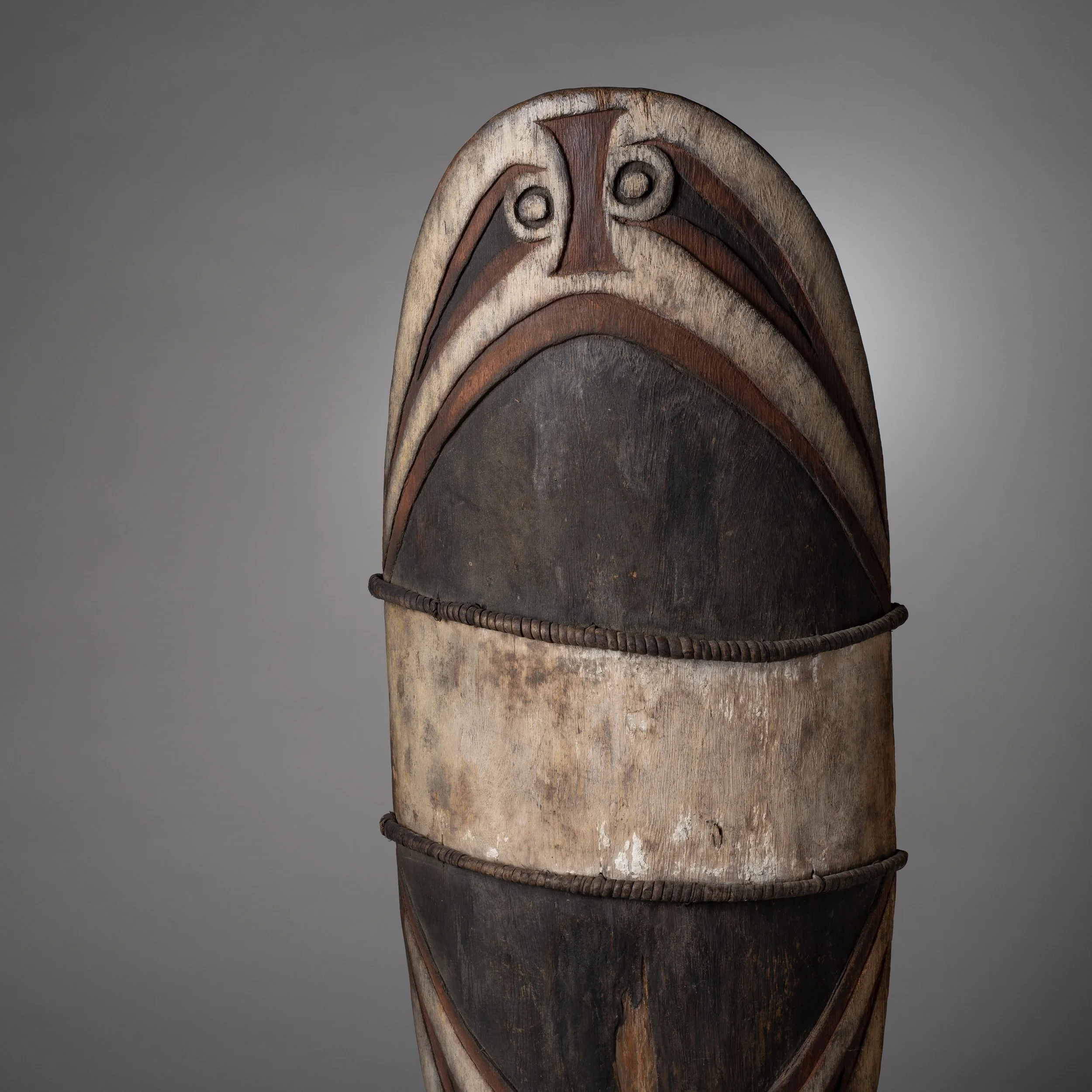 Image 6 of 6