Trobriand Islands, Milne Bay Province, Papua New Guinea
19th century
Acacia wood, native pigments, cane
Height: 31 inches (78.5 cm) Width: 12.5 inches (32 cm)
Provenance: Patricia Whithof, London
Ernest Beyler, Basel
Originating from the Massim region of Papua New Guinea, this exceptional Vayola shield is a testament to the mastery of the artists of the Trobriand Islands. More than a simple defensive implement, the vayola served as an elite insignia reserved for high-ranking men, accomplished warriors, and ritual war magic specialists. The shields also served as a receptacle for the owners Mana; imbued with their spiritual and protective ancestral power. In Trobriand society, warfare was not a matter of random, chaotic skirmishes; instead, it was a highly formal, pre-arranged affair. The vayola played a central role in these staged combats, though its primary defensive function was psychological and spiritual rather than mechanical. Remarkably, few surviving shields bear signs of physical damage, arrow holes, or battle scarring. This near-pristine condition underscores the shields’ true function as ceremonial tools of spiritual deterrence. Before a warrior entered ritual combat, the village war wizard would cast protective spells over the shield. By resting the wood across his knees and whispering incantations directly into the decorated surface, he empowered the shield with his ritual breath.
Characterized by their relatively compact, convex pear shape, Massim shields were carved from lightweight but dense acacia wood and fitted with a double cane grip on its reverse side. The choice of light wood was deliberate, allowing the owner nimble and swift movements. The finely painted front surface of the shields reveals the mastery of Massim artists; the vayola representing one of the world's premier shield traditions focused entirely on exquisite line drawing and painted design, rather than heavy etching or deep carving.
Massim artists utilized a strict, traditional palette of white, black, and red native pigments, layering the painted details over a bright white ground to maximize visual contrast. Although the fundamental composition, intricate motifs and color schemes remained uniform across the scattered atolls of the Trobriands, no two shields were ever exactly the same, with each shield standing as an individual expression of its creator's skill.
The abstract and semi-abstract painted motifs dynamically wrapped around the surface of the shields depict a highly sophisticated cosmological code. Because the shields graphics rely on layers of metaphor, where painted designs mask deeper meaning, these enigmatic motifs have sparked a century of anthropological debate. According to Massim native explanations recorded by Reverend S. B. Fellows in 1897
We ship free anywhere in the world, fully insured and packed by hand.


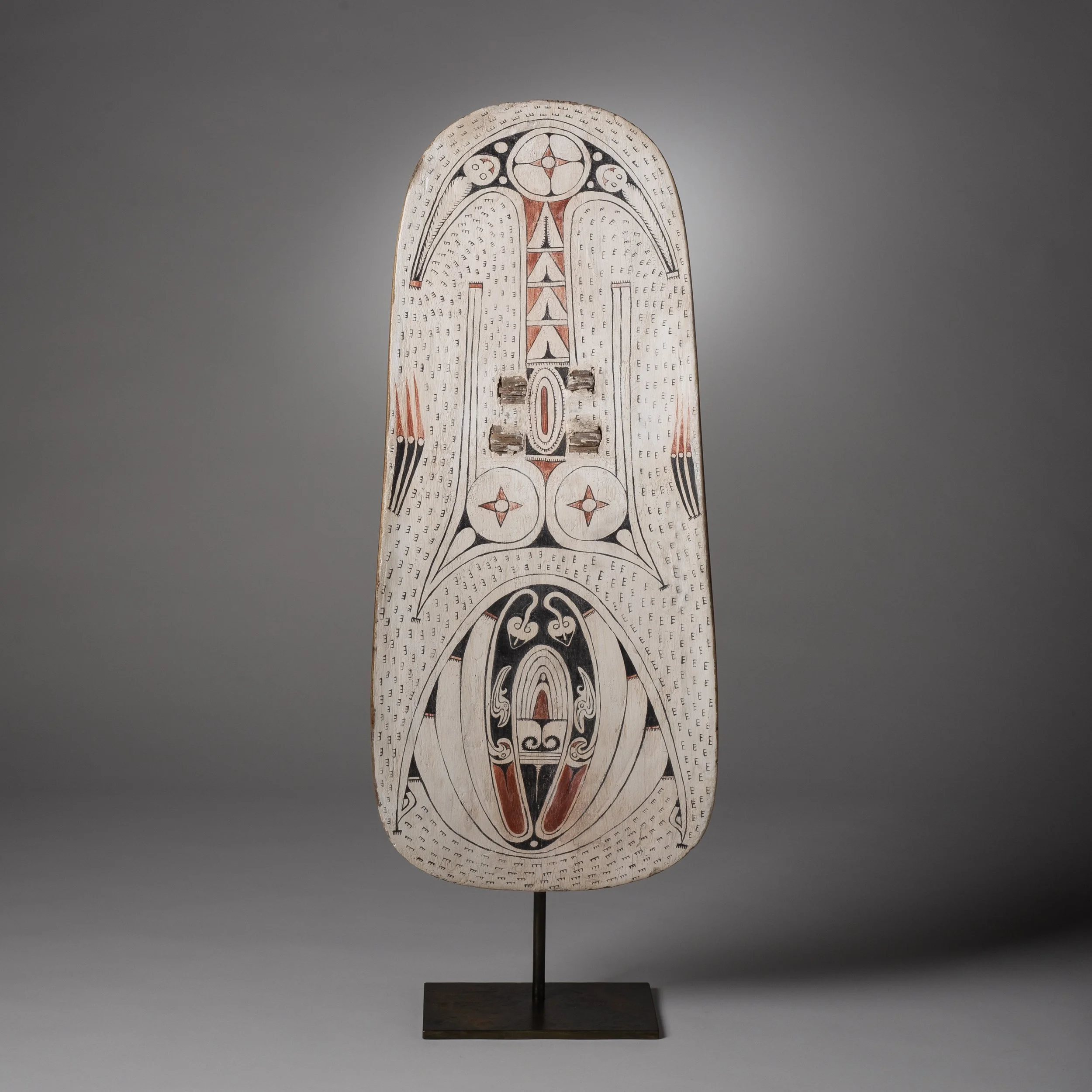 Image 1 of 6
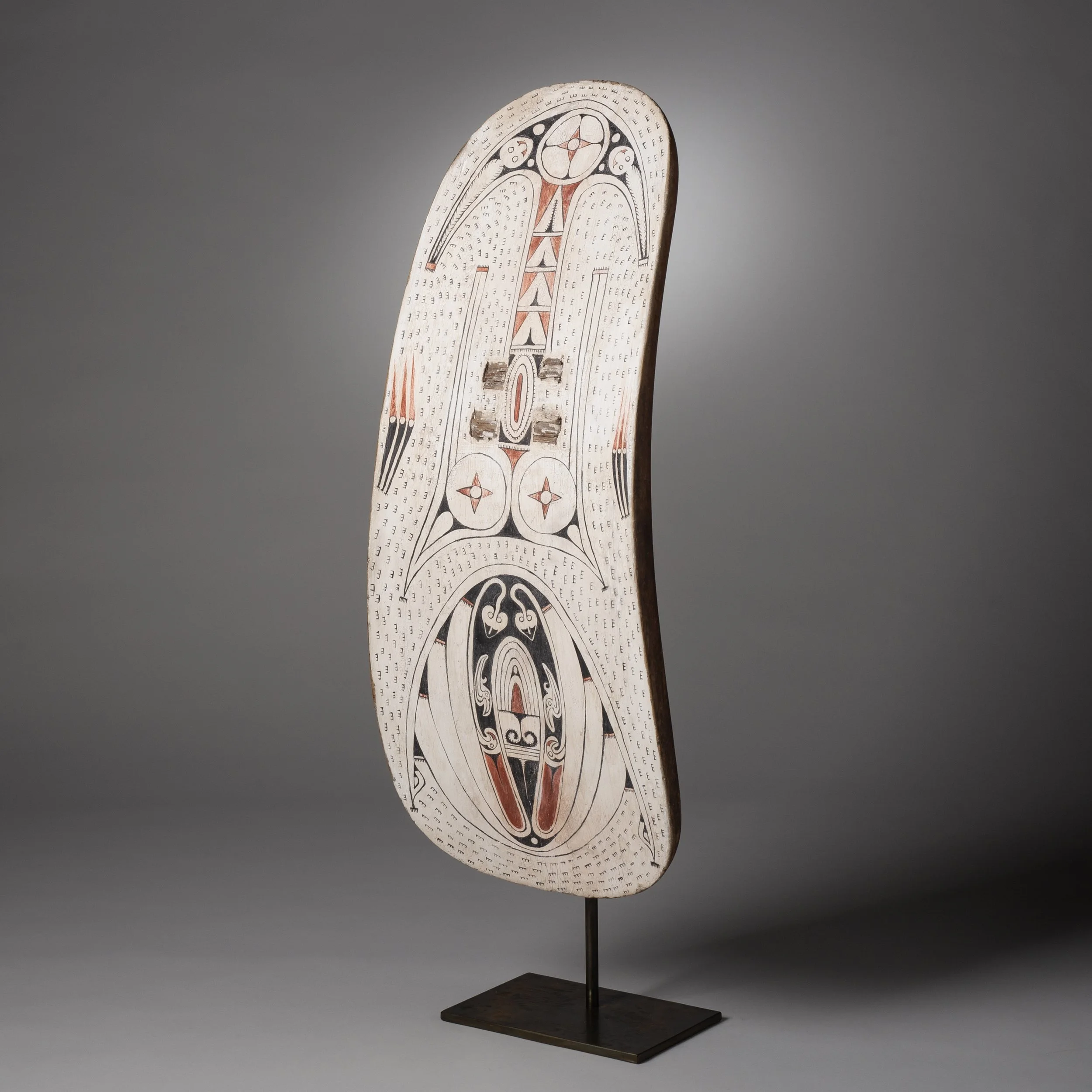 Image 2 of 6
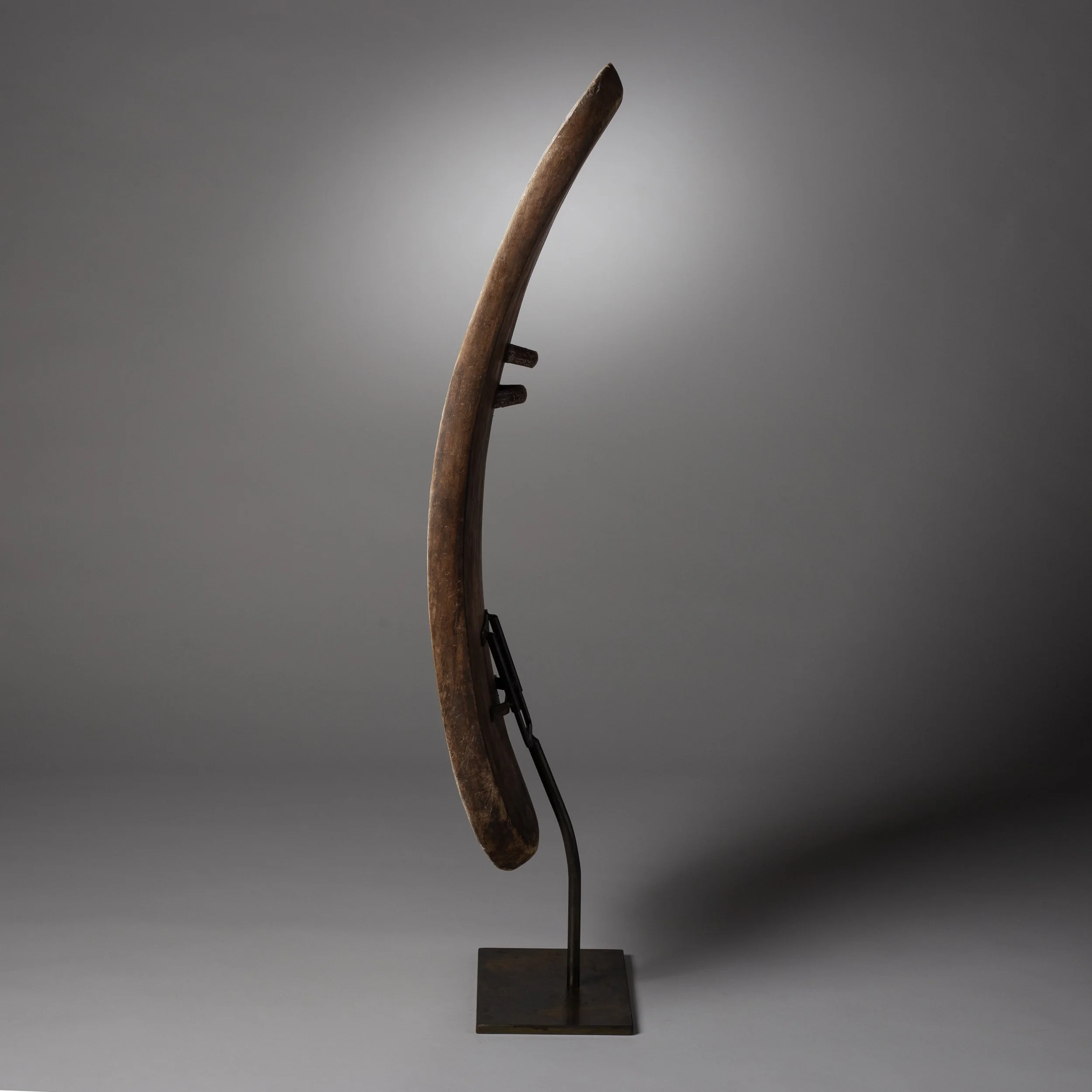 Image 3 of 6
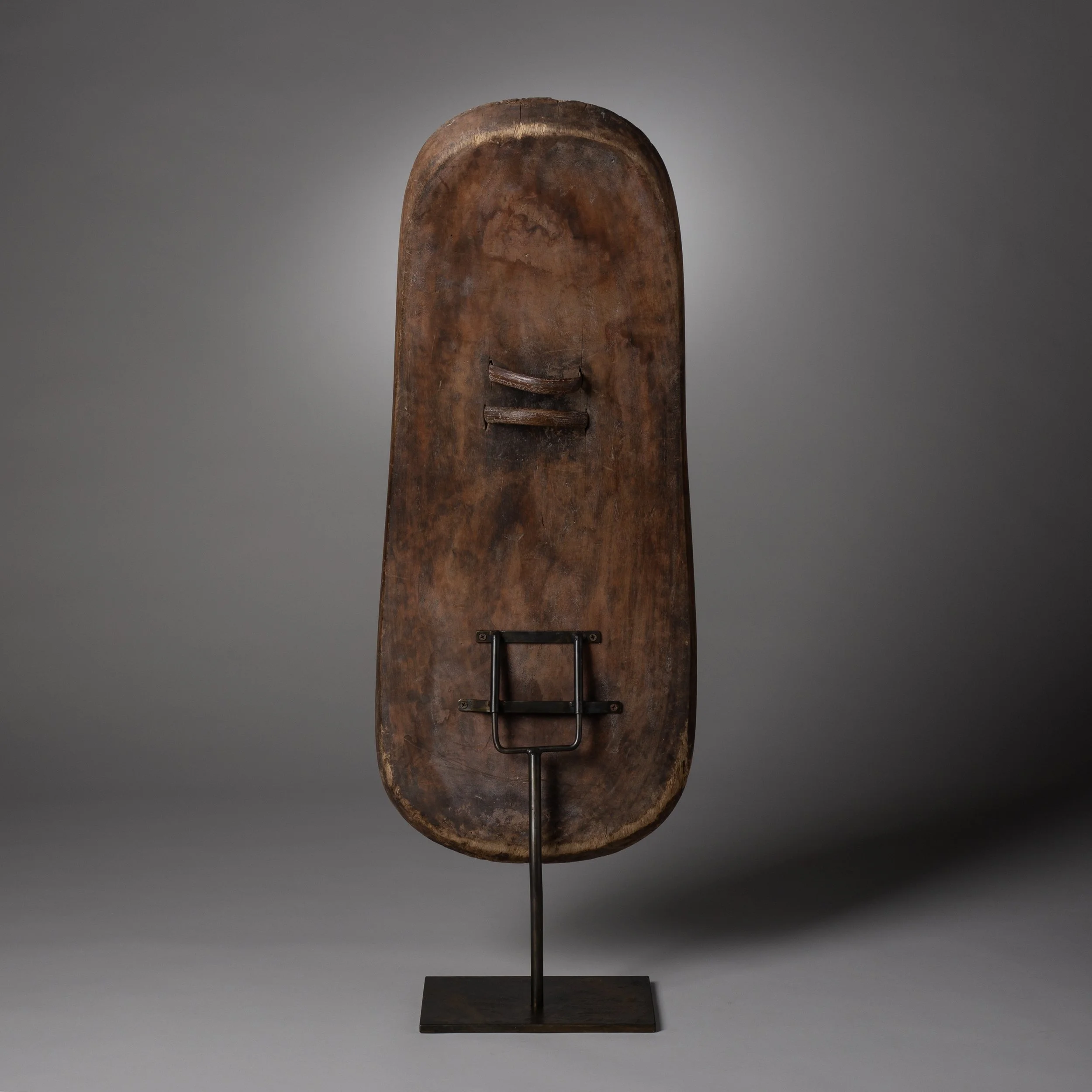 Image 4 of 6
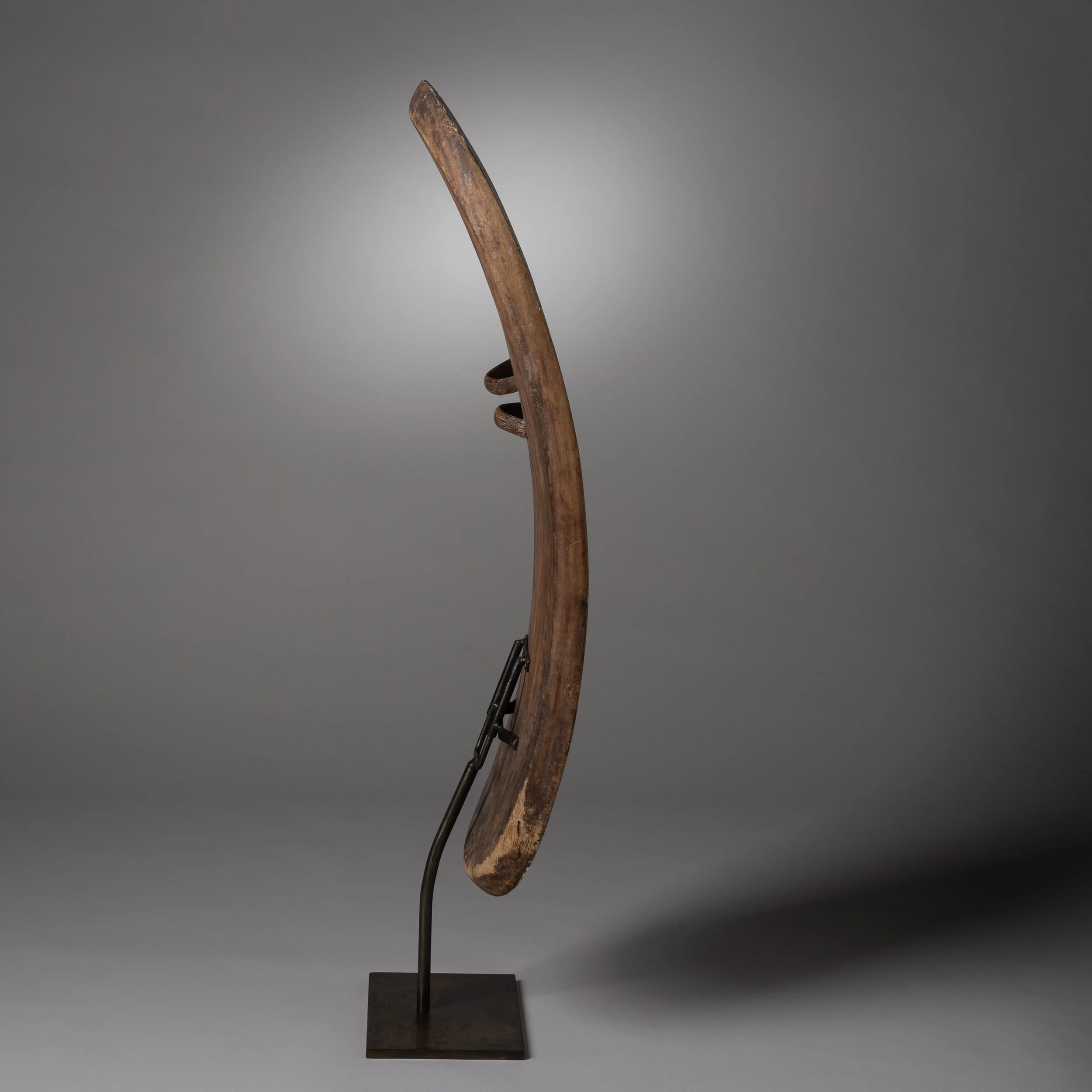 Image 5 of 6
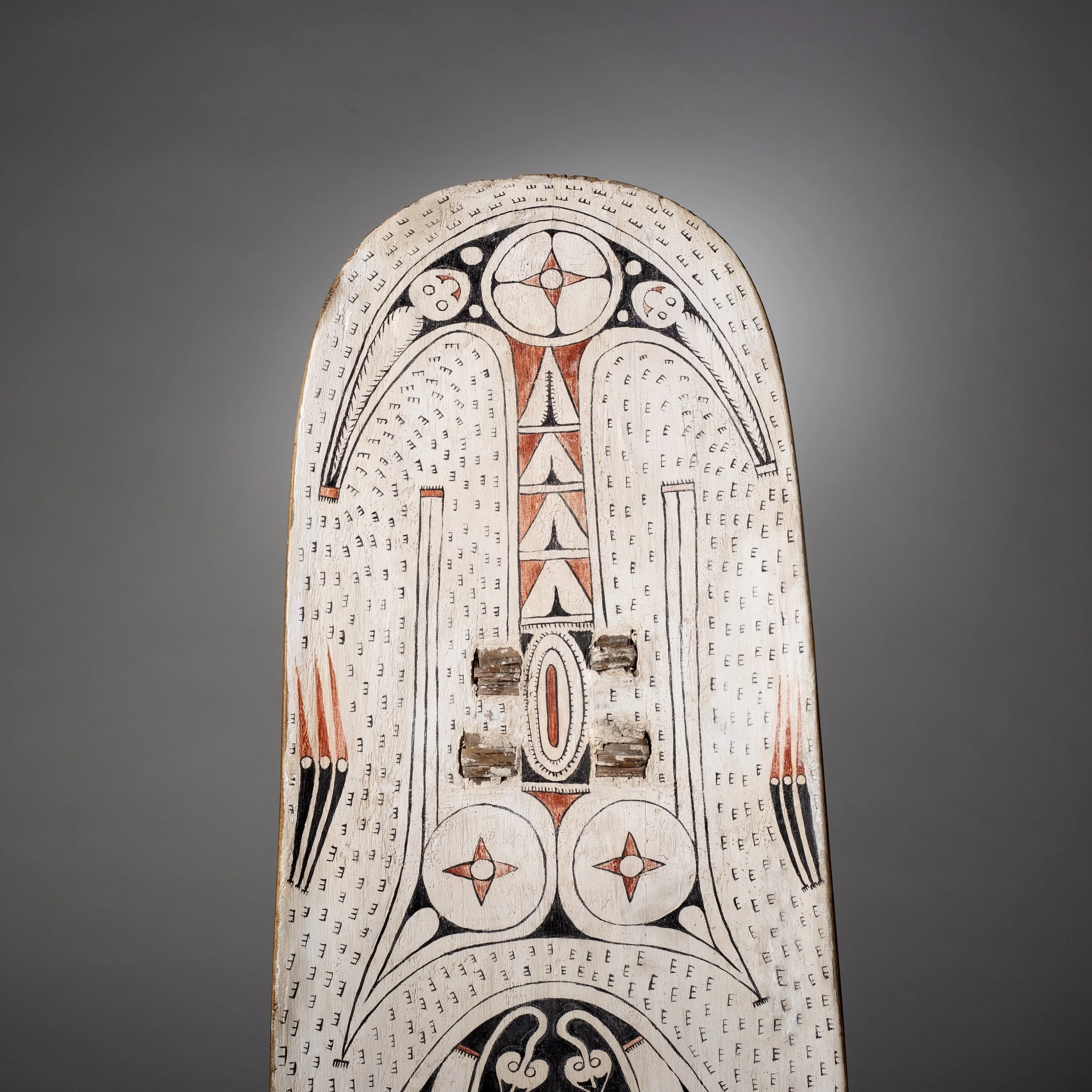 Image 6 of 6