Fiji
Late 18th century
Hardwood
Length: 36 in. (91.4 cm)
Provenance: Private collection, New Bedford, MA
The totokia is a Fijian weapon classified by scholar Fergus Clunie as a beaked battlehammer, designed to deliver a concentrated stabbing blow rather than the wide arc required by other club forms. Clunie describes its function as intended to penetrate skulls, delivered in an abrupt, vicious stab, and notes that the weapon could be used in open warfare or to dispatch fallen warriors on the battlefield. Some totokia were named objects with documented battle histories, and the type was associated with chiefs and warriors of established reputation.
The club takes its form from a long, slightly curved handle of dense dark hardwood rising to a large, faceted bulbous head terminating in a projecting point, the form that led European collectors to describe it as a pineapple club, though Clunie and others relate the head's appearance to the pandanus fruit. Whale ivory inlay is set into the handle, a material indicating status and access to trade goods in the late eighteenth century Fijian context. The wood is dense and well-seasoned, the surface developing a dark even patina through age.
We ship free within the United States, fully insured, packed by hand.
Fiji
Late 18th century
Hardwood
Length: 36 in. (91.4 cm)
Provenance: Private collection, New Bedford, MA
The totokia is a Fijian weapon classified by scholar Fergus Clunie as a beaked battlehammer, designed to deliver a concentrated stabbing blow rather than the wide arc required by other club forms. Clunie describes its function as intended to penetrate skulls, delivered in an abrupt, vicious stab, and notes that the weapon could be used in open warfare or to dispatch fallen warriors on the battlefield. Some totokia were named objects with documented battle histories, and the type was associated with chiefs and warriors of established reputation.
The club takes its form from a long, slightly curved handle of dense dark hardwood rising to a large, faceted bulbous head terminating in a projecting point, the form that led European collectors to describe it as a pineapple club, though Clunie and others relate the head's appearance to the pandanus fruit. Whale ivory inlay is set into the handle, a material indicating status and access to trade goods in the late eighteenth century Fijian context. The wood is dense and well-seasoned, the surface developing a dark even patina through age.
We ship free within the United States, fully insured, packed by hand.


 Image 1 of 6
 Image 2 of 6
 Image 3 of 6
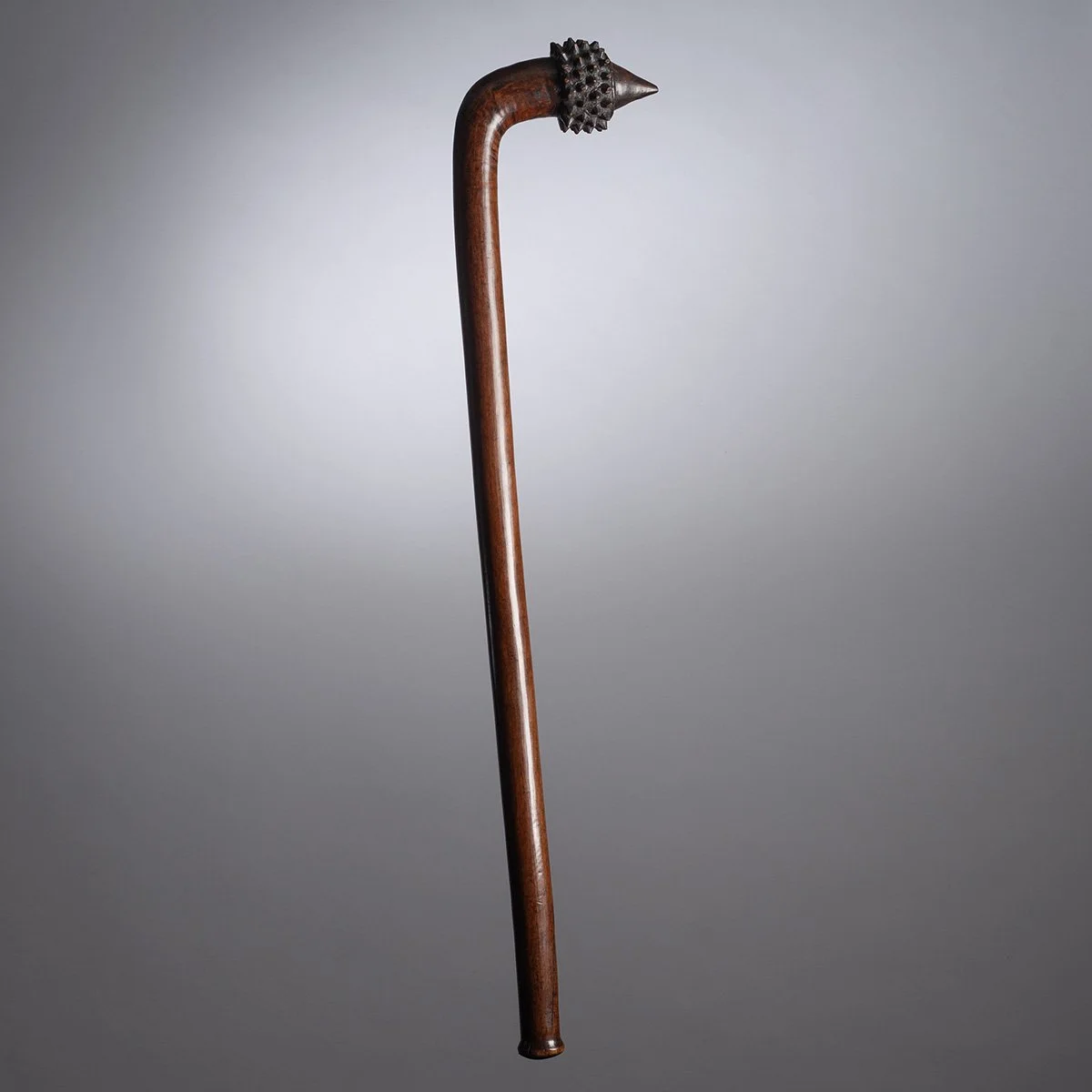 Image 4 of 6
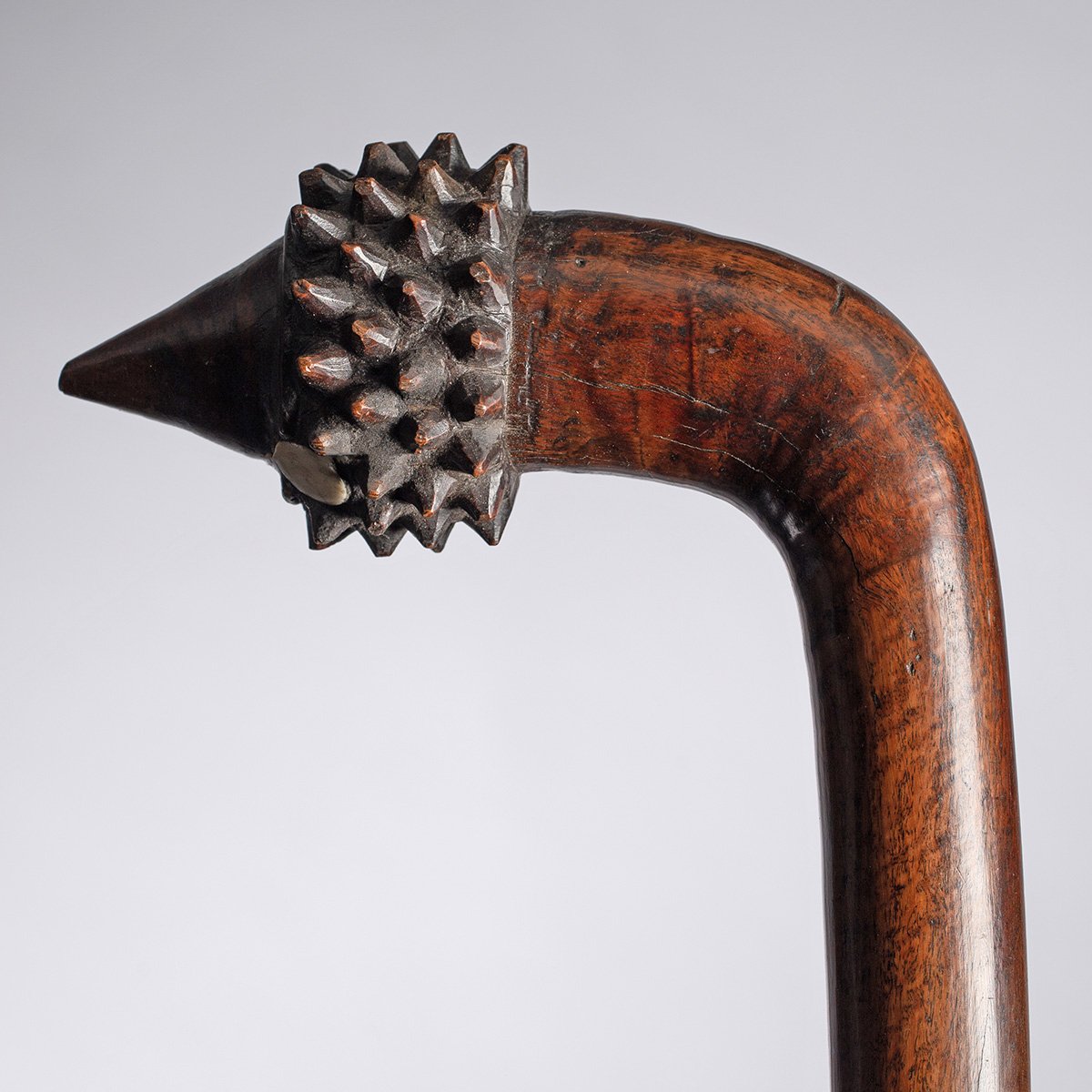 Image 5 of 6
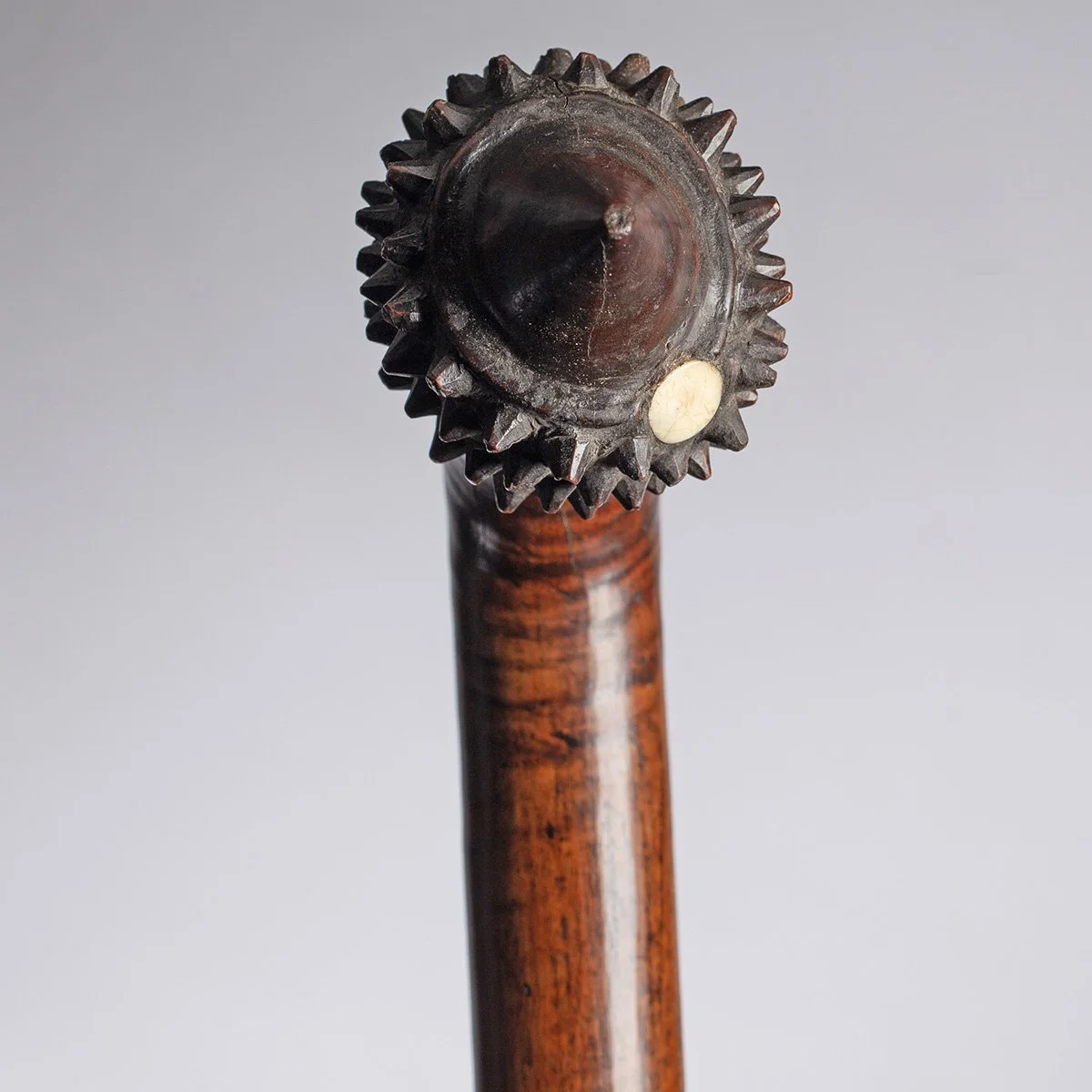 Image 6 of 6