

 Image 1 of 3
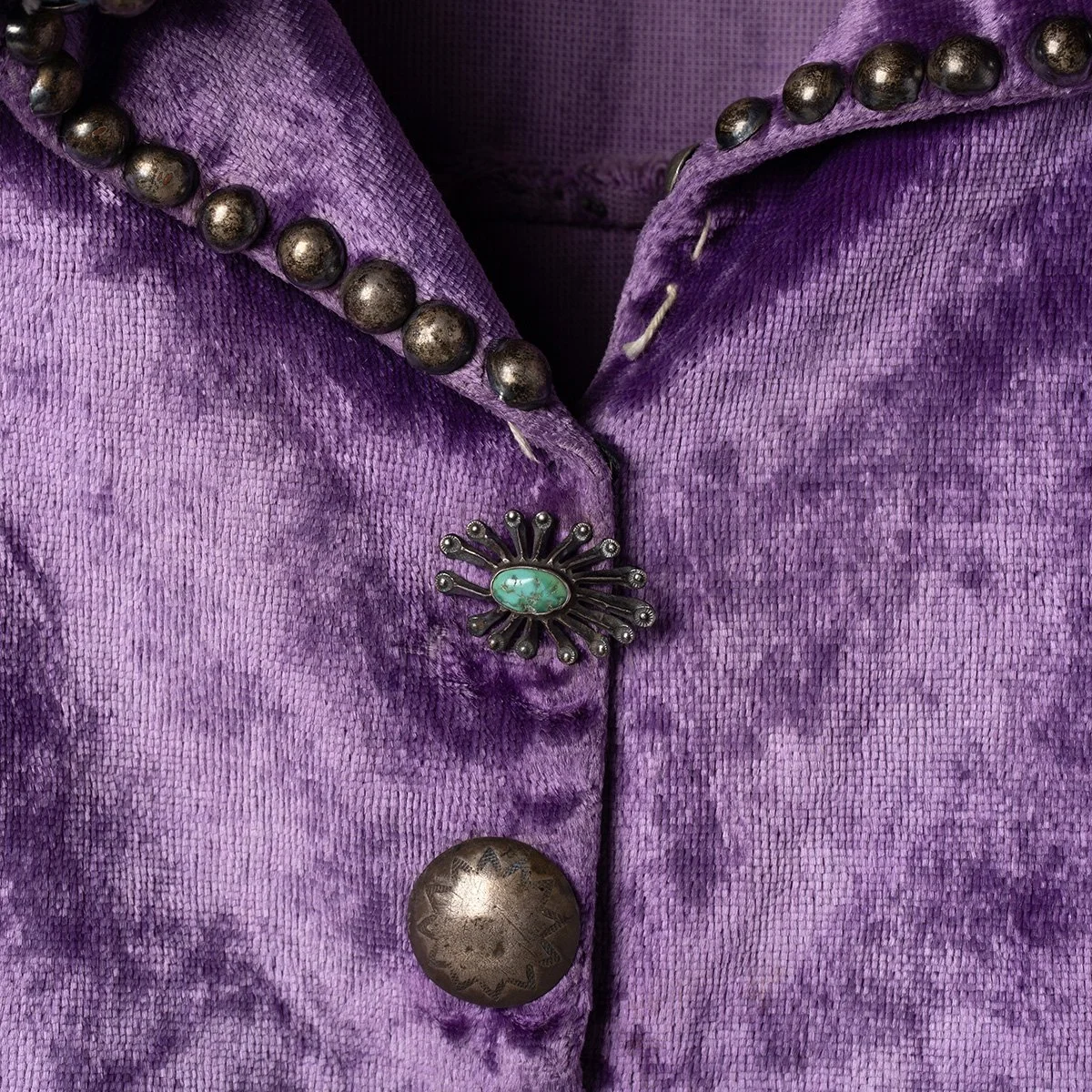 Image 2 of 3
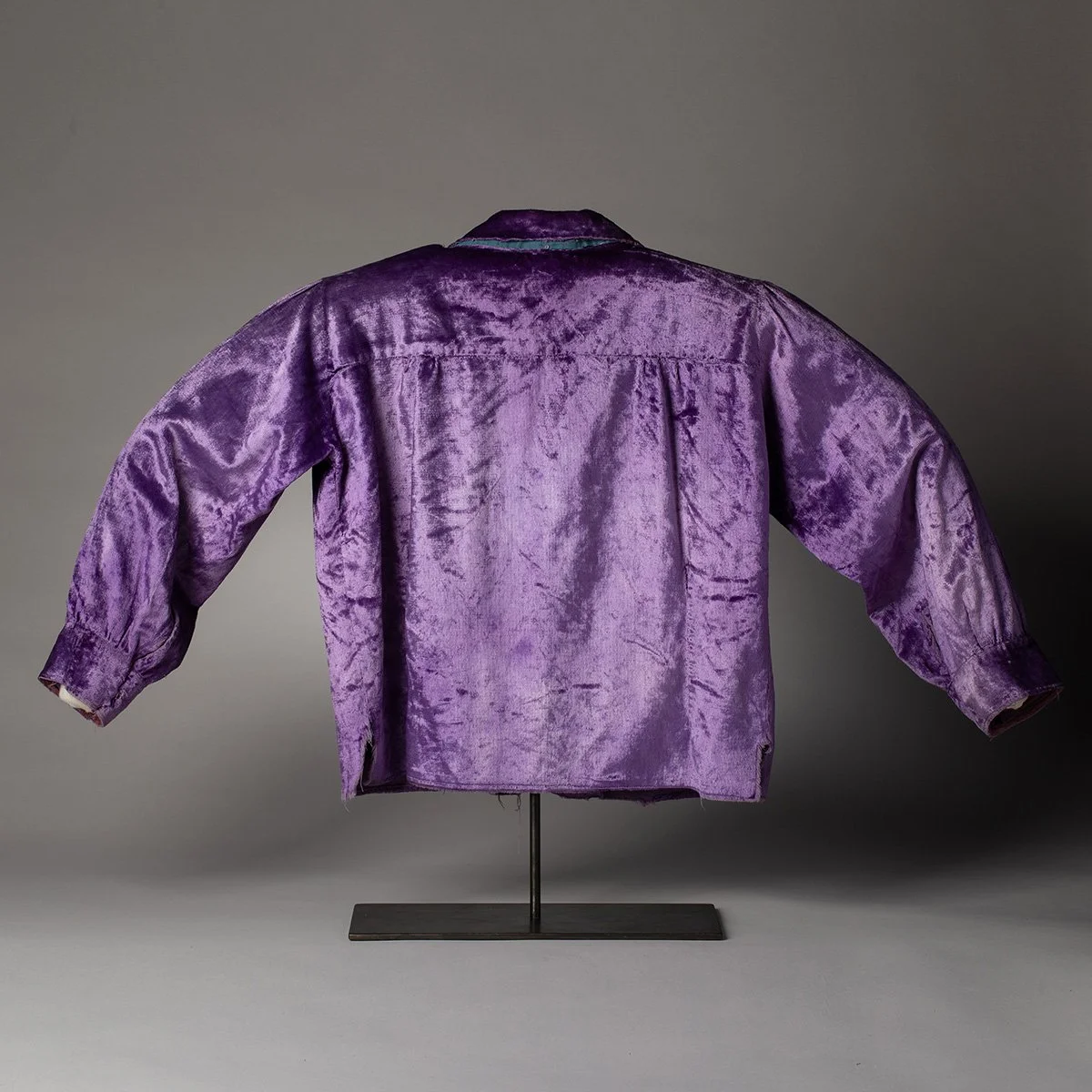 Image 3 of 3
Navajo
Southwest
1920s
Velvet with silver buttons
Women's size small
Provenance: Larry Frank, Taos, New Mexico
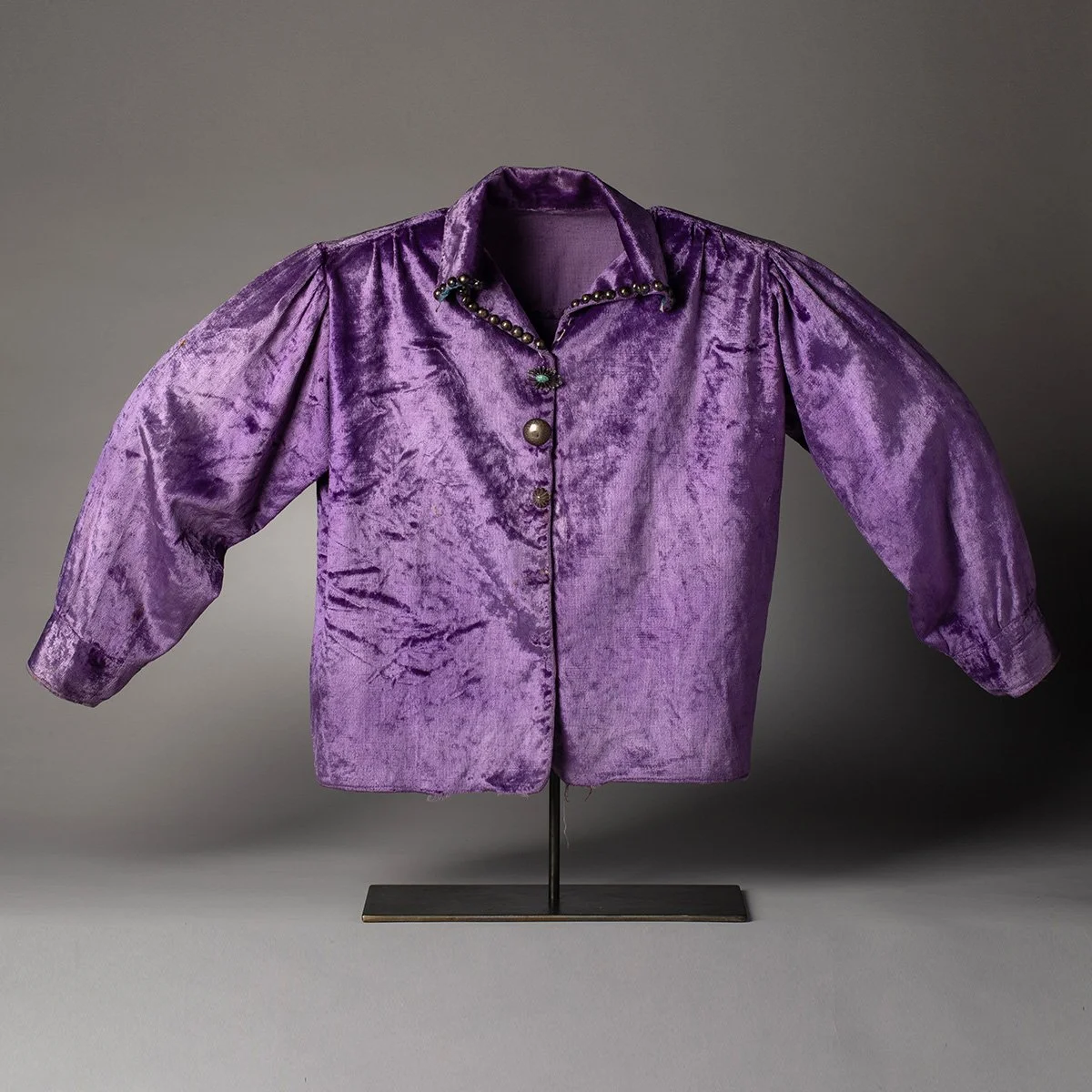
The blouse is cut from purple velvet with a pointed collar, shoulders gathered into a full sleeve that narrows toward the cuff, and a straight front opening fastened with domed silver buttons. A row of smaller silver buttons is set close together along both edges of the collar, running from the points back toward the neck, with a turquoise set button at each collar point. The nap of the velvet holds the light differently across the body and the sleeves, so the color shifts between violet and a deeper plum as the piece turns.
Velvet blouses of this cut were worn by Navajo women from the late nineteenth century onward, made up at home from yard goods bought at the trading post and fastened and trimmed with silver made by Navajo smiths. Buttons were among the earliest and most common forms of Navajo silverwork, often worked from coins, and they were moved from one garment to another as clothing wore out. A blouse that has kept its full complement of buttons is therefore carrying two separate things at once, the dress and the silver.
Larry Frank was a collector and scholar of Southwestern and Spanish Colonial art based in Taos, New Mexico. He was the co-author of Indian Silver Jewelry of the Southwest, 1868 to 1930, published in 1978, and New Kingdom of the Saints: Religious Art of New Mexico, 1780 to 1907, published in 1992, both standard references in their fields.
We ship free anywhere in the world, fully insured, packed by hand.
Navajo
Southwest
1920s
Velvet with silver buttons
Women's size small
Provenance: Larry Frank, Taos, New Mexico
The blouse is cut from purple velvet with a pointed collar, shoulders gathered into a full sleeve that narrows toward the cuff, and a straight front opening fastened with domed silver buttons. A row of smaller silver buttons is set close together along both edges of the collar, running from the points back toward the neck, with a turquoise set button at each collar point. The nap of the velvet holds the light differently across the body and the sleeves, so the color shifts between violet and a deeper plum as the piece turns.
Velvet blouses of this cut were worn by Navajo women from the late nineteenth century onward, made up at home from yard goods bought at the trading post and fastened and trimmed with silver made by Navajo smiths. Buttons were among the earliest and most common forms of Navajo silverwork, often worked from coins, and they were moved from one garment to another as clothing wore out. A blouse that has kept its full complement of buttons is therefore carrying two separate things at once, the dress and the silver.
Larry Frank was a collector and scholar of Southwestern and Spanish Colonial art based in Taos, New Mexico. He was the co-author of Indian Silver Jewelry of the Southwest, 1868 to 1930, published in 1978, and New Kingdom of the Saints: Religious Art of New Mexico, 1780 to 1907, published in 1992, both standard references in their fields.
We ship free anywhere in the world, fully insured, packed by hand.