

 Image 1 of 5
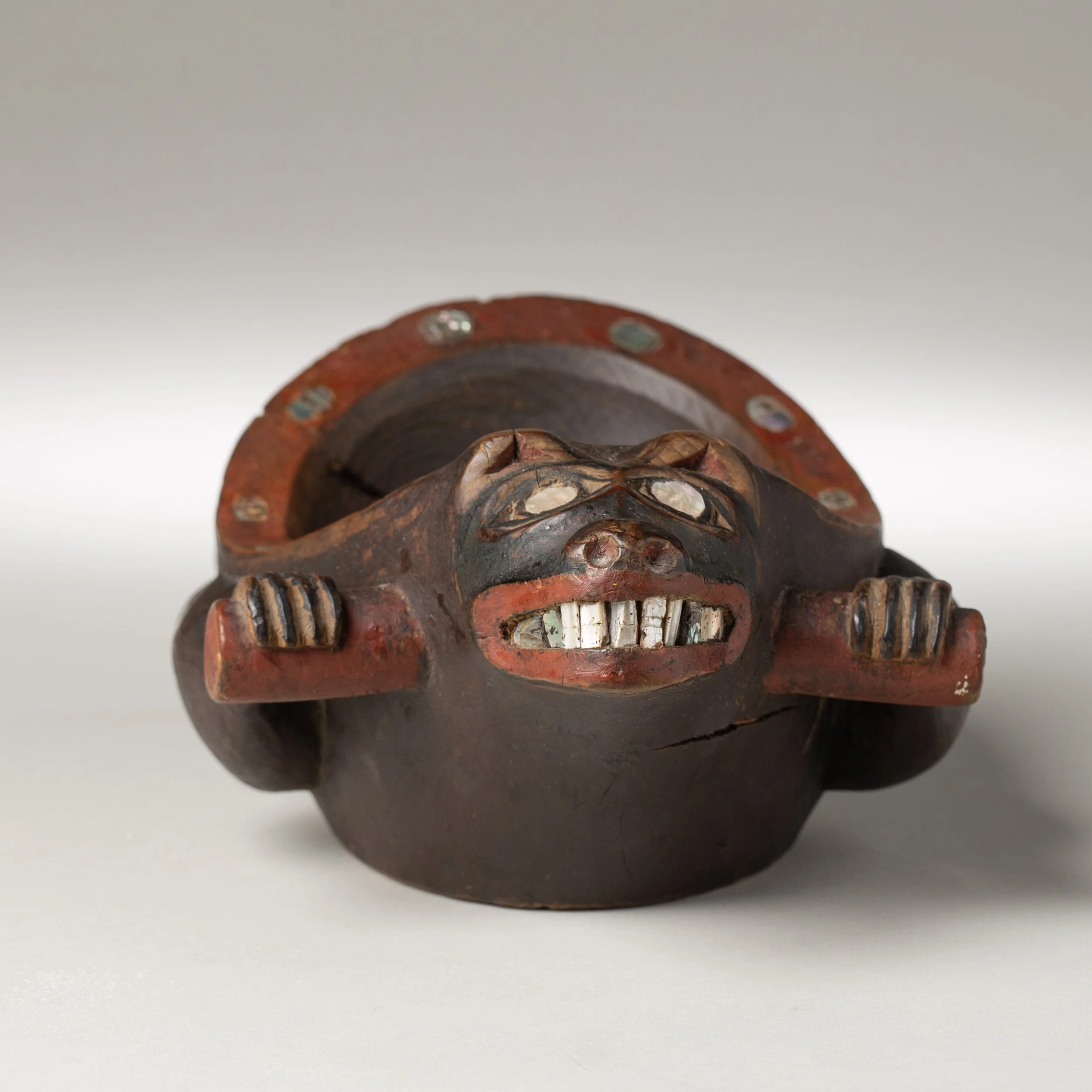 Image 2 of 5
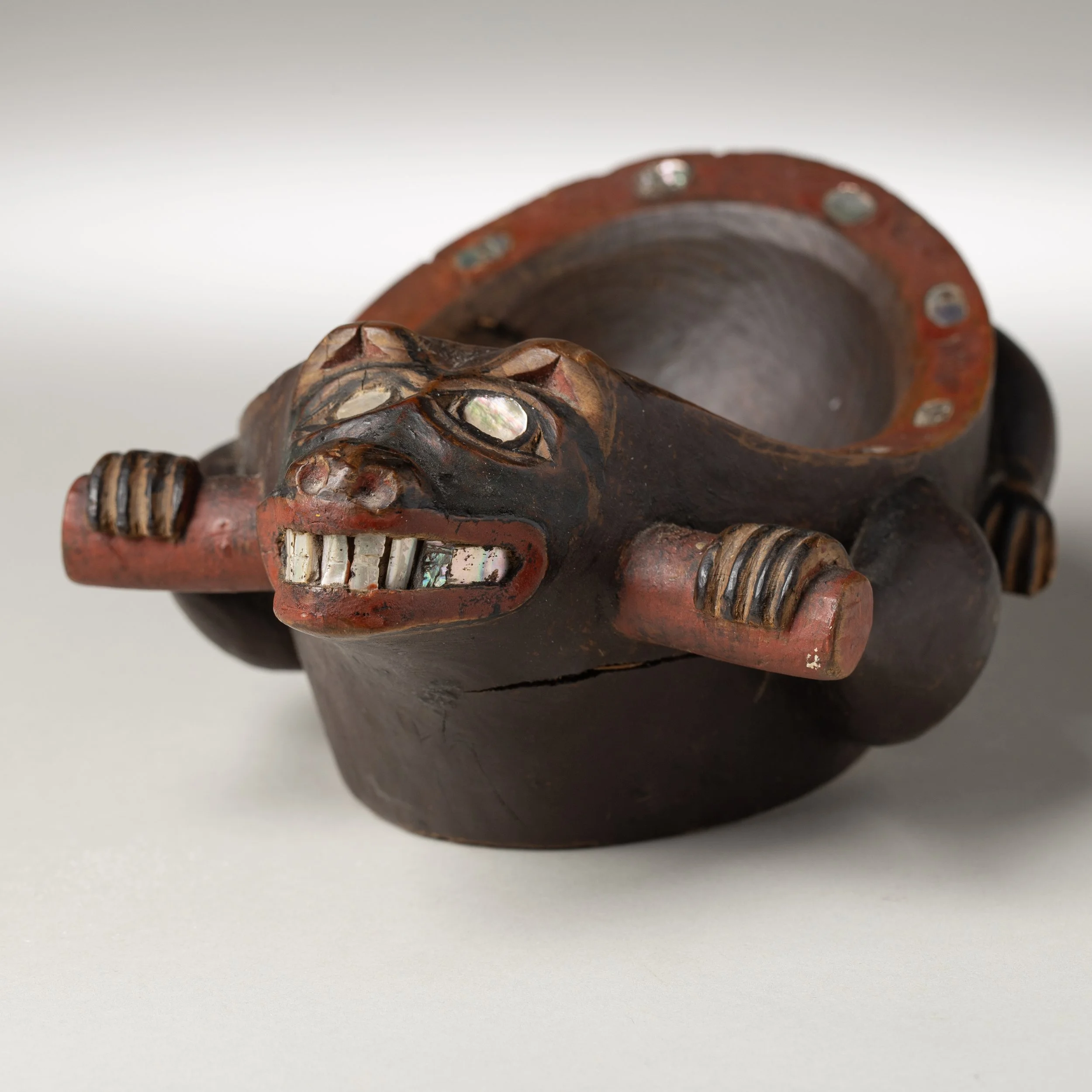 Image 3 of 5
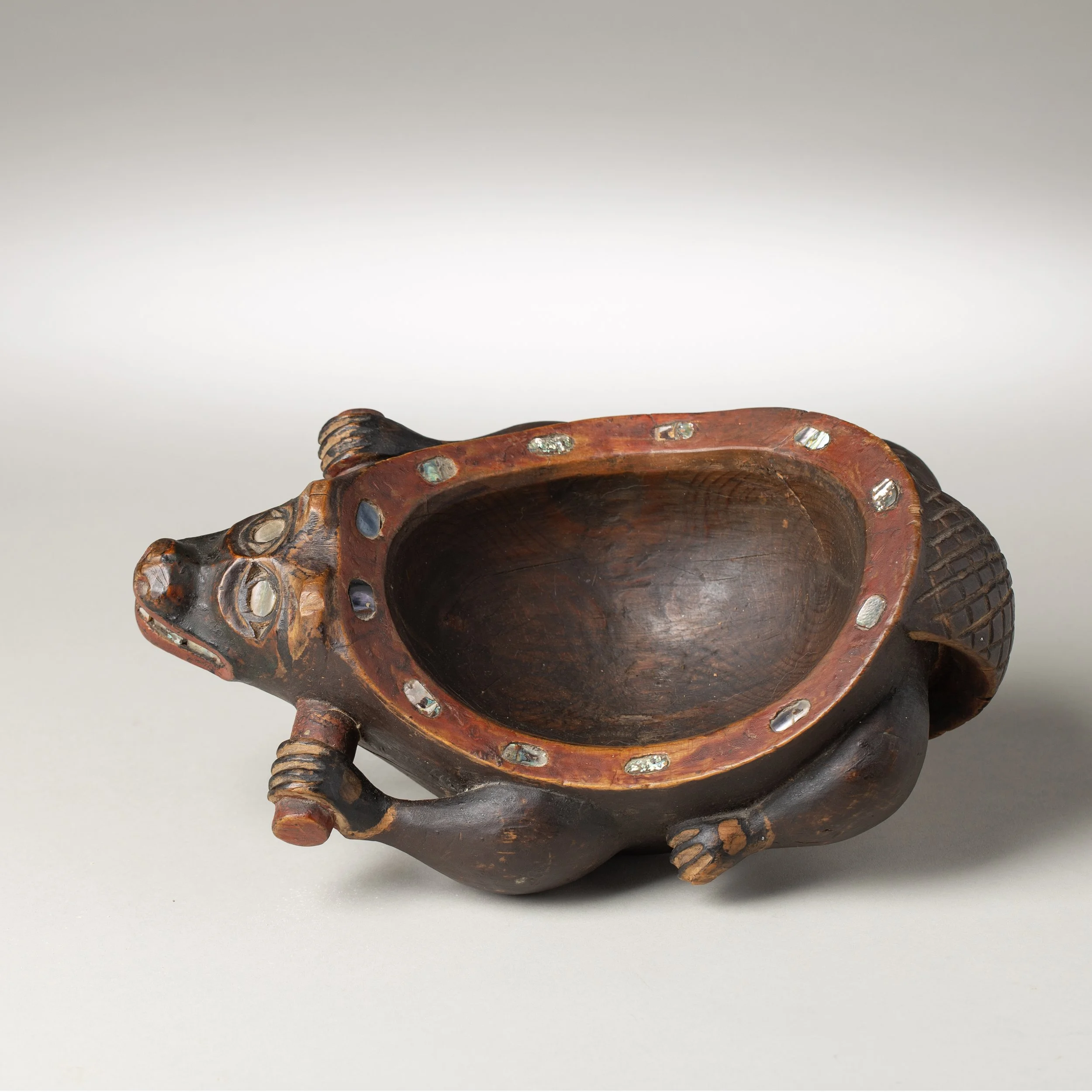 Image 4 of 5
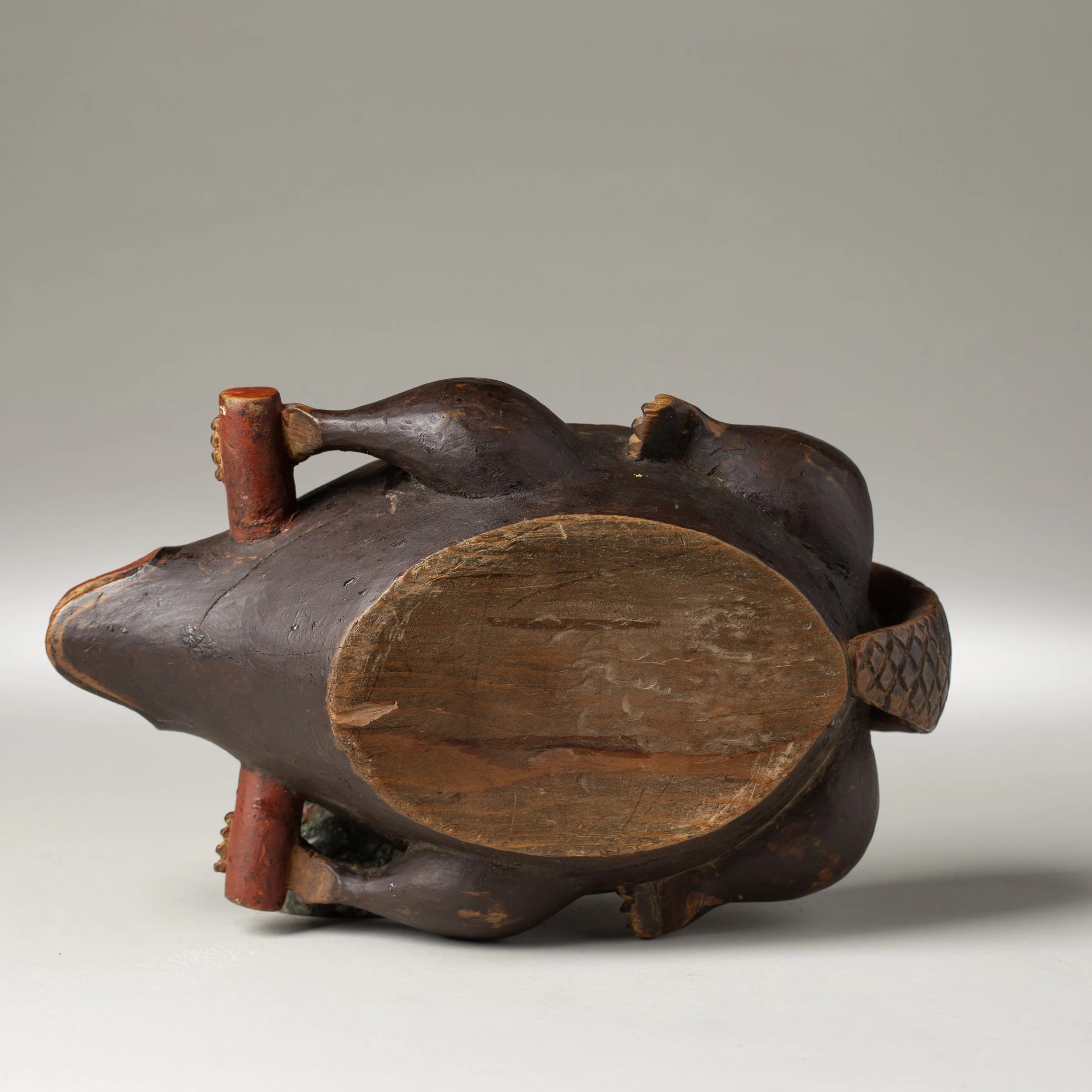 Image 5 of 5
Haida Gwaii, British Columbia
Cedar wood, abalone shell, native pigments
Circa 1880
Length: 10.25 inches (26 cm) Height: 4 inches (10.15 cm)
Provenance: Private collection – Seattle, Washington
Within the rich cultural and artistic traditions of the Haida people, carved objects were rarely just utilitarian tools, but rather they served as both a conduit to the spiritual world and a tangible symbol of status and ancestral history. Among the most sophisticated of these carved objects were small hand-held zoomorphic and anthropomorphic bowls referred to as effigy grease bowls. Visually striking and artistically complex, Haida effigy grease bowls were designed to hold highly prize culinary oils used as an accompaniment to the dried fish or meats that were served during feasts and potlatch celebrations. Far exceeding their functional role as a dish, early Haida effigy grease bowls are widely regarded as some of the great masterworks of Northwest Coast art.
The term grease was historically an English word used to describe eulachon oil, a flavorful fermented oil laboriously rendered from the Thaleicthys pacificus, a small river-run fish known colloquially as candlefish due to its remarkably high fat content. Within the potlatch system, eulachon oil was the supreme currency of generosity. Serving lavish amounts of the oil to guests and even pouring the oil onto the central longhouse fire in a dramatic flared display of reckless indifference to expense, demonstrated a chief’s immense resources and high status. The grease bowl served as the centerpiece of this display, the spiritual vessel through which a chief’s wealth was shared with the community, often ladled into smaller personal bowls called kihle belonging to individuals or family groups.
The most finely carved and decorated effigy grease bowls were the exclusive property of the Haida nobility, whose wealth and influence enabled them to commission such masterful artworks from the artist class. Applying the mastery of the Northwest Coast formline style, Haida artists skillfully integrated the anatomical contours of the effigy with the functional swell of the bowl, often carving the animal or human figure so that the vessel itself forms the abdomen of the clan’s totem being. The act of filling, displaying, and consuming from a bowl shaped in the form of a clan’s animal totem or ancestor demonstrated the chiefly host's inherited rights, histories, and spiritual privileges before an assembled audience.
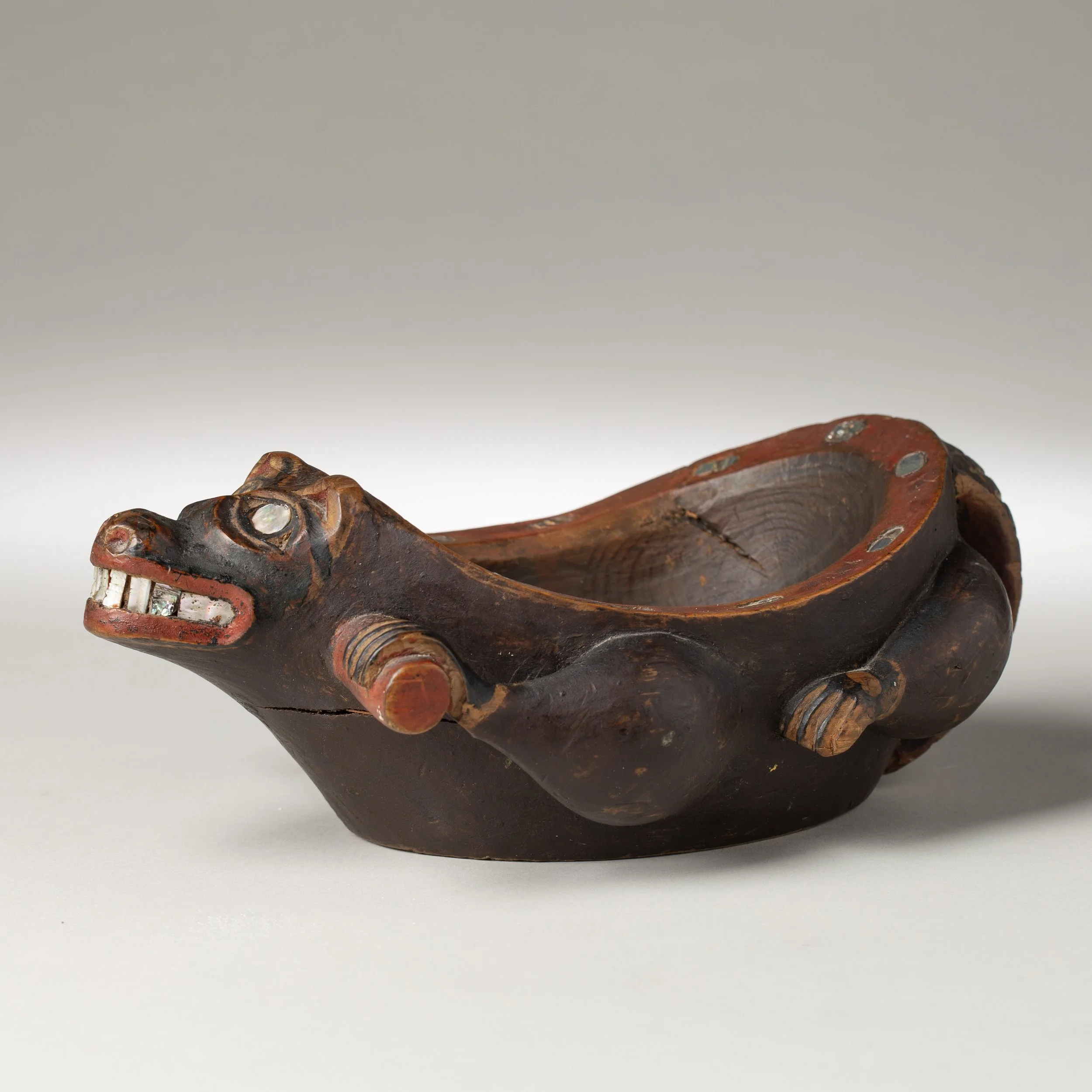
The image of the beaver was often used for grease bowls, in part as homage to the spirit of the animal that in Northwest Coast tradition represented the values of productivity, creation, tenacity, and harmony. As a major hereditary crest within the Eagle clan, the beaver is often depicted clenching a piece of wood between its paws when incorporated into the clan crest iconography. In the wonderful diminutive grease bowl presented here, the earnest and industrious character of the beaver is perfectly portrayed in its distinctly carved facial features and bodily stance. From the front of the bowl extends the beaver’s expressive face, its features defined by classic Haida formline design. The broad sweeping brow line and orbits frame ovoid eyes, inset with abalone shell that reflect an ancient awareness. The broad nose is depicted with nostrils flared, as if positioned just above the waterline. The mouth, highlighted with red ocher, is parted to showcase the beaver’s prominent front incisors, mimicked with carved inlays of carved abalone shell. Portrayed transporting a stick, the beaver’s finely carved paws convey the animal’s firm and dexterous grasp. Highlighted by an application of red ocher and embellishments of carved abalone shell, the upswept ends and the subtle inward bend of the rim were designed to prevent any spilling of the bowl’s precious contents. The beaver’s downward curved tail, incised with a textured cross-hatch motif, also serves as the bowl’s secondary handle. The overall balance of the bowl’s composition, and the fine, expressive rendering of the beaver’s head, denote the sure hand and sympathetic eye of a gifted Haida master carver.
We ship free anywhere in the world, fully insured, packed by hand.
Haida Gwaii, British Columbia
Cedar wood, abalone shell, native pigments
Circa 1880
Length: 10.25 inches (26 cm) Height: 4 inches (10.15 cm)
Provenance: Private collection – Seattle, Washington
Within the rich cultural and artistic traditions of the Haida people, carved objects were rarely just utilitarian tools, but rather they served as both a conduit to the spiritual world and a tangible symbol of status and ancestral history. Among the most sophisticated of these carved objects were small hand-held zoomorphic and anthropomorphic bowls referred to as effigy grease bowls. Visually striking and artistically complex, Haida effigy grease bowls were designed to hold highly prize culinary oils used as an accompaniment to the dried fish or meats that were served during feasts and potlatch celebrations. Far exceeding their functional role as a dish, early Haida effigy grease bowls are widely regarded as some of the great masterworks of Northwest Coast art.
The term grease was historically an English word used to describe eulachon oil, a flavorful fermented oil laboriously rendered from the Thaleicthys pacificus, a small river-run fish known colloquially as candlefish due to its remarkably high fat content. Within the potlatch system, eulachon oil was the supreme currency of generosity. Serving lavish amounts of the oil to guests and even pouring the oil onto the central longhouse fire in a dramatic flared display of reckless indifference to expense, demonstrated a chief’s immense resources and high status. The grease bowl served as the centerpiece of this display, the spiritual vessel through which a chief’s wealth was shared with the community, often ladled into smaller personal bowls called kihle belonging to individuals or family groups.
The most finely carved and decorated effigy grease bowls were the exclusive property of the Haida nobility, whose wealth and influence enabled them to commission such masterful artworks from the artist class. Applying the mastery of the Northwest Coast formline style, Haida artists skillfully integrated the anatomical contours of the effigy with the functional swell of the bowl, often carving the animal or human figure so that the vessel itself forms the abdomen of the clan’s totem being. The act of filling, displaying, and consuming from a bowl shaped in the form of a clan’s animal totem or ancestor demonstrated the chiefly host's inherited rights, histories, and spiritual privileges before an assembled audience.
The image of the beaver was often used for grease bowls, in part as homage to the spirit of the animal that in Northwest Coast tradition represented the values of productivity, creation, tenacity, and harmony. As a major hereditary crest within the Eagle clan, the beaver is often depicted clenching a piece of wood between its paws when incorporated into the clan crest iconography. In the wonderful diminutive grease bowl presented here, the earnest and industrious character of the beaver is perfectly portrayed in its distinctly carved facial features and bodily stance. From the front of the bowl extends the beaver’s expressive face, its features defined by classic Haida formline design. The broad sweeping brow line and orbits frame ovoid eyes, inset with abalone shell that reflect an ancient awareness. The broad nose is depicted with nostrils flared, as if positioned just above the waterline. The mouth, highlighted with red ocher, is parted to showcase the beaver’s prominent front incisors, mimicked with carved inlays of carved abalone shell. Portrayed transporting a stick, the beaver’s finely carved paws convey the animal’s firm and dexterous grasp. Highlighted by an application of red ocher and embellishments of carved abalone shell, the upswept ends and the subtle inward bend of the rim were designed to prevent any spilling of the bowl’s precious contents. The beaver’s downward curved tail, incised with a textured cross-hatch motif, also serves as the bowl’s secondary handle. The overall balance of the bowl’s composition, and the fine, expressive rendering of the beaver’s head, denote the sure hand and sympathetic eye of a gifted Haida master carver.
We ship free anywhere in the world, fully insured, packed by hand.