

 Image 1 of 5
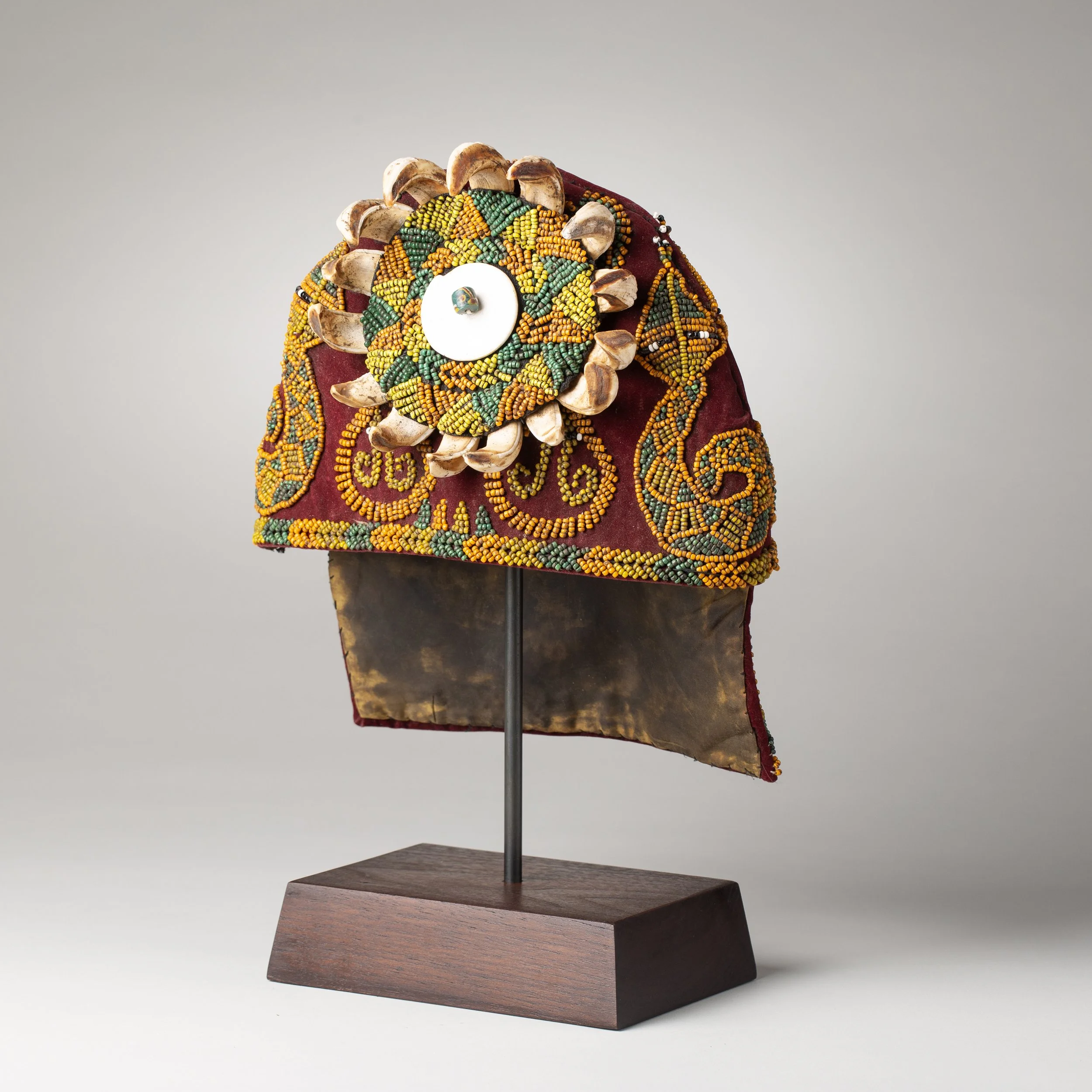 Image 2 of 5
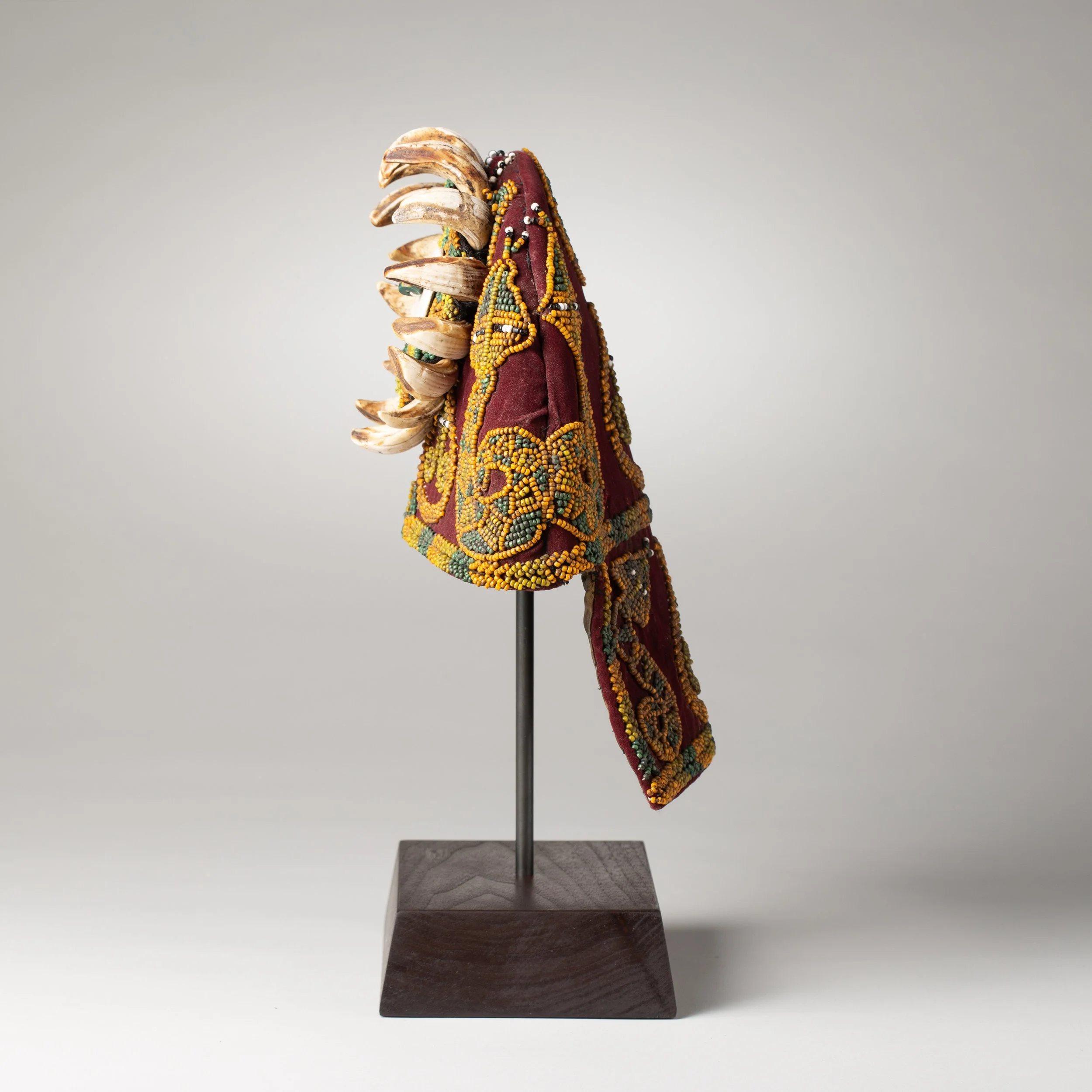 Image 3 of 5
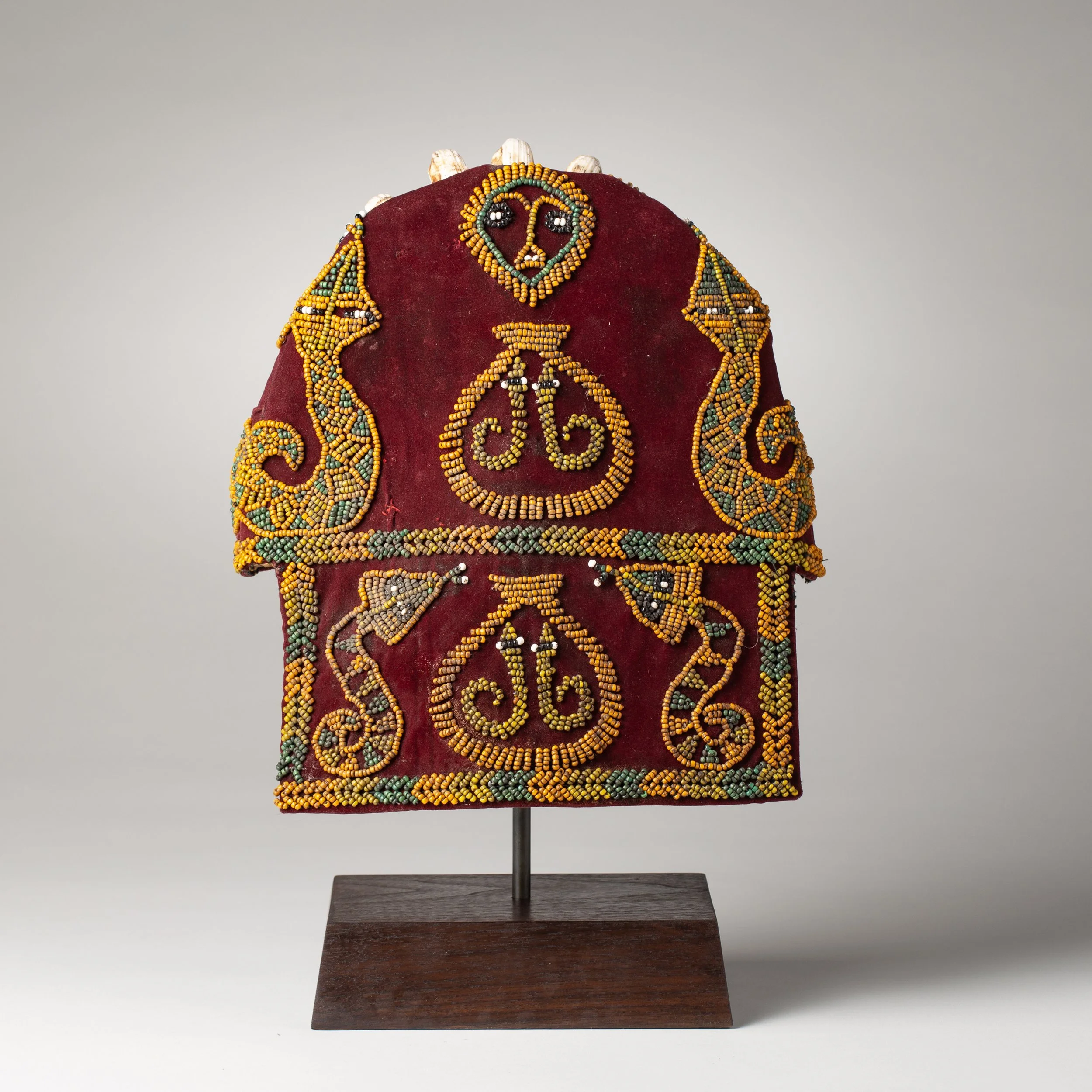 Image 4 of 5
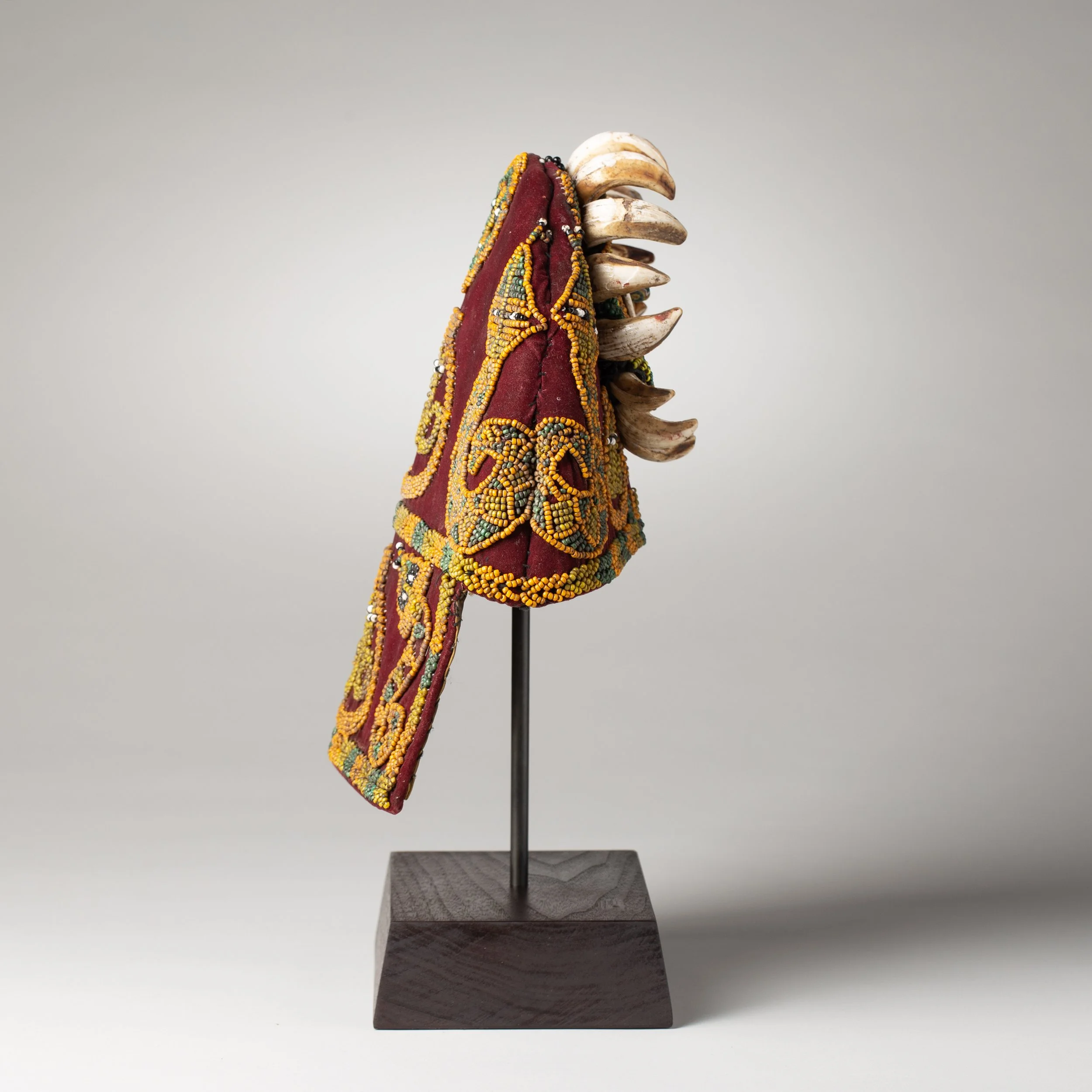 Image 5 of 5
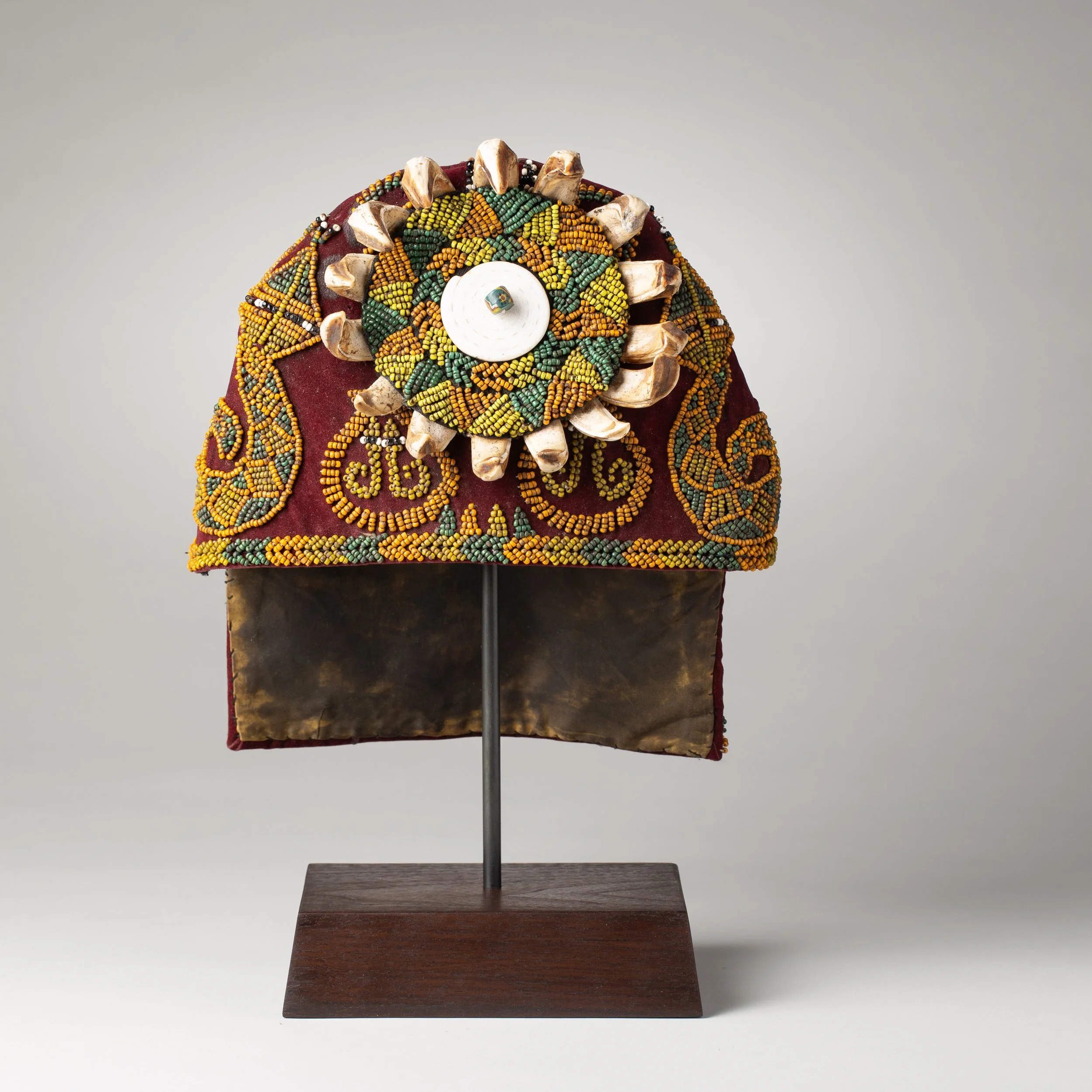
Cloth, trade beads, and bear claws
1930’s
Height: 7 1/4 in (18.415 cm) Width: 10 in (25.4 cm)
Provenance: Private collection, Dallas, TX
On the door lintels of Paiwan slate houses, in their wood carvings, clay pots, and finest ceremonial dress, like this fine headdress the same figure appears again and again — the coiled Hundred Pacer Snake (Vulung). In the culture of the Paiwan and Rukai peoples, the Hundred Pacer holds the highest place of honor, revered as an embodiment of the ancestors and a guardian spirit. The Paiwan believe their forebears share an inseparable kinship with the snake: it is the guardian of the chiefly families and the spiritual emblem of the whole tribe. For this reason, its diamond-patterned motif spreads across clothing, carving, architecture, and everyday objects — the single most central cultural symbol of the Paiwan, and not merely a design but an entire people's memory of where they came from.
In the Paiwan creation story, the Sun laid two eggs atop the sacred Mount Kavulungan (Dawushan): from one hatched the Hundred Pacer Snake, and from the other emerged the first ancestor of the Paiwan people. And so the snake and the Paiwan are siblings, and it guards the people as it would its own kin. Another legend tells of a chief's daughter who fell in love with a Hundred Pacer that had taken the form of a young man; the two married and bore the descendants of the chiefly line — which is why only chiefly families hold the right to use the snake motif. In the strict Paiwan social hierarchy, the emblem marks noble status and may not be used by commoners. And out of this kin-like reverence, when the people meet a Hundred Pacer in the mountains, they will never harm it; instead, they respectfully give it a wide berth, and some offer millet wine and betel nut — for in their eyes, it is not a snake, but a kinsman come from afar.
Paiwan reverence for the Hundred Pacer Snake is woven into every important moment of daily life. At tribal ceremonies or great family occasions, the chief prays to the Hundred Pacer ancestral spirit with offerings of millet wine, betel nut, and game meat. When a new slate house is to be raised, the snake motif is carved into its pillars to call down the ancestral spirits' protection over the home. At a wedding, the bride wears traditional dress embroidered with the Hundred Pacer pattern — a patterning that signifies she is receiving the blessing of the ancestral spirits. For the Paiwan, the Hundred Pacer dwells not in some distant heaven but on the pillars of the house, on the clothes they wear, and in every moment that calls for protection.
The most significant Paiwan ceremony is the Five-Year Ceremony (Maleveq), also known as the Covenant Between Humans and Spirits. Held once every five years over a period of roughly two weeks, the ceremony's purpose is to welcome the ancestral spirits back to the community for a reunion with the living. The climactic moment is the bamboo pole ball-piercing ritual: a shaman throws a rattan ball high into the air, and warriors attempt to pierce it with long bamboo poles. Those who succeed are believed to have received a special blessing from the ancestors. The Five-Year Ceremony has been designated a National Important Folk Custom of Taiwan.
We ship free anywhere in the world, fully insured, packed by hand.
Cloth, trade beads, and bear claws
1930’s
Height: 7 1/4 in (18.415 cm) Width: 10 in (25.4 cm)
Provenance: Private collection, Dallas, TX
On the door lintels of Paiwan slate houses, in their wood carvings, clay pots, and finest ceremonial dress, like this fine headdress the same figure appears again and again — the coiled Hundred Pacer Snake (Vulung). In the culture of the Paiwan and Rukai peoples, the Hundred Pacer holds the highest place of honor, revered as an embodiment of the ancestors and a guardian spirit. The Paiwan believe their forebears share an inseparable kinship with the snake: it is the guardian of the chiefly families and the spiritual emblem of the whole tribe. For this reason, its diamond-patterned motif spreads across clothing, carving, architecture, and everyday objects — the single most central cultural symbol of the Paiwan, and not merely a design but an entire people's memory of where they came from.
In the Paiwan creation story, the Sun laid two eggs atop the sacred Mount Kavulungan (Dawushan): from one hatched the Hundred Pacer Snake, and from the other emerged the first ancestor of the Paiwan people. And so the snake and the Paiwan are siblings, and it guards the people as it would its own kin. Another legend tells of a chief's daughter who fell in love with a Hundred Pacer that had taken the form of a young man; the two married and bore the descendants of the chiefly line — which is why only chiefly families hold the right to use the snake motif. In the strict Paiwan social hierarchy, the emblem marks noble status and may not be used by commoners. And out of this kin-like reverence, when the people meet a Hundred Pacer in the mountains, they will never harm it; instead, they respectfully give it a wide berth, and some offer millet wine and betel nut — for in their eyes, it is not a snake, but a kinsman come from afar.
Paiwan reverence for the Hundred Pacer Snake is woven into every important moment of daily life. At tribal ceremonies or great family occasions, the chief prays to the Hundred Pacer ancestral spirit with offerings of millet wine, betel nut, and game meat. When a new slate house is to be raised, the snake motif is carved into its pillars to call down the ancestral spirits' protection over the home. At a wedding, the bride wears traditional dress embroidered with the Hundred Pacer pattern — a patterning that signifies she is receiving the blessing of the ancestral spirits. For the Paiwan, the Hundred Pacer dwells not in some distant heaven but on the pillars of the house, on the clothes they wear, and in every moment that calls for protection.
The most significant Paiwan ceremony is the Five-Year Ceremony (Maleveq), also known as the Covenant Between Humans and Spirits. Held once every five years over a period of roughly two weeks, the ceremony's purpose is to welcome the ancestral spirits back to the community for a reunion with the living. The climactic moment is the bamboo pole ball-piercing ritual: a shaman throws a rattan ball high into the air, and warriors attempt to pierce it with long bamboo poles. Those who succeed are believed to have received a special blessing from the ancestors. The Five-Year Ceremony has been designated a National Important Folk Custom of Taiwan.
We ship free anywhere in the world, fully insured, packed by hand.