New Mexico, United States
Early 19th century
Water soluble pigments on gessoed wood panel
Height 17 1/4" (43.8 cm); width 12 3/8" (31.4 cm)
Provenance: J.B. Neumann (1887 to 1961), New York; private collection, Michigan
Pedro Antonio Fresquís (1749 to 1831) was one of the earliest identified New Mexican santero painters, working in the Rio Grande Valley during the late Spanish colonial and early Mexican periods. Known as the "Truchas Master" after the northern New Mexico village where he worked, Fresquís developed a distinctive personal style characterized by elongated figures, expressive facial features, and a palette of earth pigments applied to gessoed wood panels. He is among the few santeros of his era whose work has been convincingly attributed through stylistic analysis and is represented in major museum collections of Spanish colonial art.
Retablos are devotional paintings on flat wood panels produced for private and church use throughout the Spanish colonial Southwest, functioning as focal points for prayer and veneration in domestic chapels and larger religious settings. The subject here, Nuestra Señora del Rosario, Our Lady of the Rosary, was one of the most venerated Marian devotions in the colonial Southwest, associated with the rosary confraternities that played a central role in the religious life of New Mexican communities. Fresquís treated Marian subjects with particular frequency throughout his long career, producing works that circulated across the Rio Grande Valley into the 19th century.
The provenance of this retablo connects it to J.B. Neumann, the Berlin born New York dealer who opened his first gallery in 1911 exhibiting works by Munch and members of Die Brücke, and who later directed the New Art Circle in New York after emigrating in 1923. Neumann's interests ranged across European modernism and American folk and indigenous art, and his collection of New Mexican santos reflects the broader modernist fascination with non-academic devotional objects that developed in the early 20th century. The combination of a firm Fresquís attribution, early 20th century New York provenance, and the scale and condition of the panel gives this retablo a well documented place within the corpus of identified works by this santero.
We ship free anywhere in the world, fully insured, packed by hand.
INQUIRE HERE:
New Mexico, United States
Early 19th century
Water soluble pigments on gessoed wood panel
Height 17 1/4" (43.8 cm); width 12 3/8" (31.4 cm)
Provenance: J.B. Neumann (1887 to 1961), New York; private collection, Michigan
Pedro Antonio Fresquís (1749 to 1831) was one of the earliest identified New Mexican santero painters, working in the Rio Grande Valley during the late Spanish colonial and early Mexican periods. Known as the "Truchas Master" after the northern New Mexico village where he worked, Fresquís developed a distinctive personal style characterized by elongated figures, expressive facial features, and a palette of earth pigments applied to gessoed wood panels. He is among the few santeros of his era whose work has been convincingly attributed through stylistic analysis and is represented in major museum collections of Spanish colonial art.
Retablos are devotional paintings on flat wood panels produced for private and church use throughout the Spanish colonial Southwest, functioning as focal points for prayer and veneration in domestic chapels and larger religious settings. The subject here, Nuestra Señora del Rosario, Our Lady of the Rosary, was one of the most venerated Marian devotions in the colonial Southwest, associated with the rosary confraternities that played a central role in the religious life of New Mexican communities. Fresquís treated Marian subjects with particular frequency throughout his long career, producing works that circulated across the Rio Grande Valley into the 19th century.
The provenance of this retablo connects it to J.B. Neumann, the Berlin born New York dealer who opened his first gallery in 1911 exhibiting works by Munch and members of Die Brücke, and who later directed the New Art Circle in New York after emigrating in 1923. Neumann's interests ranged across European modernism and American folk and indigenous art, and his collection of New Mexican santos reflects the broader modernist fascination with non-academic devotional objects that developed in the early 20th century. The combination of a firm Fresquís attribution, early 20th century New York provenance, and the scale and condition of the panel gives this retablo a well documented place within the corpus of identified works by this santero.
We ship free anywhere in the world, fully insured, packed by hand.
INQUIRE HERE:


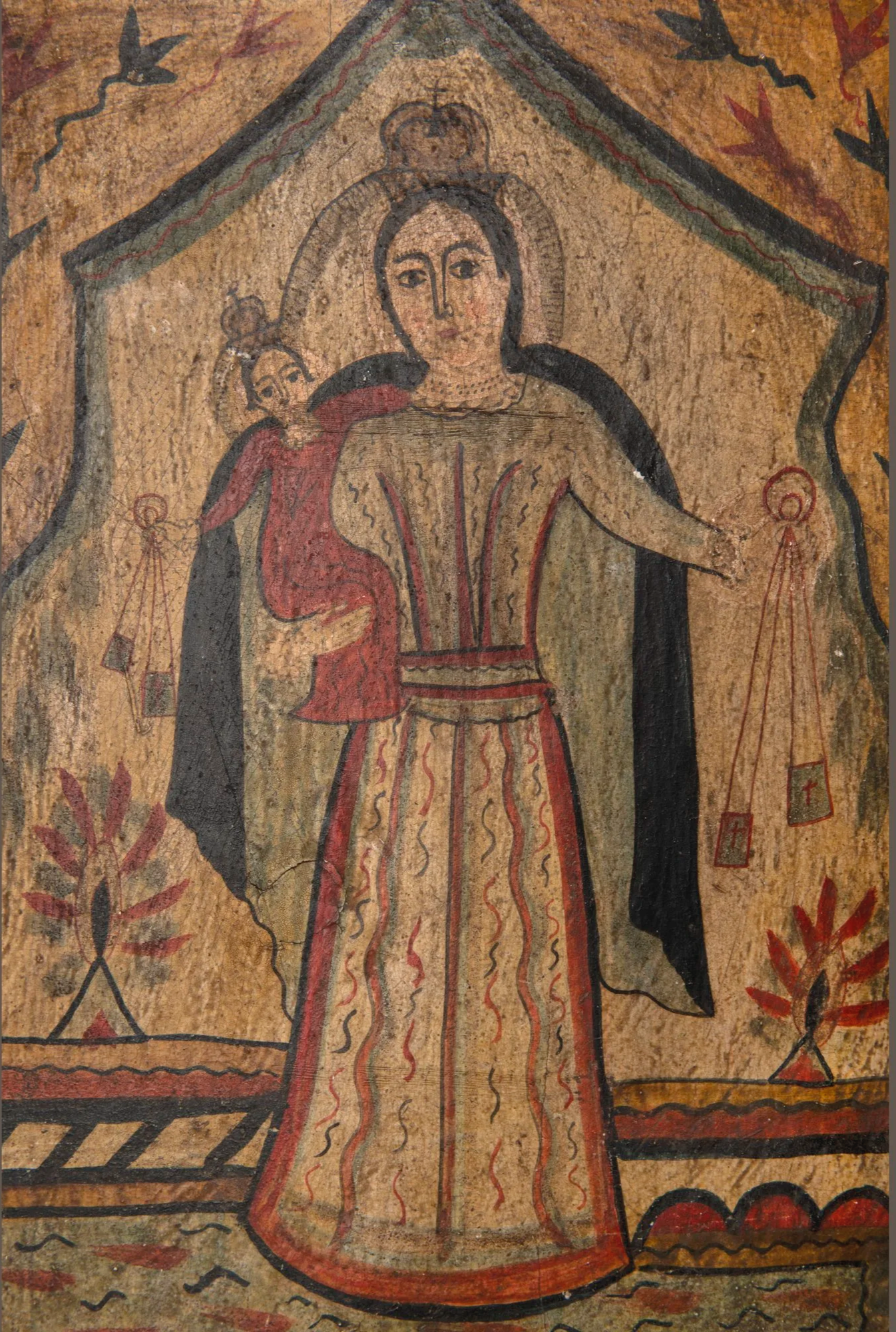 Image 1 of 6
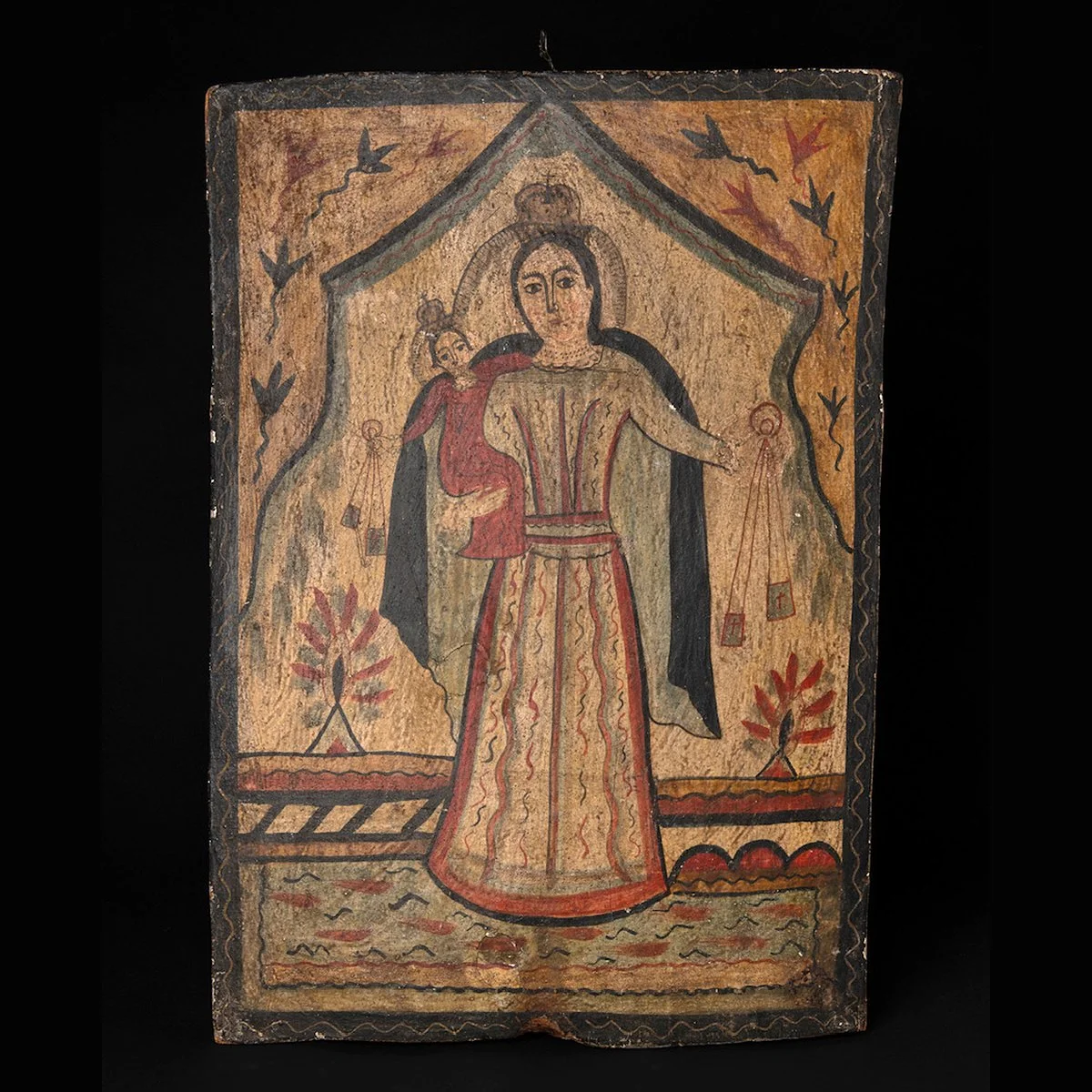 Image 2 of 6
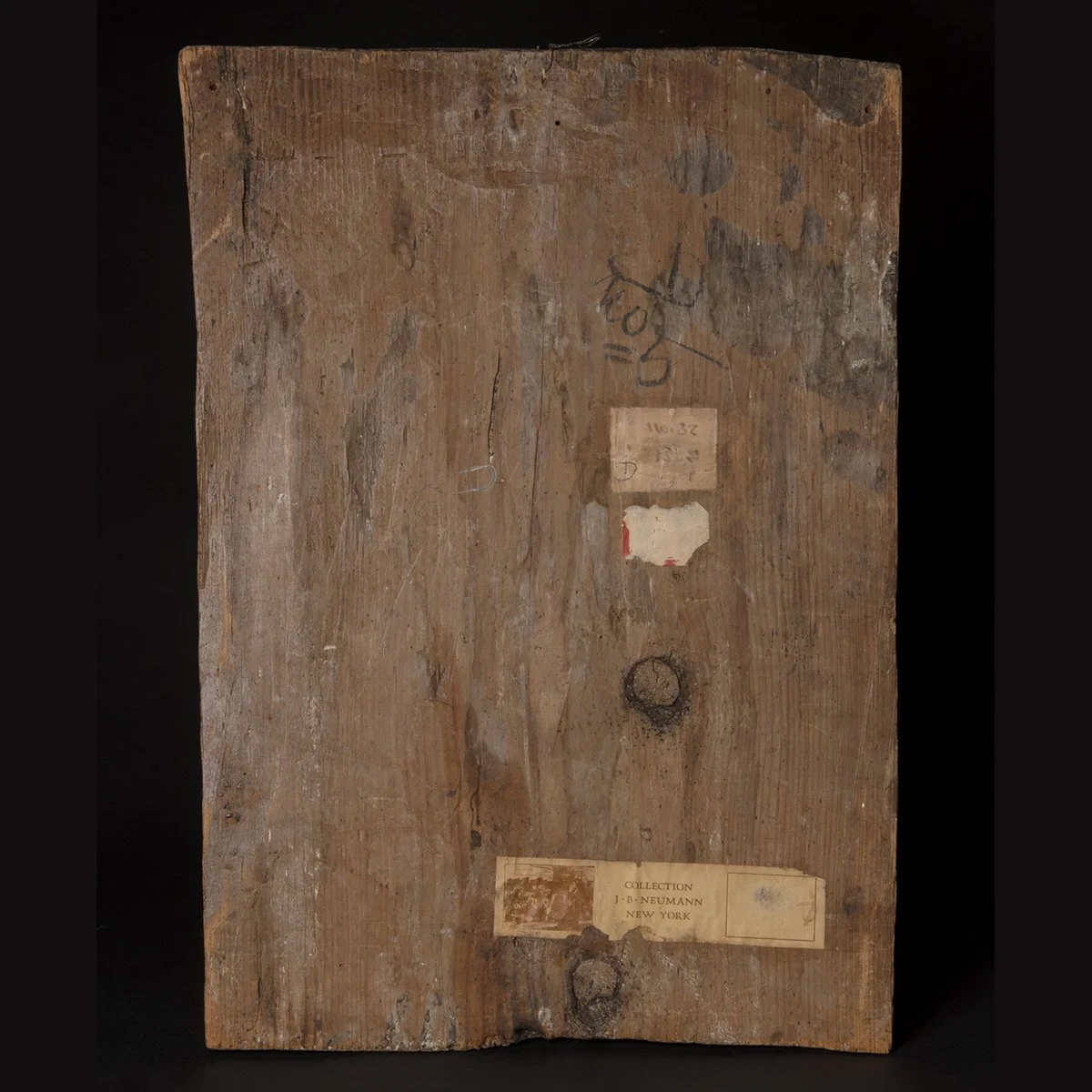 Image 3 of 6
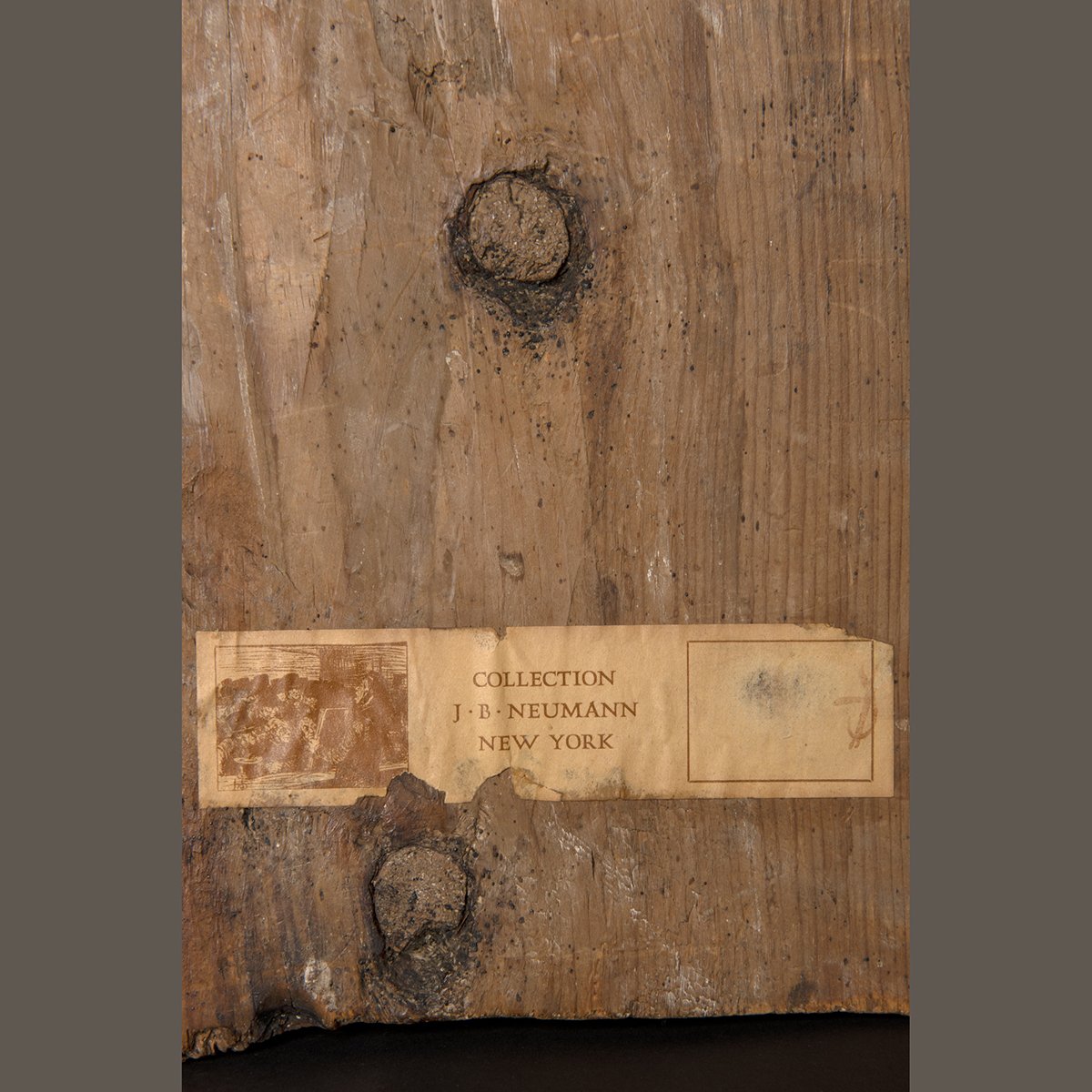 Image 4 of 6
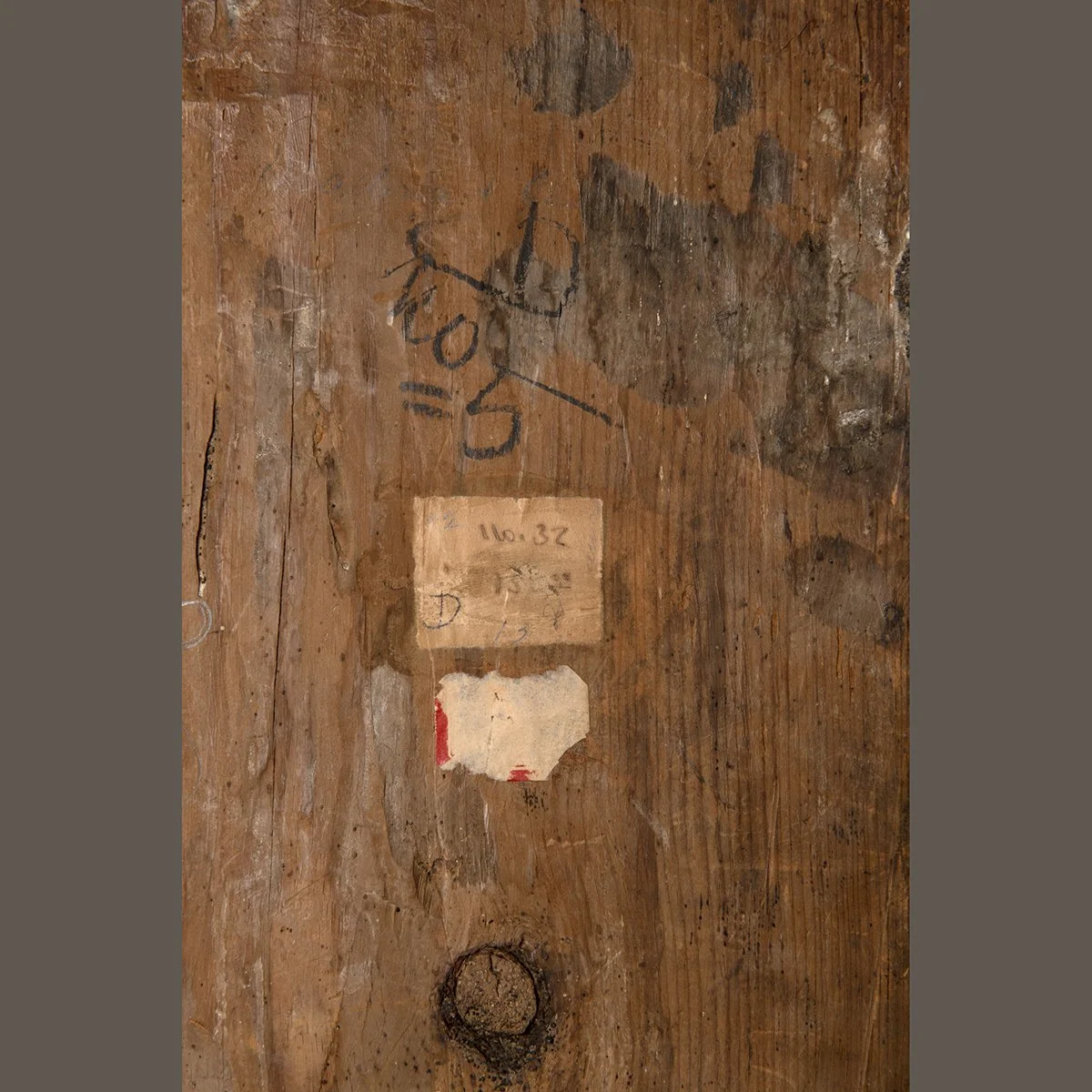 Image 5 of 6
 Image 6 of 6