

 Image 1 of 3
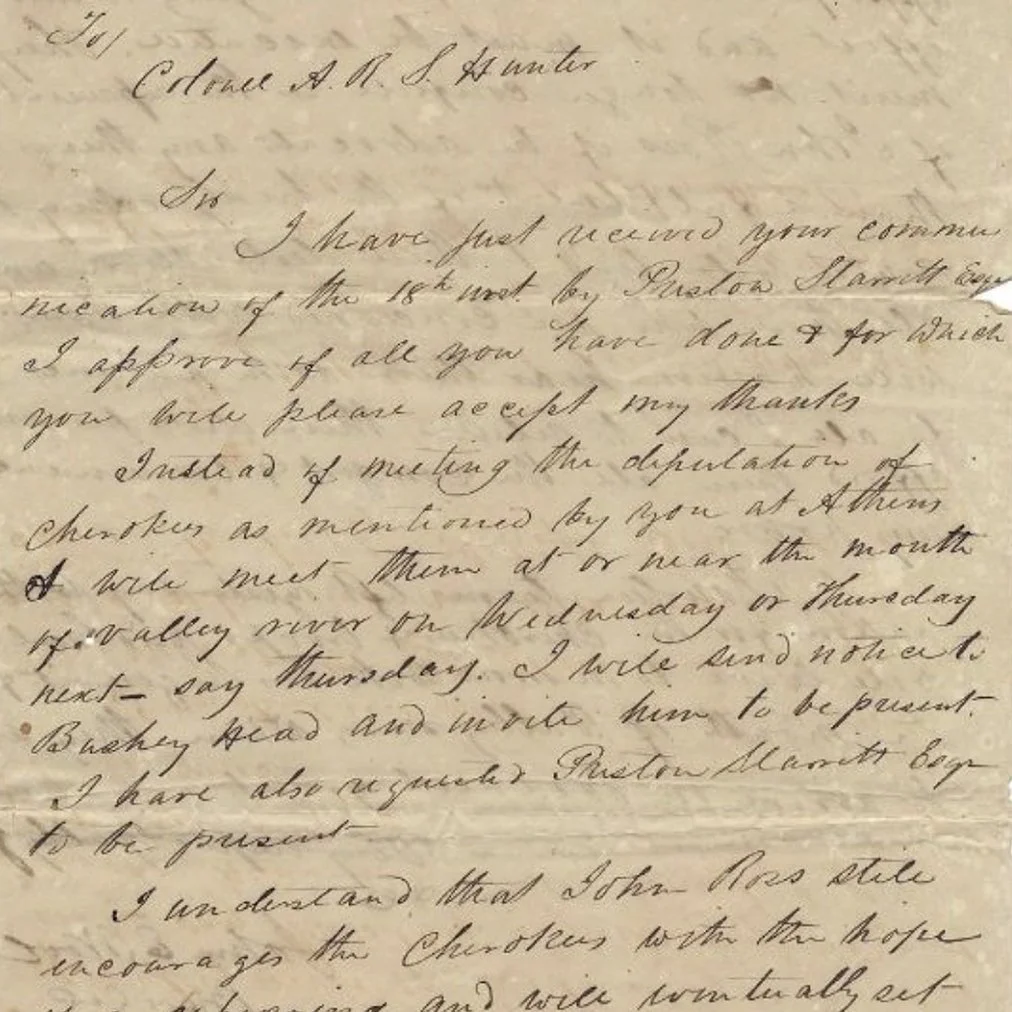 Image 2 of 3
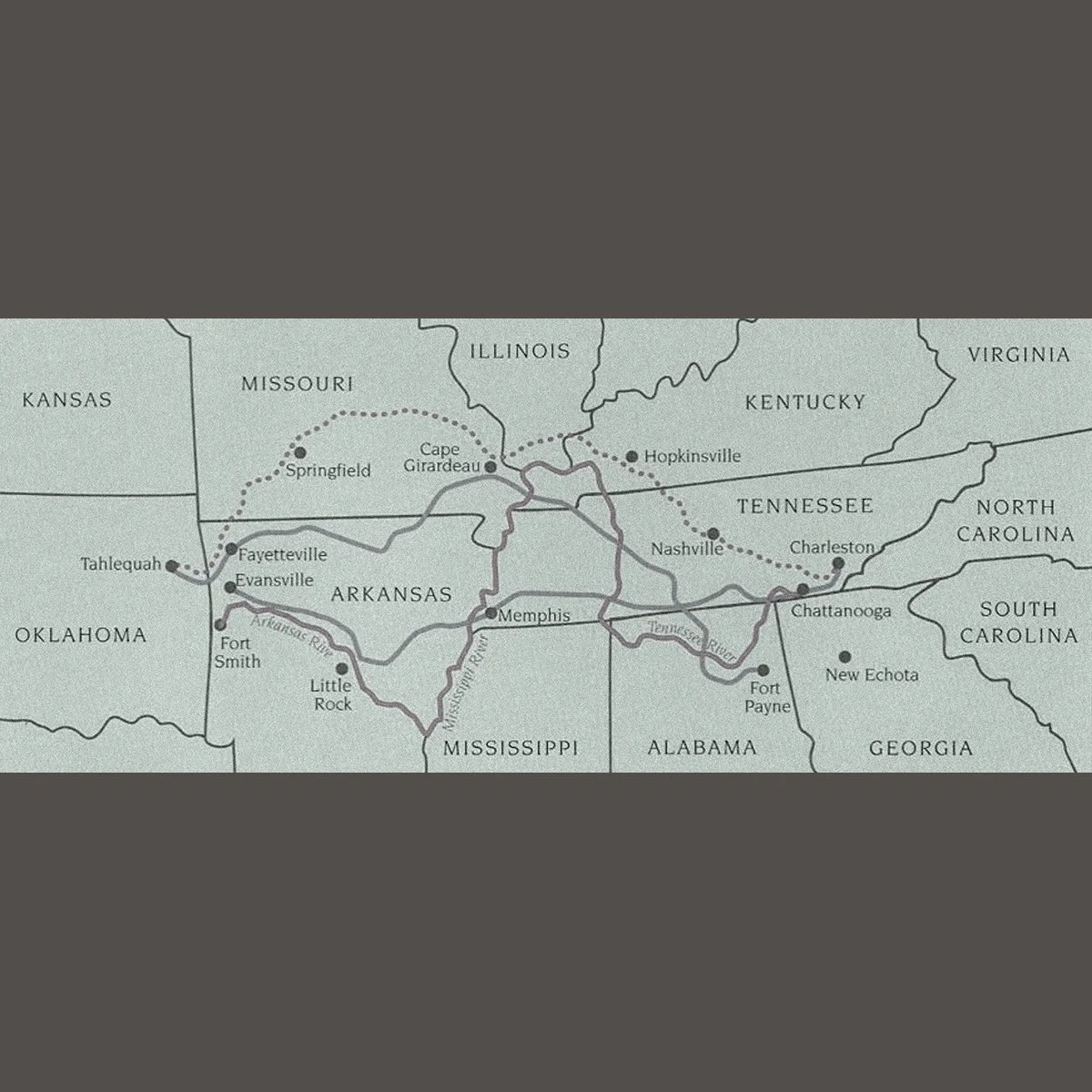 Image 3 of 3
Cherokee / Native American
1830s
Three manuscript letters
Dimensions not provided
Provenance: Not provided
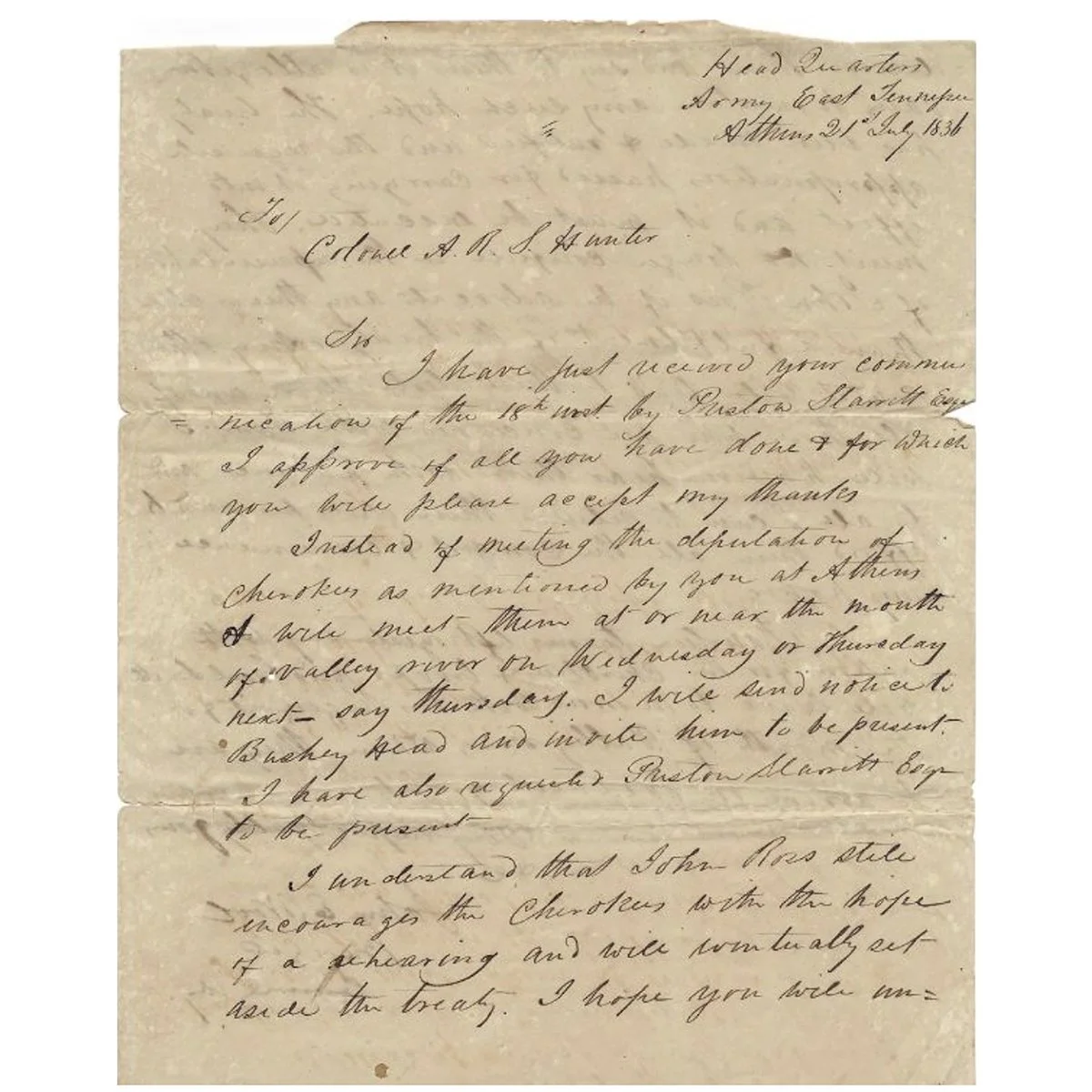
This three-letter archive relates to General John Wool and the federal enforcement of Cherokee removal under the Treaty of New Echota. Written from Tennessee, Wool’s correspondence addresses John Ross’s continued resistance to the treaty and the government’s intention to carry removal into effect. The letters place the archive directly within the political and military framework that led to the Trail of Tears.
General John Wool was assigned to help coordinate Cherokee removal in 1836, following the contested Treaty of New Echota of 1835. The treaty was signed without the approval of Chief John Ross or the Cherokee National Council, yet it became the legal instrument used by the United States to force removal from Cherokee homelands. Wool’s role was complex, as he was committed to carrying out federal policy while also attempting to protect Cherokee lives, property, and rights during the process.
The Trail of Tears resulted in the forced relocation of the Cherokee Nation from ancestral lands in Georgia, Alabama, North Carolina, and Tennessee to the future state of Oklahoma. This archive preserves a direct written record tied to treaty enforcement, Cherokee resistance, and the administrative process behind removal. Its value lies in its connection to named individuals, a specific treaty, and one of the most consequential episodes in nineteenth-century American and Native American history.
We ship free anywhere in the world, fully insured, packed by hand.
Cherokee / Native American
1830s
Three manuscript letters
Dimensions not provided
Provenance: Not provided
This three-letter archive relates to General John Wool and the federal enforcement of Cherokee removal under the Treaty of New Echota. Written from Tennessee, Wool’s correspondence addresses John Ross’s continued resistance to the treaty and the government’s intention to carry removal into effect. The letters place the archive directly within the political and military framework that led to the Trail of Tears.
General John Wool was assigned to help coordinate Cherokee removal in 1836, following the contested Treaty of New Echota of 1835. The treaty was signed without the approval of Chief John Ross or the Cherokee National Council, yet it became the legal instrument used by the United States to force removal from Cherokee homelands. Wool’s role was complex, as he was committed to carrying out federal policy while also attempting to protect Cherokee lives, property, and rights during the process.
The Trail of Tears resulted in the forced relocation of the Cherokee Nation from ancestral lands in Georgia, Alabama, North Carolina, and Tennessee to the future state of Oklahoma. This archive preserves a direct written record tied to treaty enforcement, Cherokee resistance, and the administrative process behind removal. Its value lies in its connection to named individuals, a specific treaty, and one of the most consequential episodes in nineteenth-century American and Native American history.
We ship free anywhere in the world, fully insured, packed by hand.