

 Image 1 of 5
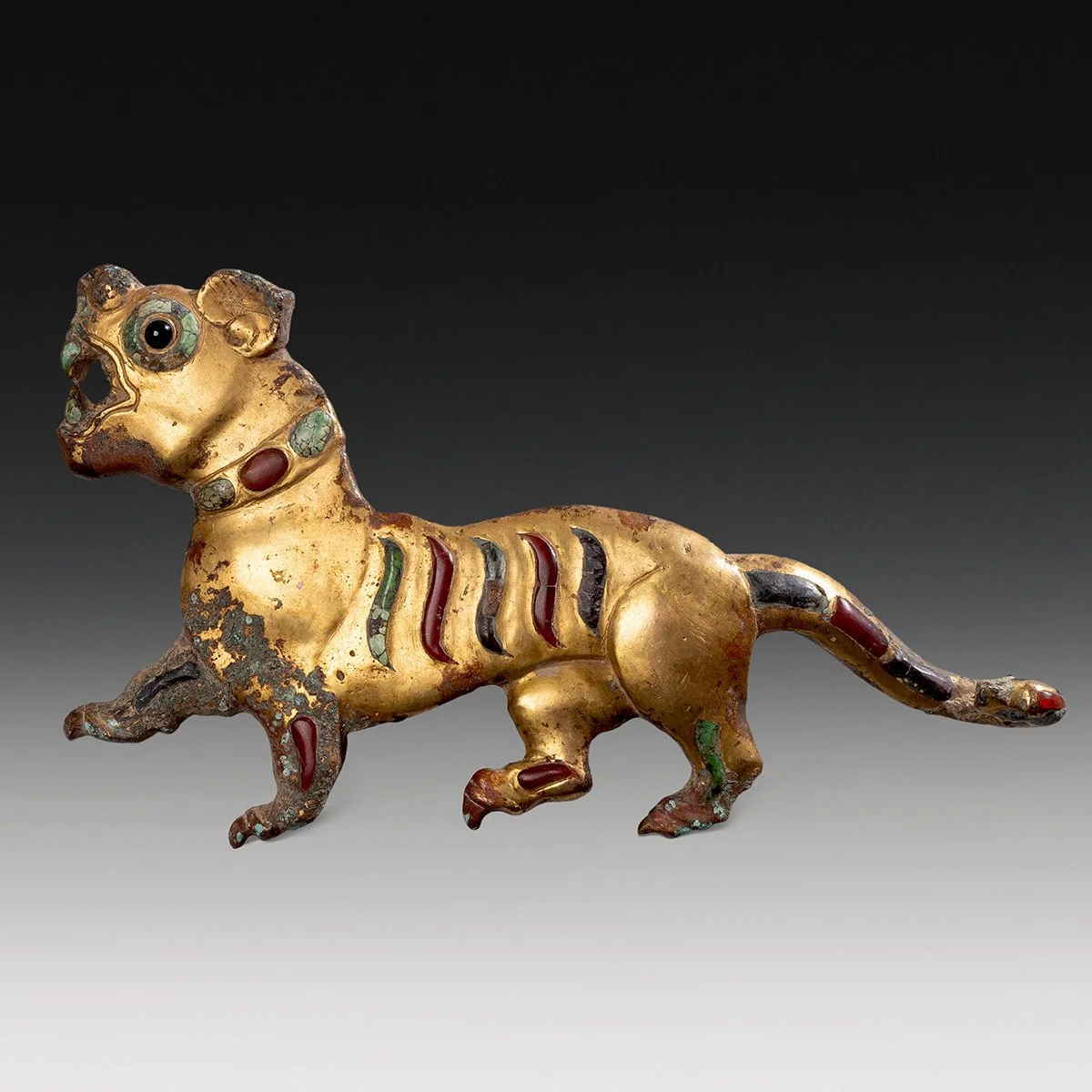 Image 2 of 5
 Image 3 of 5
 Image 4 of 5
 Image 5 of 5
China
Warring States Period, 475–221 BC
Gilt bronze, turquoise, carnelian, obsidian
Length 9.25 in / 23.5 cm
Provenance: Jean Devenne, London; Ken Mackay, London
Art Loss Register certificate provided: #S00252196
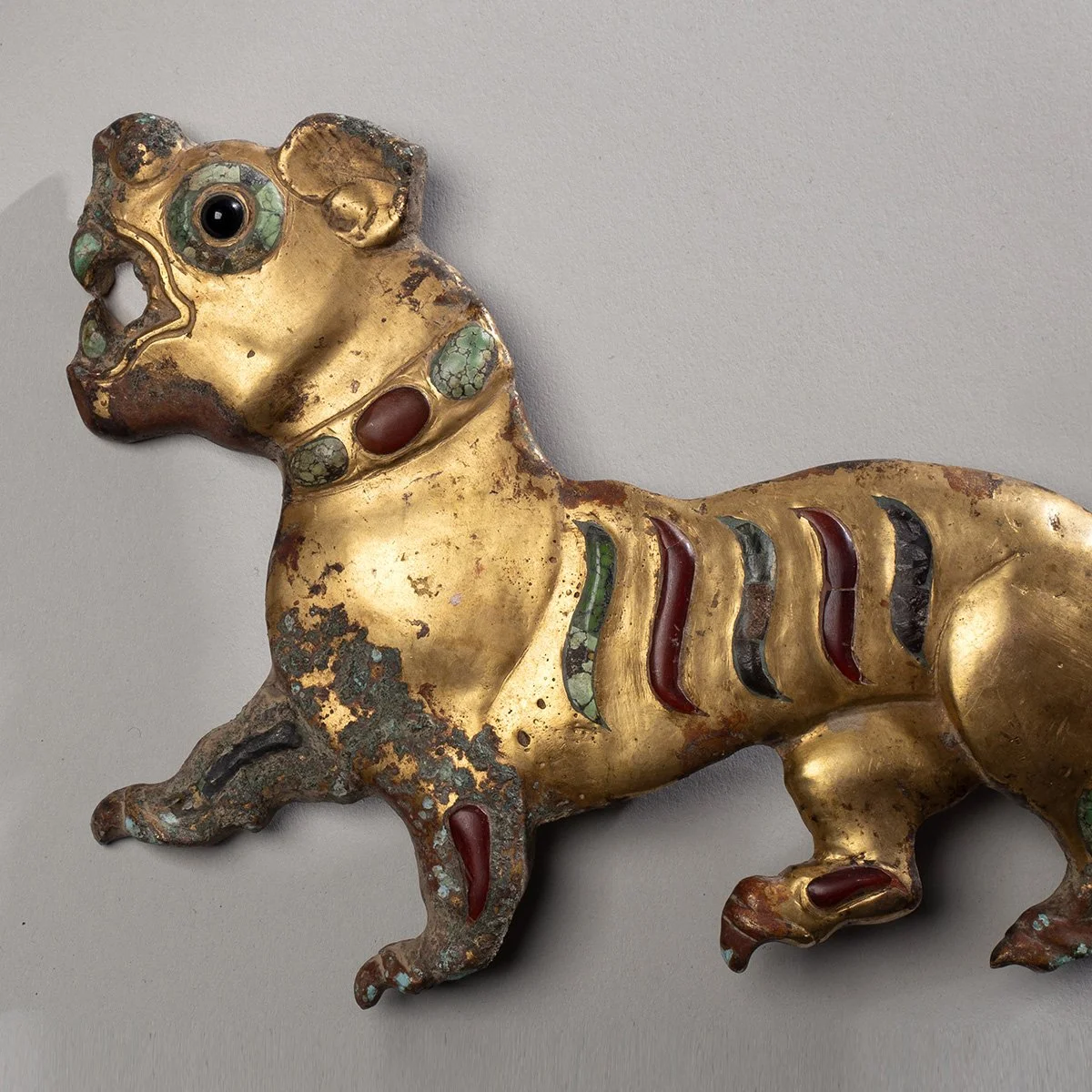
A gilt bronze tiger garment hook, or daigou, from China’s Warring States Period. Garment hooks came into elite use during this period, influenced by contact with nomadic cultures of the Eastern Eurasian steppes, and were used to secure robes and garments during movement, including on horseback.
This example is cast as a tiger striding on clawed feet, with the tail extended and the mouth open. The gilt bronze surface is inlaid with turquoise, carnelian, and obsidian, arranged along the body in curving stripes that emphasize the animal’s movement and strength. Once both practical and symbolic, such hooks were associated with status, dress, and elite burial culture.
As a featured work, this garment hook stands out for the strength of its animal form and the survival of its inlaid surface. The tiger is presented with compact force, combining movement, ornament, and status in a small-scale object of courtly and martial refinement. Its materials, period, and Art Loss Register documentation make it a strong example of Warring States-period metalwork.
To read more from Mark about this extraordinary item, please click here.
We ship free anywhere in the world, fully insured, packed by hand.
China
Warring States Period, 475–221 BC
Gilt bronze, turquoise, carnelian, obsidian
Length 9.25 in / 23.5 cm
Provenance: Jean Devenne, London; Ken Mackay, London
Art Loss Register certificate provided: #S00252196
A gilt bronze tiger garment hook, or daigou, from China’s Warring States Period. Garment hooks came into elite use during this period, influenced by contact with nomadic cultures of the Eastern Eurasian steppes, and were used to secure robes and garments during movement, including on horseback.
This example is cast as a tiger striding on clawed feet, with the tail extended and the mouth open. The gilt bronze surface is inlaid with turquoise, carnelian, and obsidian, arranged along the body in curving stripes that emphasize the animal’s movement and strength. Once both practical and symbolic, such hooks were associated with status, dress, and elite burial culture.
As a featured work, this garment hook stands out for the strength of its animal form and the survival of its inlaid surface. The tiger is presented with compact force, combining movement, ornament, and status in a small-scale object of courtly and martial refinement. Its materials, period, and Art Loss Register documentation make it a strong example of Warring States-period metalwork.
To read more from Mark about this extraordinary item, please click here.
We ship free anywhere in the world, fully insured, packed by hand.