Haida, Northwest Coast
16th–17th century (CIRAM laboratory report)
Argillite
Length 4 1/4 in. (10.8 cm); height 1 5/8 in. (4.1 cm)
Provenance: Stothert and Trice, London, United Kingdom
Grease bowls were among the most culturally significant vessel forms produced on the Northwest Coast, used in the context of feasting and the ceremonial presentation of eulachon grease, a prestige food central to Indigenous exchange and social life along the coast. This example is carved from argillite, the dense black carbonaceous shale quarried exclusively on Slatechuck Mountain on Haida Gwaii and reserved by tradition and by right for Haida carvers alone. The form is compact and resolved, measuring 4 1/4 inches in length and 1 5/8 inches in height, with a presence in hand that belies its small scale.
The surface carries a deep, well-worn patina developed over centuries of handling, giving the stone a warmth and depth that distinguishes objects of genuine age from later production. The carving is assured and economical, with the vessel walls worked to an even thickness and the overall profile showing the command of material characteristic of accomplished Haida stone carving. A CIRAM laboratory report dates the piece to the 16th or 17th century, placing it among the earliest dated argillite objects known.
Argillite carving as documented in the scholarly literature begins around 1820, making an object with a pre-contact laboratory date an object of considerable significance within the Northwest Coast collecting field. The piece comes from Stothert and Trice, London, a provenance that places it within the established British market for Northwest Coast material.
CIRAM laboratory report included.
We ship free anywhere in the world, fully insured, packed by hand.
Haida, Northwest Coast
16th–17th century (CIRAM laboratory report)
Argillite
Length 4 1/4 in. (10.8 cm); height 1 5/8 in. (4.1 cm)
Provenance: Stothert and Trice, London, United Kingdom
Grease bowls were among the most culturally significant vessel forms produced on the Northwest Coast, used in the context of feasting and the ceremonial presentation of eulachon grease, a prestige food central to Indigenous exchange and social life along the coast. This example is carved from argillite, the dense black carbonaceous shale quarried exclusively on Slatechuck Mountain on Haida Gwaii and reserved by tradition and by right for Haida carvers alone. The form is compact and resolved, measuring 4 1/4 inches in length and 1 5/8 inches in height, with a presence in hand that belies its small scale.
The surface carries a deep, well-worn patina developed over centuries of handling, giving the stone a warmth and depth that distinguishes objects of genuine age from later production. The carving is assured and economical, with the vessel walls worked to an even thickness and the overall profile showing the command of material characteristic of accomplished Haida stone carving. A CIRAM laboratory report dates the piece to the 16th or 17th century, placing it among the earliest dated argillite objects known.
Argillite carving as documented in the scholarly literature begins around 1820, making an object with a pre-contact laboratory date an object of considerable significance within the Northwest Coast collecting field. The piece comes from Stothert and Trice, London, a provenance that places it within the established British market for Northwest Coast material.
CIRAM laboratory report included.
We ship free anywhere in the world, fully insured, packed by hand.


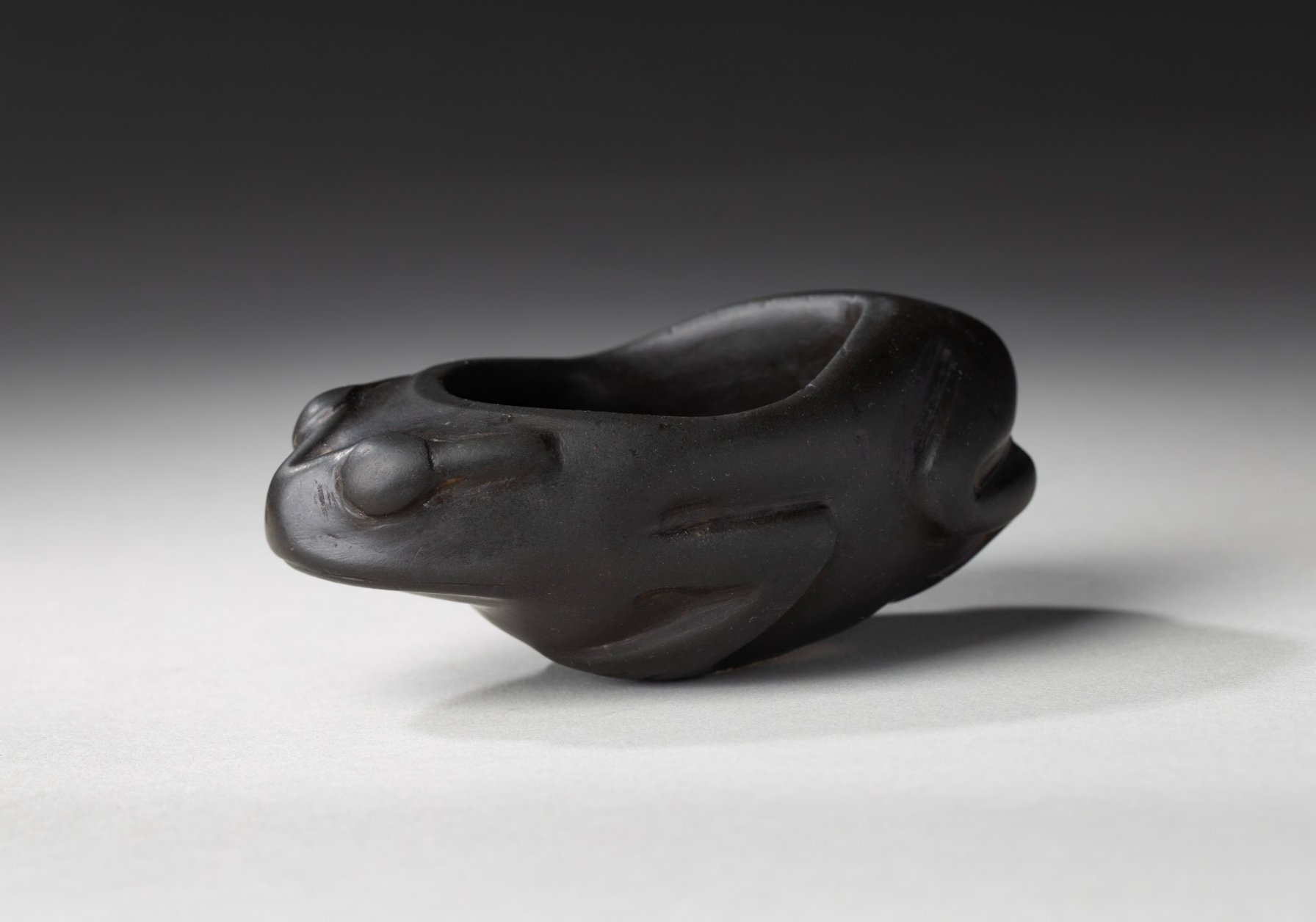 Image 1 of 8
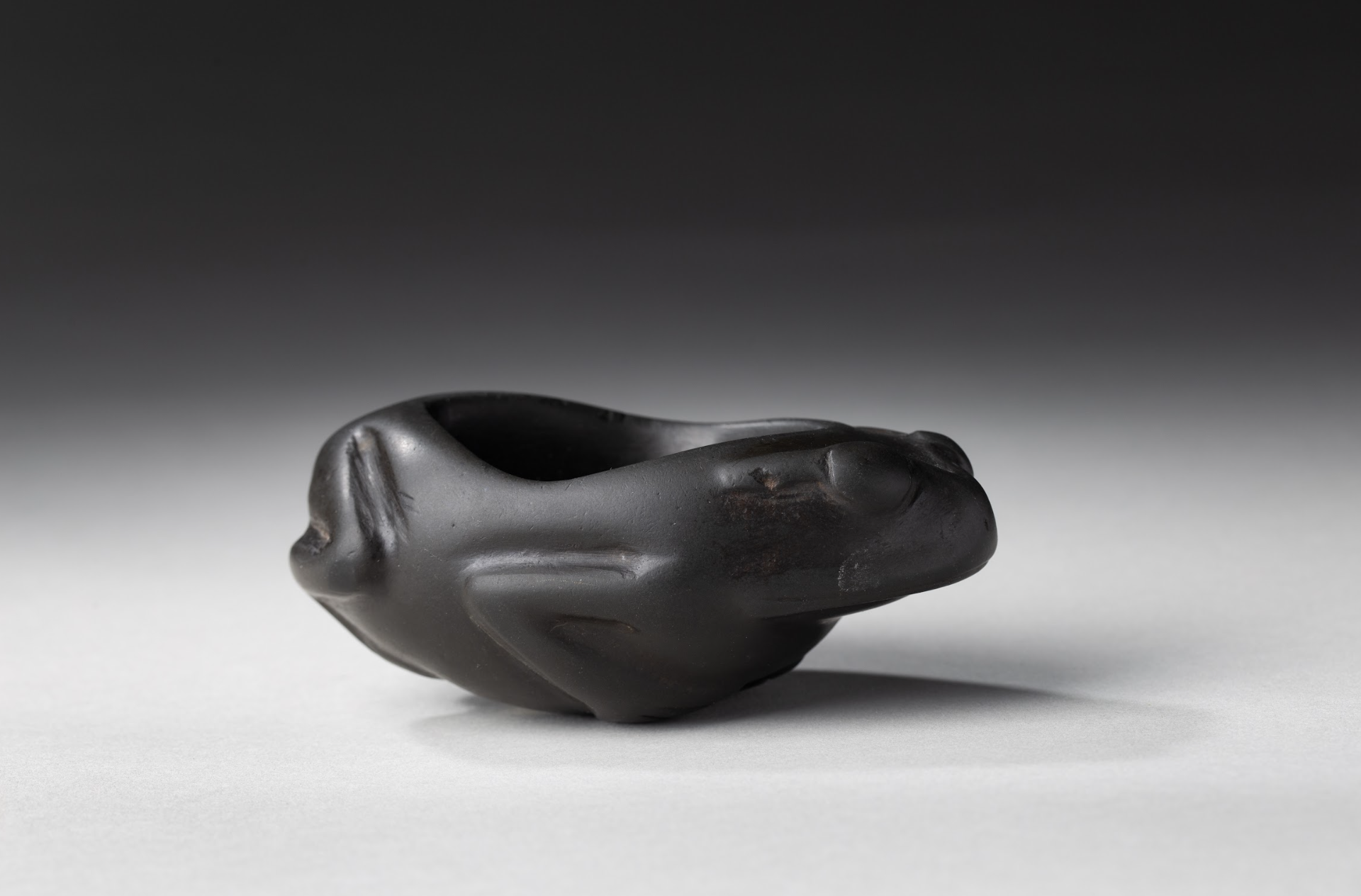 Image 2 of 8
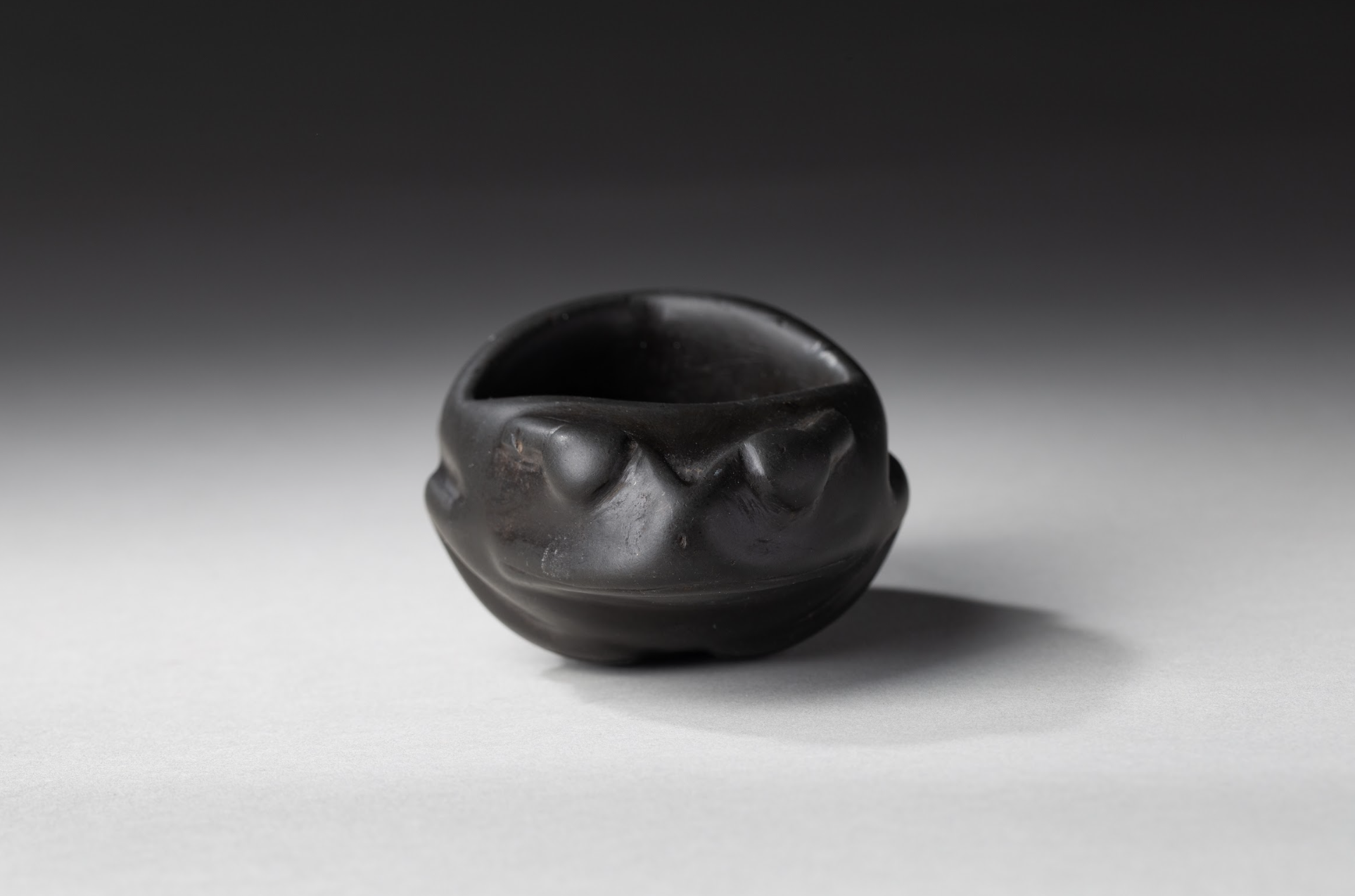 Image 3 of 8
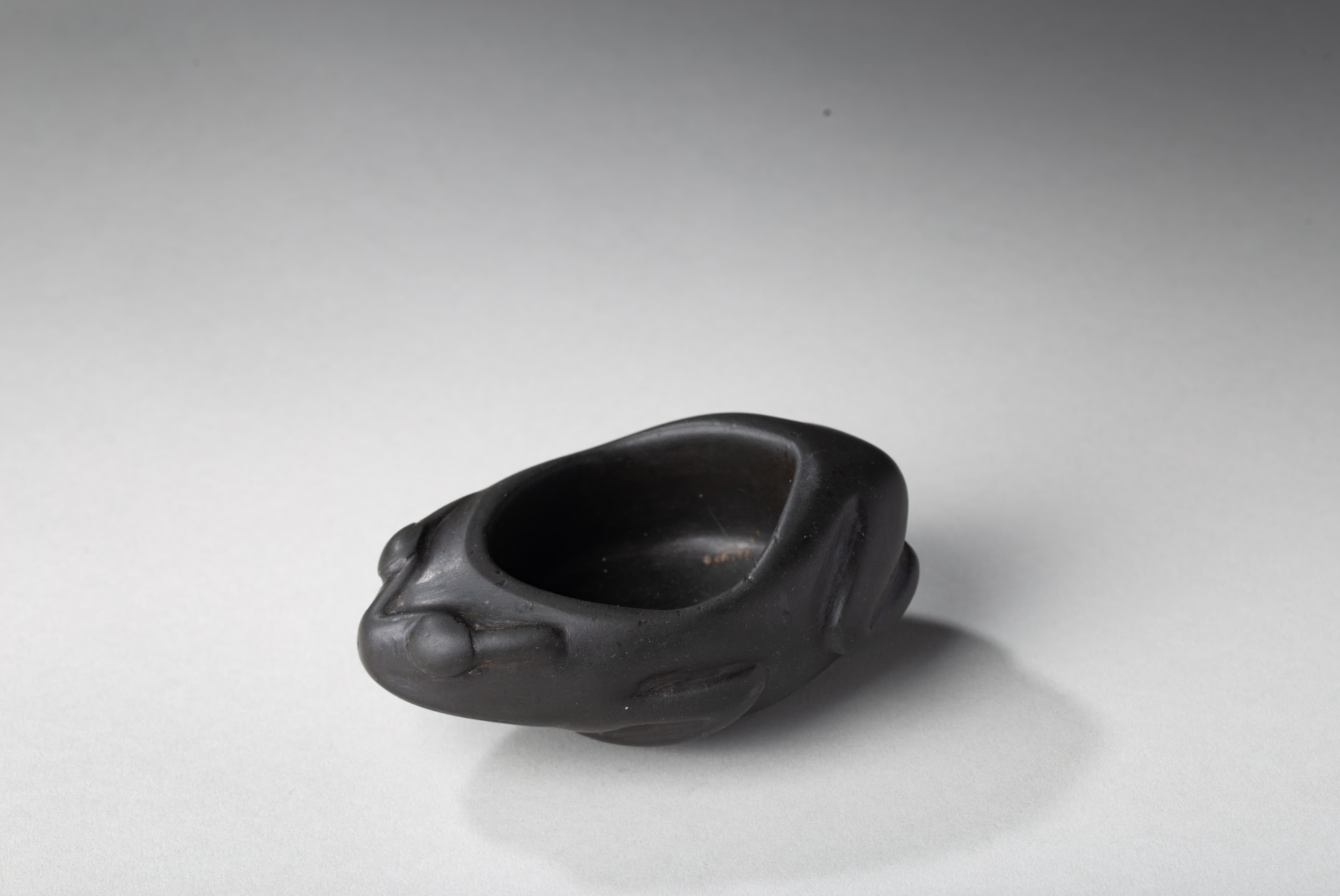 Image 4 of 8
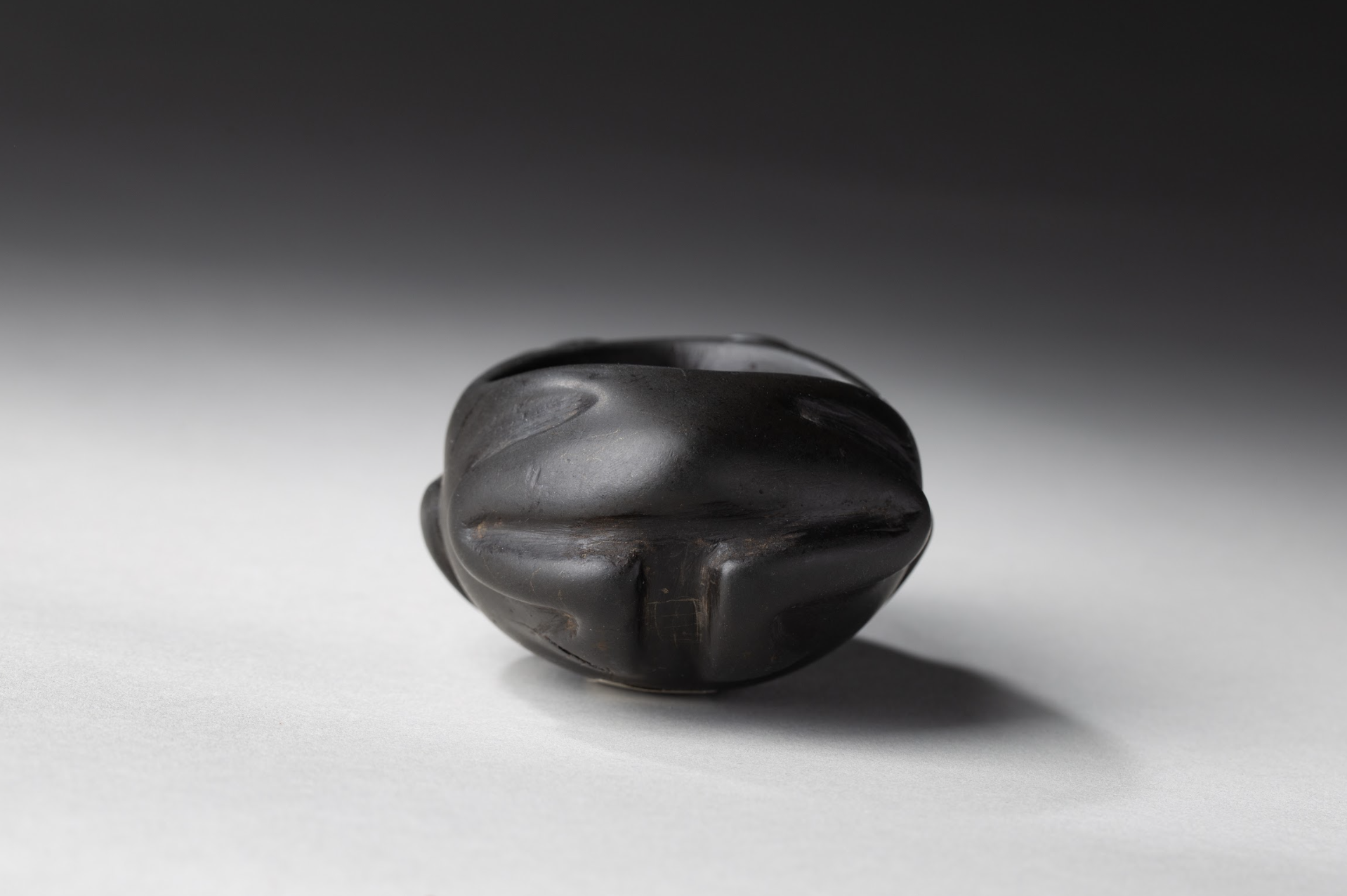 Image 5 of 8
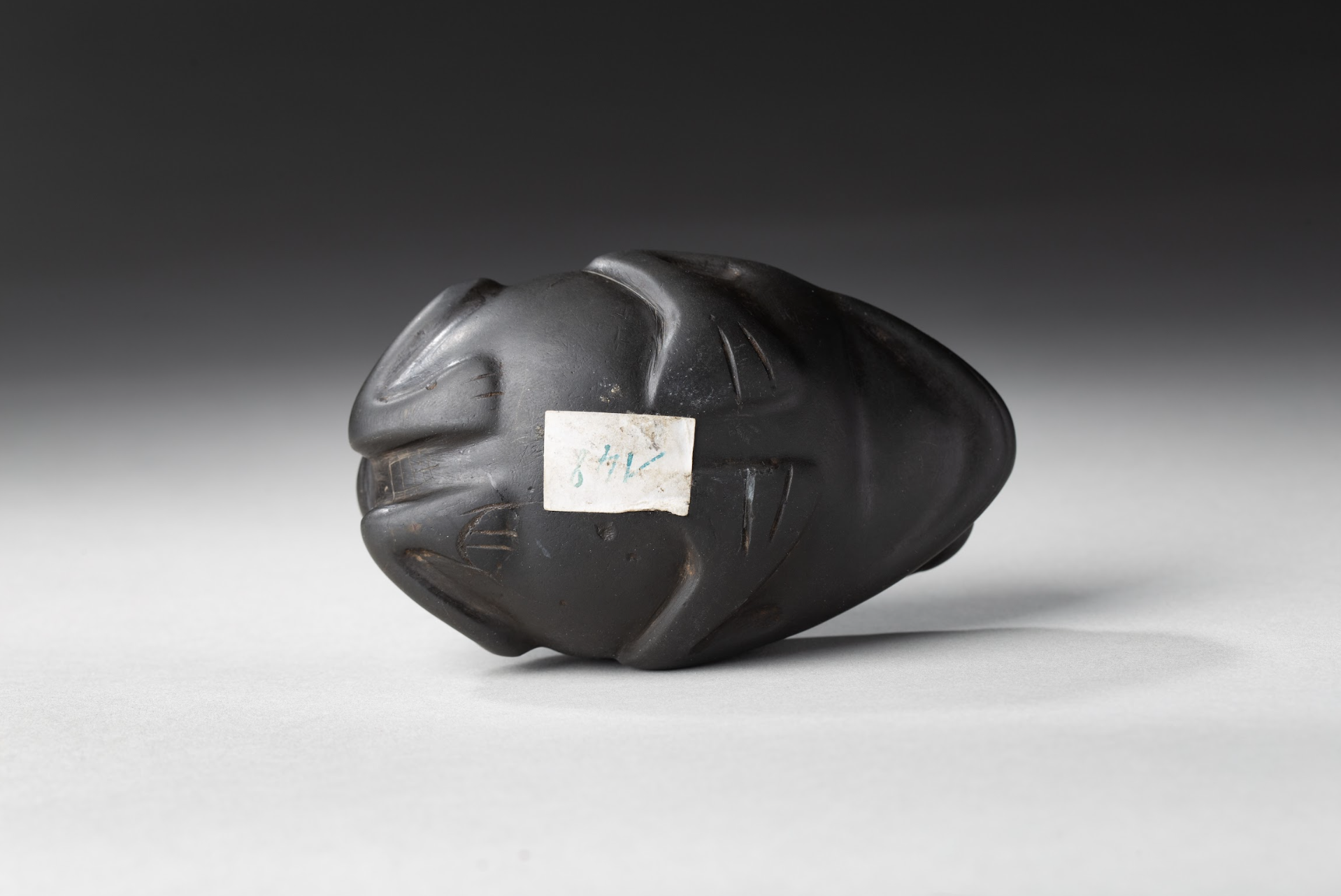 Image 6 of 8
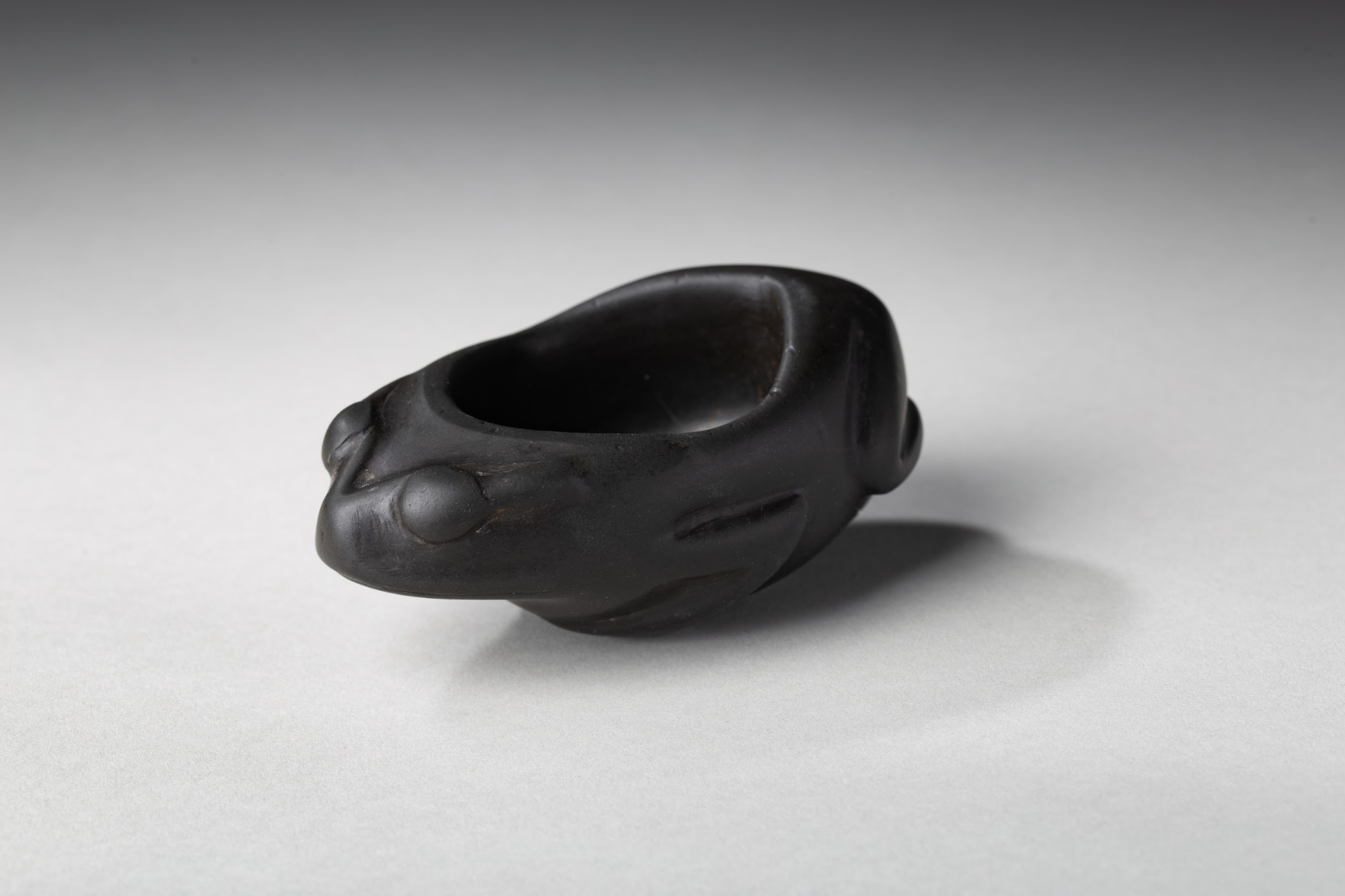 Image 7 of 8
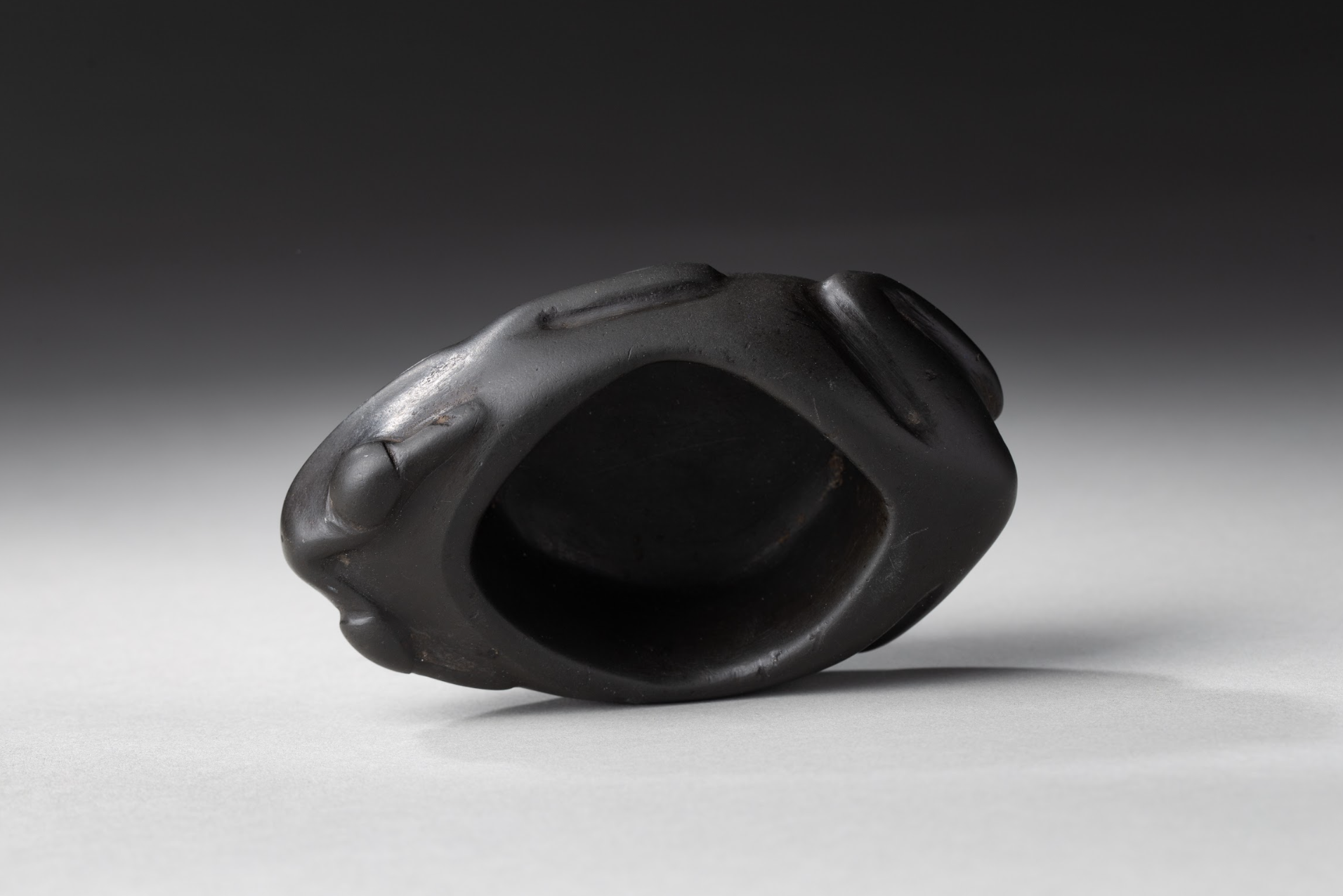 Image 8 of 8