Walrus ivory with abalone shell inlay
circa 19th Century
Length 3 1/4 in / 8.3 cm
Provenance: Paul and Mary Thiry, Seattle, Washington
ESA antique-exempt ivory; not available for international sale or shipment to California, Hawaii, Illinois, Nevada, New Hampshire, New Jersey, New York, Oregon, or Washington.
This Haida killer whale amulet is carved from walrus ivory and inlaid with abalone shell. The form reflects the central place of the orca in Northwest Coast visual culture, where killer whales are associated with ancestry, transformation, protection, and movement between sea and land. The compact scale suggests use as a personal object rather than a large ceremonial carving.
The carving uses clear Haida design elements, with the elongated body, defined head, inlaid eye, and secondary formline details worked across the surface. The abalone inlay gives emphasis to the eye and body while connecting the object to the shell ornament traditions of the Northwest Coast. Its 19th-century date, material, and regional symbolism make it a strong example of small-scale Haida carving.
We guarantee that it was made prior to 1972.
We ship free within the United States, fully insured, packed by hand.
Walrus ivory with abalone shell inlay
circa 19th Century
Length 3 1/4 in / 8.3 cm
Provenance: Paul and Mary Thiry, Seattle, Washington
ESA antique-exempt ivory; not available for international sale or shipment to California, Hawaii, Illinois, Nevada, New Hampshire, New Jersey, New York, Oregon, or Washington.
This Haida killer whale amulet is carved from walrus ivory and inlaid with abalone shell. The form reflects the central place of the orca in Northwest Coast visual culture, where killer whales are associated with ancestry, transformation, protection, and movement between sea and land. The compact scale suggests use as a personal object rather than a large ceremonial carving.
The carving uses clear Haida design elements, with the elongated body, defined head, inlaid eye, and secondary formline details worked across the surface. The abalone inlay gives emphasis to the eye and body while connecting the object to the shell ornament traditions of the Northwest Coast. Its 19th-century date, material, and regional symbolism make it a strong example of small-scale Haida carving.
We guarantee that it was made prior to 1972.
We ship free within the United States, fully insured, packed by hand.


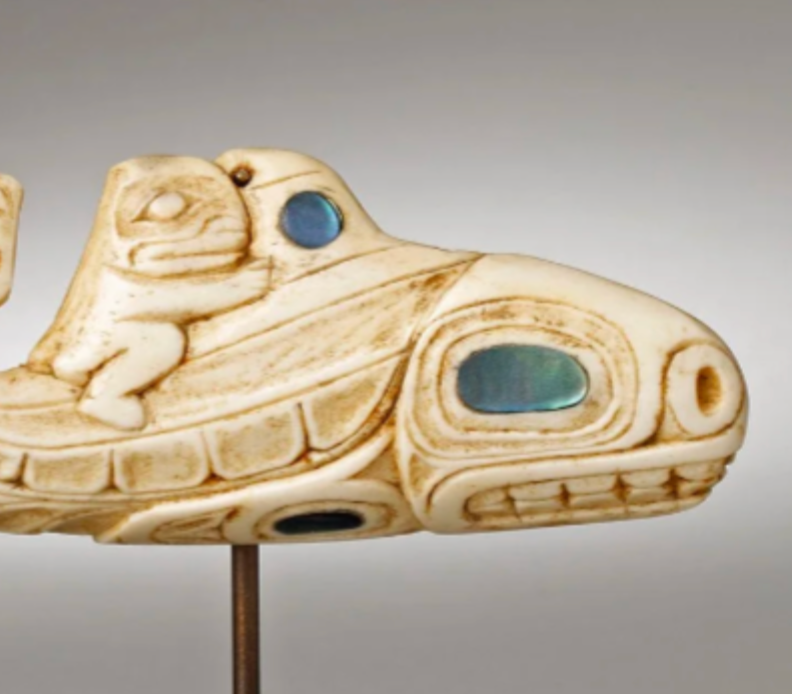 Image 1 of 7
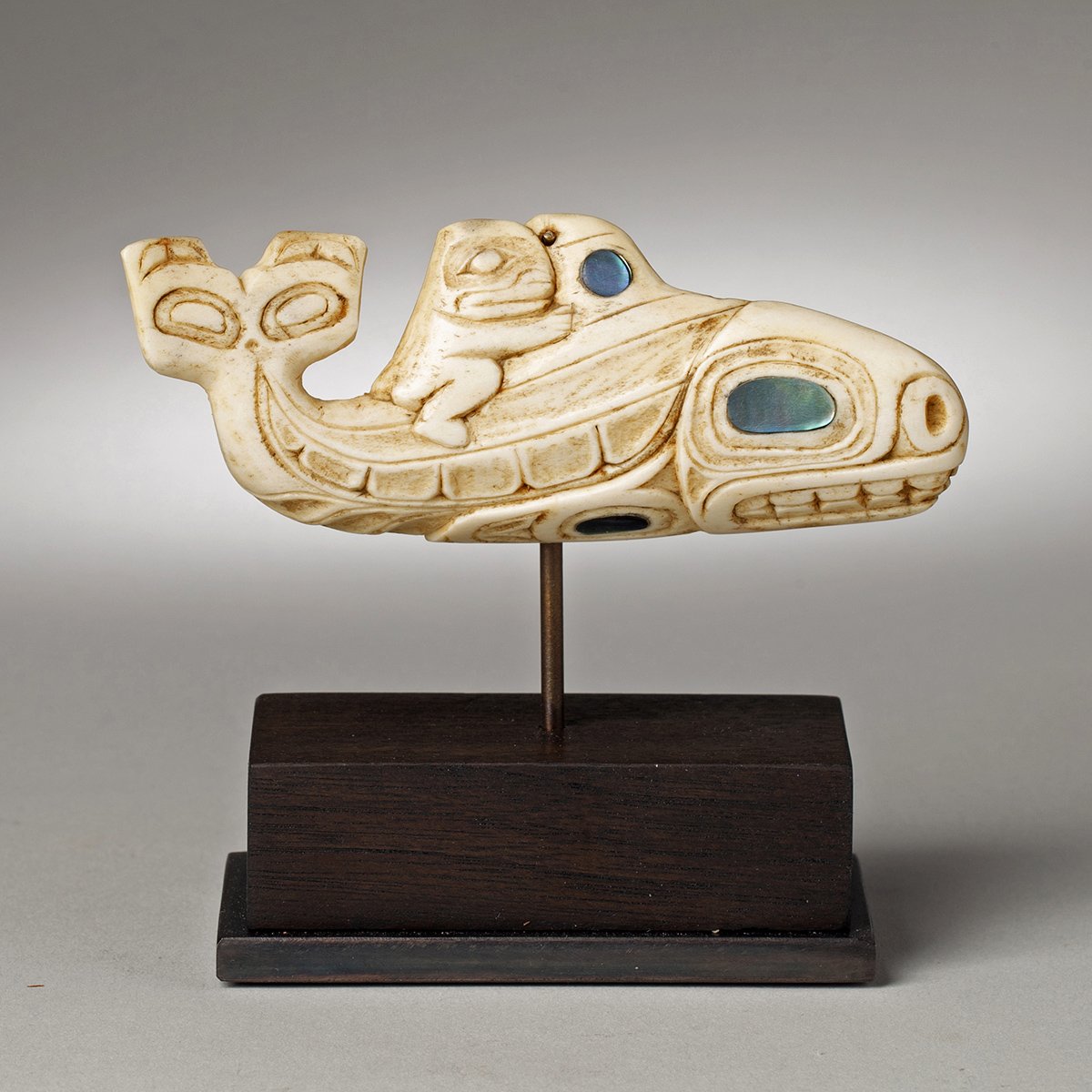 Image 2 of 7
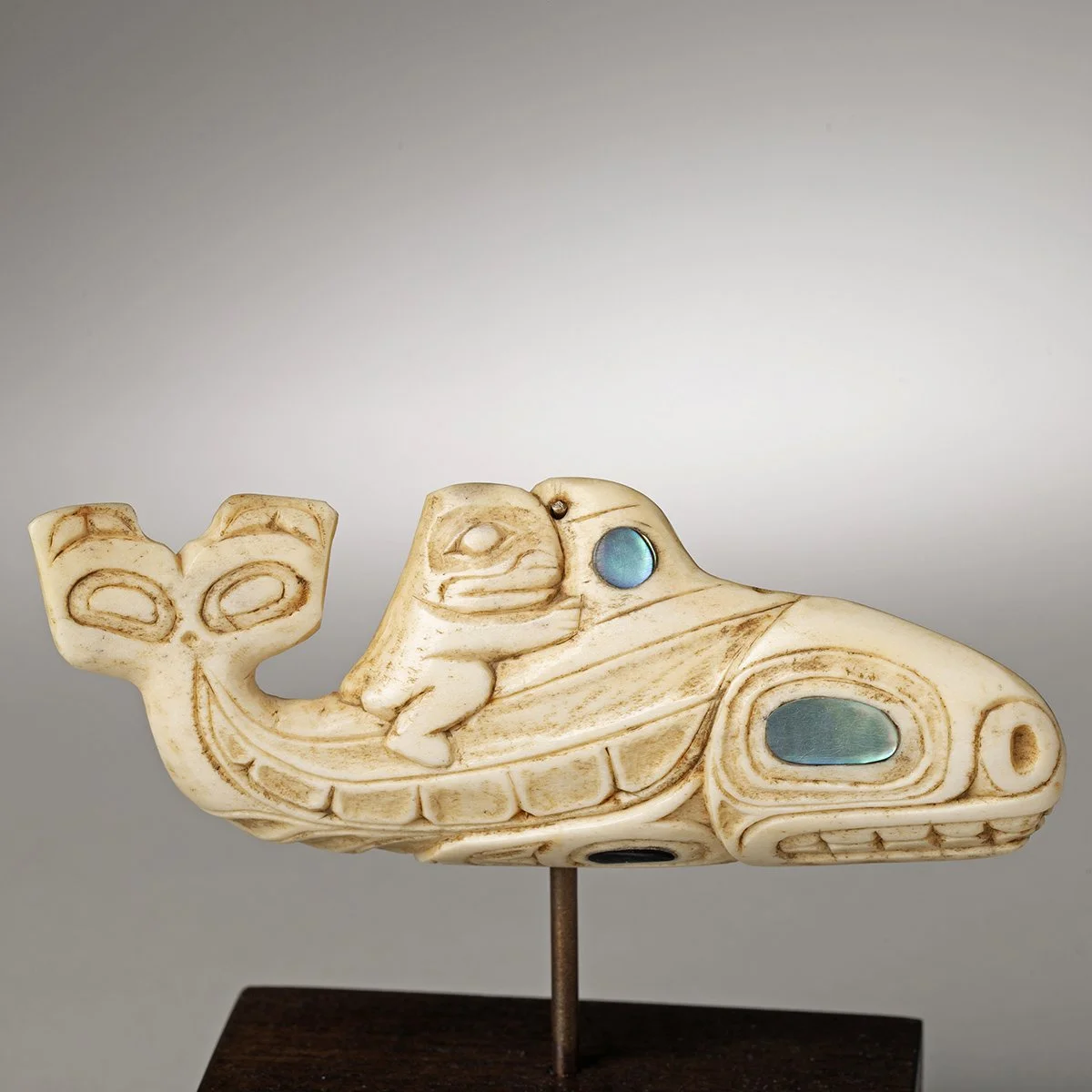 Image 3 of 7
 Image 4 of 7
 Image 5 of 7
 Image 6 of 7
 Image 7 of 7