

 Image 1 of 2
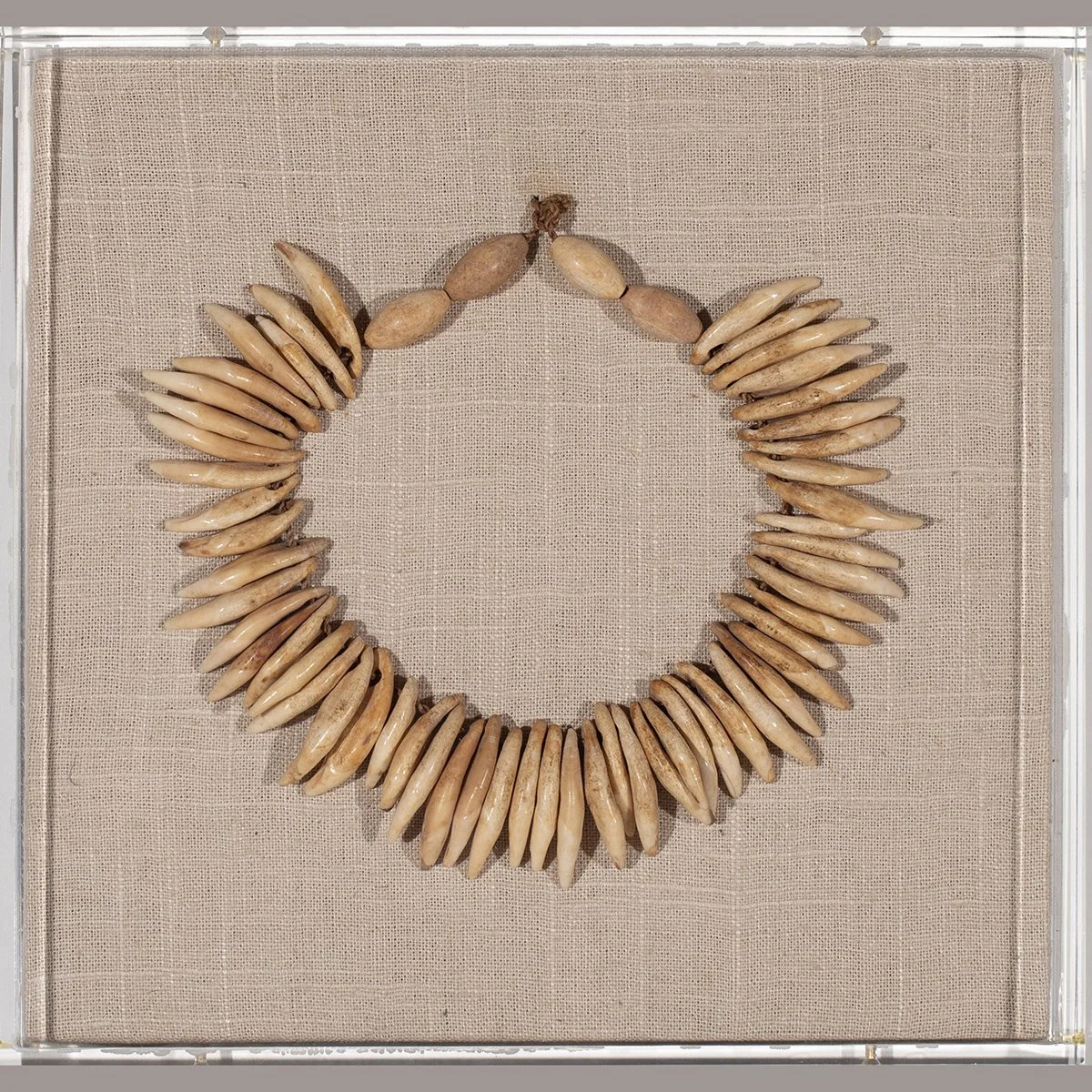 Image 2 of 2
Hawaiʻi
18th century
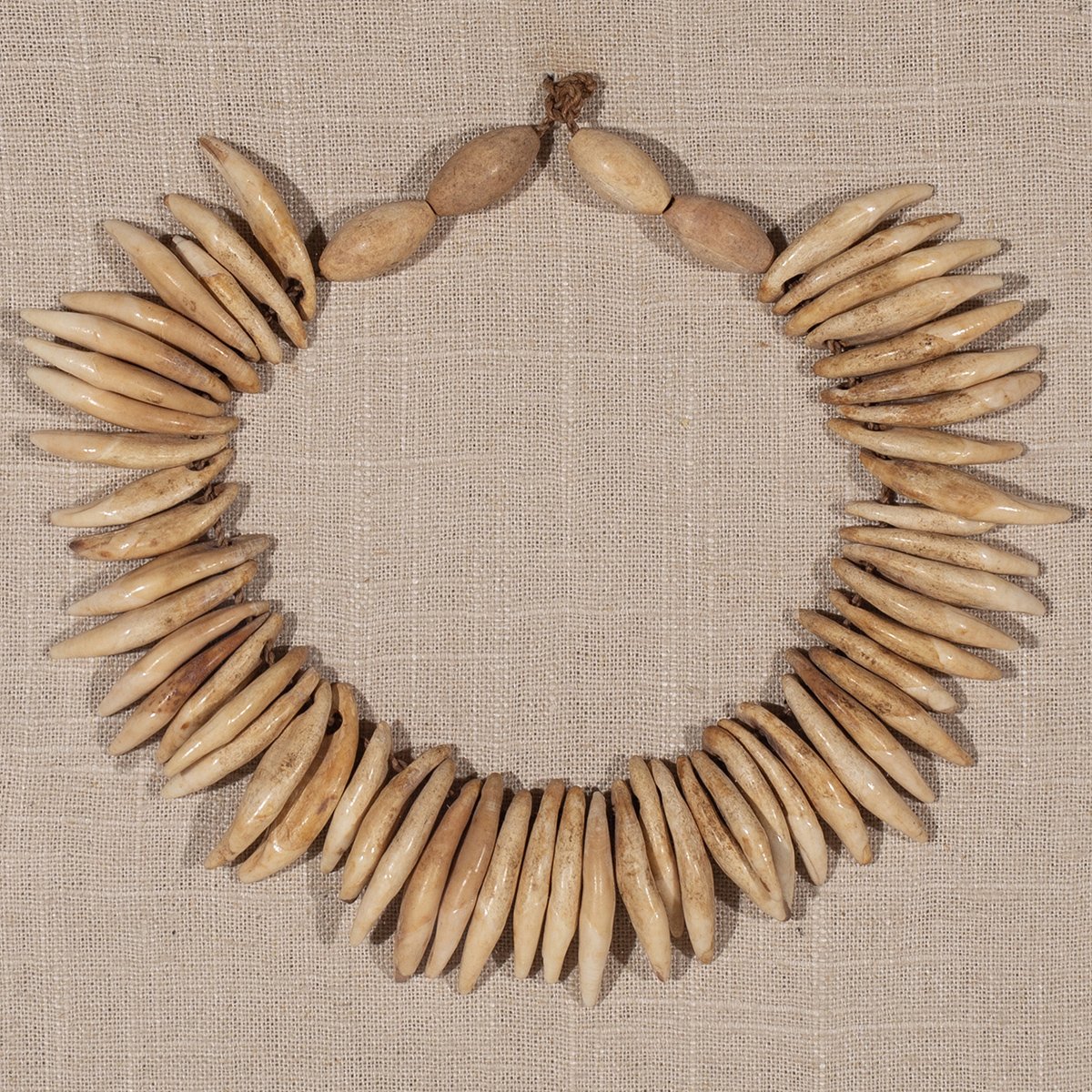
Canine teeth of ʻīlio (Hawaiian dog), marine ivory spindle beads, ʻolona cording
Length: 20 in. (50.8 cm)
Provenance: David Simmons, Auckland, New Zealand
This Hawaiian necklace is constructed from the canine teeth of the native Hawaiian dog (ʻīlio), each tooth drilled from both sides to meet in an hourglass form at the root, a technique that reduced splitting during preparation. Because each animal yields only four canine teeth, a necklace of this scale required material gathered from a substantial number of dogs over an extended period. The upper section incorporates smooth elongated marine ivory spindle beads strung alongside the teeth on hand-braided ʻolona cord, a fiber from Touchardia latifolia reserved in Hawaiian tradition for royal garments, feather capes, and high-status regalia.
Strands of dog teeth of this type carried dual function in Hawaiian material culture, worn as personal adornment and also wrapped onto ʻolona mesh backing to form kūpeʻe niho ʻīlio, leg rattles worn by male hula dancers. As the dancers moved, the canine teeth generated a sharp rhythmic sound that drove the tempo of performance. The association with both chiefly adornment and ceremonial dance places objects of this type among the most culturally layered forms of Hawaiian personal ornament.
The David Simmons provenance connects this piece to one of the more significant New Zealand collections of Pacific material assembled in the latter 20th century. Pre-contact Hawaiian adornment of this type is seldom encountered, as the transformation of Hawaiian culture following European contact and changes to native canine populations made the accumulation of sufficient teeth increasingly difficult by the 19th century. This piece is a featured work within the Hawaiʻi collection.
We ship free anywhere in the world, fully insured, packed by hand.
Hawaiʻi
18th century
Canine teeth of ʻīlio (Hawaiian dog), marine ivory spindle beads, ʻolona cording
Length: 20 in. (50.8 cm)
Provenance: David Simmons, Auckland, New Zealand
This Hawaiian necklace is constructed from the canine teeth of the native Hawaiian dog (ʻīlio), each tooth drilled from both sides to meet in an hourglass form at the root, a technique that reduced splitting during preparation. Because each animal yields only four canine teeth, a necklace of this scale required material gathered from a substantial number of dogs over an extended period. The upper section incorporates smooth elongated marine ivory spindle beads strung alongside the teeth on hand-braided ʻolona cord, a fiber from Touchardia latifolia reserved in Hawaiian tradition for royal garments, feather capes, and high-status regalia.
Strands of dog teeth of this type carried dual function in Hawaiian material culture, worn as personal adornment and also wrapped onto ʻolona mesh backing to form kūpeʻe niho ʻīlio, leg rattles worn by male hula dancers. As the dancers moved, the canine teeth generated a sharp rhythmic sound that drove the tempo of performance. The association with both chiefly adornment and ceremonial dance places objects of this type among the most culturally layered forms of Hawaiian personal ornament.
The David Simmons provenance connects this piece to one of the more significant New Zealand collections of Pacific material assembled in the latter 20th century. Pre-contact Hawaiian adornment of this type is seldom encountered, as the transformation of Hawaiian culture following European contact and changes to native canine populations made the accumulation of sufficient teeth increasingly difficult by the 19th century. This piece is a featured work within the Hawaiʻi collection.
We ship free anywhere in the world, fully insured, packed by hand.