British Columbia, Canada
19th century
Wood, pigment
Length 11 1/2" (29.2 cm)
Provenance: Private collection, Australia
First contact between the Heiltsuk and Europeans occurred around 1793, and the name "Bella Bella" entered use by 1834, though the people have always referred to themselves as Heiltsuk. They became highly skilled traders during the fur trade era, producing canoes and later western-style schooners, and for a time served as middlemen controlling access to sea otter pelts. Their trading acumen was noted and complained about in numerous historical records of the period.
Rattles of this form were used in potlatch ceremonies central to Heiltsuk social life, serving functions of naming, healing, and honoring ancestors. The mosquito form carries specific shamanic associations, and the sculptural handling reflects the Northwest Coast carving tradition in its integration of figure and form. The warm, even patina across the surface is consistent with sustained ceremonial handling over time.
The rattle is carved from a single piece of wood and retains original pigment in the recessed areas, indicating careful use and preservation. The composition balances the elongated rattle body with the figurative elements in a manner consistent with northern Northwest Coast formal conventions. It is an object of both ceremonial function and considered artistic execution.
We ship free anywhere in the world, fully insured, packed by hand.
INQUIRE HERE
British Columbia, Canada
19th century
Wood, pigment
Length 11 1/2" (29.2 cm)
Provenance: Private collection, Australia
First contact between the Heiltsuk and Europeans occurred around 1793, and the name "Bella Bella" entered use by 1834, though the people have always referred to themselves as Heiltsuk. They became highly skilled traders during the fur trade era, producing canoes and later western-style schooners, and for a time served as middlemen controlling access to sea otter pelts. Their trading acumen was noted and complained about in numerous historical records of the period.
Rattles of this form were used in potlatch ceremonies central to Heiltsuk social life, serving functions of naming, healing, and honoring ancestors. The mosquito form carries specific shamanic associations, and the sculptural handling reflects the Northwest Coast carving tradition in its integration of figure and form. The warm, even patina across the surface is consistent with sustained ceremonial handling over time.
The rattle is carved from a single piece of wood and retains original pigment in the recessed areas, indicating careful use and preservation. The composition balances the elongated rattle body with the figurative elements in a manner consistent with northern Northwest Coast formal conventions. It is an object of both ceremonial function and considered artistic execution.
We ship free anywhere in the world, fully insured, packed by hand.
INQUIRE HERE


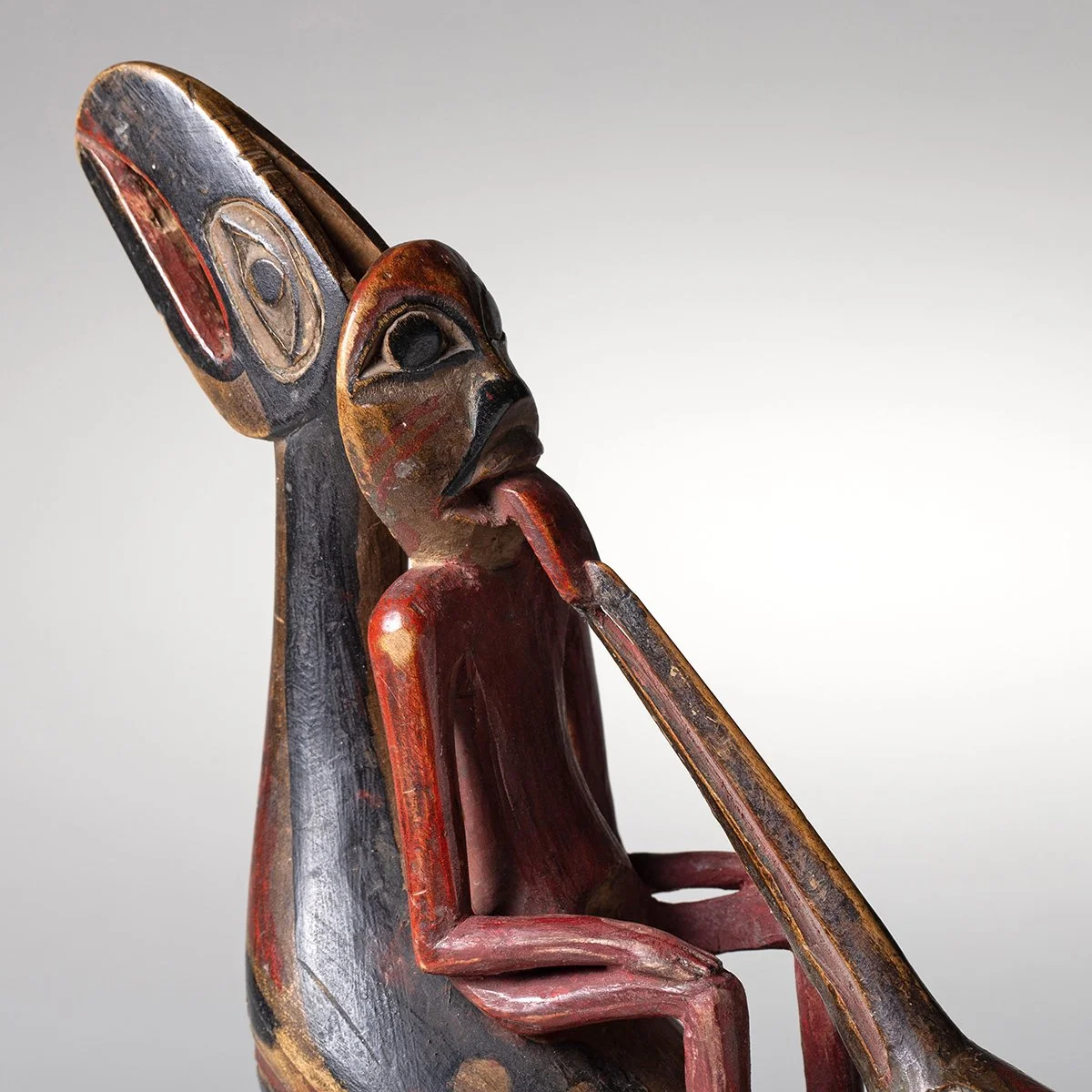 Image 1 of 8
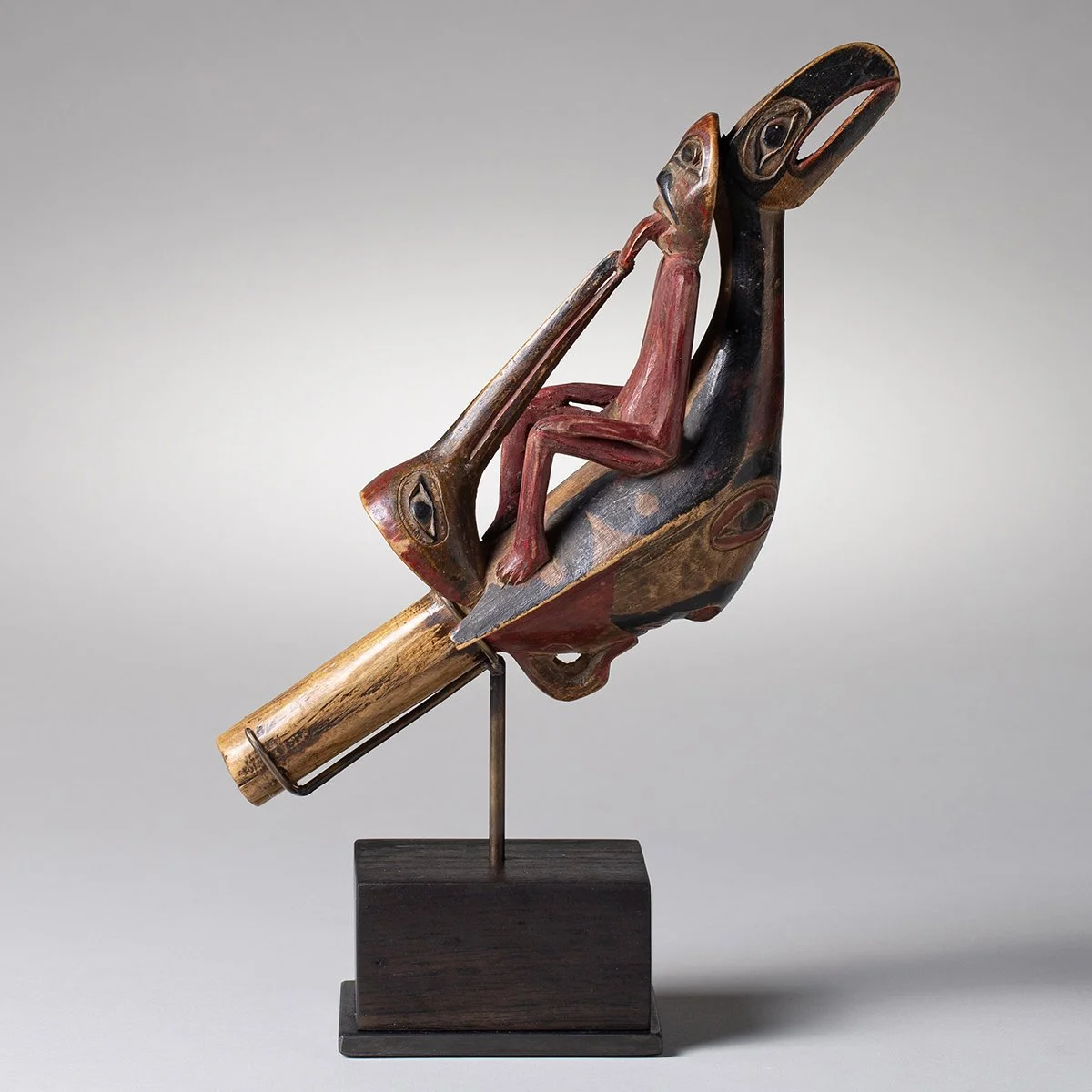 Image 2 of 8
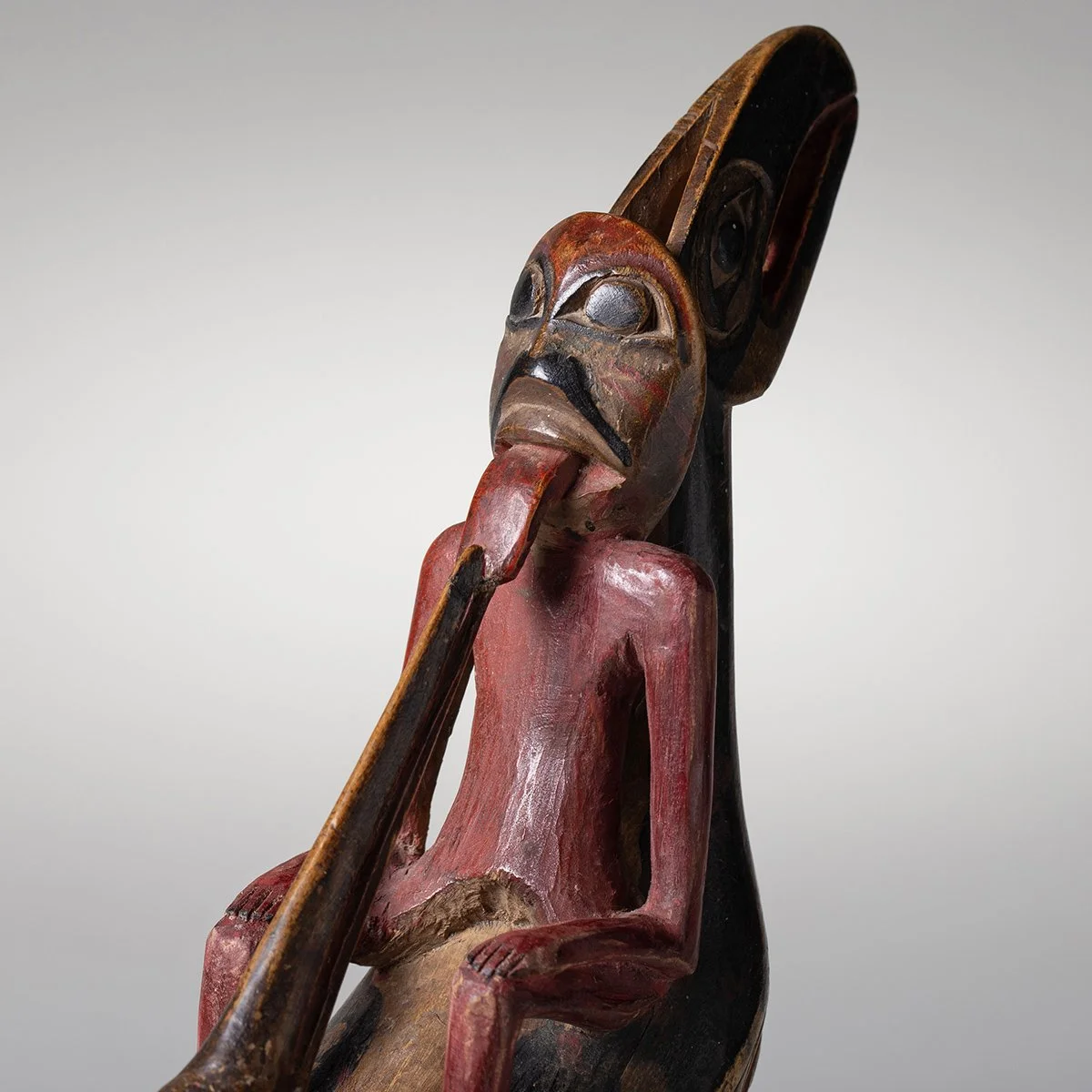 Image 3 of 8
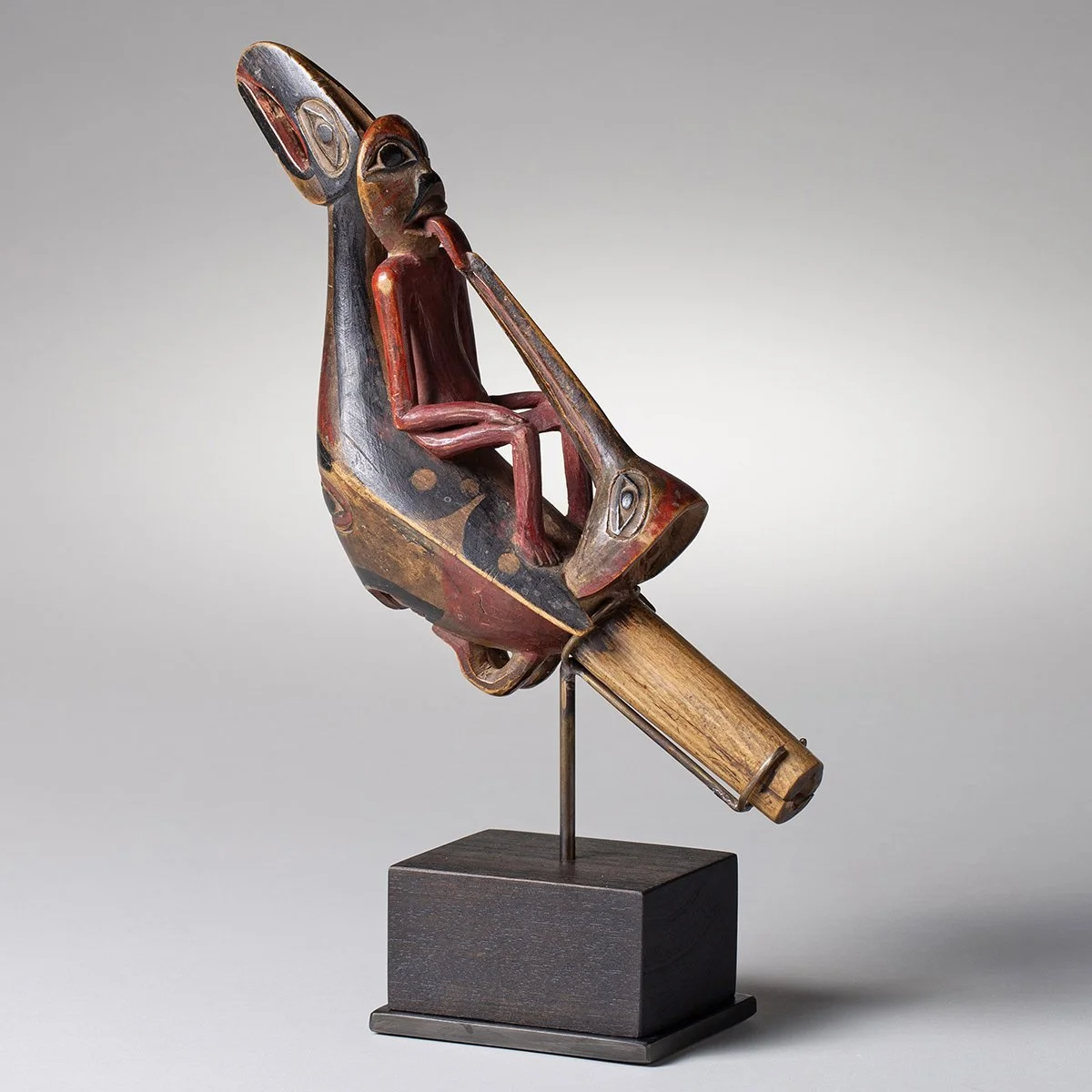 Image 4 of 8
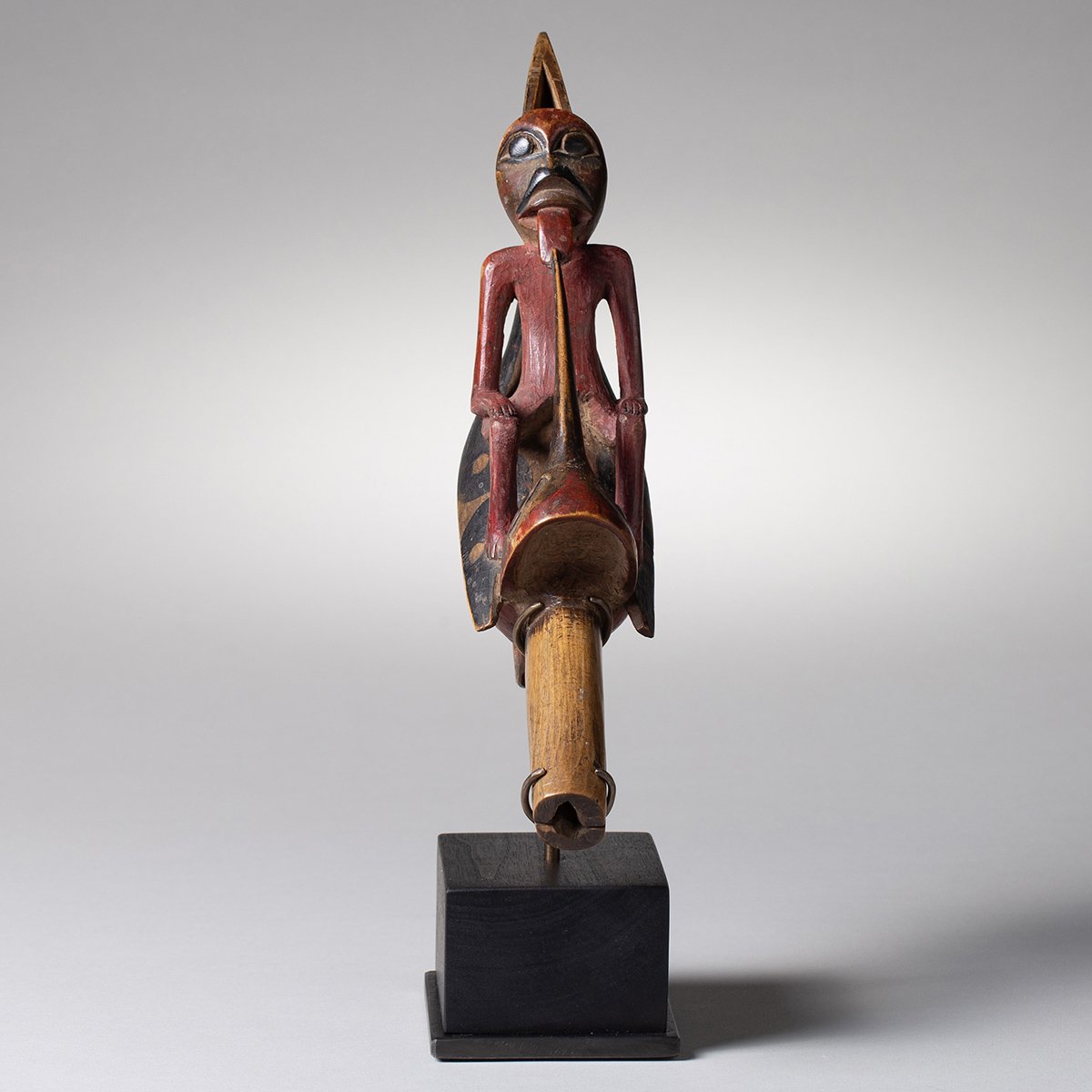 Image 5 of 8
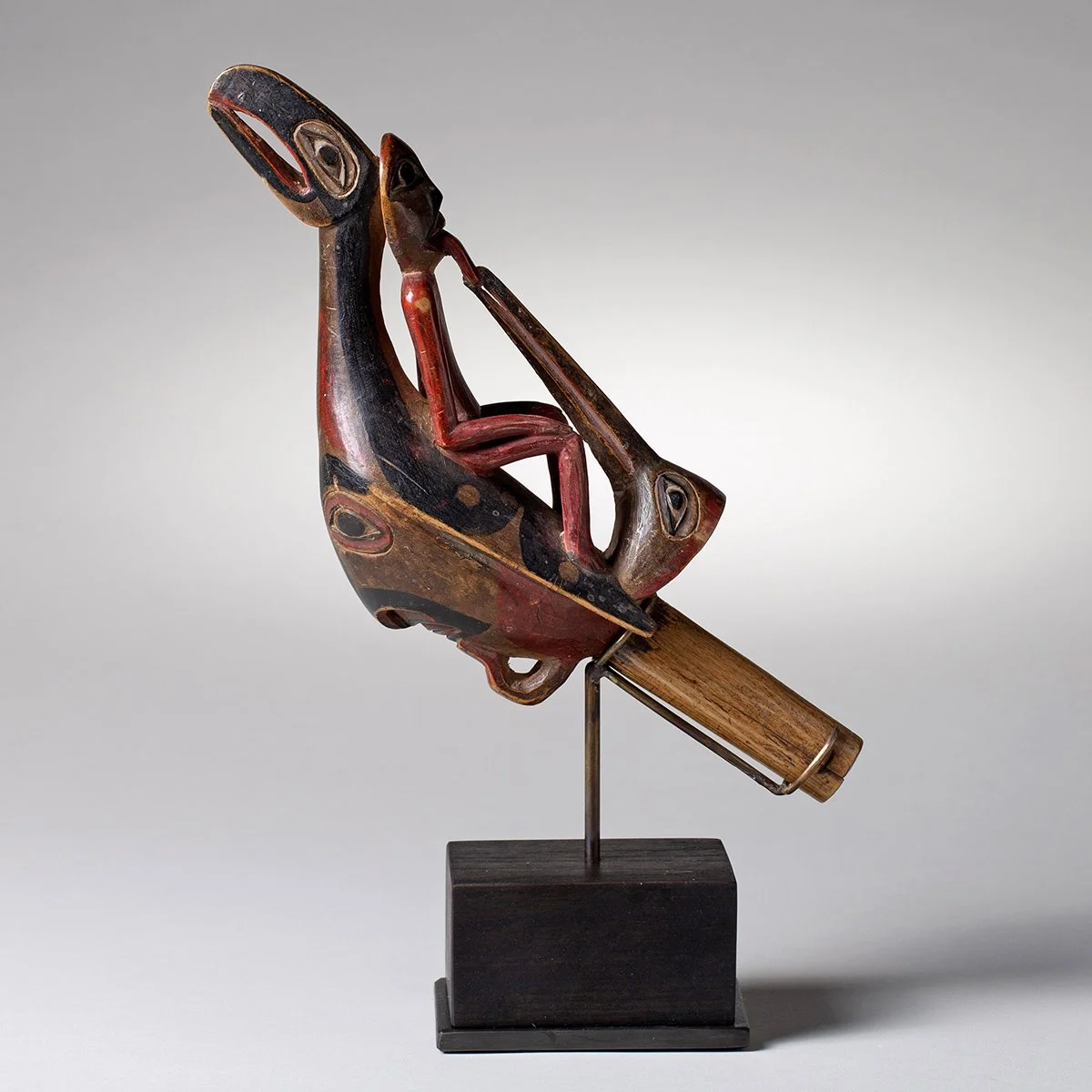 Image 6 of 8
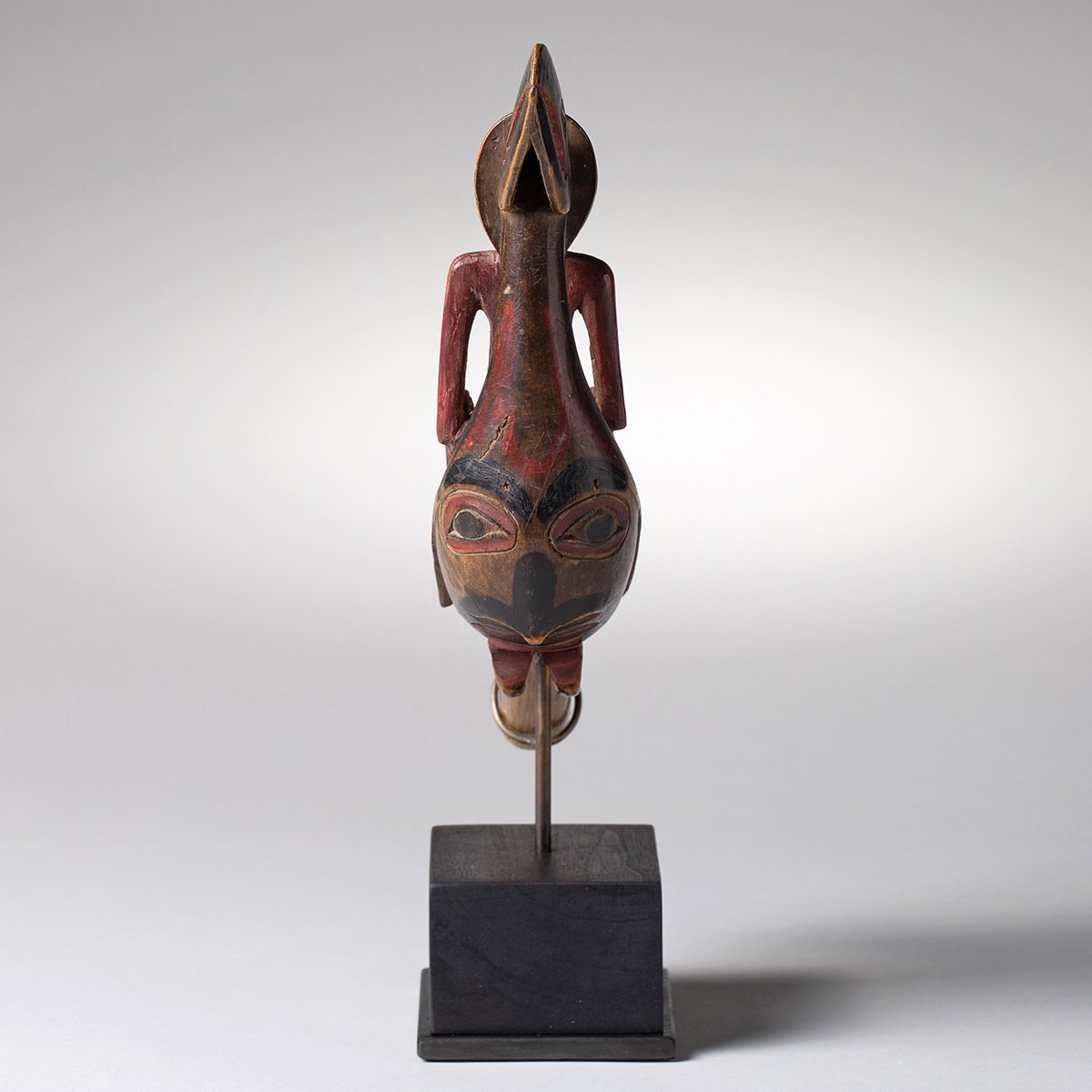 Image 7 of 8
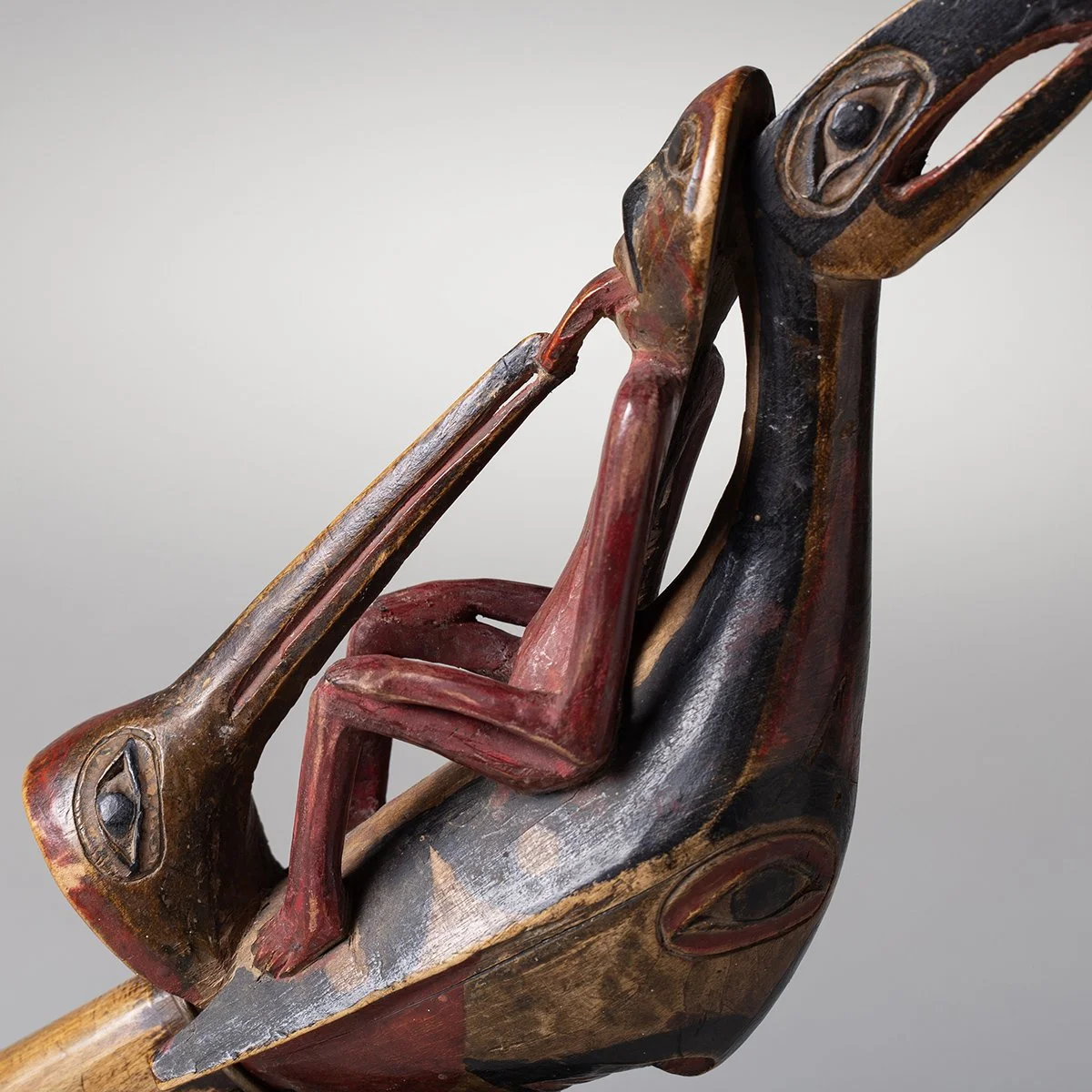 Image 8 of 8