Hopi, Arizona
1930s
Cottonwood, pigment, fabric, feathers, fiber
Height 9½ in (24.1 cm)
Provenance: Tucson trade; private collection, Tucson, AZ
The Avachhoya, or Spotted Corn Katsina, known also as Qá-ö, appears in the Pamuya and regular katsina dances, performed exclusively by boys and young men who dance with particular energy and liveliness alongside a drummer and chorus. Unlike many katsina figures, the Avachhoya holds nothing in its hands during the dance, instead making gestures and signs that describe clouds, cornstalks, and whatever is being sung about at the time, connecting the performance directly to agricultural ceremony and seasonal prayer. The figure is carved and painted in the fully three-dimensional style of the 1930s, with the characteristic spotted black and white mask, large round ear forms, and circle motifs in red and green painted across the body.
The figure retains its complete original costume including fabric kilt, ankle bands, and fiber and feather headdress, presenting the Avachhoya in full ceremonial dress. The articulated arms are posed in the active stance associated with the dance, and the painted surface shows honest age and wear consistent with the period. Examples retaining the full original costume in this condition are seldom encountered.
We ship free anywhere in the world, fully insured, packed by hand.
Hopi, Arizona
1930s
Cottonwood, pigment, fabric, feathers, fiber
Height 9½ in (24.1 cm)
Provenance: Tucson trade; private collection, Tucson, AZ
The Avachhoya, or Spotted Corn Katsina, known also as Qá-ö, appears in the Pamuya and regular katsina dances, performed exclusively by boys and young men who dance with particular energy and liveliness alongside a drummer and chorus. Unlike many katsina figures, the Avachhoya holds nothing in its hands during the dance, instead making gestures and signs that describe clouds, cornstalks, and whatever is being sung about at the time, connecting the performance directly to agricultural ceremony and seasonal prayer. The figure is carved and painted in the fully three-dimensional style of the 1930s, with the characteristic spotted black and white mask, large round ear forms, and circle motifs in red and green painted across the body.
The figure retains its complete original costume including fabric kilt, ankle bands, and fiber and feather headdress, presenting the Avachhoya in full ceremonial dress. The articulated arms are posed in the active stance associated with the dance, and the painted surface shows honest age and wear consistent with the period. Examples retaining the full original costume in this condition are seldom encountered.
We ship free anywhere in the world, fully insured, packed by hand.


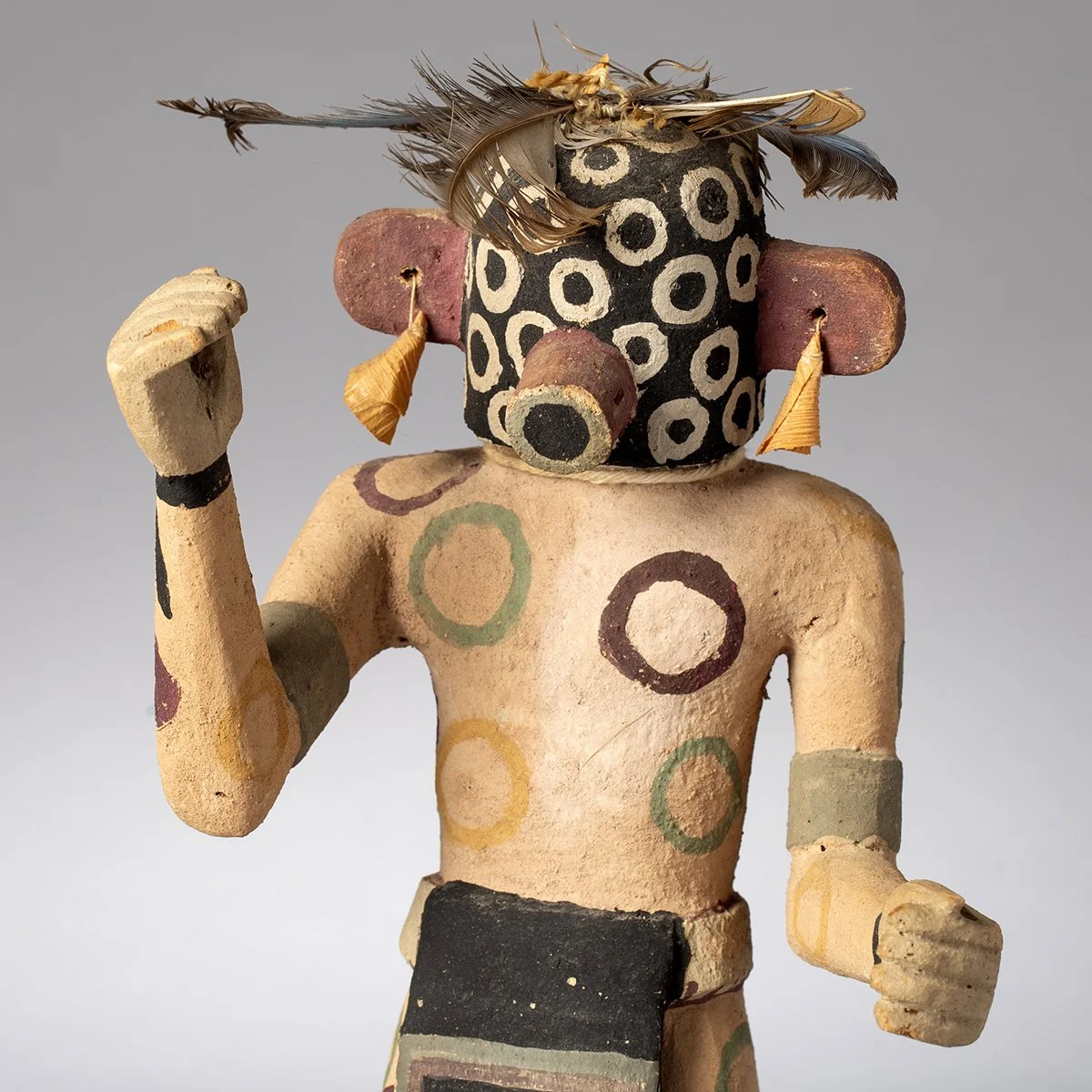 Image 1 of 6
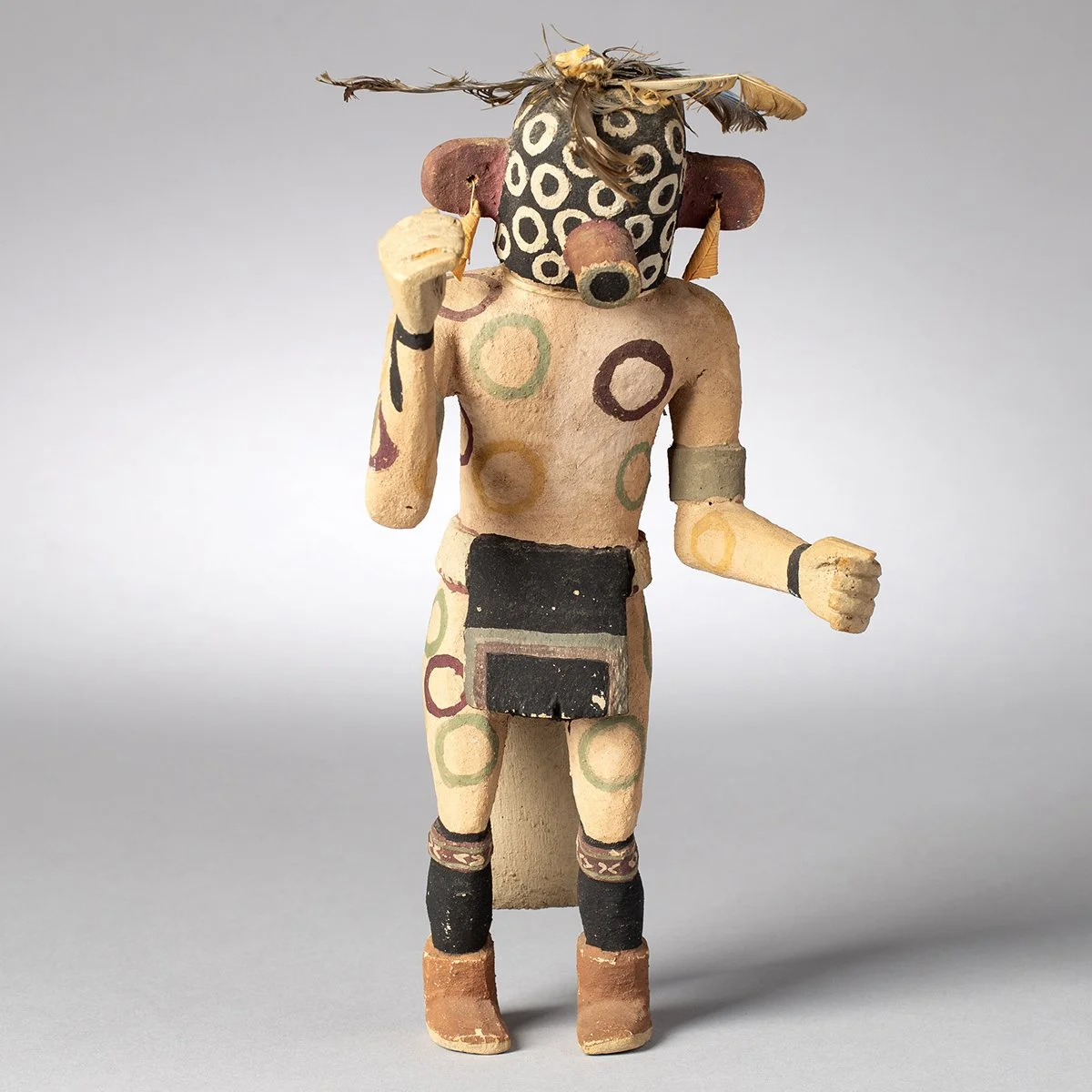 Image 2 of 6
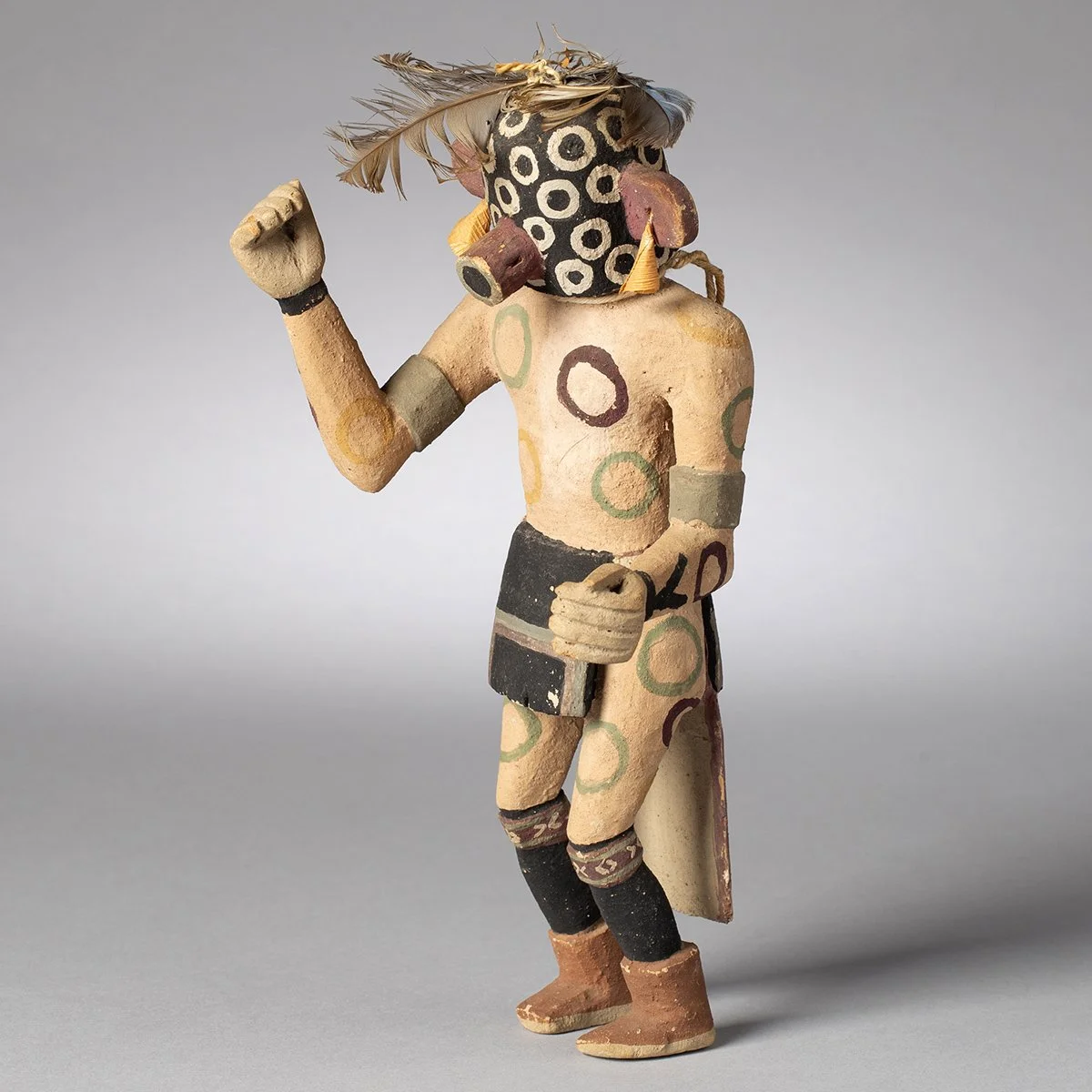 Image 3 of 6
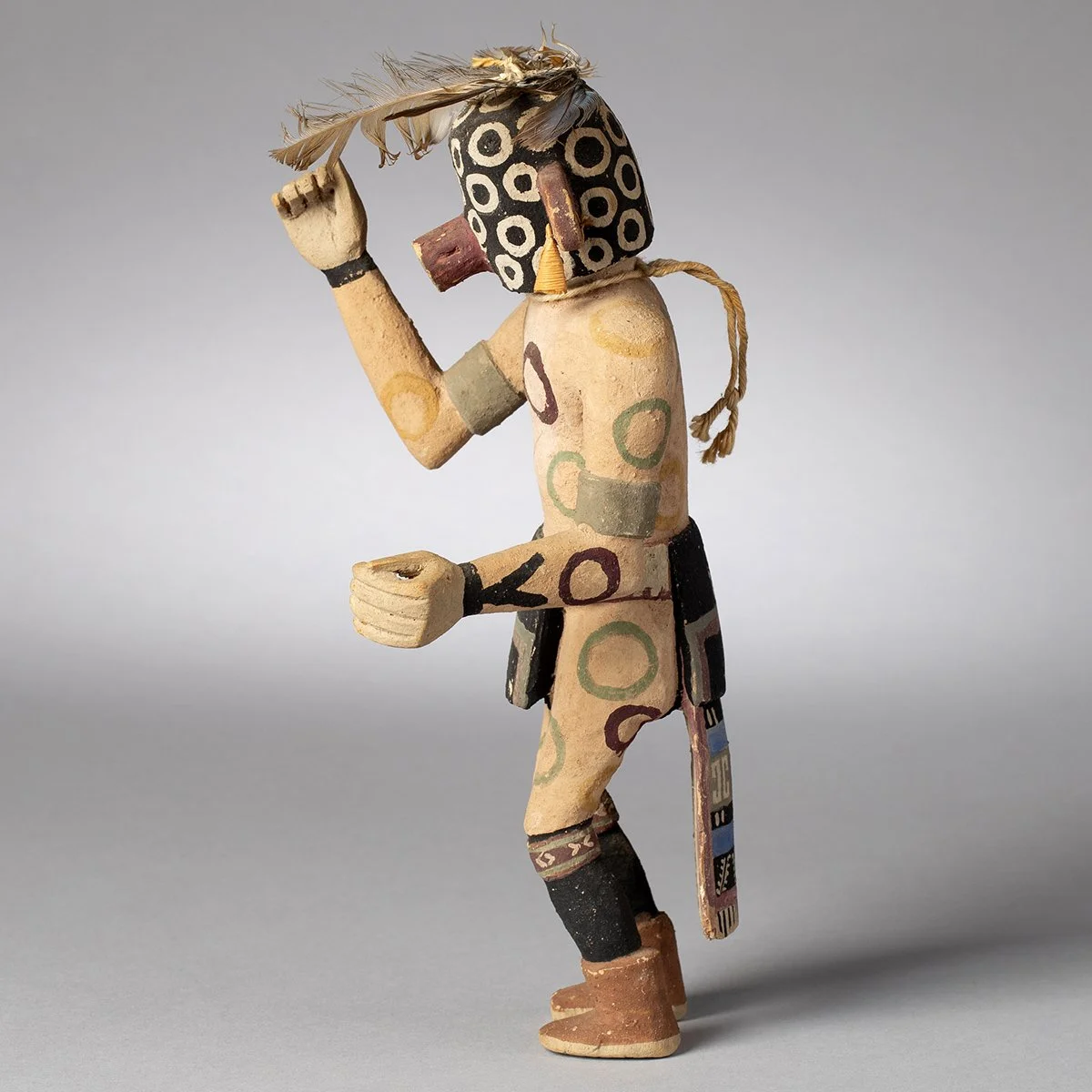 Image 4 of 6
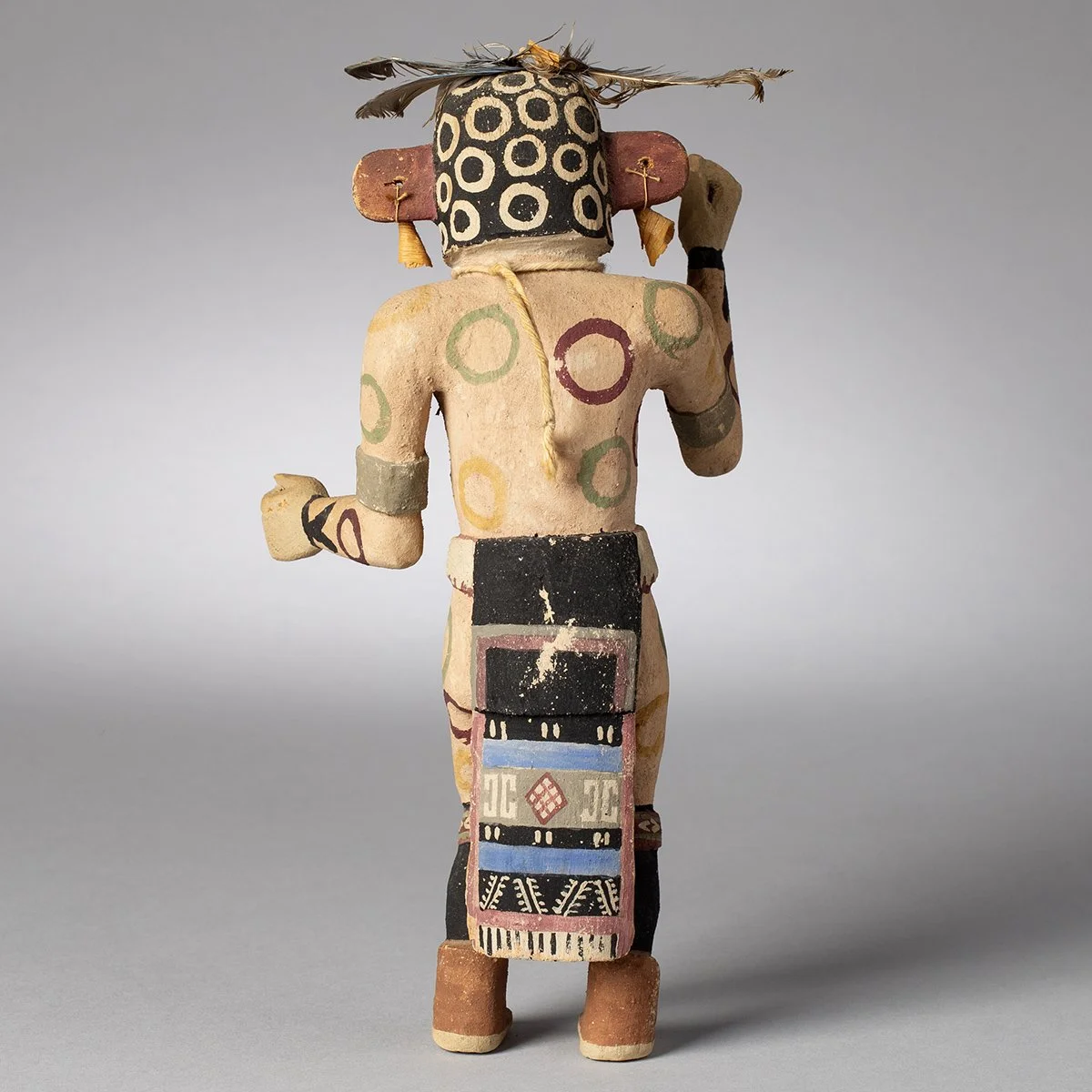 Image 5 of 6
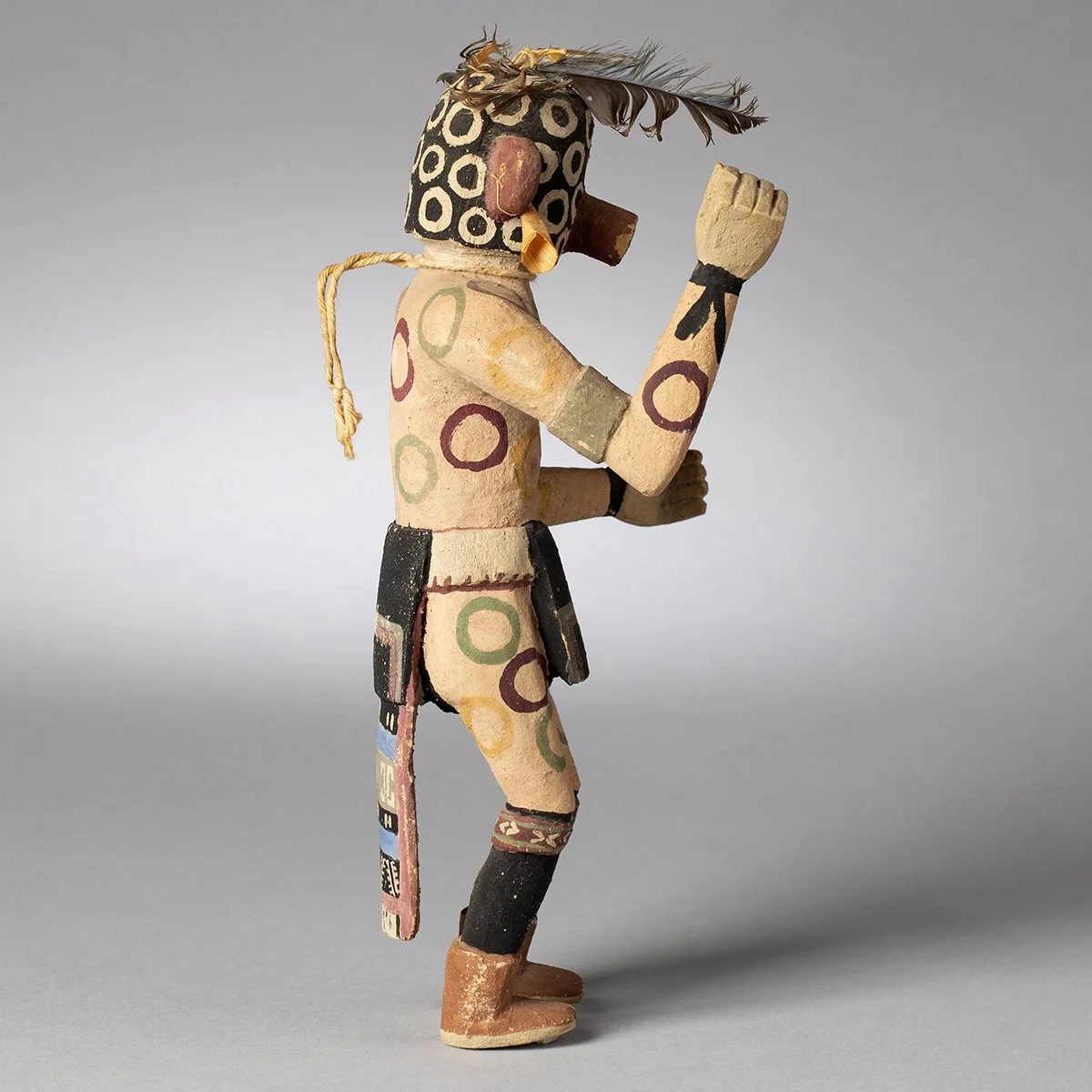 Image 6 of 6