

 Image 1 of 3
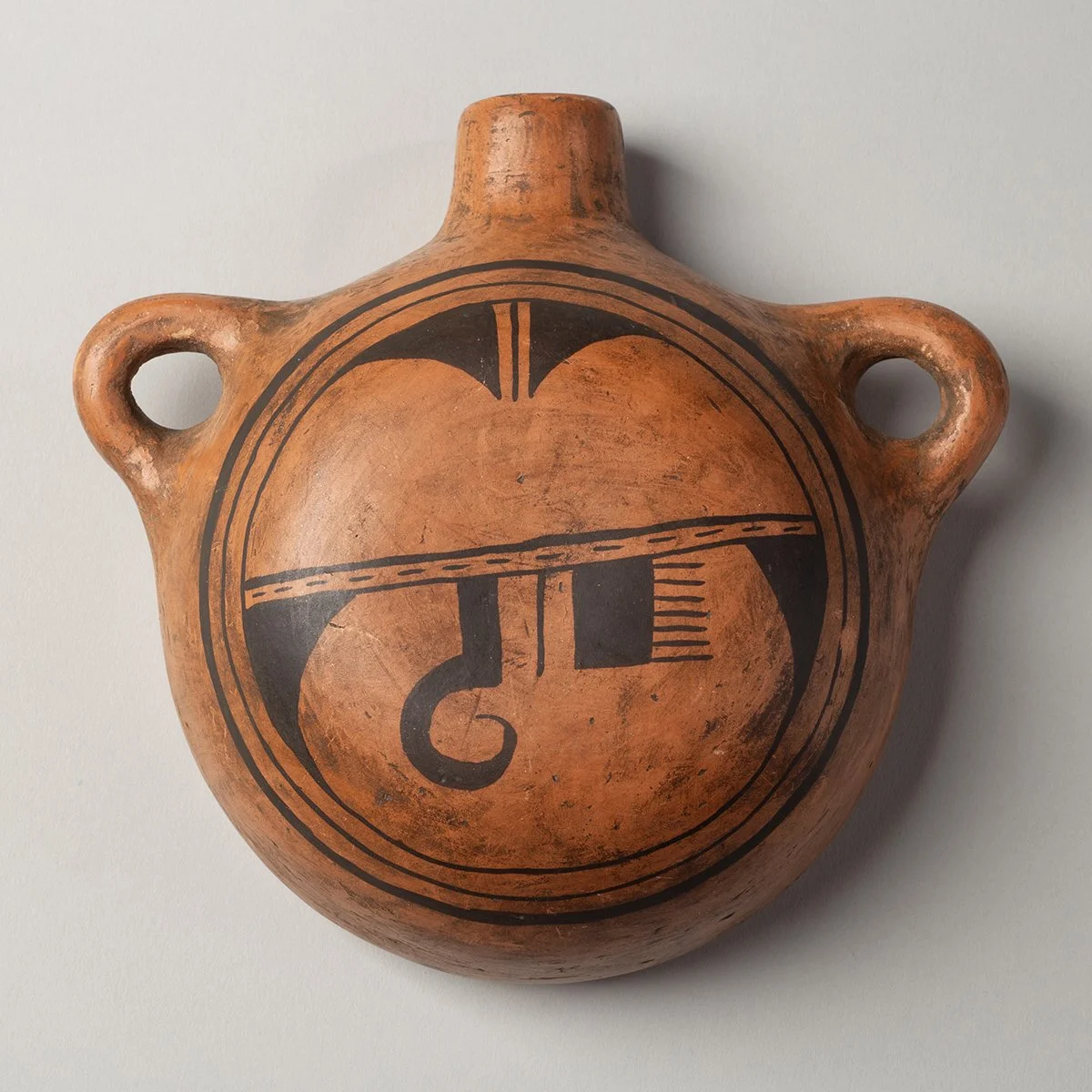 Image 2 of 3
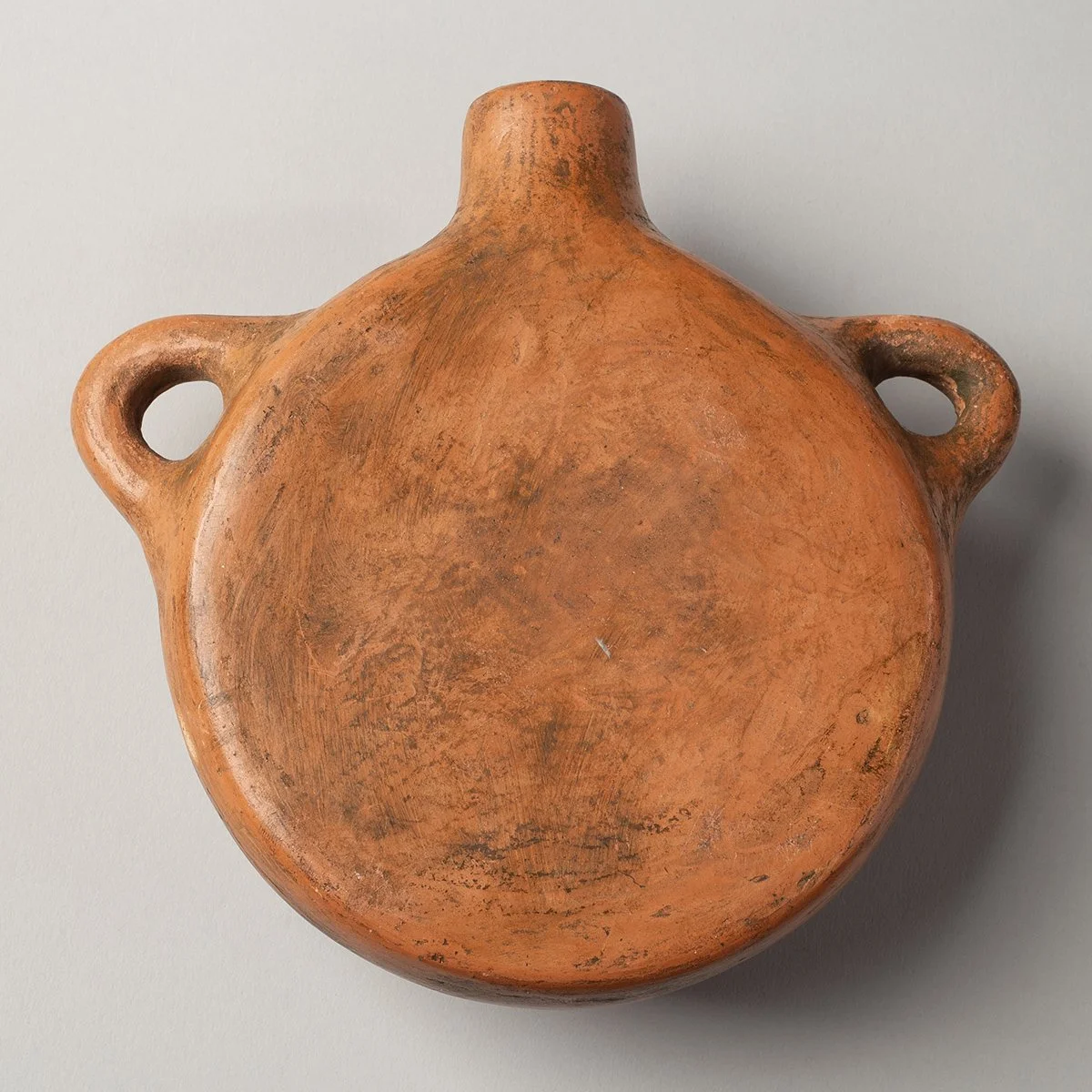 Image 3 of 3
Hopi, First Mesa, Arizona
1920
Ceramic, terracotta slip, mineral pigment
Height 7½ in (19.1 cm)
Provenance: Arizona trade
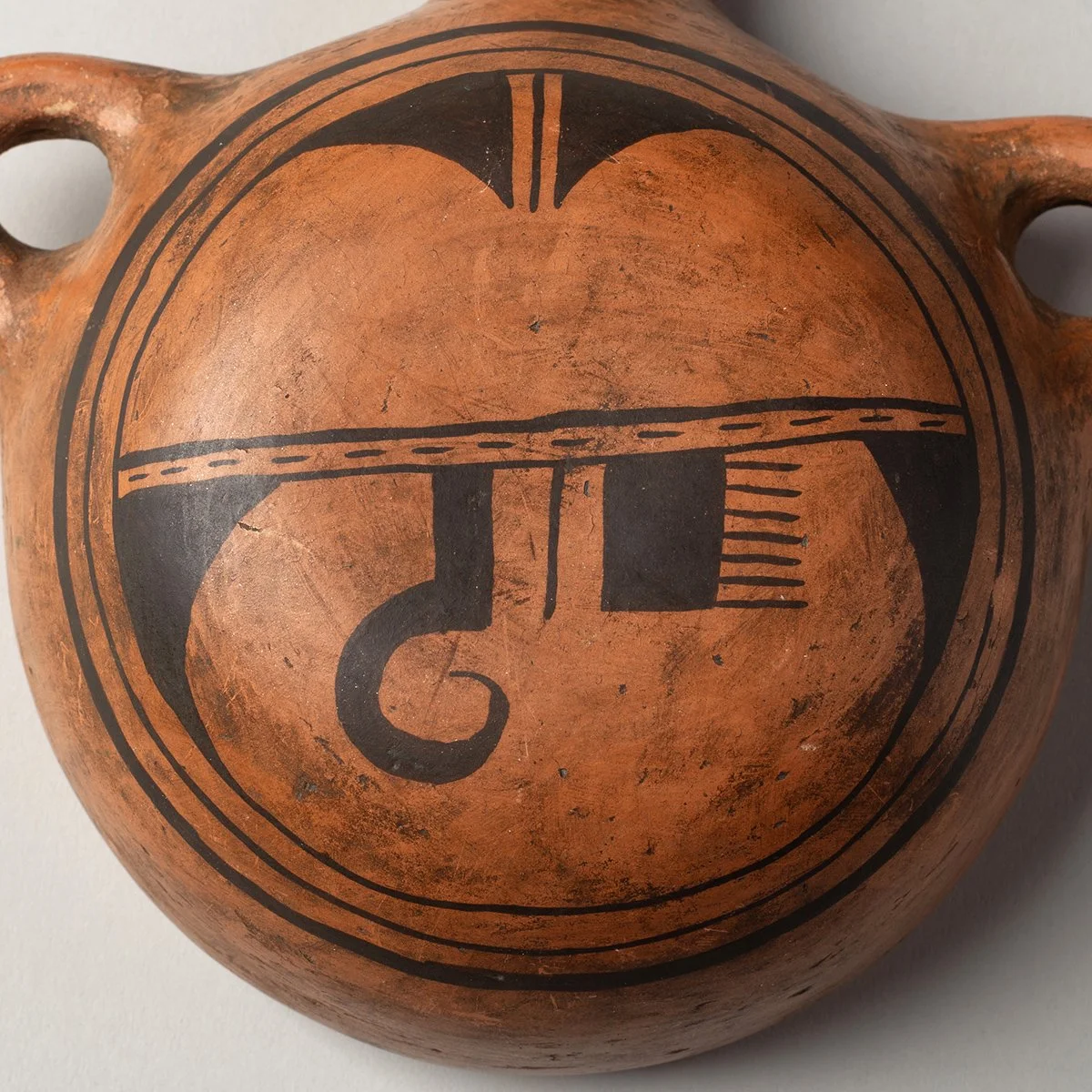
The canteen or double-spouted vessel form has deep roots in Pueblo ceramic history, and its revival in the hands of Hopi potters working in the Sikyatki tradition at the turn of the twentieth century reflects the broader renaissance of ancient forms initiated by Nampeyo of Hano on First Mesa in the 1890s. This example is attributed to the Nampeyo tradition and carries the terracotta orange slip and restrained black mineral pigment decoration characteristic of Sikyatki revival ware, with parallel line work and curved arc motifs organized around the body of the vessel. The tall cylindrical neck and small side spout are consistent with canteen forms produced by Hopi potters working in this tradition during the early decades of the twentieth century.
The surface retains its original terracotta slip with the warm, matte finish characteristic of Hopi pottery of this period, showing honest age and handling consistent with a vessel of nearly a century. The decoration is intentionally restrained, reflecting the Sikyatki aesthetic preference for spare, well-placed motifs over dense surface coverage. The Arizona trade provenance is consistent with Hopi material entering the market through Flagstaff and Winslow dealers during the active collecting period of the 1920s and 1930s.
We ship free anywhere in the world, fully insured, packed by hand.
Hopi, First Mesa, Arizona
1920
Ceramic, terracotta slip, mineral pigment
Height 7½ in (19.1 cm)
Provenance: Arizona trade
The canteen or double-spouted vessel form has deep roots in Pueblo ceramic history, and its revival in the hands of Hopi potters working in the Sikyatki tradition at the turn of the twentieth century reflects the broader renaissance of ancient forms initiated by Nampeyo of Hano on First Mesa in the 1890s. This example is attributed to the Nampeyo tradition and carries the terracotta orange slip and restrained black mineral pigment decoration characteristic of Sikyatki revival ware, with parallel line work and curved arc motifs organized around the body of the vessel. The tall cylindrical neck and small side spout are consistent with canteen forms produced by Hopi potters working in this tradition during the early decades of the twentieth century.
The surface retains its original terracotta slip with the warm, matte finish characteristic of Hopi pottery of this period, showing honest age and handling consistent with a vessel of nearly a century. The decoration is intentionally restrained, reflecting the Sikyatki aesthetic preference for spare, well-placed motifs over dense surface coverage. The Arizona trade provenance is consistent with Hopi material entering the market through Flagstaff and Winslow dealers during the active collecting period of the 1920s and 1930s.
We ship free anywhere in the world, fully insured, packed by hand.