Hopi, Arizona
Circa 1920
Cottonwood, pigment
Height 11 in (27.9 cm)
Provenance: Private collection, Southern California
This Hopi katsina figure dates to circa 1920 and is carved in the fully three-dimensional style characteristic of that period, with a cylindrical blue mask head featuring horizontal black eye slits and a circular mouth, set on a yellow neck ruff above a red painted body with teal geometric banding. The white kilt with painted geometric border at the hem and the yellow lower legs complete the ceremonial dress, rendered with the careful attention to painted regalia that identifies Hopi figures of this generation. The hands are held at the waist in the composed stance associated with figures made for ceremonial gifting rather than active dance performance.
The surface retains original polychrome pigment throughout, with the multiple color zones — blue, red, yellow, white, and teal — showing honest age and wear consistent with the period. Figures of this quality and state of preservation from the 1920s, when Hopi carving maintained strong ties to ceremonial tradition, represent the standard by which later commercial production is measured. The Southern California provenance is consistent with serious early collecting of Hopi material along the West Coast.
We ship free anywhere in the world, fully insured, packed by hand.
Hopi, Arizona
Circa 1920
Cottonwood, pigment
Height 11 in (27.9 cm)
Provenance: Private collection, Southern California
This Hopi katsina figure dates to circa 1920 and is carved in the fully three-dimensional style characteristic of that period, with a cylindrical blue mask head featuring horizontal black eye slits and a circular mouth, set on a yellow neck ruff above a red painted body with teal geometric banding. The white kilt with painted geometric border at the hem and the yellow lower legs complete the ceremonial dress, rendered with the careful attention to painted regalia that identifies Hopi figures of this generation. The hands are held at the waist in the composed stance associated with figures made for ceremonial gifting rather than active dance performance.
The surface retains original polychrome pigment throughout, with the multiple color zones — blue, red, yellow, white, and teal — showing honest age and wear consistent with the period. Figures of this quality and state of preservation from the 1920s, when Hopi carving maintained strong ties to ceremonial tradition, represent the standard by which later commercial production is measured. The Southern California provenance is consistent with serious early collecting of Hopi material along the West Coast.
We ship free anywhere in the world, fully insured, packed by hand.


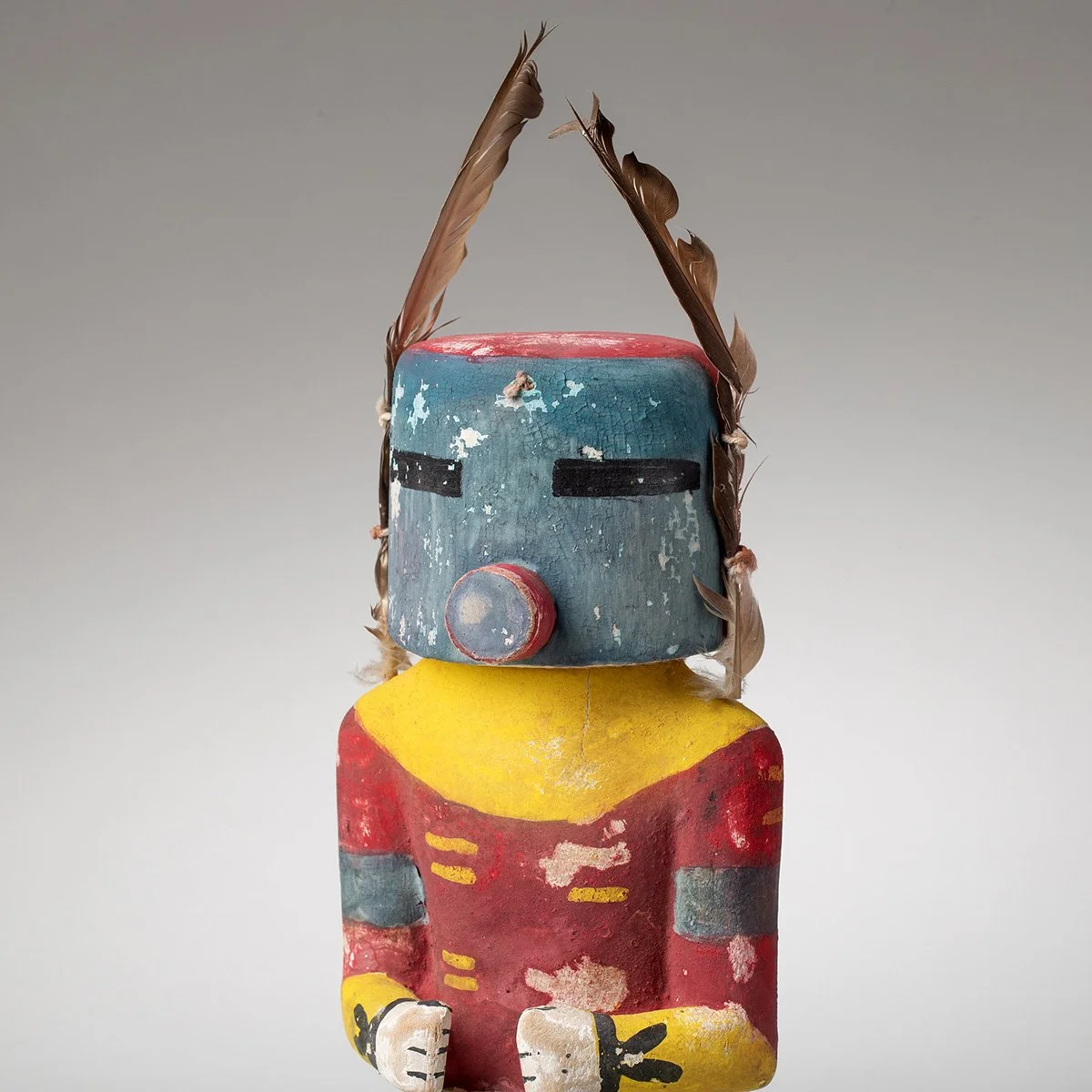 Image 1 of 7
 Image 2 of 7
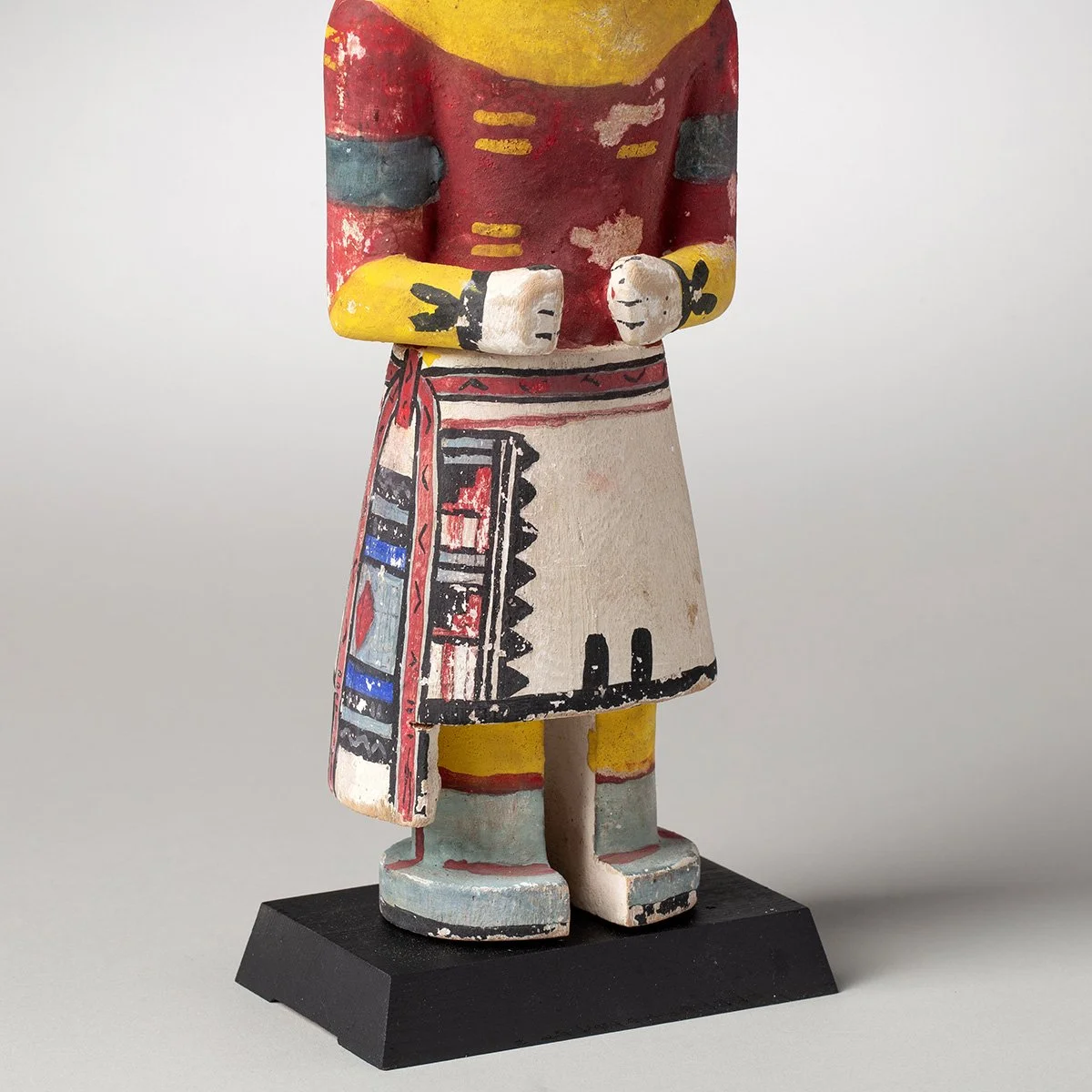 Image 3 of 7
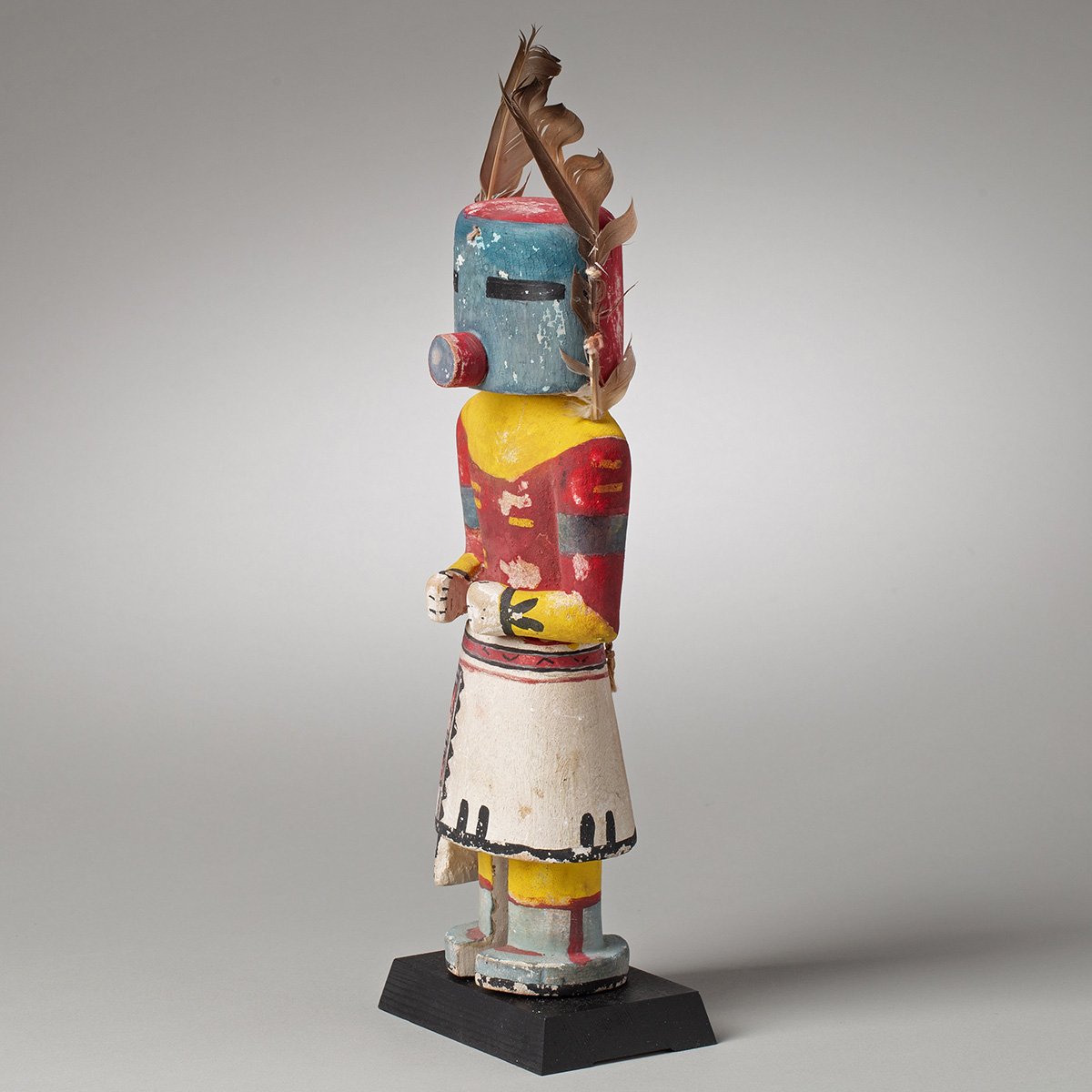 Image 4 of 7
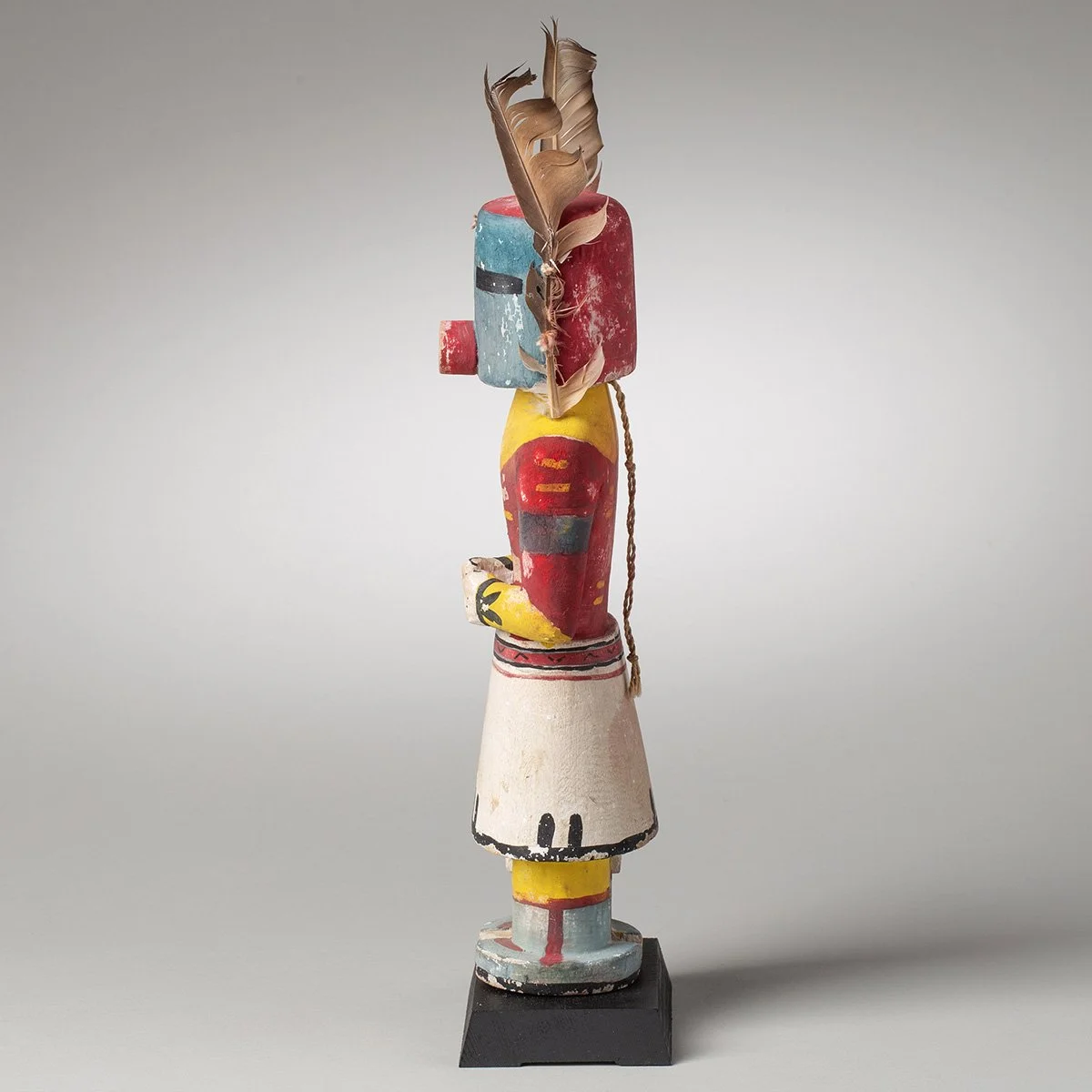 Image 5 of 7
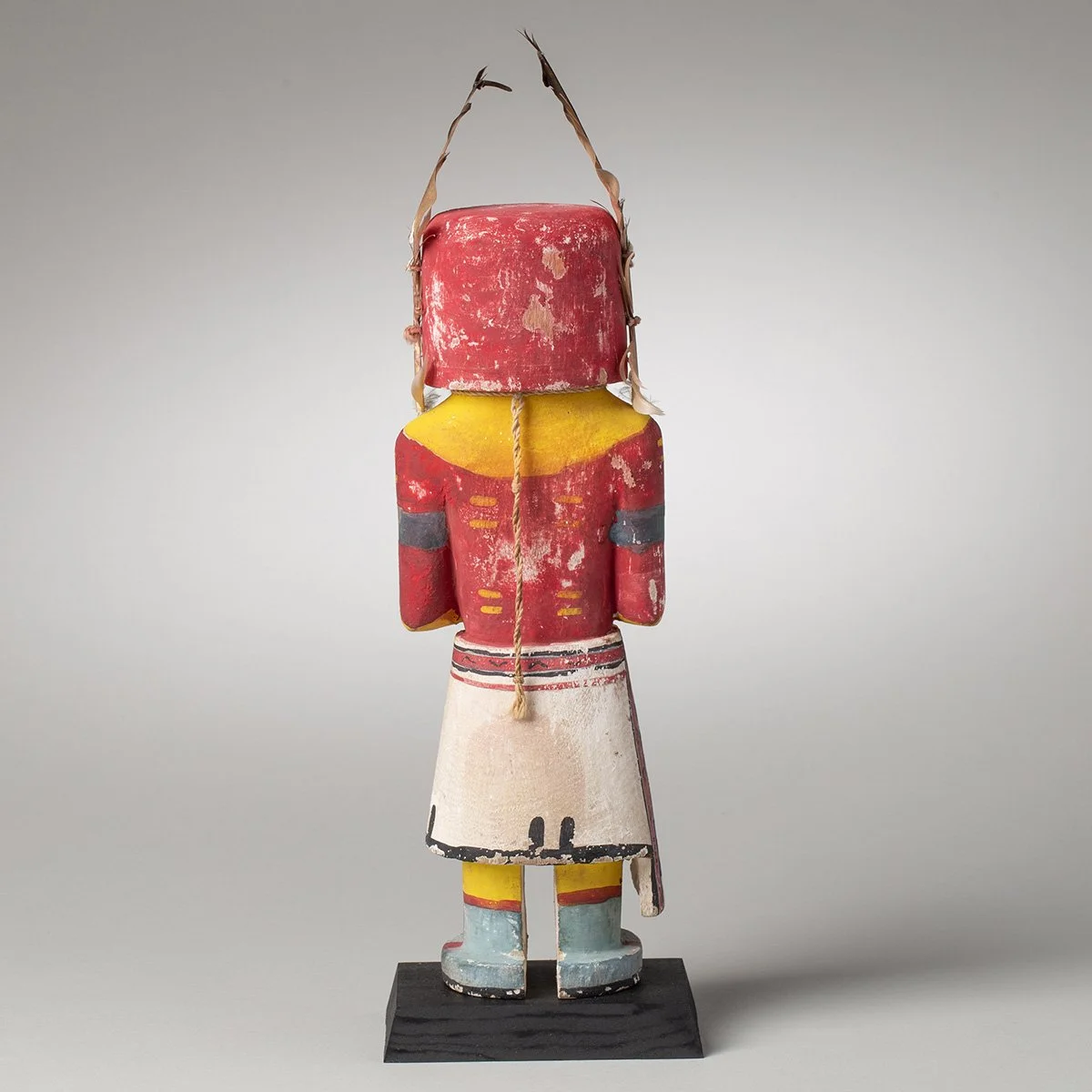 Image 6 of 7
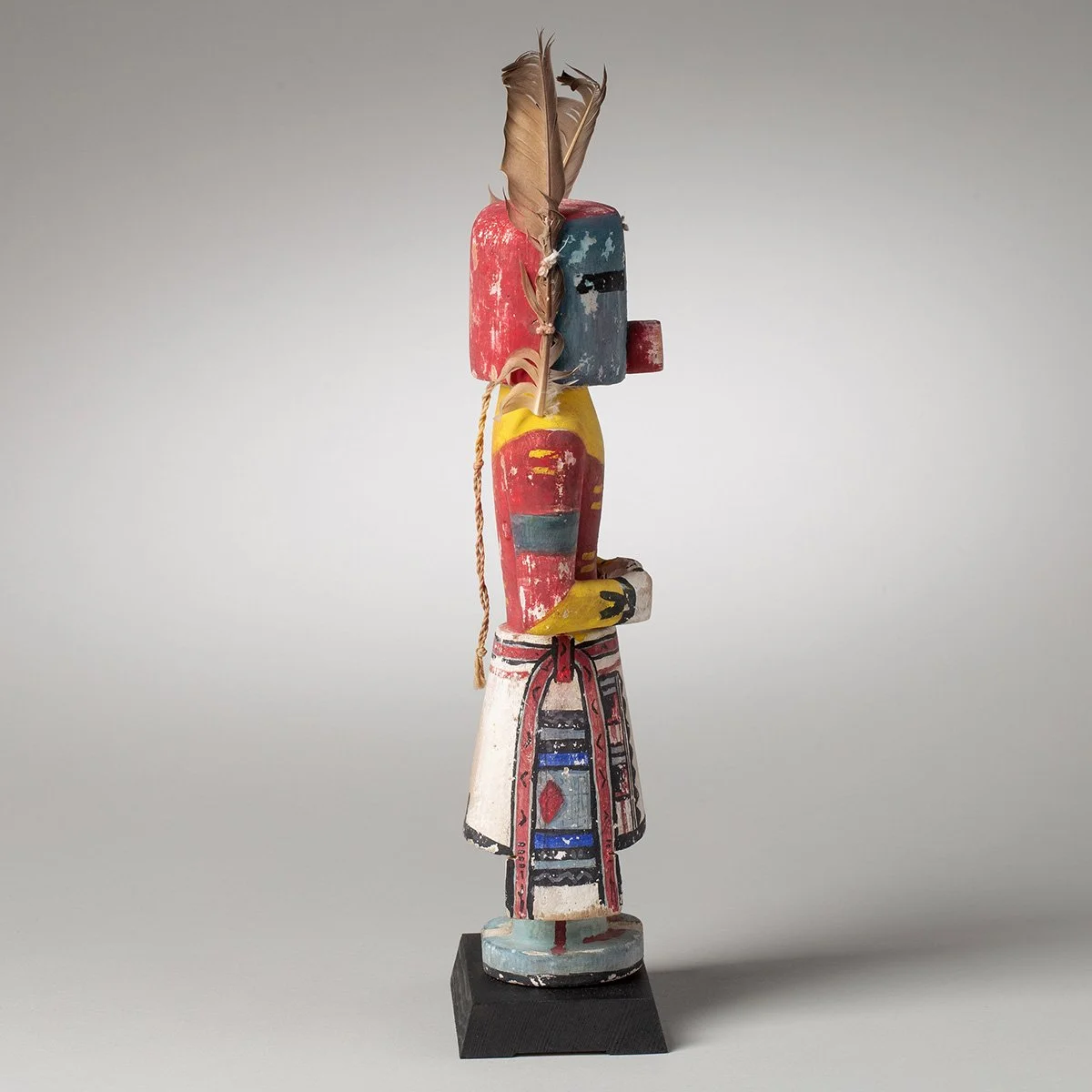 Image 7 of 7