Hopi, Arizona
Circa 1900
Cottonwood, pigment
Height 8 in (20.3 cm)
Provenance: Collection of Elizabeth Willis De Huff (1886–1983), thence by descent
This Hopi katsina figure dates to circa 1900 and retains its original painted surface, characteristic of early Pueblo carving before the elaboration of applied materials became standard in figures made for outside collectors. The form is restrained and direct, consistent with the older tradition of katsina figures carved for ceremonial gifting rather than commercial sale. Its scale and handling reflect the conventions of Hopi carving at the turn of the century.
Elizabeth Willis De Huff (1886–1983) was an artist, educator, and author whose Santa Fe home became an informal teaching studio for Native American students after arts instruction was restricted at the Santa Fe Indian School. Her circle included Fred Kabotie and Otis Polelonema, two of the most significant Hopi painters of the twentieth century, and her collection reflects sustained personal engagement with Hopi material culture. This figure descended through her family and has not previously appeared on the market.
We ship free anywhere in the world, fully insured, packed by hand.
Hopi, Arizona
Circa 1900
Cottonwood, pigment
Height 8 in (20.3 cm)
Provenance: Collection of Elizabeth Willis De Huff (1886–1983), thence by descent
This Hopi katsina figure dates to circa 1900 and retains its original painted surface, characteristic of early Pueblo carving before the elaboration of applied materials became standard in figures made for outside collectors. The form is restrained and direct, consistent with the older tradition of katsina figures carved for ceremonial gifting rather than commercial sale. Its scale and handling reflect the conventions of Hopi carving at the turn of the century.
Elizabeth Willis De Huff (1886–1983) was an artist, educator, and author whose Santa Fe home became an informal teaching studio for Native American students after arts instruction was restricted at the Santa Fe Indian School. Her circle included Fred Kabotie and Otis Polelonema, two of the most significant Hopi painters of the twentieth century, and her collection reflects sustained personal engagement with Hopi material culture. This figure descended through her family and has not previously appeared on the market.
We ship free anywhere in the world, fully insured, packed by hand.


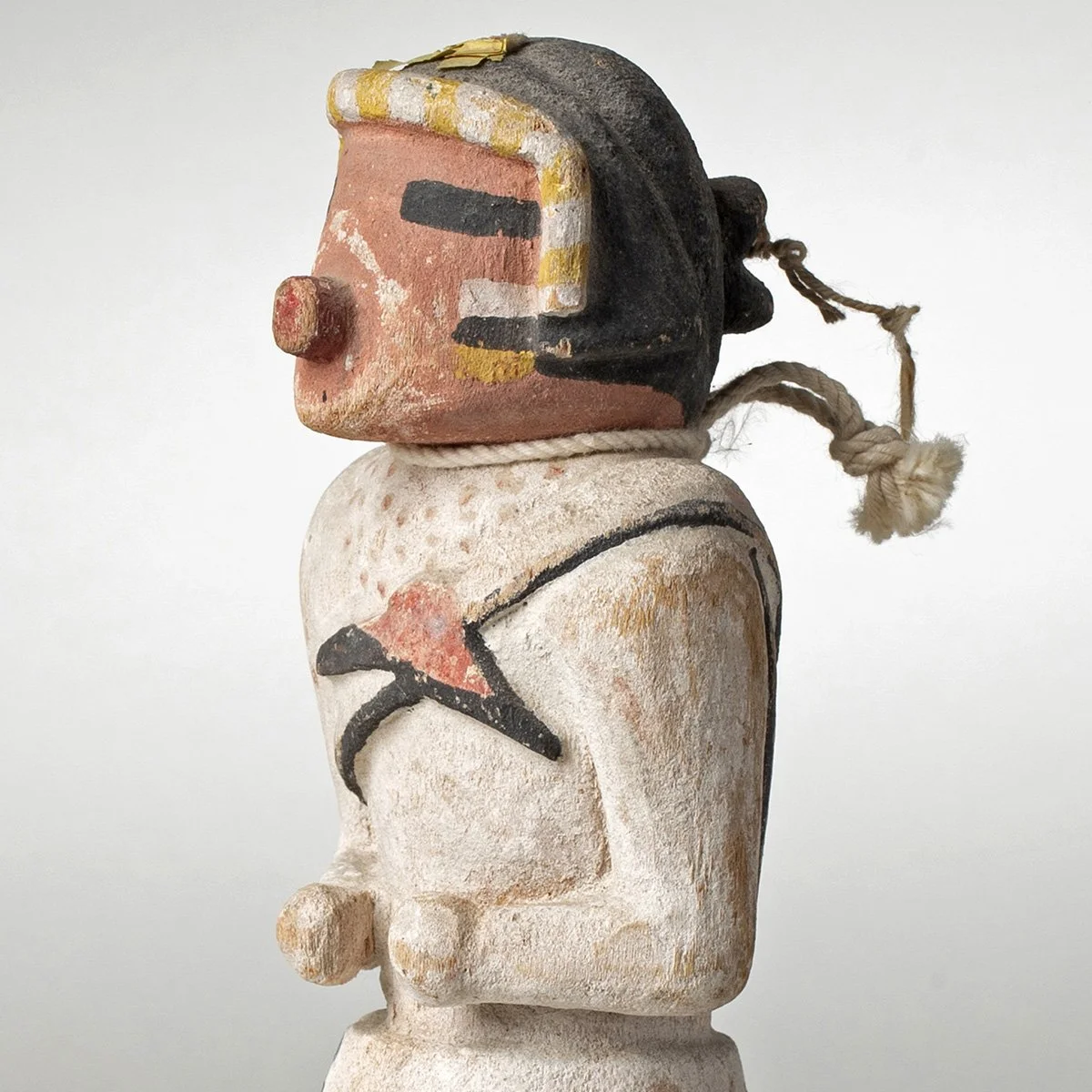 Image 1 of 10
 Image 2 of 10
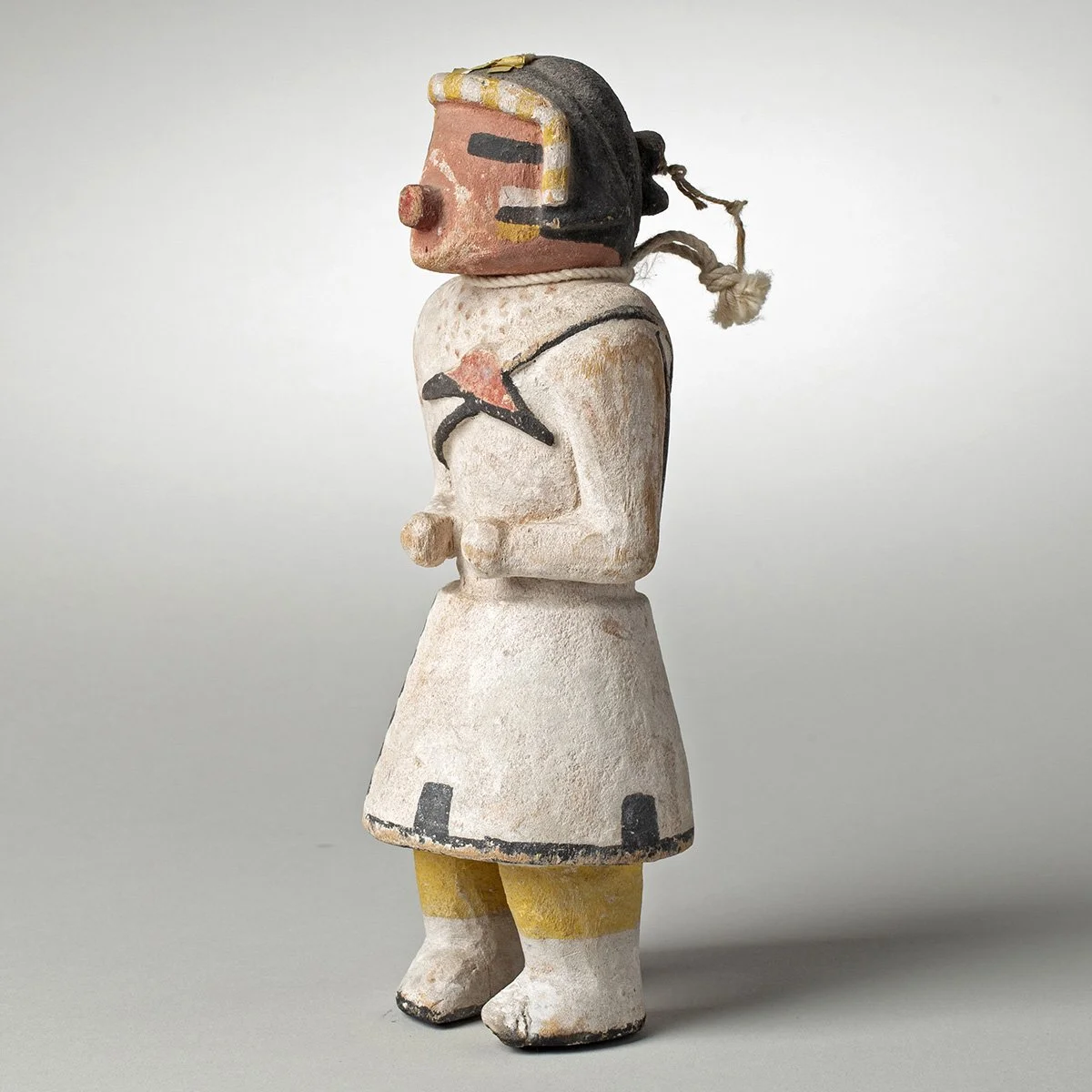 Image 3 of 10
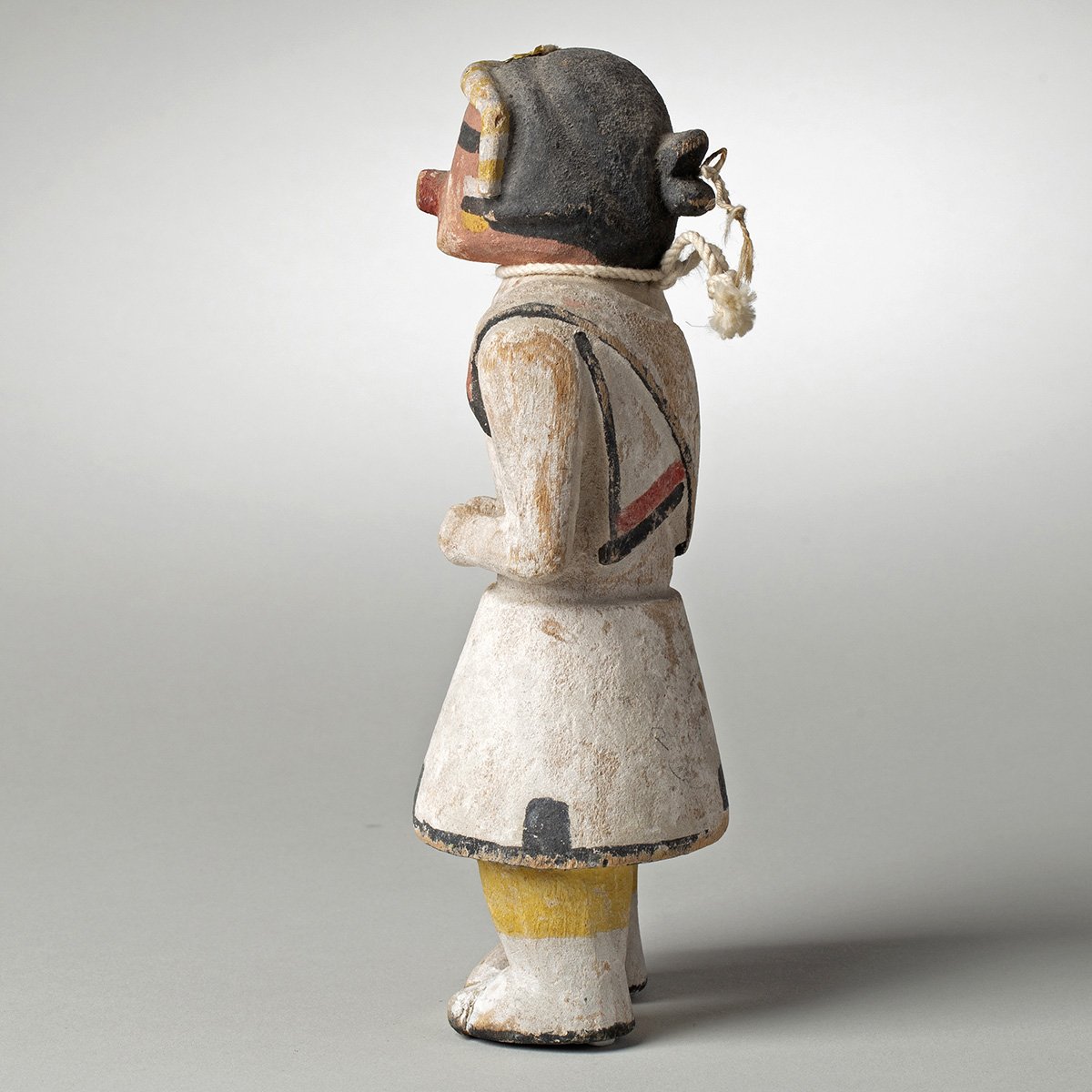 Image 4 of 10
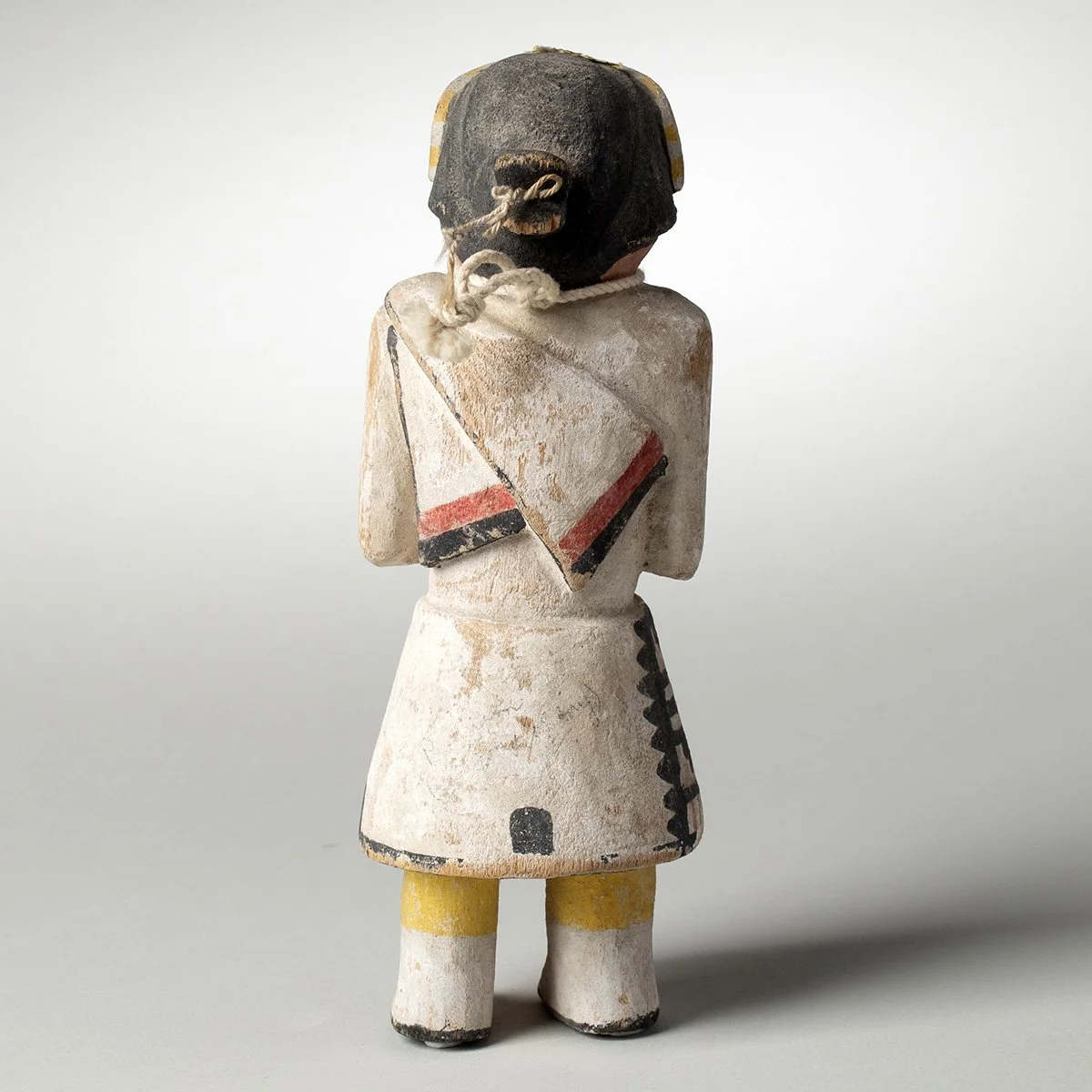 Image 5 of 10
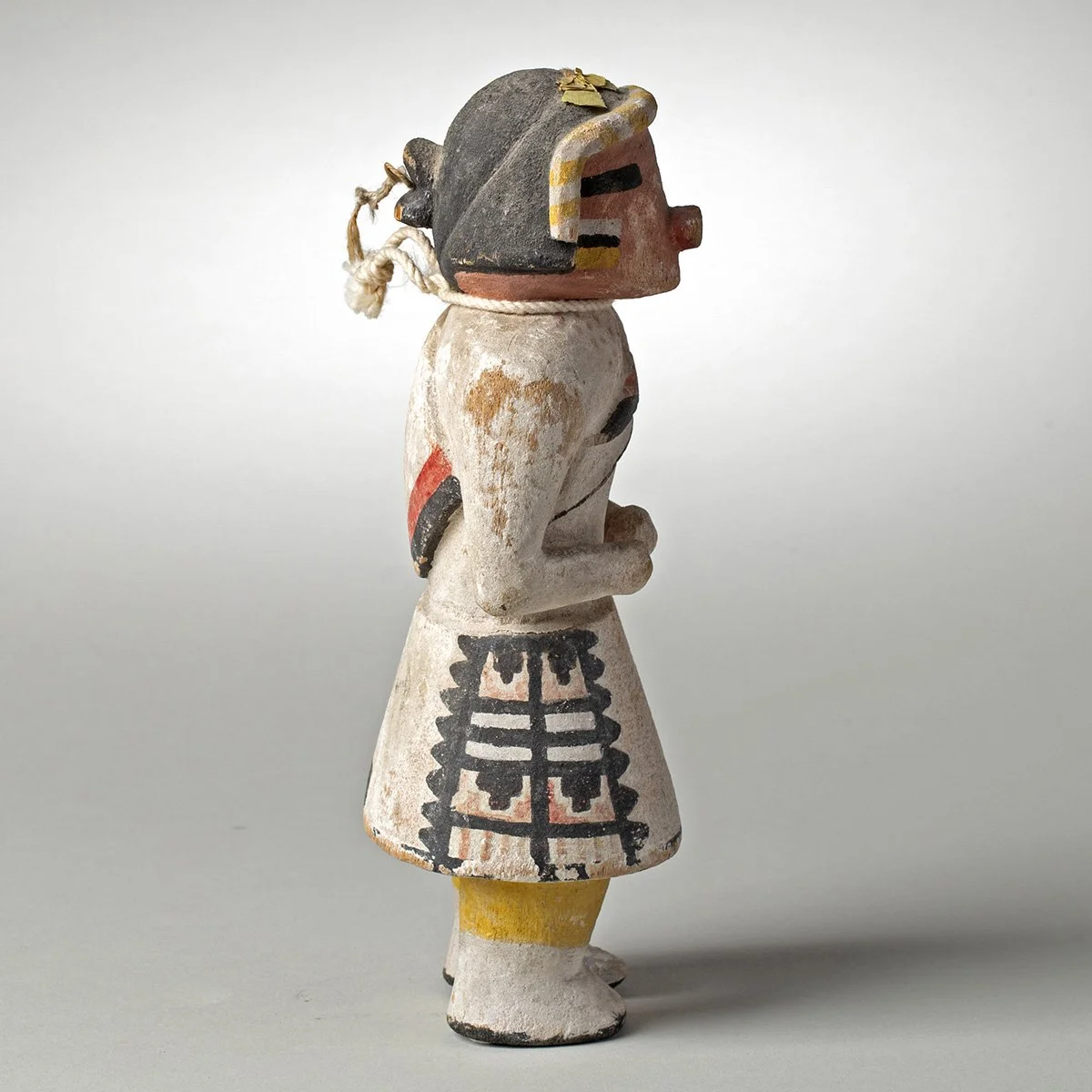 Image 6 of 10
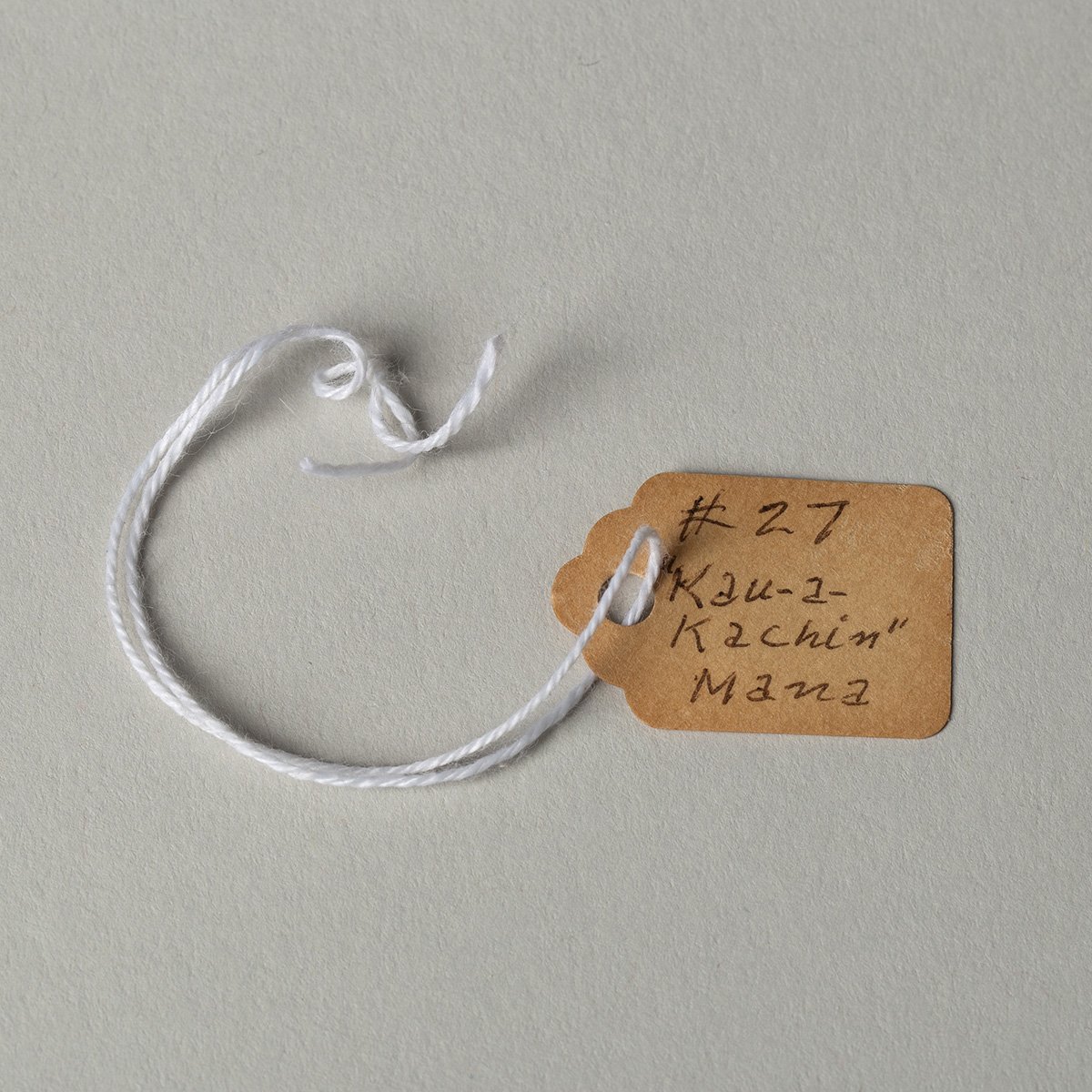 Image 7 of 10
 Image 8 of 10
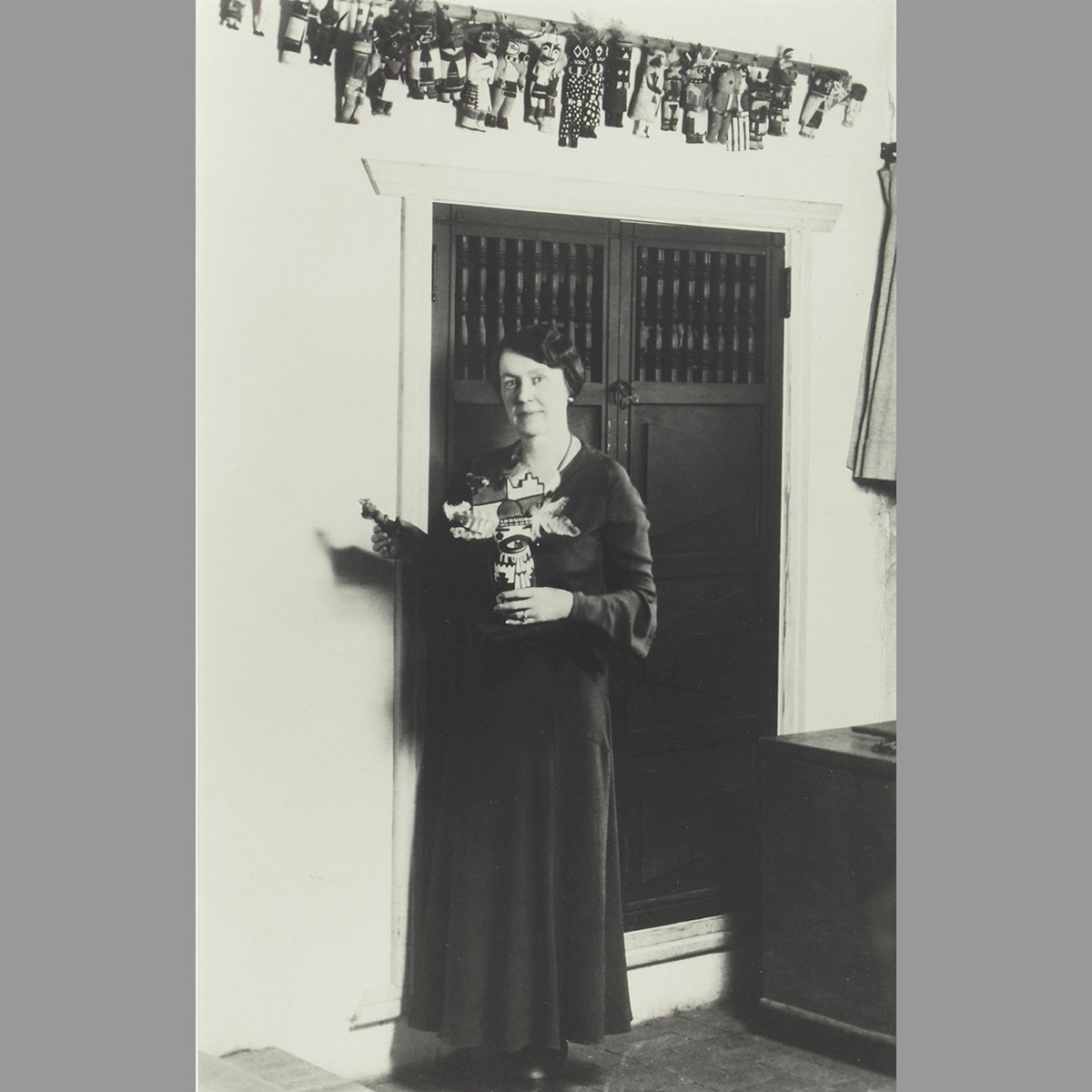 Image 9 of 10
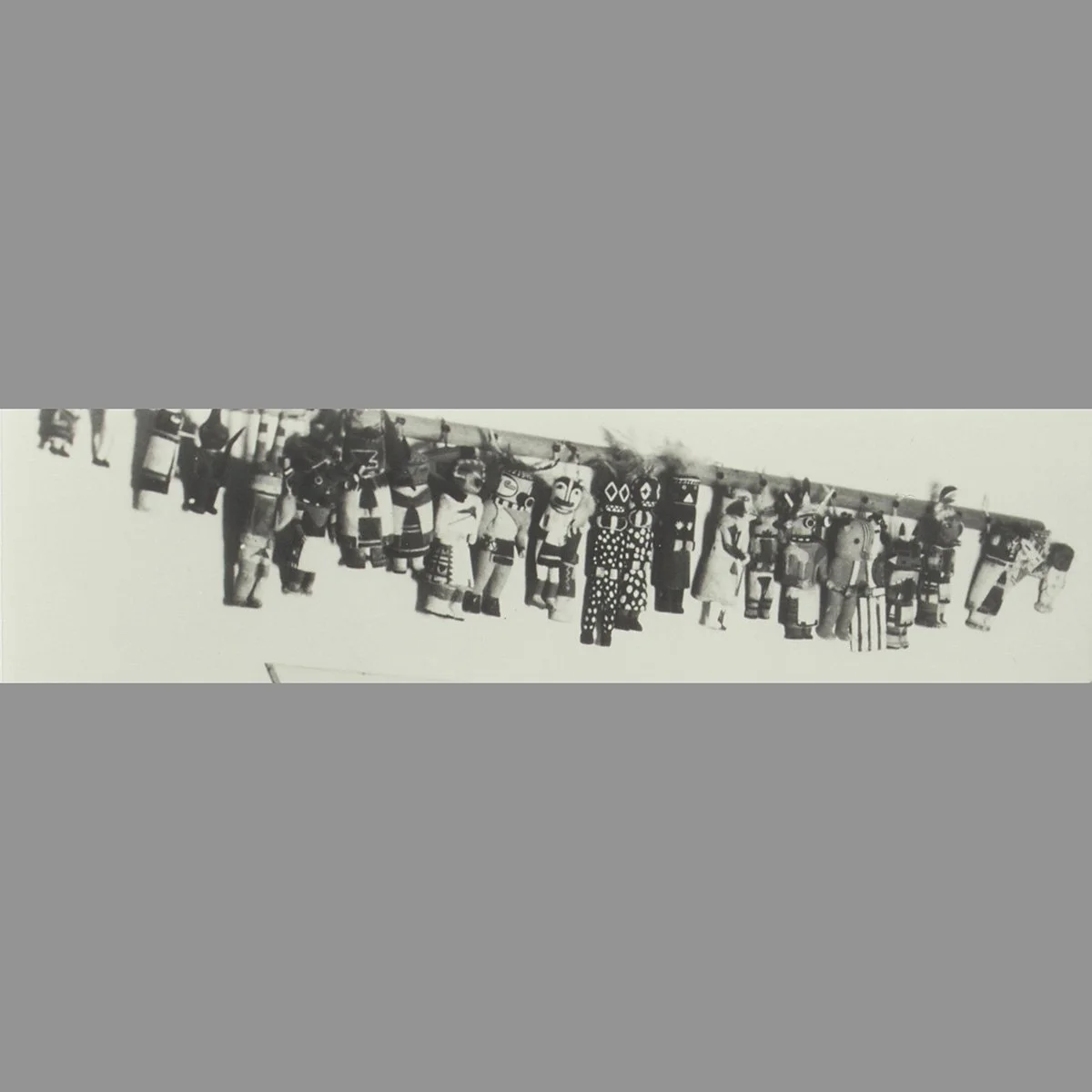 Image 10 of 10