Hopi, Arizona
1920s
Cottonwood, pigment
Height 8⅞ in (22.5 cm)
Provenance: James and Marlene Henerson, Santa Monica, CA
The Katsinmana, or Katsina Maiden, represents the female counterpart to the male katsina dancers in Hopi ceremonial life, appearing during the Niman and other dances as a figure associated with fertility, corn, and the nurturing forces of the natural world. This example dates to the 1920s and is carved in the composed standing pose characteristic of maiden figures, with a human face rendered in careful painted detail and wheel-form ear ornaments at the sides of the head. The flat stepped tablita headdress, painted in red, yellow, and black with geometric patterning, is the most distinctive element of the Katsinmana and is executed here with clarity and traditional precision.
The body is dressed in a black painted dress with blue and red diagonal sash, the hands held together at the waist in the ceremonial posture associated with the maiden dancer role. The surface retains original mineral pigment throughout with wear consistent with age and honest use. Provenance from the James and Marlene Henerson collection in Santa Monica indicates a careful private collecting history on the West Coast.
We ship free anywhere in the world, fully insured, packed by hand.
Hopi, Arizona
1920s
Cottonwood, pigment
Height 8⅞ in (22.5 cm)
Provenance: James and Marlene Henerson, Santa Monica, CA
The Katsinmana, or Katsina Maiden, represents the female counterpart to the male katsina dancers in Hopi ceremonial life, appearing during the Niman and other dances as a figure associated with fertility, corn, and the nurturing forces of the natural world. This example dates to the 1920s and is carved in the composed standing pose characteristic of maiden figures, with a human face rendered in careful painted detail and wheel-form ear ornaments at the sides of the head. The flat stepped tablita headdress, painted in red, yellow, and black with geometric patterning, is the most distinctive element of the Katsinmana and is executed here with clarity and traditional precision.
The body is dressed in a black painted dress with blue and red diagonal sash, the hands held together at the waist in the ceremonial posture associated with the maiden dancer role. The surface retains original mineral pigment throughout with wear consistent with age and honest use. Provenance from the James and Marlene Henerson collection in Santa Monica indicates a careful private collecting history on the West Coast.
We ship free anywhere in the world, fully insured, packed by hand.


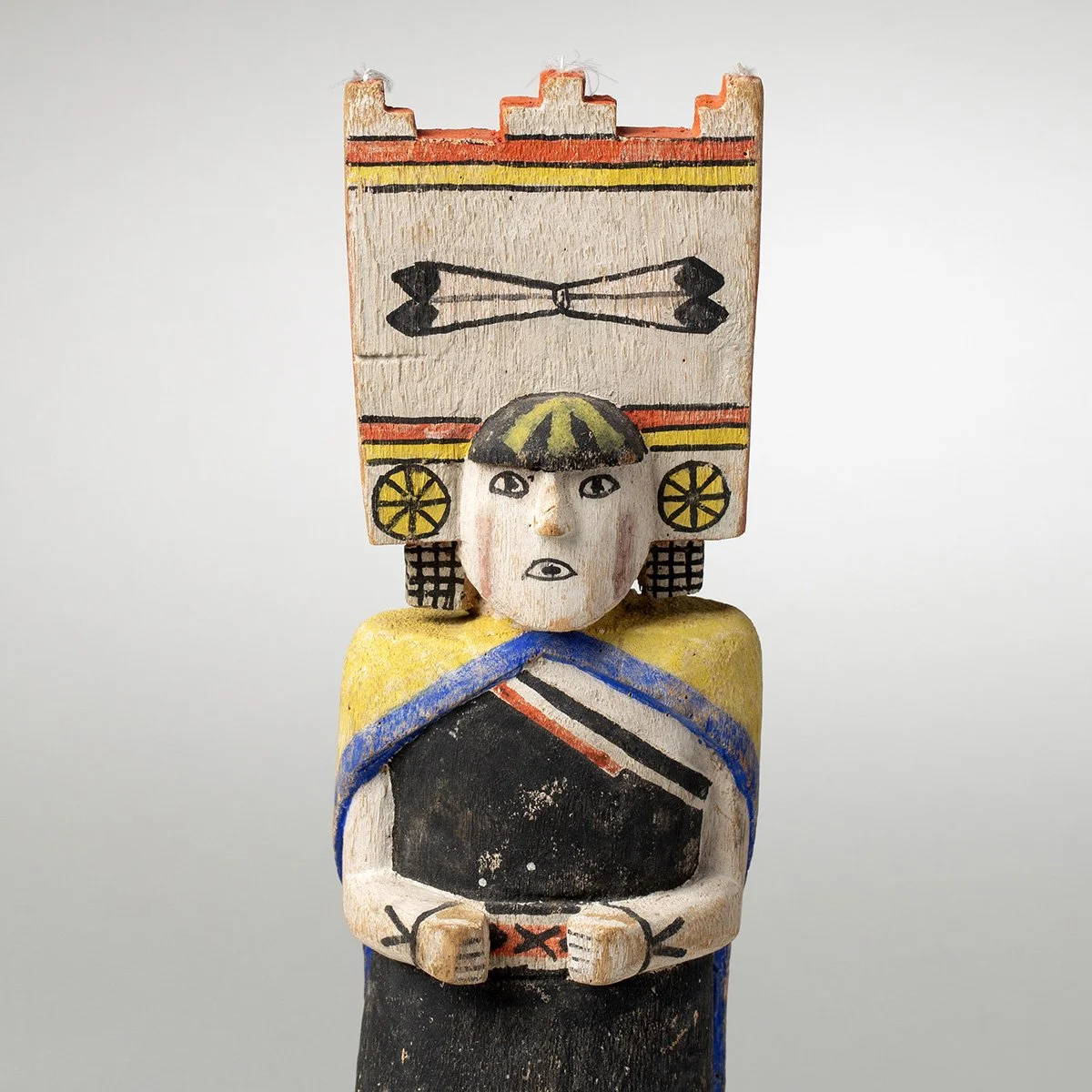 Image 1 of 6
 Image 2 of 6
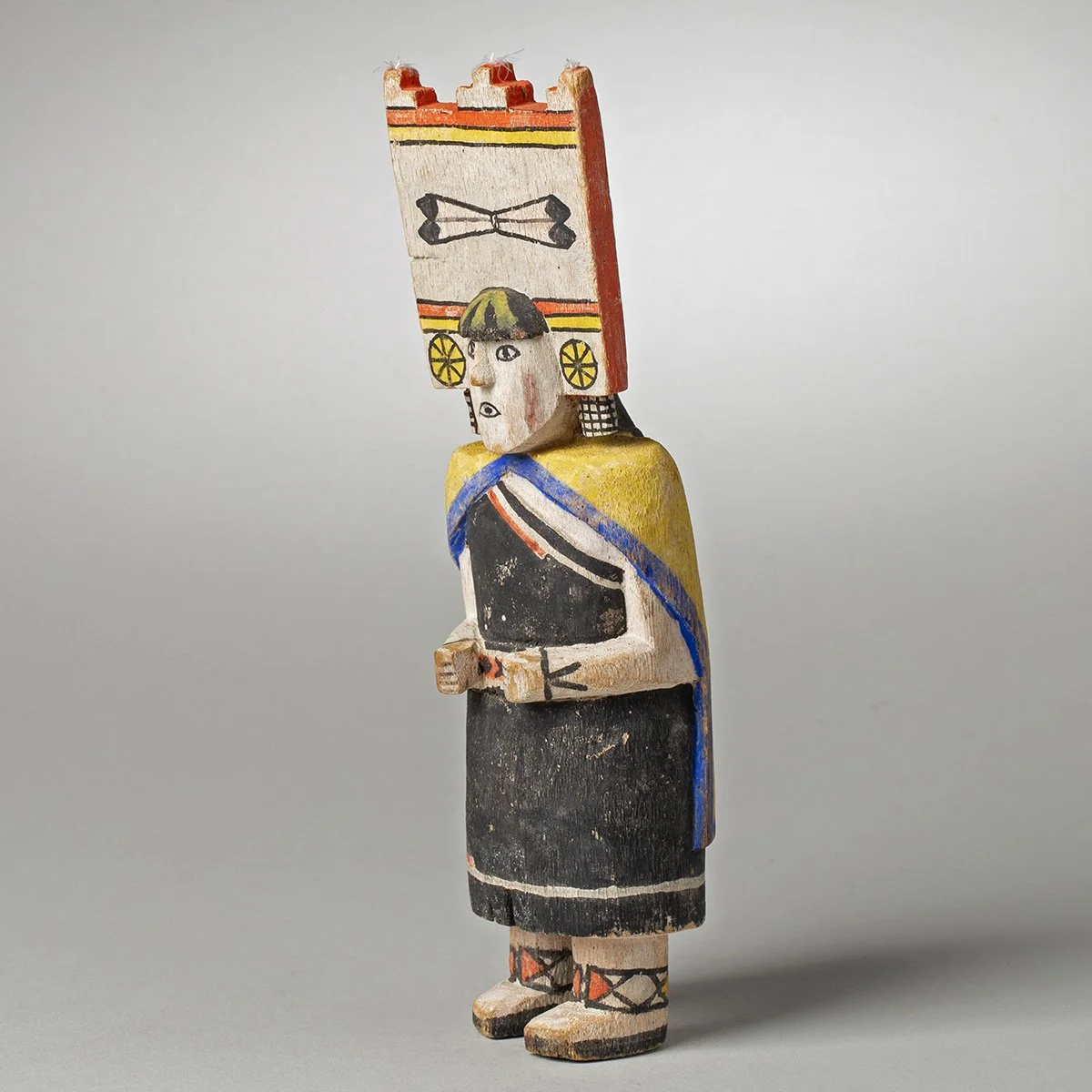 Image 3 of 6
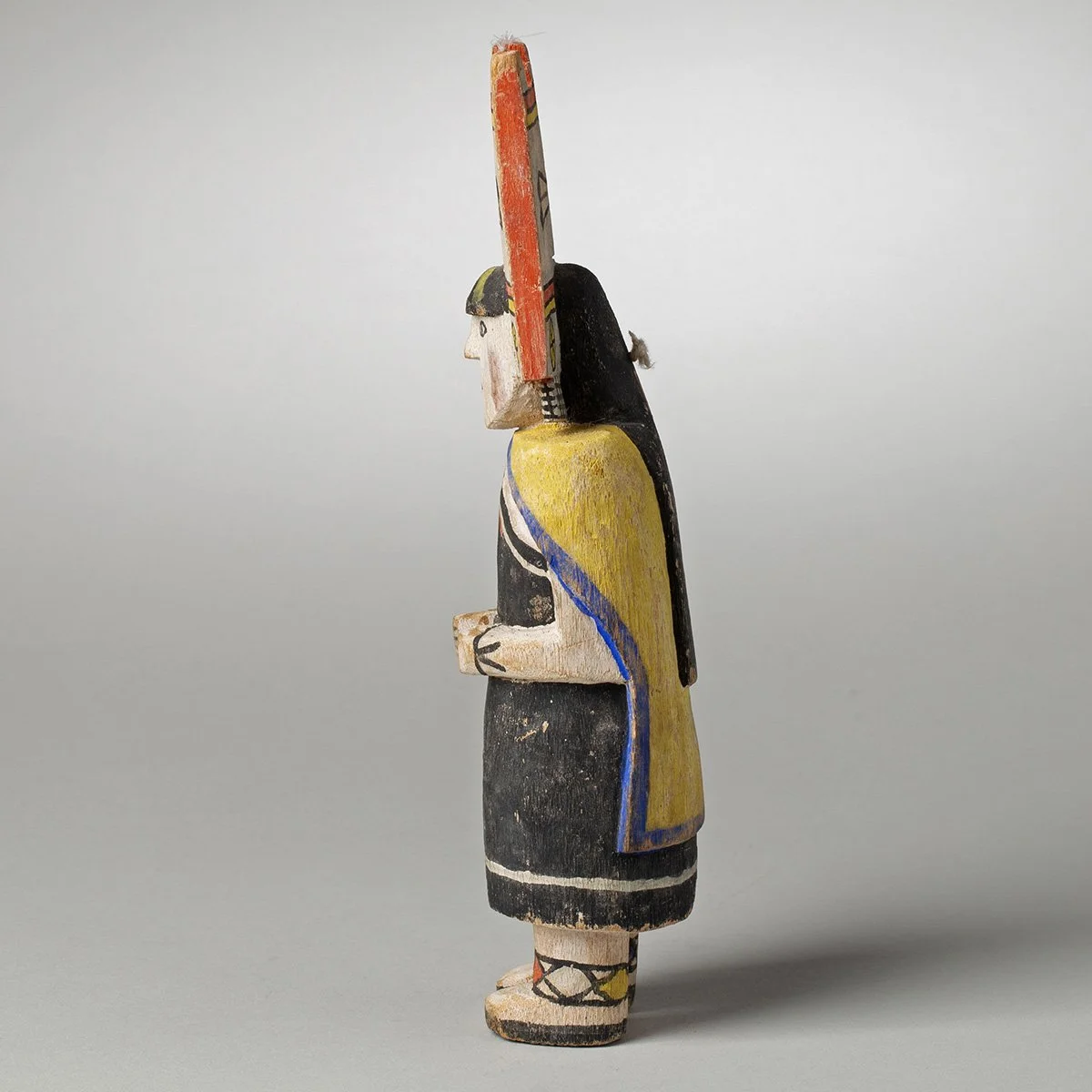 Image 4 of 6
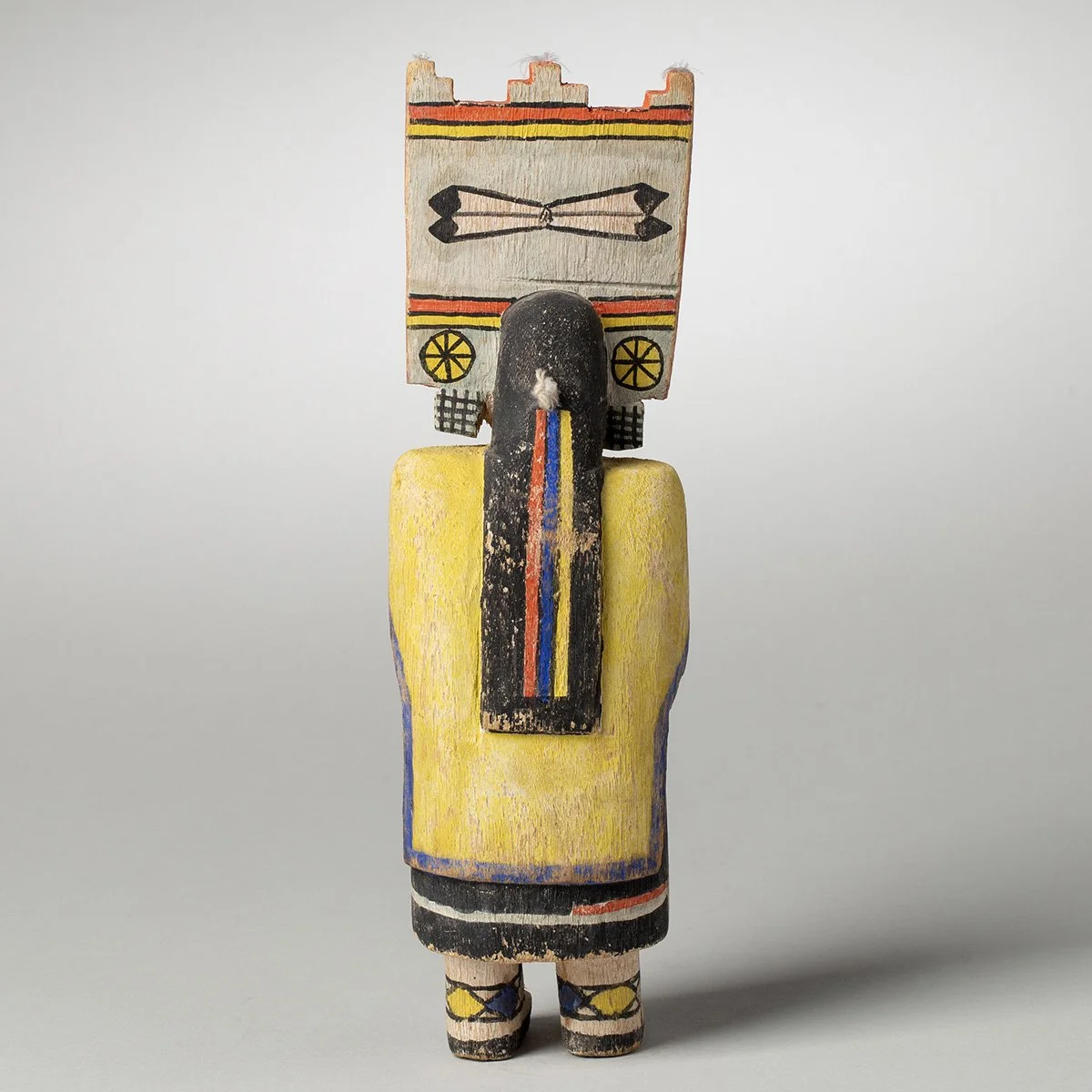 Image 5 of 6
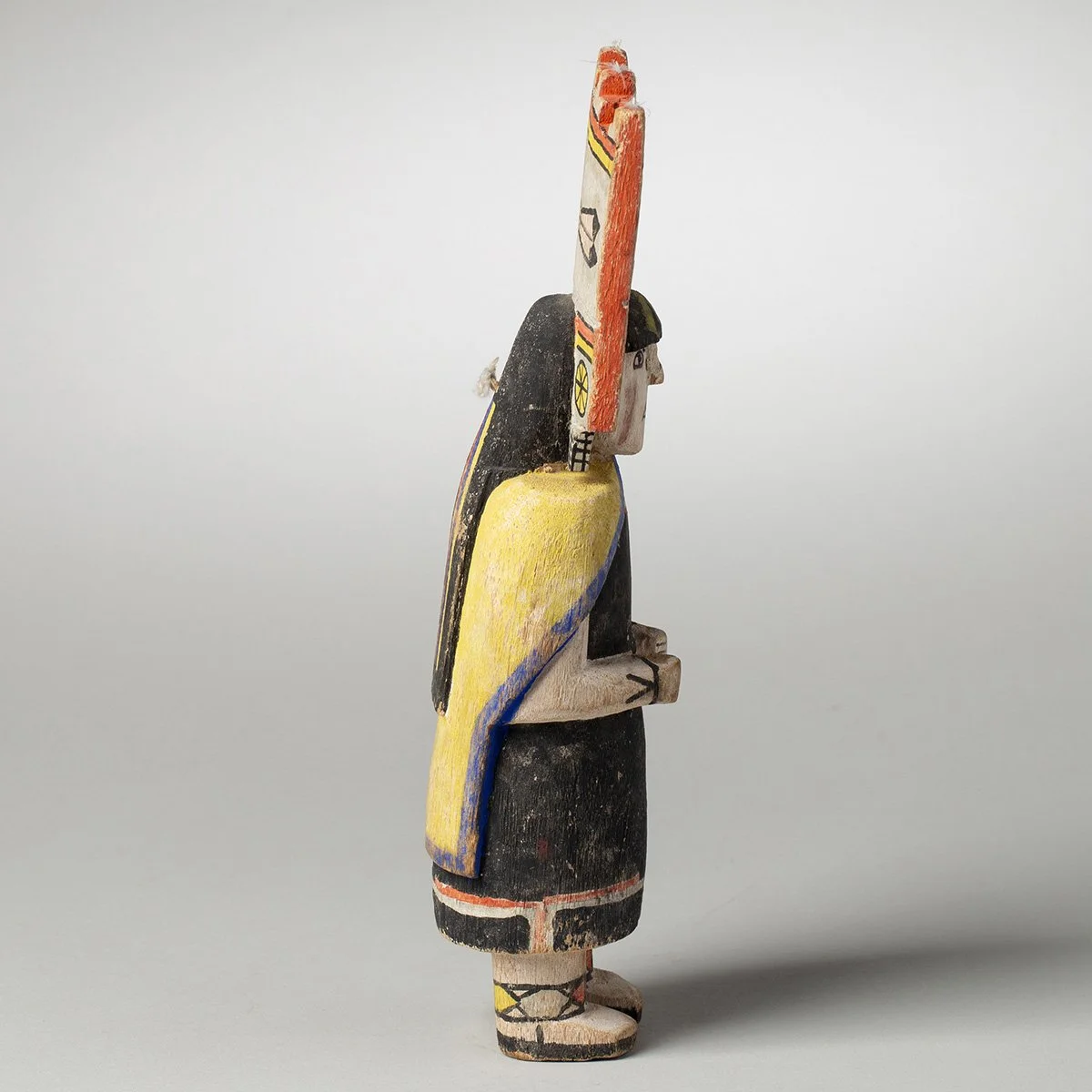 Image 6 of 6