Hopi
Circa 1920
Cottonwood root, natural pigments, feathers
Height 11"
Provenance: Private collection, Tucson, AZ
This tihu was carved from cottonwood root and retains its original feather headdress and full complement of attachments, a completeness that is increasingly uncommon in early 20th-century examples. The case mask is painted in bold polychrome, turquoise, yellow, orange, black, and white, with fine geometric patterning across the tabletop form that identifies the specific ceremonial being. The white malo, the woven kilt from which this katsina takes its name, is rendered prominently on the lower figure and retains its painted detail with clarity.
Tihu carved in the 1920s represent the tradition at a moment of confident and accomplished production, when carvers working within living ceremonial practice produced figures of strong formal presence. The paint surface on this example is stable and unrestored, with the natural aging consistent with a piece that has been carefully preserved rather than handled heavily. The retention of the original feathers and attachments gives this figure a ceremonial completeness that significantly distinguishes it from examples that have lost these elements over time.
We ship free anywhere in the world, fully insured, packed by hand.
Hopi
Circa 1920
Cottonwood root, natural pigments, feathers
Height 11"
Provenance: Private collection, Tucson, AZ
This tihu was carved from cottonwood root and retains its original feather headdress and full complement of attachments, a completeness that is increasingly uncommon in early 20th-century examples. The case mask is painted in bold polychrome, turquoise, yellow, orange, black, and white, with fine geometric patterning across the tabletop form that identifies the specific ceremonial being. The white malo, the woven kilt from which this katsina takes its name, is rendered prominently on the lower figure and retains its painted detail with clarity.
Tihu carved in the 1920s represent the tradition at a moment of confident and accomplished production, when carvers working within living ceremonial practice produced figures of strong formal presence. The paint surface on this example is stable and unrestored, with the natural aging consistent with a piece that has been carefully preserved rather than handled heavily. The retention of the original feathers and attachments gives this figure a ceremonial completeness that significantly distinguishes it from examples that have lost these elements over time.
We ship free anywhere in the world, fully insured, packed by hand.


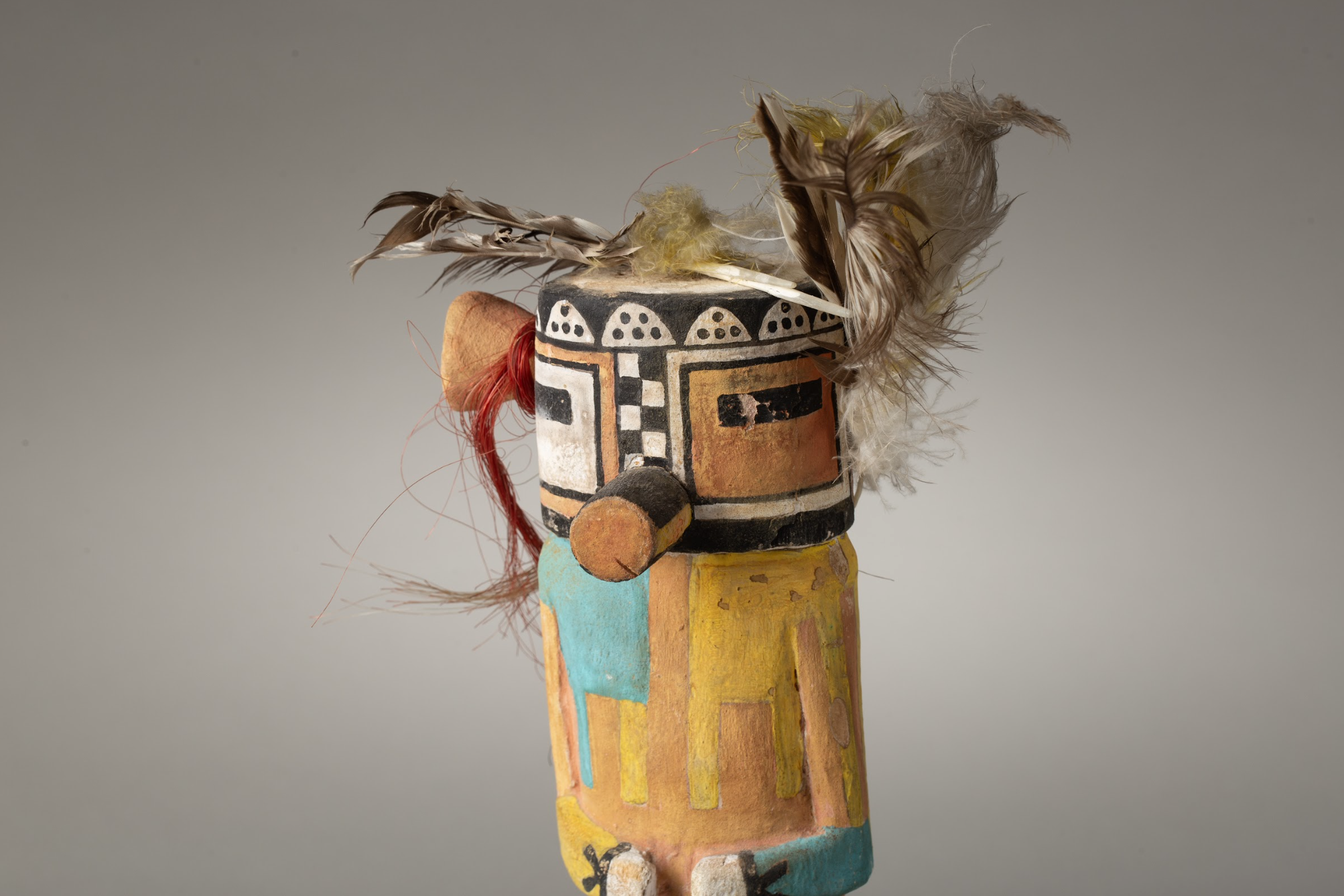 Image 1 of 6
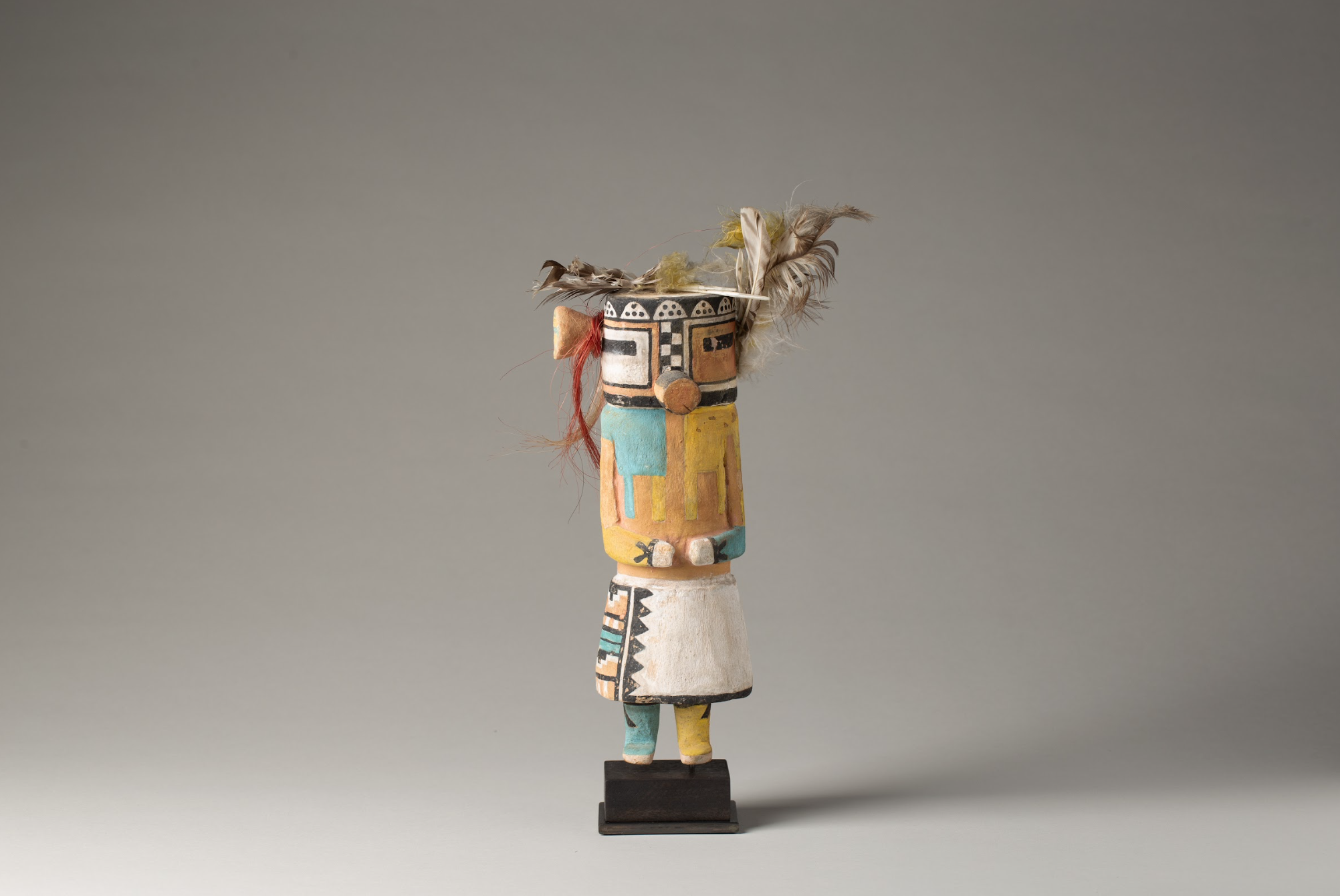 Image 2 of 6
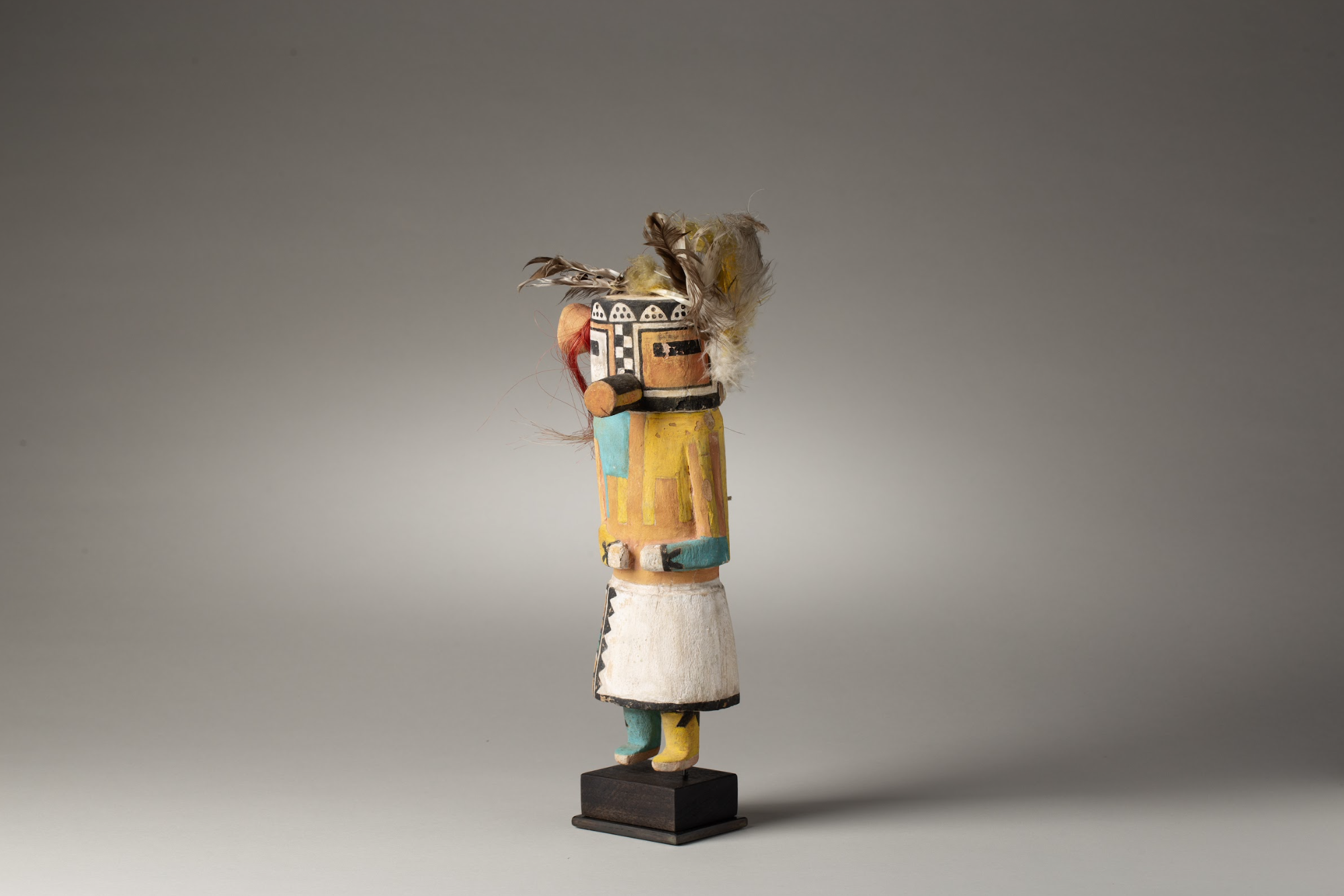 Image 3 of 6
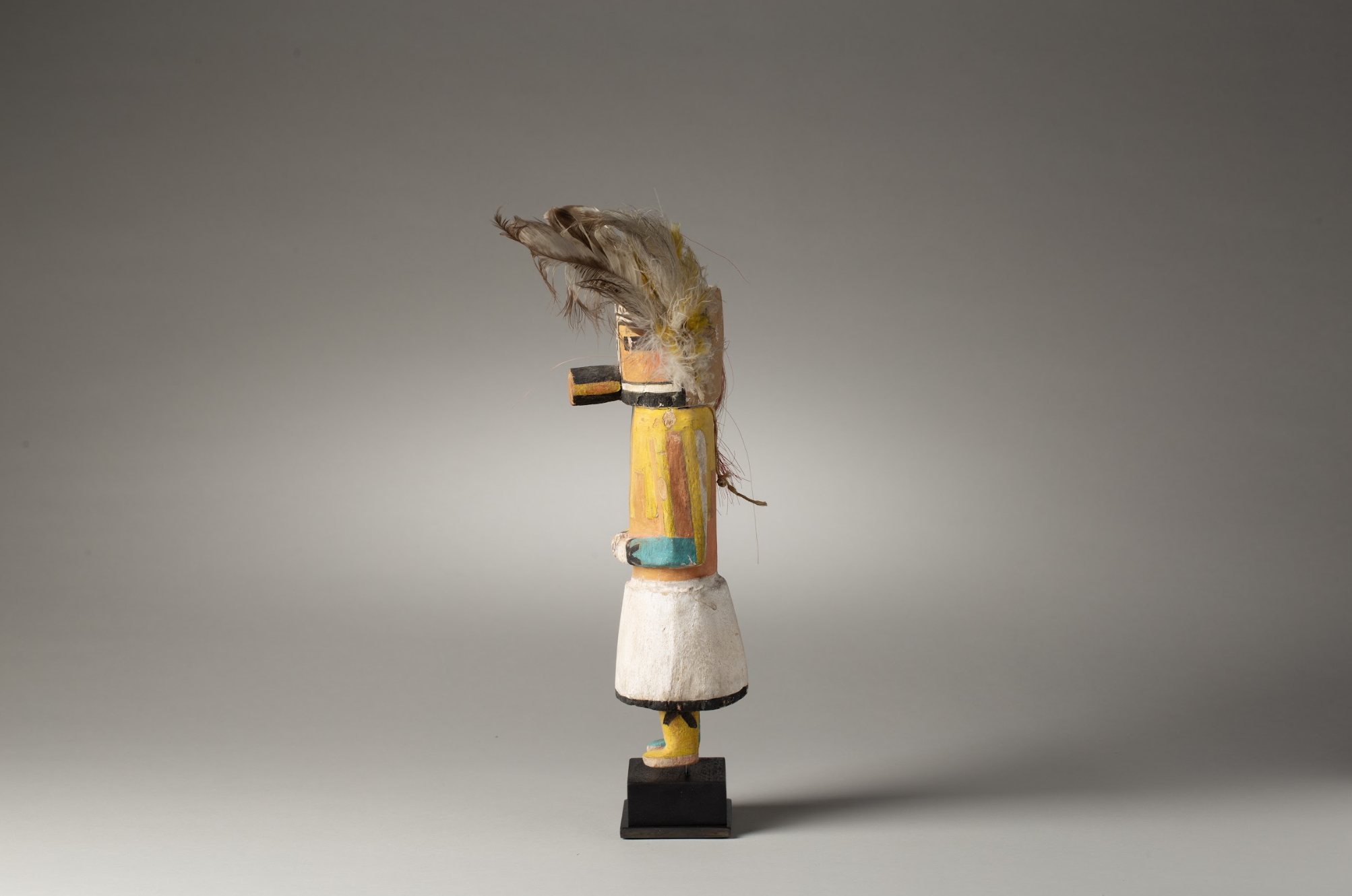 Image 4 of 6
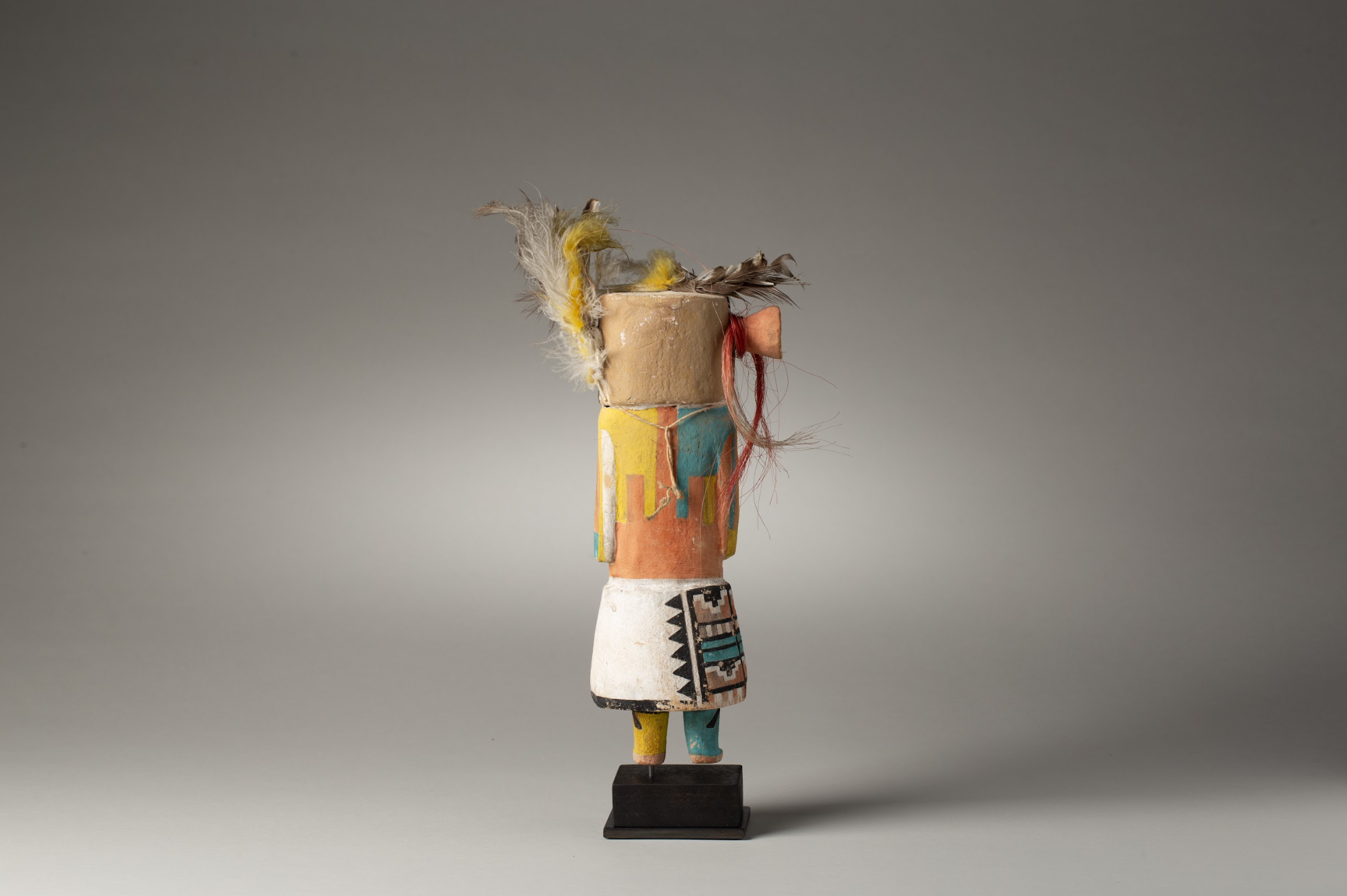 Image 5 of 6
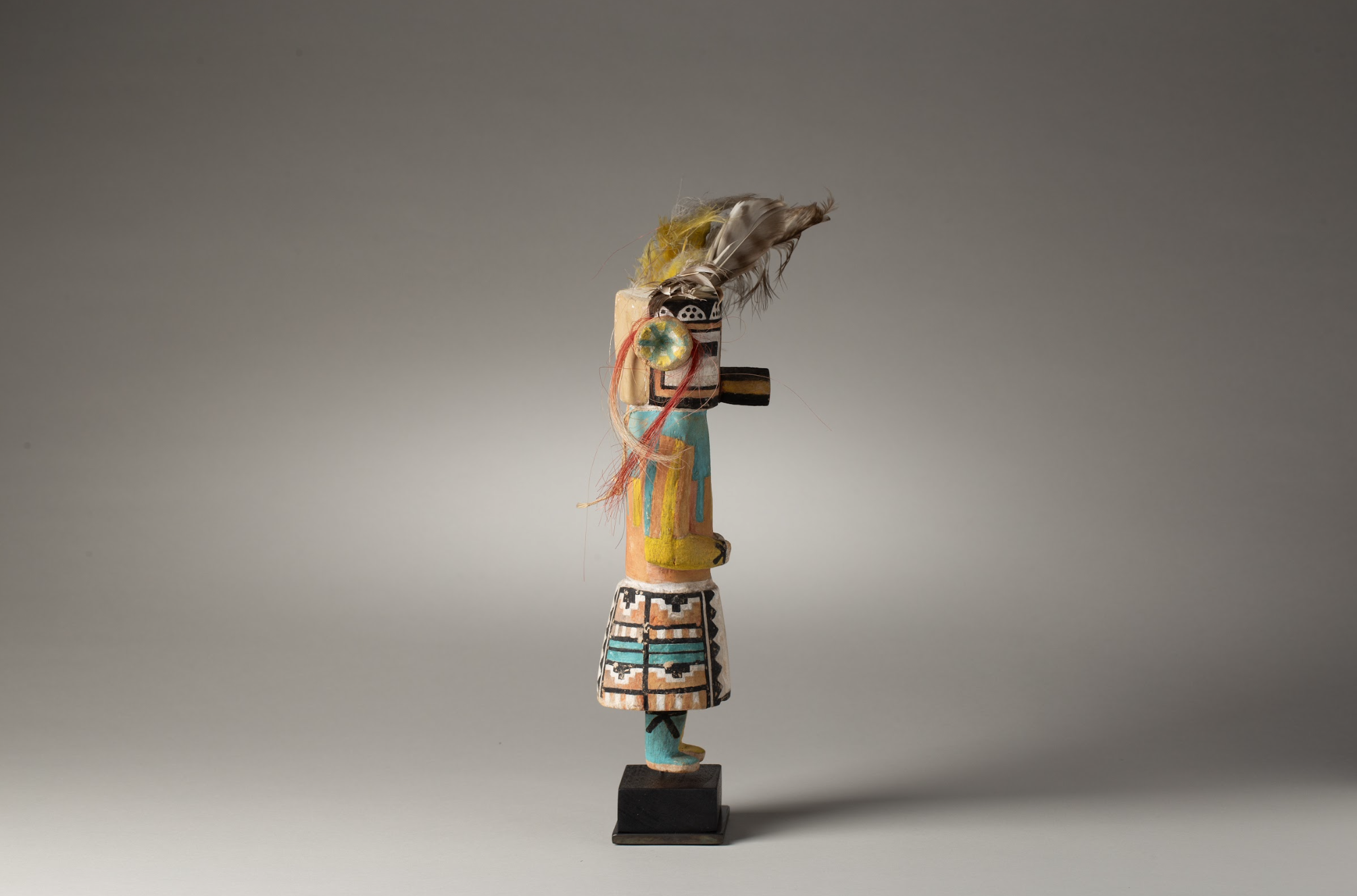 Image 6 of 6